Skip to Content Facebook Feature Image

EPA moves to weaken pollution limits on chemical used to sterilize medical equipment

TECH

EPA moves to weaken pollution limits on chemical used to sterilize medical equipment
TECH

TECH

EPA moves to weaken pollution limits on chemical used to sterilize medical equipment

2026-03-14 05:38 Last Updated At:12:33

WASHINGTON (AP) — The Environmental Protection Agency proposed Friday to weaken air pollution limits on a chemical used to sterilize medical equipment, a move that would reverse a Biden administration finding of high cancer risks at manufacturing facilities that use ethylene oxide to clean medical devices like catheters and syringes.

The EPA said it is concerned that the current Biden-era standards “actively threaten” manufacturers' abilities to sterilize equipment and “jeopardize one of America’s only options for a secure domestic supply chain of essential medical equipment.”

Ethylene oxide plays a crucial role in sterilizing lifesaving medical devices, including pacemakers and syringes, but long-term exposure can cause leukemia and other types of cancer among people who work at medical sterilization facilities or live nearby.

EPA Administrator Lee Zeldin said the proposed rule shows the agency's commitment to protecting people’s health while maintaining a stable domestic medical supply chain.

“The Trump EPA is committed to ensuring life-saving medical devices remain available for the critical care of America’s children, elderly and all patients without unnecessary exposure to communities," he said in a statement.

The proposal is the latest in a series of moves by the EPA under President Donald Trump to relax pollution limits and lower costs for industry. In February alone, the agency weakened restrictions on mercury from coal-burning power plants and repealed a scientific finding that served as the central basis for U.S. action to regulate greenhouse gas emissions and fight climate change.

An EPA rule finalized in 2024 was intended to reduce ethylene oxide emissions by about 90% by targeting nearly 90 commercial sterilization facilities across the country. The Biden-era rule also required companies to test for the antimicrobial chemical in the air and ensure their pollution controls are functioning properly.

The American Lung Association called the proposed rule change unacceptable.

“The science shows that both short-term and long-term exposure to ethylene oxide is dangerous for health," said Laura Kate Bender, the association's vice president. “People who live near many commercial sterilization facilities are much more likely to develop cancer over their lifetimes. No one should have to live with elevated cancer risk because of air pollution in their community."

Environmental justice advocates noted that many ethylene oxide facilities are located in minority communities where Black and Brown people have been exposed to the cancer-causing chemical.

Ethylene oxide, also known as EtO, is a gas used to sterilize roughly half of all medical devices and is also used to ensure the safety of certain spices and other food products. It is used to clean everything from catheters to syringes, pacemakers and plastic surgical gowns. Brief exposure isn’t considered a danger, but breathing it long term elevates the risk of breast cancer and lymphoma, the EPA said.

The EPA first classified ethylene oxide as a human carcinogen in 2016.

In 2022, the EPA laid out the risks faced by residents who live near medical sterilization facilities. In Laredo, Texas, for example, residents and activists fought to clean up a sterilization facility run by Missouri-based Midwest Sterilization Corp. It was one of 23 sterilizers in the United States that the EPA said posed a risk for people nearby.

Sterigenics, a major sterilization company, shuttered a medical sterilization plant in a Chicago suburb after monitoring found emissions spikes in nearby neighborhoods. They eventually settled numerous lawsuits.

Scott Whitaker, president and CEO of the Advanced Medical Technology Association, said medical sterilizers provide a vital service and many devices can’t be sterilized by any other method.

"We appreciate the EPA’s efforts in listening to and understanding the importance of supplying safe, sterile medical technology without interruption while protecting employees and communities near sterilization facilities,'' he said in an email.

Los Angeles County Supervisor Janice Hahn, who has raised concerns about emissions at a Sterigenics plant southeast of Los Angeles, said Friday that "the EPA is moving in the wrong direction and putting more Americans’ health on the line.”

Associated Press writer Dorany Pineda in Los Angeles contributed to this story.
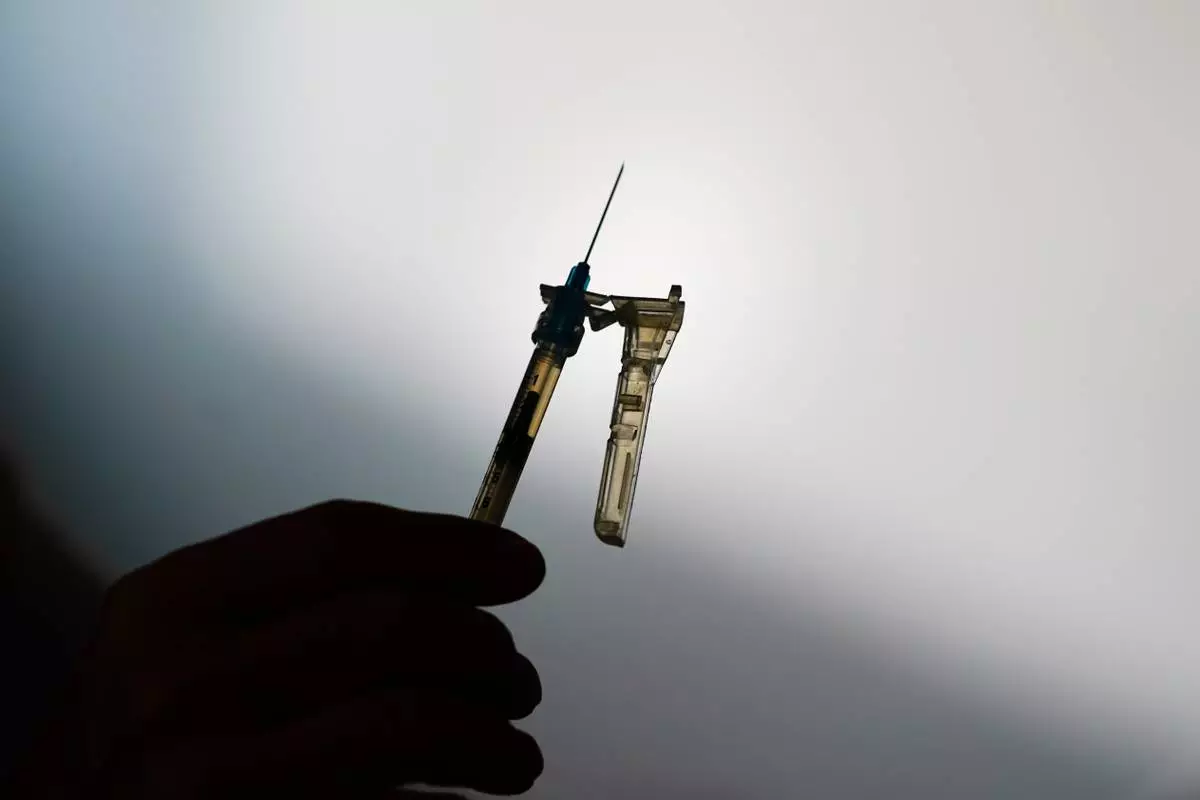
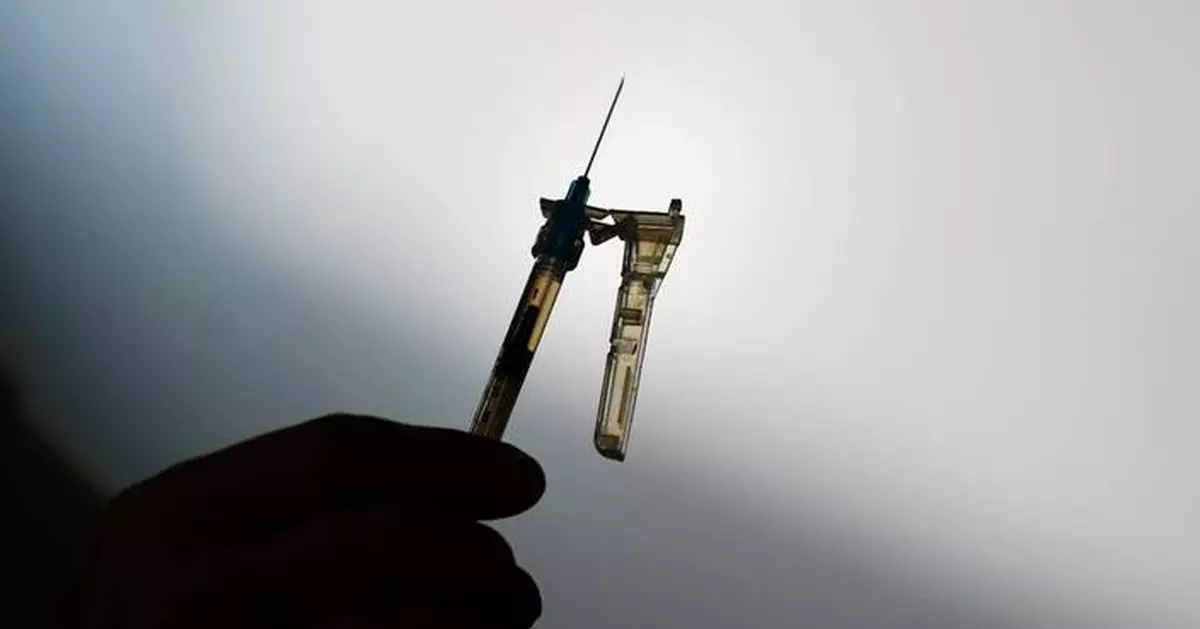
FILE - A syringe is prepared at a clinic in Norristown, Pa., on Dec. 7, 2021. (AP Photo/Matt Rourke, File)


FILE - A syringe is prepared at a clinic in Norristown, Pa., on Dec. 7, 2021. (AP Photo/Matt Rourke, File)

WASHINGTON (AP) — Anti-Muslim rhetoric from some Republicans in Congress intensified this week against the backdrop of the Iran war, with multiple lawmakers — including one who said “Muslims don’t belong in American society” — drawing condemnation from Democrats for their remarks but little pushback from GOP leaders.

The derogatory language has been percolating among Republican officials for months, often prominent when criticizing New York Mayor Zohran Mamdani, who is Muslim. But against the backdrop of the Iran war, a country with an overwhelmingly Muslim population, and attacks at a synagogue in Michigan and a college in Virginia, the tone sharpened this week.

“The enemy is inside our gates,” Alabama Sen. Tommy Tuberville wrote Thursday in response to a photo of Mamdani sitting on the ground during an iftar dinner at New York City Hall. The photo was juxtaposed with a picture of the Sept. 11 attacks.

Hours later, Tuberville doubled down: “To be clear, I didn’t ‘suggest’ Islamists are the enemy. I said it plainly.”

The rhetoric intensified Friday as GOP lawmakers responded to the attacks in Michigan and Virginia by urging a halt to all immigration into the United States. Some singled out Muslims specifically.

For many Muslims, it's a political moment that carries echoes from the early 2000s, when the 9/11 attacks and the Afghanistan and Iraq wars generated hostility toward Muslim communities in the United States, often accompanied by discrimination and racist violence.

“When members of Congress speak, it’s not just words,” said Iman Awad, the national director for policy and advocacy for the Muslim American advocacy group Emgage Action. “It shapes public perception. It legitimizes prejudice.”

Tennessee Rep. Andy Ogles in his social media post stated flatly that Muslims don't belong in the United States. He stood behind it after criticism mounted, later writing that “paperwork doesn’t magically make you American” and that “Muslims are unable to assimilate; they all have to go back.”

Asked about Ogles’ post on Tuesday, House Speaker Mike Johnson said he had spoken to members “about our tone and our message and what we say.” He said Ogles used “different language than I would use,” but added that he believes the issue raised by the comments is “serious.”

“There’s a lot of energy in the country, and a lot of popular sentiment that the demand to impose Sharia law in America is a serious problem," Johnson said. "That’s what animates this.”

Sharia is a religious framework that guides many Muslims’ moral and spiritual conduct. References to “Sharia law” have often been invoked by officials to suggest Muslims are attempting to impose religious practices on communities in the United States.

Many Republicans point to a Muslim-centered planned community near Dallas as proof of “Sharia law” — though the developers have denied the allegations and said they are being targeted because they are Muslim.

With Johnson not condemning Ogles’ remarks — or to recent comments from Florida Rep. Randy Fine that “the choice between dogs and Muslims is not a difficult one” — the anti-Muslim rhetoric grew louder. After the photo circulated of Mamdani at the iftar dinner, several Republicans responded with critical posts.

Democrats broadly condemned the GOP messages. Chuck Schumer, the leader of Senate Democrats, called Tuberville's post “mindless hate.”

“Islamophobic hate like this is fundamentally un-American and we must confront and overcome it whenever it rears its ugly head,” Schumer said.

Mamdani — in response to Tuberville's post that “the enemy is inside our gates" — said: "Let there be as much outrage from politicians in Washington when kids go hungry as there is when I break bread with New Yorkers.”

Federal officials identified a man who rammed his vehicle into a hallway at Temple Israel in West Bloomfield Township, Michigan, this week as a naturalized citizen born in Lebanon. Officials have said that the man had lost four family members in an Israeli airstrike in his native Lebanon last week, just after sunset as they were having their fast-breaking meal during the Muslim holy month of Ramadan

In Virginia, Mohamed Bailor Jalloh opened fire in a classroom at Old Dominion University before ROTC students subdued and killed him. Court documents showed that he had previously served time for attempting to aid the Islamic State and was released less than two years ago.

Some Republican lawmakers claimed vindication for their views. Others pushed for legislation. Minnesota Rep. Tom Emmer, the House GOP’s whip, said “the security of our nation hinges on our ability to denaturalize and deport terrorists.”

West Virginia Rep. Riley Moore said he would introduce a bill to denaturalize and deport any naturalized citizen who “commits an act of terrorism, plots to commit an act of terrorism, joins a terrorist organization or otherwise aids and abets terrorism against the American people.”

Similar rhetoric and policy pushes have surfaced before and drawn controversy. Last year, protesters connected to demonstrations over the Israel-Hamas war were arrested and targeted by authorities, including former Columbia University graduate student Mahmoud Khalil, a Palestinian activist the government has sought to detain and deport.

Middle East conflicts bringing domestic tensions is nothing new. With the war in Gaza, both Muslim and Jewish communities have faced faith-based discrimination and attacks.

Mamdani said the posts invoking the 9/11 attacks are problematic not just because of the words, but because of "the actions that often accompany them.”

“I think too of the smaller indignities, the indignities that many New Yorkers face, but that Muslims are expected to face in silence,” Mamdani said. “Of the exhaustion of having to explain yourself to those who are not interested in understanding. Of the men who introduce themselves by their given name only to be called Muhammad for years on end.”

The stark silence from Republican leaders, including President Donald Trump, reflects a broader change in the party. After the Sept. 11 attacks in 2001, Republican President George W. Bush visited the Islamic Center of Washington, D.C., to explicitly warn against Muslim discrimination.

“America counts millions of Muslims amongst our citizens, and Muslims make an incredibly valuable contribution to our country,” Bush said during the visit, adding: “They need to be treated with respect. In our anger and emotion, our fellow Americans must treat each other with respect.”

“Those who feel like they can intimidate our fellow citizens to take out their anger don’t represent the best of America, they represent the worst of humankind, and they should be ashamed of that kind of behavior,” Bush said.

New York City Mayor Zohran Mamdani speaks during a Rental Ripoff Hearing at Fordham University on Wednesday, March 11, 2026, in New York. (AP Photo/Andres Kudacki)

New York City Mayor Zohran Mamdani speaks during a Rental Ripoff Hearing at Fordham University on Wednesday, March 11, 2026, in New York. (AP Photo/Andres Kudacki)

Police tape hangs outside the Temple Israel synagogue Friday, March 13, 2026, in West Bloomfield Township, Mich. (AP Photo/Paul Sancya)

Police tape hangs outside the Temple Israel synagogue Friday, March 13, 2026, in West Bloomfield Township, Mich. (AP Photo/Paul Sancya)

FILE - Rep. Andy Ogles, R-Tenn., arrives for a meeting with Speaker of the House Mike Johnson, R-La., at the Capitol in Washington, Dec. 20, 2024. (AP Photo/J. Scott Applewhite, File)

FILE - Rep. Andy Ogles, R-Tenn., arrives for a meeting with Speaker of the House Mike Johnson, R-La., at the Capitol in Washington, Dec. 20, 2024. (AP Photo/J. Scott Applewhite, File)

FILE - The U.S. Capitol is seen at sunrise March 9, 2026, in Washington. (AP Photo/Jose Luis Magana, File)

FILE - The U.S. Capitol is seen at sunrise March 9, 2026, in Washington. (AP Photo/Jose Luis Magana, File)

Recommended Articles