Skip to Content Facebook Feature Image

Chinese FM calls for resolving issues between Afghanistan and Pakistan through dialogue, consultation

China

China

China

Chinese FM calls for resolving issues between Afghanistan and Pakistan through dialogue, consultation

2026-03-14 03:47 Last Updated At:15:27

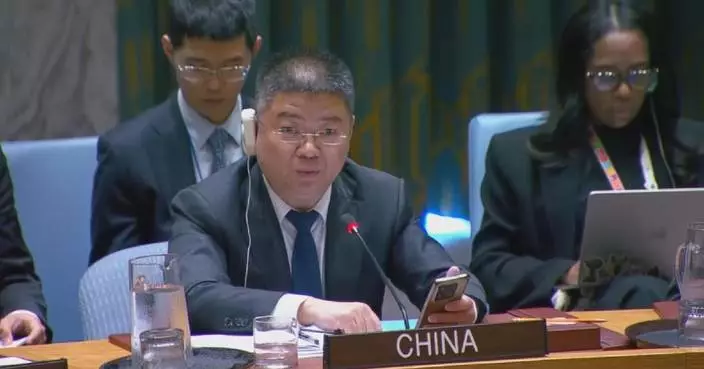
Chinese Foreign Minister Wang Yi said on Friday that the issues between Afghanistan and Pakistan can only be resolved through dialogue and consultation.

The use of force would only complicate the situation and intensify the contradictions, which would be of no benefit to either side and threatens regional peace and stability, he said.

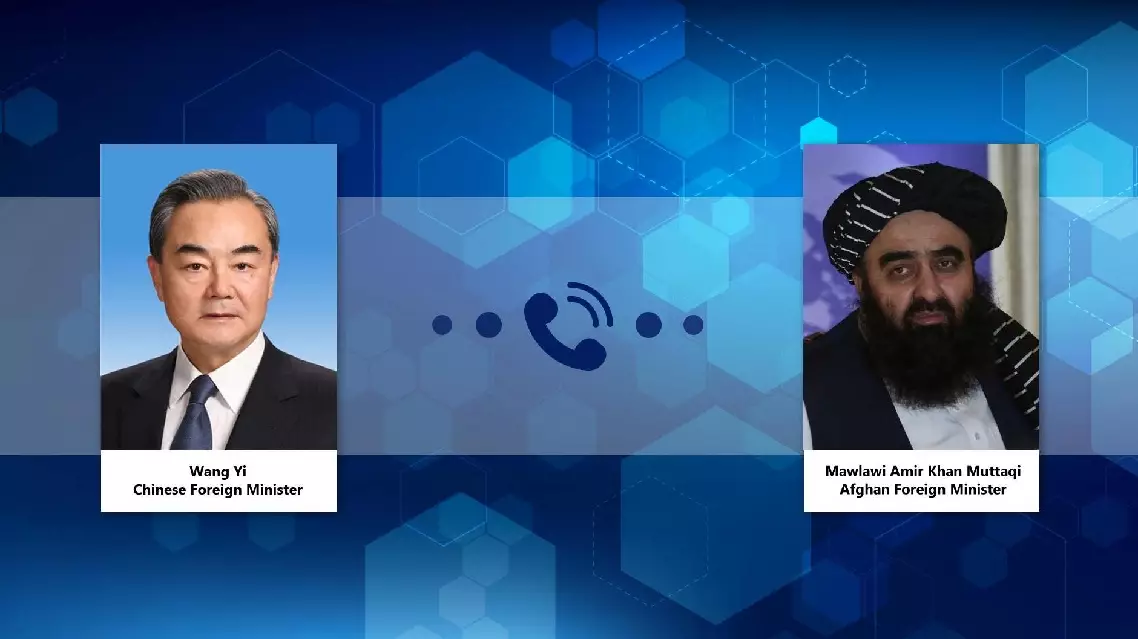
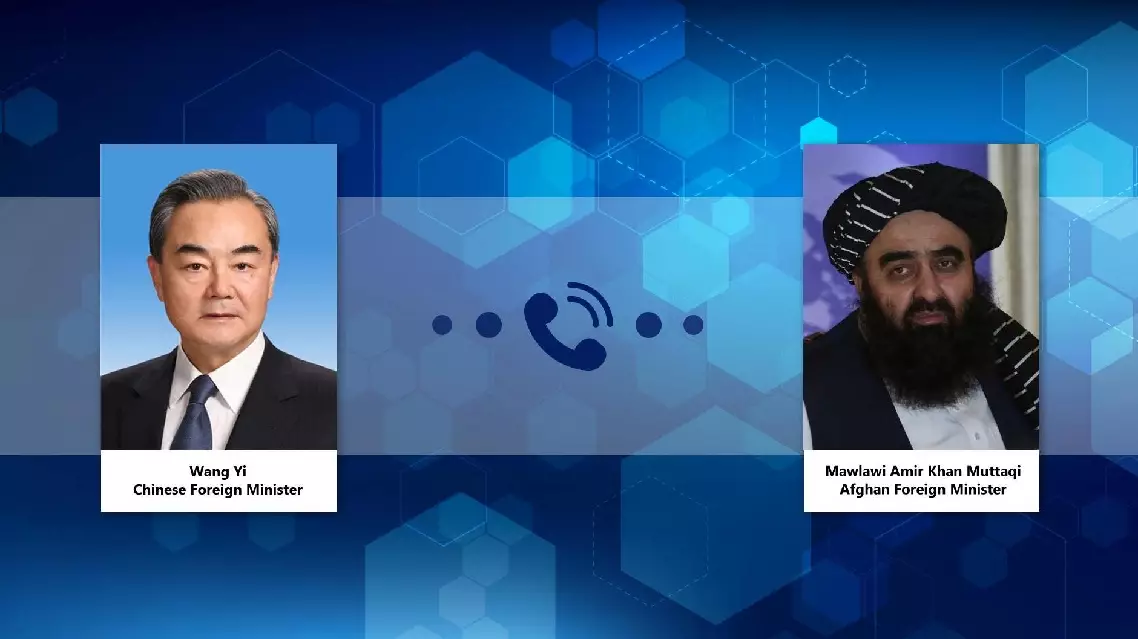
Wang, also a member of the Political Bureau of the Communist Party of China Central Committee, made the remarks in a phone conversation with Afghan Foreign Minister Mawlawi Amir Khan Muttaqi at the latter's request.

Muttaqi thanked China for its active efforts in mediating the conflicts between Afghanistan and Pakistan, noting that the Afghan people, who have suffered greatly from war, cherish the opportunities for peace and development.

The Afghan foreign minister said his country wants to be a source of regional peace rather than unrest, reaffirming that its territory will not be used to attack neighboring countries.

Afghanistan does not wish to engage in military conflict with other countries, and looks forward to mutual trust and friendly coexistence with neighboring countries, he said.

The Afghan side believes that dialogue and consultation are the only way to resolve issues and looks forward to China, as a major country and a friendly neighbor, playing a greater role, he said.

For his part, Wang said that the more volatile the external environment becomes, the more countries in the region should strengthen unity and cooperation, overcome difficulties together, and forge a path of cooperative security and common security.

Afghanistan and Pakistan are inseparable brothers and neighbors that cannot be moved away from each other, he said.

China has always maintained an objective and impartial stance on the conflict between Afghanistan and Pakistan, Wang said.

The special envoy on Afghan affairs of the Chinese Foreign Ministry is shuttling between the two countries to mediate, he said, adding that it is hoped that both sides will keep calm and exercise restraint, have face-to-face exchanges at an early date, achieve a ceasefire as soon as possible, and resolve differences and contradictions through dialogue.

China is willing to continue to make active efforts to help achieve reconciliation and detente between Afghanistan and Pakistan, Wang said.

The two sides also exchanged views on the situation in Iran.

Wang reaffirmed China's principled position, stating that China is willing to work with the international community, including Afghanistan, to further play a constructive role in striving for peace.
Chinese FM calls for resolving issues between Afghanistan and Pakistan through dialogue, consultation
Chinese FM calls for resolving issues between Afghanistan and Pakistan through dialogue, consultation
Chinese FM calls for resolving issues between Afghanistan and Pakistan through dialogue, consultation
Chinese FM calls for resolving issues between Afghanistan and Pakistan through dialogue, consultation
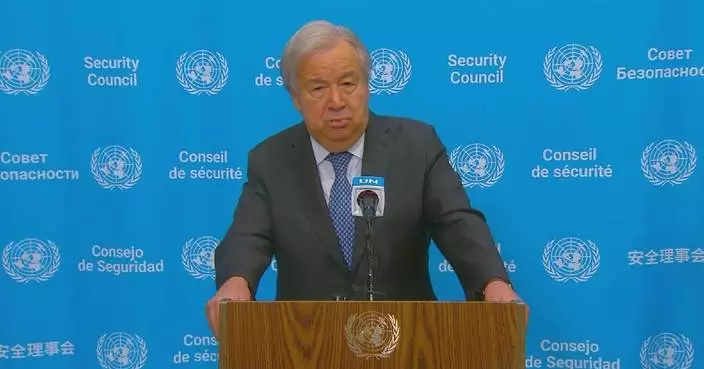
U.S. President Donald Trump said on Friday that he estimates a deal with Iran will be signed "in the next day or two."

Trump said in an interview with Israel's Channel 12 News that the United States and Iran will probably meet over the weekend to finalize a deal to end the war. "The Iranians want to meet and make a deal," he said.

He said "the naval blockade on Iran is helping to make a deal. I will not lift it until we make a deal," adding that "the biggest part of this deal is that it will make Israel safer. This deal is good for Israel."

According to the channel, one component of the deal under discussion is that the United States will release 20 billion U.S. dollars in frozen Iranian funds.

In exchange, Iran would give up its stockpile of enriched uranium, and would be only allowed to have nuclear research reactors to produce medical isotopes, all above ground.

Trump also stressed that Israel must stop the strikes on Lebanon, saying, "They can't keep blowing up buildings. I'm not going to allow that."

Also on Friday, Trump said in a phone interview with Bloomberg that a deal to end the U.S.-Israeli war with Iran is mostly complete as talks over a lasting peace deal will "probably" be held this weekend in Pakistan.

Trump said in the phone interview that Iran agreed to suspend its nuclear program indefinitely, and will not receive any frozen funds from the United States.

"Most of the main points are finalized. It'll go pretty quickly," Trump said.

Asked if he would travel to Pakistan to sign the potential deal, Trump said: "I may."

Trump again denied that the moratorium on Iran's nuclear program would expire after 20 years. "No years, unlimited," Trump said.

The United States will get all of Iran's nuclear "dust" with no money having exchanged hands "in any way, shape, or form," Trump wrote on social media earlier on Friday. Multiple Western media outlets have interpreted Trump's reference to nuclear "dust" as meaning Iran's stockpile of enriched uranium.

Iran has yet to comment on any deal beyond the reopening of the Strait of Hormuz, nor on claims made by Trump that Tehran had offered concessions, including over the key issue of its nuclear program.

If the United States continues its naval blockade of the Strait of Hormuz, Iran will consider it a violation of the ceasefire between the two countries and will close the waterway, the semi-official Tasnim news agency reported Friday, citing an informed source close to the Supreme National Security Council.

The Iranian side has yet to respond to the media report on the enriched uranium issue.

The United States and Iran had their first round of negotiations in Pakistan's Islamabad last weekend to ease tension in the Middle East. The talks, which failed to produce an agreement, took place after a ceasefire was announced on April 8 between Iran, the United States, and Israel, following 40 days of fighting.

Iran tightened control over the Strait of Hormuz after the United States and Israel launched joint attacks on the country on Feb. 28. The United States also imposed a naval blockade on the strait following the failed negotiations in Islamabad.

Earlier on Friday, both Washington and Tehran confirmed that the strait had been completely open for all commercial vessels. However, Trump said on Truth Social that the U.S. naval blockade would "remain in full force." In response, Iran warned of closing the waterway again if the U.S. blockade continues.

Trump says may sign deal with Iran "in the next day or two": Israeli media

Trump says may sign deal with Iran "in the next day or two": Israeli media

Trump claims peace deal with Iran mostly complete: report

Trump claims peace deal with Iran mostly complete: report

Recommended Articles