Skip to Content Facebook Feature Image

US faces elevated terrorism threats against backdrop of Iran war and cuts at FBI, Justice Department

News

US faces elevated terrorism threats against backdrop of Iran war and cuts at FBI, Justice Department
News

News

US faces elevated terrorism threats against backdrop of Iran war and cuts at FBI, Justice Department

2026-03-14 06:31 Last Updated At:06:40

WASHINGTON (AP) — In New York City, two men who federal authorities say were inspired by the Islamic State brought powerful homemade bombs to a far-right protest outside the mayoral mansion.

In Michigan, a naturalized citizen from Lebanon rammed his vehicle into a synagogue before being shot by security.

More Images
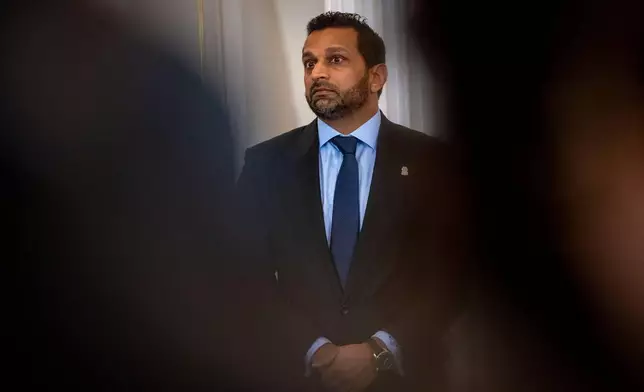
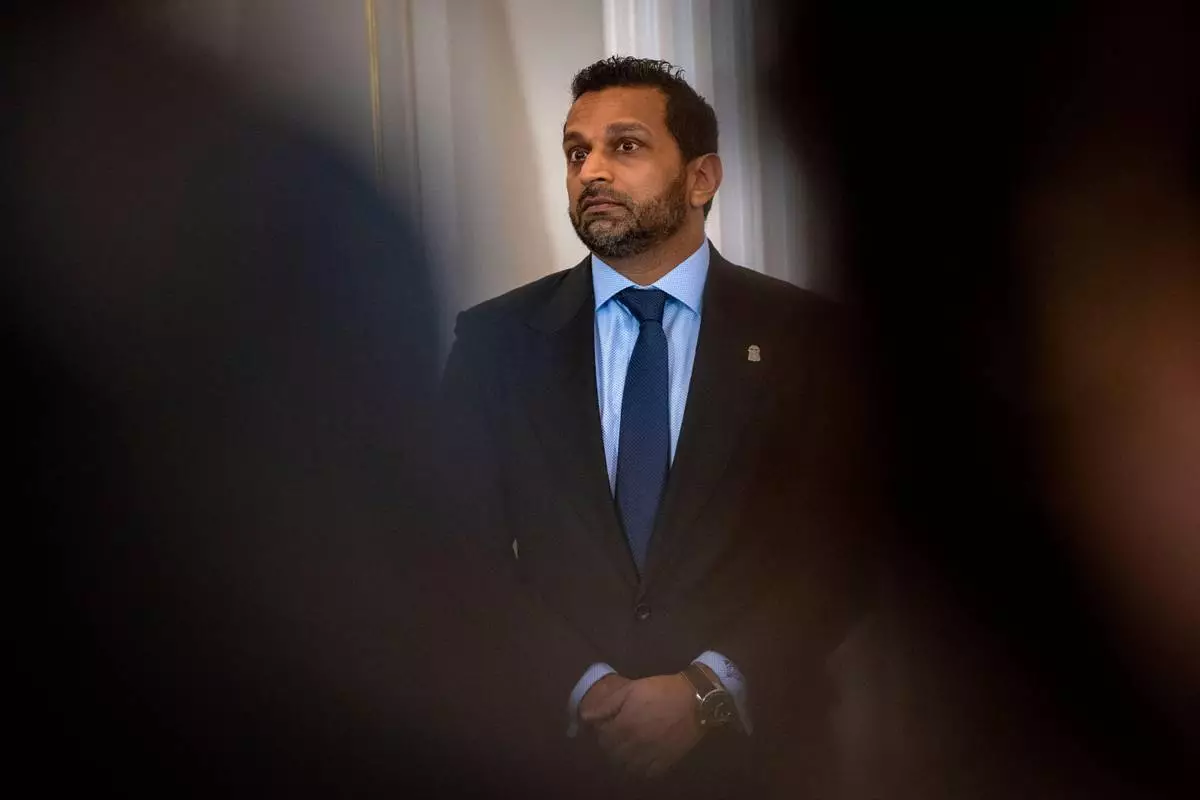
FBI Director Kash Patel takes part in a U.S. Hostage and Wrongful Detainee Flag Raising ceremony at the State Department, Monday, March 9, 2026 in Washington. (AP Photo/Kevin Wolf)
FBI Director Kash Patel takes part in a U.S. Hostage and Wrongful Detainee Flag Raising ceremony at the State Department, Monday, March 9, 2026 in Washington. (AP Photo/Kevin Wolf)

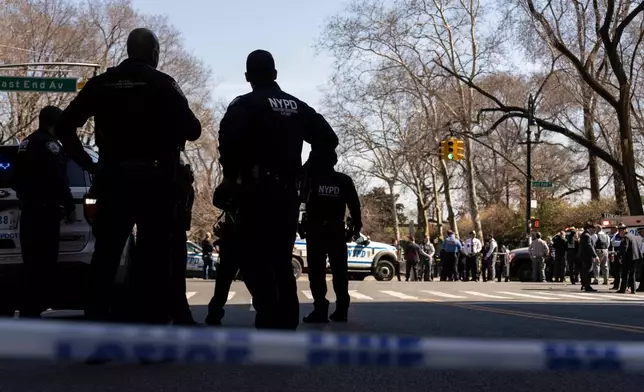
NYPD officers stand outside Carl Schurz Park as they investigate suspicious device, Tuesday, March 10, 2026, in New York. (AP Photo/Yuki Iwamura)
NYPD officers stand outside Carl Schurz Park as they investigate suspicious device, Tuesday, March 10, 2026, in New York. (AP Photo/Yuki Iwamura)

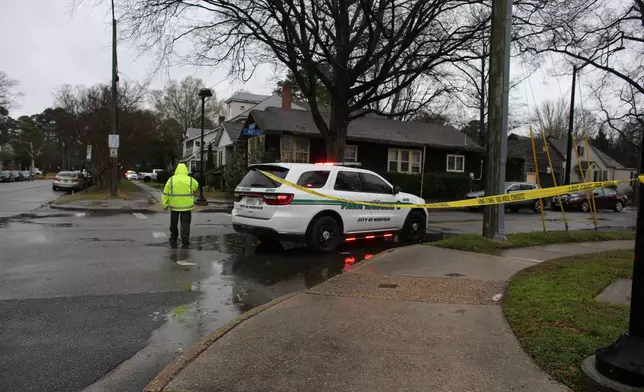
Police arrive outside Old Dominion University's campus after reports of an active shooter on Thursday, March 12, 2026, in Norfolk, Va. (AP Photo/John Clark)
Police arrive outside Old Dominion University's campus after reports of an active shooter on Thursday, March 12, 2026, in Norfolk, Va. (AP Photo/John Clark)

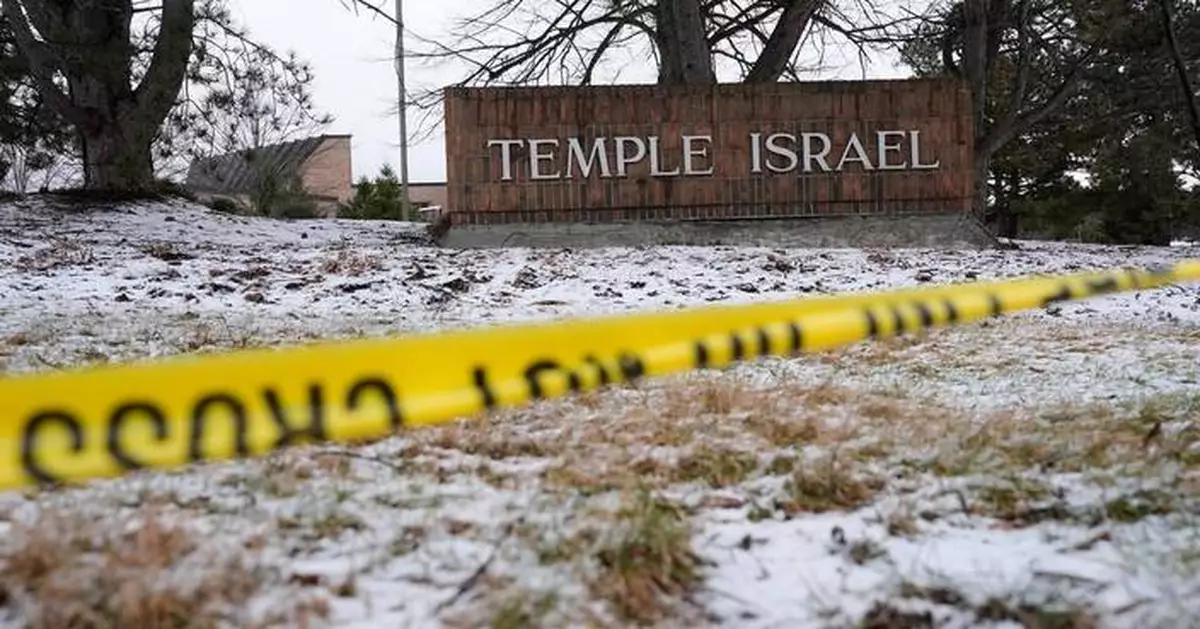
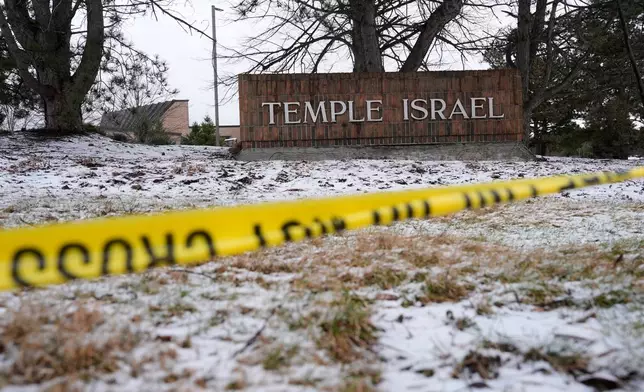
Police tape hangs outside the Temple Israel synagogue Friday, March 13, 2026, in West Bloomfield Township, Mich. (AP Photo/Paul Sancya)

Police tape hangs outside the Temple Israel synagogue Friday, March 13, 2026, in West Bloomfield Township, Mich. (AP Photo/Paul Sancya)

In Virginia, a man previously imprisoned on a terrorism conviction was heard yelling “Allahu akbar” before opening fire in a university classroom in an attack that officials said ended when the shooter was killed by students.

The three acts of violence in the last week have laid bare a heightened terrorism threat unfolding against the backdrop of the U.S. war with Iran and as the country's counterterrorism system is strained by the departures of experienced national security professionals at the FBI and Justice Department. The firings and resignations, along with the diversion of resources and personnel over the last year to meet other Trump administration priorities, have fueled concerns about the capability to head off a potential surge in threats.

“So much experience has been decimated from the ranks,” said Frank Montoya, a retired senior FBI official. “The folks that were best-positioned to get to the bottom of it before something really bad happened” are in many cases no longer with the government, he said, meaning less experienced personnel assigned to the threat are “starting from way behind.”

The FBI said it would not comment on personnel numbers and decisions, but issued a statement saying “agents and staff are dedicated professionals working around the clock to defend the homeland and crush violent crime. The FBI continuously assesses and realigns our resources to ensure the safety of the American people.”

Iran has vowed revenge for the killing by the U.S. and Israel of Supreme Leader Ayatollah Ali Khamenei, and though the fighting has so far been confined to the Middle East, the Islamic Republic has long professed its determination to carry out violence on American soil.

Iranian operatives, for instance, responded to the 2020 assassination of Gen. Qassem Soleimani during the first Trump administration with a disrupted murder-for-hire plot targeting former national security adviser John Bolton.

A Pakistani business owner who says he was carrying out instructions from a contact in Iran's paramilitary Revolutionary Guard was convicted in New York last week of trying to hire hit men in 2024 for assassination plots targeting public figures, including President Donald Trump, who was then running for president.

Though much attention has focused on Iran's use of proxies or hired hands to carry out plots, the country's capability to organize a large-scale assault on the U.S. remains unclear despite clear angst over the potential. The FBI warned in a recent bulletin to law enforcement about Iran’s aspiration to conduct a drone attack targeting California, but after the warning was publicized, officials emphasized the intelligence was unverified and that no specific plot was known to exist.

The U.S. government after the Sept. 11, 2001, attacks overhauled its intelligence and national security apparatus to prevent similarly catastrophic events. But in the years since, lone actors radicalized online have nonetheless carried out shootings like the 2015 ambush attacks at a pair of military sites in Chattanooga, Tennessee and a rampage at an Orlando nightclub the following year by a gunman who killed 49 people and raged against the “filthy ways of the west.”

Those plots by self-directed individuals have proved notoriously difficult to prevent and have occurred even when the FBI has not been roiled by firings and internal upheaval like during the first year of the Trump administration.

“They're self-directed,” said retired FBI official Edward Herbst. “That’s what makes them really lethal. You never know when they're going to rise up. You never know when and where they're going to attack.”

Terrorism concerns typically rise during times of international conflict when military action overseas is accompanied by increased vigilance, including outreach from agents to their sources, more active sharing of tips between federal and local law enforcement and closer coordination among FBI joint terrorism task forces, said Claire Moravec, a former FBI national security official who served as deputy homeland security adviser in Illinois.

Officials have said there is no indication that either the men arrested in connection with the explosives in New York, or the man responsible for Thursday’s Old Dominion University shooting, were motivated explicitly by the Iran war. The man who crashed into Temple Israel synagogue near Detroit on Thursday lost four family members in an Israeli airstrike in his native Lebanon last week, an official in Lebanon said.

Regardless, wars like the one in Iran can function as “accelerants,” raising the volume and intensity of grievances for the disaffected, Moravec said.

“Ultimately, the goal during these periods is not ‘surveillance’ but maintaining a broad awareness of how international events could translate into domestic security risks, so that threats can be identified and disrupted early,” she said in an email.

The Justice Department's National Security Division was established in 2006 to address threats of terrorism, espionage and other concerns. In the last year, lawyers in the division found themselves assigned to review the Jeffrey Epstein files to prepare them for release, and elite sections dedicated to prosecuting terrorists and catching spies have endured turnover.

About half of the division's counterterrorism prosecutors have left since the beginning of the Trump administration, along with about a third of its senior leadership, according to estimates from Justice Connection, a network of department alumni.

A Justice Department spokesperson said the division's singular focus remains “keeping the American people safe from threats foreign and domestic” and that there are no known or credible threats to the homeland.

FBI Director Kash Patel has fired dozens of agents, most recently about a dozen employees who worked on the counterintelligence investigation into Trump's retention of classified documents at his Mar-a-Lago estate in Florida.

“This is not an exaggeration to say that they are not as capable as they were a year and a half ago,” Matthew Olsen, who led the National Security Division during the Biden administration, said this week on the Lawfare podcast, adding that “they’ve lost, forced out, fired, the most capable, the most experienced FBI agents, FBI officials and DOJ prosecutors, that were working on the Iran threat.”

In the national security realm, where experience and source development are vital, the loss of institutional knowledge and community relationships can be a crushing blow, said Montoya, the former FBI official.

“There was no transition,” Montoya said of the agents who have been abruptly fired. “These guys were just walked out of the building. The new guys can call them and say, ‘Hey, can you tell me what you were doing?’” but even so, “you're still introducing a brand new face into the equation.”
FBI Director Kash Patel takes part in a U.S. Hostage and Wrongful Detainee Flag Raising ceremony at the State Department, Monday, March 9, 2026 in Washington. (AP Photo/Kevin Wolf)
FBI Director Kash Patel takes part in a U.S. Hostage and Wrongful Detainee Flag Raising ceremony at the State Department, Monday, March 9, 2026 in Washington. (AP Photo/Kevin Wolf)

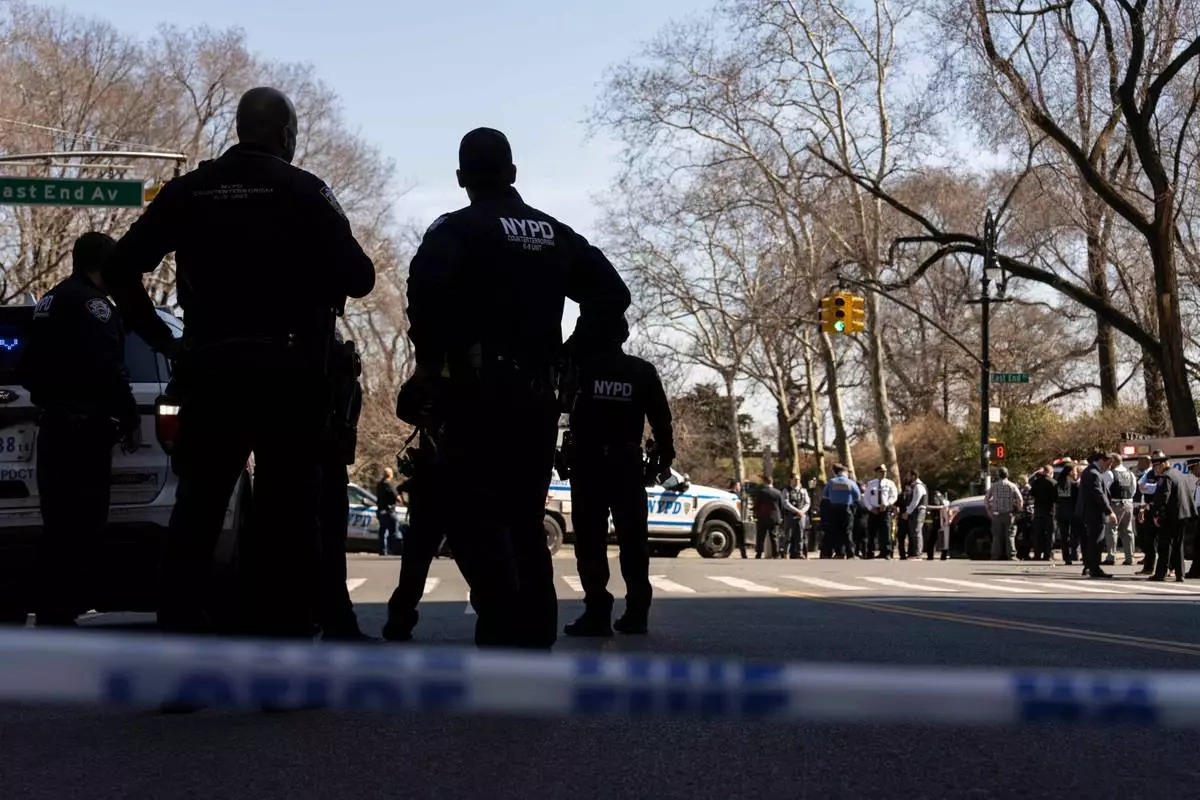
NYPD officers stand outside Carl Schurz Park as they investigate suspicious device, Tuesday, March 10, 2026, in New York. (AP Photo/Yuki Iwamura)
NYPD officers stand outside Carl Schurz Park as they investigate suspicious device, Tuesday, March 10, 2026, in New York. (AP Photo/Yuki Iwamura)

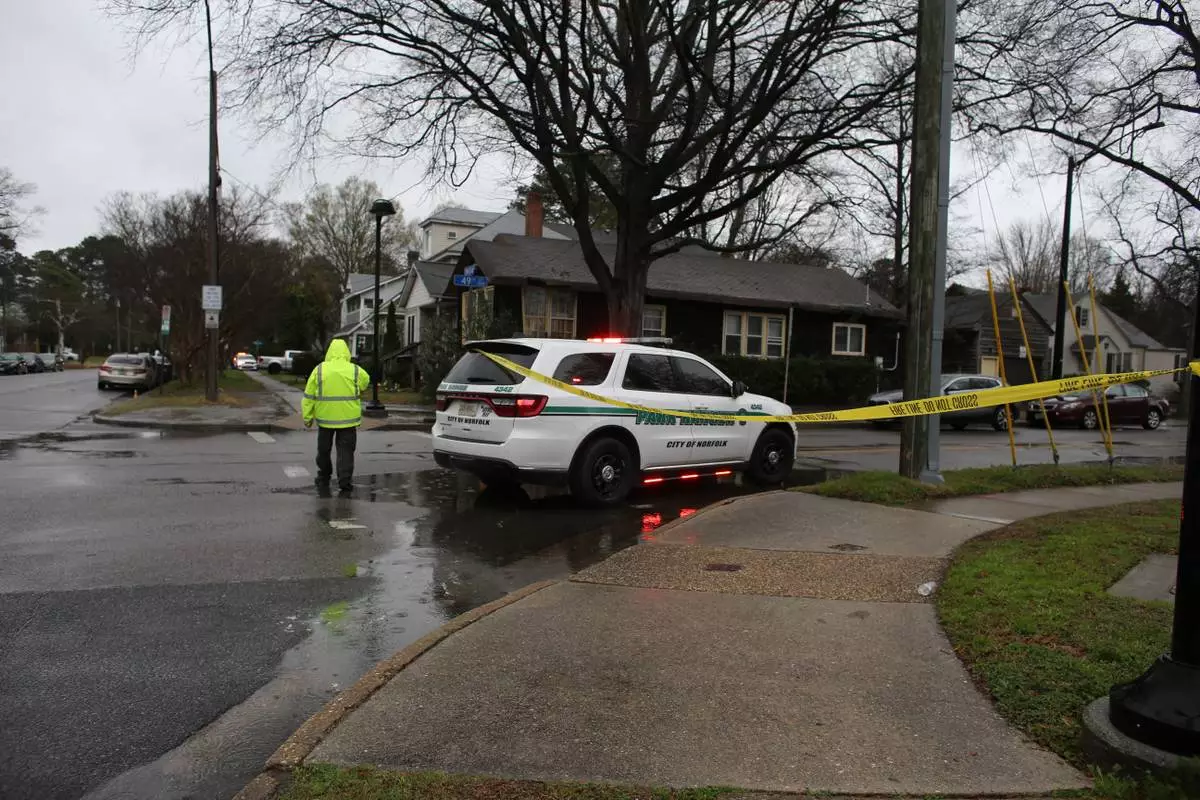
Police arrive outside Old Dominion University's campus after reports of an active shooter on Thursday, March 12, 2026, in Norfolk, Va. (AP Photo/John Clark)
Police arrive outside Old Dominion University's campus after reports of an active shooter on Thursday, March 12, 2026, in Norfolk, Va. (AP Photo/John Clark)

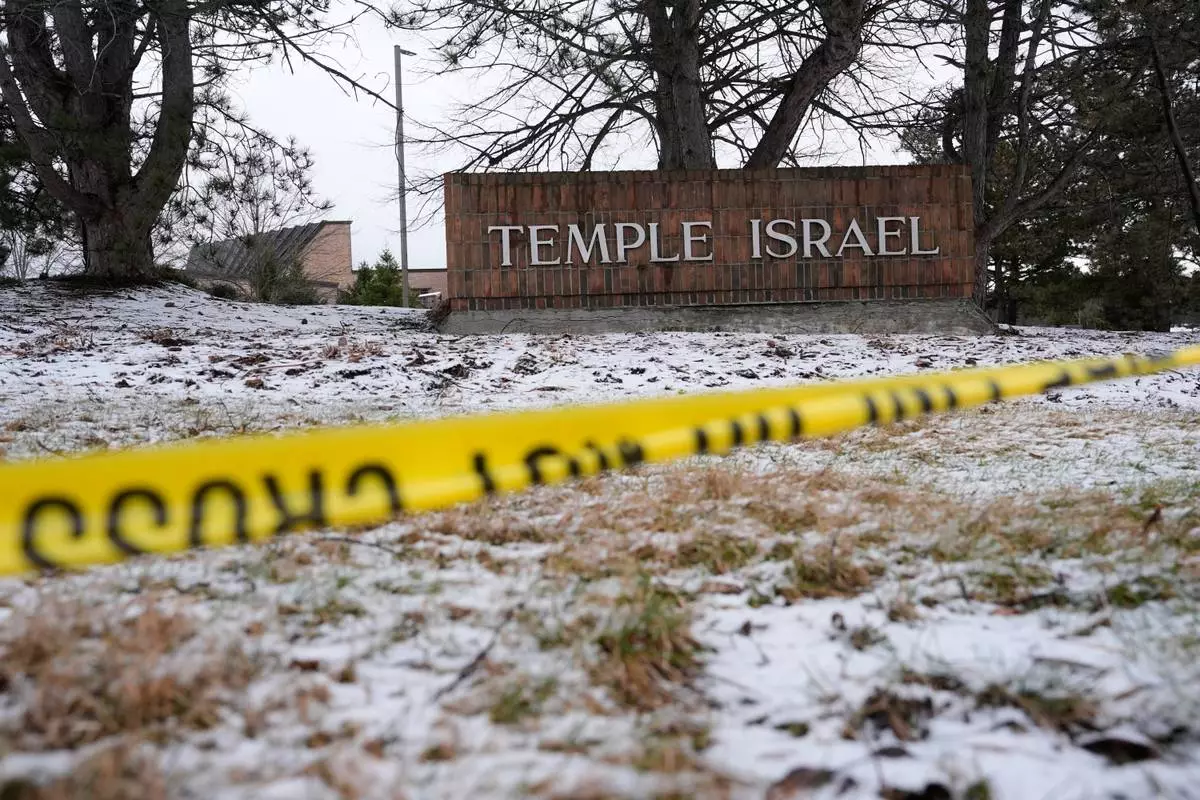
Police tape hangs outside the Temple Israel synagogue Friday, March 13, 2026, in West Bloomfield Township, Mich. (AP Photo/Paul Sancya)


Police tape hangs outside the Temple Israel synagogue Friday, March 13, 2026, in West Bloomfield Township, Mich. (AP Photo/Paul Sancya)

The U.S. is temporarily easing some sanctions on Russian oil shipments, reflecting global concerns over sharply higher crude prices due to supply shortages stemming from the Iran war.

The move, intended to soothe jittery markets over the disruption of Middle Eastern oil and gas supplies, underlines how the war has boosted Moscow's ability to profit from its energy exports, a pillar of the Kremlin’s budget as it presses its invasion of Ukraine.

U.S. sanctions will not apply for 30 days on deliveries of Russian oil that's been loaded on tankers as of Thursday, U.S. Treasury Secretary Scott Bessent said on X. That would give reluctant purchasers a green light to take the oil without worrying that they will run afoul of U.S. sanctions rules.

The Trump administration earlier had granted a 30-day reprieve to refineries in India.

Bessent said the “narrowly tailored, short-term measure” was part of President Donald Trump's “decisive steps to promote stability in global energy markets” and to “keep prices low."

Allowing the sale of stranded Russian oil would provide no additional financial benefit for the Russian government because the Kremlin already taxed the oil when it was extracted from the ground, Bessent said. Washington has sanctioned Russia's two biggest oil companies, Lukoil and Rosneft, as part of efforts to end the fighting in Ukraine. Except for the 30-day reprieve for floating oil, those sanctions remain in place.

Kremlin spokesman Dmitry Peskov said Friday the move will help stabilize global energy markets, adding it was impossible to do so "without significant volumes of Russian oil.”

But Ukrainian President Volodymyr Zelenskyy said the action “does not help peace.”

“This easing alone by the United States could provide Russia with about $10 billion for the war,” Zelenskyy said. “It spends the money from energy sales on weapons, and all of this is then used against us.”

The price of international benchmark Brent crude eased after the announcement but soon rose again, breaking through $100 to trade at $103.24 per barrel as of 1800 GMT (2 p.m. EDT) Friday. That is still well above $72.87, where Brent traded on Feb. 27, the eve of the war.

The fighting has choked off most tanker transport through the Strait of Hormuz at the mouth of the Persian Gulf, through which 20% of the world's oil supply typically passes. That has dealt a massive energy shock to the global economy and threatened increased inflation around the world.

“In the short term this slightly increases available supply on the global market, which helps contain the current spike in oil prices,” said Simone Tagliapietra, an energy expert at the Bruegel think tank in Brussels. “The impact on prices should therefore be modestly downward, or at least stabilizing.”

Analysts estimate about 125 million barrels of Russian oil are currently being shipped. That equals five or six days' worth of normal shipments through the Strait of Hormuz, or a bit over one day's worth of global consumption of about 101 million barrels per day.

After President Vladimir Putin ordered his full-scale invasion of Ukraine in 2022, the European Union — once Moscow's biggest customer — stopped taking Russian oil, and many Western customers also shunned it.

Instead, the oil flowed to China and India, where it sold for a discount due to efforts by the U.S., the EU and Kyiv's other allies to impose a price cap on Russian oil that was enforced through shipping and insurance companies.

Over time, Russia was able to dodge the cap by lining up a fleet of used tankers with obscure ownership and insurance based in countries that weren't observing the cap.

Along with the sanctions on Lukoil and Rosneft, Ukraine's allies penalized more and more of the individual vessels in Russia's “shadow fleet.” Customers in China and India started demanding even bigger discounts to compensate for the risk of running afoul of sanctions, for the hassle of concealing the origin of the oil, or for finding workarounds that skirted banks reluctant to handle payments for sanctioned oil.

In December, Russia's Urals blend traded under $40 per barrel, some $25 below Brent. That slashed the Kremlin's oil revenues to their lowest levels since the invasion. Oil and gas exports typically supply 20% to 30% of the federal budget.

Russian oil has risen along with oil prices generally and now trades at over $80 per barrel — a boost to its financial fortunes if disruptions continue in the Strait of Hormuz and keep prices high while refineries in Asia need to replace supplies no longer available from the Middle East.

Russia’s daily revenue from oil sales during the Iran war has been on average 14% higher than in February, according to the nonprofit Centre for Research on Energy and Clean Air. Russia has been earning 510 million euros ($588 million) every day this month from oil and liquefied natural gas exports, according to Isaac Levi of the CREA.

But there's still a big discount to Brent due to sanctions. The latest U.S. move “likely narrows the Urals discount somewhat" by reducing sanctions risk, Tagliapietra said. But since it's limited, the U.S. move "does not fundamentally change the structure of longer-term Russian oil flows or sanctions pressure.”

Former Russian Central Bank official Sergei Aleksashenko said the move “will not be a very significant boost” to the Russian budget because the oil was going to find buyers anyway -- especially given the disruptions to the Strait of Hormuz.

The Trump administration may not have been ready for such a dramatic spike or for a prolonged war, said Aleksashenko, head of economics at the NEST Centre, founded by exiled Russian tycoon and opposition figure Mikhail Khodorkovsky.

Now that gasoline prices in the U.S. have risen along with oil, “the president should say something, that 'I'm dealing with the problem,'" he said. That includes the break for India and the release along with other countries of 400 million barrels of strategic oil reserves.

“In my view it's more rhetoric and perception," he said.

German Chancellor Friedrich Merz said leaders of the Group of Seven democracies discussed Russian oil with Trump this week and that “six members expressed a very clear view that this is not the right signal to send.”

—-

Kostya Manenko in Tallinn, Estonia, and Kwiyeon Ha in London contributed.

Oil tankers and cargo ships line up in the Strait of Hormuz as seen from Khor Fakkan, United Arab Emirates, Wednesday, March 11, 2026. (AP Photo/Altaf Qadri)

Oil tankers and cargo ships line up in the Strait of Hormuz as seen from Khor Fakkan, United Arab Emirates, Wednesday, March 11, 2026. (AP Photo/Altaf Qadri)

Russian President Vladimir Putin chairs a meeting with members of the Security Council via videoconference at the Kremlin in Moscow, Russia, Friday, March 13, 2026. (Gavriil Grigorov, Sputnik, Kremlin Pool Photo via AP)

Russian President Vladimir Putin chairs a meeting with members of the Security Council via videoconference at the Kremlin in Moscow, Russia, Friday, March 13, 2026. (Gavriil Grigorov, Sputnik, Kremlin Pool Photo via AP)

Treasury Secretary Scott Bessent, left, sits next to Defense Secretary Pete Hegseth as President Donald Trump speaks at the Shield of the Americas Summit, Saturday, March 7, 2026, at Trump National Doral Miami in Doral, Fla.(AP Photo/Mark Schiefelbein)

Treasury Secretary Scott Bessent, left, sits next to Defense Secretary Pete Hegseth as President Donald Trump speaks at the Shield of the Americas Summit, Saturday, March 7, 2026, at Trump National Doral Miami in Doral, Fla.(AP Photo/Mark Schiefelbein)

FILE - A man walks along the shore as oil tankers and cargo ships line up in the Strait of Hormuz, as seen from Khor Fakkan, United Arab Emirates, Wednesday, March 11, 2026. (AP Photo/Altaf Qadri, file)

FILE - A man walks along the shore as oil tankers and cargo ships line up in the Strait of Hormuz, as seen from Khor Fakkan, United Arab Emirates, Wednesday, March 11, 2026. (AP Photo/Altaf Qadri, file)

Recommended Articles