Skip to Content Facebook Feature Image

War has already displaced nearly a million Lebanese, and aid groups warn of a humanitarian crisis

News

War has already displaced nearly a million Lebanese, and aid groups warn of a humanitarian crisis
News

News

War has already displaced nearly a million Lebanese, and aid groups warn of a humanitarian crisis

2026-03-14 14:05 Last Updated At:14:10

BEIRUT (AP) — Fatima Nazha slept on the street for two days after she and her family fled their home in Beirut's southern suburbs following an Israeli mass evacuation order.

All of the schools the government turned into shelters were full, and the family couldn’t afford a hotel or an apartment, so she and her husband eventually moved into a tent in the country's biggest stadium while their kids and grandchildren found shelter near the southern coastal city of Sidon.

More Images
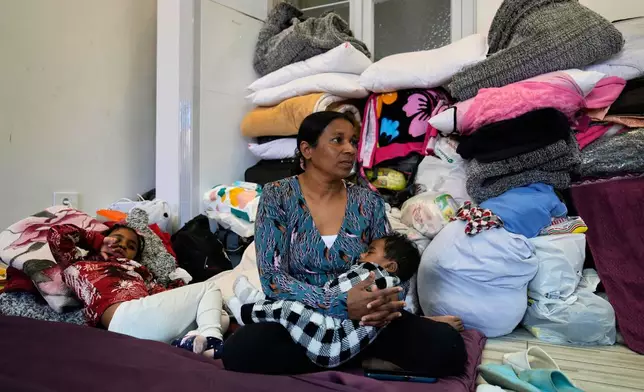
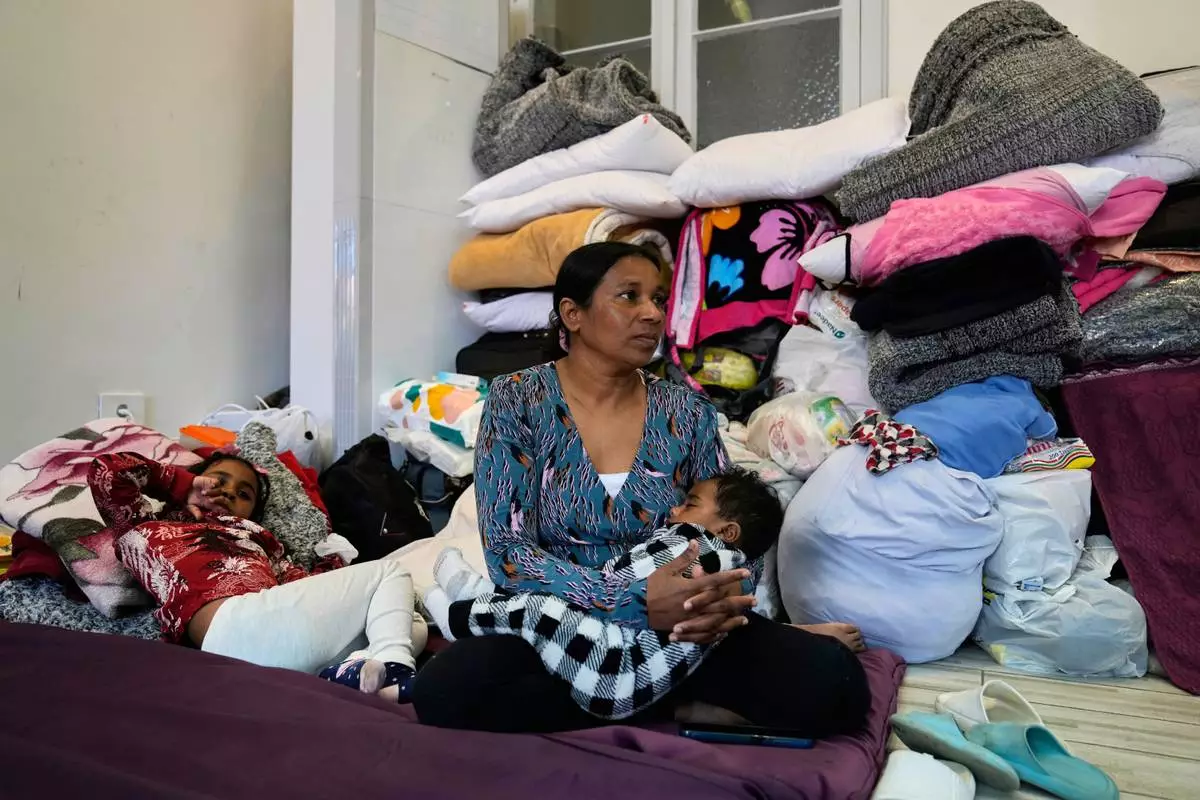
A displaced migrant woman, who among many others who fled Israeli strikes in southern and eastern Lebanon and Beirut's southern suburbs, sits with her children on mattresses at Saint Joseph Church, which has been turned into a shelter for displaced migrants, mostly from African nations, in Beirut, Wednesday, March 11, 2026. (AP Photo/Hussein Malla)
A displaced migrant woman, who among many others who fled Israeli strikes in southern and eastern Lebanon and Beirut's southern suburbs, sits with her children on mattresses at Saint Joseph Church, which has been turned into a shelter for displaced migrants, mostly from African nations, in Beirut, Wednesday, March 11, 2026. (AP Photo/Hussein Malla)

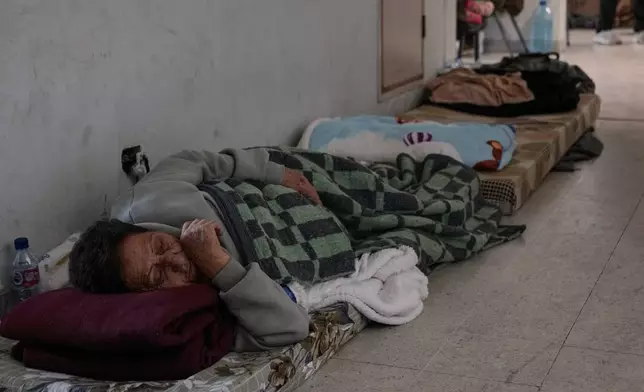
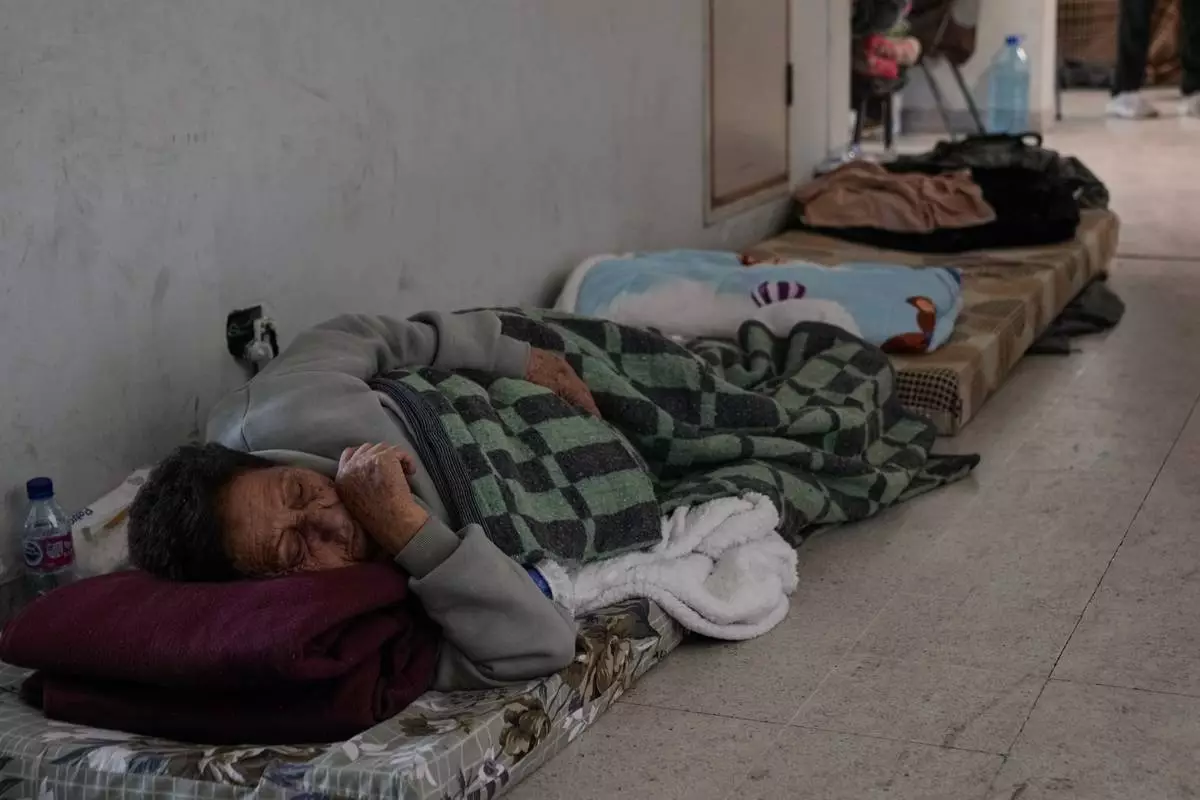
A displaced woman who fled Israeli airstrikes in southern Lebanon sleeps on the ground at the Bir Hassan Technical Institute, which has been turned into a shelter, in Beirut, Lebanon, Wednesday, March 11, 2026. (AP Photo/Bilal Hussein)
A displaced woman who fled Israeli airstrikes in southern Lebanon sleeps on the ground at the Bir Hassan Technical Institute, which has been turned into a shelter, in Beirut, Lebanon, Wednesday, March 11, 2026. (AP Photo/Bilal Hussein)

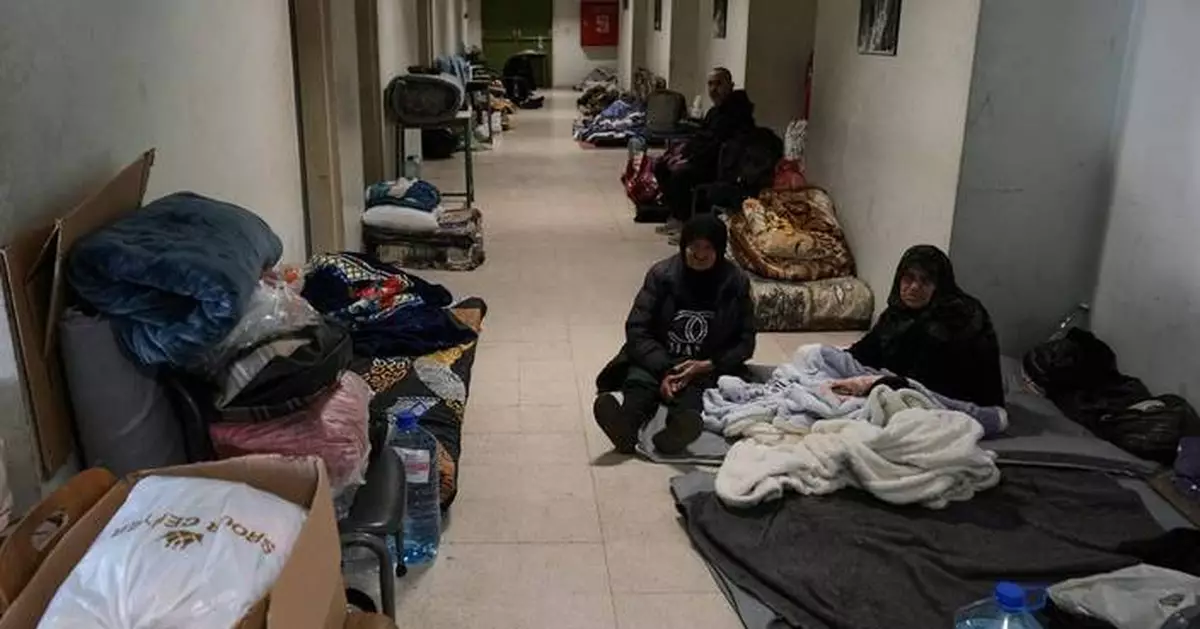
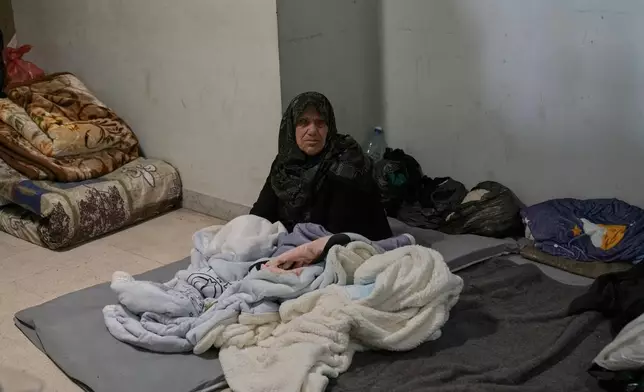
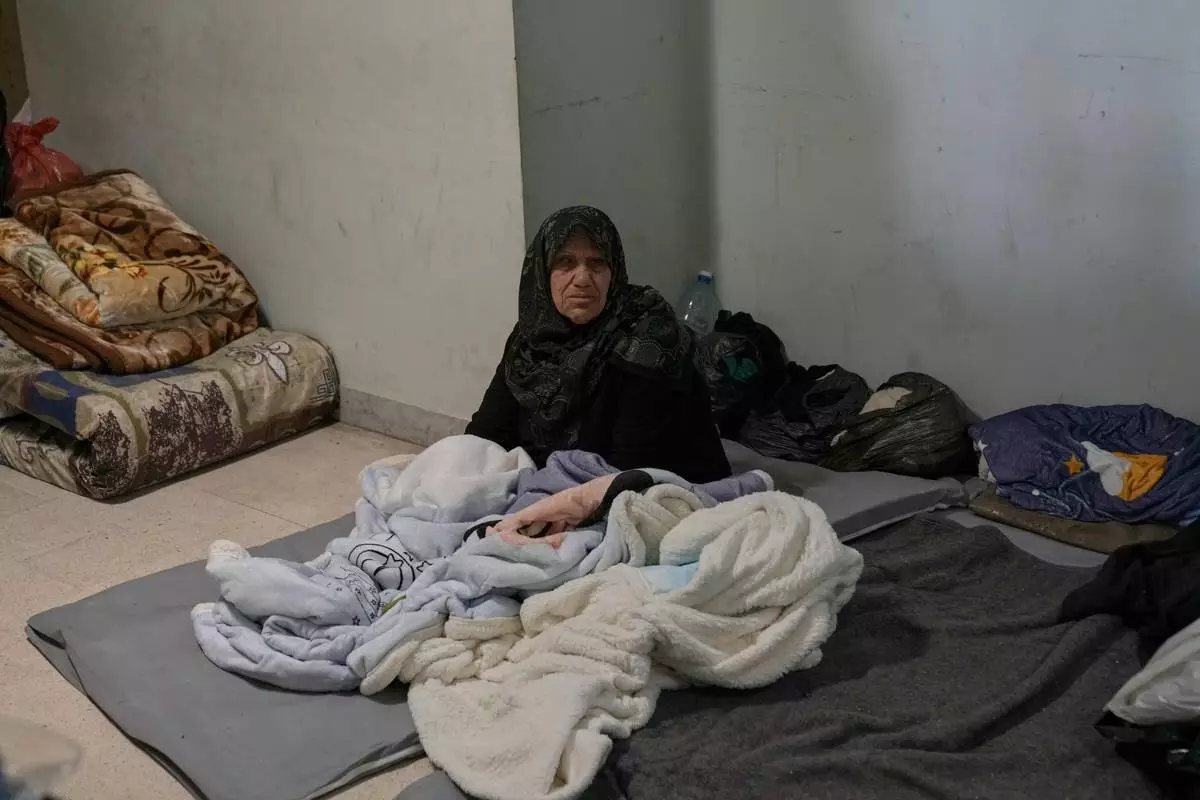
An elderly displaced woman who fled Israeli airstrikes with her family in southern Lebanon sits at the Bir Hassan Technical Institute, which has been turned into a shelter, in Beirut, Lebanon, Wednesday, March 11, 2026. (AP Photo/Bilal Hussein)

An elderly displaced woman who fled Israeli airstrikes with her family in southern Lebanon sits at the Bir Hassan Technical Institute, which has been turned into a shelter, in Beirut, Lebanon, Wednesday, March 11, 2026. (AP Photo/Bilal Hussein)

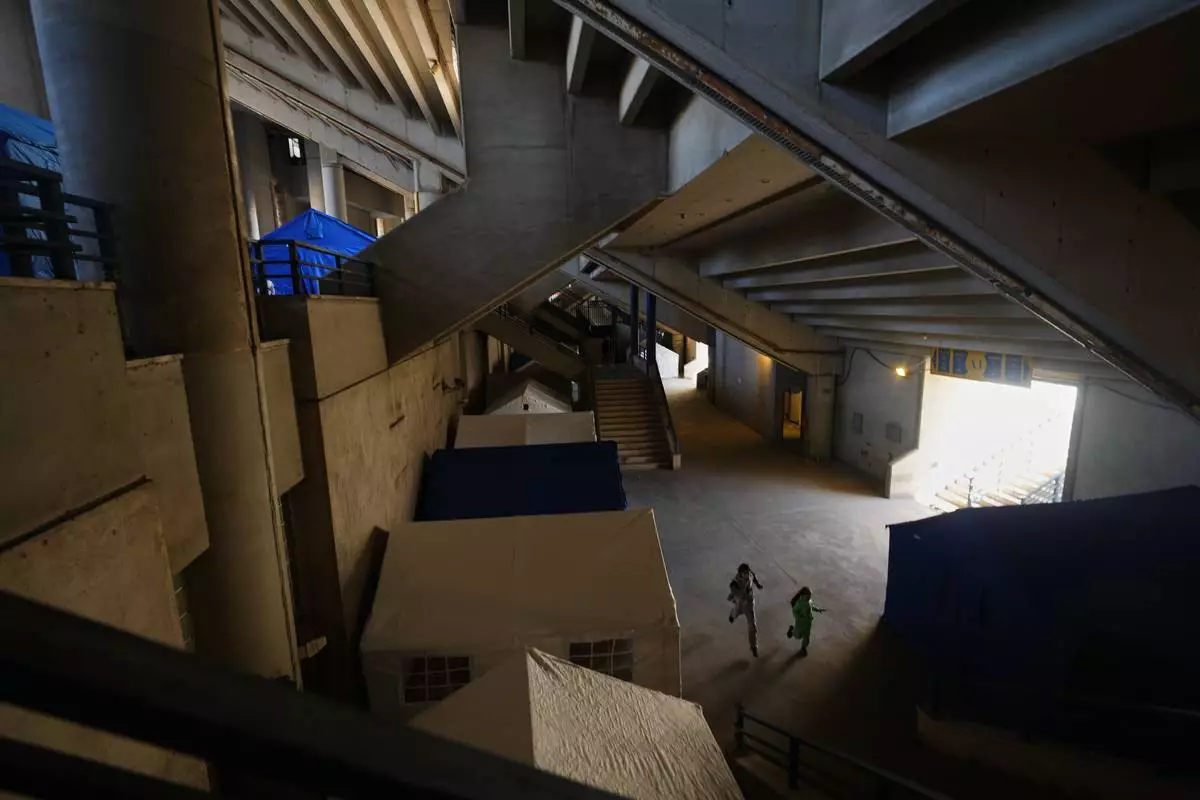
Displaced children run between tents set up inside the Camille Chamoun Sports City Stadium, which has been turned into a shelter for people displaced by Israeli airstrikes in southern Lebanon and Dahiyeh, Beirut's southern suburbs, in Beirut, Lebanon, Tuesday, March 10, 2026. (AP Photo/Hassan Ammar)
Displaced children run between tents set up inside the Camille Chamoun Sports City Stadium, which has been turned into a shelter for people displaced by Israeli airstrikes in southern Lebanon and Dahiyeh, Beirut's southern suburbs, in Beirut, Lebanon, Tuesday, March 10, 2026. (AP Photo/Hassan Ammar)

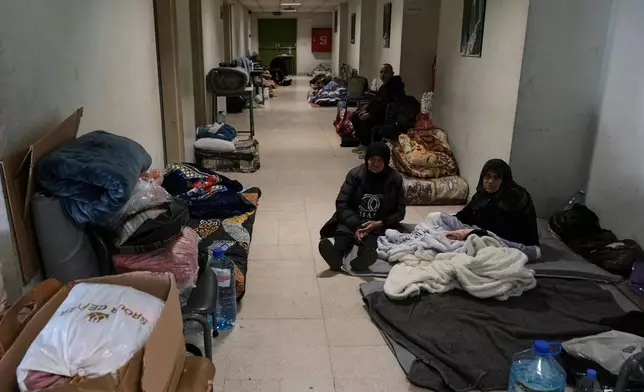
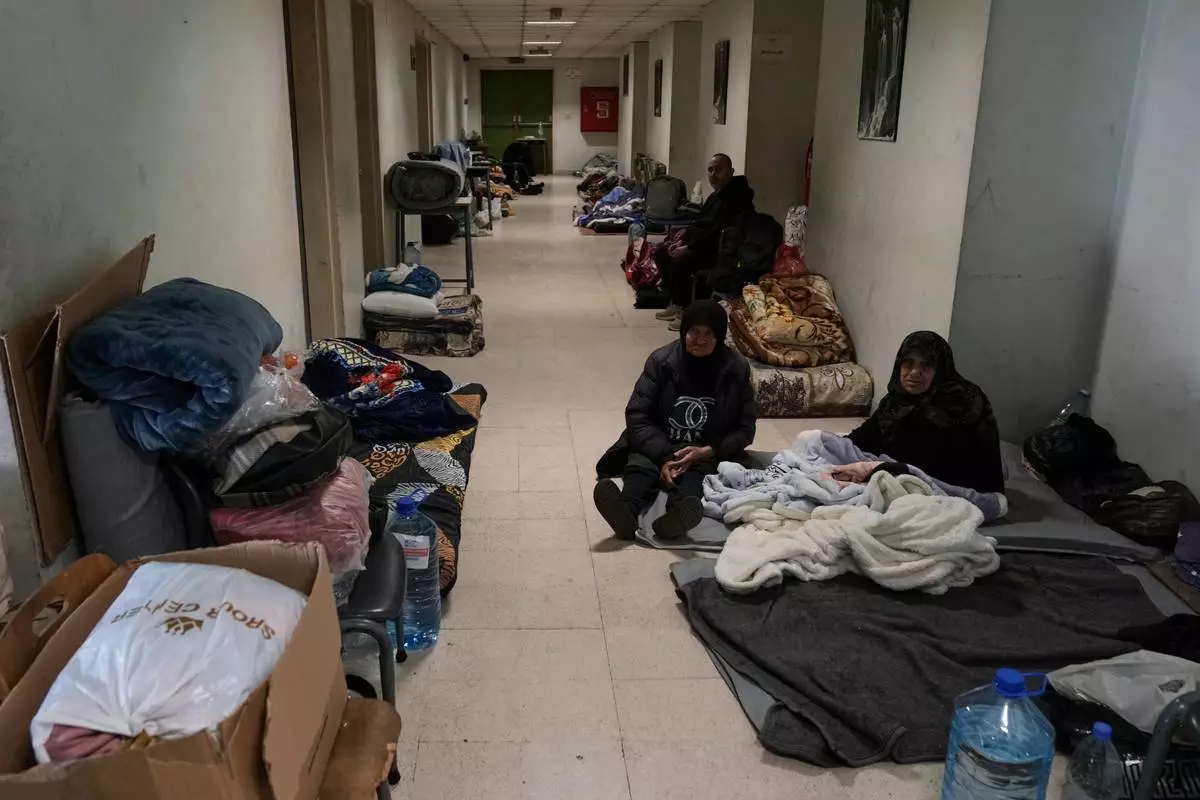
Displaced people fleeing Israeli airstrikes in southern Lebanon and Dahiyeh, Beirut's southern suburbs, settle at the Bir Hassan Technical Institute, which has been turned into a shelter, in Beirut, Lebanon, Wednesday, March 11, 2026. (AP Photo/Bilal Hussein)

Displaced people fleeing Israeli airstrikes in southern Lebanon and Dahiyeh, Beirut's southern suburbs, settle at the Bir Hassan Technical Institute, which has been turned into a shelter, in Beirut, Lebanon, Wednesday, March 11, 2026. (AP Photo/Bilal Hussein)

In just 10 days, more than 800,000 people in Lebanon have been displaced by war, just over a year since the last conflict uprooted over a million Lebanese from their homes. That’s one in every seven people in the tiny country, according to humanitarian organization the Norwegian Refugee Council. Many don’t have a place to stay, and the cash-strapped government has only been able to accommodate roughly 120,000 people as it scrambles to open shelters and bring in more supplies.

Nazha, who uses a wheelchair, said being forced from her home has been far more difficult this time than when Israel and Hezbollah were last at war more than a year ago. The strikes targeting the Iran-backed militant group have been more intense and unpredictable, and Israel's evacuation order came abruptly, leaving her unable to gather all her belongings.

“The strikes used to target a specific area, but now they’re hitting all the areas,” she said, taking a drag off her cigarette. Lebanon’s Health Ministry said Friday that more than 700 people, including 103 children, have died in the war.

Israel ramped up its strikes on its northern neighbor after Hezbollah fired several rockets into Israel following the killing of Iran’s Supreme Leader Ali Khamenei at the start of the war.

Most Lebanese were hoping Hezbollah wouldn't respond to the attack on Iran, as the militant group's support for another Iran-backed group, Hamas, in 2023 led to Israeli attacks on Hezbollah in Lebanon. Resentment toward Hezbollah and its backers has surged in Lebanon, as internal tensions and divisions in the deeply divided country continue to simmer.

Fearing becoming a target, landlords have been hiking apartment rents to dissuade new tenants. Hotels, meanwhile, have been vetting guests more strictly since Israel struck two hotel rooms, saying it was targeting Iranian Revolutionary Guard members who were operating in Beirut.

Some who don’t have family and friends to stay with or can't afford an apartment or a hotel room have been sleeping on the streets or in their cars around central Beirut, trading comfort for safety. That sense of safety was shattered, though, after an overnight Israeli strike killed at least eight people and wounded more than 30 others in the capital’s Ramlet el-Bayda neighborhood, where many displaced people pitched tents by the sea or slept on mattresses on the boardwalk.

Humanitarian groups, saddled by years of underfunding, are struggling to keep up. They warn of a humanitarian crisis.

“The needs are escalating much faster than our capacity to respond,” Mathieu Luciano, the head of the International Organization for Migration in Lebanon, said during a recent press briefing.

The government, meanwhile, is using Lebanon's largest sports stadium as a makeshift shelter, where Nazha, her husband and more than 800 other people have been sleeping in the semiopen corridors under the stands. It has toilets and sinks, but no showers and only sporadic electricity.

“It’s not enough that they bring us food. … A tin of sardines or a loaf of bread or a gallon of water, that’s not enough,” Nazha said Thursday from her foldout bed.

In the parking lot of the stadium where Lebanon's national soccer team regularly plays in peacetime, children played a pickup game as an Israeli drone flew overhead, recognizable by its whirring. From there, one can see and hear the bombs that have been exploding daily in nearby neighborhoods.

Naji Hammoud, who oversees sporting facilities for the Lebanese Youth and Sports Ministry, said he didn't expect to have to take on such a heavy responsibility.

“It’s a race against time,” Hammoud said as aid workers and volunteers scrambled to pitch tents.

More than a million people were displaced in the last war, but that was toward the end of it after a year of limited fighting that gradually escalated. This time, what took months took days.

Hezbollah's initial rocket attack followed by Israel's swift bombardments overnight rattled Lebanon and the mass evacuation notices caught people off-guard. Israel first called on dozens of villages south of the Litani River to flee north. It later warned residents to evacuate Dahiyeh, an area of predominantly Shiite suburbs on Beirut's southern edge that is one of the country's most densely populated places.

All of the main roads leading to the capital from southern Lebanon were gridlocked as people scrambled to find somewhere safe to stay.

“We were on the road for two days until we found this place here that accepted us,” said Seganish Gogamo, a worker from Ethiopia who fled the southern city of Nabatieh and found shelter in a Beirut church hosting migrant workers from Asia and Africa. She fled in the middle of the night after intense airstrikes.

There is no end in sight to the fighting, as some 100,000 Israeli troops have amassed along the U.N.-mandated Blue Line which divides the two countries in an anticipated ground invasion. Many fear the Israel-Hezbollah conflict could continue beyond the Iran war.

Joe Sayyah was among dozens of residents who remained in their border village, Alma al-Shaab, during the first few days of the war, hoping they wouldn't have to leave. It's a Christian village, and Israel has mostly targeted Shiite communities where Hezbollah operates.

Sayyah and others appealed to the Vatican and the U.S., describing themselves as bystanders in the conflict, insisting there was no military presence or activity among them. They also spent days sheltering in a church.

But when his friend was killed in an Israeli drone strike while watering his plants, they knew it was time to leave. He and the others rang the church bell one last time before they left for the capital in a convoy escorted by United Nations peacekeepers.

After arriving at a church in the northern outskirts of Beirut to hold a funeral Mass for his friend, Sayyah said the sense of relief that came with reaching somewhere safe was quickly replaced by the grim realization that this war could be different from the last.

“This time around, there’s a huge possibility we may not be able to go back to our village,” he said.

Associated Press reporters Jamey Keaten in Geneva and Fadi Tawil in Beirut contributed to this story.
A displaced migrant woman, who among many others who fled Israeli strikes in southern and eastern Lebanon and Beirut's southern suburbs, sits with her children on mattresses at Saint Joseph Church, which has been turned into a shelter for displaced migrants, mostly from African nations, in Beirut, Wednesday, March 11, 2026. (AP Photo/Hussein Malla)
A displaced migrant woman, who among many others who fled Israeli strikes in southern and eastern Lebanon and Beirut's southern suburbs, sits with her children on mattresses at Saint Joseph Church, which has been turned into a shelter for displaced migrants, mostly from African nations, in Beirut, Wednesday, March 11, 2026. (AP Photo/Hussein Malla)

A displaced woman who fled Israeli airstrikes in southern Lebanon sleeps on the ground at the Bir Hassan Technical Institute, which has been turned into a shelter, in Beirut, Lebanon, Wednesday, March 11, 2026. (AP Photo/Bilal Hussein)
A displaced woman who fled Israeli airstrikes in southern Lebanon sleeps on the ground at the Bir Hassan Technical Institute, which has been turned into a shelter, in Beirut, Lebanon, Wednesday, March 11, 2026. (AP Photo/Bilal Hussein)
An elderly displaced woman who fled Israeli airstrikes with her family in southern Lebanon sits at the Bir Hassan Technical Institute, which has been turned into a shelter, in Beirut, Lebanon, Wednesday, March 11, 2026. (AP Photo/Bilal Hussein)

An elderly displaced woman who fled Israeli airstrikes with her family in southern Lebanon sits at the Bir Hassan Technical Institute, which has been turned into a shelter, in Beirut, Lebanon, Wednesday, March 11, 2026. (AP Photo/Bilal Hussein)

Displaced children run between tents set up inside the Camille Chamoun Sports City Stadium, which has been turned into a shelter for people displaced by Israeli airstrikes in southern Lebanon and Dahiyeh, Beirut's southern suburbs, in Beirut, Lebanon, Tuesday, March 10, 2026. (AP Photo/Hassan Ammar)
Displaced children run between tents set up inside the Camille Chamoun Sports City Stadium, which has been turned into a shelter for people displaced by Israeli airstrikes in southern Lebanon and Dahiyeh, Beirut's southern suburbs, in Beirut, Lebanon, Tuesday, March 10, 2026. (AP Photo/Hassan Ammar)

Displaced people fleeing Israeli airstrikes in southern Lebanon and Dahiyeh, Beirut's southern suburbs, settle at the Bir Hassan Technical Institute, which has been turned into a shelter, in Beirut, Lebanon, Wednesday, March 11, 2026. (AP Photo/Bilal Hussein)


Displaced people fleeing Israeli airstrikes in southern Lebanon and Dahiyeh, Beirut's southern suburbs, settle at the Bir Hassan Technical Institute, which has been turned into a shelter, in Beirut, Lebanon, Wednesday, March 11, 2026. (AP Photo/Bilal Hussein)

LONDON (AP) — Chef Gordon Ramsay yells at people. His mentor was known for throwing pans and plates. That chef, London's Marco Pierre White, titled his own memoir “The Devil in the Kitchen” — in part for the punishments he meted out to his chefs.

“If you don’t fear the boss, you’ll take shortcuts, you’ll turn up late,” White wrote, saying his kitchen staff at Harveys accepted that. “They were all pain junkies, they had to be. They couldn’t get enough of the bollockings."

No more.

The public downfall this week of Denmark's Rene Redzepi, arguably the world's top chef, has forced a reckoning in real time over when “brigade de cuisine" becomes abuse and what should happen to perpetrators who direct the creation of edible art.

At issue is whether time is up on the storied bullying and intimidation of fine dining kitchen culture, brought to the masses through pop culture by celebrity chef reality shows and high-end TV like “The Bear." Lofty, pricey matters like leadership style and legal liability are suddenly at the center of a relatively small industry known for narrow profit margins, not HR departments or training.

“The resources aren’t there for self-policing,” said Robin Burrow, associate professor of organization studies at the University of York. “The general feeling, though, is that things are so tough even for very good chefs that this kind of culture ends up being inevitable.”

Redzepi, a Danish knight and the founder of Noma and innovative “New Nordic” cuisine, stepped down Thursday after The New York Times reported that dozens of former employees had shared their accounts of abuse and assault between 2009 and 2017 at the Copenhagen landmark. Redzepi had been dogged for years by reports of mistreating his staff and employing unpaid interns at Noma, which received three Michelin stars and was ranked first on the World's 50 Best Restaurants List five times.

The allegations overshadowed Noma's $1,500-a-head pop-up restaurant in Los Angeles. Sponsors pulled their funding for the residency, which opened on Wednesday to a small gathering of protesters. Redzepi announced his resignation on Instagram with a tearful video soon after. “An apology is not enough,” he said. "I take responsibility for my own actions.”

Former employees said Redzepi has never been held accountable for his conduct, which included punching members of the staff, jabbing them with kitchen tools and threatening to get them blacklisted from restaurants or have their families deported.

Jason Ignacio White, a former head of Noma’s fermentation lab, collected anonymous testimonies of alleged abuse at the restaurant and posted them to his Instagram page. The accounts have been viewed millions of times.

“Noma destroyed my passion for the industry," one post said. "I struggled with intense anxiety, bad enough to give me panic attacks in the middle of the night. The trauma, abuse and idea that nothing would ever change all led me to walk away from the career.”

The process at the heart of restaurants worldwide is the “brigade de cuisine," a strict organization of the kitchen developed around the turn of the 20th century by French chef Georges Auguste Escoffier, who based it on his own military experience.

Under its hierarchy, every member of the staff has a specialty — from the “chief” to the sauce-maker, the roast cook, the grill cook and the fish cook. Their choreography and their communications — “Hand!” and “Yes, chef!” — are designed for speed, consistency and cleanliness.

Even so, kitchen atmospheres have long been filled with chaos and intensity. Escoffier himself wrote that his first chef believed it was impossible to govern a kitchen “without a shower of slaps.”

George Orwell, the essayist and author of the dystopian classic “1984,” once described the restaurant kitchen of his time as a place where one person in the hierarchy yelled at his subordinate, who yelled at someone below him and so on. Weeping was not unusual. As a plongeur (dishwasher), Orwell ranked at the bottom.

“A plongeur is one of the slaves of the modem world,” he wrote in “Down and Out in Paris and London,” published in 1933. “He is no freer than if he were bought and sold.”

In the modern era, professional kitchens are thought to be some of the toughest places to work thanks to a recipe of long hours, close quarters, strict hierarchies, grueling physical conditions and relentless pressure.

The rise of the chef as an auteur during the 1970s with an obsession with Michelin-star-level excellence only accelerated the poor behavior as prices and egos rose.

In his 2006 memoir, White described his kitchen at Harveys in London as “my theatre of cruelty” and boasted of giving his chefs “a 10-second throttle.” Anthony Bourdain’s memoir “Kitchen Confidential” helped romanticize that testosterone-fueled vision, describing kitchens filled with “heated argument, hypermacho posturing and drunken ranting.”

Personal accounts and research suggest there's painful truth behind the romanticized branding. Cardiff University conducted interviews with 47 elite chefs for a 2021 study and found that the isolation of commercial kitchens can produce a sort of “geography of deviance” that create “feelings of invisibility, alienation and detachment” in lower-ranking employees. It also found that chef conduct can make a kitchen “an instrument of social withdrawal and a symbol of deviance around which the community pivots.”

Open kitchens in part were designed to merge the two spaces, kitchens and dining rooms. Several employees told The Times that when Redzepi wanted to discipline them in the open kitchen but there were customers in the dining room, he would crouch under the counters and jab them in the legs with his fingers or a nearby utensil.

Many chefs' proteges stay silent because they don't want to risk the opportunity to learn from the best — or the potential to launch high-flying culinary careers of their own. That was the case in the fictional, wildly popular show “The Bear,” in which the main character, Carmy Berzatto, endured open and flagrant abuse so that he can study under one of the world's greatest chefs.

Noma — a contraction of the Danish words for Nordisk and Mad, meaning Nordic and food — opened in 2003 dedicated to "a simple desire to rediscover wild local ingredients by foraging and to follow the seasons." By the time Redzepi stepped down, he had become so prominent in the culinary world that Noma played a role in “The Bear” as the training ground for two main characters. Redzepi himself appeared on the series in a cameo.

It wasn't his first time on camera. He'd also been seen yelling at cooks in the 2008 documentary “Noma at Boiling Point,” and has made several public apologies. He acknowledged in a 2015 essay, being “a bully for a large part of my career.” He said he's “yelled and pushed people. I’ve been a terrible boss at times.”

And — today's mass-culture excitement around intense kitchen behavior notwithstanding — he seemed to recognize even then that the old way alienated young, talented workers and jeopardized the future of cuisine.

“The only way we will be able to reap the promise of the present is by confronting the unpleasant legacies of our past," Redzepi said, “and collectively forging a new path forward.”

Associated Press Writer Mark Kennedy contributed from New York.

Noma's chef René Redzepi smells a citrus fruit in Copenhagen, Nov. 24, 2024. (Soeren Bidstrup/Ritzau Scanpix via AP)

Noma's chef René Redzepi smells a citrus fruit in Copenhagen, Nov. 24, 2024. (Soeren Bidstrup/Ritzau Scanpix via AP)

FILE - Danish chef René Redzepi, in London, April 29, 2013. (AP Photo/Lefteris Pitarakis, File)

FILE - Danish chef René Redzepi, in London, April 29, 2013. (AP Photo/Lefteris Pitarakis, File)

FILE - Jeremy Allen White arrives at the premiere of "The Bear" Season 3 at the El Capitan Theatre on Tuesday, June 25, 2024, in Los Angeles. (Photo by Richard Shotwell/Invision/AP, File)

FILE - Jeremy Allen White arrives at the premiere of "The Bear" Season 3 at the El Capitan Theatre on Tuesday, June 25, 2024, in Los Angeles. (Photo by Richard Shotwell/Invision/AP, File)

FILE - Gordon Ramsay arrives at the FOX winter junket on Wednesday, Dec. 13, 2023, in Los Angeles. (Photo by Richard Shotwell/Invision/AP, File)

FILE - Gordon Ramsay arrives at the FOX winter junket on Wednesday, Dec. 13, 2023, in Los Angeles. (Photo by Richard Shotwell/Invision/AP, File)

Noma's chef René Redzepi prepares a vegetarian burger in a restaurant, in Copenhagen, Nov. 24, 2024. (Soeren Bidstrup/Ritzau Scanpix via AP)

Noma's chef René Redzepi prepares a vegetarian burger in a restaurant, in Copenhagen, Nov. 24, 2024. (Soeren Bidstrup/Ritzau Scanpix via AP)

Recommended Articles