SHENZHEN, China, March 14, 2026 /PRNewswire/ -- On March 7, 2026, the globally renowned Spartan Race launched its new season in Shenzhen's Bijiashan Park. The Event features a KIDS Race(March 7–8) , followed by the SPRINT, SUPER and HURRICANE HEAT for adults (March 17–18). Additionally, the Tough Mudder Kids event will take place at the same venue on April 18–19, continuously injecting fresh sports energy into the Guangdong-Hong Kong-Macao Greater Bay Area(GBA).
As the host city of APEC 2026, Shenzhen's introduction of this international sporting event into its urban core vividly embodies APEC's vision of sustainable urban development and high-quality living.
Held annually in over 42 countries and regions worldwide, Spartan Race stages more than 250 events each year, attracting over ten million participants to date. More than just a race, it represents a spirit and a lifestyle.
The recently concluded Kids Race in Shenzhen drew over 6,000 young participants, highlighting the new generation's fearless spirit. For the second consecutive year, Bijiashan Park—strategically located in downtown Shenzhen and seamlessly connected to the international eco-lifestyle hub, UpperHills—serves as the venue. The park is a key node in Shenzhen's "Five Parks Linked" Project and a model example of the innovative "Park + Commercial" urban development concept.
For this event, UpperHills used its "Park + Town + Street + Mall" model to offer one-stop services for Spartan warriors of all ages and their families. After crossing the finish line, participants can walk directly via a skybridge into UpperHills, where they enjoy exclusive Spartan-themed discounts at numerous dining, accommodation, leisure, and retail outlets—including the Mandarin Oriental, Shenzhen.
Thanks to its prime location, fashion-forward DNA, and rich cultural-sports programming, UpperHills has become a premier lifestyle and travel destination for residents of the GBA and global visitors alike. From March 27 to April 6, the Flower Show 2026 will be held at Bijiashan Sports Park, while the 2026 International Exotic Plants Show & Sale returns to UpperHills—adding vibrant touches of nature and artistry to the spring season and potentially driving visitor numbers to new highs.
As an iconic Shenzhen landmark and key showcase of GBA culture, UpperHills leverages global cultural, sports, and entertainment events to create integrated, immersive experiences—helping build a high-quality, livable, and vibrant GBA lifestyle circle and showcasing Shenzhen's openness and urban dynamism to the Asia-Pacific as a pioneer demonstration zone.
** This press release is distributed by PR Newswire through automated distribution system, for which the client assumes full responsibility. **

UpperHills: 2026 Spartan Race Shenzhen Station Kicks Off, Injecting Greater Bay Area Vitality into APEC
| |
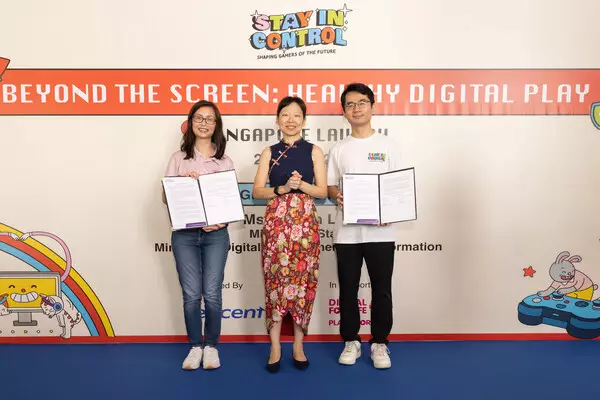
The launch is marked by the signing of an agreement between IMDA and Tencent to advance healthy digital habits and safe, responsible use of digital technologies among youths, parents, and families.
SINGAPORE, May 2, 2026 /PRNewswire/ -- The Infocomm Media Development Authority (IMDA) and Tencent today jointly launched "Beyond the Screen: Healthy Digital Play", a new digital wellbeing campaign that encourages healthy digital habits by bringing families into the conversation and strengthening real-world connection through healthy gameplay.
The campaign encourages families to bridge the gap between play and purpose through gaming. It showcases how digital play can foster deeper understanding, facilitate balanced routines, and build stronger connections at home.
"Digital spaces are already a natural part of how young people learn, play, and connect today," said Mr Murphy Zhao, Country Manager of Tencent Singapore and Head of Tech Group, Tencent Games. "As a company with deep expertise across digital entertainment and communications, we want to play a constructive role by helping families build meaningful digital habits that extend beyond the screen."
Advancing Family Digital Wellness In Partnership with IMDA
As part of the launch, IMDA and Tencent also signed an agreement to strengthen collaboration on initiatives in digital wellbeing. The agreement was signed by Ms Joanna Lam, Cluster Director for Digital Readiness, IMDA, and Mr Murphy Zhao, Country Manager of Tencent Singapore and Head of Tech Group, Tencent Games. The collaboration builds on Tencent's ongoing cooperation with IMDA, in support of the national Digital for Life (DfL) movement, focusing on promoting online safety and healthy digital habits among youths, parents, and families.
Tencent will co-develop educational content with IMDA, as well as organise four community outreach activities, reaching out to an estimated 4,000 participants. The company will also commit S$ 25,000, which totals to S$ 50,000 with the government's dollar-to-dollar matching, to the DfL Fund. The DfL Fund provides support for projects and activities promoting digital inclusion, digital literacy and digital wellness.
"Ensuring digital wellness is increasingly important, particularly for our children who are digital natives," said Ms Joanna Lam, Cluster Director for Digital Readiness, IMDA. "Tencent has been a DfL partner since 2022, and I thank them for their continued commitment to the DfL cause. We look forward to deepening our collaboration with Tencent to empower parents and youths with practical guidance to build healthy digital habits and navigate the digital world safely together."
Leading the Conversation on Healthy Digital Play
The inaugural Singapore launch event was officiated by Ms Jasmin Lau, Minister of State, Ministry of Digital Development and Information, and also hosted social service organisations from Singapore, Malaysia, Thailand, Indonesia, and the Philippines. At the event, families participated in gamified quiz experiences and took home educational materials designed to transform gaming into healthier routines at home.
The programme also featured a parenting talk that shared practical guidance on utilising games as a bridge for conversation at home. The session highlighted how, when guided by constructive routines, gaming can support the development of soft skills such as communication, teamwork, strategic thinking, and persistence.
During the event's expert insights session, Mr Narasimman S/O Tivasiha Mani, psychotherapist and co-founder of local youth charity Impart, said, "Healthy gaming is not built through one-off rules. It grows through rapport, shared understanding, and everyday conversations. Through a collaborative process between educators, families, and the wider community, it becomes easier to set shared expectations and support balanced habits that carry beyond the screen."
Building a Scalable Digital Wellbeing Framework for Southeast Asia
While digital habits may look different across the region, the underlying need is the same — helping families build healthier, more confident relationships with the digital world.
"Beyond the Screen" is part of Tencent's broader commitment to fostering intentional digital play, equipping youths, parents, and educators with practical resources to build balanced routines, encourage respectful interactions, and strengthen open communication at home.
Insights from the Singapore launch will inform the rollout of the campaign across Southeast Asia in 2026, with local adaptations to meet the needs of diverse communities in the region.
About Digital for Life Movement
A Digital Future for All – In our increasingly digital world, everyone can play a part to help create a more inclusive digital future.
The Digital for Life (DfL) national movement, launched on 8 February 2021, aims to galvanise the community across the 3Ps (Private, Public and People) to help Singaporeans embrace digital as a lifelong pursuit and enrich lives through digital technology.
The DfL fund was also set up to support projects and activities promoting digital inclusion, digital literacy and digital wellness. Learn more about the DfL movement at digitalforlife.gov.sg.
About Infocomm Media Development Authority
The Infocomm Media Development Authority (IMDA) leads Singapore's digital transformation by developing a vibrant digital economy and an inclusive digital society. As Architects of Singapore's Digital Future, we foster growth in Infocomm Technology and Media sectors in concert with progressive regulations, harnessing frontier technologies, and developing local talent and digital infrastructure ecosystems to establish Singapore as a digital metropolis.
For more news and information, visit www.imda.gov.sg or follow IMDA on LinkedIn (IMDAsg), Facebook (IMDAsg) and Instagram (@imdasg).
About Tencent
Tencent is a world-leading internet and technology company that develops innovative products and services to improve the quality of life of people around the world. Our communication and social services connect more than one billion people around the world, helping them to keep in touch with friends and family, access transportation, pay for daily necessities, and even be entertained. Our financial technology business covers payment, credit, wealth management and insurance sectors, as we support our partners' business growth and assist their digital upgrade through FinTech and other enterprise services. We also publish some of the world's most popular video games and other high-quality digital content, enriching interactive entertainment experiences for people around the globe. Tencent was founded in Shenzhen, China, in 1998, and has been listed on the Main Board of the Stock Exchange of Hong Kong since 2004.
The launch is marked by the signing of an agreement between IMDA and Tencent to advance healthy digital habits and safe, responsible use of digital technologies among youths, parents, and families.
SINGAPORE, May 2, 2026 /PRNewswire/ -- The Infocomm Media Development Authority (IMDA) and Tencent today jointly launched "Beyond the Screen: Healthy Digital Play", a new digital wellbeing campaign that encourages healthy digital habits by bringing families into the conversation and strengthening real-world connection through healthy gameplay.
The campaign encourages families to bridge the gap between play and purpose through gaming. It showcases how digital play can foster deeper understanding, facilitate balanced routines, and build stronger connections at home.
"Digital spaces are already a natural part of how young people learn, play, and connect today," said Mr Murphy Zhao, Country Manager of Tencent Singapore and Head of Tech Group, Tencent Games. "As a company with deep expertise across digital entertainment and communications, we want to play a constructive role by helping families build meaningful digital habits that extend beyond the screen."
Advancing Family Digital Wellness In Partnership with IMDA
As part of the launch, IMDA and Tencent also signed an agreement to strengthen collaboration on initiatives in digital wellbeing. The agreement was signed by Ms Joanna Lam, Cluster Director for Digital Readiness, IMDA, and Mr Murphy Zhao, Country Manager of Tencent Singapore and Head of Tech Group, Tencent Games. The collaboration builds on Tencent's ongoing cooperation with IMDA, in support of the national Digital for Life (DfL) movement, focusing on promoting online safety and healthy digital habits among youths, parents, and families.
Tencent will co-develop educational content with IMDA, as well as organise four community outreach activities, reaching out to an estimated 4,000 participants. The company will also commit S$ 25,000, which totals to S$ 50,000 with the government's dollar-to-dollar matching, to the DfL Fund. The DfL Fund provides support for projects and activities promoting digital inclusion, digital literacy and digital wellness.
"Ensuring digital wellness is increasingly important, particularly for our children who are digital natives," said Ms Joanna Lam, Cluster Director for Digital Readiness, IMDA. "Tencent has been a DfL partner since 2022, and I thank them for their continued commitment to the DfL cause. We look forward to deepening our collaboration with Tencent to empower parents and youths with practical guidance to build healthy digital habits and navigate the digital world safely together."
Leading the Conversation on Healthy Digital Play
The inaugural Singapore launch event was officiated by Ms Jasmin Lau, Minister of State, Ministry of Digital Development and Information, and also hosted social service organisations from Singapore, Malaysia, Thailand, Indonesia, and the Philippines. At the event, families participated in gamified quiz experiences and took home educational materials designed to transform gaming into healthier routines at home.
The programme also featured a parenting talk that shared practical guidance on utilising games as a bridge for conversation at home. The session highlighted how, when guided by constructive routines, gaming can support the development of soft skills such as communication, teamwork, strategic thinking, and persistence.
During the event's expert insights session, Mr Narasimman S/O Tivasiha Mani, psychotherapist and co-founder of local youth charity Impart, said, "Healthy gaming is not built through one-off rules. It grows through rapport, shared understanding, and everyday conversations. Through a collaborative process between educators, families, and the wider community, it becomes easier to set shared expectations and support balanced habits that carry beyond the screen."
Building a Scalable Digital Wellbeing Framework for Southeast Asia
While digital habits may look different across the region, the underlying need is the same — helping families build healthier, more confident relationships with the digital world.
"Beyond the Screen" is part of Tencent's broader commitment to fostering intentional digital play, equipping youths, parents, and educators with practical resources to build balanced routines, encourage respectful interactions, and strengthen open communication at home.
Insights from the Singapore launch will inform the rollout of the campaign across Southeast Asia in 2026, with local adaptations to meet the needs of diverse communities in the region.
About Digital for Life Movement
A Digital Future for All – In our increasingly digital world, everyone can play a part to help create a more inclusive digital future.
The Digital for Life (DfL) national movement, launched on 8 February 2021, aims to galvanise the community across the 3Ps (Private, Public and People) to help Singaporeans embrace digital as a lifelong pursuit and enrich lives through digital technology.
The DfL fund was also set up to support projects and activities promoting digital inclusion, digital literacy and digital wellness. Learn more about the DfL movement at digitalforlife.gov.sg.
About Infocomm Media Development Authority
The Infocomm Media Development Authority (IMDA) leads Singapore's digital transformation by developing a vibrant digital economy and an inclusive digital society. As Architects of Singapore's Digital Future, we foster growth in Infocomm Technology and Media sectors in concert with progressive regulations, harnessing frontier technologies, and developing local talent and digital infrastructure ecosystems to establish Singapore as a digital metropolis.
For more news and information, visit www.imda.gov.sg or follow IMDA on LinkedIn (IMDAsg), Facebook (IMDAsg) and Instagram (@imdasg).
About Tencent
Tencent is a world-leading internet and technology company that develops innovative products and services to improve the quality of life of people around the world. Our communication and social services connect more than one billion people around the world, helping them to keep in touch with friends and family, access transportation, pay for daily necessities, and even be entertained. Our financial technology business covers payment, credit, wealth management and insurance sectors, as we support our partners' business growth and assist their digital upgrade through FinTech and other enterprise services. We also publish some of the world's most popular video games and other high-quality digital content, enriching interactive entertainment experiences for people around the globe. Tencent was founded in Shenzhen, China, in 1998, and has been listed on the Main Board of the Stock Exchange of Hong Kong since 2004.
** This press release is distributed by PR Newswire through automated distribution system, for which the client assumes full responsibility. **
IMDA and Tencent Debut "Beyond the Screen" to Champion Real-World Connection through Digital Play
IMDA and Tencent Debut "Beyond the Screen" to Champion Real-World Connection through Digital Play