The China-proposed Global Civilization Initiative, which aims to promote exchanges and mutual learning and enhance the development of all civilizations, marked its third anniversary on Sunday.
Chinese President Xi Jinping, also general secretary of the Communist Party of China (CPC) Central Committee, put forward the initiative while delivering a keynote address at the CPC in Dialogue with World Political Parties High-level Meeting in Beijing on March 15, 2023.
The initiative was founded on four fundamental principles.
First, it advocates respect for the diversity of civilizations, letting cultural exchanges transcend estrangement.
Second, it advocates the common values of humanity, including peace, development, fairness, justice, democracy, and freedom.
The initiative is also built on a commitment to the inheritance and innovation of civilizations, urging efforts to push for creative transformation and innovative development of their fine traditional cultures.
Last but not least, it supports robust international people-to-people exchanges and cooperation, calling for the building of a global network for inter-civilization dialogue and cooperation.
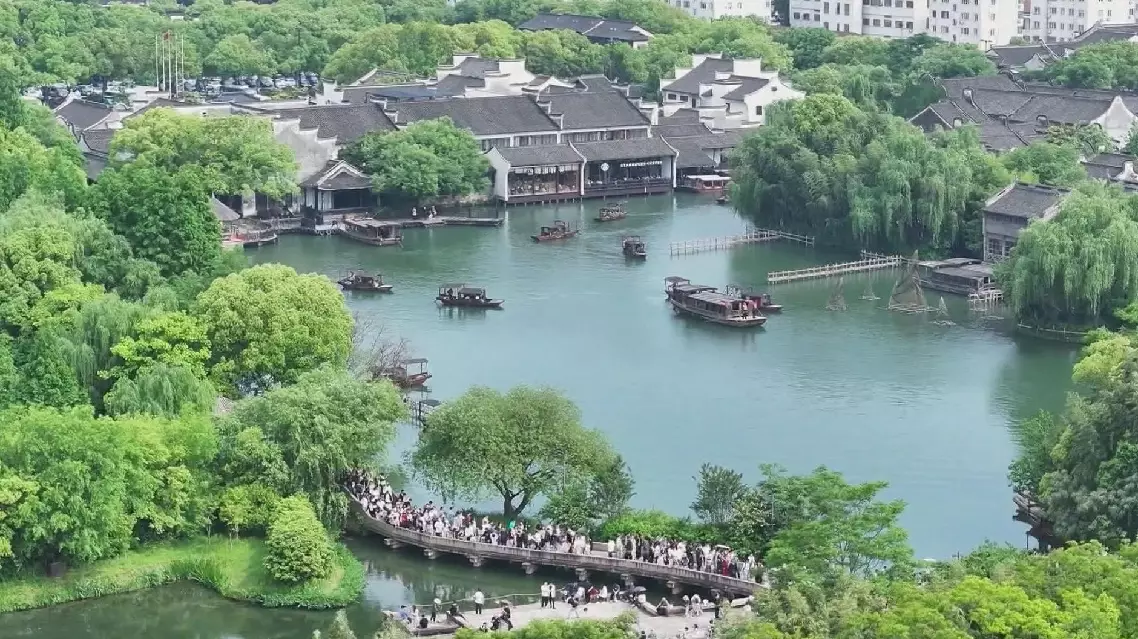
China-proposed Global Civilization Initiative marks 3rd anniversary
Chinese President Xi Jinping awarded Serbian President Aleksandar Vucic the Friendship Medal of the People's Republic of China in Beijing on Monday.
As solemn music played and the golden doors slowly opened, Xi and Vucic entered the hall together, followed by Xi's wife Peng Liyuan and Vucic's wife Tamara Vucic.
Applauding guests rose to their feet, and paid respect to the two heads of state.
A Guard of Honor escorted the Friendship Medal into the hall, and amid solemn music, Xi formally presented the medal to Vucic.
Xi highlighted Vucic's long-standing commitment to advancing China-Serbia friendship and underscored the significance of the honor.
"President Vucic has long stayed committed to China-Serbia friendship, and he has always given China the firmest and clearest support on issues concerning China's core interests and major concerns. He gains the respect from the Chinese people. This medal is not only a high recognition of President Vucic's contributions to bilateral friendship, but also carries the earnest expectations of both peoples for building a China-Serbia community with a shared future in the new era," Xi said.
The Friendship Medal is China's highest state honor for foreigners, reserved for those who have made outstanding contributions to China's modernization drive, promoting exchange and cooperation between China and the world, and safeguarding world peace.
At the invitation of Xi, Vucic is on a state visit to China from Sunday to Thursday, with this marking his first state visit to China and his ninth trip to the country overall.

Xi awards Serbian President Aleksandar Vucic China's friendship medal