A surge in global demand has set Yiwu's manufacturing and logistics chain running at full speed this spring, with factories and shippers all working overtime to meet orders bound for markets worldwide.
Many manufacturers in Yiwu, an eastern Chinese city known as "the world’s supermarket," reported a steady rise in orders in the first quarter of 2026.
Among them are sports goods makers racing to deliver ahead of the 2026 World Cup in North America.
"In the first two months alone, we sent about four containers of goods. Orders have gradually come in from South America and Africa, and the current orders can keep our production running through May," said Wu Xiaoming, general manager of a sports firm in Yiwu.
At Yiwu's bonded zone, customs brokers swiftly checked documents to ensure exports reach global markets fast.
"Today's shipments mainly are kitchenware, tableware and small home appliances. They are mainly bound for Germany and Spain," said Fu Jianying, a customs broker.
Yiwu has now linked 26 international rail freight routes, building a logistics network that covers more than 160 cities in about 50 countries. With smooth transport, creative design and strong manufacturing capacity, the city's cross-border trade is accelerating, underscoring its role as a hub of global small commodities.
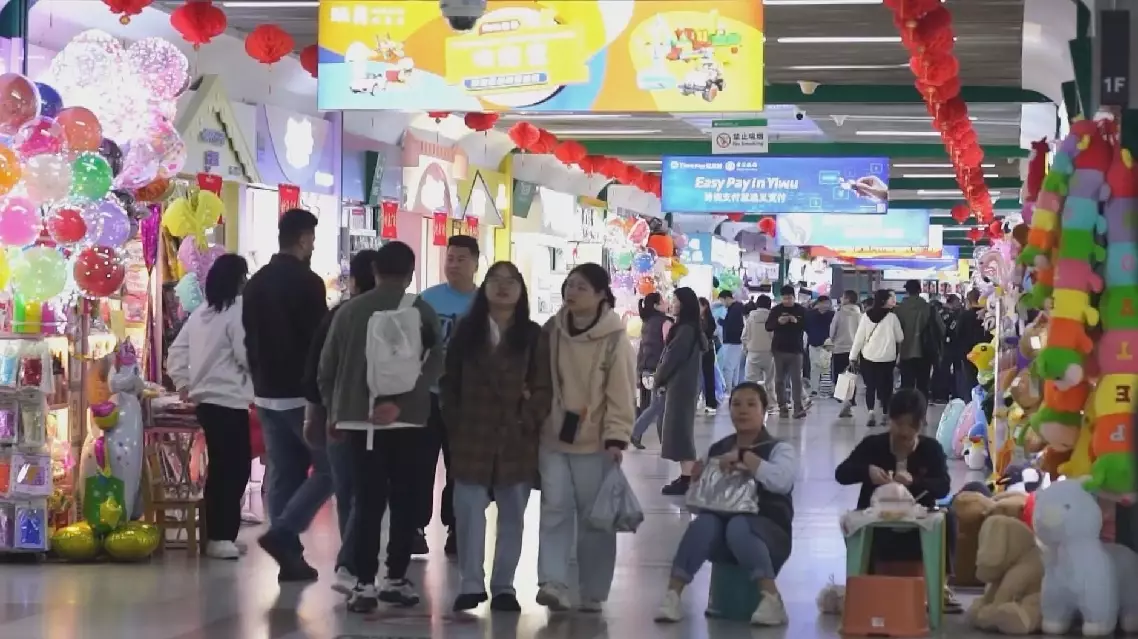
Yiwu cross‑border trade gains speed this spring
The World Health Organization (WHO) revealed on Monday that a rapidly spreading Ebola outbreak in the Democratic Republic of the Congo (DRC) has caused 220 suspected deaths, as health officials struggle to catch up with the pace of spread of the epidemic.
While 101 confirmed cases and 10 confirmed deaths have been recorded, WHO chief Tedros Adhanom Ghebreyesus said the true scale is far larger. "There are now more than 900 suspected cases and 220 suspected deaths," Tedros said at the Virtual Ministerial Briefing on the Bundibugyo Ebola Outbreak on Monday.
The outbreak, declared as a public health emergency of international concern on May 17, has also spread to Uganda, which has seven confirmed cases and one death.
Tedros highlighted a critical challenge: the delay in detecting the outbreak means that health teams are now playing catch-up with a very fast-moving epidemic."We are urgently scaling up operations, but at the moment, the epidemic is outpacing us," he said.
The Ebola strain involved is Bundibugyo virus, for which no approved vaccines or therapeutics exist. Previous outbreaks of this strain occurred only twice - in Uganda (2007) and DRC (2012). WHO has recommended prioritizing two monoclonal antibodies for clinical trials.
Compounding the crisis, the affected provinces of Ituri and North Kivu are plagued by intense insecurity and community distrust. Recent months have seen intensified fighting displacing over 100,000 people, along with two security incidents at health facilities last week.
The WHO has raised its national risk assessment to "very high," while regional risk remains "high" and global risk "low." Neighboring countries are urged to take immediate action.
Tedros is set to travel to the DRC with the WHO's emergencies director, as the agency commits to stopping the outbreak. "It will get worse before it gets better," he admitted. "But we know this virus, and we know how to stop it."

WHO reports 220 suspected Ebola deaths in DRC, warns outbreak outpacing response