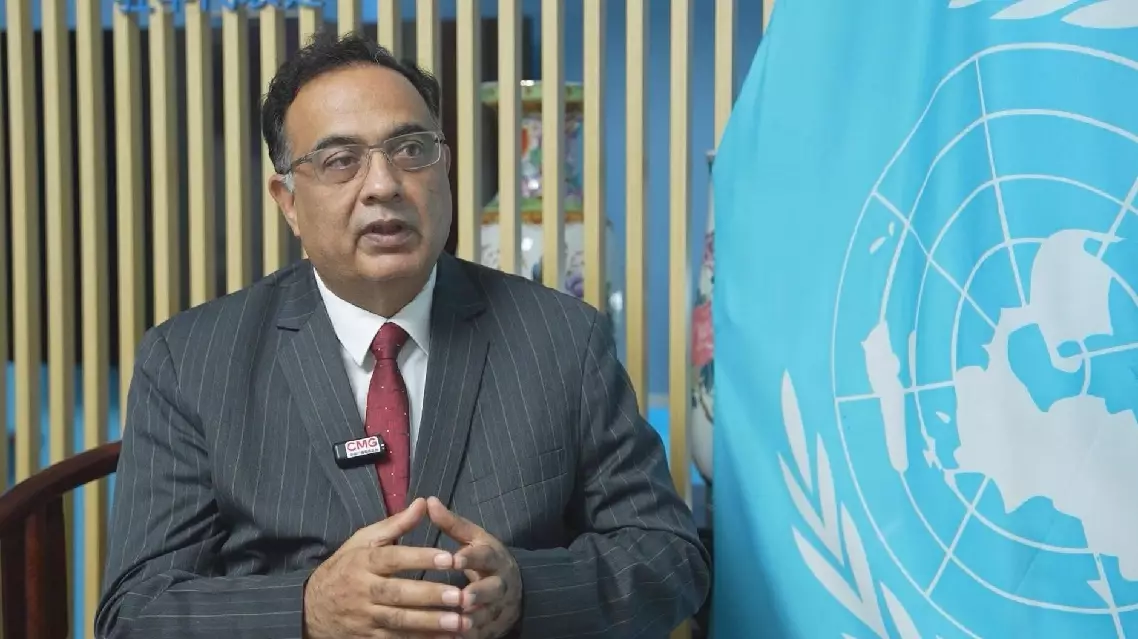
UNESCO's East Asia director Shahbaz Khan has warned that escalating global tensions and climate threats make intercultural dialogue "more important than ever," endorsing China's Global Civilization Initiative (GCI) as a pillar of peace and sustainable development.
Speaking to China Media Group (CMG), Khan described the GCI as a practical response to today's fractured world, stressing its role in promoting mutual respect and cultural exchange across borders.
Proposed by President Xi Jinping in March 2023, the initiative has since gained traction as a cornerstone of global governance, championing civilizational diversity as humanity's shared heritage.
"Peace and security is very important. The world is also facing challenges related to sustainability and also the challenges related to climate change and so on. For that we need to develop common understanding. As we say, if all flowers in a garden will bloom, only then it will be a garden; otherwise it is a single flower. So that's why such an initiative is more important than ever before, in my opinion. We should create a community of practice, which understands why it's important for us to have intercultural dialogue, for us to be able to understand different civilizations and to respect them. And then thinking how culture can contribute towards sustainable development, how culture can contribute towards peace and then we move forward with the confidence by respecting each other and by respecting each other's values," said Khan.
China's push for civilizational dialogue is winning broader international endorsement. In 2024, the UN General Assembly's 78th session unanimously backed the country's proposal to establish an International Day for Dialogue among Civilizations, an outcome diplomats hailed as a sign of growing consensus on cultural exchange as a tool for peace.
Marking the first anniversary on June 10, 2025, the UN Headquarters in New York hosted a series of commemorative events alongside celebrations in multiple countries.
Khan said the turnout demonstrated rising global support for the GCI and a recognition that intercultural dialogue is fast becoming a foundation for shared progress in an interconnected world.
"There are a number of meetings of culture. There are also bilateral efforts between countries to work together on common areas of culture and heritage. There are many such initiatives which are creating a better understanding of our world, through education, through exchange of experts and exchange of visitors and also having very high-level dialogues at the level of ministers. So China is very serious about the Global Civilization Initiative. And global civilization is about giving respect and understanding each other. So UNESCO's mission, Greater UN's mission and GCI, they are very much aligned with each other. So we call for all member states to have intercultural dialogue for better understanding of our shared past, for a better shared future with prosperity and dignity," said Khan.
As part of China's efforts to contribute to global governance, the GCI follows the Global Development Initiative, launched in 2021, and the Global Security Initiative, introduced in 2022.
UNESCO official backs China’s civilization initiative, urges dialogue amid global strains