China announced on Monday the launch of a pilot program of the comprehensive application of hydrogen energy, aiming to boost the high-quality development of hydrogen sector and advance the country's green transition.
According to a circular jointly issued by three departments, including the Ministry of Industry and Information Technology, pilots should be applied by city clusters as the main participants. The central government will provide reward funds to these city clusters, with each pilot period lasting four years. The maximum reward for a single city cluster during the pilot period will not exceed 1.6 billion yuan (about 232 million U.S. dollars), according to the document.
The circular sets a goal of cutting end-user hydrogen prices to below 25 yuan per kg by 2030 -- and around 15 yuan in advantageous regions -- while fostering hydrogen power as a new driver of economic growth.
It also aims to have 100,000 fuel cell vehicles nationwide by 2030, double the 2025 level, according to the document.
China's hydrogen industry has progressed from "zero to one" but still faces challenges such as limited application scenarios, high costs, and difficulties in storage and transportation, the ministry noted. The pilot program will prioritize fuel cell vehicles, hydrogen-powered industrial applications, and innovative uses of hydrogen.
By the end of 2025, nearly 40,000 hydrogen fuel cell vehicles had been sold nationwide, placing China among the world's leading countries in the sector, the ministry said.
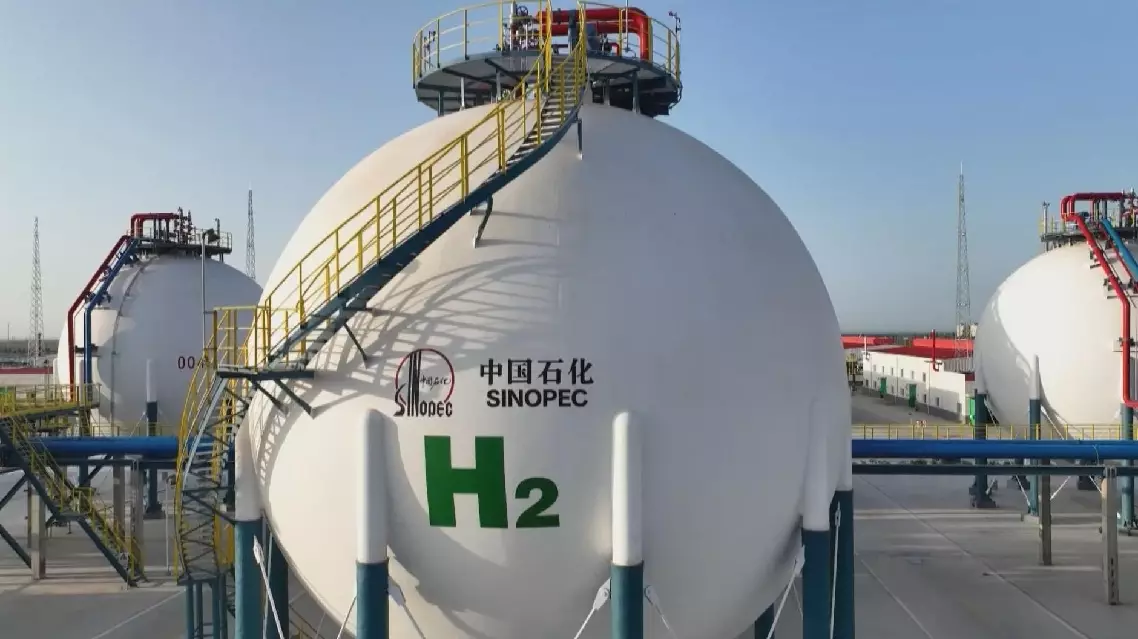
China launches application pilot program to boost hydrogen energy development
China will establish a dynamic maintenance mechanism for territorial spatial planning, according to a circular on enhancing the guarantee of natural resource elements.
The circular, issued by the Ministry of Natural Resources and the National Forestry and Grassland Administration earlier this month, introduced 13 policy measures focusing on optimizing territorial spatial layout, improving resource allocation efficiency, safeguarding mineral exploitation, balancing existing and newly added resources, and coordinating land and sea use.
According to the notice, China will enhance the guarantee of natural resource elements to facilitate the implementation of 109 major projects outlined in the country's 15th Five-Year Plan period (2026-2030).
"With regard to national and provincial projects designated on the planning map, which are eligible for special site selection, if a provincial natural resources administration conducted a review and granted permission that complies with the territorial spatial planning, the land use pre-review and site selection procedures can be omitted. With permission, land can be used. The approval procedures are significantly streamlined to ensure that major projects can be launched, built and put into service as quickly as possible," said Xie Haixia, director of the National Land Spatial Planning Bureau at the Ministry of Natural Resources.
The circular also urged a coordinated approval mechanism for land use, forest use, grassland use and sea use.
"Through information technology, we transition from step-by-step approval to parallel approval. At the provincial level, we will achieve full-system connectivity across all levels, reducing the need to re-enter applications and the step-by-step review of matters. By mobilizing data, we will reduce the legwork for enterprises and the public," said Liu Yan, director of the ministry's Department of Territorial Spatial Use Control.
China to establish dynamic mechanism for maintaining territorial spatial layout