OSAKA, Japan--(BUSINESS WIRE)--Mar 16, 2026--
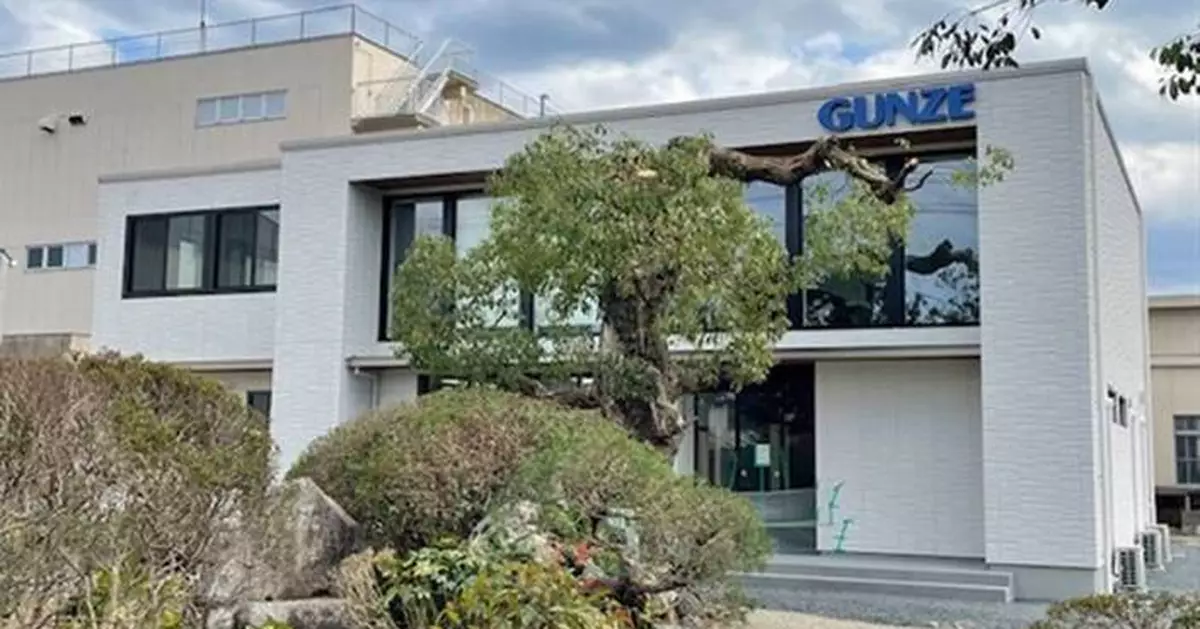
Gunze Limited (Headquarters: Osaka, Japan; President: Toshiyasu Saguchi) (TOKYO:3002) today announced the completion of a newly renovated office building at its Tsuyama Plant in Tsuyama City, Okayama. The project revitalizes the plant’s historic office building, originally constructed in 1928, preserving its heritage while upgrading it to support modern development and collaboration.
This press release features multimedia. View the full release here: https://www.businesswire.com/news/home/20260316864412/en/
Background and Purpose of the New Office
The Tsuyama Plant has long served as one of Gunze’s key production bases. The former office building, constructed in 1928, is a historic facility with deep roots in the company’s manufacturing operations. Through this renovation, the building has been reborn as a modern workplace that preserves its traditional design while incorporating functions suited to advanced technical development.
The new office represents the first step toward consolidating and integrating the company’s technical development functions. By bringing together diverse technical expertise, Gunze aims to accelerate the creation of new businesses and speed the commercialization of innovative technologies.
Features of the New Office Building
Outlook
Gunze positions its mid-term management plan “VISION 2030 stage2” (FY2025–FY2027) as a three-year period to transform the company into one capable of sustainable growth. In FY2026, the second year of the plan, key priorities include acquiring global talent and strengthening technology development that contributes to environmental impact reduction.
The renewed Tsuyama Plant will enhance Gunze’s global competitiveness in the textile materials business and serve as a technological hub for generating new growth opportunities, contributing to further increases in corporate value.
Overview of the new office building at Tsuyama plant
About Gunze and its Threads and Accessories Business
Founded in Kyoto in 1896, Gunze Limited is a global manufacturer and technology developer with businesses in apparel, plastic films, engineering plastics, and medical devices. The company employs more than 4,300 people across operations in 10 countries.
Gunze’s Threads and Accessories business is known for advanced manufacturing technology and consistent quality. Its industrial sewing threads are widely used in apparel and industrial applications, including high-performance threads for automotive airbags that require strict safety standards. Gunze holds the leading share of Japan’s industrial sewing thread market and is expanding globally while promoting sustainable initiatives such as recycled threads and yarns.
Website: https://www.gunze.co.jp/english/products/thread/
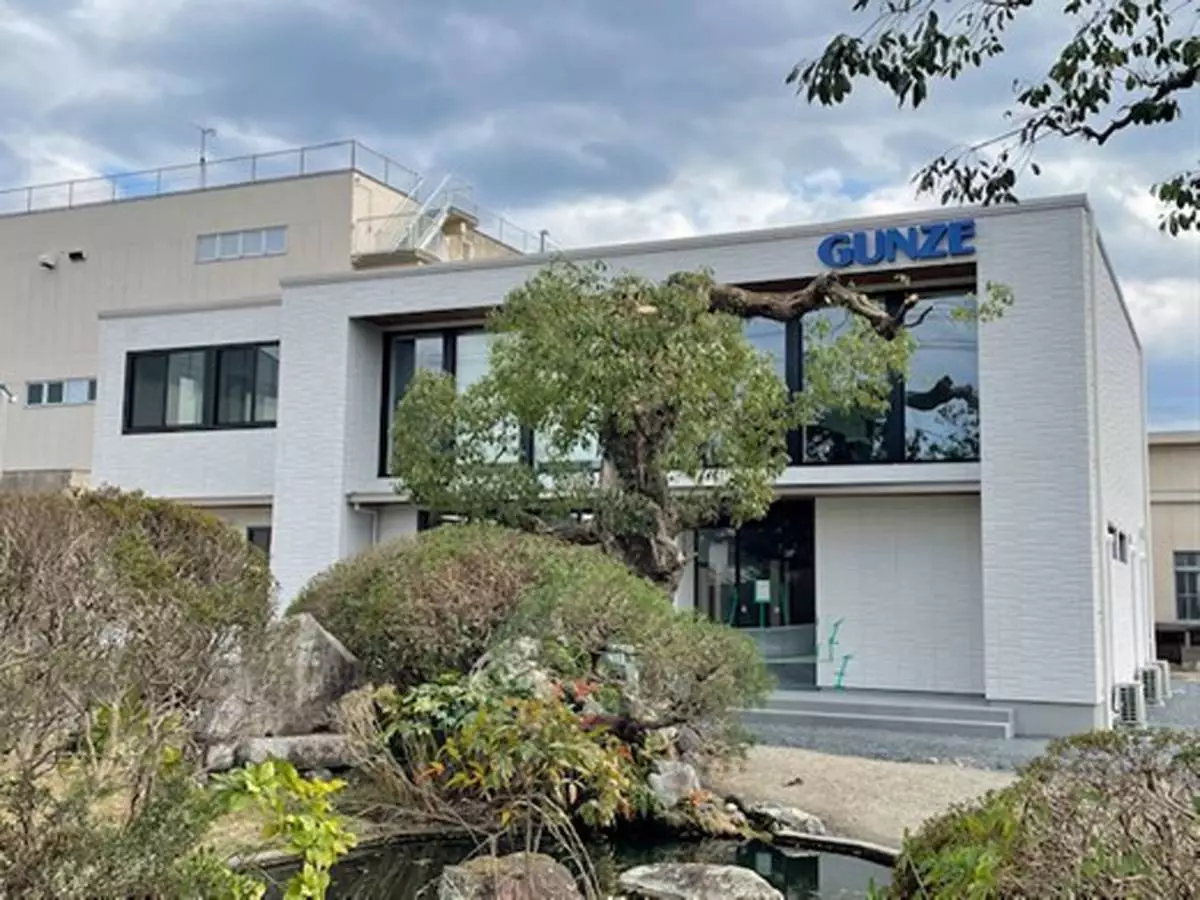
New Office Building at Tsuyama Plant
HAVANA (AP) — Officials in Cuba reported an islandwide blackout Monday in the country of some 11 million people as its energy and economic crises deepen and its power grid continues to crumble.
The Ministry of Energy and Mines on X noted a “complete disconnection” of the country’s electrical system and said it was investigating, noting there were no failures in the units that were operating when the grid collapsed.
It was the third major blackout in Cuba over the past four months.
Tomás David Velázquez Felipe, a 61-year-old resident of Havana, said the relentless outages make him think that Cubans who can should just pack up and leave the island. “What little we have to eat spoils,” he said. “Our people are too old to keep suffering.”
By Monday night, state-owned media reported that crews had restored power to 5% of Havana's residents, representing some 42,000 customers, as well as several hospitals across the island. Officials said they would prioritize the communications sector next, all while warning that the small circuits restored so far could fail again.
Cuba’s aging grid has drastically eroded in recent years, leading to an increase in daily outages and islandwide blackouts. But the government also has blamed its woes on a U.S. energy blockade after U.S. President Donald Trump in January warned of tariffs on any country that sells or provides oil to Cuba. The Trump administration is demanding that Cuba release political prisoners and move toward political and economic liberalization in return for a lifting of sanctions. Trump also has raised the possibility of a "friendly takeover of Cuba."
On Monday, he said he believes he’ll have the “honor of taking Cuba.”
“I mean, whether I free it, take it. I think I could do anything I want with it,” Trump said about Cuba, calling it a “very weakened nation.”
The U.S. Embassy in Cuba wrote on X on Monday that “there is no information on when power would be restored.”
“Cuba’s national electrical grid is increasingly unstable and prolonged scheduled and unscheduled power outages are a daily occurrence across the country,” it wrote. “Take precautions by conserving fuel, water, food, and mobile phone charge, and be prepared for significant disruption.”
William LeoGrande, a professor at American University who has tracked Cuba for years, said the country's energy grid hasn't been maintained properly and its infrastructure is “way past its normal useful life.”
“The technicians working on the grid are magicians to keep it running at all given the shape that it’s in," LeoGrande said.
LeoGrande said that if the island drastically reduces consumption and expands renewables, it can struggle along for a while without oil shipments. “But it would be constant misery for the general population, and eventually, the economy could collapse just completely and then you would have social chaos and probably mass migration,” he said.
To ramp up solar power even faster than Cuba did last year, LeoGrande said other countries, principally China, would have to be willing to double or more their provision of such equipment.
Cuban President Miguel Díaz-Canel on Friday said the island had not received oil shipments in three months and was operating on solar power, natural gas and thermoelectric plants, and that the government has had to postpone surgeries for tens of thousands of people.
Yaimisel Sánchez Peña, 48, said she was upset that the food she buys with money that her son in the U.S. sends keeps spoiling, adding that the outages also affect her 72-year-old mother: “Every day, she suffers."
Mercedes Velázquez, a 71-year-old Cuban resident, lamented yet another blackout. “We’re here waiting to see what happens,” she said, adding that she recently gave away part of a soup she made while it was still fresh so as not to throw it out. “Everything goes bad.”
A massive outage over a week ago affected the island’s west, leaving millions without power. Another major blackout affected western Cuba in early December.
Critical oil shipments from Venezuela were halted after the U.S. attacked the South American country in early January and arrested its then-president, Nicolás Maduro.
While Cuba produces 40% of its petroleum and has been generating its own power, it hasn’t been sufficient to meet demand as its electric grid continues to crumble.
“And on top of all that, the Cuban government doesn’t have the hard currency to import spare parts or upgrade the plant or grid itself. It’s just a perfect storm of collapse," LeoGrande said.
He noted that the thermoelectric plants also have been using heavy oil, whose sulfur content is corroding the equipment.
On Friday, Díaz-Canel confirmed that Cuba was holding talks with the U.S. government as the problems continue to deepen.
The deputy prime minister of the Ministry of Foreign Trade and Foreign Investment, Óscar Pérez-Oliva Fraga, told reporters Monday that Cuba is open to trading with U.S. companies while noting the embargo’s limitations.
He said he’s also implementing new measures aimed at boosting the island’s economy. Among those is the possibility of allowing Cubans residing abroad to be partners or owners of private companies in the country and to be involved in large-scale projects, including those related to infrastructure, according to state media.
He said those Cubans will be allowed to partner with Cuban private companies and establish ties with both state-owned and private Cuban entities.
Pérez-Oliva added that the government also will grant land under usufruct for the development of certain projects.
He said Cubans residing abroad also will be able to open foreign currency bank accounts in Cuban banks, which will facilitate transactions.
Coto reported from San José, Costa Rica. Associated Press writer Darlene Superville in Washington contributed.

People walk outside during a blackout in Havana, Cuba, Monday, March 16, 2026. (AP Photo/Ramon Espinosa)
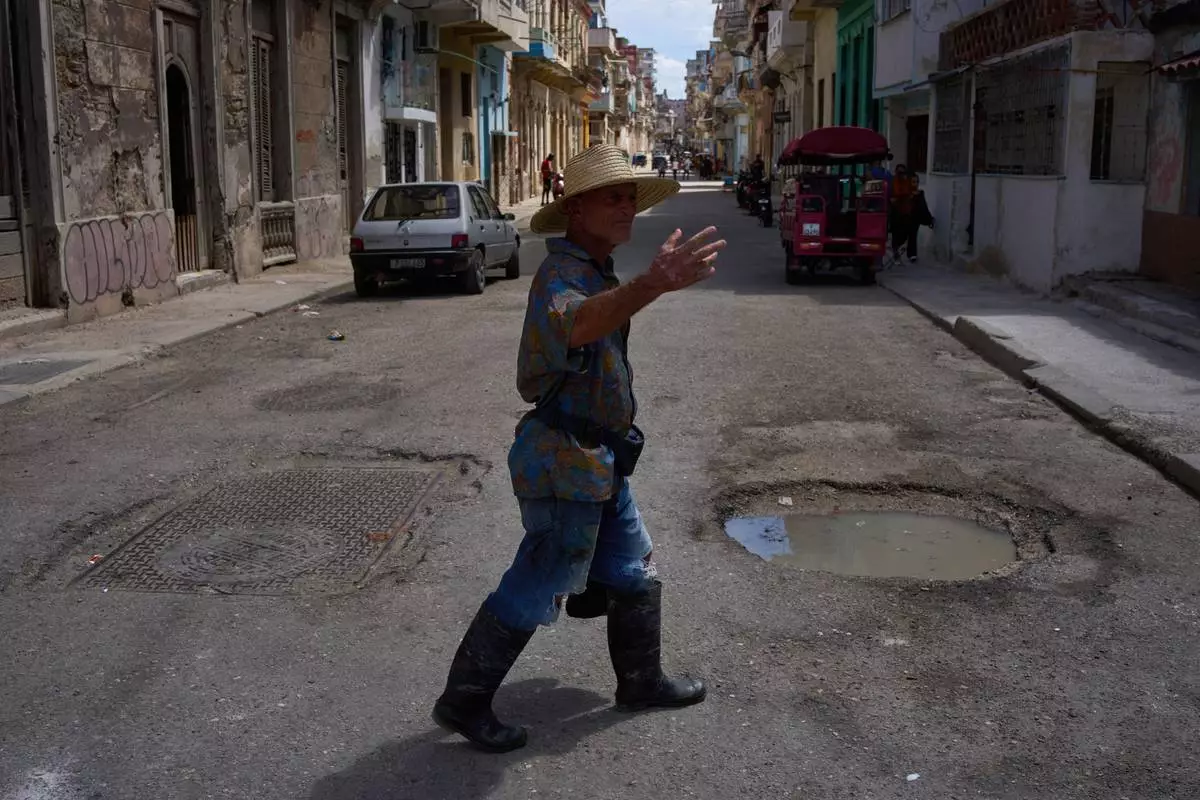
A man walks outside during a blackout in Havana, Cuba, Monday, March 16, 2026. (AP Photo/Ramon Espinosa)
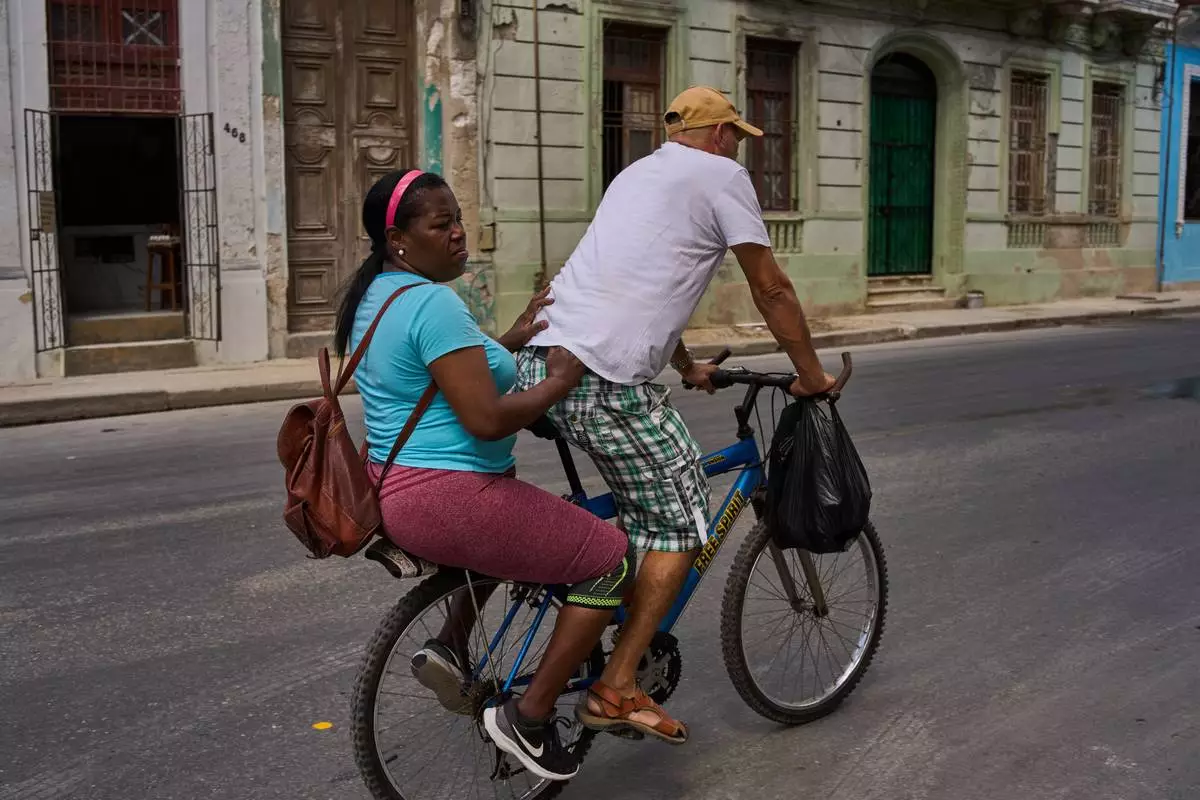
People ride a bicycle during a blackout in Havana, Cuba, Monday, March 16, 2026. (AP Photo/Ramon Espinosa)
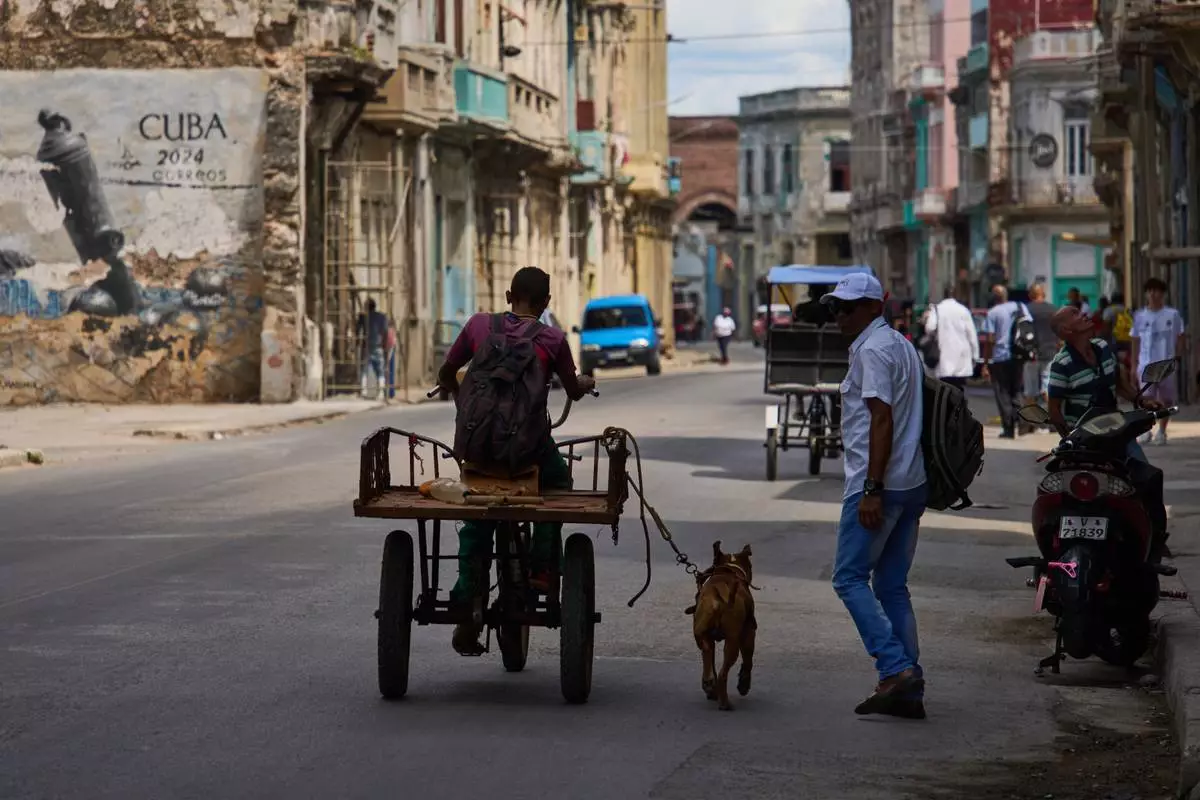
A man rides a tricycle with his leashed dog running alongside him during a blackout in Havana, Cuba, Monday, March 16, 2026. (AP Photo/Ramon Espinosa)
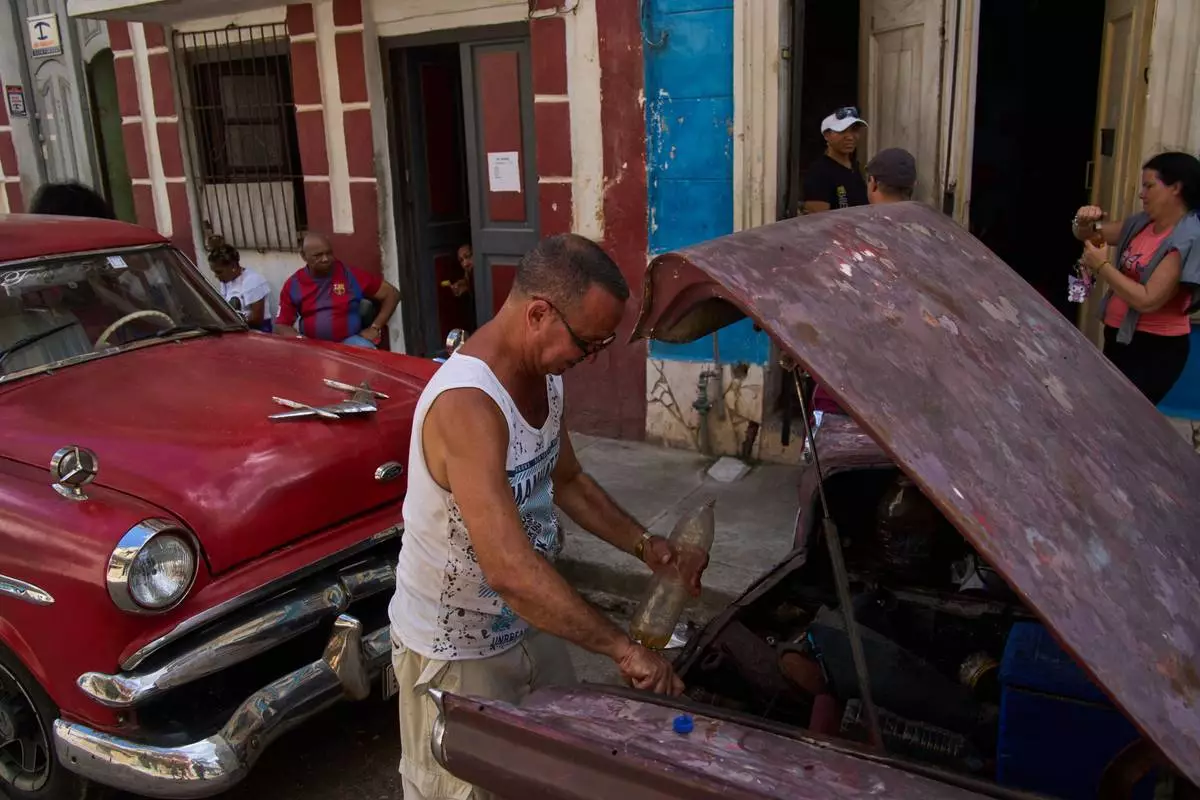
A man finishes putting fuel in his car's tank, located in the back of the car, during a blackout in Havana, Cuba, Monday, March 16, 2026. (AP Photo/Ramon Espinosa)

People walk outside during a blackout in Havana, Cuba, Monday, March 16, 2026. (AP Photo/Ramon Espinosa)
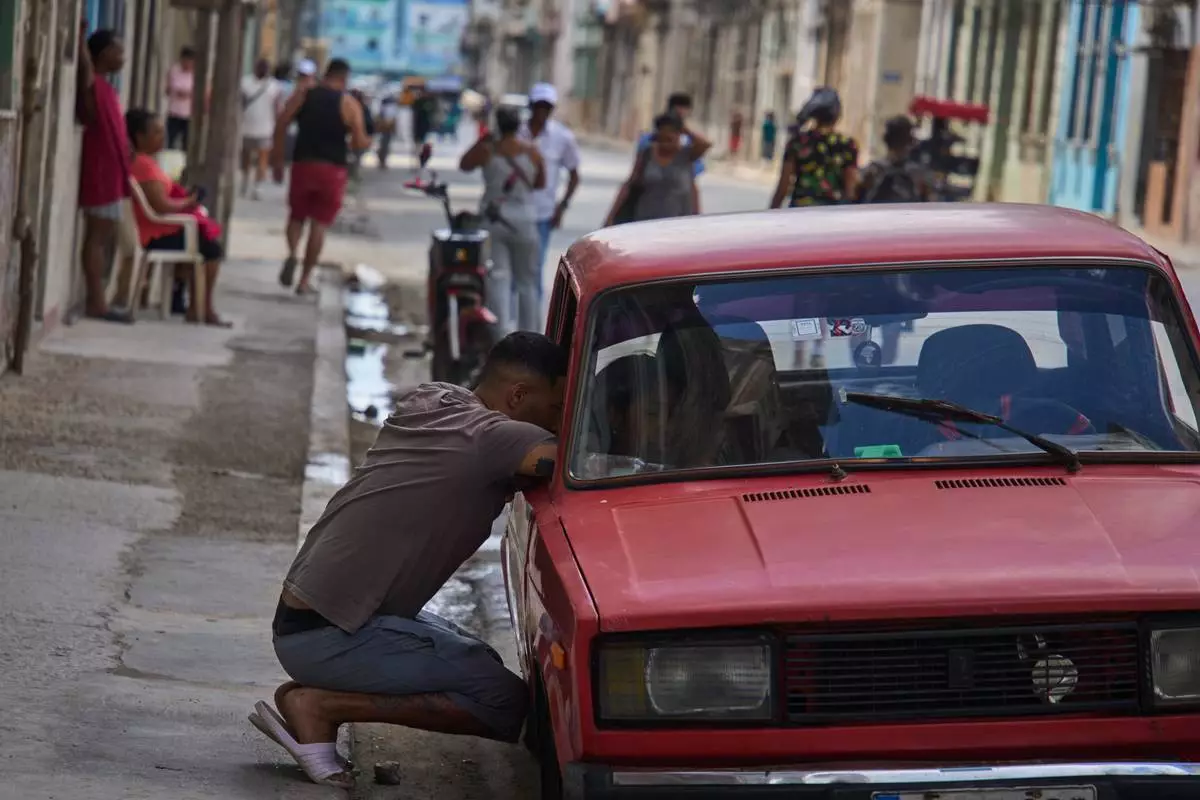
A man speaks with a person in a car during a blackout in Havana, Cuba, Monday, March 16, 2026. (AP Photo/Ramon Espinosa)
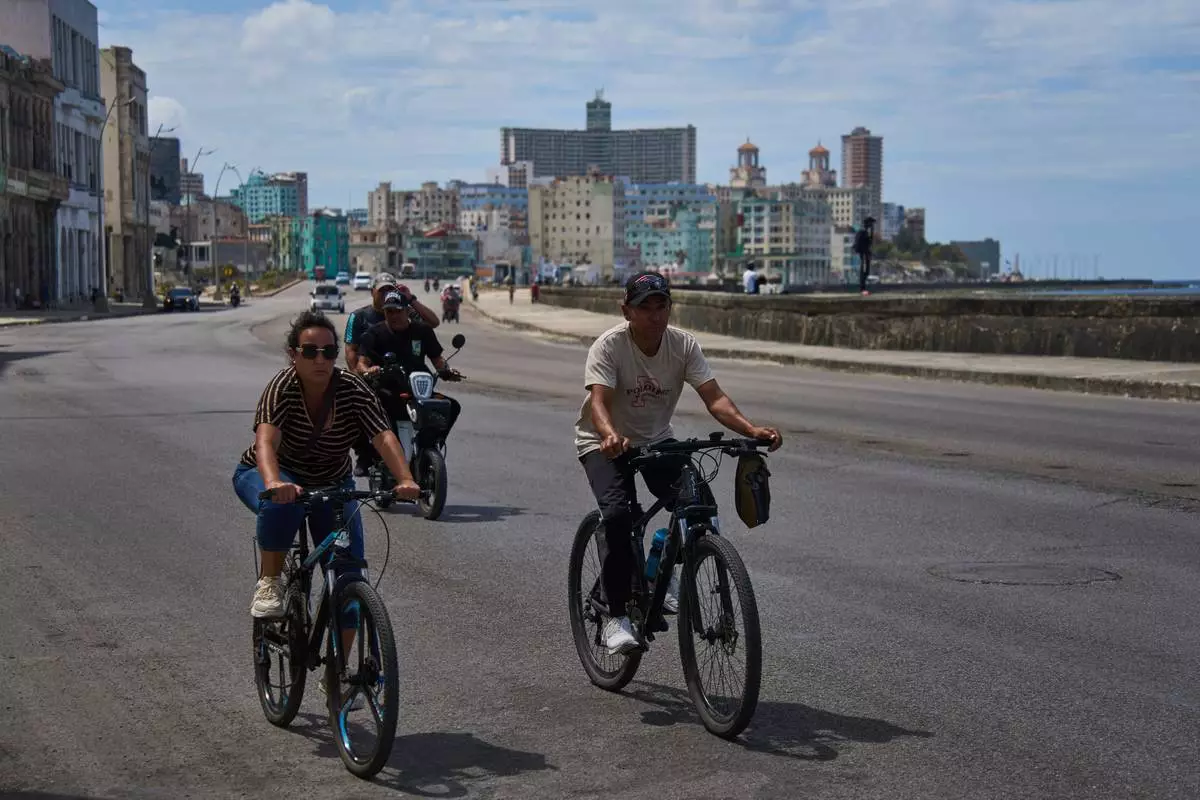
People ride their bicycles along the Malecón during a blackout in Havana, Cuba, Monday, March 16, 2026. (AP Photo/Ramon Espinosa)
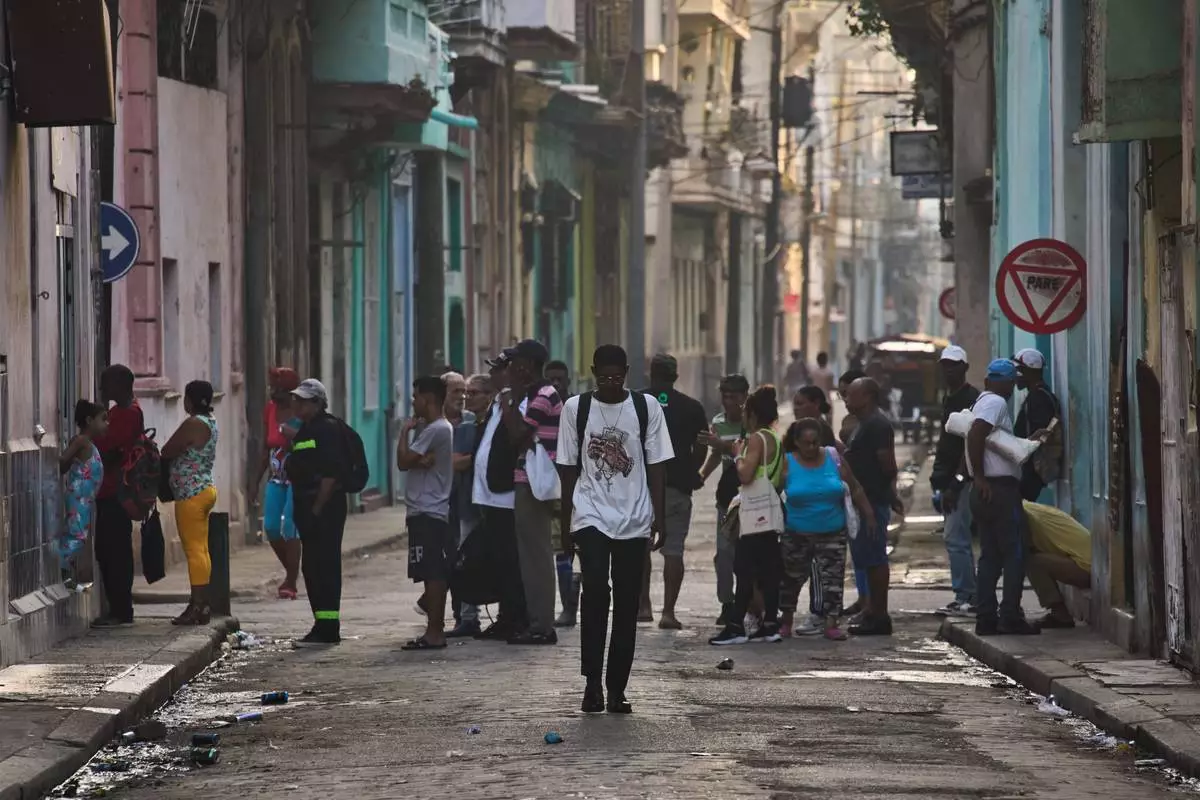
People line up in the street to buy bread in Havana, Cuba, Friday, March 13, 2026. (AP Photo/Ramon Espinosa)