GONZALES, Texas, March 17, 2026 /PRNewswire/ -- As the U.S. cattle herd falls to a 75-year low and beef prices climb to record highs, Texas ranchers are under growing pressure to protect every acre of usable pasture. Yet invasive brush continues to spread, and conventional control methods often prove too costly, too imprecise or too limited by terrain. Agricultural drones are changing that equation, offering a more practical way to deliver herbicide treatments in dense brush and hard-to-reach areas without damaging the soil or grass underneath.
When the Brush Takes Over
That challenge is creating growing demand for brush control specialists like Curtis Schramm, owner of Texas Agridrone Services. He operates in Gonzales County, a Texas cattle region where livestock accounts for 93 percent of agricultural sales and crop rows make up just 10 percent of farmland. There, brush encroachment is visible and relentless. According to Texas A&M research, a single adult mesquite tree can consume up to 20 gallons of water per day during peak growing season, while prickly pear density can increase 25 to 30 percent each year during prolonged drought. In a region that depends almost entirely on rainfall, that kind of pressure steadily shrinks the amount of usable pasture available to ranchers.
The traditional answers work only when the economics align. In Schramm's experience, a 29-acre brushy pasture is too small for a half-million-dollar ground rig to bother with. A helicopter can cover hundreds of acres an hour but won't spray precisely over a dense thicket. And shredding with a tractor makes things worse: it stresses the plants, accelerates regrowth, and leaves fields full of stumps that prevent other equipment from entering afterward.
"A lot of my work is a fix to poor management practices from decades, even lifetimes of ranchers and landowners mismanaging property," says Schramm, "Letting native brush and other invasive species come in and take over."
A Different Kind of Precision
Brush work comes with a different set of demands than open-field spraying. Schramm's jobs involve dense, irregularly shaped thickets, damaged terrain, and pastures laced with electrical lines. Although agricultural spray drones are built to handle a range of priorities, he knows that penetration and precision matter most for his work. "What good would a wide swath do me if it didn't have the force to push the chemical all the way down through the canopy?" he says.
He chose the XAG P150, starting operations in August 2025. The quad-rotor design generates a strong, concentrated downdraft, and paired with the RevoSpray System, it reaches a maximum flow rate of 7.9 gallons per minute (30 liters per minute), pushing herbicide uniformly through canopy layers to the understory below. When Schramm hovers over a dense mesquite stand, landowners expect the spray to drift down gently, like rain under a tree. What they see instead surprises them every time. "When the drone goes over, the plants swirl, the ground's blowing up in the dust, and the chemical reaches every bit of the plant, not just the soil. They're always impressed."
The drone's 4D imaging radar detects obstacles between 5 and 328 feet along the flight path (1.5 to 100 meters), enabling safe operation across the uneven, obstacle-heavy terrain Schramm navigates daily. Real-time 3D terrain mapping enables autonomous flight without a preloaded map, adjusting continuously to each new field's contours. "The way it quickly adjusts... it makes me laugh every time," he says. "That's incredible to me, because I'm thinking about all that math that has to compute to know what the speed, height, and all those variables to make a decision in a millisecond."
The P150's foldable design also lets Schramm load, launch, and manage a full day's operation alone. For a small-business owner in his first years of operation, working solo means lower overhead and more profit. It's also a practical necessity: his jobs are often on properties where larger equipment simply can't reach.
The results have been clear. His first job, a shredder-damaged pasture of mixed mesquite, prickly pear, and huisache, looked one month later like a war zone. "It killed everything but the grass," Schramm says, recalling the landowner calling him out to come see it.
In his first season, August through December 2025, he completed 682 acres of brushwork without losing a single client. For each of those ranchers, recovered pasture means more grass, more cattle weight, and more income — a chain of returns that begins with getting the brush out.
Land, Cattle, and Family
Schramm didn't arrive here through a straight line. He spent decades connected to the land, first through his family's poultry operation for Tyson Foods from 1977 to 2015, and before that through his grandfather, a county conservation resource manager for 31 years who taught young Curtis to identify grasses, understand invasive plants, and know when and how to treat them. "All those techniques I grew up learning turned out to be something I needed when I was in my late 40s and early 50s," he laughs. "Here I am doing this."
For Schramm, the work has always been about more than brush. "If you're in a drought, you need to feed your cattle as cheaply as possible," he says. "The quicker you can put weight on, the more money you can make." He's brought his refill cycle down to under 32 seconds: batteries swapped, tank refilled, drone back in the air in under a minute, because every minute on the ground is a minute not serving that chain. "The idea is to feed your land to feed your cattle to feed your family."
"It's my life now," he says. "When I wake up at 4 in the morning to go somewhere and do something with the drone, I'm super excited. It's been something that's filled my life, and for my family, very well."
** This press release is distributed by PR Newswire through automated distribution system, for which the client assumes full responsibility. **

For Texas Ranchers Fighting Invasive Brush, XAG Drones Are Changing the Odds

For Texas Ranchers Fighting Invasive Brush, XAG Drones Are Changing the Odds
|
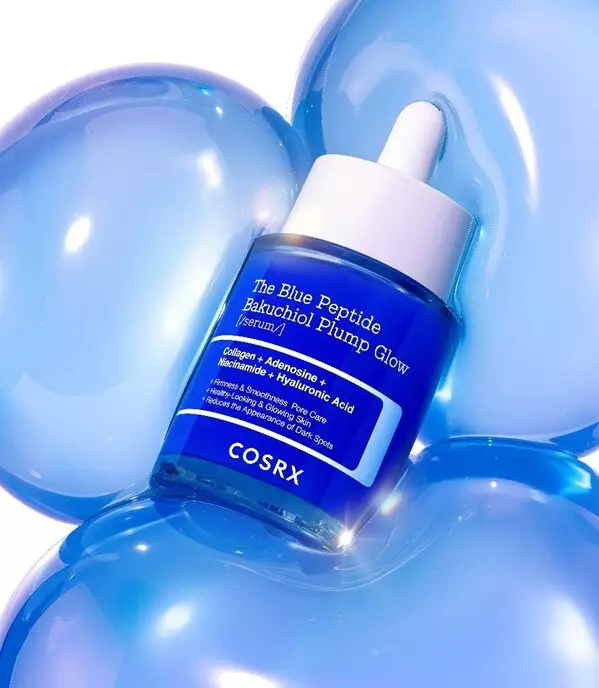
NEW YORK, May 5, 2026 /PRNewswire/ -- Friendly derma skincare brand COSRX announces its latest innovation, The Blue Peptide Bakuchiol Plump Glow Serum, powered by advanced Peptide technology designed to support healthy aging while visibly improving skin plumpness and elasticity. The new serum became available nationwide on Amazon & cosrx.com starting April 29.
Why Skin Plumpness Matters in the Era of GLP-1 Treatments
As skin naturally evolves over time, changes in firmness, elasticity, and volume are inevitable, driven by factors such as age, genetics, and environmental exposure. Many of these shifts begin beneath the surface, long before they become visibly apparent, gradually emerging as fine lines, less defined facial contours, more visible pores, and a loss of overall smoothness and radiance.
In addition, shifts in lifestyle and body composition, such as significant weight changes, including those associated with the growing use of GLP-1-based treatments, can also influence facial volume and the appearance of skin firmness.
Rather than addressing these changes at the surface level, COSRX takes a more foundational approach, combining synergistic ingredients to improve skin volume while reinforcing its structure for a visibly firmer, more lifted look.
A Targeted Formula to Restore Skin Plumpness and Elasticity
At the core of the formula is Blue Peptide (Copper TriPeptide-1), a premium ingredient naturally blue in color and known for supporting the skin's structural integrity. Acting as a targeted "restoring signal," it helps improve resilience, elasticity, and overall condition.
The formula is further enhanced with Bakuchiol, a plant-derived, low-irritation alternative to Retinol that helps maintain firmness over time, along with a 5 Multi-Peptide Complex to support overall skin quality and balance.
Together, this synergistic blend helps visibly improve firmness and elasticity, restore skin's natural plumpness and bounce, refine the appearance of pores, and enhance overall texture and radiance.
Lightweight, Designed for Daily Use
Designed for effortless daily use, the Blue Peptide Bakuchiol Plump Glow Serum features a lightweight, fast-absorbing texture that glides smoothly onto the skin, leaving a soft, naturally luminous finish without heaviness or stickiness.
Its gentle formulation makes it suitable for a wide range of skin types, including sensitive skin, offering an effective yet approachable solution for those looking to support long term skin health.
Making Premium Peptide Skincare More Accessible
Already recognized for its Peptide-driven innovations, including The 6 Peptide Skin Booster Serum and The Peptide Collagen Hydrogel Eye Patch, COSRX has been at the forefront of making Peptide skincare more accessible.
The Blue Peptide Bakuchiol Plump Glow Serum continues this direction, bringing Copper Peptides, an increasingly sought-after ingredient typically associated with high-end skincare, into a formula that balances performance with everyday usability.
About COSRX
Rooted in science and driven by results, COSRX is a global skincare brand known for its high-performance yet affordable formulations that target real skin concerns with minimal ingredients and maximum efficacy. Trusted by skincare lovers worldwide, COSRX delivers visible results through carefully selected actives in concentrated doses. Discover its award-winning lineup at retailers including COSRX.com, Amazon, ULTA, Revolve, Dermstore, Nordstrom and Target. Follow @cosrx on Instagram and TikTok for the latest product drops, tips, and trends.
NEW YORK, May 5, 2026 /PRNewswire/ -- Friendly derma skincare brand COSRX announces its latest innovation, The Blue Peptide Bakuchiol Plump Glow Serum, powered by advanced Peptide technology designed to support healthy aging while visibly improving skin plumpness and elasticity. The new serum became available nationwide on Amazon & cosrx.com starting April 29.
Why Skin Plumpness Matters in the Era of GLP-1 Treatments
As skin naturally evolves over time, changes in firmness, elasticity, and volume are inevitable, driven by factors such as age, genetics, and environmental exposure. Many of these shifts begin beneath the surface, long before they become visibly apparent, gradually emerging as fine lines, less defined facial contours, more visible pores, and a loss of overall smoothness and radiance.
In addition, shifts in lifestyle and body composition, such as significant weight changes, including those associated with the growing use of GLP-1-based treatments, can also influence facial volume and the appearance of skin firmness.
Rather than addressing these changes at the surface level, COSRX takes a more foundational approach, combining synergistic ingredients to improve skin volume while reinforcing its structure for a visibly firmer, more lifted look.
A Targeted Formula to Restore Skin Plumpness and Elasticity
At the core of the formula is Blue Peptide (Copper TriPeptide-1), a premium ingredient naturally blue in color and known for supporting the skin's structural integrity. Acting as a targeted "restoring signal," it helps improve resilience, elasticity, and overall condition.
The formula is further enhanced with Bakuchiol, a plant-derived, low-irritation alternative to Retinol that helps maintain firmness over time, along with a 5 Multi-Peptide Complex to support overall skin quality and balance.
Together, this synergistic blend helps visibly improve firmness and elasticity, restore skin's natural plumpness and bounce, refine the appearance of pores, and enhance overall texture and radiance.
Lightweight, Designed for Daily Use
Designed for effortless daily use, the Blue Peptide Bakuchiol Plump Glow Serum features a lightweight, fast-absorbing texture that glides smoothly onto the skin, leaving a soft, naturally luminous finish without heaviness or stickiness.
Its gentle formulation makes it suitable for a wide range of skin types, including sensitive skin, offering an effective yet approachable solution for those looking to support long term skin health.
Making Premium Peptide Skincare More Accessible
Already recognized for its Peptide-driven innovations, including The 6 Peptide Skin Booster Serum and The Peptide Collagen Hydrogel Eye Patch, COSRX has been at the forefront of making Peptide skincare more accessible.
The Blue Peptide Bakuchiol Plump Glow Serum continues this direction, bringing Copper Peptides, an increasingly sought-after ingredient typically associated with high-end skincare, into a formula that balances performance with everyday usability.
About COSRX
Rooted in science and driven by results, COSRX is a global skincare brand known for its high-performance yet affordable formulations that target real skin concerns with minimal ingredients and maximum efficacy. Trusted by skincare lovers worldwide, COSRX delivers visible results through carefully selected actives in concentrated doses. Discover its award-winning lineup at retailers including COSRX.com, Amazon, ULTA, Revolve, Dermstore, Nordstrom and Target. Follow @cosrx on Instagram and TikTok for the latest product drops, tips, and trends.
** This press release is distributed by PR Newswire through automated distribution system, for which the client assumes full responsibility. **
COSRX Launches Blue Peptide Serum to Help Restore Skin Plumpness and Support Healthy Aging