DH releases "Student Health Service Annual Health Report for 2024/25 School Year"
The Department of Health (DH) today (March 17) released the "Student Health Service (SHS) Annual Health Report for 2024/25 School Year", which summarised the key findings of the annual health assessment service and questionnaires provided to primary and secondary school students in Hong Kong during the school year. Results show that overweight (including obesity) and excessive recreational screen timeremain prevalent among students in Hong Kong, and vision health remains unsatisfactory. The DH urges students to maintain a balanced diet, engage in more physical activity, reduce screen time, protect their eyesight and pay attention to their psychosocial well-being.
Annual health assessment service is comprehensive
---------------------------------------------------------------------
The annual health assessment service includes growth monitoring; screenings for vision, hearing and scoliosis; physical examinations; health assessment questionnaires on health behaviours and psychosocial well-being; individual health counselling; health education; and mop-up vaccinations. In the 2024/25 school year, approximately 256 000 primary school students and 172 000 secondary school students received free annual health assessment service at the DH's Student Health Service Centres (SHSCs).
Weight management, diet and physical activity
----------------------------------------------------------
Starting from the 2024/25 school year, the DH has adopted the updated growth charts, the Hong Kong 2020 Growth References, to assess and monitor the growth of children and adolescents. The results of the annual health assessment indicate that weight problems among Hong Kong students remain prevalent. In the 2024/25 school year, the prevalence of being overweight (including obesity) among students was 17.5 per cent (17.2 per cent for primary school students and 17.9 per cent for secondary school students). In the 2023/24 school year, the prevalence of being overweight (including obesity) among students was 17.1 per cent (16.9 per cent for primary school students and 17.4 per cent for secondary school students) (see Note).
Regarding fruit and vegetable consumption and physical activity, the data are similar to those of the previous school year. In the 2024/25 school year, 89.4 per cent of students (82.5 per cent of primary school students and 96.8 per cent of secondary school students) reported an inadequate intake of fruits and vegetables per day (i.e. an average of fewer than four servings for primary school students and fewer than five servings for secondary school students). Concerning physical activity, 93.6 per cent of students (91.5 per cent of primary school students and 95.8 per cent of secondary school students) reported insufficient levels of daily physical activity, i.e. not having at least 60 minutes of moderate- to vigorous-intensity physical activity daily.
"Being overweight during childhood and adolescence adversely affects health and is associated with a greater risk and earlier onset of various non-communicable diseases, such as type 2 diabetes, cardiovascular disease and certain cancers. Childhood and adolescent obesity can also have adverse psychosocial consequences, affecting students' school performance and quality of life. The DH will continue to provide weight management and nutrition counselling advice through the SHSCs to students in need and will continue to promote the importance of a balanced diet and regular exercise to students and parents. Furthermore, the Hong Kong Special Administrative Region Government launched the inaugural Action Plan on Weight Management earlier this month, outlining five key directions. The action plan brings together the strengths of various government bureaux and departments to enhance collaboration between Chinese and Western medicine, aiming to comprehensively promote weight management across Hong Kong through various activities and approaches. We urge schools and parents to actively participate and join hands with the Government in nurturing a healthy new generation," the Consultant Community Medicine (Family and Student Health) of the DH, Dr Chuang Shuk-kwan, said.
Vision and use of Internet and electronic screen products
---------------------------------------------------------------------
Compared with the 2023/24 school year, the visual health of students in Hong Kong remains a concern. The proportion of Primary One students wearing glasses was 14.5 per cent, which was comparable to 14.3 per cent in the previous school year, but much higher than the pre-COVID years of approximately 11 per cent. Furthermore, the proportion of students wearing glasses is higher among students in higher grades. The proportion of Primary Six students wearing glasses reached 55.1 per cent. Among primary and secondary school students who had their visual acuity tested in the 2024/25 school year, 17.3 per cent required further assessment by the SHS of the DH or private optometrists due to a failed preliminary visual acuity test, or other eye or visual problems. A higher proportion of students in higher grades need to wear glasses or fail the preliminary visual acuity test, indicating deteriorating vision with age.
Healthy eyes and vision are critical parts of children's development. Visual problems can interfere with children's daily activities and learning. Prolonged screen use increases the risk of myopia. According to the data from the DH's health assessment questionnaires, in the 2024/25 school year, 41.8 per cent of primary school students reported spending two hours or more using the Internet or electronic screen products (including computers, tablets, smartphones, video games and television) for recreational purposes on a typical school day. Although the figure represents a decrease from 43.3 per cent in the 2023/24 school year, it remains higher than the pre-COVID years of around 30 per cent. For secondary school students, the corresponding proportion reaches as high as 81.1 per cent, which is a cause for concern. A number of studies have shown that spending time doing more outdoor activities can both prevent the onset of and delay the progression of myopia in children. With reference to international guidelines, the DH recommends children aged between 6 and 12 years old to limit recreational screen time to less than two hours a day.
Dr Chuang noted that if health or behavioural issues (such as excessive use of electronic screen products) are identified in students, healthcare professionals will provide health counselling and relevant information and refer them to the Special Assessment Service of the SHS of the DH, specialist clinics, or other organisations as appropriate for further assessment and follow-up.
In response to public concerns regarding the health impacts of screen and social media use on children and adolescents, the DH has been following up on the measures outlined in the "The Chief Executive's 2025 Policy Address" and established the Advisory Group on Health Effects of Screen and Social Media Use for Children and Adolescents in October last year. The interdepartmental expert Advisory Group is currently reviewing the latest medical and scientific evidence, as well as the relevant development and experiences in other countries and regions while consolidating expert opinions, with the aim of issuing updated health recommendations on the use of screen and social media by children and adolescents within this year.
Psychosocial well-being
----------------------------
The DH's health assessment questionnaires indicate that the majority of students reported that they enjoyed or very much enjoyed family life (96.0 per cent) and school life (93.8 per cent) in the 2024/25 school year. Both percentages were higher than the previous school year. However, 2.1 per cent of students reported experiencing cyberbullying in the past 12 months, a decrease from the previous school year (3.0 per cent). Meanwhile, 1.6 per cent and 0.7 per cent of students reported having planned or attempted to commit suicide in the past 12 months respectively. Both figures are lower than the previous school year (2.2 per cent and 1.0 per cent respectively). In the 2024/25 school year, among the students receiving annual health assessment services at the SHSCs, 1.0 per cent were referred to the clinical psychologists of the SHS of the DH, specialist clinics or other suitable organisations for further assessment and management of their psychosocial and behavioural problems.
The Government has set up the 18111 - Mental Health Support Hotline to provide one-stop, round-the-clock support for people with mental health needs. The Government has also implemented the regularised Three-Tier School-based Emergency Mechanism through cross-departmental collaboration of the Education Bureau, the Health Bureau and the Social Welfare Department in all secondary schools in Hong Kong in 2025/26 school year. The mechanism has been extended on a trial basis to Primary Four to Six students to ensure early identification and support for students at higher risk of suicide and provide them with timely assistance and professional counselling or treatment services.
Furthermore, "The Chief Executive's 2024 Policy Address" announced the enhancement of the Whole School Health Programme (WSHP). Apart from publishing a territory-wide health report, the DH will prepare individualised health reports for each participating school, recommending targeted school-based health promotion measures for physical activity, diet and other matters to improve students' physical and psychological well-being. As of early March this year, 891 schools in Hong Kong have joined the WSHP, covering more than 75 per cent of primary and secondary schools in Hong Kong, marking an encouraging development. The DH encourages all schools in Hong Kong to actively participate in the WSHP, enabling Hong Kong to ultimately achieve the World Health Organization's vision of "making every school a health-promoting school".
At the same time, the Primary Healthcare Commission is actively promoting the Life Course Preventive Care Plan via the District Health Centres (DHCs), DHC Expresses and family doctors. A personalised preventive care plan will be formulated to address the health needs of citizens, including vaccinations required by children as well as prevention of infectious diseases, cancers and chronic diseases. The DHCs and DHC Expresses also provide children-targeted services, such as emotion management, weight management and healthy diet classes, as well as collaborate with schools to provide outreach health education, health-risk factors assessment, low salt and sugar diet education and promotion activities. In the long run, the Government will, in accordance with the Primary Healthcare Blueprint, integrate some of the DH's primary healthcare services (including maternal and child health service and student health service)into the primary healthcare system, in order to enhance children's primary healthcare services in Hong Kong and create a better environment for children's medical care and healthy development.
Full implementation of E-enrolment to streamline process
----------------------------------------------------------------------
"The free annual health assessment services provided by the SHS of the DH enable early identification of students with health or behavioural problems and provide them with timely advice and intervention services. In addition to letting individual students understand their own health condition, the DH regularly analyses collected data to monitor the overall health condition and relevant trends among local students. The information is disseminated to the public to raise their awareness about student health. In line with the Government's policy to promote e-Government services, the SHS has fully implemented the Online Enrolment Scheme during the 2025/26 school year. By streamlining the enrolment procedures, we aim to further encourage and facilitate participation of students, parents and schools," Dr Chuang said.
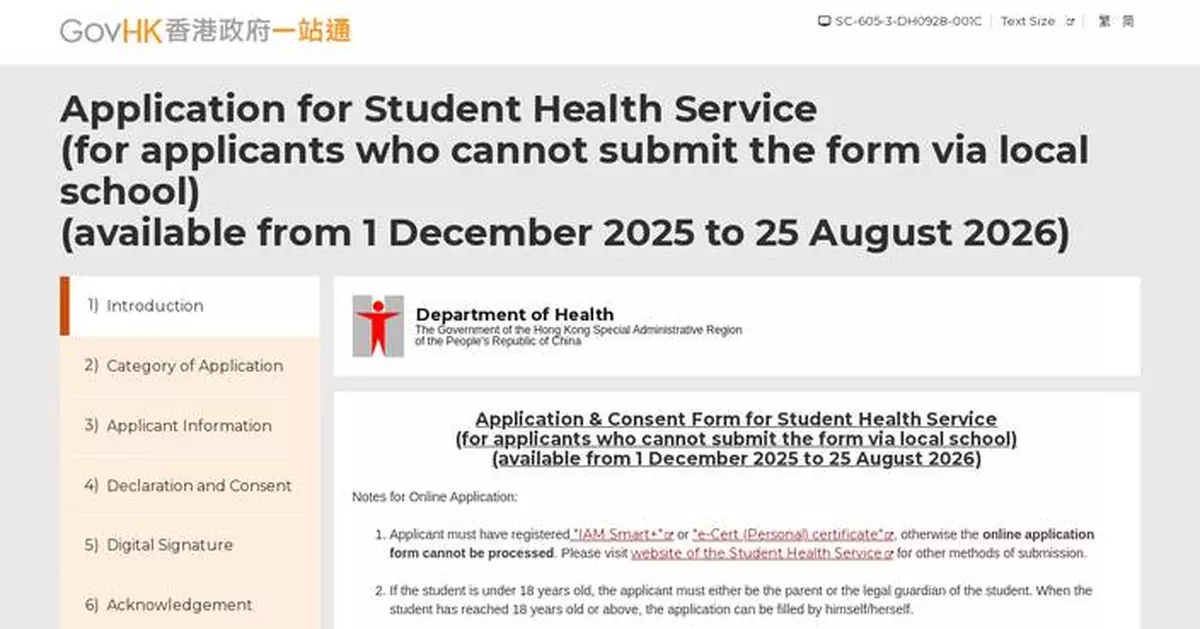
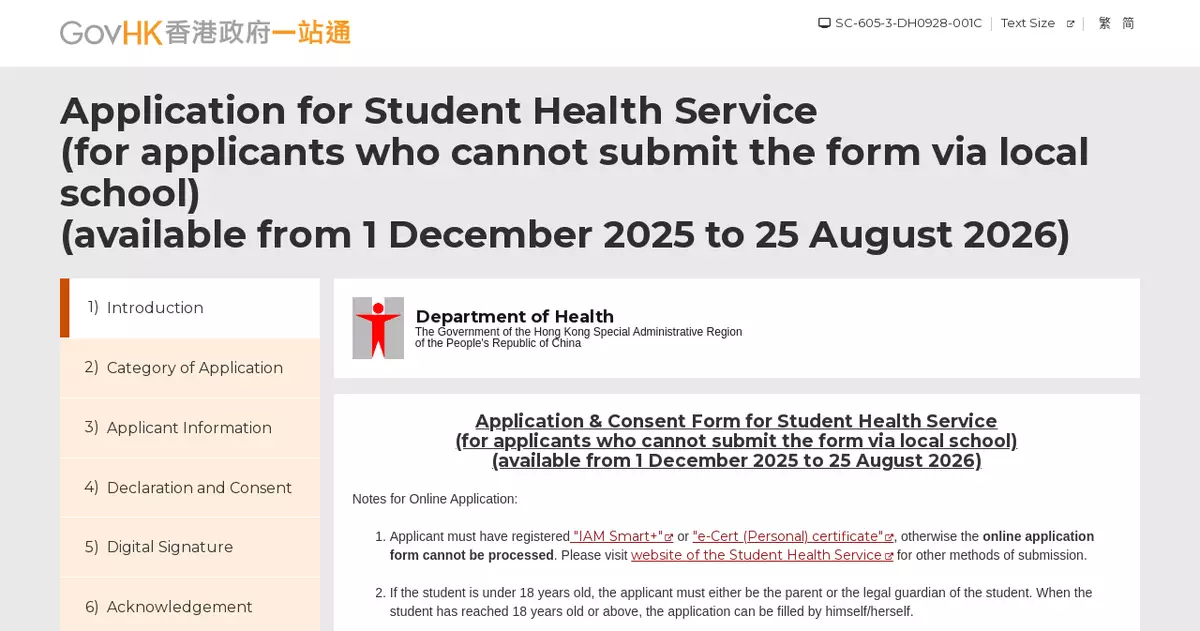
Enrolment for the annual health assessment service of the 2025/26 school year is now open. Students who have not yet enrolled may submit an online application through GovHK, or complete the Application and Consent Form and submit it along with the required documents by email (dh_stdhs_enrolment_exercise@dh.gov.hk), post or fax to the designated SHSC. Please refer to the websiteof the SHS of the DH for application details and forms.
Note: retrospectively calculated using the updated Hong Kong 2020 Growth References.
Source: AI-found images
Speech by SJ at official launch of Asian Legal History Association
Following is the speech by the Secretary for Justice, Mr Paul Lam, SC, at the official launch of the Asian Legal History Association (ALHA) today (March 17):
Professor Lo (Vice-Chancellor and President of the Chinese University of Hong Kong, Professor Dennis Lo), Professor Xi (Dean of the Faculty of Law of the Chinese University of Hong Kong, Professor Xi Chao), learned scholars, distinguished guests, ladies and gentlemen,
A very good morning. It is my great pleasure to address you today at the official launch of the Asian Legal History Association in Hong Kong. It is undoubtedly a momentous occasion that brings together 21 leading law schools and academic institutions from 17 jurisdictions with distinguished scholars, historians and legal professionals from across the globe. Professor Xi told me a while ago that there are 12 representatives coming from 17 jurisdictions who are with us today, so welcome to Hong Kong. This gathering does not only celebrate the launch of a new institutional platform, but also signifies our shared commitment to delving into Asia's legal history and preserving Asia's rich and diverse legal traditions as valuable resources of wisdom and inspiration. I would like to express my sincere gratitude to the ALHA for hosting its official launch in Hong Kong, as well as to all those who have contributed to the process and made the ALHA a reality.
With its Secretariat proudly hosted here at the Chinese University of Hong Kong, the ALHA is a landmark initiative that brings together the finest legal minds to explore not only how the laws and legal systems were shaped by their historical context and background but also how they might evolve or adapt to better serve justice in the course of time. It offers a unique, dedicated platform for scholars and practitioners to examine how legal doctrines and institutions have travelled, interacted and been transformed across diverse cultures and jurisdictions in Asia. This platform could also observe how these exchanges have influenced, and continue to influence, the legal reforms, governance and the administration of justice today. Through conferences, research collaborations and projects, I am sure that the ALHA will foster an ongoing cross-jurisdictional dialogue on legal history that transcends geography and ideology, thereby contributing significantly to the legal study and exchanges in Asia and beyond.
Why legal history matters
Speaking personally, I enjoy reading legal history of different jurisdictions especially when travelling overseas. This is because this would shed lights on how justice has been perceived in different societies throughout their respective legal history.
Legal history offers us not just archives or records of ancient statutes, but also serves as a living narrative of how societies, through centuries of trial and error, have sought to regulate human relationships. Legal history can be both a mirror and compass for a legal system. It embodies and reflects the continuous evolution of values of the society and explains how our law today came to embody the values we hold dear, and what the law can become in the future. From this wellspring of wisdom, we draw practical insights that continually shape our understanding of justice, our approach to governance and our commitment to upholding the rule of law.
I believe that it is our shared passion for legal history that has brought us together today. The passion for legal history is not only a purely academic pursuit. A thorough understanding of legal history is important for practical purposes. Legal history should not be viewed as just a chronicle of the past, but it should be considered as a living force that guides our present decisions and empowers us to shape the future. Many fundamental principles and values that we rely on today, for example, natural justice, equality before the law, independent judiciary, protection of human rights, etc, are influenced by centuries of lessons and experiences from the past. Every piece of legislation is drafted in response to society's development and evolving values. Every judgment we read or deliver stands on precedents built by generations before us.
Studying legal history could help us to find ways to address present challenges. By examining how our predecessors dealt with crises through legal principles, we gain clearer insights into the complexities we are facing and are better equipped to avoid repeating historical mistakes.
I would venture to say that the study of legal history holds particular significance in Asia. As the world's largest and most diverse continent, Asia embraces a remarkable array of legal systems and traditions, ranging from civil law, common law and sharia law. Rich legal diversity is Asia's strength and characteristic. It has endowed Asia with the unique flexibility and adaptability to draw lessons from its varied traditions and address contemporary issues more effectively.
It is therefore profoundly fitting and meaningful that the ALHA has chosen Hong Kong as its base. Indeed, the development of the common law system in Hong Kong is one of the most exciting and interesting stories on legal history. Let me explain briefly.
Hong Kong's own unique legal history
Hong Kong is the only common law jurisdiction within China; it is also the only common law jurisdiction in the world with both Chinese and English as the official languages. I have said repeatedly that our common law system is one of the most unique and significant systematic strengths of Hong Kong under the principle of "one country, two systems". Not only that it serves to maintain the prosperity and stability of Hong Kong, it also serves to assist in the development and opening up of our country.
So where did the story actually begin? It began 183 years ago in 1843. After Hong Kong came under British colonial rule, the Supreme Court Ordinance (No. 15 of 1844) was enacted. The original formula stated that the law of England should be in full force in Hong Kong, except where the same shall be inapplicable to the local circumstances or its inhabitants. Two years later, the Ordinance was amended to make it clear that the effective date shall be backdated to April 5, 1843. This formula of reception of the English law lasted 93 years and was only replaced in 1966 by the Application of English Law Ordinance. Section 3 of this Ordinance stated that "the common law and the rules of equity shall be in force in Hong Kong, so far as they are applicable to the circumstances of Hong Kong or its inhabitants and subject to such modifications as such circumstances may require".
It is significant to note that the importation of the English common law was subject to the exception that it may be inapplicable due to the local circumstances of Hong Kong. As explained by the Court of Final Appeal in the case of China Field Ltd v. Appeal Tribunal (Buildings) (2009) 12 HKCFAR 342, one of the things which that exception did was to leave some room in certain spheres for ethnic Chinese domiciled in Hong Kong to resort to the laws and customs of traditional China. Another consequence of the exception is that the Hong Kong courts had to develop what amounted to common law of Hong Kong even though it was for the most part identical to the English common law.
Before China resumed the exercise of sovereignty over Hong Kong on July 1, 1997, the final appellate court of Hong Kong was the Privy Council in England. However, as the Court of Final Appeal observed in the case that I have mentioned a while ago, the fact that Hong Kong appeals laid ultimately to the Privy Council did not hinder, rather did it assist, the proper development of Hong Kong common law. The Privy Council would in general accord the respect due to local habits and conditions. In practice, the courts of Hong Kong continued to develop the common law of Hong Kong through what had always amounted in reality to a modified application of the English common law.
In anticipation of China's resumption of the exercise of sovereignty over Hong Kong, the Basic Law was promulgated on April 4, 1990. Article 160 provides that, upon the establishment of the Hong Kong Special Administrative Region (HKSAR), the law previously in force in Hong Kong shall be adopted as law of Hong Kong except for those which the Standing Committee of the National People's Congress declares to be in contravention of the Basic Law. On February 23, 1997, the Standing Committee of the National People's Congress made a decision pursuant to Article 160. Among other things, it decided that the Application of English Law Ordinance contravened the Basic Law and hence, shall not be adopted as the law of the HKSAR.
In these circumstances, to preserve and continue the application of common law in Hong Kong, Article 8 of the Basic Law becomes very important. It provides expressly that the laws previously in force in Hong Kong, that is, the common law, rules of equity, ordinances, subordinate legislation and customary law shall be maintained, except for any that contravene the Basic Law, and subject to any amendment by the legislature of the HKSAR. Without this important provision, common law would have ceased to be a part of Hong Kong law.
It is also significant that, under the Basic Law, Hong Kong enjoys independent power of adjudication; and that the power of final adjudication shall be vested in the newly created Court of Final Appeal. Accordingly, since China's resumption of the exercise of sovereignty over Hong Kong on July 1, 1997, the Hong Kong courts' development of our common law has been carried out with the Hong Kong Court of Final Appeal at the apex of the judicial hierarchy. Not surprisingly, the development of our common law has been on the increase since July 1, 1997.
To facilitate the development of the common law in Hong Kong, there are also the following exceptional arrangements under the Basic Law. First, Article 82 provides that the Court of Final Appeal may invite judges from other common law jurisdictions to sit on it; and Article 92 provides more generally that judges and other members of the judiciary may be recruited from other common law jurisdictions. On the other hand, Article 84 provides that the Hong Kong courts may refer to precedents of other common law jurisdictions.
As stated by the former Chief Justice Mr Andrew Li in the case A Solicitor (24/07) v The Law Society of Hong Kong (2008) 11 HKCFAR 117, and he said after July 1, 1997, in the new constitutional order, it is of the greatest importance that the courts in Hong Kong should continue to derive assistance from overseas jurisprudence; this includes the decisions of final appellate courts in various common law jurisdictions as well as decisions of supra-national courts, such as the European Court of Human Rights. Compared to many common law jurisdictions, Hong Kong is a relatively small jurisdiction. It is of great benefit to the Hong Kong courts to examine comparative jurisprudence in seeking the appropriate solution for the problems which come before them. Bearing in mind that historically, Hong Kong's legal system originated from the British legal system, decisions of the Privy Council and the House of Lords, which is now the Supreme Court of the United Kingdom, should be treated with great respect. Their persuasive effect would depend on all relevant circumstances, including in particular, the nature of the issue and the similarity of any relevant statutory or constitutional provision. However, at the end of the day, the courts in Hong Kong must decide for themselves what is appropriate for our own jurisdiction.
An excellent example is that, in a very recent case Samantha Jane Bradley v Sir Elly Kadoorie & Sons Ltd (for and on behalf of itself, its current and former officers, employees and agents, including its legal representatives, Messrs Simmons & Simmons) [2026] HKCFA 2, the Court of Final Appeal recognised that there is at Hong Kong common law a tort of harassment.
Let me now give you an important number, which is 66. This is the total number of Hong Kong court cases cited or used by overseas courts between 2018 and February 10, 2026. The overseas courts include courts in the United Kingdom, Australia, New Zealand, Singapore, Canada and Dubai. The fact that courts in other common law jurisdiction found it useful to cite Hong Kong cases is a very cogent piece of evidence that the quality of the jurisprudence produced by the Hong Kong courts is extremely high and has made important contributions to the development of common law in general.
To put the matter in a historical context, after more than 183 years, Hong Kong has now developed its own unique common law system, which is highly renowned around the world and marked by its highly international characteristics. This is also why I am convinced that Hong Kong stands as an ideal base for the ALHA. We take great pride in Hong Kong's role as the bridge and home for the ALHA, where the lessons of history continue to inspire the pursuit of a fairer and more enlightened future for all.
As I stand before so many eminent scholars and experts in legal history, I would like to share with you a timeless remark by Confucius, "", which may be translated into English as "Learning the past to know the future". As we celebrate the launch of the ALHA, let us remember that to study where our laws and legal systems came from is not an exercise in nostalgia, but an act of foresight.
Once again and to conclude, I extend my warmest congratulations to the ALHA and wish it every success. I also wish you all a very constructive inaugural conference to foster meaningful dialogue and collaboration among legal history experts. Thank you very much.
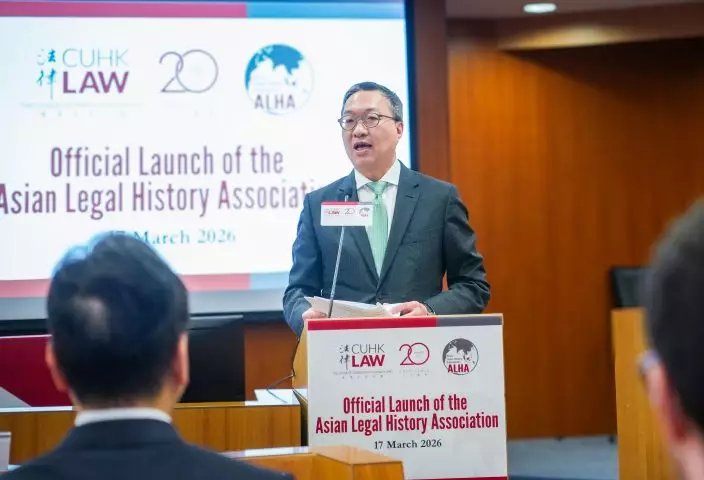
The Secretary for Justice, Mr Paul Lam, SC, speaks at the official launch of the Asian Legal History Association today (March 17). Source: HKSAR Government Press Releases