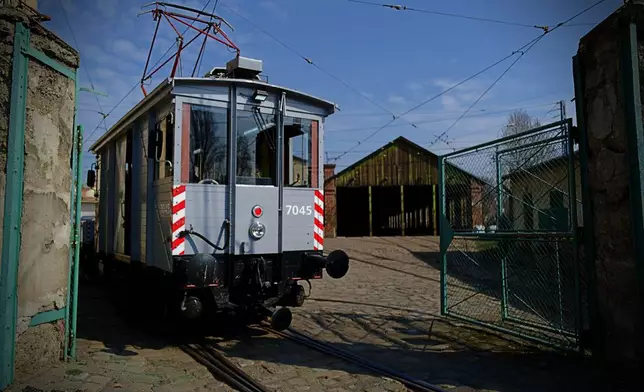
BUDAPEST, Hungary (AP) — With the toot of a horn, the ring of a bell and the hiss of air brakes, an unusual rail vehicle pulls out of a depot in Budapest to serve the Hungarian capital's public transit system, a job it has done for a century.
The so-called freight trams, known as mukis, run on electricity provided by overhead wires and travel on Budapest's vast tram rail network, one of the busiest in the world. But unlike the hundreds of iconic yellow trams in the passenger fleet, they don’t carry commuters.
Click to Gallery
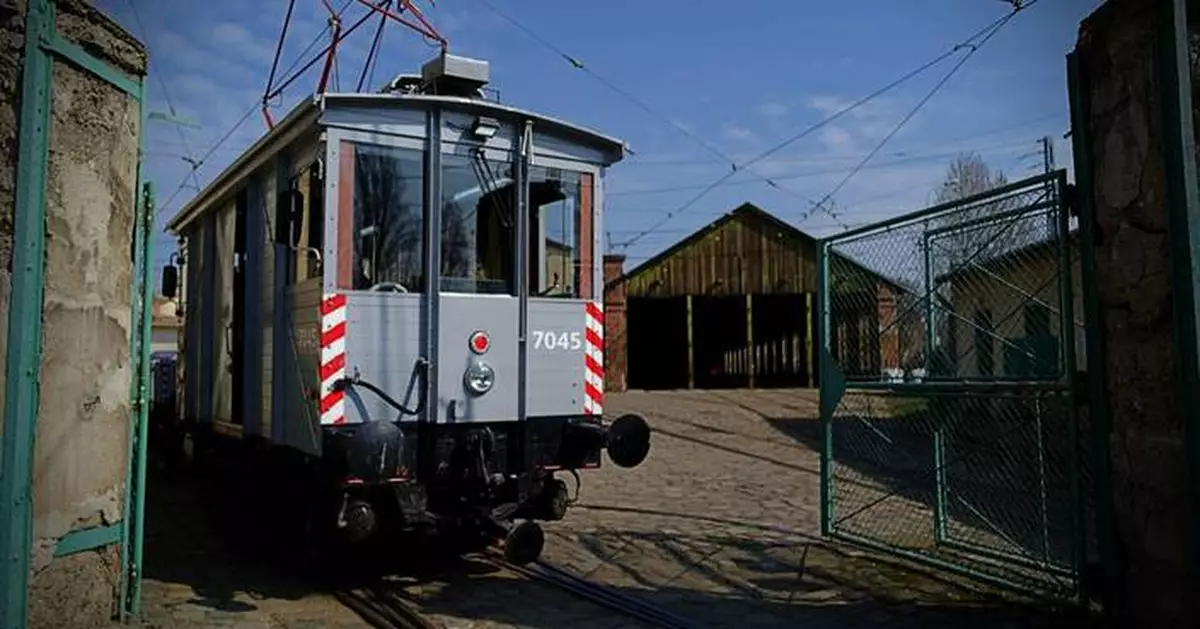
A century-old freight tram is parked in the Kelenfold tram depot in Budapest, Hungary on Thursday, March 12, 2026. (AP Photo/Bela Szandelszky)
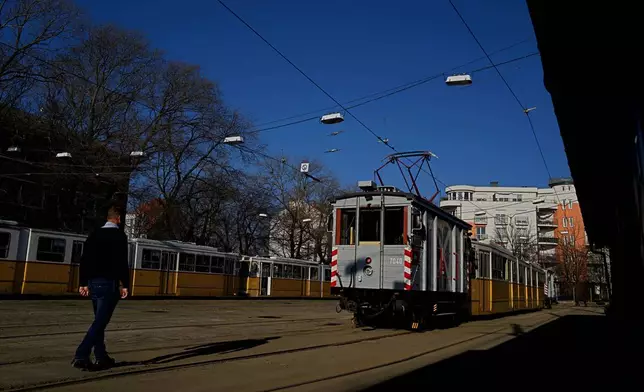
Commuters look at a century-old freight tram in Budapest, Hungary on Thursday, March 12, 2026. (AP Photo/Bela Szandelszky)
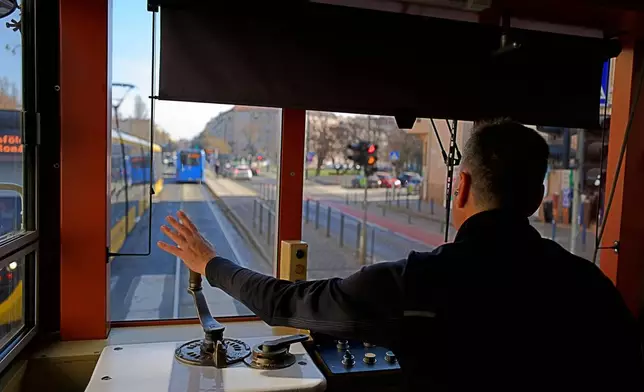
A driver waves while operating a century-old freight tram in Budapest, Hungary on Thursday, March 12, 2026. (AP Photo/Bela Szandelszky)
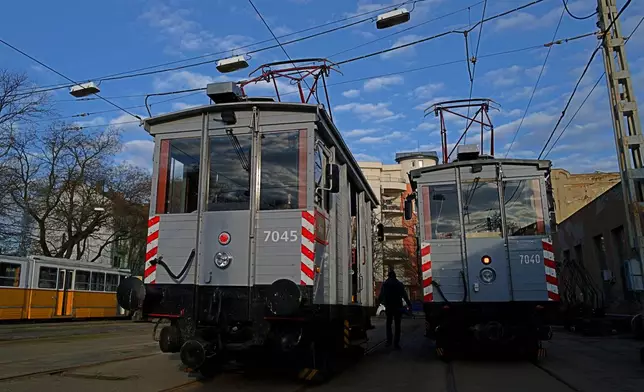
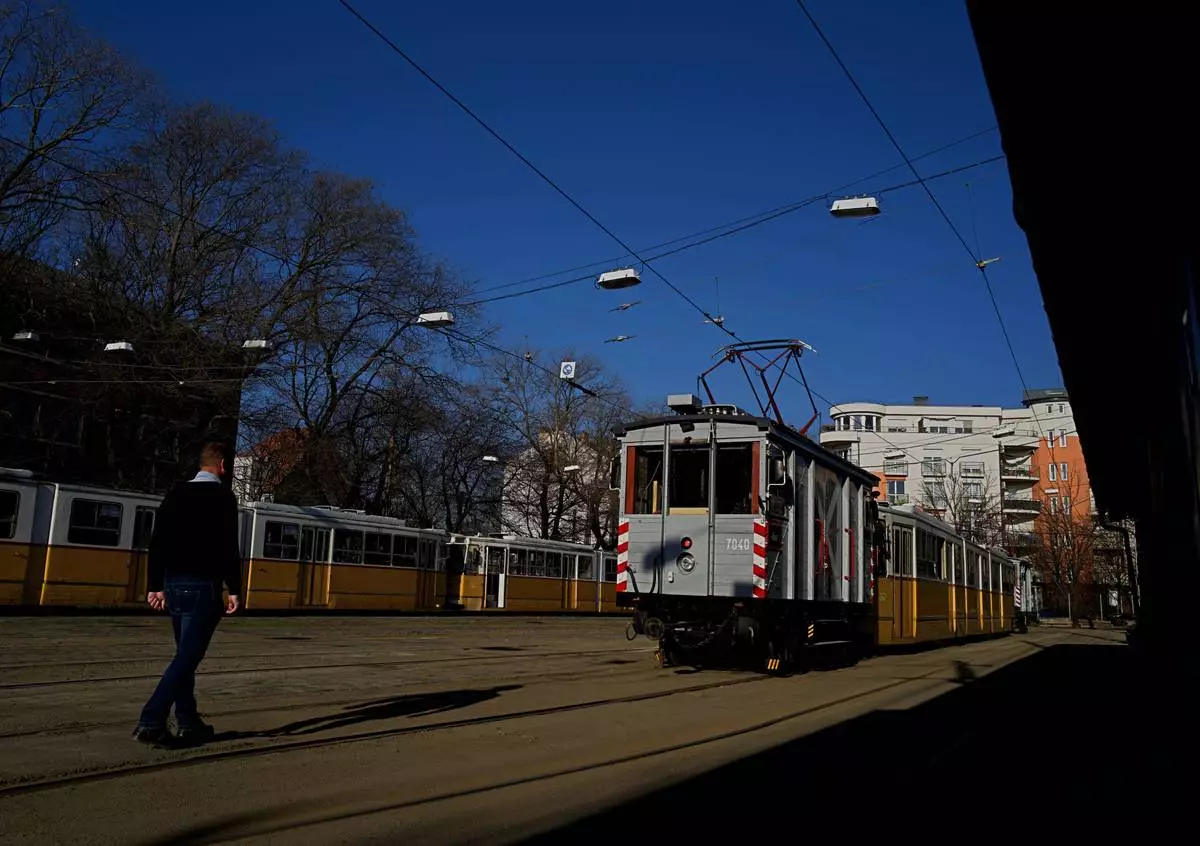
Two century-old freight trams are parked in the Kelenfold tram depot in Budapest, Hungary on Thursday, March 12, 2026. (AP Photo/Bela Szandelszky)
A century-old freight tram leaves the Ferencvaros tram depot in Budapest, Hungary on Wednesday, March 11, 2026. (AP Photo/Bela Szandelszky)
Acquired by the city in 1926, the wood-sided trams were initially products of necessity: They brought goods and raw materials to and from Budapest's factories after much of the local freight infrastructure had been destroyed during World War I.
"Engineers at the time designed an electric drive system mainly using parts from vehicles damaged in the war, as well as parts from vehicles that had already been designated for scrapping,” said Ádám Zadravecz, the head of tram vehicle development and technology at Budapest's public transit company BKV.
“Their primary purpose was freight transport, but after World War II, these vehicles were also used for removal of the war ruins," he said.
Over time, the mukis' function changed as Hungary recovered. In the 1960s, some of the original 40 trams were equipped with a snowplow, enabling them to clear the city's tram tracks in winter, as they do today.
They also perform nighttime maintenance runs, and transport broken-down trams into depots for repairs.
Various parts on the trams were gradually replaced, resulting in a mishmash of components. By 2018, the mukis were due for a more comprehensive refurbishment.
“When they were manufactured in the 1920s, they were extremely simple, extremely puritanical devices,” said Nándor Meixner, head of vehicle maintenance at Budapest's Ferencváros depot. "During the refurbishment, we strove to make our colleagues’ work easier. That is why, for example, a seat was added to the vehicle, so that the driver can at least sit down.”
Another addition: The trams were equipped with heating in the cabin.
Despite the changes over the last 100 years, Zadravecz said the trams' overall nature remained the same.
“Their maintenance costs is almost zero because these trams are very easy to maintain. Compared to the complex electronics of today’s vehicles, there is very little in them that can break down," he said. "People say that it can be repaired with a hammer and a file, and that’s absolutely true.”
Driving them requires special training, however, as well as what Meixner called a certain “feel” for the vehicle.
“It is not enough to just drive, to know the signs and instructions, you also need to know the vehicle itself. We used to say that the driver has to drive this vehicle with his butt,” he said.
Of the original fleet of 40 mukis, only six have survived the last 100 years in Budapest, with three in active use.
“The value of these vehicles lies precisely in their simplicity, in the pure fact that they exist and are available to us," Zadravecz said.
A century-old freight tram is parked in the Kelenfold tram depot in Budapest, Hungary on Thursday, March 12, 2026. (AP Photo/Bela Szandelszky)

Commuters look at a century-old freight tram in Budapest, Hungary on Thursday, March 12, 2026. (AP Photo/Bela Szandelszky)
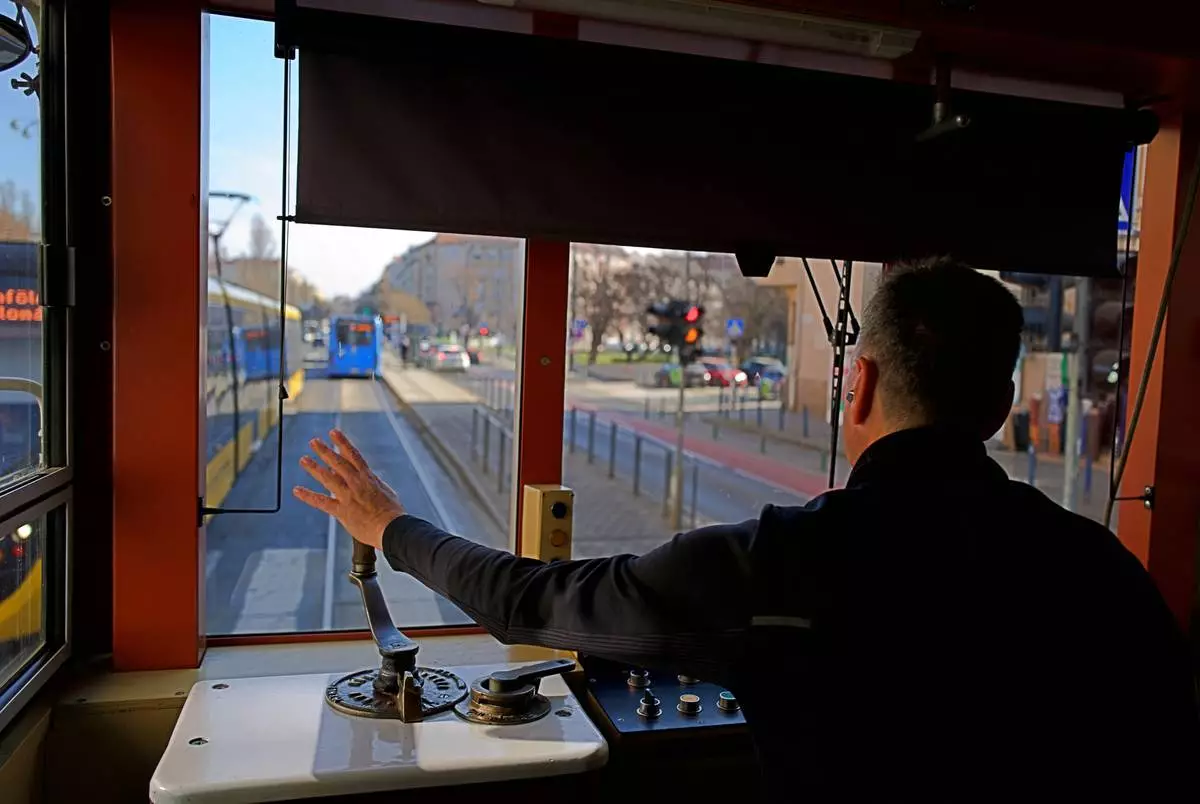
A driver waves while operating a century-old freight tram in Budapest, Hungary on Thursday, March 12, 2026. (AP Photo/Bela Szandelszky)
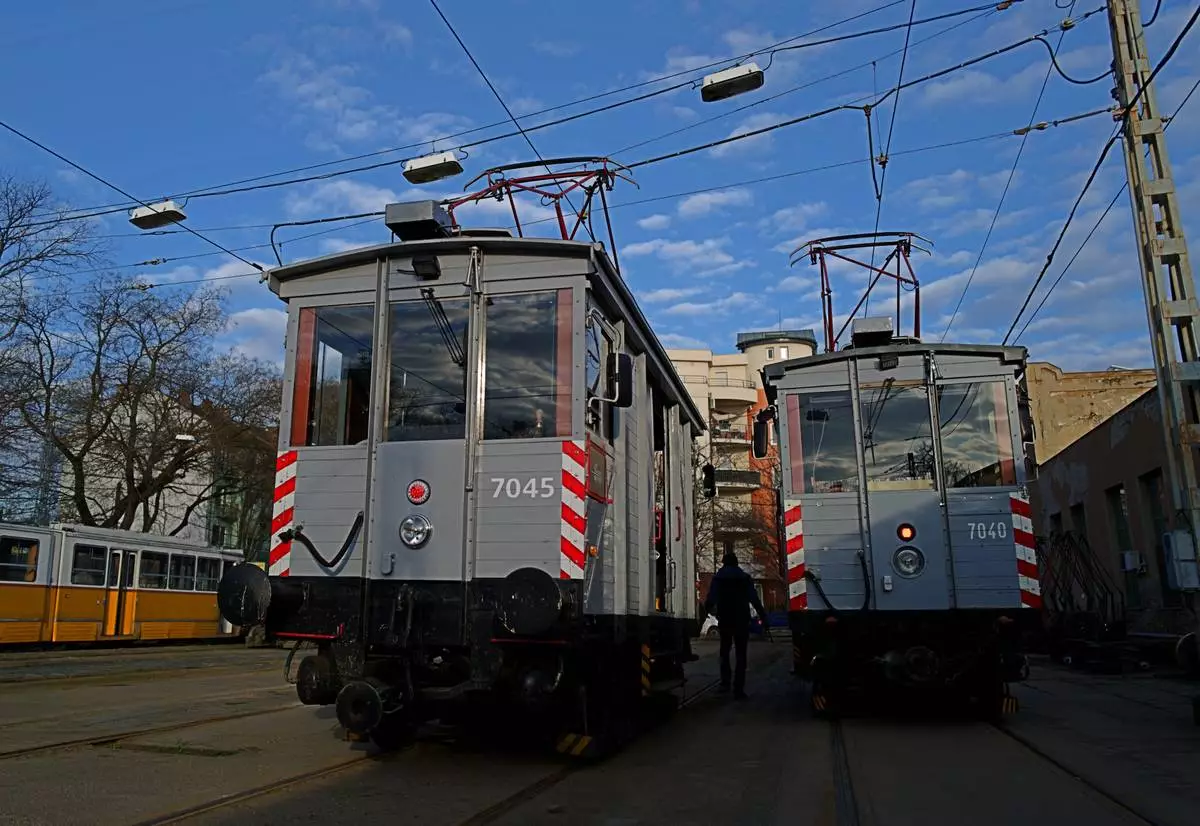
Two century-old freight trams are parked in the Kelenfold tram depot in Budapest, Hungary on Thursday, March 12, 2026. (AP Photo/Bela Szandelszky)
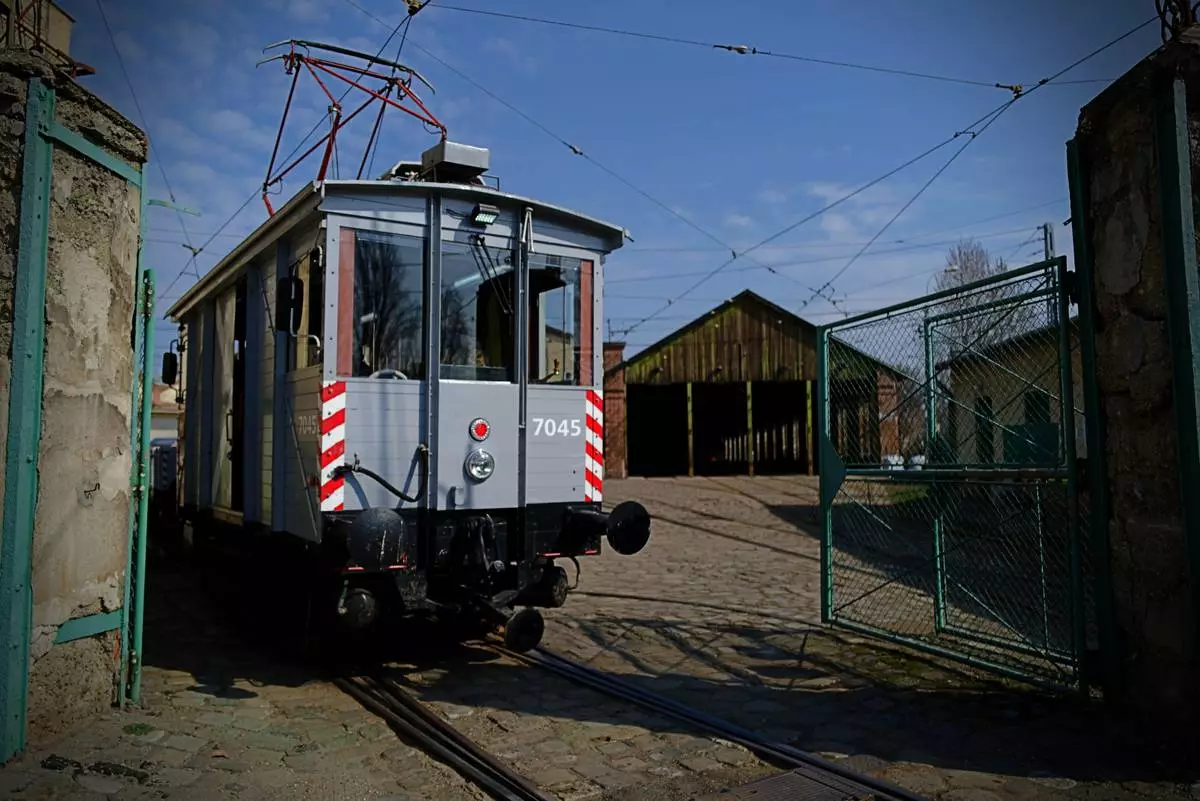
A century-old freight tram leaves the Ferencvaros tram depot in Budapest, Hungary on Wednesday, March 11, 2026. (AP Photo/Bela Szandelszky)
MIAMI (AP) — Francisco Cervelli believes Italy won't be sneaking up on opponents in three years at the next World Baseball Classic.
“We are no longer the Cinderella,” the Italy manager said after the Azzurri were eliminated with a 4-2 semifinal loss to Venezuela on Monday night. “In three years they are going to take us seriously. We have a group of young players that are going to participate in the next classic. What they experienced today, they are going to take it away for the rest of their lives.”
The Azzurri stunned with a 5-0 start to reach their first WBC semifinal, putting a spotlight on a soccer-crazed country where baseball is less popular than in many other participating WBC nations. Players spoke of providing an exciting foundation for future growth and success.
“To play in front of all these crowds and just how loud they were in these games," said center fielder Jakob Marsee, "no one thought we could win, and being able to do it with all the guys was a lot of fun.”
Italy blew a 2-1 seventh-inning lead Monday when Michael Lorenzen allowed consecutive run-scoring singles with two outs to Ronald Acuña Jr., Maikel Garcia and Luis Arraez.
Italy players remained draped over the dugout railing after the final out, watching Acuña and the other Venezuelan stars celebrate on the field in front of them while the pro-Venezuela sellout crowd at loanDepot park roared. They stayed there for about 10 minutes, exchanging hugs and saluting some fans behind their dugout.
“We just wanted to make sure we waved and thanked, one, the Venezuelan fans who were here tonight," captain Vinnie Pasquantino said, "and the Italian fans that were here, because that atmosphere was incredible.”
Cervelli addressed the team after that.
“I just told the guys that they are the champions of this tournament,” he said. “No one expected what they did. They are champions. ... They revolutionized Italy. They put another sport on the map, which is good.”
The expectation is certainly that this young roster made up of only a handful of major leaguers and many players from the minors will be back and more experienced in future WBCs.
By then they're hoping baseball in Italy will have skyrocketed in popularity.
“We were told that ... 7 million people watched this game tonight in Italy,” Pasquantino said of a broadcast that started just after 1 a.m. Tuesday in Italy. “That’s incredible. That’s why we’re doing this tournament, in my opinion. To have that sort of impact once every few years is incredible. And the goal of this team — we’ve talked about it a lot — is to impact Italy, and we have.
"So for us, we weren’t successful on the field tonight, but we were successful in Italy. And that’s what this is all about.”
The Azzurri became the surprise of the tournament, handing the United States a surprising 8-6 loss in pool play and following that with a 9-1 defeat of Mexico when Pasquantino had the WBC's first three-homer game. The Italians then beat Puerto Rico 8-6 to reach Monday night's semifinal.
“Really happy to be here with these guys and represent my family,” said Marsee, who is entering his second season with the Miami Marlins and played in front of a crowd Monday that he's unaccustomed to seeing. "Going forward this season, all I want to do is bring this back to Miami and be able to do this in October.”
The Italians' celebrations throughout the tournament were endearing to many and garnered widespread attention. They followed each of their 12 home runs with celebratory shots of espresso and brought in bottles of wine — each batch grew more pricey — after every win.
They didn't pay much attention to the outside critiques they received. Some criticized the roster mostly comprised of Italian-Americans, many of whom have never been to Italy.
Pasquantino said he hopes that will change.
“And for the kids in Italy, just know that we’re doing this for you guys,” he said. “We want in 20 years for the World Baseball Classic Italian team to be full of Italians, like Italian speakers from Italy. That’s the goal of this. To be an ambassador of that is extremely humbling for me, and I hope that we get to see this through one day.”
AP MLB: https://apnews.com/MLB

Venezuela first baseman Luis Arraez (2) catches the ball as Italy Vinnie Pasquantino is out on first base during the second inning of a World Baseball Classic semifinal game, Monday, March 16, 2026, in Miami. (AP Photo/Rebecca Blackwell)

The Venezuela team celebrates after defeating Italy at a World Baseball Classic semifinal game, Monday, March 16, 2026, in Miami. (AP Photo/Lynne Sladky)

The Italy team console each other after losing to Venezuela at a World Baseball Classic semifinal game, Monday, March 16, 2026, in Miami. (AP Photo/Lynne Sladky)

Italy pitcher Michael Lorenzen and catcher JJ D'Orazio shake hands during the fifth inning of a World Baseball Classic semifinal game against Venezuela, Monday, March 16, 2026, in Miami. (AP Photo/Lynne Sladky)