Vietnamese Prime Minister Pham Minh Chinh met with Chinese Foreign Minister Wang Yi, Minister of Public Security Wang Xiaohong, and Minister of National Defense Dong Jun in Hanoi on Monday.
The three senior Chinese officials were in Vietnam to attend the first ministerial meeting of the China-Vietnam "3+3" strategic dialogue on diplomacy, defense and public security.
Noting that China is the only country that aligns with all of Vietnam's foreign policy priorities, Chinh said that consolidating and developing relations with China is the top priority and a strategic choice of the Communist Party of Vietnam and the Vietnamese government.
Chinh said that Vietnam firmly adheres to the one-China policy, supports the series of global initiatives proposed by China, and is willing to work with China to implement the important consensus reached by the top leaders of the two parties, prepare for the next stage of high-level exchanges, jointly enhance political mutual trust, promote pragmatic cooperation, properly handle differences, and continuously deepen the Vietnam-China comprehensive strategic cooperative partnership.
For his part, Foreign Minister Wang Yi said that China is willing to work with Vietnam to comprehensively deepen the alignment of development strategies, strengthen cooperation in areas such as connectivity, trade and investment, implement more projects that benefit people's livelihoods, and deliver greater benefits to the people of both countries, so as to jointly forge ahead in a turbulent and changing world.
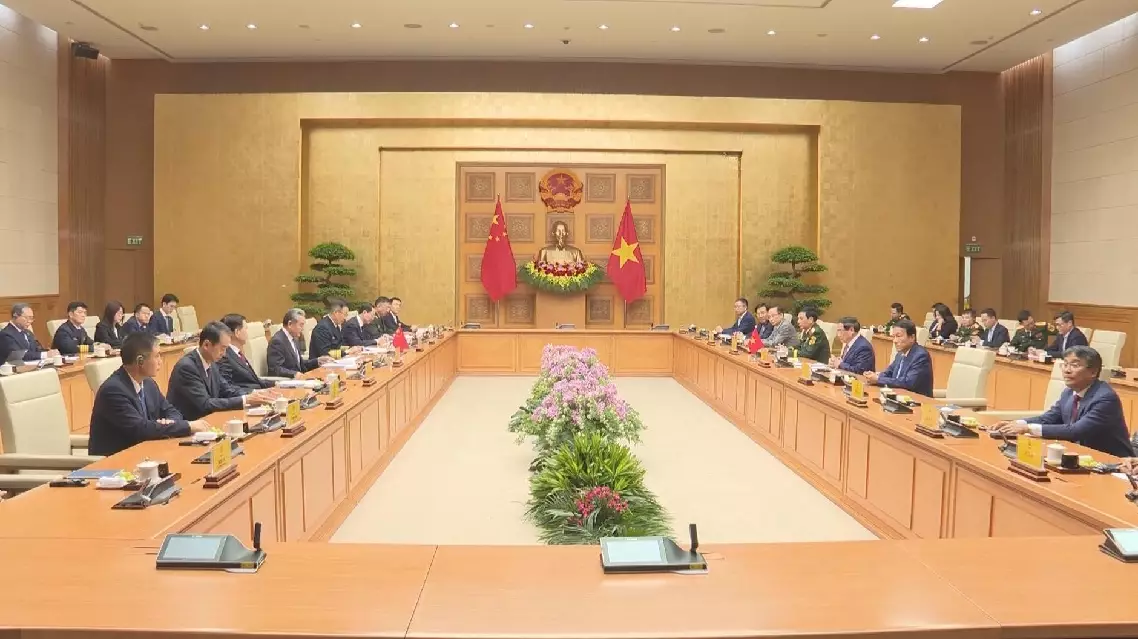
Vietnamese PM meets with senior Chinese officials
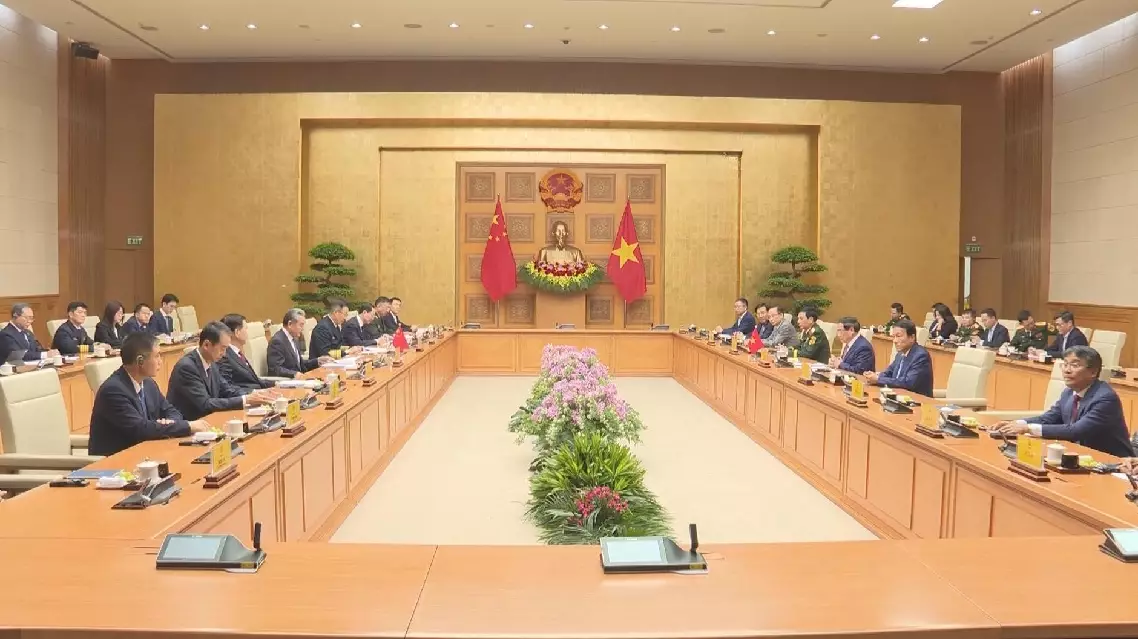
Vietnamese PM meets with senior Chinese officials
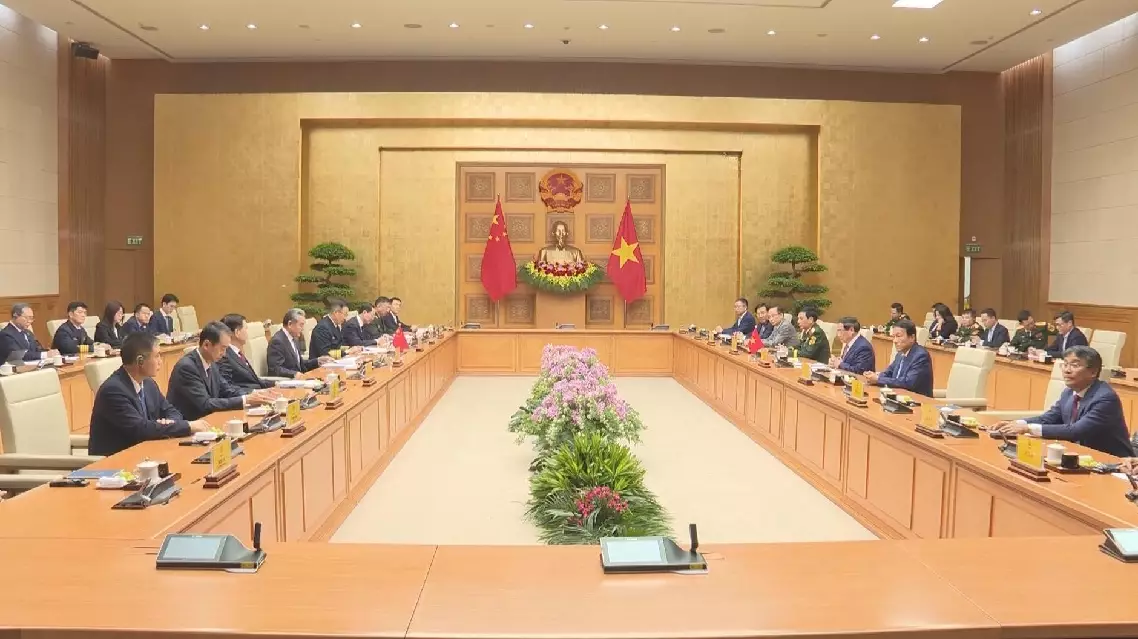
Vietnamese PM meets with senior Chinese officials
The on-site search for survivors has largely concluded following a deadly explosion at a fireworks factory in central China's Hunan Province on Monday, which killed 26 people and injured 61 others, local authorities said at a news conference on Tuesday.
The blast occurred at around 16:40 on Monday at a workshop of Huasheng Fireworks Manufacturing and Display Co., Ltd. in Liuyang, a county-level city under Changsha, the provincial capital.
Officials paused to mourn the victims at the beginning of the news conference. Among the injured, 55 with minor wounds have received treatment and are in stable conditions.
"More than 1,500 personnel from the fire, emergency response, public security and health departments have been deployed to carry out rescue operations, on-site response and medical treatment in an orderly manner. On-site search and rescue has now basically completed, and identity verification of the victims is underway. The leaders of the company concerned have been taken into legal custody. Real-time monitoring of air and water shows that the relevant environmental indicators are normal," said Chen Bozhang, mayor of Changsha City and deputy secretary of the Communist Party of China (CPC) Changsha Municipal Committee.
The Hunan provincial fire and rescue authorities dispatched 482 personnel, 116 fire trucks, 15 sniffer dogs, 18 drones, six robots and one robot dog to the scene, successfully pulling out seven trapped individuals.
"Next, we will concentrate the best medical resources to conduct case-by-case assessments of the injured, closely monitor their conditions, and dynamically adjust treatment plans to provide meticulous care. A special task force has been set up for follow-up assistance, adopting a 'one special team for one victim (family)' approach to proactively contact the families of the deceased and injured, and establish a closed-loop mechanism for learning about and addressing their needs," Chen said.
The mayor also vowed a full, transparent investigation into the cause of the accident.
"We will fully cooperate in the accident investigation, strictly adhering to the principles of seeking truth from facts and confronting problems head-on. We will carry out a comprehensive, in-depth and penetrating investigation to fully reconstruct the entire process and chain of the accident," he said.
Since 19:00 on Monday, all fireworks production enterprises in Changsha have suspended operations for safety rectification. Citywide safety inspections are underway to close regulatory loopholes, reinforce corporate responsibility and improve overall safety standards.
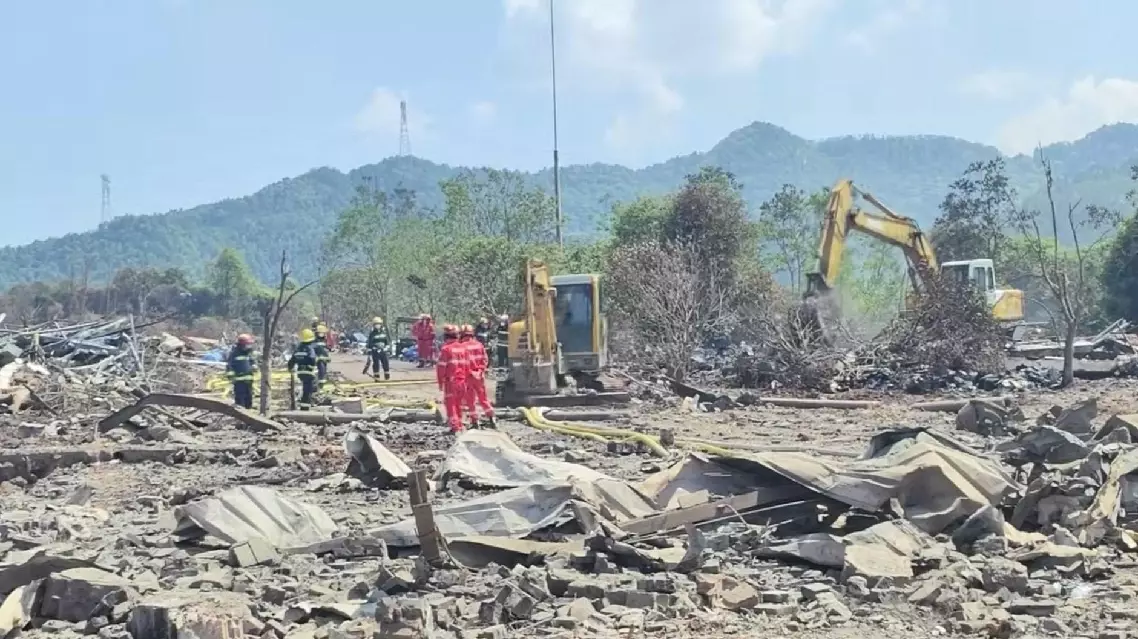
Death toll rises to 26 in central China fireworks plant explosion