LOS ANGELES--(BUSINESS WIRE)--Mar 17, 2026--
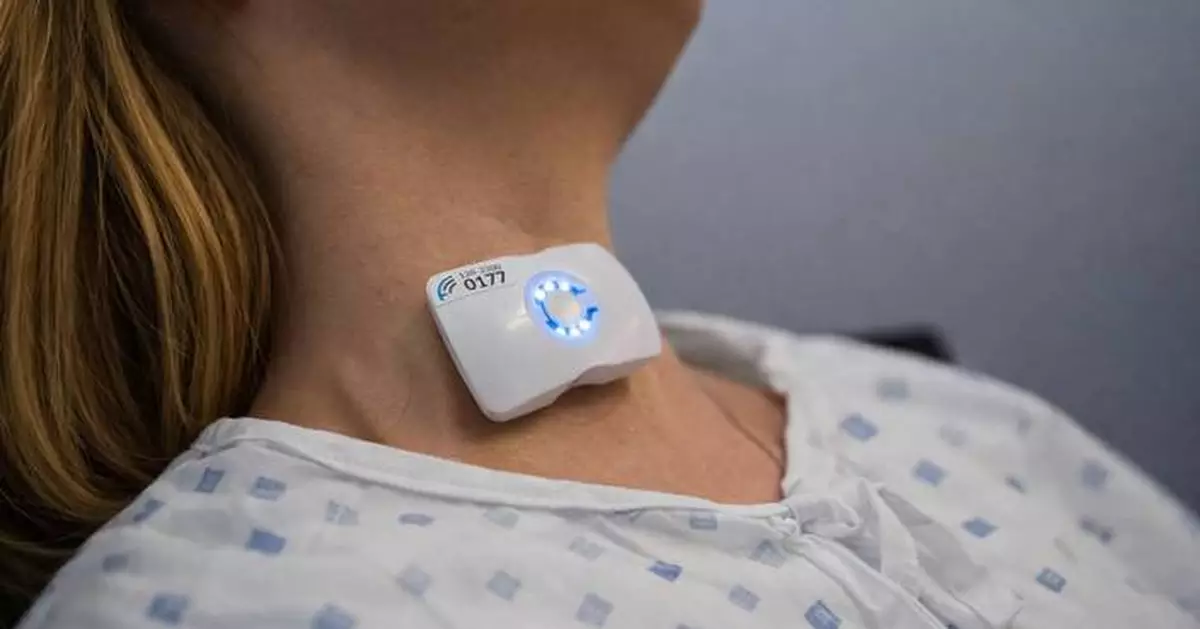
Flosonics Medical, maker of FloPatch, the world’s first wireless, wearable Doppler ultrasound for critical care, today announced the peer-reviewed publication of the Safe and Fluid Effective Resuscitation (SaFER) protocol in SN Comprehensive Clinical Medicine. Co-authored by Flosonics co-founder and CMO Dr. Jon-Emile Kenny and Stanford University’s Dr. Carolyn Kaufman, the paper introduces a structured bedside framework for IV fluid decisions and identifies FloPatch as a practical tool to execute it, including for clinicians without advanced ultrasound training.
This press release features multimedia. View the full release here: https://www.businesswire.com/news/home/20260317709165/en/
The SaFER protocol structures this decision around three questions: Are fluids indicated? Are fluids safe? Are fluids effective? Existing ultrasound tools can answer these questions but require advanced training most frontline clinicians don’t have. FloPatch bridges that gap. A single wireless patch placed on the neck simultaneously assesses fluid safety and fluid efficacy, providing the same physiologic insight as more complex methods without specialized expertise.
“In rapid response situations, fluid decisions need to be made quickly and with confidence, but the physiologic data that should guide those decisions has historically been out of reach for most frontline teams,” says Dr. Carolyn Kaufman, MD, PhD, Department of Medicine, Stanford University School of Medicine. “The SaFER protocol was designed to change that. The carotid and jugular Doppler data FloPatch provides maps directly onto the questions we’re trying to answer, and any member of the response team can apply it at the bedside.”
“What the SaFER framework makes explicit is that fluid safety and fluid efficacy are physiologically distinct questions,” says Dr. Jon-Emile Kenny, MD, Co-Founder and Chief Medical Officer of Flosonics Medical. “FloPatch was developed specifically for this clinical context, giving physicians and nurses without ultrasound training real-time and easy-to-acquire critical care ultrasound for IV volume management.”
Tailored IV fluid delivery as described by SaFER is important because nearly one-third of patients with septic shock do not respond to additional fluids 1, and fluid overload can extend hospital stays by approximately three days at more than $15,000 in added cost per patient 2. When clinicians employ dynamic fluid assessments, outcomes improve, with reduced need for mechanical ventilation and renal replacement therapy 3,4, shorter ICU stays 4, and lower mortality 5,6. The Society of Critical Care Medicine recently endorsed ultrasound-guided fluid management for all critically ill patients, but adoption has been limited by the training and equipment demands of traditional tools.
Disclosure: Dr. Jon-Emile Kenny and co-author Joseph Eibl are co-founders of Flosonics Medical, as noted in the published paper’s competing interests statement.
About Flosonics Medical
Flosonics Medical is a medical device company building the future of hemodynamic monitoring. Its flagship product, FloPatch, is an FDA-cleared, wireless, wearable Doppler ultrasound for real-time hemodynamic assessment at the bedside. Recently awarded a Vizient Innovative Technology contract, FloPatch is used in hospitals across the United States to guide fluid resuscitation in critically ill patients. Founded in 2015 in Sudbury, Ontario. For more information, visit www.flosonicsmedical.com.
References:
Sources for statistics and clinical evidence cited in release body:
1. Hernández G, Ospina-Tascón GA, Damiani LP, et al; ANDROMEDA-SHOCK Investigators. Effect of a resuscitation strategy targeting peripheral perfusion status vs serum lactate levels on 28-day mortality among patients with septic shock. JAMA. 2019;321(7):654–664.
2. American Hospital Directory analysis of FFY2022 Medicare IPPS (MedPAR) claims data.
3. Douglas IS, Alapat PM, Corl KA, et al. Fluid response evaluation in sepsis hypotension and shock. Chest. 2020;158(4):1431–45.
4. Latham HE, Bengtson CD, Satterwhite L, et al. Stroke volume guided resuscitation in severe sepsis and septic shock improves outcomes. Journal of Critical Care. 2017;42:42–6.
5. Wang J, Blake LM, Orozco N, et al. Dynamic Measures of Fluid Responsiveness to Guide Resuscitation in Patients With Sepsis and Septic Shock: A Systematic Review and Meta-Analysis. Critical Care Explorations. 2025;7(9):e1303.
6. Sharif S, Flindall H, Basmaji J, et al. Critical Care Ultrasonography for Volume Management: A Systematic Review, Meta-Analysis, and Trial Sequential Analysis of Randomized Trials. Crit Care Explor. 2025;7(5):e1261.
Notes to Editors:
Publication details and supporting references for journalist use:
Full citation: Kaufman CS, Wu D, Eibl JK, Kenny JES. Ultrasonographic Measures of Safe and Fluid Effective Resuscitation (SaFER): Incorporating the VExUS and VTI into Protocolized Care. SN Compr Clin Med. 2026;8:73. DOI: 10.1007/s42399-026-02318-7
SCCM guideline reference: Díaz-Gómez JL, et al. Society of Critical Care Medicine Guidelines for the Use of Point-of-Care Ultrasound in the Adult Critically Ill Patient: 2024 Focused Update. Crit Care Med. 2025;53(2):e447–458.
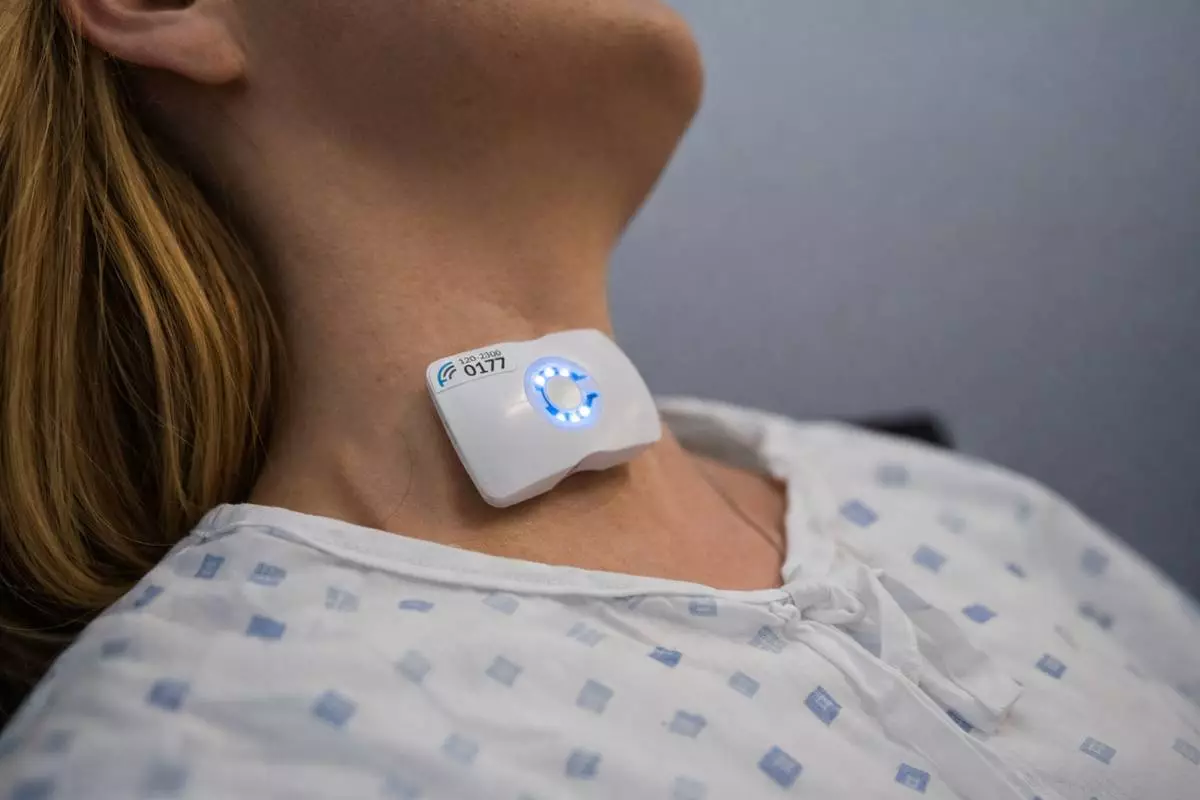
FloPatch, a wearable Doppler ultrasound device, is applied to the neck to measure real-time blood flow and help clinicians make faster, more personalized treatment decisions.
WASHINGTON (AP) — Legislation that would require proof of U.S. citizenship for new voters has become a rallying cry for President Donald Trump, who claims that passage of the bill will “guarantee the midterms” for his Republican Party in November.
The bill, which the Senate will take up as early as Tuesday, would require voters to provide proof of citizenship when they register and to present approved identification when they go to the polls, among other new rules that Trump and his most loyal supporters are pushing as part of an effort to assert more federal control over elections.
Federal law already requires that voters in national elections be U.S. citizens. But the legislation would lay out strict new requirements for voters to prove their status.
Democrats are uniformly opposed to the legislation and expected to block its passage through the Senate. They say the legislation would disenfranchise millions of American voters who don’t have birth certificates or other documents readily available — both Republicans and Democrats who would be newly registering to vote.
Despite the long odds of success, Trump has been pushing Senate Majority Leader John Thune to move ahead with the bill and suggested Republicans eliminate the filibuster or find another workaround to pass it. Thune has repeatedly said there isn’t enough support in the Senate to do that.
Instead, Republicans plan to hold an extended debate on the bill for a week or more, an effort to try and appease Trump and make Democrats defend their position.
The bill would “require Americans to demonstrate that they’re eligible to vote,” Thune said last week. “And that they are who they say they are.”
The Safeguard American Voter Eligibility Act, or the SAVE America Act, would force Americans to prove they are citizens when they register to vote, mostly through a valid U.S. passport or birth certificate.
Driver's licenses in many states would not be enough. The legislation says that the identification must be compliant with new REAL ID rules and also indicate that the applicant is a citizen of the United States — which few state licenses do.
A person registering to vote could also present a passport or a birth certificate. U.S. military members could present a military ID along with a record of service that shows where they were born.
Most people registering to vote would have to present the documents in person at an elections office, including people who vote by mail. Advocacy groups that oppose the legislation say that the bill would crush voter registration efforts ahead of this year's elections.
The bill would create new penalties for election officials who register applicants who have not presented documentary proof of citizenship. Opponents say that provision could potentially scare workers into turning away valid applicants while also discouraging people from working or volunteering at polling locations. It would also allow private individuals to sue election officials in some circumstances.
While federal law requires that voters are U.S. citizens, there is not currently a nationwide requirement that voters must show identification when they go to vote. Currently, 36 states have voter identification laws in place, some stricter than others, according to the National Conference of State Legislatures.
The bill would require voters in all states to present valid identification, and those voting by mail would have to send a photocopy. Overseas military and some qualified disabled individuals would be exempt from those rules.
Republican supporters most frequently highlight this section of the bill when pushing for its passage. Thune said last week that if you have to show an ID to get a library card, “it’s not too much to ask voters to show ID to vote in federal elections.”
The legislation would require states to share voters' information with the Department of Homeland Security as a way to verify the citizenship of the names on the voter rolls — giving the federal government unprecedented access to state voter data. Many states are already embroiled in legal fights with the Trump administration over demands that they provide voter information.
Supporters of the state-federal sharing say that it would enable DHS to compare the state information with their own databases that are used to verify immigration status.
But Senate Democratic leader Chuck Schumer predicted that handing over names to the federal government would allow DHS to ”purge tens of millions of people from the voter rolls.”
Senate Republicans are expected to offer amendments on the floor as part of their talkathon in support of the bill. Trump has said he wants more provisions added, including a ban on mail-in ballots, which are used by many states.
Trump has long criticized mail-in ballots and used it as a central argument in his false claims of fraud in the 2020 election he lost to Democrat Joe Biden. But voting groups — and many lawmakers in both parties — have long championed the practice as helping to make it easier for Americans to vote.
The president also wants to add two unrelated provisions around transgender rights issues — one that would ban those born as men from playing in women’s sports and another to block sex reassignment surgeries on some minors.
If the SAVE America Act were enacted, the new rules for voter registration and voter identification at the polls would take effect immediately. Trump says it’s necessary for Republicans to win in the midterm elections — even though they won both chambers of Congress and the White House without the law in 2024.
With primary elections getting underway next month, critics say it would be difficult and costly for state election officials to implement, and could confuse voters.
Marc Elias, a Democratic elections attorney, said he isn’t ”aware of any state that currently requires what this would require.”
“If it’s passed tomorrow, the day after states would need to implement this,” Elias said.
Associated Press writer Lisa Mascaro contributed to this report.
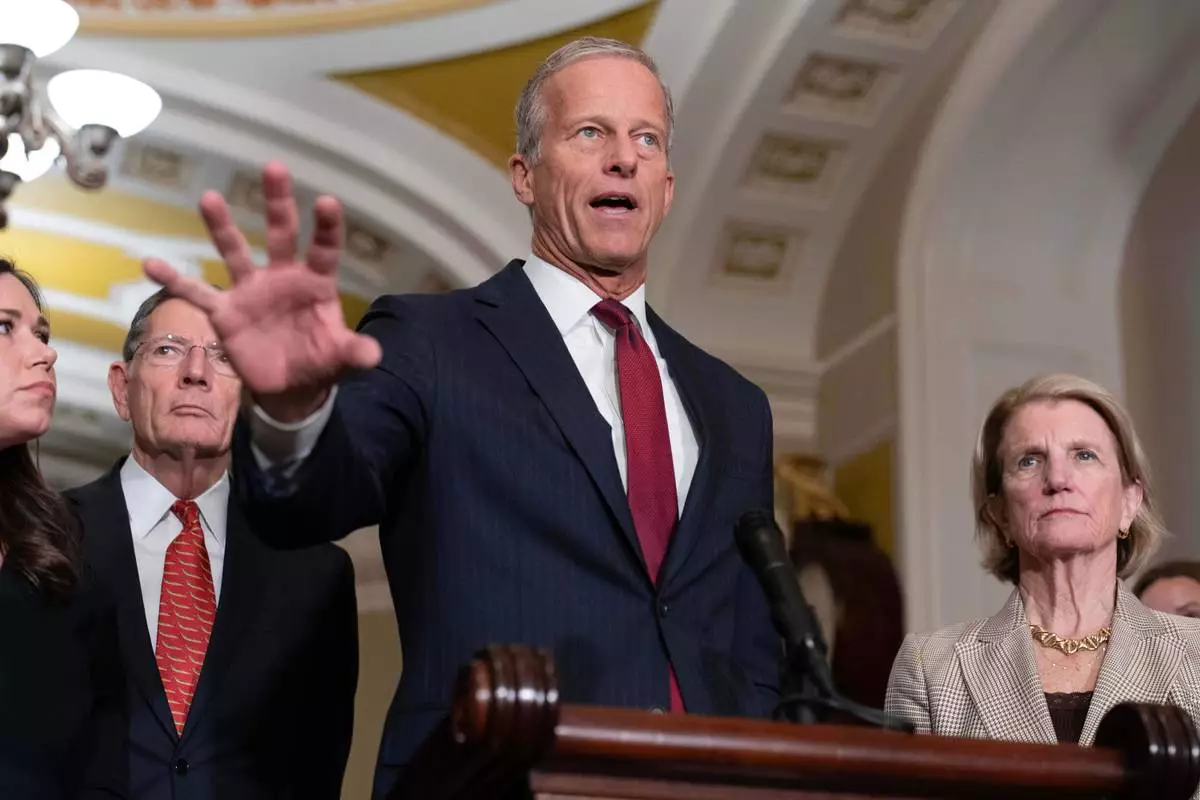
Senate Majority Leader John Thune, R-S.D., speaks to reporters after a weekly Republican policy luncheon, at the Capitol in Washington, Tuesday, March 10, 2026. (AP Photo/Jose Luis Magana)