Escalating Israeli strikes on Lebanon are driving hundreds of thousands from their homes, forcing civilians to abandon livelihoods and placing further strain on a country already grappling with a severe economic crisis.
Lebanon is seeing a sharp rise in the number of displaced people as Israeli airstrikes hit various parts of the country, particularly the south. The mass displacement is placing additional strain on a country already grappling with a severe economic crisis, burdening infrastructure and worsening the hardships faced by residents and local authorities.
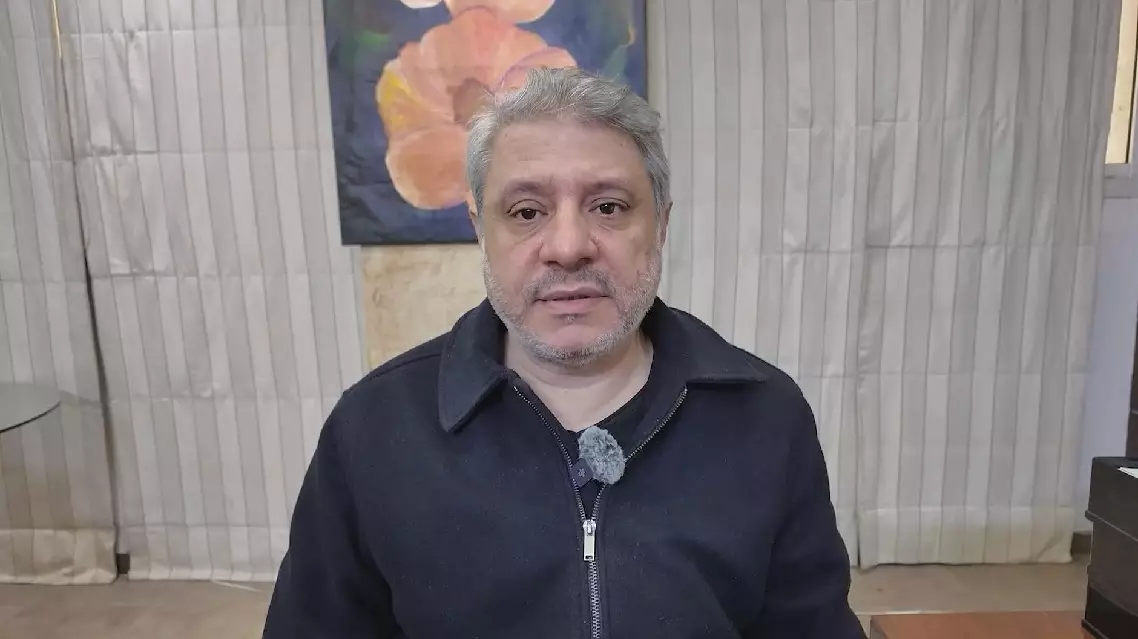
Dr. Ahmed Jaber, an academic and researcher specializing in economics, said the large-scale internal displacement has placed heavy pressure on displaced people, host communities and aid organizations, and that even with assistance from other countries, the problem cannot be fully resolved.
"Schools throughout Beirut are filled with displaced people. This is costly for both the displaced and the citizens, as well as for the organizations that provide aid to the people. This has had repercussions on the economic level, given the number of displaced people, which exceeds the available resources to address this issue. Therefore, some countries have begun providing humanitarian aid, but this will only address a small part of the problem," he said.
"The airstrikes were in the Sultaniyeh area around us, and the village of Deir Qanoun al-Nahr. We were on the road for about fifteen to twenty hours, and we didn't even reach Sidon because of the heavy traffic. So we had to sleep in an area called al-Adousiyeh for a whole day, and the next day we came to Beirut," said Hassan Salameh, a displaced resident from southern Lebanon.
Musa Salameh, another displaced resident from southern Lebanon, said continued Israeli strikes have forced them from their homes and wiped out their livelihoods.
"I left all my sources of income in Blida. I owned a horse worth two thousand dollars, I left it in the street. I had seven heads of cattle, they are all gone, and we have nothing left. There is no way to live anymore. I was living in the house under the sound of shelling. During the two months, I put plastic bags in place of the broken glass. There is no money, no work, nothing at all. We endured and stayed, but there was nothing we could do. Then this crisis came and broke our backs again. We pray to God that we can return to our homes," he said. "The houses were destroyed, and life is no longer the same. We moved to the (southern) suburbs of Beirut, then we returned from the suburbs and moved here. It's a long story, a story of two years (of suffering). There is no source of income or work, all of life has stopped because of this crisis," said Hussein Moussa, another displaced resident from southern Lebanon.
Israeli forces launched ground operations on Monday against Hezbollah strongholds in southern Lebanon, the Israel Defense Forces said.
The ground incursion marks an escalation of a conflict that began on Feb 28 with a U.S.-Israeli air campaign against Iran. Hezbollah, a key Iranian ally that controls much of southern Lebanon, resumed attacks on March 2, two days after the killing of former Supreme Leader Ali Khamenei in a U.S.-Israeli strike.
Monday's clashes were among the fiercest since a ceasefire ended a year-long war in late 2024, a halt that had stopped hostilities that displaced hundreds of thousands and left significant infrastructure damage on both sides.
Israeli airstrikes displace hundreds of thousands, strain Lebanon’s economy