ANKARA, Turkey (AP) — Canada was not consulted over the U.S-Israeli strikes on Iran that sparked the war in the Middle East and has no intention of participating in any offensive military operation, Canadian Foreign Minister Anita Anand said Tuesday.
In a brief telephone interview with The Associated Press ahead of talks in Ankara with Turkish Foreign Minister Hakan Fidan, Anand stressed Canada’s priority was the de-escalation of the conflict and the protection of civilians.
Anand arrived in Turkey for consultations on the situation in the region as the war rages on.
U.S. President Donald Trump called last week on NATO allies and major powers to help reopen the Strait of Hormuz, warning that the alliance faces a “very bad future” if they refuse. Iran has blocked the waterway since the war began, driving up fuel prices and disrupting global supply chains and travel.
“Canada was not consulted, did not participate in the military action, and has no intention of participating in the offensive military operation,” Anand said. “Our foreign policy is focused on de-escalation and the protection of civilians and humanitarianism generally.”
The minister added that in a meeting with Turkish Vice President Cevdet Yilmaz, both agreed that “de-escalation is of the utmost priority and that the war in the Middle East needs to end in the interests of civilian lives.”
Since the start of the war, NATO air defense systems have intercepted three ballistic missiles fired from Iran toward Turkey’s airspace. The action forced the alliance to deploy an additional Patriot missile defense system on Turkish territory.
Fidan, in an interview with the AP earlier this week, said Turkey’s top priority is to remain outside of the conflict and ruled out a military response at this stage, saying NATO’s defenses were effective.
Asked whether Canada would get involved if a NATO country was attacked, Anand said: “We will take all decisions concerning the alliance in conjunction with the alliance.”
Canadian Prime Minister Mark Carney initially backed the strikes on Iran but later said he supported them “with some regret” as they represented an extreme example of a rupturing world order.
Anand insisted there was no change in Canada’s foreign policy.
“It has been our long-standing position that Iran is a destabilizing force in the Middle East and in particular, Iran’s proliferation of its nuclear capacity,” she said. Anand said Carney’s reversal wasn’t about abandoning that stance, but about supporting regional stability, backing the Gulf states that have come under attack and prioritizing civilians and infrastructure.
The Canadian minister also expressed concerns over the conflict between Israel and Hezbollah in Lebanon, saying it was the Lebanese people “who are bearing the brunt of the ongoing war.”
Canada, alongside France, Germany, Italy, and the United Kingdom, issued a statement on Monday warning of the grave consequences of escalating violence in Lebanon. The statement said a significant Israeli ground offensive could lead to devastating humanitarian consequences and protracted conflict “must be averted.”
“And we very much are concerned with Hezbollah’s attacks on Israel and the targeting of civilians,” Anand said. “We want to ensure that there is meaningful engagement by Israeli and Lebanese representatives to negotiate a sustainable political solution.”
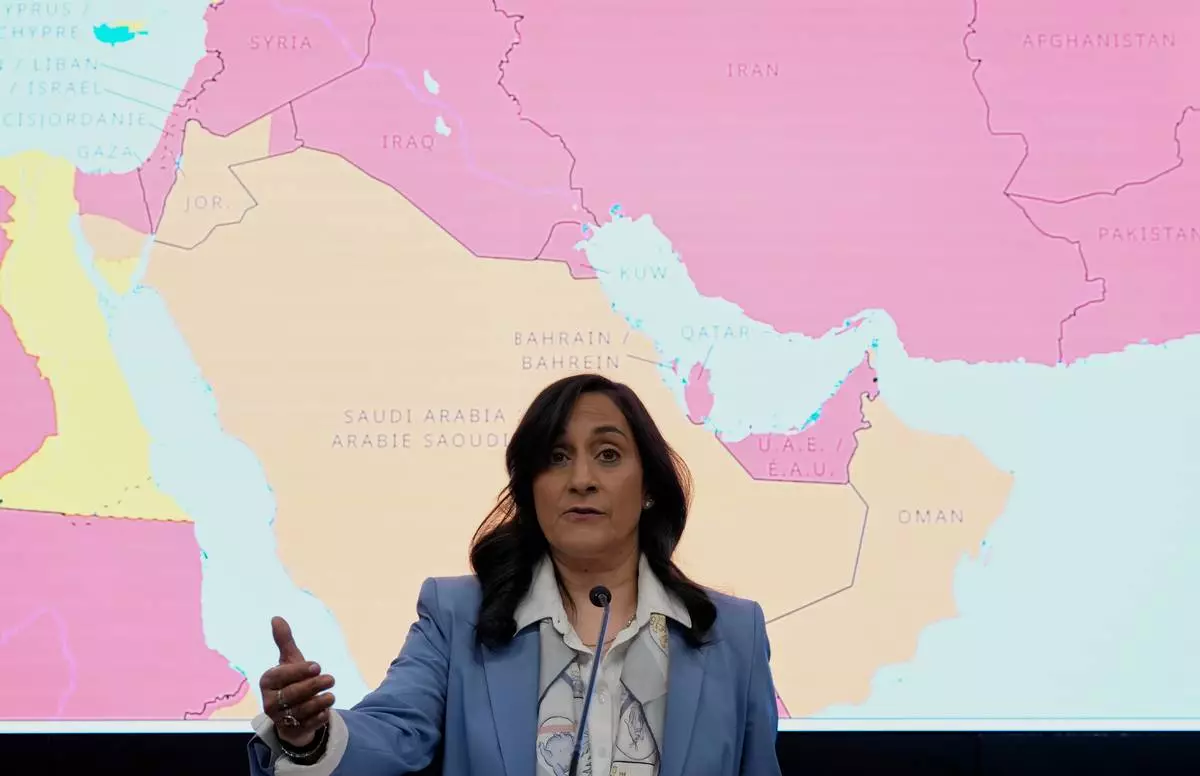
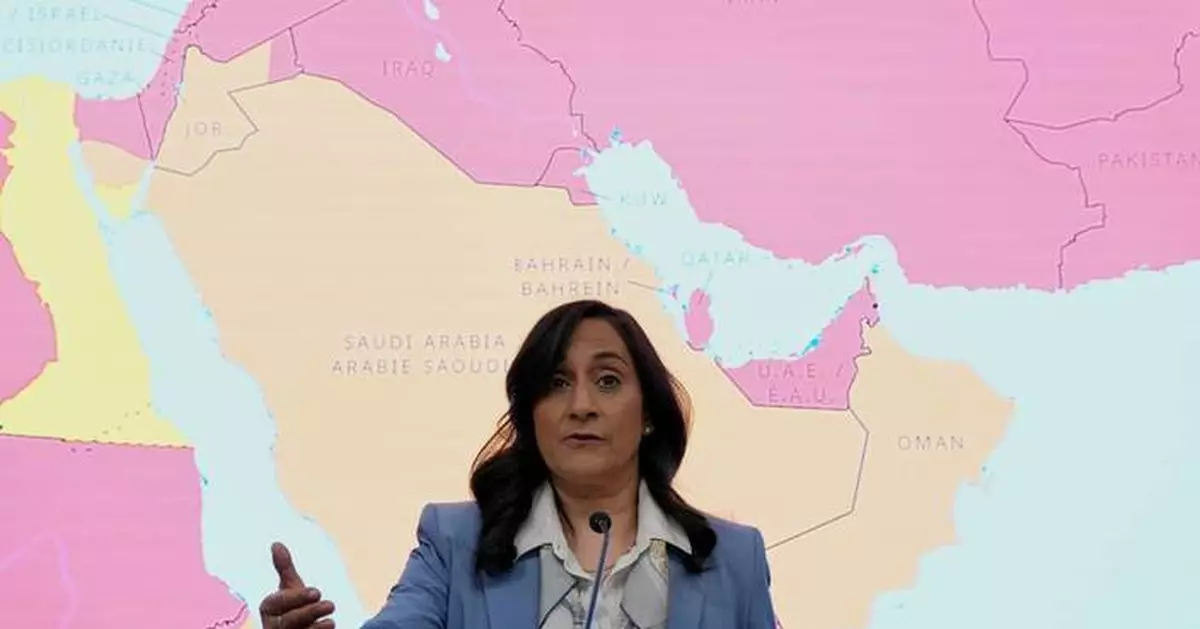
A map showing travel advisory risk levels in the Middle East is shown behind Canada's Minister of Foreign Affairs Anita Anand as she speaks at a news conference at the Emergency Watch and Response Centre at Global Affairs Canada in Ottawa, Ontario, Wednesday, March 4, 2026. (Justin Tang/The Canadian Press via AP)
WASHINGTON (AP) — Joe Kent, the director of the National Counterterrorism Center, announced his resignation on Tuesday, citing his concerns about the justification for military strikes in Iran and saying he “cannot in good conscience” back the Trump administration’s war.
“Iran posed no imminent threat to our nation, and it is clear that we started this war due to pressure from Israel and its powerful American lobby,” Kent said in a statement posted on social media.
Kent, a former political candidate with connections to right-wing extremists, was confirmed to his post last July on a 52-44 vote. As head of the National Counterterrorism Center, he was in charge of an agency tasked with analyzing and detecting terrorist threats.
His resignation reflects unease within President Donald Trump’s base about the war and shows that questions about the justification for the use of force in Iran extend to the right of Trump's base and to senior members of his administration.
The change in personnel at one of the nation's top counterterrorism offices comes amid heightened concerns about terrorism in the homeland following attacks within the past week at a Michigan synagogue and a Virginia university.
Trump has offered shifting reasons for the strikes and has pushed back on claims that Israel forced the U.S. to act. Earlier this month, House Speaker Mike Johnson, R-La., suggested that the White House believed Israel was determined to act on its own, leaving the Republican president with a “very difficult decision.”
A spokesperson for Director of National Intelligence Tulsi Gabbard did not immediately respond to questions about Kent's resignation. The White House also had no immediate comment on Kent's resignation.
Democrats strongly opposed Kent’s confirmation, pointing to his past ties to far-right figures and conspiracy theories. But following Kent's resignation, Sen. Mark Warner of Virginia, the top Democrat on the Senate Intelligence Committee, said Kent's concerns about the war in Iran were justified.
“I strongly disagree with many of the positions he has espoused over the years, particularly those that risk politicizing our intelligence community," Warner said. “But on this point, he is right: There was no credible evidence of an imminent threat from Iran that would justify rushing the United States into another war of choice in the Middle East.”
Gabbard, CIA Director John Ratcliffe and FBI Director Kash Patel are scheduled to testify before lawmakers later this week about threats facing the U.S., an annual hearing that this year is likely to be taken up by questions about the Iran war and in particular the revelation that outdated intelligence likely led to the U.S. firing a missile that hit an elementary school in Iran and killed more than 165 people.
A veteran and former Congresswoman from Hawaii, Gabbard has in the past criticized talk of military strikes in Iran. Six years ago she said that "an all out war with Iran would make the wars that we’ve seen in Iraq and Afghanistan look like a picnic. It will be far more costly in lives, American lives, and American taxpayer dollars — and all towards accomplishing what goal? What objective?”
Gabbard's office did not respond when asked if Gabbard supported the strikes, and she has not posted about Iran on her social media accounts since the strikes began last month.
Before entering Trump's administration, Kent ran two unsuccessful campaigns for Congress in Washington state. He also served in the military, seeing 11 deployments as a Green Beret, followed by work at the CIA.
During his 2022 congressional campaign, Kent paid Graham Jorgensen, a member of the far-right military group the Proud Boys, for consulting work. He also worked closely with Joey Gibson, the founder of the Christian nationalist group Patriot Prayer, and attracted support from a variety of far-right figures.
During his Senate confirmation hearing, Kent also refused to distance himself from a conspiracy theory that federal agents instigated the Jan. 6, 2021, attack at the Capitol, as well as false claims that Trump won the 2020 election over Democrat Joe Biden.
Democrats grilled Kent on his participation in a group chat on Signal that was used by Trump’s national security team to discuss sensitive military plans.
Still, Republicans praised Kent’s counterterrorism qualifications, pointing to his military and intelligence experience.
Sen. Tom Cotton, the GOP chair of the intelligence committee, said in a floor speech that Kent had “dedicated his career to fighting terrorism and keeping Americans safe.”
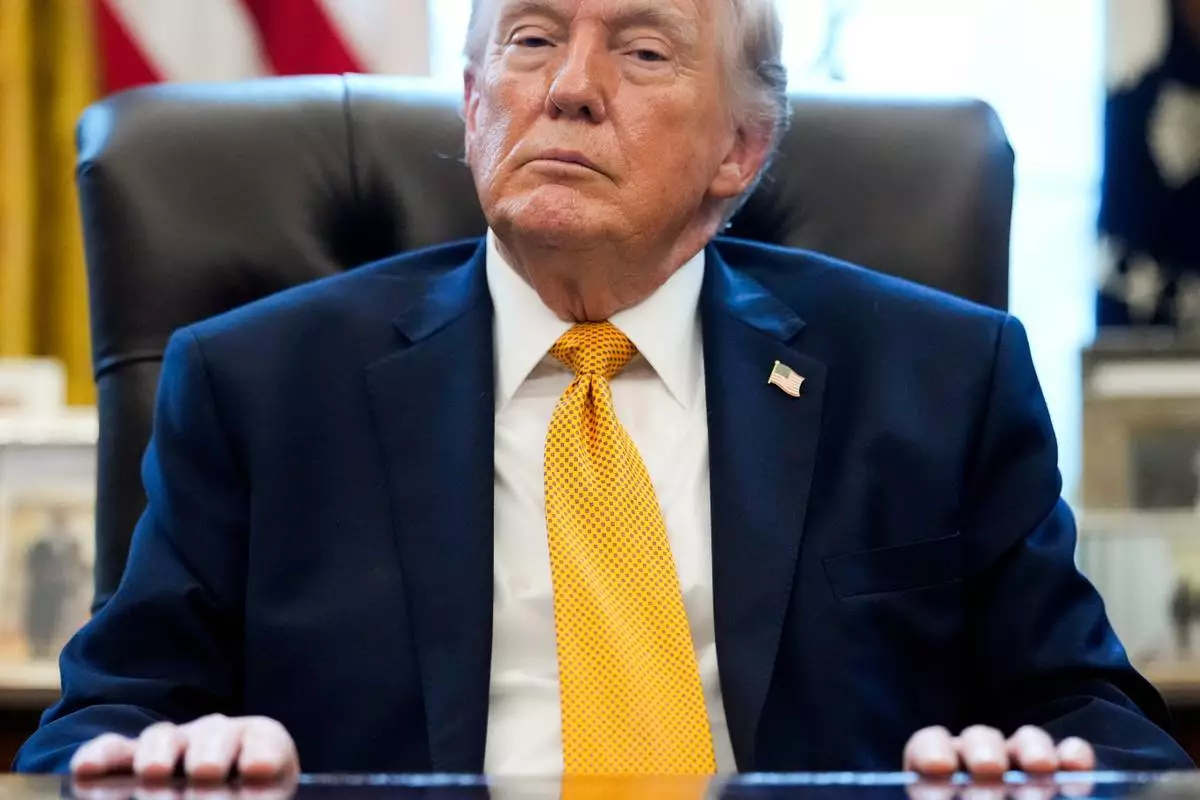
President Donald Trump pauses after signing an executive order in the Oval Office of the White House, Monday, March 16, 2026, in Washington. (AP Photo/Julia Demaree Nikhinson)
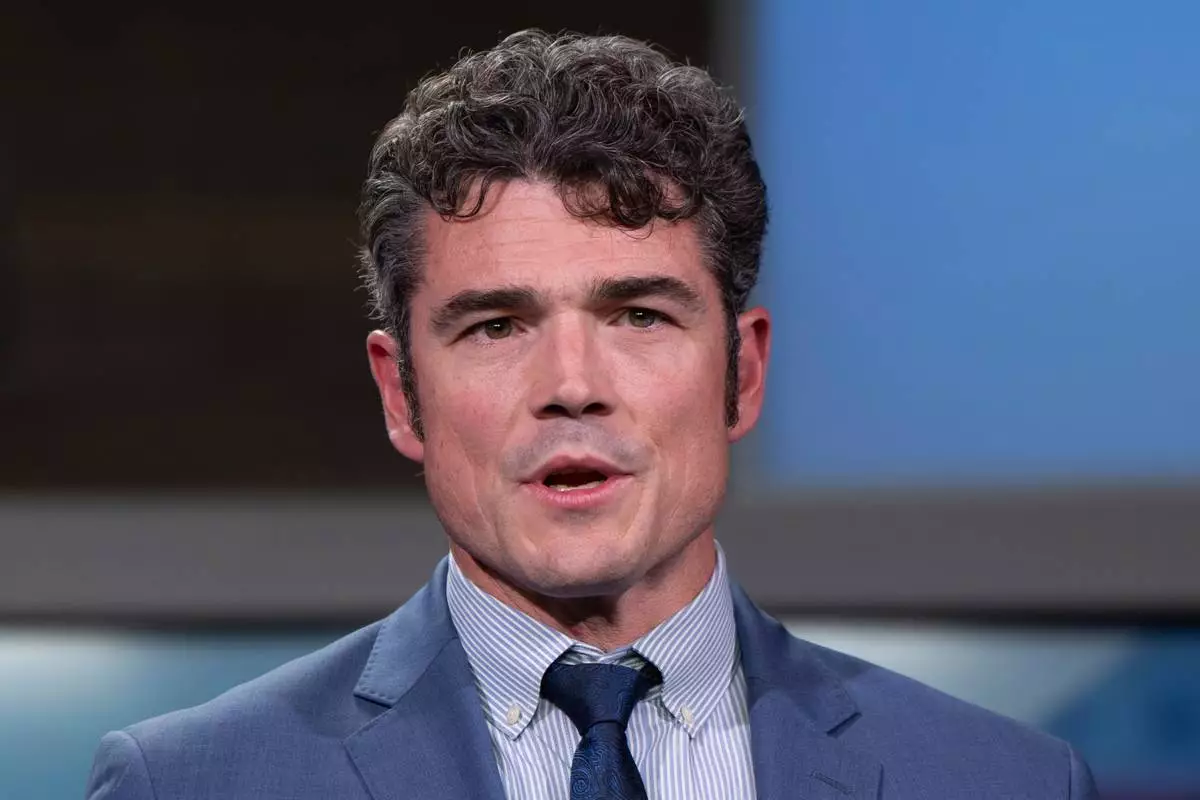
FILE - Joe Kent, Director of the U.S. National Counterterrorism Center, speaks during a congressional debate at KATU studios Oct. 7, 2024, in Portland, Ore. (AP Photo/Jenny Kane, File)