Skip to Content Facebook Feature Image

Vatican appeals court declares mistrial in the 'trial of the century' against a cardinal

News

Vatican appeals court declares mistrial in the 'trial of the century' against a cardinal
News

News

Vatican appeals court declares mistrial in the 'trial of the century' against a cardinal

2026-03-18 02:59 Last Updated At:03:00

ROME (AP) — The Vatican appeals tribunal declared a mistrial Tuesday in the Holy See’s big “trial of the century,” a stunning blow to both Pope Francis’ legacy and Vatican prosecutors who had put a cardinal and several other people on trial over alleged financial crimes.

In a 16-page ruling, the appeals court ruled that Francis and Vatican prosecutors both made procedural errors that nullified the original indictment against Cardinal Angelo Becciu and the others and required a new trial. The court set a June 22 as the date for the new trial to begin.

Defense lawyers said such a ruling was significant if not historic, since it amounted to a Vatican court declaring that an act of the pope had no effect.

The ruling was a win for the defense and a huge setback to Vatican prosecutors, who have been scrambling to salvage their case. The prosecution and 2023 convictions against Becciu and others had been held up by the Vatican and late pope as evidence of his willingness to crack down on financial misconduct in the Holy See.

Becciu's lawyers said the ruling showed they were right in arguing that the defense was put at an unfair disadvantage from the start.

“It shows that from the first moment, we were right to raise the violation of the right to defense and to request that the law be respected to have a fair trial,” Becciu's lawyers Fabio Viglione and Maria Concetta Marzo said in a statement.

The case had as its main focus the Vatican’s investment of 350 million euros ($413 million) in a London property. Prosecutors alleged brokers and Vatican monsignors fleeced the Holy See of tens of millions of euros in fees and commissions to acquire the property, and then extorted the Holy See for 15 million euros ($16.5 million) to cede control of it.

The original investigation spawned two main tangents involving Becciu, once a leading Vatican cardinal and future papal contender. He was convicted of embezzlement and sentenced to 5½ years in prison. The tribunal convicted eight other defendants of embezzlement, abuse of office, fraud and other charges and imposed tens of millions of euros (dollars) in restitution to the Holy See.

All defendants maintained their innocence and appealed after a two-year trial that opened a pandora's box of unwanted revelations about papal ransom payments to Islamic militants, Vatican vendettas, espionage and other dirty laundry of the Holy See.

During the initial trial, Becciu’s lawyers in particular had complained that prosecutors hadn’t turned over all the evidence to the defense, violating their right to a fair trial. Prosecutors had redacted some documents, withheld the cellphone records of a key prosecution witness and redacted texts among the players, arguing that such omissions were necessary to protect the secrecy of other investigations.

Defense lawyers also alleged that four secret decrees Francis signed giving prosecutors wide-ranging powers to investigate violated the defendants' right to a fair trial. They only learned about the decrees just before the trial began, since the decrees were never published.

The appeals court agreed with the defense arguments.

In the ruling, the appeals court ruled that one of Francis’ decrees — which allowed prosecutors to proceed without a preliminary judge overseeing their work — amounted to a law that should have been published. The failure to publish it, or to at least let the suspects know about it, made it ineffective, the court ruled.

The court also decreed that Vatican prosecutors’ failure to turn over to the defense all their evidence nullified their original indictment.

The finding against Francis' decree could have wide-ranging implications for any new trial, since it throws into question prosecutors' actions derived from the powers Francis granted them. Chief among them was the June 2020 arrest of broker Gianluigi Torzi, who was held in the Vatican barracks for 10 days of questioning without charge or a judge's warrant, and had his cellphones and laptop seized.

Defense lawyers were pleased by the ruling.

“The historic decision by the Court of Appeals—which, for the first time in Vatican history, ruled that a papal rescript was invalid and void due to failure to publish it—in our view results in the complete nullity of the entire investigation and trial,” attorneys Massimo Bassi and Cataldo Intrieri, who represent former Vatican official Fabrizio Tirabassi, said in a statement.

The tribunal, headed by Archbishop Alejandro Arellano Cedillo, ordered prosecutors to deposit all the documentation, “in their original form,” by April 30. It gave the defense until June 15 to prepare their motions before the June 22 start of the new trial.

The court stressed that it was not declaring the complete nullity of every act of the original trial, maintaining for example the status of the civil parties and the original acquittals. Defense lawyers said it remains to be seen how the appeals court decides what elements of the original trial can remain and what must be redone.

It was the second major blow to prosecutors since the appeals phase opened last year.

In January, the Vatican’s highest Court of Cassation upheld the lower court’s decision to throw out the prosecutor’s appeal of the first trial entirely because prosecutor Alessandro Diddi committed an embarrassing rookie procedural error.

On the same day as the Cassation ruling, Diddi also dropped months of objections and abruptly resigned from the case, rather than face the possibility that the Cassation court would order him removed.

Tuesday's decision was issued just days after Pope Leo XIV opened the Vatican’s judicial year. Leo, a canon lawyer, met Saturday with the judges and prosecutors who oversee the judicial apparatus of the Vatican City State, which follows its own peculiar legal code that is inspired by a century-old Italian code and the church’s in-house canon law.

In his remarks, Leo spoke of justice as a means of fostering unity in the church and credibility within an institution. His remarks were interpreted by some as a reference to how the Becciu trial had in some ways damaged the Holy See’s reputation because of its many anomalies.

“The observance of procedural safeguards, the impartiality of the judge, the effectiveness of the right of defence and the reasonable duration of proceedings are not merely technical instruments of the judicial process," Leo said. "They constitute the conditions through which the exercise of the judicial function acquires particular authority and contributes to institutional stability.”

Associated Press religion coverage receives support through the AP’s collaboration with The Conversation US, with funding from Lilly Endowment Inc. The AP is solely responsible for this content.
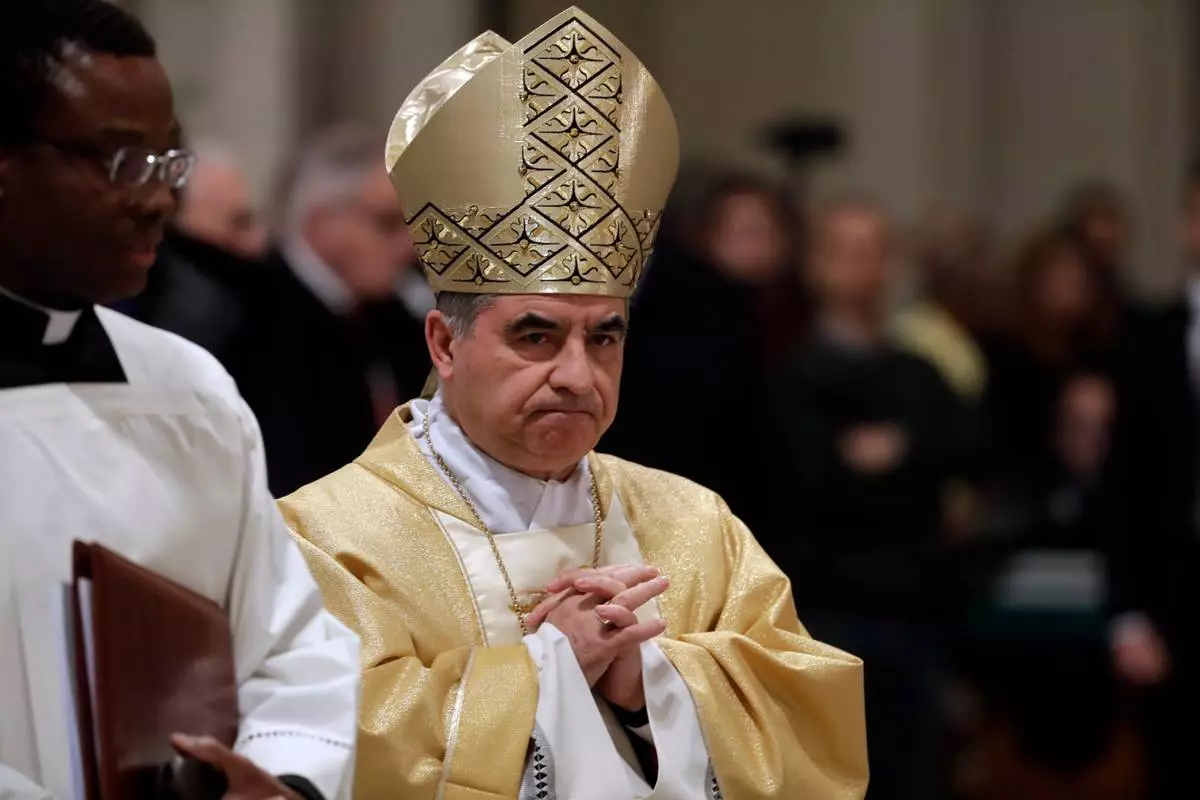
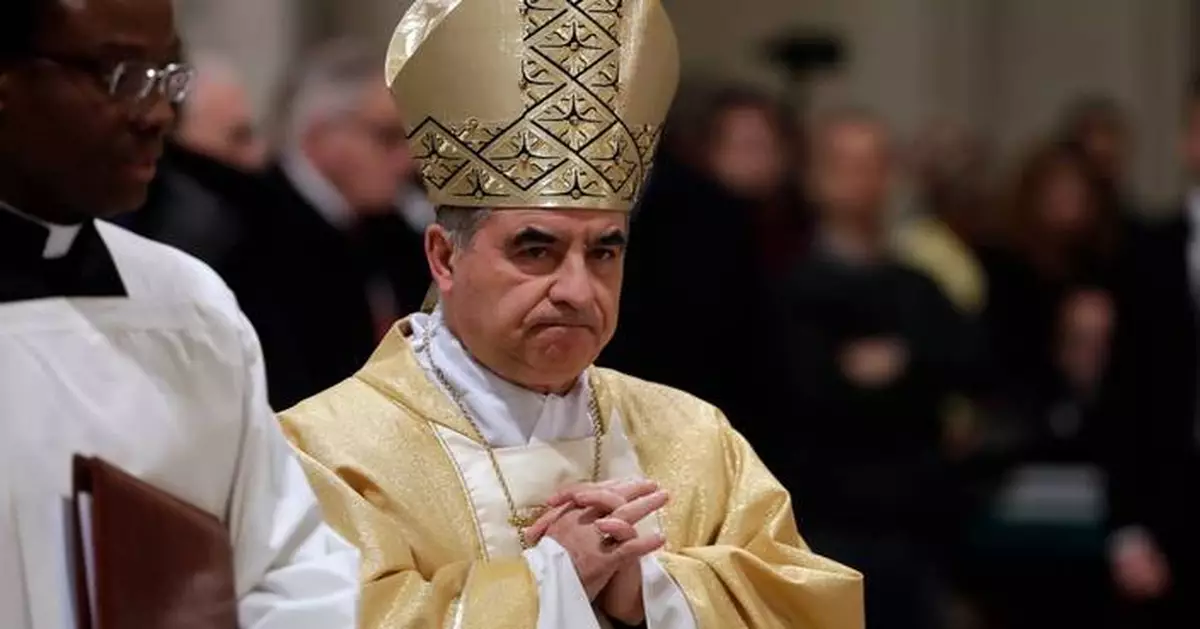
FILE - Mons. Angelo Becciu presides over an eucharistic liturgy at the St. John Lateran Basilica in Rome, Feb. 9, 2017. (AP Photo/Gregorio Borgia, File)
FILE - Mons. Angelo Becciu presides over an eucharistic liturgy at the St. John Lateran Basilica in Rome, Feb. 9, 2017. (AP Photo/Gregorio Borgia, File)
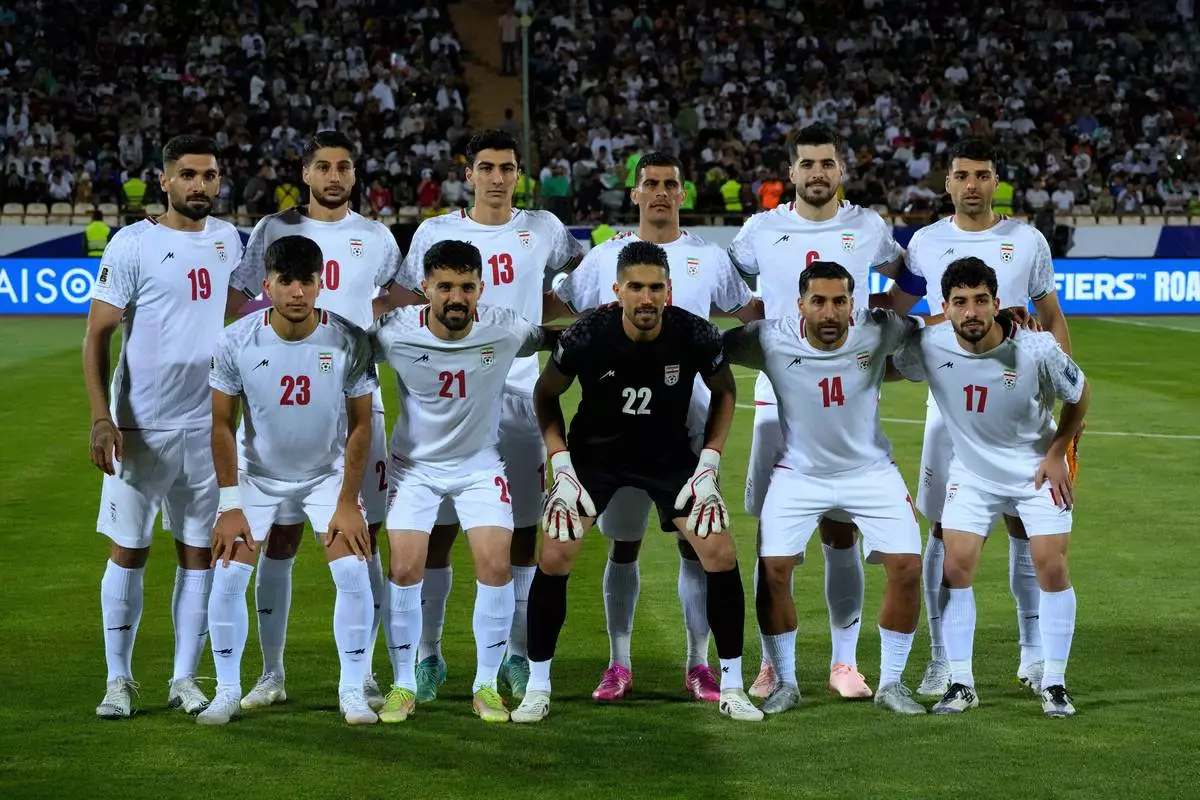
GENEVA (AP) — The public wrangling between Iran, FIFA and U.S. President Donald Trump over the narrative of playing in the World Cup shifted on Tuesday to Mexico where President Claudia Sheinbaum seemed open to a suggestion by Islamic Republic diplomats that Iran's games in June be moved to her country.

The Iranian ambassador and embassy in Mexico City said the country was negotiating with FIFA to move Iran’s three group-stage matches from the United States to Mexico after Trump last week discouraged the team from attending the 48-nation tournament, citing safety concerns.

It was already unclear whether such talks were even happening before FIFA said such unprecedented changes in World Cup history were not planned to a match schedule agreed three months ago.

Sheinbaum was asked about it Tuesday during her daily briefing.

“They are discussing with FIFA whether it’s feasible because they were going to hold the (games) in the United States," she said. “They are looking into whether they can hold (them) in Mexico, and we will inform you when the time comes. Mexico has relations with all countries in the world. We’ll see what FIFA decides and then we’ll announce it.”

In a statement, FIFA said it is “in regular contact with all participating member associations, including (the Islamic Republic of) Iran, to discuss planning for the FIFA World Cup 2026. FIFA is looking forward to all participating teams competing as per the match schedule announced on Dec. 6, 2025.”

The Feb. 28 start of U.S. and Israeli bombing of Iran that killed the Islamic Republic’s Supreme Leader Ayatollah Ali Khamenei and senior officials immediately cast doubt on the national soccer team going to play at least three World Cup games in the U.S., which is co-hosting the most watched global sports event with Mexico and Canada.

Iran's soccer federation has not canceled its World Cup entry with FIFA, though official comments have variously suggested the U.S. is unable or unwilling to ensure the delegation's secure arrival and accommodation.

Since last week, Trump has variously said “I don't really care” if the Iran team comes, that it was welcome and would be treated like all players as stars, and that the players' safety was at risk.

In comments posted late Monday on the embassy website, Iran’s Ambassador to Mexico Abolfazl Pasandideh urged FIFA to move the team’s games to Mexico, saying the U.S. was not cooperative on visas.

“We love the Mexican people very much and for us, the best situation is for our games to be held in Mexico,” he was quoted as saying by state-run news agency IRNA.

An Iranian government spokesman and the team itself have said in recent days it is up to FIFA and the U.S. to keep the team safe during the World Cup. The Iran team's planned training camp is in Tucson, Arizona.

Pasandideh's embassy in Mexico City also posted a statement attributed to national soccer federation president Mehdi Taj saying Iran wants to move its group-stage matches out of the U.S.

“When Trump has explicitly stated that he cannot ensure the security of the Iranian national team, we will certainly not travel to America,” the statement said. “We are currently negotiating with FIFA to hold Iran’s matches in the World Cup in Mexico.”

Iran is scheduled to play New Zealand on June 15 and Belgium on June 21 in Inglewood, California, before finishing group play in Seattle against Egypt on June 26.

Moving the games would be remarkable less than three months before the World Cup and risks being judged a failure in the history of tournament hosting.

It also is not envisaged by Iran's first opponent.

New Zealand soccer federation chief executive Andrew Pragnell said Monday: “I also don’t foresee it as remotely feasible” to move scheduled games to another country. Tens of thousands of tickets have been sold for Iran games, including to visiting fans who have booked flights to the U.S.

“By trying to move the match schedule, you actually create more problems down the track," Pragnell told New Zealand media outlet Stuff, adding "I don’t think it’ll happen.”

The Belgian soccer federation declined to comment Tuesday.

Trump said last week that the Iran team was welcome at the World Cup despite the ongoing war in the Middle East but “I really don’t believe it is appropriate that they be there, for their own life and safety.”

Iran's mixed signals include sports minister Ahmad Donyamali telling state TV last week that it was not possible to play "due to the wicked acts they have done against Iran.”

But after Trump's post the national team said on Instagram that “no one can exclude” it from the tournament and a government spokesman in Tehran stressed it was the responsibility of FIFA and the U.S. as a co-host nation to keep players safe and secure.

“FIFA is the organizer of the World Cup,” Iran Foreign Ministry spokesman Esmail Baghaei said. “When warnings are issued at the highest level about the environment being unsafe for Iranian football players, this indicates that the host country apparently lacks the capacity and ability to provide security for such an important sporting event.”

Soccer is followed passionately in Iran, a nation of more than 90 million people which has qualified for seven men's World Cups and each of the past four editions. The team is ranked No. 20 in the world by FIFA and behind only Japan from Asia.

FIFA has not commented in recent days beyond an Instagram post by president Gianni Infantino last week that he'd received assurances from Trump that Iran was welcome at the tournament.

Pye contributed from Brisbane, Australia. Amir-Hussein Rajdy in Cairo and Fabiola Sanchez in Mexico City also contributed.

AP soccer: https://apnews.com/hub/soccer

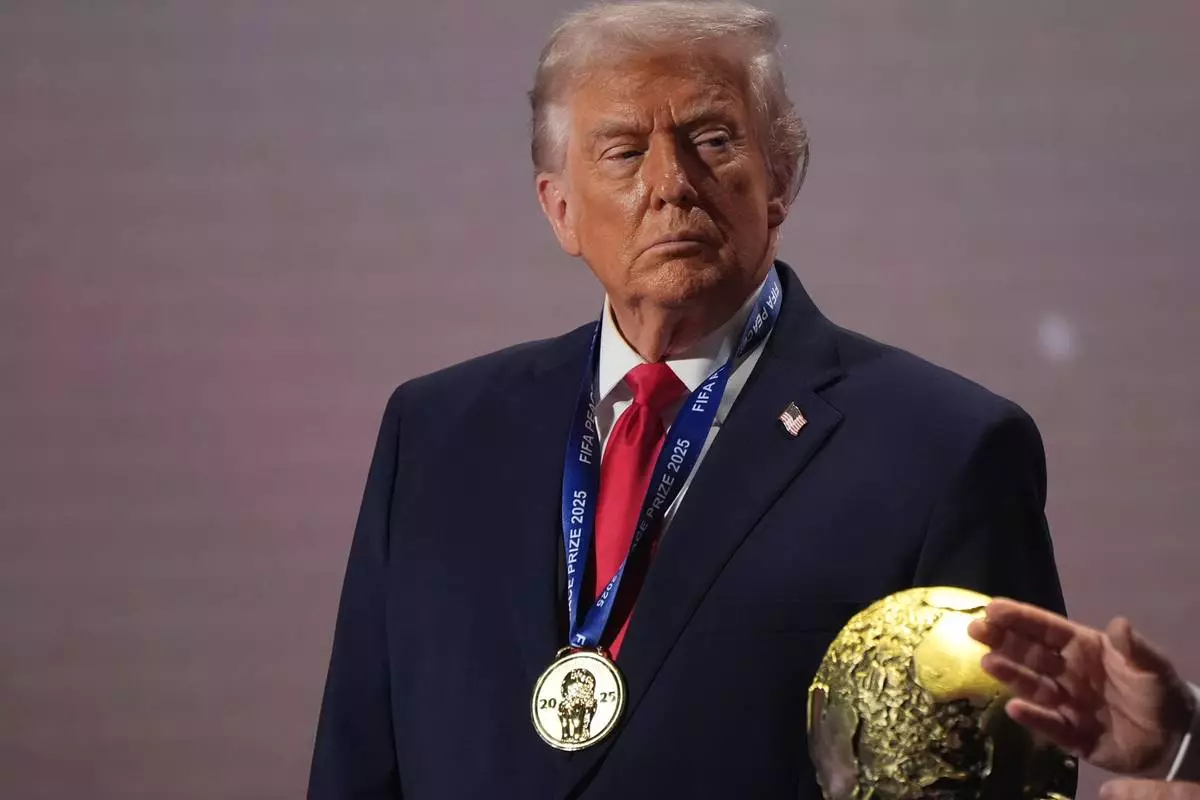
FILE - President Donald Trump stands on stage next to the FIFA World Cup after receiving the FIFA Peace Prize during the draw for the 2026 soccer World Cup at the Kennedy Center in Washington, Dec. 5, 2025. (AP Photo/Jacquelyn Martin, File)

FILE - President Donald Trump stands on stage next to the FIFA World Cup after receiving the FIFA Peace Prize during the draw for the 2026 soccer World Cup at the Kennedy Center in Washington, Dec. 5, 2025. (AP Photo/Jacquelyn Martin, File)

FILE - Irans's players pose for a team photo before an Asian group A qualifying soccer match against North Korea for the 2026 World Cup, June 10, 2025, at Azadi Stadium in Tehran, Iran. (AP Photo/Vahid Salemi, file)

FILE - Irans's players pose for a team photo before an Asian group A qualifying soccer match against North Korea for the 2026 World Cup, June 10, 2025, at Azadi Stadium in Tehran, Iran. (AP Photo/Vahid Salemi, file)

Recommended Articles