Rising geopolitical tensions in the Middle East are disrupting global energy, fertilizer and agrifood supply chains and could further push up food production costs, the United Nations Food and Agriculture Organization (FAO) said in a report on Monday.
According to the report, the escalation of conflict has sharply increased risks to these systems. Prices of granular urea, a solid nitrogen fertilizer widely used in crop production, rose nearly 20 percent in early March compared with late February.
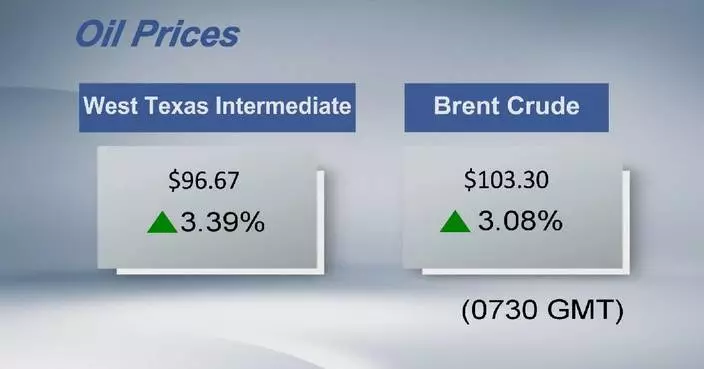
Because nitrogen fertilizer production relies heavily on natural gas as a feedstock, rising energy prices have further driven up costs. Global fertilizer prices could average 15 to 20 percent higher in the first half of 2026 if current conditions persist, the FAO warned.
Meanwhile, higher energy prices are also pushing up costs across the wider agricultural supply chain. The report noted that the impact of the conflict may extend beyond commodity markets, potentially triggering broader economic repercussions.
Stephane Dujarric, spokesperson for the UN secretary-general said Monday that the escalating conflict in the Middle East continues to affect civilians, with significant spillover effects on global energy and agricultural systems.
"As Gulf economies host millions of migrant workers from south Asia, southeast Asia and Africa, who sent home billions of dollars in remittances every year, if the conflict continues, FAO pointed out that remittance flows could decline significantly, reducing household incomes in many developing economies and compounding the impact of rising food and energy prices," said Dujarric.
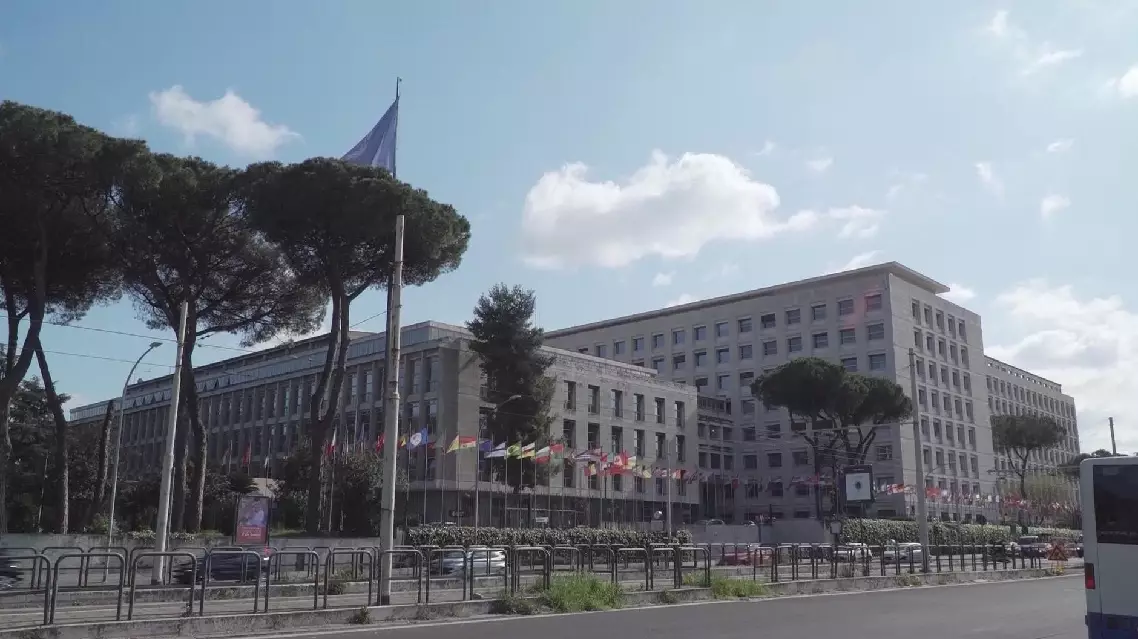
UN warns Middle East conflict driving up food, energy costs
The 17th meeting of the China-Vietnam Steering Committee for Bilateral Cooperation was held in Hanoi on Tuesday.
Member of the Political Bureau of the Communist Party of China Central Committee and Foreign Minister Wang Yi and Vietnamese Deputy Prime Minister Bui Thanh Son co-chaired the meeting with officials from various ministries and provincial governments of both sides participating online and offline.
Efficient coordination among various departments and localities of the two countries has led to an upgrade in all-round cooperation, Wang noted.
Faced with a complex and volatile international situation, China and Vietnam should join hands to advance the path of socialist modernization, continuously create new prospects for relations between the two parties and countries, and make new contributions to strengthening Global South unity and self-reliance and promoting international and regional peace and stability, said Wang.
He added that both sides should expand the breadth of pragmatic cooperation, including promoting railway connectivity, strengthening cooperation in agriculture, electricity, finance, key minerals, and technological innovation, and jointly safeguarding the multilateral trading system.
Efforts should also be made to maintain the momentum of people-to-people exchanges, such as promoting cooperation in media, publishing, radio, and film, and to strengthen the management of differences, advance maritime cooperation, and conclude consultations of the Code of Conduct in the South China Sea at an early date, Wang added.
Son said that Vietnam has always regarded China as a top priority and strategic choice in its foreign policy, adding that Vietnam firmly adheres to the one-China policy and opposes any form of Taiwan separatist activities.
He added that Vietnam agrees with the next steps of cooperation proposed by China, and is willing to further consolidate strategic mutual trust, prepare for high-level exchanges, and strengthen party and parliamentary exchanges.
Vietnam is willing to deepen defense and security cooperation, promote mutually beneficial cooperation in trade, agriculture, finance, green energy, and cultural and educational fields, strengthen multilateral coordination and cooperation, properly manage differences, and advance Vietnam-China relations to deeper and more substantive levels, Son said.
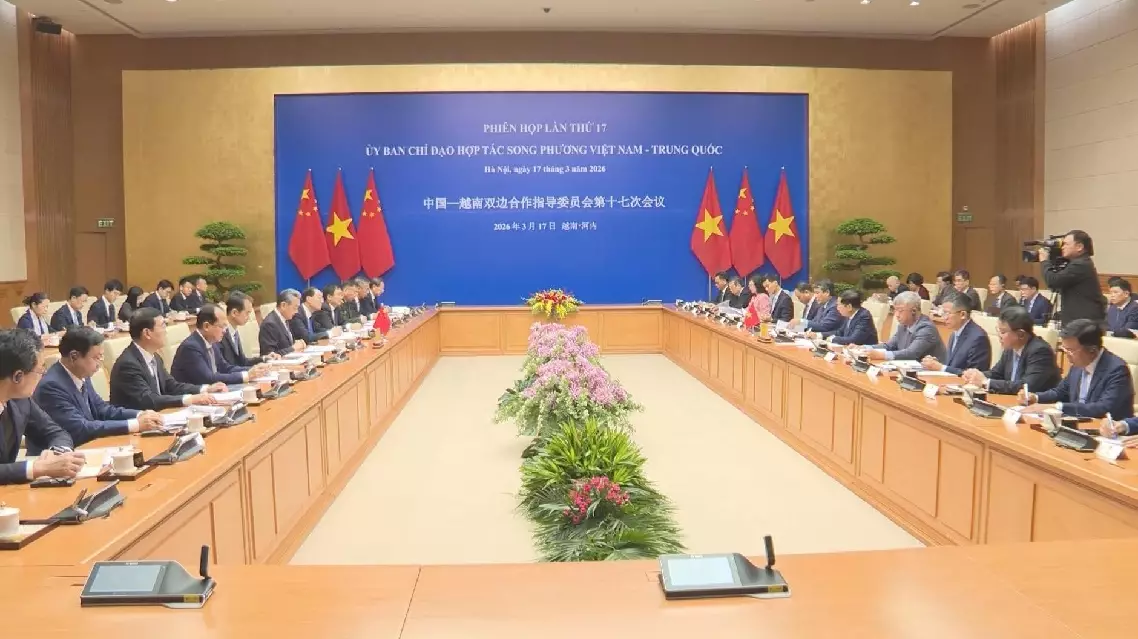
China, Vietnam hold meeting to advance cooperation