Skip to Content Facebook Feature Image

Iran’s internet blackout silences voices at home as diaspora creators fill the void

News

Iran’s internet blackout silences voices at home as diaspora creators fill the void
News

News

Iran’s internet blackout silences voices at home as diaspora creators fill the void

2026-03-17 22:05 Last Updated At:03-18 01:21

NEW YORK (AP) — Iranian American Ariana Afshar has tried to produce commentary about the first weeks of the war in the Middle East based on the perspectives of people in Iran.

But the New York-based social media creator keeps running into an obstacle: An internet blackout imposed by the government in Tehran has stifled almost all communications from the country. That makes it nearly impossible to reliably survey perspectives on the escalating conflict from inside Iran, where Afshar lived as a teenager and still has family.

More Images
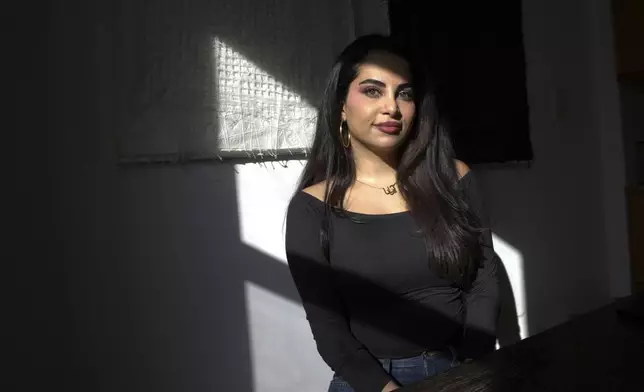
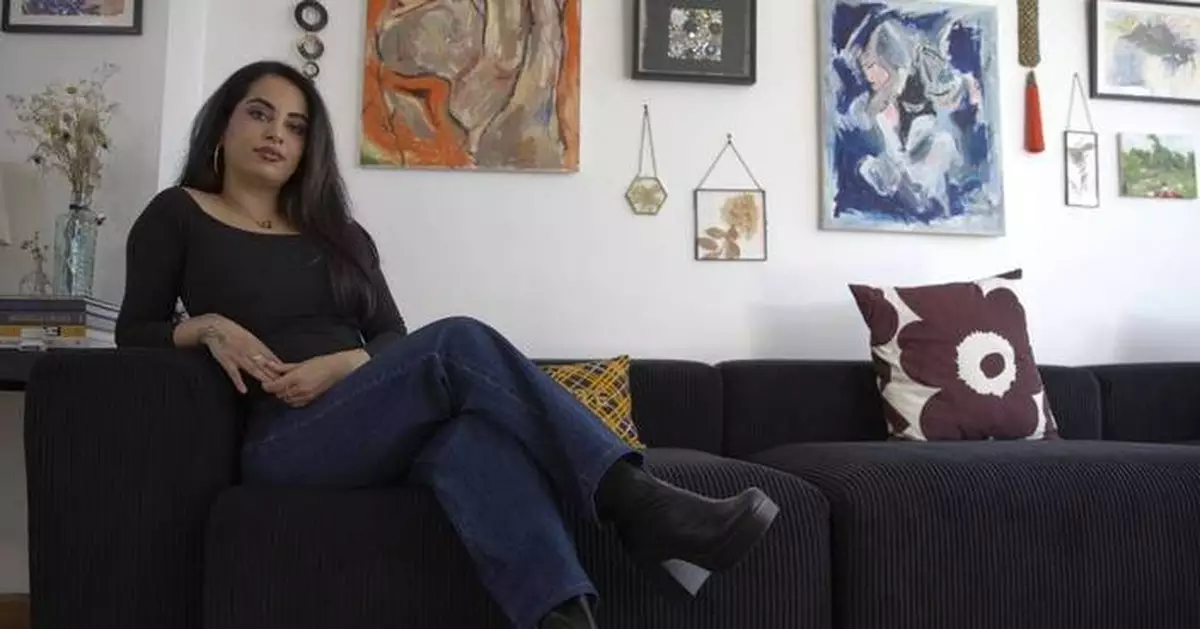
Ariana Afshar, one of many Iranian American content creators struggling to amplify the voices of Iranians amidst an internet blackout in Iran during the ongoing war, poses for a photo Monday, March 9, 2026, in New York. (AP Photo/Safiyah Riddle)
Ariana Afshar, one of many Iranian American content creators struggling to amplify the voices of Iranians amidst an internet blackout in Iran during the ongoing war, poses for a photo Monday, March 9, 2026, in New York. (AP Photo/Safiyah Riddle)

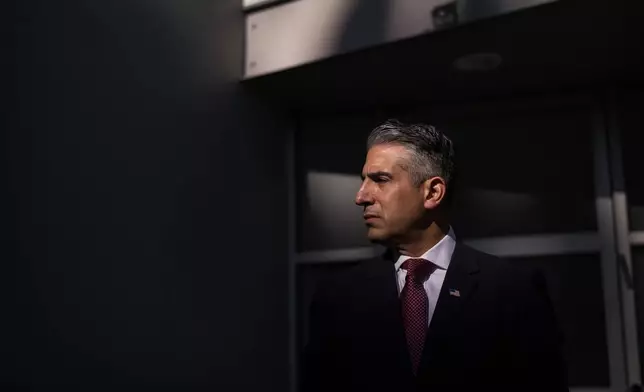
Dr. Houman David Hemmati poses for a portrait in Santa Monica, Calif., Wednesday, March 11, 2026. (AP Photo/Jae C. Hong)
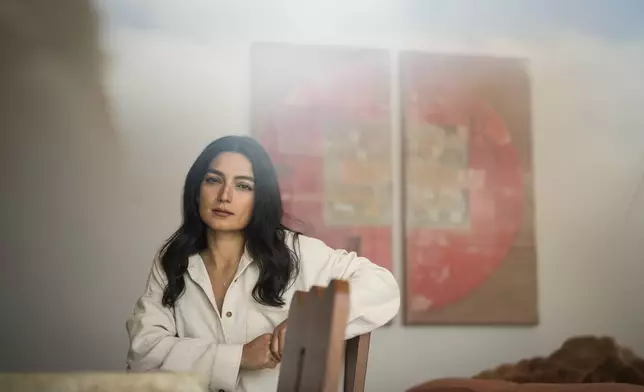
Dr. Houman David Hemmati poses for a portrait in Santa Monica, Calif., Wednesday, March 11, 2026. (AP Photo/Jae C. Hong)

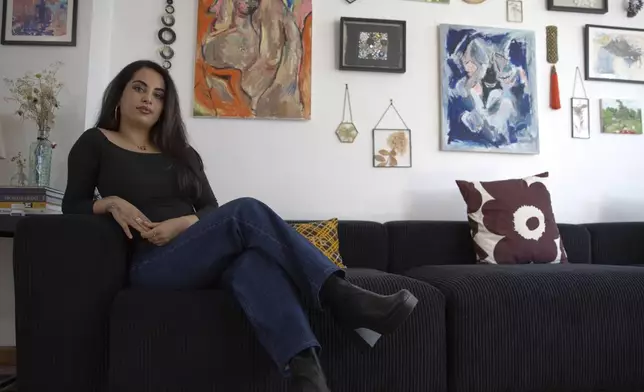
Zoya Biglary poses for photos in Los Angeles, Tuesday, March 10, 2026. (AP Photo/Jae C. Hong)
Zoya Biglary poses for photos in Los Angeles, Tuesday, March 10, 2026. (AP Photo/Jae C. Hong)

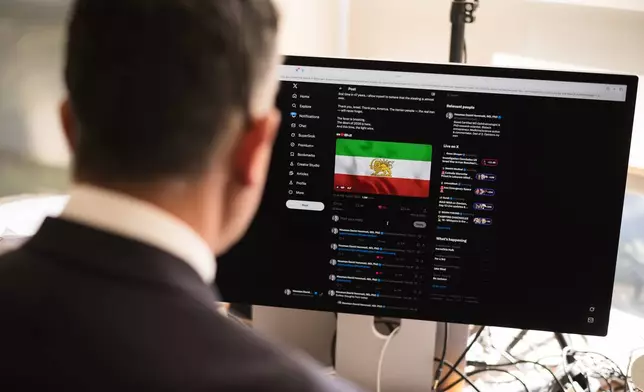
Dr. Houman David Hemmati poses for photos with his social media page displayed on a screen in Santa Monica, Calif., Wednesday, March 11, 2026. (AP Photo/Jae C. Hong)
Dr. Houman David Hemmati poses for photos with his social media page displayed on a screen in Santa Monica, Calif., Wednesday, March 11, 2026. (AP Photo/Jae C. Hong)

Ariana Afshar, one of many Iranian American content creators struggling to amplify the voices of Iranians amidst an internet blackout in Iran during the ongoing war, poses for a photo Monday, March 9, 2026, in New York. (AP Photo/Safiyah Riddle)

Ariana Afshar, one of many Iranian American content creators struggling to amplify the voices of Iranians amidst an internet blackout in Iran during the ongoing war, poses for a photo Monday, March 9, 2026, in New York. (AP Photo/Safiyah Riddle)

That absence has amplified the voices of Iranian American social media creators, who are now explaining the nation’s complicated history and the conflicting desires of its citizens in succinct videos that are widely shared online.

Their content is geared toward the surging demand for information in the U.S., where online searches like “why are we at war with iran” increased by 3,000% in the first week of March, according to Google Search Trends.

Some creators and observers say the disproportionate influence of voices outside of Iran has exacerbated deep rifts in the diaspora, which includes about 750,000 people in the United States, according to the Pew Research Center.

“I think it’s a huge problem among the Iranian diaspora, where they speak for Iranians a lot. I don’t want to fall into that,” said Afshar, who has roughly 350,000 followers on Instagram and TikTok.

In her own online activity, she mostly critiques pro-war perspectives based on her experience growing up in both countries. In the rare moments when she is able to reach relatives, they are often too afraid to share their true feelings about the war and the government.

Content creators “cannot thoroughly access the people’s opinions in Iran,” Afshar said.

Some creators support the war, saying the fear of conflict pales in comparison to a government that killed thousands of people in January during a crackdown on dissent. Others have pointed to obliterated infrastructure and mounting casualties — including more than 165 killed by a strike on an elementary school — as a warning of more carnage to come, citing previous U.S. wars in Iraq and Afghanistan as precedent.

“The outside media, especially Iranian diaspora, are playing a major role,” said Babak Rahimi, an Iranian professor of culture, religion and technology at the University of California San Diego. “It’s the kind of role that is not about really information, but it’s mostly about the circulation of emotions.”

In many wars, citizens are able to supplement official reporting with first-person accounts posted on social media and widely shared, Rahimi said. But digital blackouts and fear of government retaliation have severely limited that in Iran.

The Associated Press and other news outlets have some journalists reporting inside Iran, but limited communications makes getting their reporting out challenging at times. AP also uses satellite imagery, phone interviews to gather accounts and eyewitness testimony and user generated content it verifies to report on events in the country.

But online, bad information still thrives on social media and in messaging apps like Telegram, where millions of people subscribe to groups where inaccurate and unattributed content is easily shared.

Some of that disinformation is put out by the Iranian government, including fake firsthand accounts that attempt to rile up Americans who oppose the war, said Houman Hemmati, who supports the war and left Iran with his Persian Jewish family after the 1979 revolution.

False information seemingly designed to favor the U.S. has also proliferated, including videos claiming that Iran was behind the strike on the school. A preliminary U.S. military investigation has found outdated intelligence likely led to the U.S. carrying out the strike, according to a U.S. official and a second person briefed on the findings.

But in brief moments when Iranians are able to share information, Hemmati said, it quickly grabs attention, showcasing the hunger for firsthand accounts.

“All it takes is for just a little bit to leak out, and those images and stories go viral,” said Hemmati, a 49-year-old from Southern California who speaks regularly on Fox News and has more than 83,000 followers on the social platform X.

A 35-year-old Iranian living in New York, who asked not to be named for fear of retaliation against relatives in Iran, said her family WhatsApp chat between relatives in both countries illustrates the blackout's harm.

In brief opportunities to connect, the chat has been a go-to for scraps of news her relatives cannot easily get.

A cousin in Tehran sent messages the day the bombing began: “Where did they hit?” one read. “Everything I watch is just smoke and explosions.”

The family chat has also been a forum for debate over the future of their homeland, with relatives sharing news clips and social media videos offering varying perspectives about U.S. involvement. But she said there is a huge difference between her family members in the U.S., who speak passionately about the abstract politics of the war, and those in Iran, who are living it each day.

There has long been a “narrative war” among members of the diaspora, said 26-year-old social media creator Ciara Moezidis, who was born in the United States and has extended family in Iran.

Her Instagram following has increased by 2,000 people since January, when she started posting in support of Iranian protesters and against a war.

“It’s been incredibly exhausting to navigate this while seeing bombs drop across Iran and not being able to reach our families,” said Moezidis.

Others, like Zoya Biglary, an Iranian American content creator with over 600,000 Instagram followers, said she hopes Iranians will eventually be able to see the outpouring of support for their struggle.

“Maybe they’re looking for proof that someone on the outside kind of sees their humanity,” Biglary said.

Associated Press writers Sarah Raza in Sioux Falls, South Dakota, and Amy Taxin in Orange County, California, contributed.
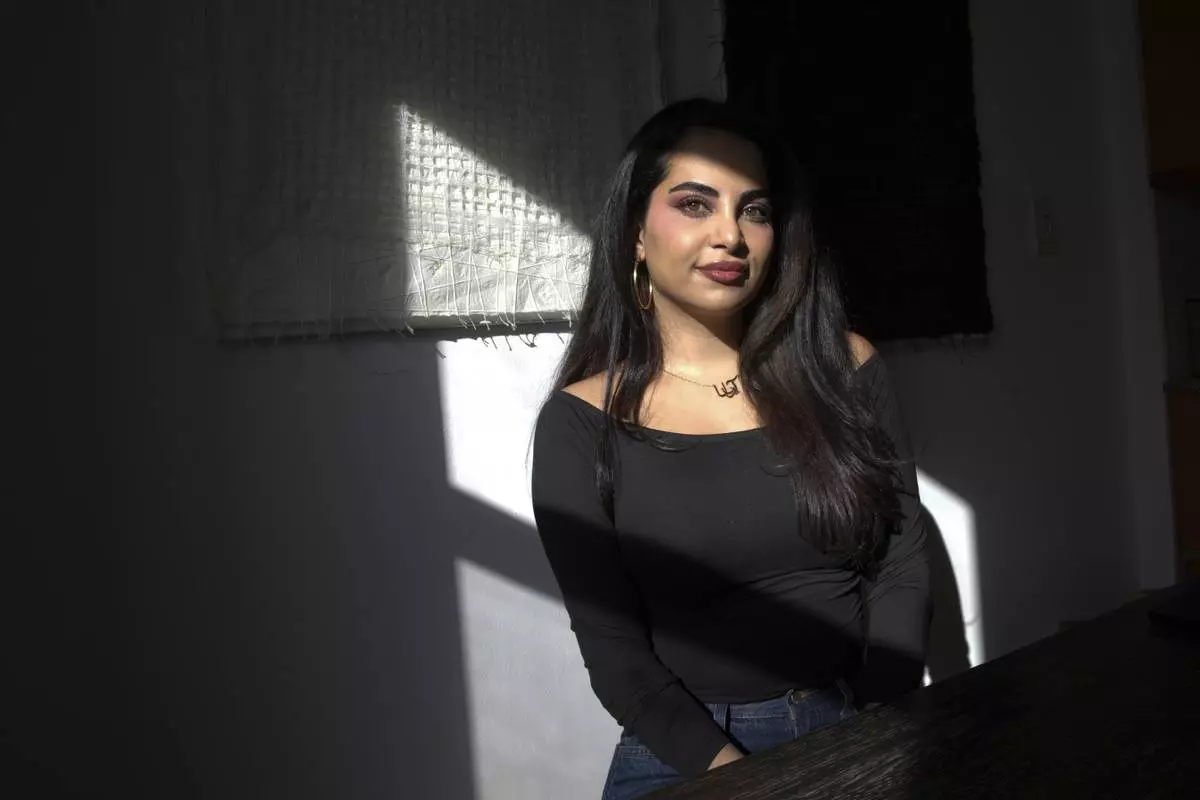
Ariana Afshar, one of many Iranian American content creators struggling to amplify the voices of Iranians amidst an internet blackout in Iran during the ongoing war, poses for a photo Monday, March 9, 2026, in New York. (AP Photo/Safiyah Riddle)
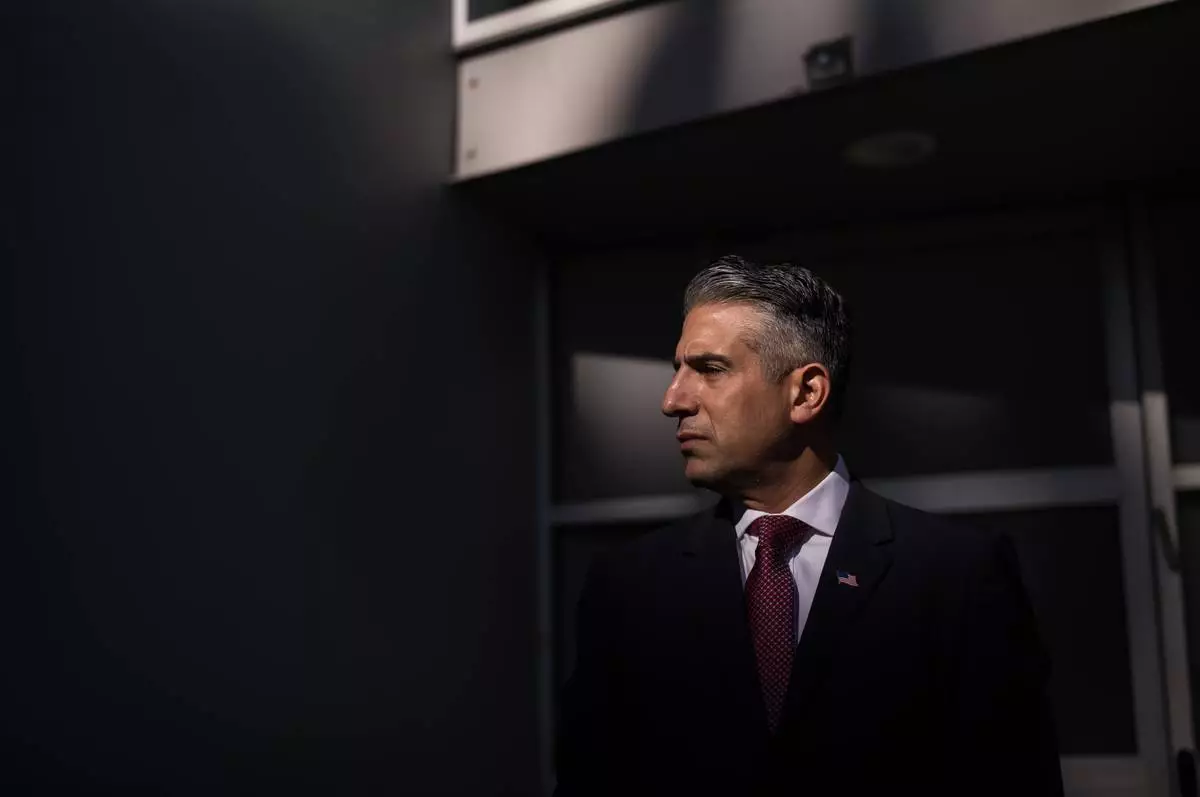
Ariana Afshar, one of many Iranian American content creators struggling to amplify the voices of Iranians amidst an internet blackout in Iran during the ongoing war, poses for a photo Monday, March 9, 2026, in New York. (AP Photo/Safiyah Riddle)

Dr. Houman David Hemmati poses for a portrait in Santa Monica, Calif., Wednesday, March 11, 2026. (AP Photo/Jae C. Hong)
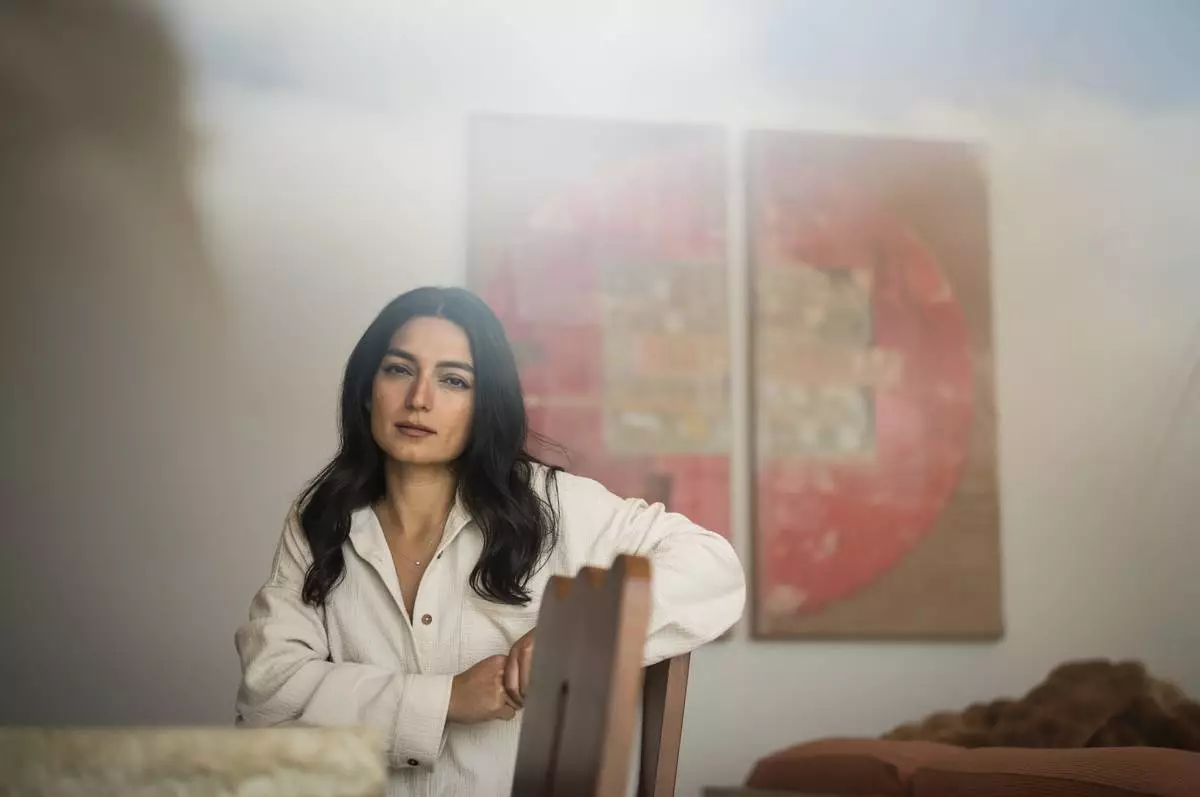
Dr. Houman David Hemmati poses for a portrait in Santa Monica, Calif., Wednesday, March 11, 2026. (AP Photo/Jae C. Hong)

Zoya Biglary poses for photos in Los Angeles, Tuesday, March 10, 2026. (AP Photo/Jae C. Hong)
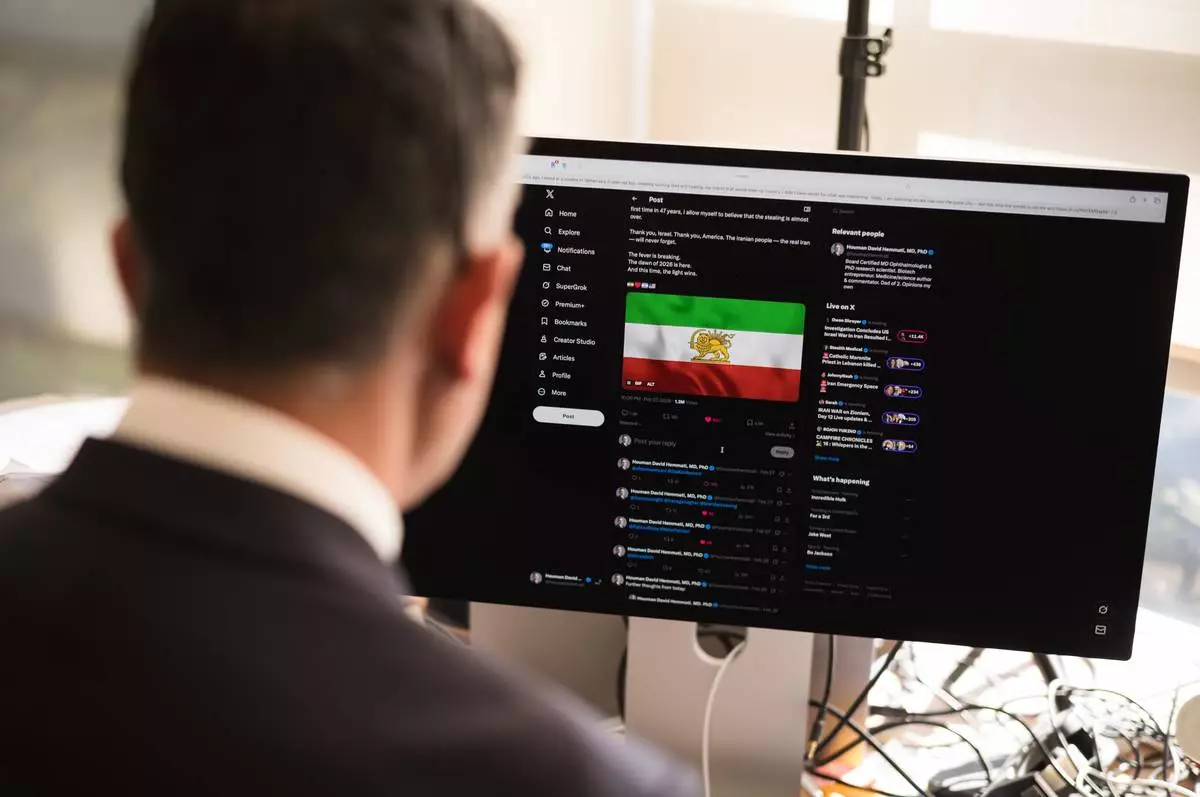
Zoya Biglary poses for photos in Los Angeles, Tuesday, March 10, 2026. (AP Photo/Jae C. Hong)

Dr. Houman David Hemmati poses for photos with his social media page displayed on a screen in Santa Monica, Calif., Wednesday, March 11, 2026. (AP Photo/Jae C. Hong)
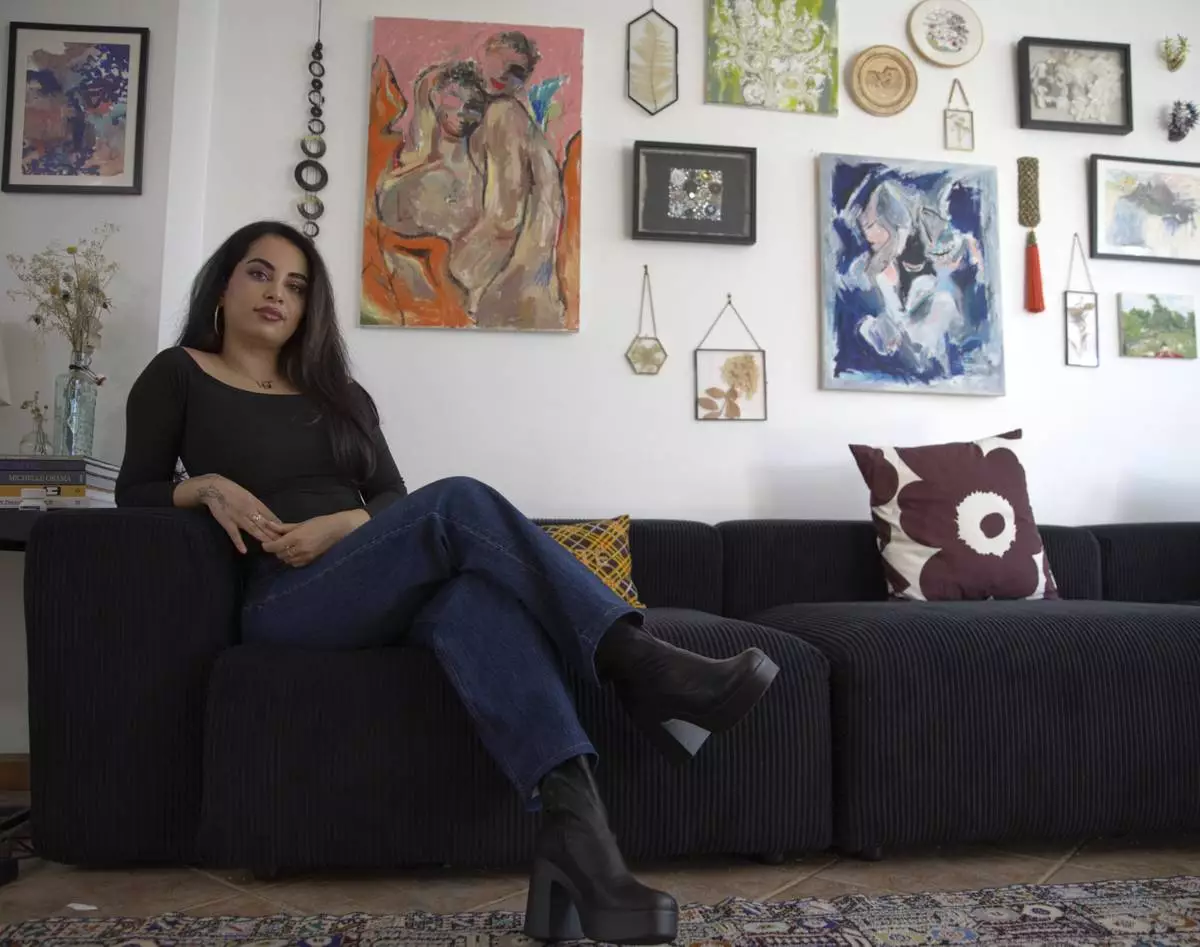
Dr. Houman David Hemmati poses for photos with his social media page displayed on a screen in Santa Monica, Calif., Wednesday, March 11, 2026. (AP Photo/Jae C. Hong)

Ariana Afshar, one of many Iranian American content creators struggling to amplify the voices of Iranians amidst an internet blackout in Iran during the ongoing war, poses for a photo Monday, March 9, 2026, in New York. (AP Photo/Safiyah Riddle)
Ariana Afshar, one of many Iranian American content creators struggling to amplify the voices of Iranians amidst an internet blackout in Iran during the ongoing war, poses for a photo Monday, March 9, 2026, in New York. (AP Photo/Safiyah Riddle)
GENEVA (AP) — The public wrangling between Iran, FIFA and U.S. President Donald Trump over the narrative of playing at the World Cup in June shifted on Tuesday to Mexico where its diplomats suggested Iran's soccer team could play its games.

The Iranian ambassador and embassy in Mexico City said the country was negotiating with FIFA to move Iran’s three group-stage matches from the United States to Mexico after Trump last week discouraged the team from attending the 48-nation tournament, citing safety concerns.

It was already unclear whether such talks were even happening before FIFA said such unprecedented changes in World Cup history were not planned to a match schedule agreed three months ago.

In a statement, FIFA said it is “in regular contact with all participating member associations, including (the Islamic Republic of) Iran, to discuss planning for the FIFA World Cup 2026. FIFA is looking forward to all participating teams competing as per the match schedule announced on Dec. 6, 2025.”

The Feb. 28 start of U.S. and Israeli bombing of Iran that killed the Islamic republic’s Supreme Leader Ayatollah Ali Khamenei and senior officials immediately cast doubt on the national soccer team going to play at least three World Cup games in the U.S., which is co-hosting the most watched global sports event with Mexico and Canada.

Iran's soccer federation has not canceled its World Cup entry with FIFA, though official comments have variously suggested the U.S. is unable or unwilling to ensure the delegation's secure arrival and accommodation.

Since last week, Trump has variously said “I don't really care” if the Iran team comes, that it was welcome and would be treated like all players as stars, and that the players' safety was at risk.

In comments posted late Monday on the embassy website, Iran’s Ambassador to Mexico Abolfazl Pasandideh urged FIFA to move the team’s games to Mexico, saying the U.S. was not cooperative on visas.

“We love the Mexican people very much and for us, the best situation is for our games to be held in Mexico,” he was quoted as saying by state-run news agency IRNA.

An Iranian government spokesman and the team itself have said in recent days it is up to FIFA and the U.S. to keep the team safe during the World Cup. The Iran team's planned training camp is in Tucson, Arizona.

Pasandideh's embassy in Mexico City also posted a statement attributed to national soccer federation president Mehdi Taj saying Iran wants to move its group-stage matches out of the U.S.

“When Trump has explicitly stated that he cannot ensure the security of the Iranian national team, we will certainly not travel to America,” the statement said. “We are currently negotiating with FIFA to hold Iran’s matches in the World Cup in Mexico.”

Iran is scheduled to play New Zealand on June 16 and Belgium on June 21 in Inglewood, California, before finishing group play in Seattle against Egypt on June 26.

Moving the games would be remarkable less than three months before the World Cup and risks being judged a failure in the history of tournament hosting.

It also is not envisaged by Iran's first opponent.

New Zealand soccer federation chief executive Andrew Pragnell said on Monday “I also don’t foresee it as remotely feasible” to move scheduled games to another country. Tens of thousands of tickets have been sold for Iran games, including to visiting fans who have booked flights to the U.S.

“By trying to move the match schedule, you actually create more problems down the track," Pragnell told New Zealand media outlet Stuff, adding "I don’t think it’ll happen.”

The Belgian soccer federation declined to comment on Tuesday.

Trump said last week that the Iran team was welcome at the World Cup despite the ongoing war in the Middle East but “I really don’t believe it is appropriate that they be there, for their own life and safety.”

Iran's mixed signals include sports minister Ahmad Donyamali telling state TV last week that it was not possible to play "due to the wicked acts they have done against Iran.”

But after Trump's post the national team said on Instagram that “no one can exclude” it from the tournament and a government spokesman in Tehran stressed it was the responsibility of FIFA and the U.S. as a co-host nation to keep players safe and secure.

“FIFA is the organizer of the World Cup,” Iran Foreign Ministry spokesman Esmail Baghaei said. “When warnings are issued at the highest level about the environment being unsafe for Iranian football players, this indicates that the host country apparently lacks the capacity and ability to provide security for such an important sporting event.”

Soccer is followed passionately in Iran, a nation of more than 90 million people which has qualified for seven men's World Cups and each of the past four editions. The team is ranked No. 20 in the world by FIFA and behind only Japan from Asia.

FIFA has not commented in recent days beyond an Instagram post by president Gianni Infantino last week that he'd received assurances from Trump that Iran was welcome at the tournament.

Pye contributed from Brisbane, Australia. Amir-Hussein Rajdy in Cairo also contributed.

AP soccer: https://apnews.com/hub/soccer

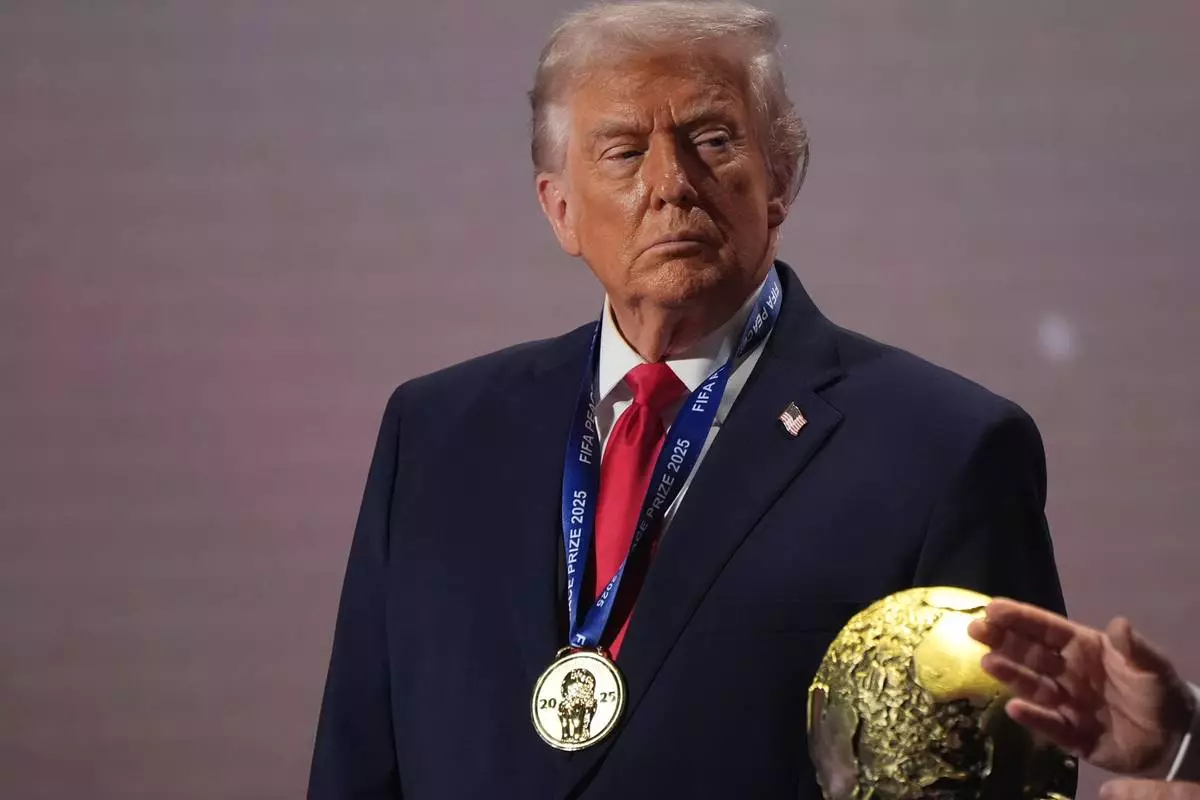
FILE - President Donald Trump stands on stage next to the FIFA World Cup after receiving the FIFA Peace Prize during the draw for the 2026 soccer World Cup at the Kennedy Center in Washington, Dec. 5, 2025. (AP Photo/Jacquelyn Martin, File)

FILE - President Donald Trump stands on stage next to the FIFA World Cup after receiving the FIFA Peace Prize during the draw for the 2026 soccer World Cup at the Kennedy Center in Washington, Dec. 5, 2025. (AP Photo/Jacquelyn Martin, File)

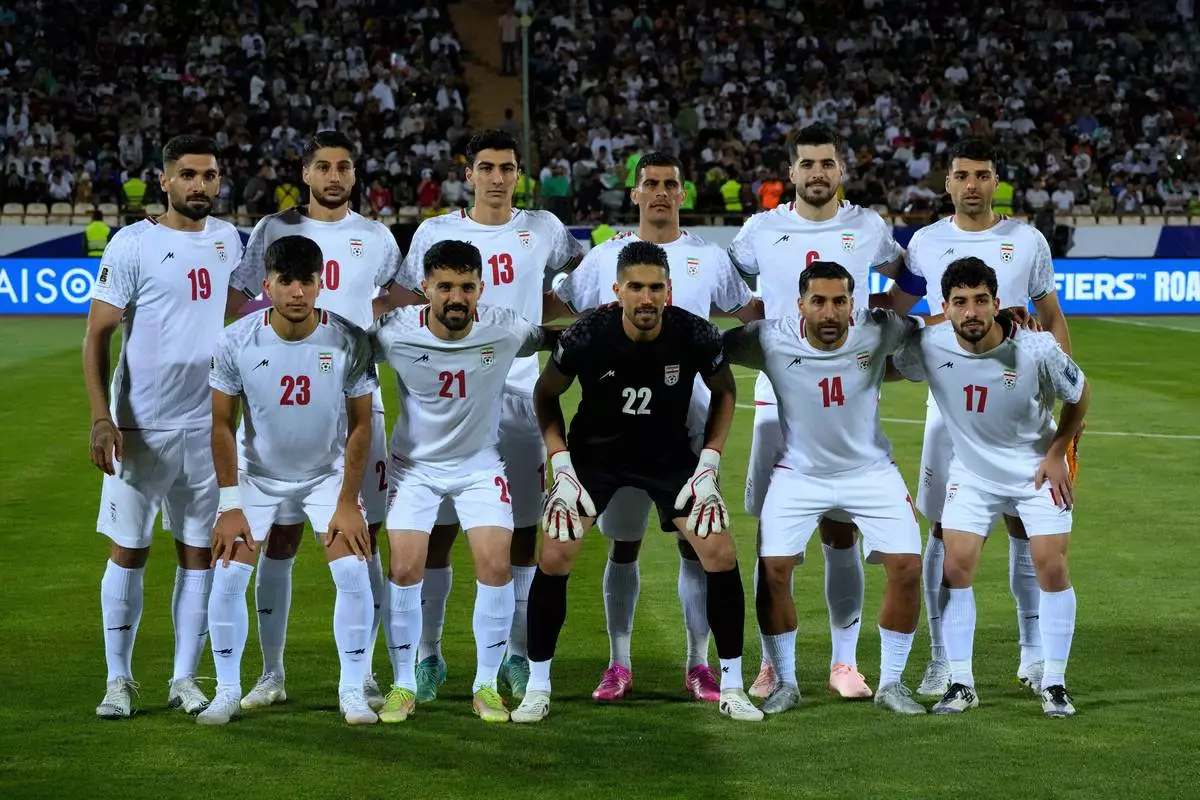
FILE - Irans's players pose for a team photo before an Asian group A qualifying soccer match against North Korea for the 2026 World Cup, June 10, 2025, at Azadi Stadium in Tehran, Iran. (AP Photo/Vahid Salemi, file)

FILE - Irans's players pose for a team photo before an Asian group A qualifying soccer match against North Korea for the 2026 World Cup, June 10, 2025, at Azadi Stadium in Tehran, Iran. (AP Photo/Vahid Salemi, file)

Recommended Articles