Skip to Content Facebook Feature Image

Tennessee family's lawsuit against police, paramedics over use of force dismissed

News

Tennessee family's lawsuit against police, paramedics over use of force dismissed
News

News

Tennessee family's lawsuit against police, paramedics over use of force dismissed

2026-03-18 05:30 Last Updated At:05:41

NASHVILLE, Tenn. (AP) — A lawsuit alleging Bristol, Tennessee, police officers and paramedics used excessive force on a 23-year-old man having a seizure and failed to give him access to medical care has been dismissed.

A federal judge ruled Monday in favor of the city of Bristol and the officers and paramedics, who argued the statute of limitations had expired by the time the family of Austin Hunter Turner filed the lawsuit over his 2017 death.

His death was one of more than 1,000 nationally that an investigation led by The Associated Press identified as happening after police officers used physical force or weapons that were supposed to stop, but not kill, people.

Turner's mother, Karen Goodwin, filed the lawsuit in 2024 after AP reporters shared police body-camera video they had found. His mother had not seen the video, which made the family doubt the autopsy report conclusion that he died of a multiple drug toxicity. An attorney for the family said they intend to appeal the dismissal.

The lawsuit focused on how the video contradicted the police version of what happened inside Turner’s apartment after his girlfriend called 911 for medical help.

Attorneys representing the city of Bristol, on the Virginia state line, as well as the paramedics and some of the officers involved declined to comment when reached by the AP on Tuesday.

The officers had said they shocked him with a Taser and physically restrained him face down because he was fighting paramedics. The lawsuit says the video shows Turner was not punching or kicking and he was not disobeying the paramedics because he was in the middle of a seizure.

The lawsuit says the video shows police and paramedics put “significant pressure on the back of Mr. Turner’s head and upper back while Turner was face-down, in the prone position, with a spit sock covering his airway, hands cuffed behind his back and legs shackled.”

David Randolph Smith, an attorney for Turner’s mother, said in a statement to the AP they respectfully disagree with the judge’s interpretation of when the statute of limitations began.

“In our case, the state’s official autopsy affirmatively and incorrectly attributed Austin’s death to ‘multiple drug toxicity as a consequence of recreational drug use’ and it was not until 2023 — when body‑camera footage surfaced and a forensic pathologist reviewed the evidence — that Karen Goodwin first learned restraint‑induced asphyxia, not drugs, caused his death,” Smith said in the statement. "We intend to appeal and will ask the Court of Appeals to hold that families in this position are entitled to their day in court when they could not reasonably have discovered the true cause of death until long after the fact, through no fault of their own, but because of misinformation and omissions by government actors.”

The AP's investigation found that in the cases they analyzed, officers violated well-known guidelines for safely restraining and subduing people, such as pinning people face down in ways that could restrict their breathing or stunning them repeatedly with Tasers.

Attorneys for the city, police and paramedics argued that because Goodwin was present in the apartment and was aware that the officers were using force on her son, she only had one year from that day to file the lawsuit.

Goodwin’s attorneys said the case involved a cover-up that would change the date when the family had to file a lawsuit. They tried to argue that clock shouldn’t start until AP reporters shared the police video with the family in August 2023, as part of their investigation with FRONTLINE (PBS) and the Howard Centers for Investigative Journalism at the University of Maryland and Arizona State University.
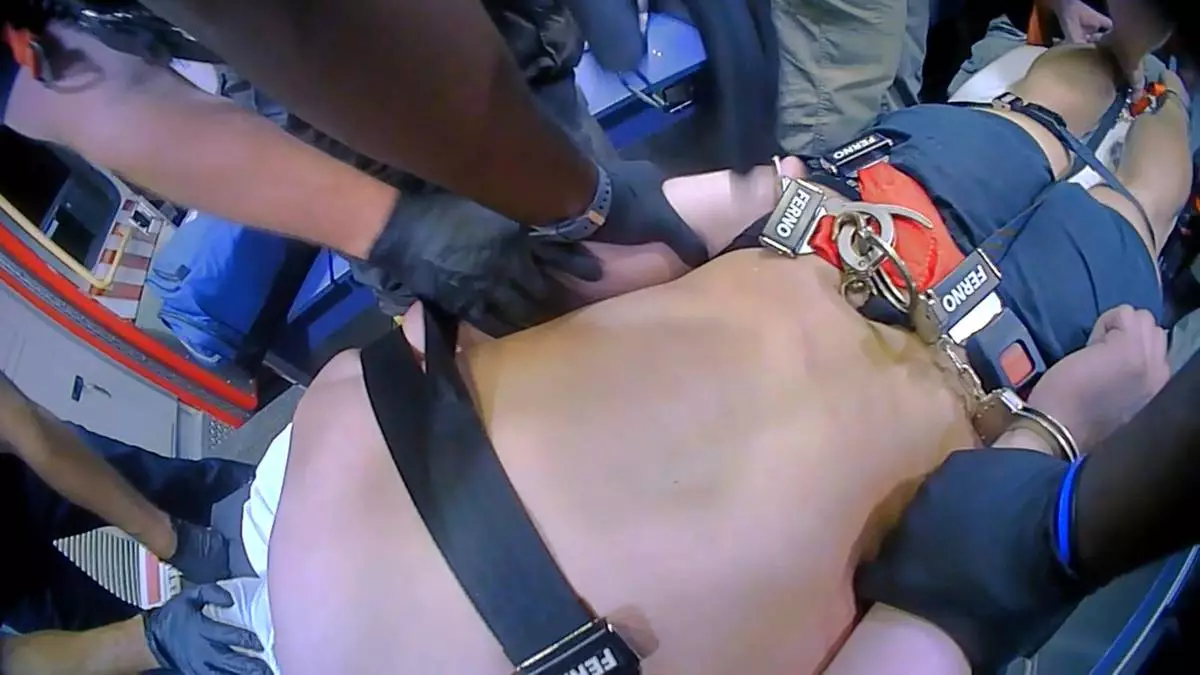
FILE - In this image from Bristol Police Department body-camera video, Austin Hunter Turner, 23, lies restrained face down in an ambulance in Bristol, Tenn., on Aug. 29, 2017. (Bristol Police Department via AP, File)
FILE - In this image from Bristol Police Department body-camera video, Austin Hunter Turner, 23, lies restrained face down in an ambulance in Bristol, Tenn., on Aug. 29, 2017. (Bristol Police Department via AP, File)

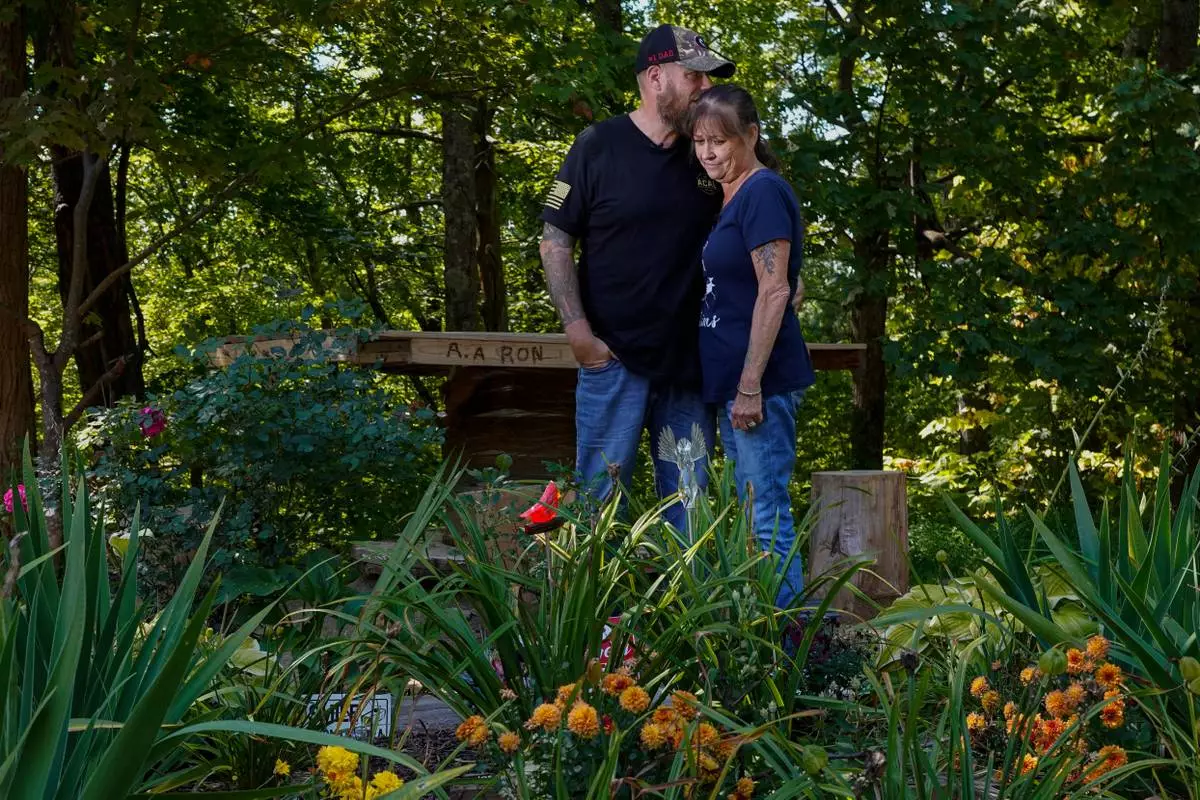
FILE - Brian and Karen Goodwin stand for a portrait near a memorial for motorcycle riders that includes the name of her son, Austin Hunter Turner, along U.S. Highway 421, Sept. 22, 2023, in Shady Valley, Tenn. (AP Photo/George Walker IV, File)
FILE - Brian and Karen Goodwin stand for a portrait near a memorial for motorcycle riders that includes the name of her son, Austin Hunter Turner, along U.S. Highway 421, Sept. 22, 2023, in Shady Valley, Tenn. (AP Photo/George Walker IV, File)

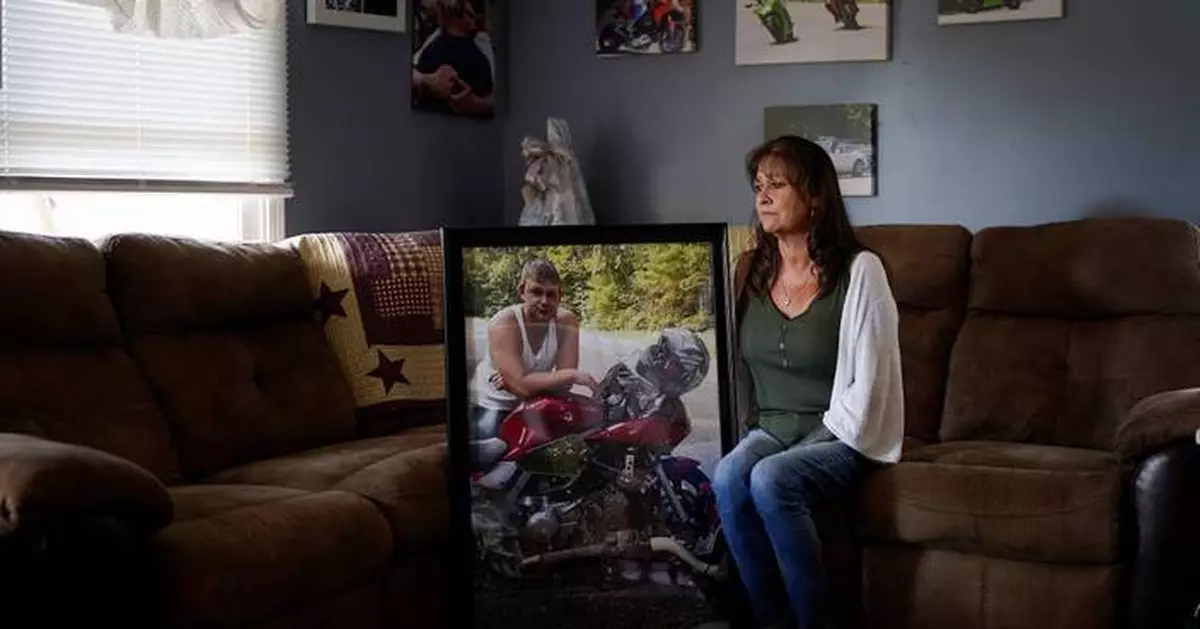
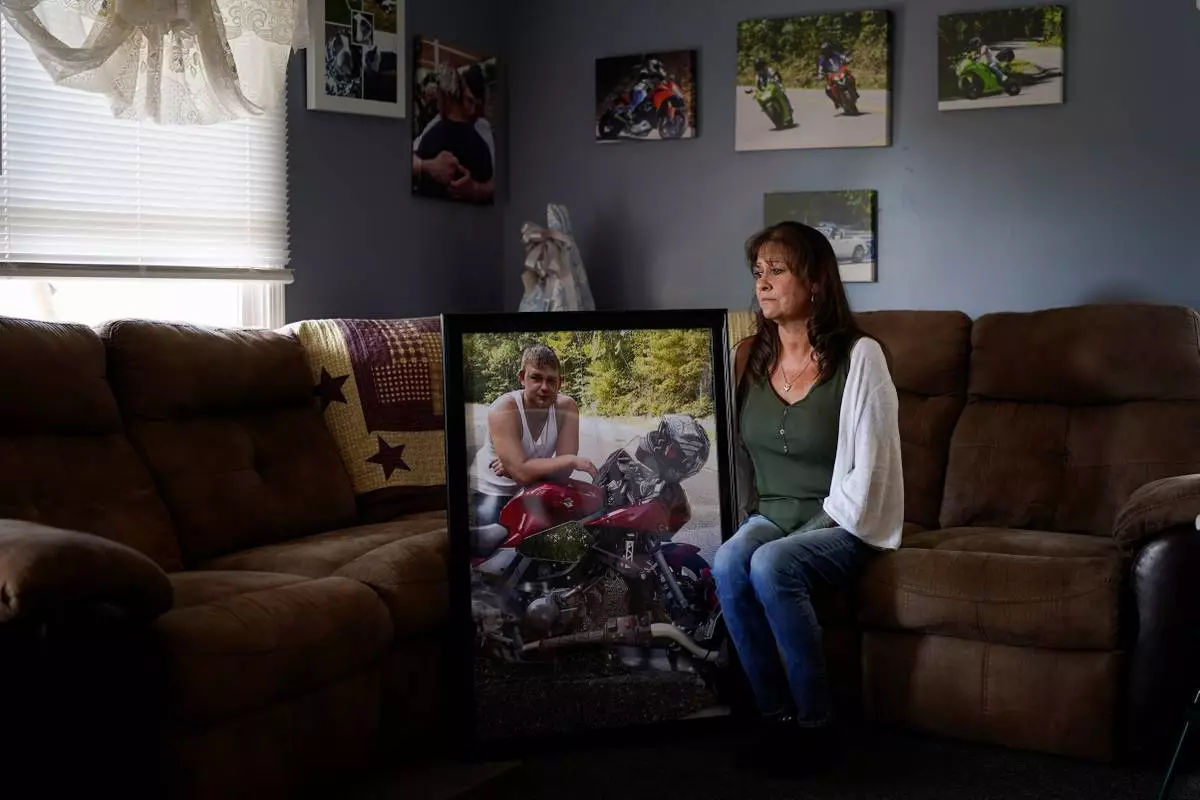
FILE - Karen Goodwin holds a photograph of her son, Austin Hunter Turner, Friday, Sept. 22, 2023, in Bristol, Tenn. (AP Photo/George Walker IV, File)
FILE - Karen Goodwin holds a photograph of her son, Austin Hunter Turner, Friday, Sept. 22, 2023, in Bristol, Tenn. (AP Photo/George Walker IV, File)
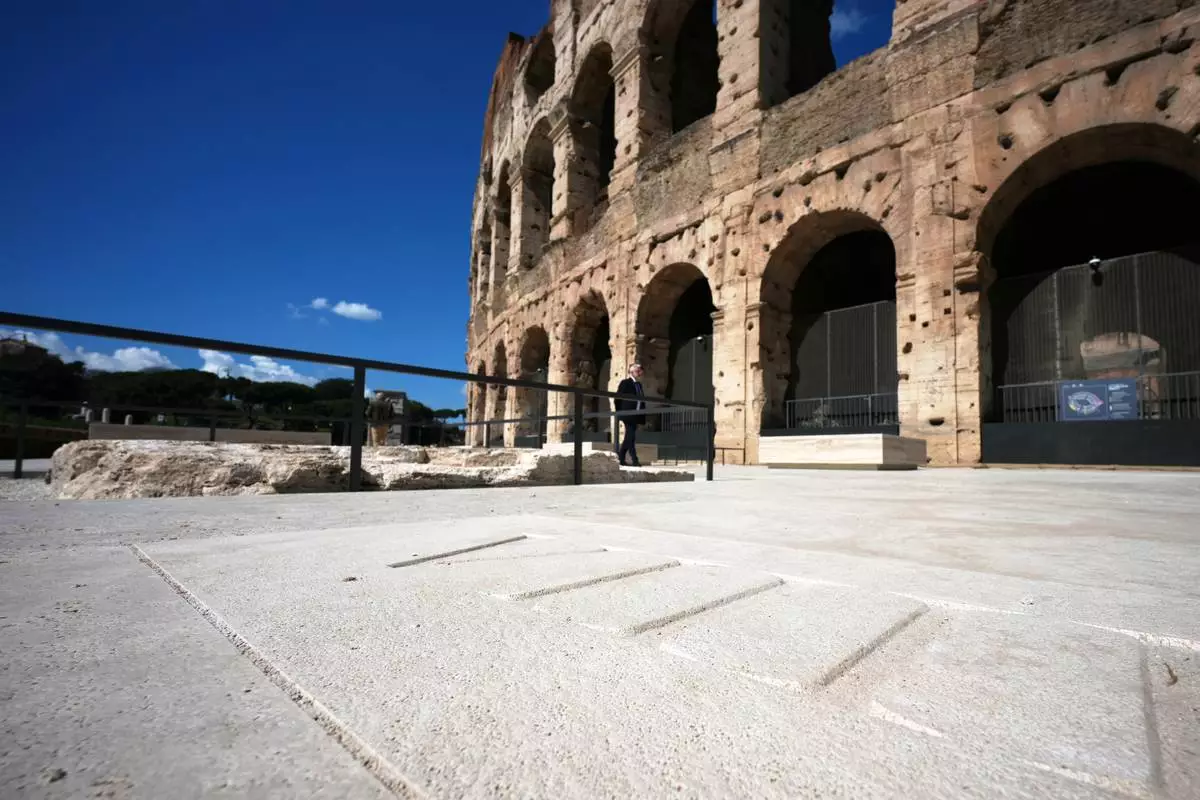
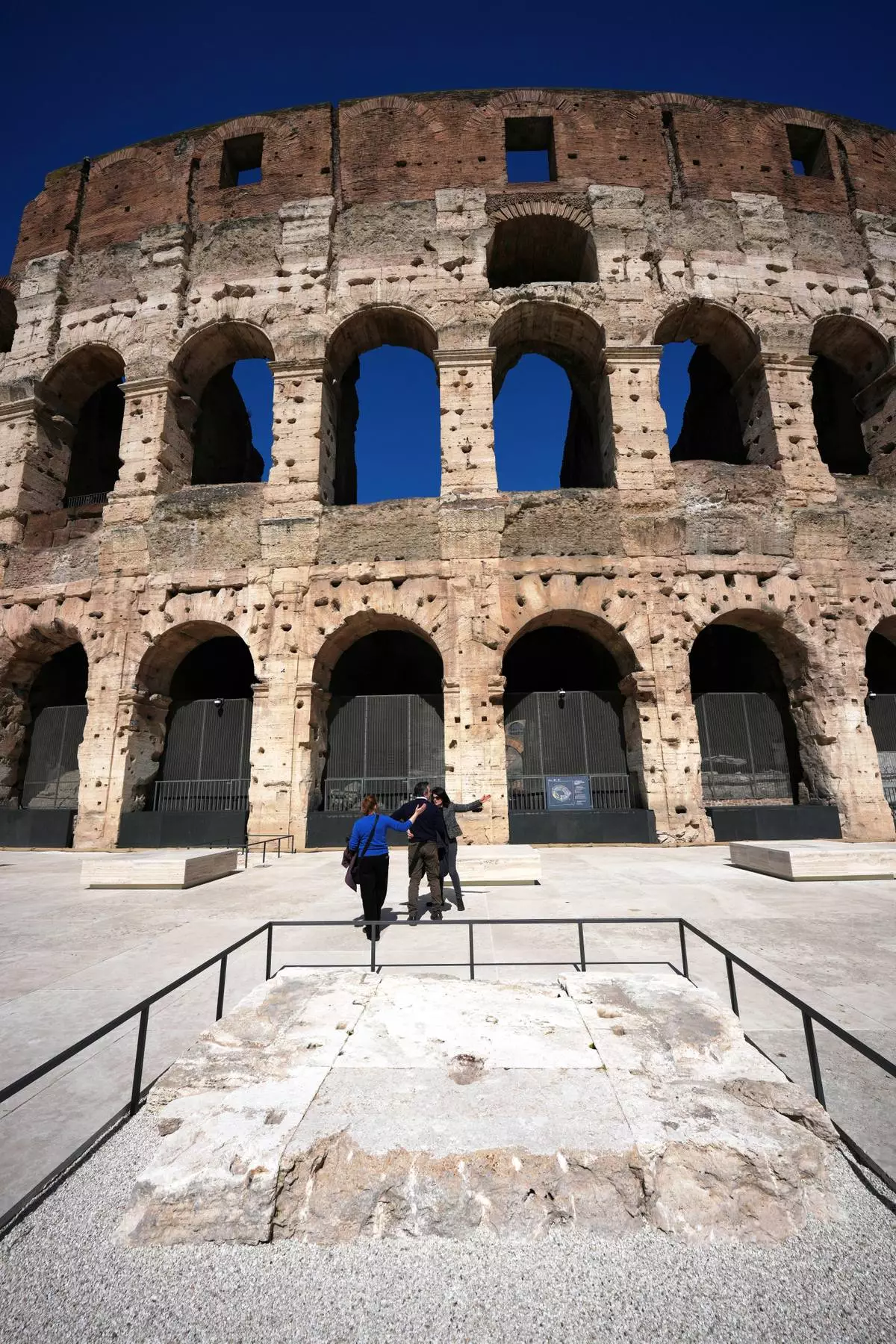
ROME (AP) — The Colosseum has a bright new look following a restoration using the same travertine marble of ancient Rome to recreate parts of columns from 2,000 years ago.

Thousands of Romans once flocked to this arena to watch gladiators battle each other and wild animals. The structure still captures the public's imagination; it is Italy’s most popular tourist destination, with 9 million visitors in 2025 alone.

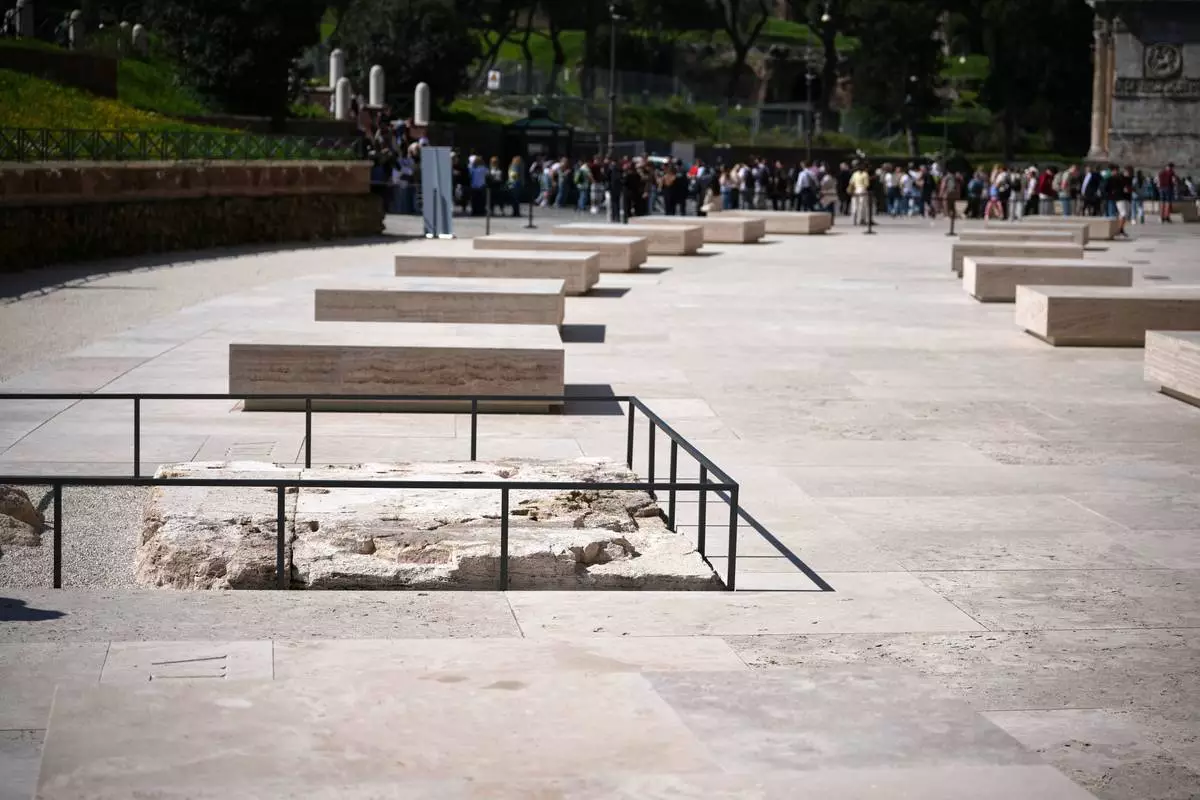
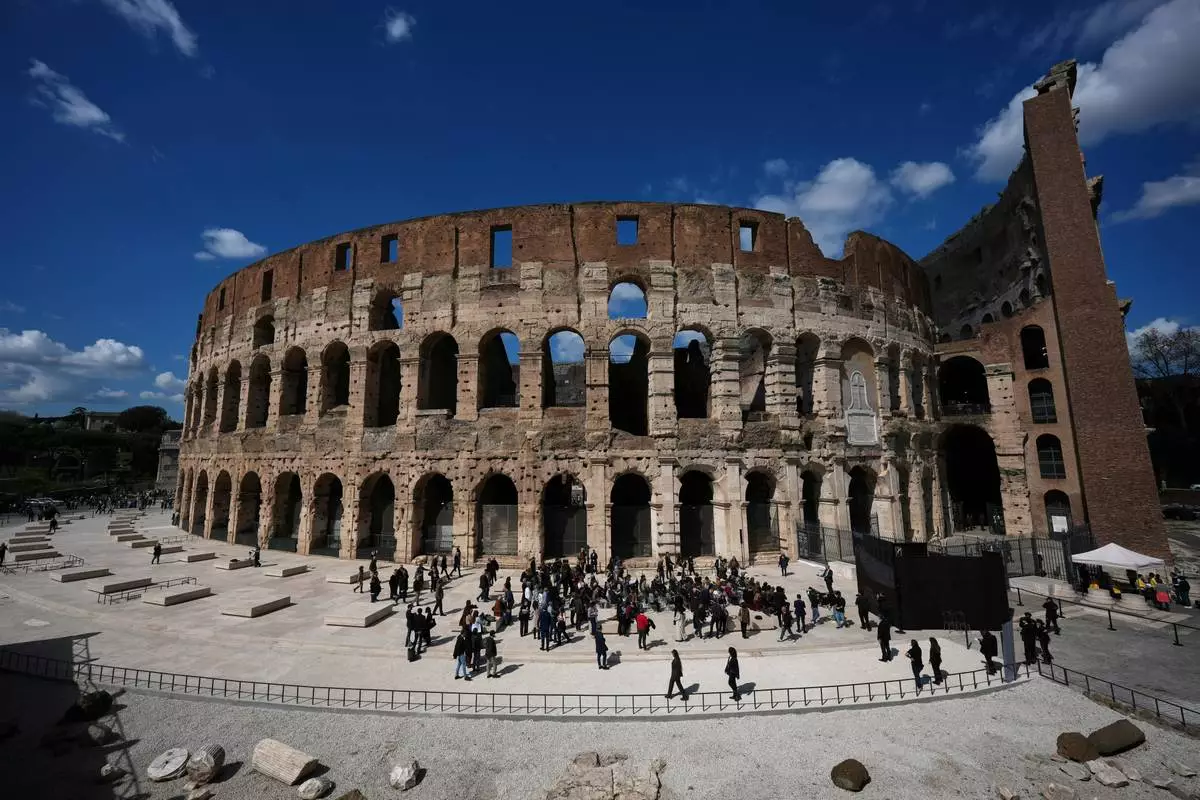
The project focused on a semicircular piazza outside the arena, where Roman spectators crowded under two arcades comprised of marble columns stretching up to 50 meters (164 feet) high. People stood in these arcades as they waited to pass through the entrances and take their seats.

Those arches are long gone, collapsing over the centuries from earthquakes and unstable ground. But now, tourists will be able to sit on large travertine marble slabs where the columns once stood and read reproductions of the Roman numerals that indicated seat sections.

“These blocks of travertine marble are placed, located exactly where the pillars, the original pillars were based,” said Italian architect Stefano Boeri, who designed the piazza. “The idea we had was to give back to the public the perception of the proportion of the arcades and the proportion of the vaults of the arches that were used to enter in the center of the Colosseum.”

Over time, the outside area became filled with detritus, including pieces of ruins, and overgrown with weeds.

Restorers began by digging a meter (yard) to where the travertine paving stones once covered the entrance area. They discovered coins, statues, animal bones and a gold ring. Deeper down is the secret underground passageway where Emperor Commodus used to enter the Colosseum while avoiding the hoi-polloi, and which was opened to the public last year.

Restorers sourced the new slabs of travertine from the same quarries where the ancient Romans retrieved theirs — and that today are used build a new generation of religious buildings, banks, museums, government buildings and private homes.

“From the beginning we understood only one thing and that was that we wanted to be involved,” Fabrizio Mariotti, head of the Mariotti Carlo stonecutting firm that has been carving travertine to order for four generations in Tivoli, said Tuesday while sitting on a slab of the stone.

“For a family like ours that has been working with travertine for four generations, working at the Colosseum, which is the symbol not only of Rome but also of this material, is so important.”

Earlier this year, the city of Rome opened two new subway stations, one deep beneath the Colosseum completing a multi-billion euro metro project. The restoration of the Colosseum’s perimeter was done using compensatory funds from the metro, project officials said.

People walk in the new outdoor space created with travertine marble around the Colosseum during it's inauguration in Rome, Tuesday, March 17, 2026. (AP Photo/Andrew Medichini)

People walk in the new outdoor space created with travertine marble around the Colosseum during it's inauguration in Rome, Tuesday, March 17, 2026. (AP Photo/Andrew Medichini)

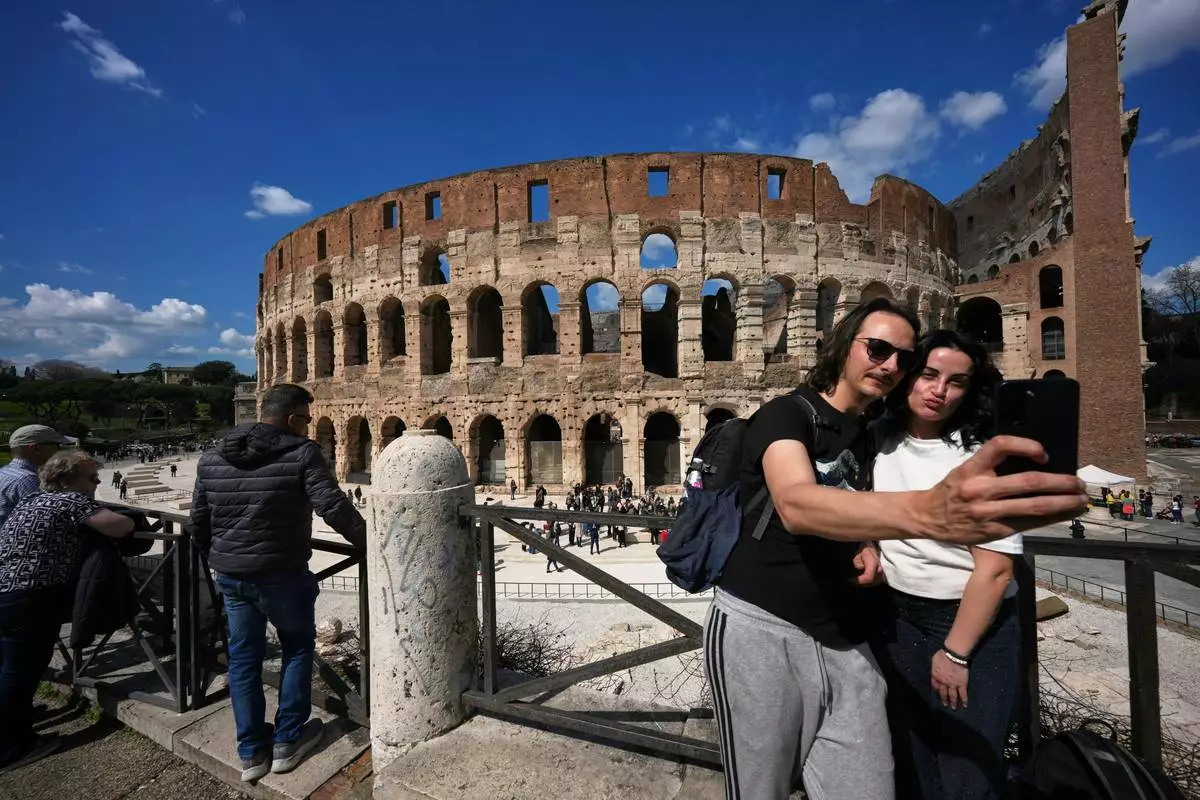
A couple take a selfie photo in front of the new outdoor space created with travertine marble around the Colosseum, during it's inauguration in Rome, Tuesday, March 17, 2026. (AP Photo/Andrew Medichini)

A couple take a selfie photo in front of the new outdoor space created with travertine marble around the Colosseum, during it's inauguration in Rome, Tuesday, March 17, 2026. (AP Photo/Andrew Medichini)

People walk in the new outdoor space created with travertine marble around the Colosseum during it's inauguration in Rome, Tuesday, March 17, 2026. (AP Photo/Andrew Medichini)

People walk in the new outdoor space created with travertine marble around the Colosseum during it's inauguration in Rome, Tuesday, March 17, 2026. (AP Photo/Andrew Medichini)

People walk in the new outdoor space created with travertine marble around the Colosseum during it's inauguration in Rome, Tuesday, March 17, 2026. (AP Photo/Andrew Medichini)

People walk in the new outdoor space created with travertine marble around the Colosseum during it's inauguration in Rome, Tuesday, March 17, 2026. (AP Photo/Andrew Medichini)

People walk in the new outdoor space created with travertine marble around the Colosseum during it's inauguration in Rome, Tuesday, March 17, 2026. (AP Photo/Andrew Medichini)

People walk in the new outdoor space created with travertine marble around the Colosseum during it's inauguration in Rome, Tuesday, March 17, 2026. (AP Photo/Andrew Medichini)

Recommended Articles