JC Tretter is the new executive director for the NFL Players Association.
The 35-year-old former center for the Packers and Browns was elected by the union’s board of player representatives on Tuesday.
Tretter previously served as NFLPA president from 2020 to 2024.
“There are times in your life when you know that you are exactly where you’re supposed to be,” Tretter said in a statement. “That’s where I am today. I’m grateful for the trust my fellow players have placed in me, and I’m going to reward that trust with my fullest commitment to these players and chart a new course for our union. My sole goal is to build up the strength of the NFLPA.
“I understand the responsibility that comes with this role and how important it is to stand shoulder to shoulder with player leadership. This union has always played a critical role in shaping the game, and that work is as important now as it’s ever been. The NFLPA needs leadership that listens, leads with integrity, and puts players first every day. That’s exactly how I plan to lead.”
Tretter’s election follows a tumultuous period for the NFLPA, which went from DeMaurice Smith to Lloyd Howell to interim executive director David White. Howell stepped down last July after a series of distractions during his short tenure.
Tretter already played an integral role as president during COVID-19 and helped negotiate key CBA amendments and launched the NFLPA’s team report cards.
“On behalf of the board of player representatives, we are proud to welcome JC Tretter as our new executive director and confident in the leadership that he will bring to our union,” the NFLPA said in a statement. “This decision reflects the responsibility our board of player Representatives carries on behalf of every player. We conducted a thorough, deliberate search to identify the right long-term leader to deliver sustained, meaningful progress for our members. JC earned the trust of our Board and demonstrated a clear commitment to serving this membership. We’re excited about what’s ahead.
“As our union moves into this next chapter, we’d like to thank David White for his steadfast leadership and dedication over the past seven months, which brought stability and focus back to our union.”
Tretter is the fifth executive director in the NFLPA’s 70-year history. The union said more than 300 candidates were considered from five primary backgrounds: football, other professional sports, government, labor and executive management.
Tretter takes over at a time when the NFL is thriving and players’ salaries are skyrocketing. He’ll lead negotiations for the next collective bargaining agreement. The league’s desire to expand the regular season to 18 games will be a major point, one the union has said is not negotiable.
“I want to congratulate JC Tretter on his election as Executive Director of the NFL Players Association,” NFL Commissioner Roger Goodell said in a statement. “As a former player, JC brings a unique perspective to this critical leadership role shaped by his firsthand experience and a deep understanding of the men he represents. We have worked with JC for several years, first as union president when he helped the league and the NFLPA successfully navigate through COVID during the 2020 season. We look forward to building upon that relationship to further our shared priorities, including our commitment to advancing player health and safety and ensuring the global growth of our game for our fans, the players and our clubs.”
AP NFL: https://apnews.com/hub/NFL

FILE - Cleveland Browns center JC Tretter (64) warms up before an NFL football game against the Los Angeles Chargers, Oct. 10, 2021, in Inglewood, Calif. (AP Photo/Kyusung Gong, File)
BUENOS AIRES, Argentina (AP) — Argentina’s once thriving wine industry is facing its worst crisis in more than 15 years, with record-low domestic consumption, dwindling exports and low-yielding crops.
Against this sobering reality, hundreds of wine enthusiasts still gathered last week in Mendoza, the heart of Argentina's wine region, to celebrate the annual National Wine Harvest Festival. Attendees watched dance performances, enjoyed live music and voted for the new queen of the Vendimia festival.
The festival was marking its 90th year as domestic wine consumption in Argentina plummeted to an all-time low of 15.7 liters (4.1 gallons) per person in 2025, according to the National Institute of Viticulture, or INV. Compare that to 1970, when Argentines consumed as much as 90 liters (24 gallons) per person annually.
Furthermore, 1,100 vineyards have shut down across the country and 3,276 hectares (8,095 acres) of grape production have vanished.
Fabián Ruggieri, president of the Argentine Wine Corp trade group, attributes the drop largely to a “sharp decline in purchasing power” that began in 2023. This trend, he said, is most acute among middle- and low-income consumers who traditionally consumed wine on a daily basis.
For Federico Gambetta, director of the Altos Las Hormigas winery, a medium-sized winery in Mendoza, the crisis is exacerbated by a shift in consumption patterns.
“People no longer consume wine en masse,” said Gambetta, noting that consumers now seek “coherence” and a sense of purpose behind their purchase.
While older generations favored high-alcohol, full-bodied wines, younger consumers prioritize other attributes, such as “approachability, freshness and lightness” — qualities typically found in white wines and rosés.
One of Gambetta’s red wines — Malbec Los Amantes 2022 — was recently ranked 41st among the world's 100 best wines. Yet, he notes that starting in 2010 his winery began to modify its wine — once defined by a traditional, heavier profile — to appeal to a new generation of consumers seeking lighter styles.
“Everything has mutated,” Gambetta said. “If you're not dynamic, you're lost.”
The U.S. is experiencing a similar shift as the older wine-focused demographic ages out and younger adults fail to fill the gap. A report by Silicon Valley Bank found that millennial and Gen Z drinkers are spread across more categories and drinking less overall, particularly those under 29.
The international market offers little relief. As the world’s 11th largest wine exporter, Argentina saw its exports fall to 193 million liters (51 million gallons) in 2025 — a 6.8% year-on-year decline and the lowest volume since 2004, according to INV.
Ruggieri notes that exports are being hampered by financing issues, high logistics costs and a lack of competitiveness resulting from external tariffs. While its neighbor and wine competitor Chile enjoys free trade agreements with over 60 economies — often reaching markets like China with tariff rates close to zero — Argentina faces tariffs between 10% and 20% in most markets.
Local producers like Gabriel Dvoskin, owner of the 10-hectare Canopus winery that produces approximately 50,000 bottles of wine each year, also struggles with inflation.
Dvoskin, who exports to 15 countries, with the U.S. as his main market, acknowledges that Argentina’s high production costs and rampant inflation place his wines at a disadvantage compared with international competitors.
“Our inflation makes us a bit expensive,” Dvoskin said. “My equivalent in France has a much lower cost for dry inputs — bottles, corks, etc. — than I do.”
For Gambetta, the current crisis reinforces a key lesson for the industry: product quality is non-negotiable.
“Right now, everything is very delicate, and one wrong step can bankrupt you,” Gambetta said.
Follow AP’s coverage of Latin America and the Caribbean at https://apnews.com/hub/latin-america
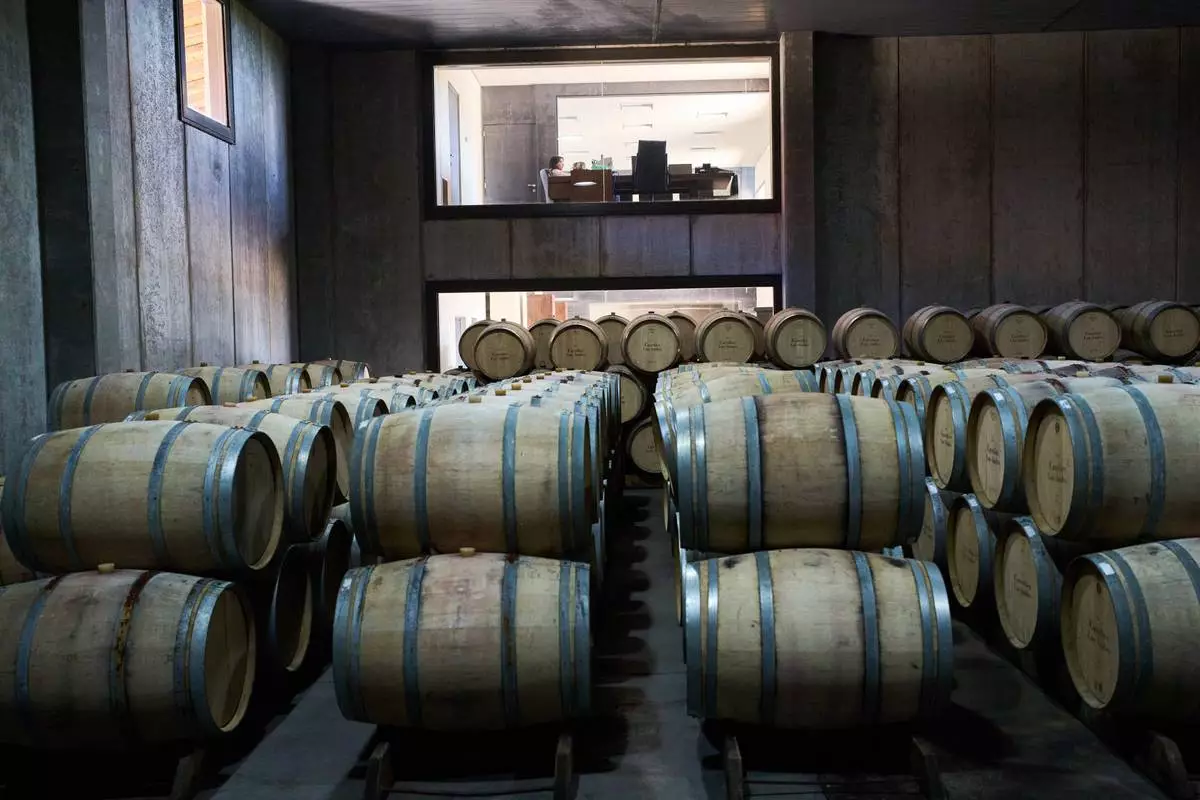
An employee works in an office above the barrel room at Cuvelier Los Andes winery in Vista Flores, Mendoza province, Argentina, Monday, March 9, 2026. (AP Photo/Rodrigo Abd)
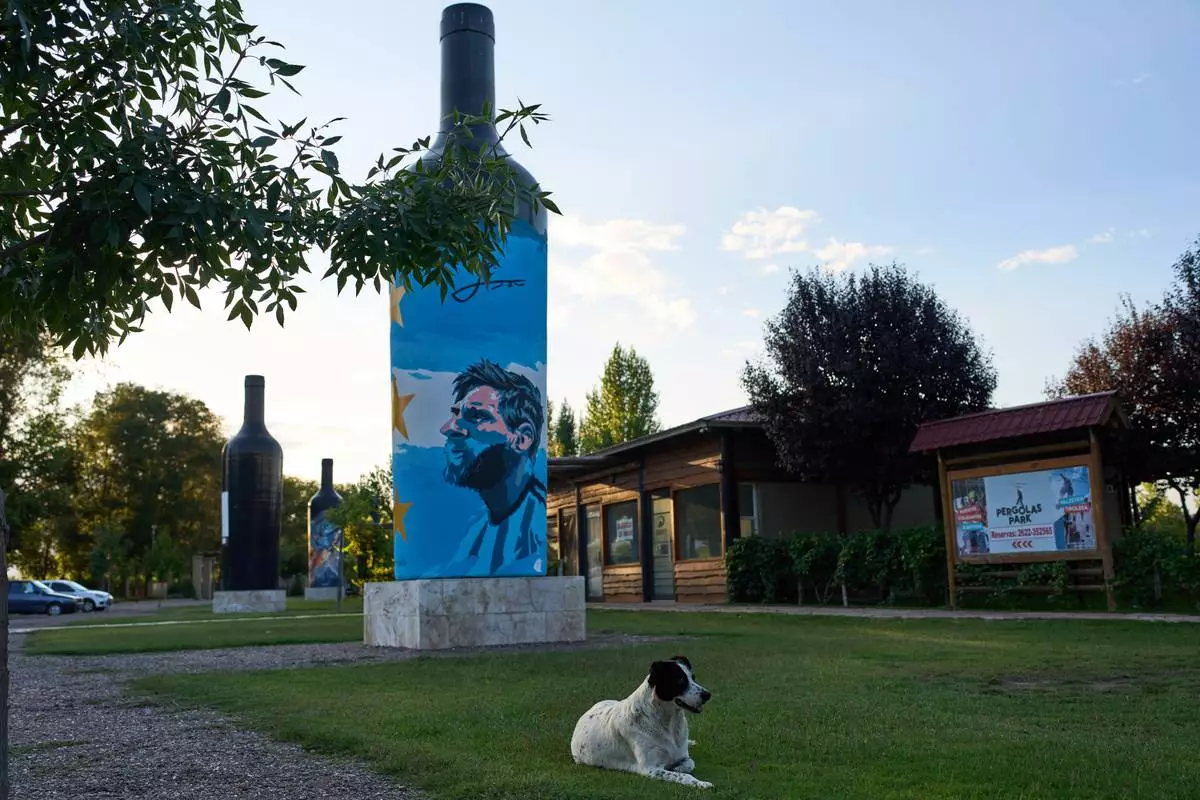
A dog rests next to wine-shaped structures in the Uco Valley, near Mendoza, Argentina, Monday, March 9, 2026. (AP Photo/Rodrigo Abd)
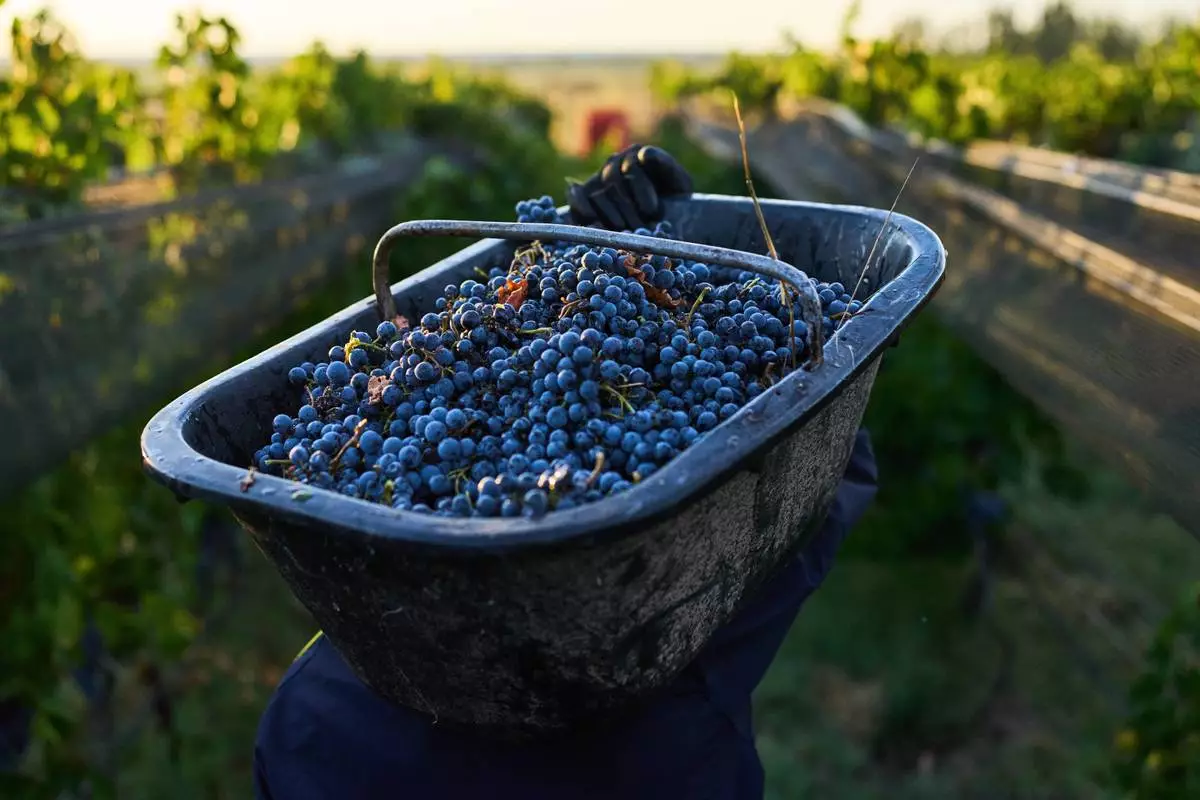
A worker carries a crate of harvested grapes at the Canopus Farm in El Cepillo, Mendoza province, Argentina, Tuesday, March 10, 2026. (AP Photo/Rodrigo Abd)
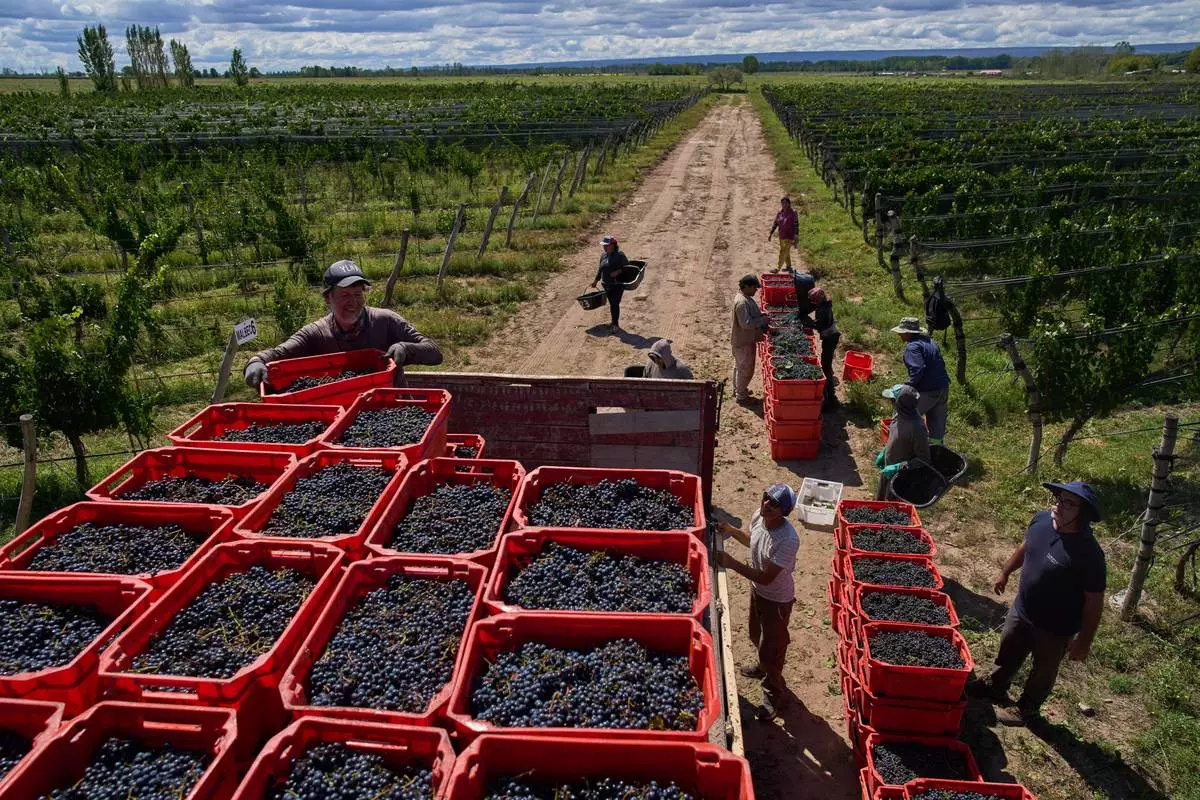
Worker load crates of grapes onto a truck at the Canopus Farm in El Cepillo, Mendoza province, Argentina, Tuesday, March 10, 2026. (AP Photo/Rodrigo Abd)
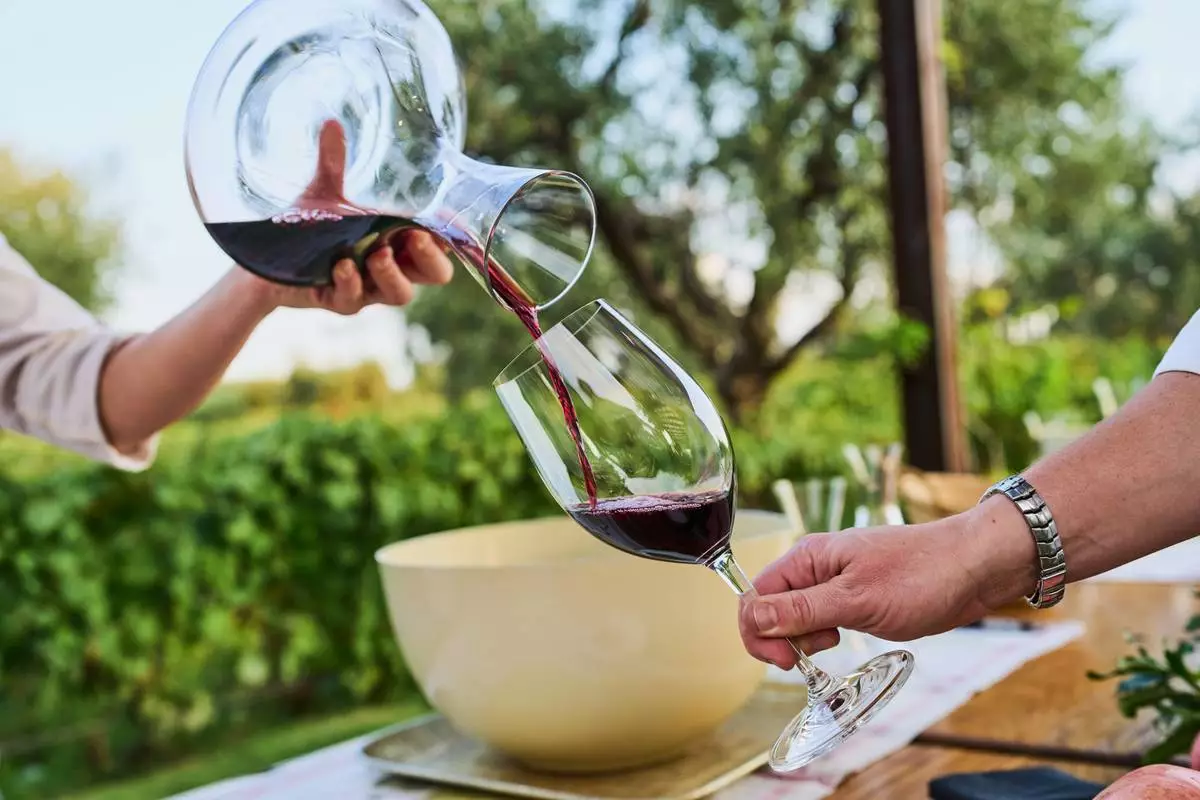
A worker serves red wine to tourists during a tasting at the Lagarde Winery in Mendoza, Argentina, Thursday, March 12, 2026. (AP Photo/Rodrigo Abd)