Skip to Content Facebook Feature Image

North London Collegiate School (Singapore) Student Achieves Academic Milestone with Peer-Reviewed Journal Publication

Business

North London Collegiate School (Singapore) Student Achieves Academic Milestone with Peer-Reviewed Journal Publication
Business

Business

North London Collegiate School (Singapore) Student Achieves Academic Milestone with Peer-Reviewed Journal Publication

2026-03-18 10:00 Last Updated At:10:15

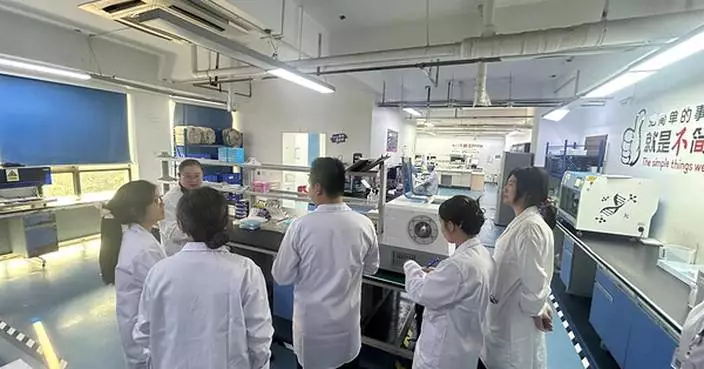
Saket Subramaniam of North London Collegiate School (Singapore) publishes peer-reviewed medical research on colorectal cancer liver metastasis in the American Journal of Student Research.

SINGAPORE, March 18, 2026 /PRNewswire/ -- North London Collegiate School (Singapore) celebrates the remarkable academic achievement of Grade 11 student Saket Subramaniam, whose research has been published in the peer-reviewed American Journal of Student Research.

Currently serving as Academic Ambassador for the 2025–2026 academic year, Saket is deeply engaged in the intellectual life of the school. His paper, "The Correlation Between the Surgical Margin and Survival in Patients with Colorectal Cancer Liver Metastasis: A Systematic Review and Meta-Analysis," was published in the American Journal of Student Research, an international academic journal that publishes student-led research across disciplines including medicine and the life sciences, on 9 February 2026, marking a significant milestone for a student researcher. The paper is available through the American Journal of Student Research website and via its DOI: 10.70251/HYJR2348.41601614.

From Curiosity to Independent Medical Research

His interest in the field began during Grade 10, when he explored an online course, "So You Want to Be a Surgeon?" offered by the University of Hong Kong. The programme introduced him to surgical subspecialties, and he became particularly fascinated by surgical oncology. While many researchers focus on organs such as the brain or heart, Saket chose to study the liver, drawn by its regenerative properties and by the complex challenges faced by patients with liver cancer, which has a five-year survival rate of approximately 20%.

Saket's work explores a critical question in surgical oncology: how much healthy tissue should be removed around a tumour in liver cancer surgery to maximise patient survival while preserving the liver's extraordinary ability to regenerate. The research investigates whether an "optimal" surgical margin exists, examining existing studies to better understand how surgical decisions can influence patient outcomes.

Methodology and Research Approach

The paper was developed as an independent research project under the guidance of Lumiere Education. Saket worked closely with his mentor, Huairen Zhang, a PhD researcher at the University of Cambridge, who supported him throughout the research process. Determined to challenge himself, Saket chose to conduct a meta-analysis, a statistically rigorous method rarely attempted by students in the programme, requiring him to independently learn advanced statistical methodologies.

Reflecting on the publication process, Saket noted that the experience of revising and refining his work in response to peer review was both demanding and rewarding. Receiving detailed feedback from the journal editors reinforced his confidence and strengthened his belief in the value of his research.

Academic Enrichment and Student Scholarship at NLCS (Singapore)

At North London Collegiate School (Singapore), Saket credits the school's academic culture, and especially Ms Holden, the Assistant Principal (Academic), for fostering his intellectual curiosity. One particularly formative experience was delivering a seminar titled "Cancer – what is it and why is it so deadly?" as part of the school's Seminar Programme. Preparing and presenting the session deepened his understanding of cellular biology while building his confidence in public speaking and teaching.

Inspired by the opportunities he had experienced at NLCS (Singapore), Saket has sought to expand academic engagement within the school community. In his role as Academic Ambassador, he launched the Bryant Lectures, a new student-led lecture series named after pioneering scientist and former NLCS (UK) headmistress Sophie Bryant. The initiative gives students the opportunity to deliver formal academic lectures, complementing the school's established McCabe Lectures delivered by staff, parents and visiting academics. The inaugural Bryant Lecture will take place on 18 March.

Saket's parents shared their pride in his achievement:

"We were absolutely thrilled to learn that his research has been published in the peer-reviewed American journal of Student Research. We have seen Saket grow in confidence, discipline and self-belief thanks to the dedicated efforts, guidance, and encouragement of his teachers at North London Collegiate School (Singapore) and his academic mentor. Their unwavering support has played a significant role in shaping the person he is becoming, and we are deeply grateful for their commitment."

Encouraging other students to pursue their interests, Saket emphasises the importance of embracing opportunity:

"Whether it is to publish your work or to pursue your passion, my single best piece of advice is to take the opportunities presented to you. Be a risk-taker; approach uncertainty with foresight, innovation, and resilience. Deliver your first seminar, create your own society, publish your own research, as you never know which small step might become the defining moment of your journey."

Saket's accomplishment reflects the spirit of intellectual ambition and academic curiosity that lies at the heart of North London Collegiate School (Singapore), an international school offering the IB curriculum, where students are encouraged to pursue academic enrichment, independent research, and scholarly inquiry beyond the classroom.

About North London Collegiate School (Singapore)

Founded in August 2020, North London Collegiate School (Singapore) is a British International School offering the academically ambitious NLCS curriculum, followed by the International Baccalaureate (IB) Middle Years Programme and culminating in the IB Diploma Programme.

Drawing on 175 years of educational heritage from its founding school in the UK, NLCS (Singapore) nurtures individuals to be intellectually curious, socially confident, and grounded in compassion through a rigorous academic framework, rich co-curricular opportunities, and exceptional pastoral care.

Situated on Depot Road, the School is part of a global family of schools committed to educational excellence and developing global citizens.

To learn more about NLCS (Singapore), please visit our website (https://nlcssingapore.sg/) and follow us on Instagram, Facebook, YouTube, and LinkedIn.

For media enquiries, please contact the NLCS (Singapore) Marketing Team
Email: marketing@nlcssingapore.sg 

** This press release is distributed by PR Newswire through automated distribution system, for which the client assumes full responsibility. **

North London Collegiate School (Singapore) Student Achieves Academic Milestone with Peer-Reviewed Journal Publication

North London Collegiate School (Singapore) Student Achieves Academic Milestone with Peer-Reviewed Journal Publication

Advancing Next-Generation Grid-to-Chip Energy Architecture for AI Infrastructure

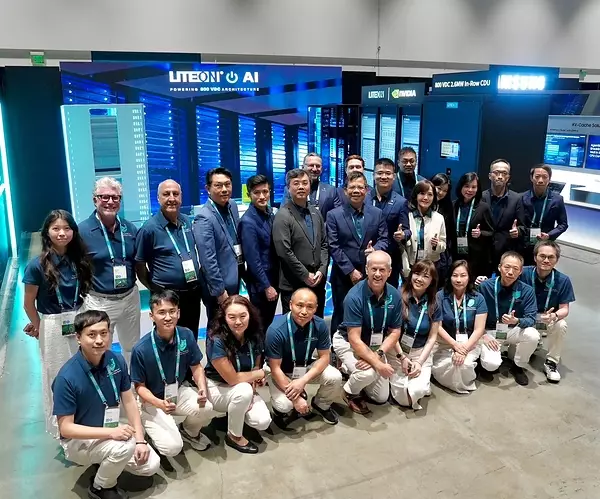
SAN JOSE, Calif., Oct. 15, 2026 /PRNewswire/ -- LITEON Technology (2301) participates in the Open Compute Project (OCP) Global Summit 2026 in San Jose, California, from October 12 to 15, showcasing its next-generation AI factory infrastructure portfolio centered on 800 VDC architecture. The exhibition features power rack solutions supporting the NVIDIA Vera Rubin platform, integrated power and thermal management solutions designed for NVIDIA MGX and OCP ORv3 architectures, demonstrating its Grid-to-Chip technology portfolio.

800 VDC Advances Power and Cooling Architecture for Megawatt-Scale AI Infrastructure

LITEON showcases its 800 VDC Power Shelf integrated with Battery Backup Unit (BBU), demonstrating next-generation 800 VDC power architectures for AI factories. To address the growing thermal demands of high-density AI computing, LITEON debuts the 2.6MW Enterprise Cooling Distribution Unit (CDU) from its strategic investment partner, DCX Liquid Cooling Systems. The solution delivers up to 2.6MW of heat transfer capacity, achieves an approach temperature of 3°C, and incorporates an N+1 redundant pump design to maximize cooling efficiency while ensuring system reliability for high-density AI and HPC deployments. Also on display is the CDU's next-generation HMI and integrated software layer, designed to enhance operational efficiency and provide clear, at-a-glance visibility into key system parameters.

For the NVIDIA Vera Rubin NVL72 platform, LITEON is also showcasing an integrated infrastructure solution featuring a 95kW DC/DC Power Shelf and a 280kW Liquid-to-Liquid (L2L) In-Rack CDU. Designed based on NVIDIA MGX architecture, the solution combines 800 VDC distribution, energy backup, and thermal management technologies to reduce transmission losses and heat generation, improve energy efficiency and power density, simplify power infrastructure, and free additional rack space for high-density AI deployments.

"In the AI era, data center competitiveness is no longer defined solely by compute scale," said John Chang, General Manager of LITEON Cloud Infrastructure Platform and Solution SBG. "Instead, it is measured by tokens per watt and how efficiently power can be converted into meaningful AI output. As AI platforms continue to scale in power density, data centers must simultaneously optimize energy efficiency, cooling performance, and deployment flexibility. High-efficiency power delivery and thermal management architecture have become the critical foundation for scaling future AI Factories."

ORv3 Power and Thermal Management Solutions Support Scalable AI Infrastructure

LITEON is also showcasing an integrated AI power rack solution designed for the ORv3 architecture, integrating an 180kW Power Shelf and a 108kW Capacitor Backup Unit (CBU). Through centralized power delivery and supercapacitor backup capabilities, the solution addresses dynamic AI workloads while enhancing power stability and overall system reliability.

Optimized for liquid cooling compatibility, the ORv3 architecture enables higher-density deployments and greater infrastructure flexibility. LITEON shows key cooling modules including 120kW and 220kW In-Rack CDUs, which can be integrated with advanced cooling technologies such as Direct-to-Chip architectures. These solutions enable greater GPU density, enhanced thermal performance, and flexible infrastructure design for next-generation AI and HPC platforms. By integrating power, backup, and thermal management systems, LITEON helps customers build efficient, reliable, and scalable AI infrastructure.

From 800 VDC Distribution to GPU Power Delivery: Building a Complete Grid-to-Chip Energy Architecture

As AI processors continue to increase in power consumption, efficiently delivering electricity from the rack level to the GPU has become a critical challenge for next-generation AI infrastructure. To address this challenge, LITEON is showcasing its comprehensive DC-DC power conversion portfolio, including 800V Power Bricks, IBC Modules, 50V Power Bricks, and Voltage Regulator Modules (VRM). These product lines bridge every stage of power delivery, from 800 VDC distribution and server-level power conversion to chip-level voltage regulation, demonstrating LITEON's complete Grid-to-Chip energy architecture for future high-density AI computing platforms.

Among these, the 800V DC/DC power brick can be deployed on the HVDC power distribution board (PDB) for downstream distribution and step-down conversion. Multiple bricks can be paralleled to match different power requirements, with active current sharing improving supply stability and reliability. The intermediate bus converter (IBC) then performs the next stage of voltage conversion. This raises overall power delivery efficiency, reduces distribution losses, optimises board area and system cost, and improves supply stability in multi-output architectures. Finally, the voltage regulator module (VRM) delivers a precise, stable operating voltage to the GPU, completing the "last mile" of power delivery from the rack to the chip.

Strengthening the Global Ecosystem to Enable Comprehensive AI Infrastructure Capabilities

As AI computing infrastructure continues evolving toward higher power density and greater energy efficiency, LITEON is expanding its capabilities across power delivery, thermal management, and system-level energy optimization. By extending its expertise from infrastructure power systems to comprehensive Grid-to-Chip energy management, LITEON is building a complete portfolio of AI infrastructure energy solutions.

LITEON continues to deepen collaboration with NVIDIA and the broader OCP ecosystem while leveraging its global manufacturing footprint and localized service capabilities. Through close ecosystem partnerships, LITEON is helping customers address the growing demand for high-performance, highly reliable, and highly scalable infrastructure in the AI Factory era, accelerating deployment and expansion of next-generation AI data centers.

LITEON Technology 2026 OCP Global Summit Exhibition Information:
Date: October 12–15, 2026
Venue: San Jose McEnery Convention Center, USA
Booth: C51, Hall 2

** This press release is distributed by PR Newswire through automated distribution system, for which the client assumes full responsibility. **

LITEON Showcases NVIDIA 800 VDC Architecture and Thermal Management Portfolio at OCP Global Summit 2026

LITEON Showcases NVIDIA 800 VDC Architecture and Thermal Management Portfolio at OCP Global Summit 2026

Recommended Articles