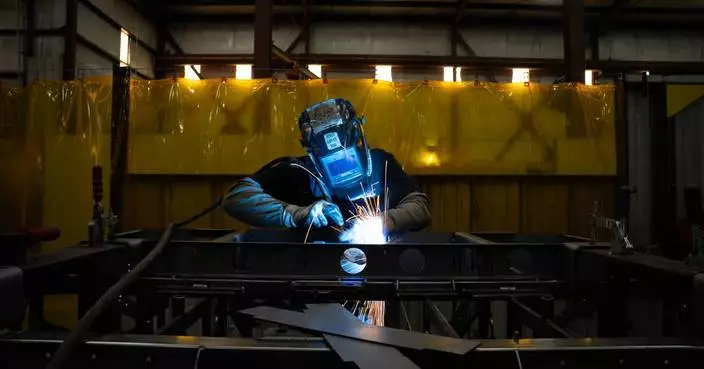
BISMARCK, N.D. (AP) — Tennessee farmer Todd Littleton expects to pay $100,000 more for fertilizer this season, a 40% spike from his bill last year thanks to the war in Iran — and he is scrambling to cover that extra cost.
“The problem is, is we’re so strained financially coming into this issue,” said Littleton, a third-generation farmer from Gibson County in the state’s northwest corner. “We have had a couple of record losses the last couple years, so everyone’s kinda grabbing at straws anyway, and then to have input prices increase yet again, it just really couldn’t happen at a worse time.”
Littleton, who grows corn, soybeans and wheat, is among thousands of farmers across the country who will pay far more this spring than they expected for fertilizer that is essential to their crops. Nitrogen-based fertilizer is especially vital for corn, usually the largest crop in the U.S. and one that feeds the nation’s livestock and is converted into fuel that helps power most U.S. cars and trucks.
Farmers have complained about costly fertilizer for years, but prices have soared even higher since the U.S. and Israel attacked Iran on Feb. 28, leading to a slowdown in shipping through the Strait of Hormuz, a chokepoint for 20% of the world’s oil and natural gas. Besides increasing the price of fuel, which is key in the production of fertilizer, the shipping disruption also has largely stopped the export of nitrogen fertilizers manufactured in the Persian Gulf and limited access to key fertilizer ingredients.
About 15% of fertilizer imports to the U.S. are from the Middle East, and about half the global supply of the key ingredient urea comes from the region, along with 30% of ammonia, according to the American Farm Bureau Federation.
“When the ports started raising their nitrogen prices due to the conflict due to shipping concerns, that directly affects me here on the farm,” Littleton said.
The extra costs are hard to absorb, coming after several bad years when crop prices were down even as expenses kept climbing, Littleton said.
But it could be worse, as some farmers may not be able to obtain fertilizer at any price, said Zippy Duvall, president of the American Farm Bureau Federation.
“We’re being told that many of our farmers that haven’t preordered their fertilizer and paid for it may not even obtain the fertilizer that they’re going to need during the season or for spring planting,” Duvall said. “That’s why this situation is so serious.”
Harry Ott, a cotton, corn and peanut farmer who also leads the South Carolina farm bureau, said there isn’t enough fertilizer stockpiled in warehouses to meet demand in the coming months.
“It is a really dire situation that our farmers facing,” Ott said.
Even before the latest price increase, other factors in the last several years have led to high fertilizer prices, starting with the war between Ukraine and Russia, which blocked access to raw materials and increased natural gas prices. China also cut phosphate exports as it focused more on domestic needs.
The latest factors worsened those existing supply issues, which means that even if the Iran war was resolved, fertilizer prices likely won’t quickly fall, said Jacqui Fatka, a farm supply economist for creditor CoBank.
“There’s going to be a tail to this to get everything turned back on, sent back out,” Fatka said.
And then there is the time it takes for shipments from the Middle East to reach the U.S. — typically 30 to 45 days to reach the Port of New Orleans.
Some fertilizer is already stored in the U.S. and can meet demand amid the shortage of Middle East imports, but at some point that supply will run short.
“We don’t quite know how it’s going to shake out,” said Nancy Martinez, director of public policy, trade and biotechnology for the National Corn Growers Association.
Nitrogen- and phosphate-based fertilizers are largely produced domestically, which helps a little bit, said Anne Villamil, a professor of economics at the University of Iowa.
“But again, energy prices are an input, and so even if you’re producing it in the U.S., if the cost of your inputs goes up, then it’s going to be an increase in price to the farmers who want to buy it,” Villamil said.
Soaring oil prices could result in higher food prices, given the increased cost of diesel needed to transport products to grocery stores and petroleum products used in plastic packaging, said Chad Hart, an economics professor at Iowa State University.
However, the increased fertilizer prices shouldn't significantly lead to grocery store increases even as they put a crimp in farmers' profits. That's because on-farm costs are only a small part of what consumers pay at the supermarket.
The Trump administration said it has taken steps to ease the cost of fertilizer, including moving to increase fertilizer imports from Venezuela, which U.S. Agriculture Secretary Brooke Rollins called “a huge step that puts farm security and farmers first.”
The Department of Agriculture also notes it previously announced $12 billion in one-time payments to help farmers offset losses primarily due to tariffs imposed by the Trump administration. In a statement, the USDA also said it has provided more than $30 billion in additional aid to farmers since January 2025, and the agency noted its support for a more competitive fertilizer marketplace that would ultimately lower prices.
Fatka, of CoBank, said the $12 billion doesn’t go far for farmers with a payment of $44 per corn acre when the USDA estimates about $900 per acre for cost of production for the average U.S. farmer.
Still, farm bankruptcies remain rare, with only 315 last year — a tiny percentage of the nearly 1.9 million farms nationally. And prices for the nation’s two largest crops — corn and soybeans — have been climbing recently.
Tom Waters, who farms about 5,000 acres (2,023 hectares) of corn, soybeans and wheat east of Kansas City, said the increase of fertilizer prices along with other costs makes it tough to make a profit when crop prices are so low.
“The margins get smaller and smaller so we just have to really work hard to trim our costs and be as frugal as we can be but still provide the soil and crop what it needs to grow and produce,” Waters said.
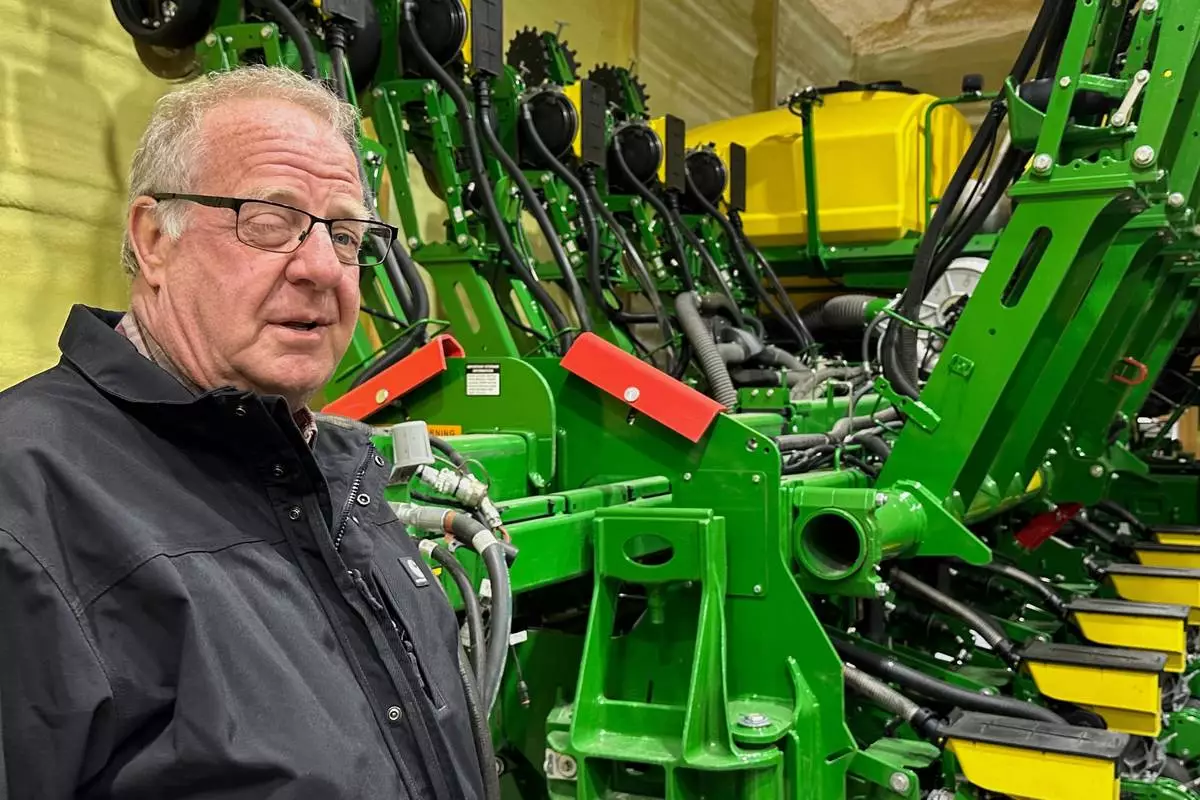
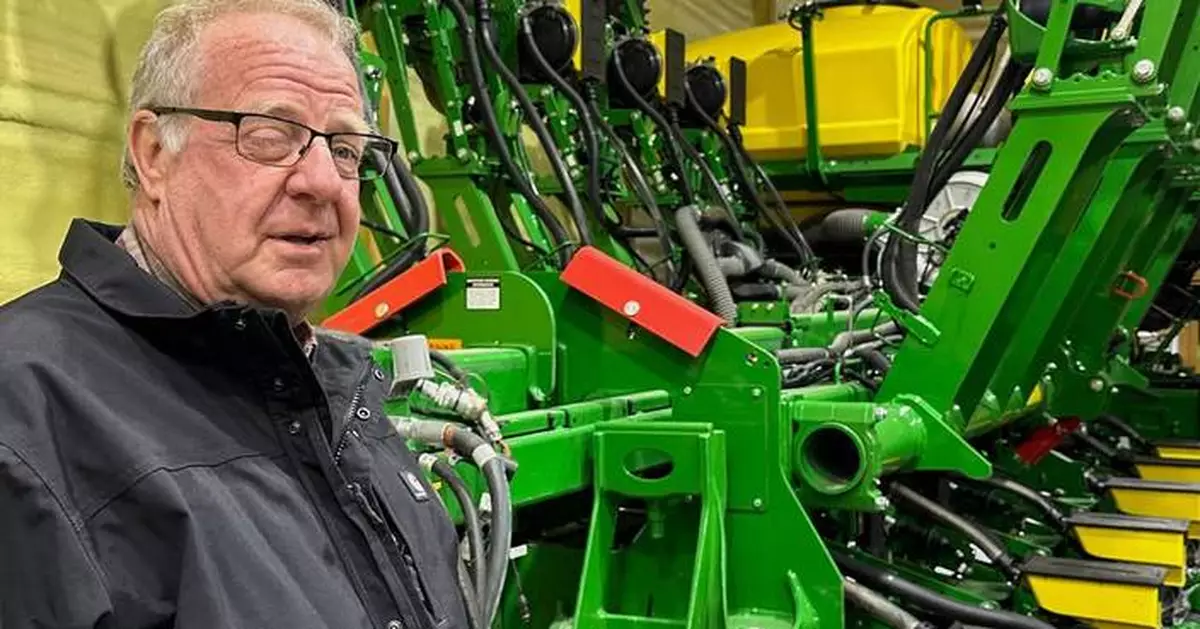
Tom Waters, a seventh-generation farmer, stands next to his planting machinery Friday, March 13, 2026, in Orrick, Mo. (AP Photo/Nick Ingram)
CHICAGO (AP) — Illinois Lt. Gov. Juliana Stratton won Tuesday's Democratic primary for U.S. Senate, edging out two sitting members of the U.S. House to advance to a November general election against Republican nominee Don Tracy, the former state party chair.
The retirement of U.S. Sen Dick Durbin, the Senate’s longtime No. 2 Democrat, triggered a competitive campaign on the Democratic side, drawing as candidates Stratton and U.S. Reps. Raja Krishnamoorthi and Robin Kelly, among others. Furious fundraising and sharp elbows marked the race, which tested the influence of Democratic Gov. JB Pritzker. The governor, whose name has been floated as a 2028 presidential contender, backed Stratton.
The races were testing grounds for some of the biggest issues facing the Democratic Party, from support for Israel to immigration enforcement and the cryptocurrency and AI industries, as super PACs poured millions of dollars into the hotly contested primaries.
Most primary winners in the Democratic stronghold are expected to win in November, shaping a new generation of leadership in the state’s congressional delegation.
Stratton lagged in fundraising but had the powerful backing of Pritzker, who campaigned with her around the state.
He introduced her Tuesday night before her victory speech, in which she pledged to push for Medicare for all and higher wages, abolish U.S. Immigration and Customs Enforcement and “bring this fight straight to Donald Trump’s door.”
“We are ready to take our democracy back into our own hands,” Stratton told supporters gathered in Chicago.
The race featuring 10 Democrats was expensive. Krishnamoorthi dominated fundraising and was the first on television with ads in July. He started 2026 with over $15 million on hand compared with Stratton's $1 million, according to campaign finance records. Late last year, Pritzker put $5 million into a super PAC aimed at electing her.
Stratton lit into Krishnamoorthi at debates, particularly on the five-term Democrat’s voting record and donations from an ICE contractor.
Krishnamoorthi, who has called to dismantle the agency, said he donated the money to immigrant rights groups. In a concession speech Tuesday, he brought up his roots as an immigrant who born in India and raised in central Illinois.
“Only in this country can a kid like me serve in the halls of Congress,” he said. “And now we must come together as Democrats and as Americans to make sure that we return to the principles that made us a beacon of freedom and opportunity for the world.”
Rochelle Brockenborough, 64, said she voted for Stratton at the Dr. Martin Luther King Community Service Center in Chicago.
“I wanted to make sure there was no AIPAC money. That’s important to me,” she said, adding that U.S. tax dollars shouldn’t be used to support Israel.
Candidates touted ties to iconic Chicagoans including former President Barack Obama and the late Rev. Jesse Jackson, who died last month. However, an endorsement touted posthumously by Stratton caused a snag as Jackson’s family withdrew it Monday, saying the draft was not meant for public release.
In the GOP primary, Tracy, an attorney who led the Illinois Republican Party from 2021 to 2024, bested five other candidates. The state last had a Republican in the Senate a decade ago, when Mark Kirk was defeated by current Democratic Sen. Tammy Duckworth.
Election officials hoped to see busy polls after statewide turnout in the 2024 primary was 19%, the lowest in more than five decades. Initial turnout estimates in Chicago were around 25%, according to the Chicago Board of Elections.
Dozens of candidates ran for five open seats in the Chicago area.
In Kelly’s 2nd district, which spans parts of the South Side and suburbs and dips into the central Illinois farmlands, Cook County Commissioner Donna Miller emerged as the winner of a crowded Democratic field that included former U.S. Rep. Jesse Jackson Jr., son of the late civil rights leader. Miller will face off in November against Republican Michael Noack, who was unopposed.
Miller was backed by AIPAC, and that support prompted retiring U.S. Rep. Jan Schakowsky, of the 9th District, to withdraw her endorsement of Miller.
The open seat in Krishnamoorthi’s suburban 8th District attracted eight Democrats and four Republicans. Former U.S. Rep. Melissa Bean won the Democratic nomination and advances to face Republican Jennifer Davis.
“People are ready for change, they want to see a functional Congress,” Bean told The Associated Press. “We haven’t had one in quite some time.”
Two other House members are retiring after long careers.
The 7th District of Rep. Danny Davis, who was first elected in 1996, covers parts of downtown, the West Side and suburbs. The candidate he endorsed, state Rep. La Shawn Ford won the nomination over a pool of candidates that included Chicago City Treasurer Melissa Conyears-Ervin. Chad Koppie won for the GOP.
The primary for Schakowsky's 9th District seat was the most crowded. Among the 15 Democrats, Evanston Mayor Daniel Biss edged out digital creator Kat Abughazaleh and state Sen. Laura Fine, who was also backed by AIPAC. Republican John Elleson won the party's nomination.
Speaking to supporters, Biss called Schakowsky, who endorsed him, his “political hero” and said the contest to replace her raised fundamental questions about Democratic Party priorities.
“Are we going to double down on our progressive values, or are we going to shrink away from protecting the most vulnerable?” Biss said. “We are going to stand up, we are going to fight.”
Another open Chicago area seat was that of Rep. Jesus “Chuy” Garcia, who announced that he would not seek reelection citing health and personal reasons. The Democratic primary for the 4th District was uncontested after Garcia quietly schemed to place his chief of staff, Patty Garcia, on the ballot without any Democratic competition.
Patty Garcia, who is not related to the congressman, will face Republican Lupe Castillo, who also ran unopposed, in November.
Pritzker, an heir to the Hyatt Hotel fortune who was unopposed in his primary, is the first governor to seek a third term since the 1980s.
One of President Donald Trump’s most vocal critics, Pritzker used his victory speech to tout his efforts to oppose the aggressive federal immigration crackdown in Chicago last year. He criticized Republicans' agenda, called Trump's presidency an “unmitigated disaster” and vowed to help Democrats across Illinois win in November.
“This is the fight of our lives,” he told supporters at a downtown Chicago hotel. “Everything we care about is under siege from Washington.”
Pritzker also made digs at Republican candidate Darren Bailey, a former state senator whom he handily defeated in 2022.
Bailey, who bested three other Republicans vying for the nomination, said he did things differently this time, including focusing more on Chicago voters.
On the campaign trail and in his victory speech, Bailey criticized Pritzker’s leadership, including blaming him for rising costs. Heading into November, he vowed to include Democrats “who felt left behind.”
“I want to work together to make Illinois government work again at all levels,” he said.
Associated Press journalists Mike Householder in Chicago and Hannah Fingerhut in Des Moines, Iowa, contributed.
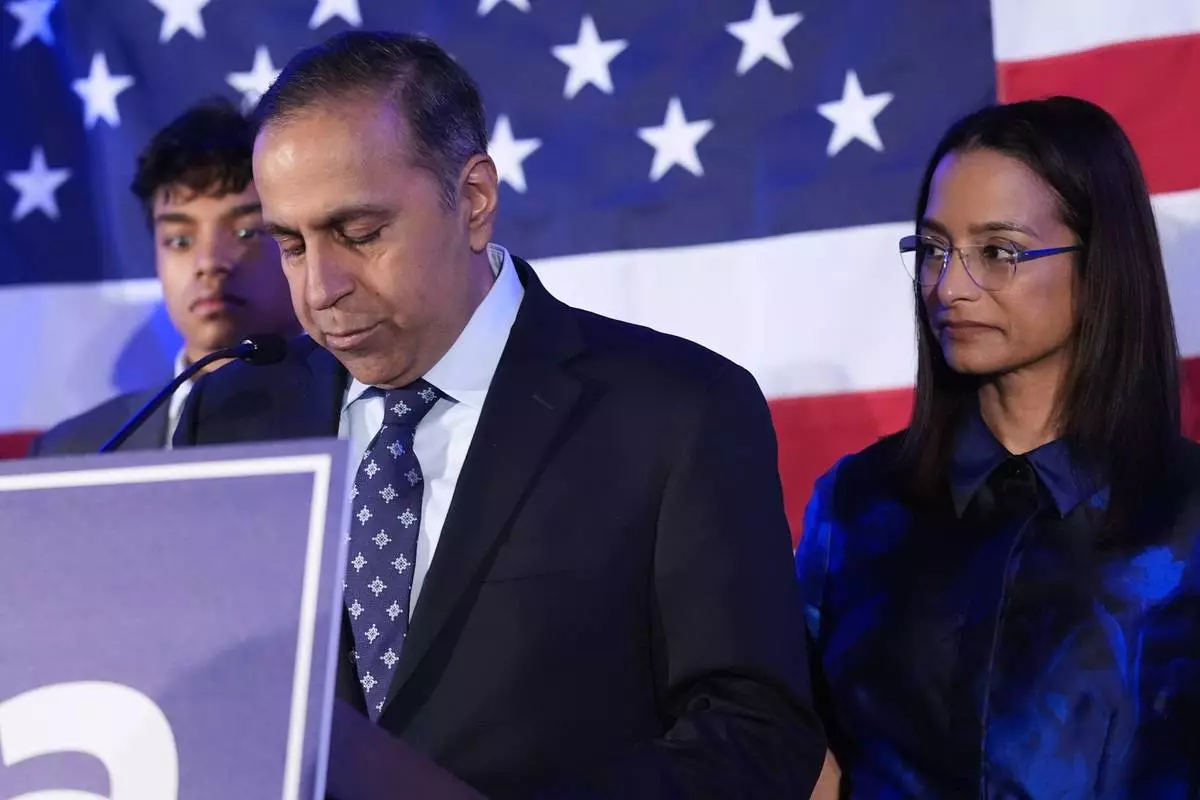
U.S. Rep. Raja Krishnamoorthi, D-Ill., center, concedes as his wife, Priya Bala, looks on during an election night watch party after losing the Democratic primary for U.S. Senate, Tuesday, March 17, 2026, in Chicago. (AP Photo/Nam Y. Huh)
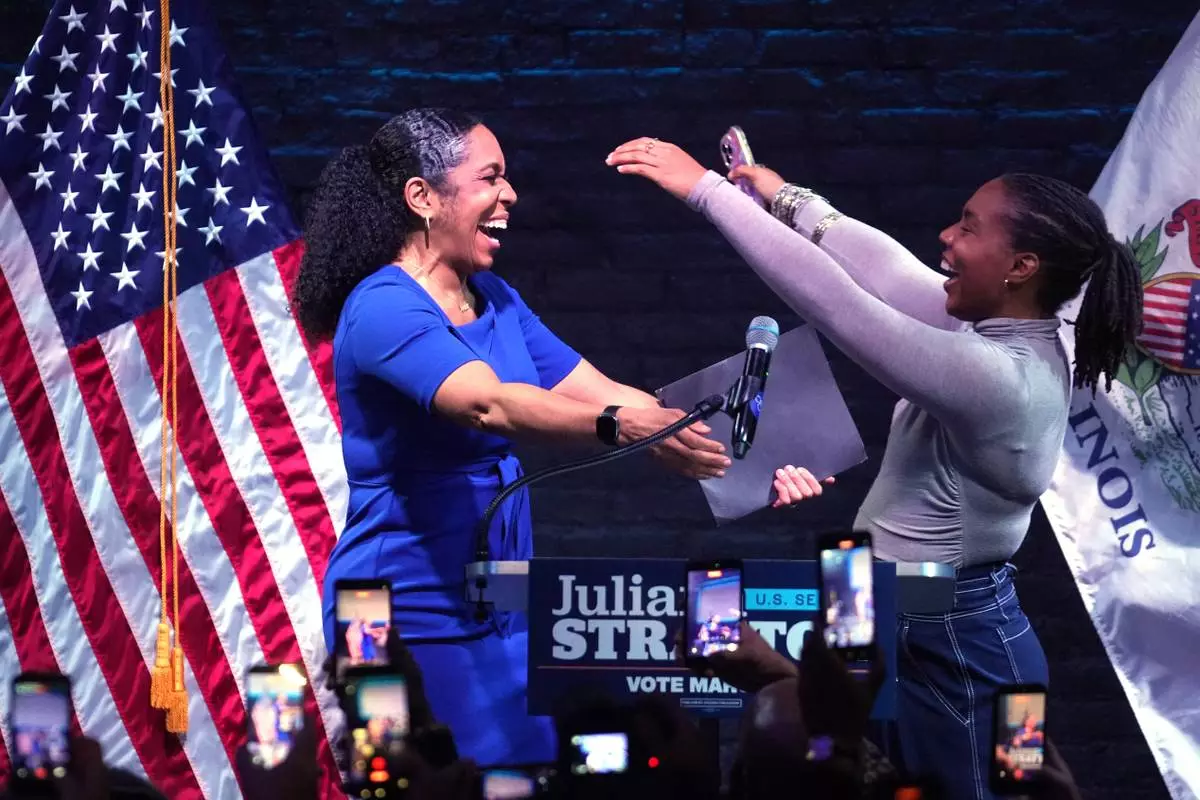
Illinois Lt. Gov. Juliana Stratton, left, hugs her daughter Cassidy during a primary election night watch party after winning the Democratic primary for U.S. Senate, Tuesday, March 17, 2026, in Chicago. (AP Photo/Erin Hooley)
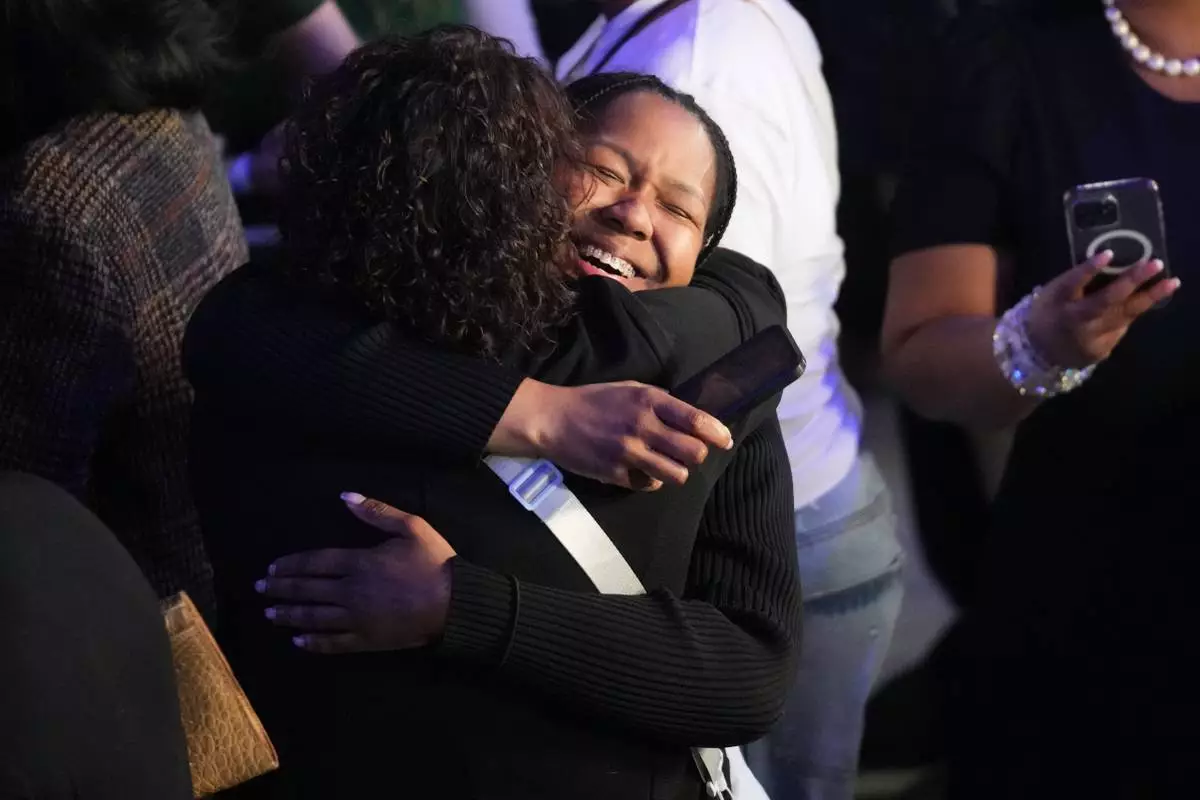
Supporters react as election results roll in during a primary election night watch party for Illinois Lt. Gov. Juliana Stratton, a Democratic candidate for U.S. Senate Tuesday, March 17, 2026, in Chicago. (AP Photo/Erin Hooley)
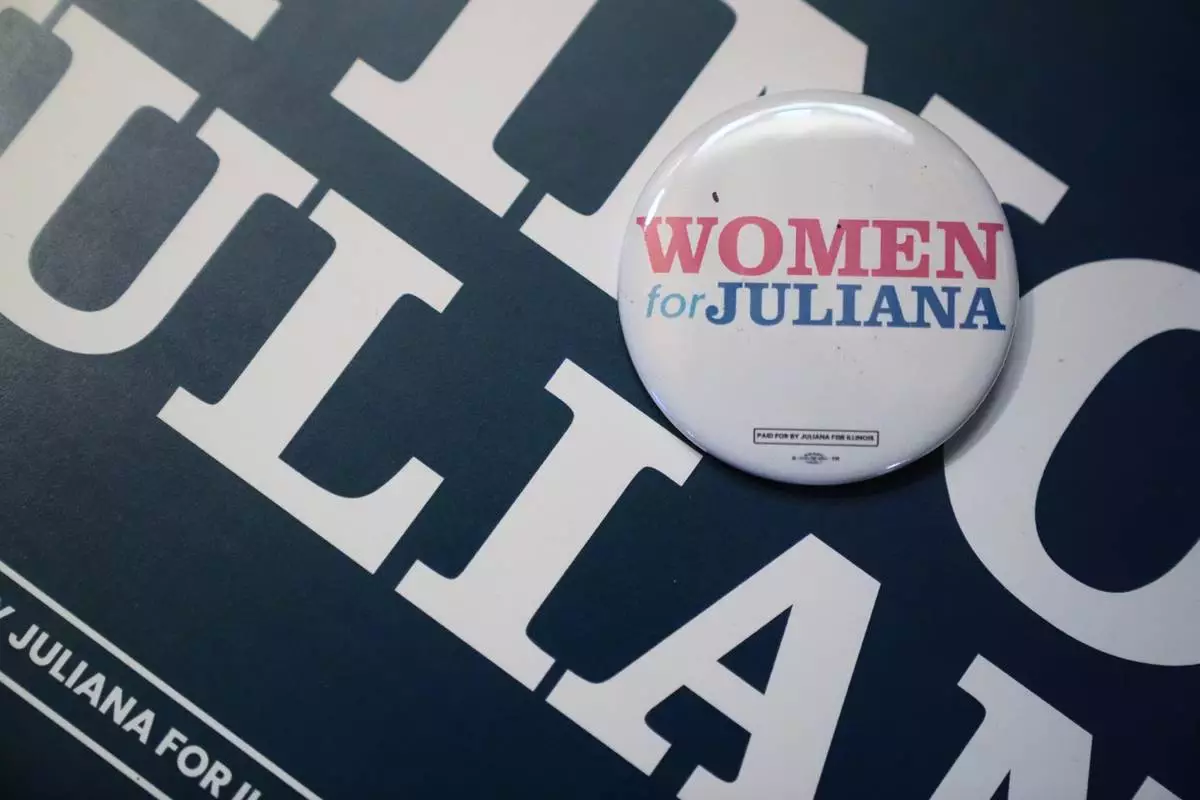
A pin reading "women for Juliana" is displayed during a primary election night watch party for Illinois Lt. Gov. Juliana Stratton, a Democratic candidate for U.S. Senate, Tuesday, March 17, 2026, in Chicago. (AP Photo/Erin Hooley)
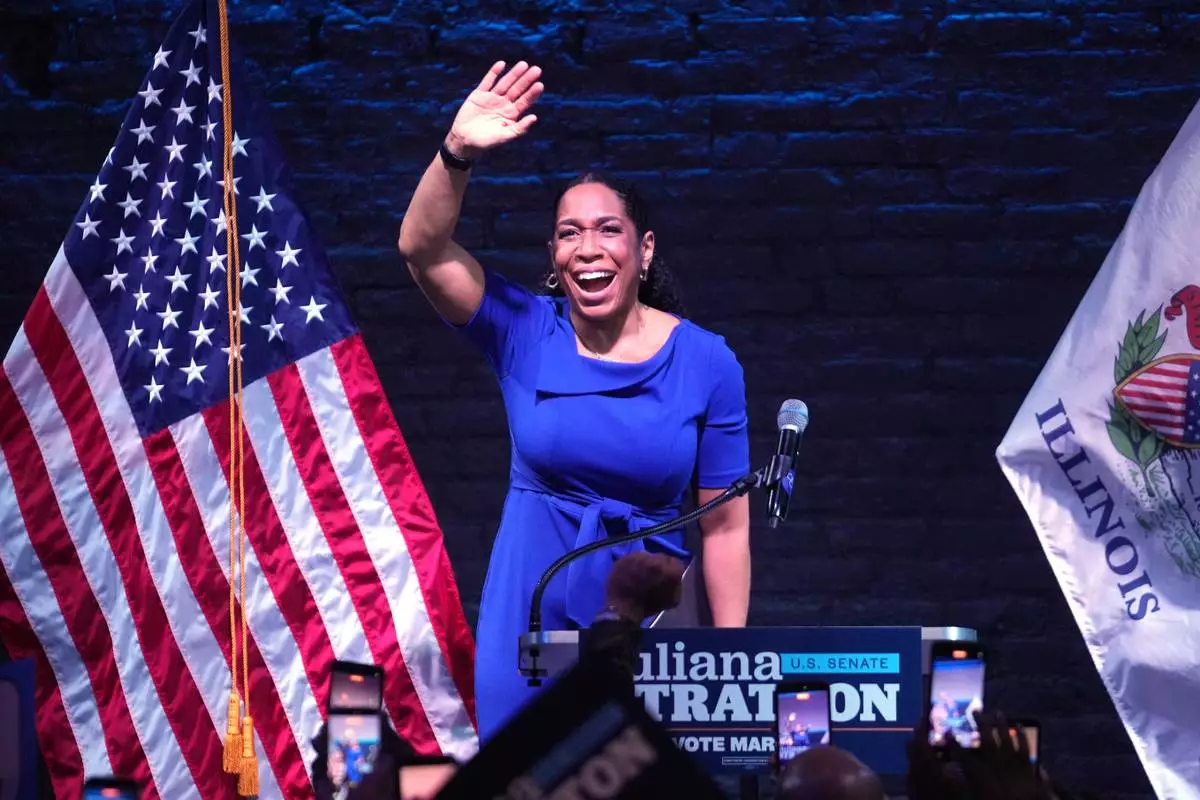
Illinois Lt. Gov. Juliana Stratton waves during a primary election night watch party after winning the Democratic primary for U.S. Senate, Tuesday, March 17, 2026, in Chicago. (AP Photo/Erin Hooley)
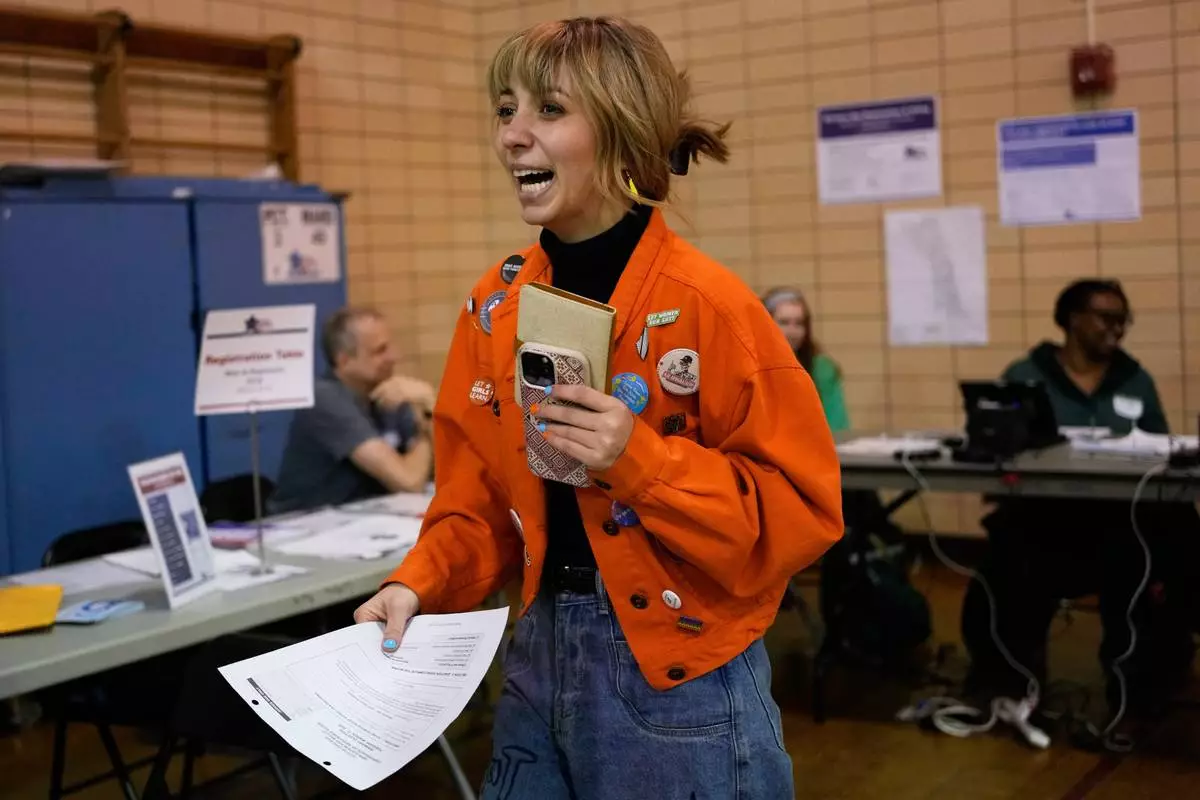
Democratic candidate for Congress, Kat Abughazaleh smiles as she walks to vote on Election Day at Chicago Park District Loyola field house in Chicago, Tuesday, March 17, 2026. (AP Photo/Nam Y. Huh)
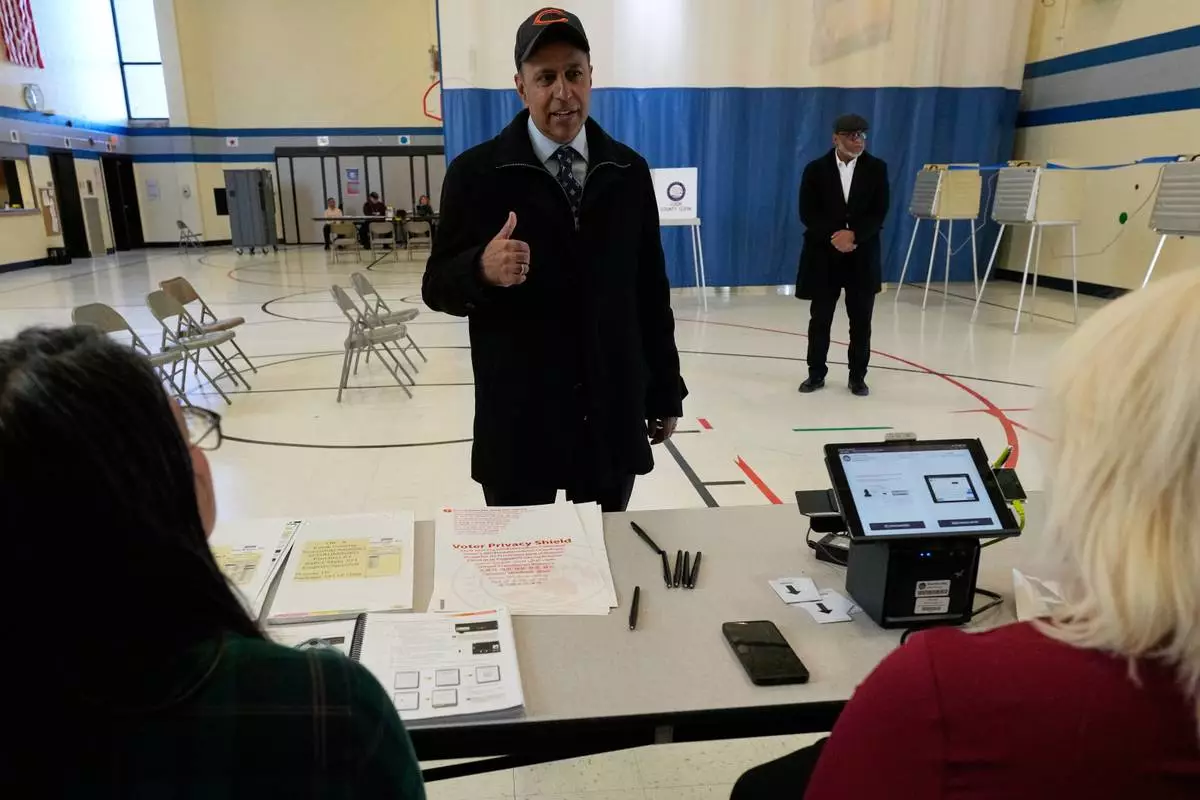
U.S. Rep. Raja Krishnamoorthi (D-Ill.), who is running in the Senate Democratic Primary Election, talks with election judges at Nerge Elementary School polling place in Schaumburg, Ill., Tuesday, March 17, 2026. (AP Photo/Nam Y. Huh)
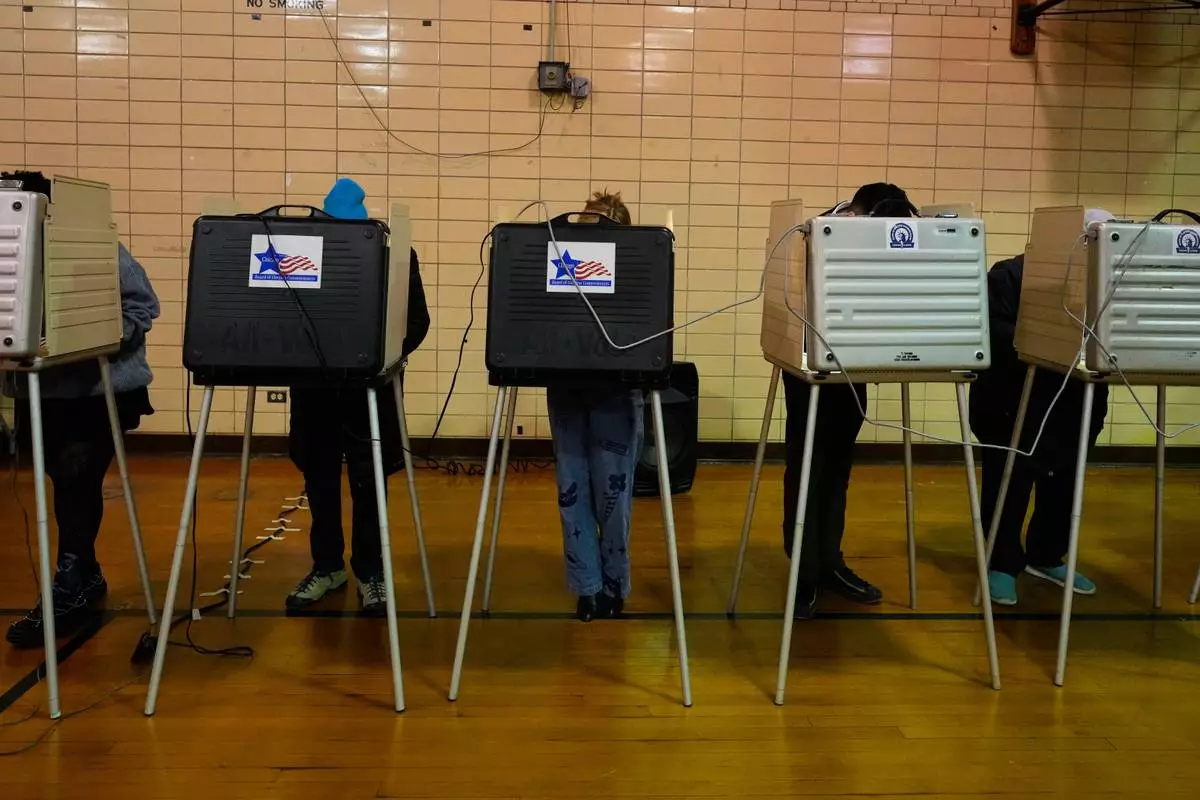
Democratic candidate for Congress, Kat Abughazaleh, center, casts her vote in a primary election for the upcoming midterms, in Chicago, Tuesday, March 17, 2026. (AP Photo/Nam Y. Huh)
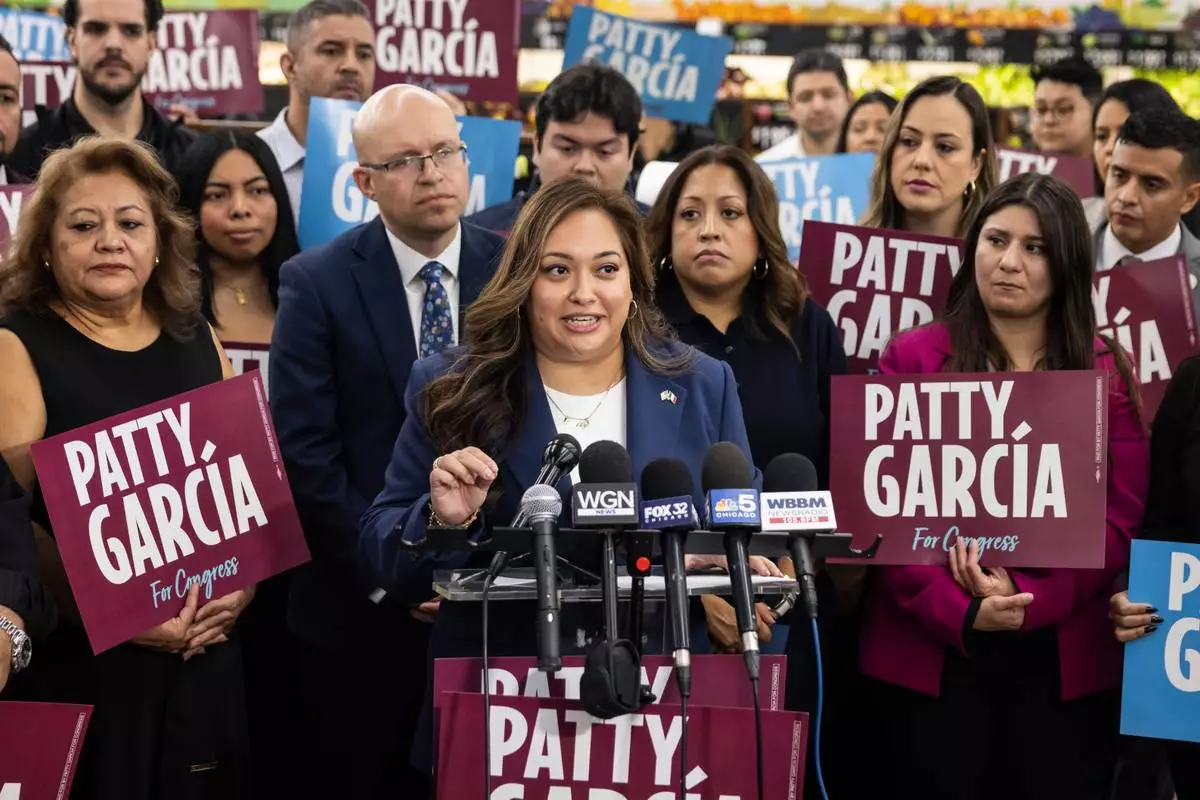
Patty García speaks during a news conference to announce her candidacy for the fourth district congressional race, Nov. 12, 2025, in Cicero, Ill. (Ashlee Rezin/Chicago Sun-Times via AP)