Cuddly creatures, stuffed animals and even squeezable Chinese steamed buns are helping bring much needed comfort to people around the world, with these emotional support toys becoming highly sought-after exports to global markets as consumers look to relieve the stress of everyday life.
China's foreign trade has seen a robust start to the year with toy exports maintaining strong momentum in the first two months of 2026, and emotional support toys have emerged as a standout category in markets across Southeast Asia, Europe and North America.
At a toy factory in Dongguan City of south China's Guangdong Province, the research and development team is refining the design of a huggable pillow ahead of its unveiling to customers.
The new product is inspired by the 'dream-eating tapir', a mythical creature recorded in the ancient Chinese classic 'Classic of Mountains and Seas', a text dating back well over 2,000 years. Even before the item hit the market, the company had already secured numerous orders from both domestic and international clients.
"Dream-eating tapirs have a special meaning: they can devour nightmares. We noticed that many people are currently suffering from insomnia, and the emotional demand in the market is becoming increasingly strong. That is why we decided to create these original IP toys," said Wu Qiaomei, head of brand marketing for the company.
Such emotional support toys have not only become an outlet for young people to unwind from their hectic daily lives, but are also emerging as a novel carrier for promoting Chinese culture.
A Beijing-based toy firm has recently integrated the animals of the Chinese zodiac into a transformable toy concept, launching two new products inspired by cultural relics including the ‘Bronze Galloping Horse Treading on a Flying Swallow', an exquisite bronze sculpture which is thought to have been created around the 2nd century.
These creative cultural items are now available in markets across China, Southeast Asia, Japan, South Korea, and North America, and have been winning over consumers for their smart designs.
"I have seen many consumers' posts on social media. They regard this product as a work of art, and they put it on their desk at home to enjoy as a piece of art for their own pleasure," said Cao Jiaping, General Manager of the Public Affairs Department of the enterprise.
Among this new wave of emotional support toys, some of the most in-demand items are the simple, low-cost category of 'decompression toys' which can be used for stress relief purposes.
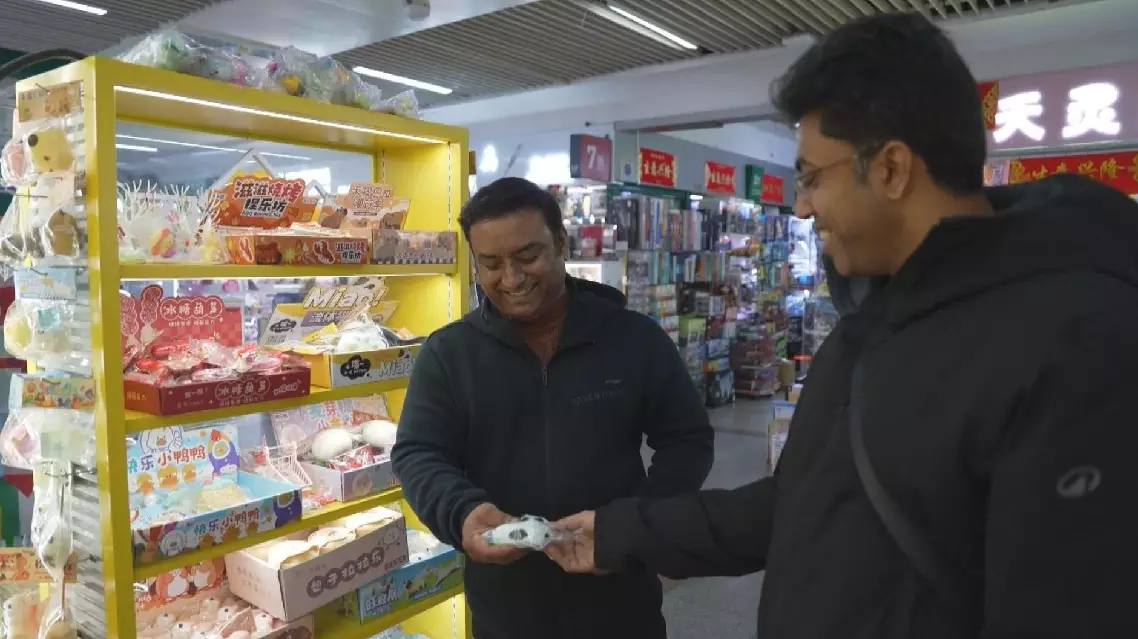
At a toy company in Yiwu, a city in east China's Zhejiang Province known as "the world's supermarket" for its booming small commodities market, one business representative noted their best-selling decompression toy is inspired by a Chinese steamed bun.
Made with slow-rebound material, it allows users to release stress through repeatedly squeezing the bun-shaped object.
"This popular product first went viral in Japan and the Republic of Korea (ROK), and last year, it went viral in Australia, Europe and the United States. Over the past four or five years, the average total order volume has increased by 15 percent," said Wu Feiyang, the company's manager.
China has become one of the world's largest markets and production bases for trendy toys, ranging from blind boxes to IP-themed merchandise, with these original cultural exports gaining international recognition.
A series of Chinese cultural and creative products have become breakout hits and trending topics online in recent years, including the wildly popular Labubu, a plush toy retailed by Chinese start-up Pop Mart which sparked a worldwide craze.
China's designer toy market, which was valued at roughly 60 billion yuan (around 8.7 billion U.S. dollars) in 2023, is now projected to surpass 110 billion yuan this year, with an annual growth rate exceeding 20 percent.
Chinese-designed emotional support toys become cuddly worldwide hit as exports rise