NEW YORK (AP) — The U.S. and Israel's war with Iran has thrust the Strait of Hormuz once again into the crosshairs of a geopolitical conflict.
Iran has ground to a halt nearly all traffic in the waterway that connects the Persian Gulf to the rest of the globe's oceans, shutting down a critical path for the world’s flow of oil. Attacks on commercial ships and threats of further strikes have stopped nearly all tankers from carrying oil, gas and other goods through the passage. That’s also led to cuts from some of the world’s largest producers, because their crude has nowhere to go.
This is hardly the first time the Strait of Hormuz has been weaponized. Ship seizures and past fighting in the region have raised alarm for commercial ships, at times severely disrupting their ability to sail through. Iran has also repeatedly threatened to close the strait in response to sanctions and other tensions over the years, but stopped short of cutting off traffic entirely. Even with the bulk of traffic halted amid the current war, dozens of vessels have still managed to cross the waterway, according to maritime and trade data platforms.
While Iran and Oman both have territory in the Strait of Hormuz, its narrow shipping channels are viewed as international waters through which all ships can travel. Still, Tehran holds significant influence over the passage through its nearby military presence and control of key islands in the area.
The latest clash, now in its third week after the U.S. and Israel launched strikes on Iran and killed its supreme leader, has resulted in major consequences for energy markets: Roughly a fifth of the world's oil traveled through the Strait of Hormuz before the war, and strains on supply have sent fuel prices soaring.
Here are some others instances when traffic in the Strait of Hormuz has been disrupted or threatened.
During a deadly, 8-year-long war between Iran and Iraq in the 1980s, both sides attacked tankers and other vessels in and nearby the Strait of Hormuz, using naval mines to shut down traffic at points. The U.S. also got involved in the so-called Tanker War — with the Navy even fighting a one-day battle against Iran in 1988, and later shooting down an Iranian commercial airliner that it mistook for a fighter jet, killing 290 people.
The strait didn't close completely. And during the war, U.S. ships also escorted Kuwaiti oil tankers to protect them against Iranian attacks. Still, the passageway became incredibly dangerous and shipping was disrupted.
At the end of 2011 and into 2012, Iran threatened to close the Strait of Hormuz in response to new sanctions from the West over its nuclear development program. The European Union began enforcing a ban on purchases of Iranian oil — and the U.S. similarly targeted the country's energy sector while also barring transactions with Iran’s central bank. That later prompted other countries to buy less Iranian oil.
But Iran walked back some of those threats, and its government did not end up closing the Strait of Hormuz. Still, the turbulence and shifts in supply brought swings in oil prices. Brent crude — the international standard — was trading above $100 in December 2011 and for much 2012, peaking at more than $126 per barrel in March 2012, before cooling some later in the year.
In May 2018, during his first term in office, U.S. President Donald Trump withdrew from an Obama-era nuclear accord with Iran and began to restore sanctions. Despite some waivers, Trump vowed to eventually cut off all Iranian oil exports. In response, then-Iranian President Hassan Rouhani repeated threats to close the Strait of Hormuz.
But again, Iran did not end up closing the strait. And despite some volatility throughout the year, with particular production pressure on OPEC producers, Brent ended the year trading at nearly $54 a barrel, down from about $75 a barrel when Trump declared the U.S. would be withdrawing in May 2018.
The U.S. Navy blamed Iran for a series of limpet mine attacks on vessels near the strait that damaged tankers in 2019, as well as for a fatal drone attack on an Israeli-linked oil tanker in 2021. Tehran denied involvement at the time. Regardless, such hostilities strained insurance rates and raised fears for shipping companies.
Meanwhile, Iran seized a handful of vessels in the waterway, including several foreign oil tankers it alleged were carrying smuggled fuel at the end of just last year, per state media. The country also captured a Portuguese-flagged cargo ship in 2024 and took two Greek tankers and held them for months in 2022, among other seizures. The strait nonetheless remained open throughout.
Fears about a possible Strait of Hormuz closure also piled up during last year's 12-day war between Israel and Iran, particularly after the U.S. entered the conflict with bombings on three Iranian nuclear and military sites.
But Iran did not close the strait, and oil didn't see lasting price surges. Despite prices jumping some in the early days of the conflict, oil actually saw a notable sell-off as traders doubted the likelihood of attacks on crude shipments. By the war's end, Brent was trading below $67 a barrel, a few dollars less than it was beforehand.
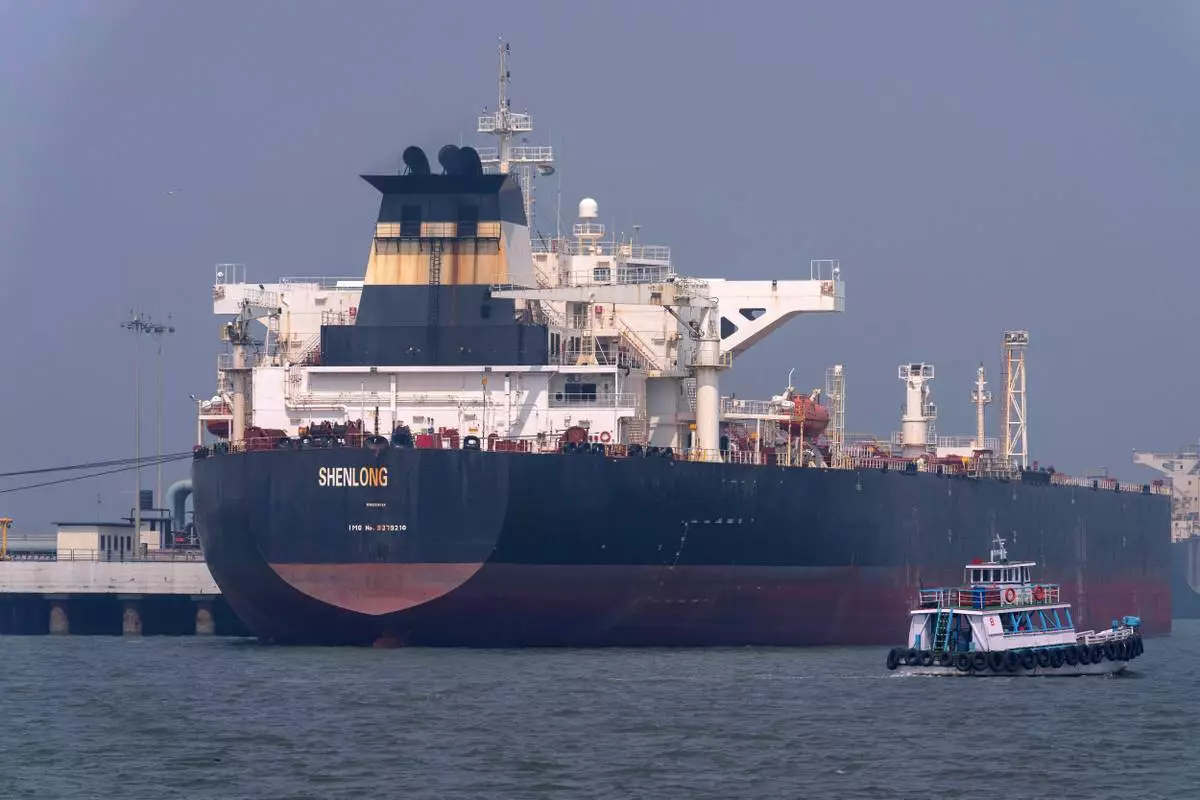
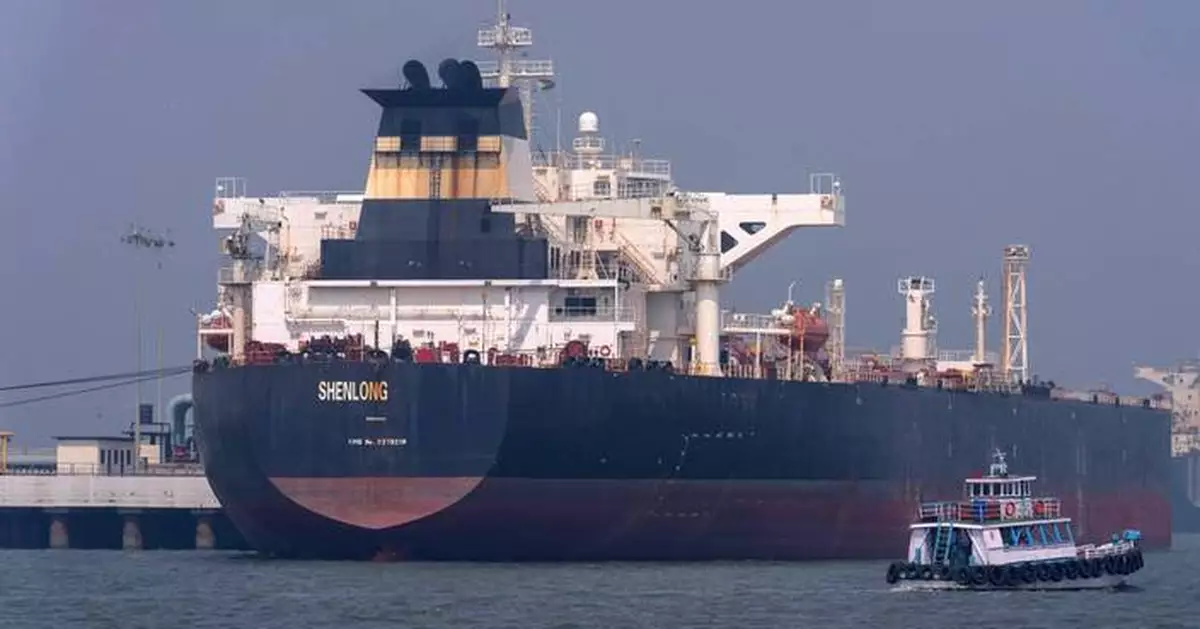
FILE - Liberia-flagged tanker Shenlong Suezmax, carrying crude oil from Saudi Arabia, that arrived clearing the Strait of Hormuz, is seen at the Mumbai Port in Mumbai, India, Thursday, March 12, 2026. (AP Photo/Rafiq Maqbool, File)
WASHINGTON (AP) — Fueled by a dose of high-octane patriotism, President Donald Trump and UFC boss Dana White walked out from the Oval Office to chants of “USA!” to greet military members and political dignitaries set to watch one of the more surreal spectacles in sports and even in the nation's capital: cage fighting on the White House lawn.
A long-time fight fan with a 25-year professional relationship with White, Trump turned 80 on Sunday and fans gathered on a gloomy night on the South Lawn cheered when one fan yelled out “happy birthday!”
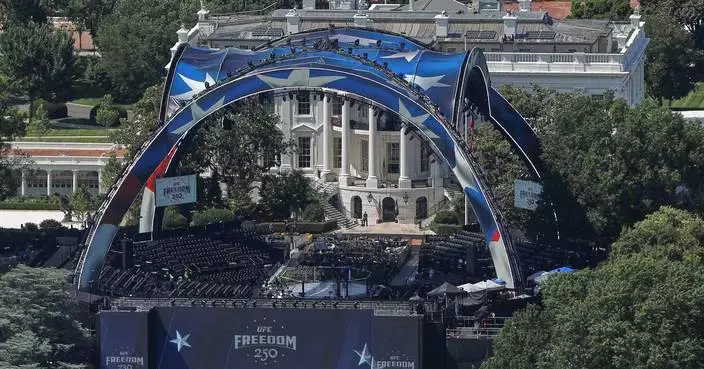
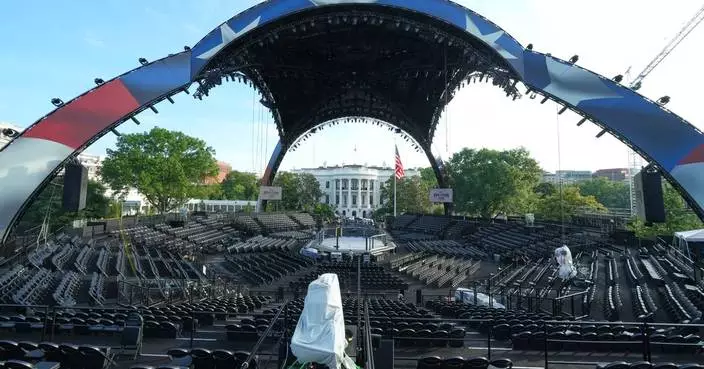
Diego Lopes and Steve Garcia opened UFC Freedom 250 in a featherweight bout under the structure known as the Claw, a four-sided mass that arcs more than 90 feet (27 meters) into the air and features lights, speakers, thick snakes of wiring and four large screens so fans not seated right next to the Octagon can follow the cage fighting below.
Garcia walked out of the White House draped in an American flag and accompanied by two police officers. Lopes walked out to the Mexican song “La Chona.”
Fans were as quiet for the start of the main card Sunday as they might be for the preliminary fights held hours before a pay-per-view event in a normal fight arena, such as Madison Square Garden. Closer to the Rose Garden, fans did come alive when Lopes landed a flurry of punches to knock out Garcia in the second round.
The show was steeped in pageantry and stands as an outlier among UFC events. The Marine Band played from in front of the White House and Zac Brown sang the national anthem — which is never played before normal UFC fight cards because of the mix of nationalities fighting inside the Octagon. The Navy’s Blue Angels and Air Force Thunderbirds zipped overhead as part of a flyover.
UFC’s ring girls, who normally parade around the cage in skimpy outfits, were covered up for a more PG-rated fight night. The women were stylishly dressed in more full-body outfits, some that flowed past the knee or to the ground, that incorporated the American flag into the designs.
Bruce Buffer's voice thundered from the cage as always for fight introductions, and his star-spangled threads fit the occasion: gold stars on the outside of his suit coat and mini American flags stitched inside.
Hours after the United States and Iran reached an agreement to end the war and open the Strait of Hormuz, offering relief to the global economy more than three months since fighting began, the White House — long known as the people’s house and a symbol of American democracy — opened its backyard to stage the fights.
More than $60 million and tens of thousands of hours of labor have been poured into building the arena, according to a court filing from the National Park Service, which oversees the South Lawn.
UFC is staging seven fights with all male fighters under the Freedom 250 banner to celebrate Trump’s birthday and the 250th anniversary of the Declaration of Independence’s signing.
The fight card headlined by two title fights on Paramount+ was scheduled to start at 8 p.m. Eastern. The official televised portion of the show started closer to 30 minutes later and the first fight went off closer to 9 p.m.
Strong thunderstorms and heavy lightning disrupted Friday’s Lincoln Memorial promotional event, and the forecast for Sunday evening also looked menacing.
White said the show will go on rain or shine.
The rare UFC outdoors event marked the pinnacle of the relationship between White and Trump that has yielded personal, political and financial dividends for both parties. White's first card as UFC president came in 2001 at an event held at Trump Taj Mahal.
Trump has attended four UFC cards as sitting president, walking to the cage amid rock music and patriotic chants from fans much like the fighters themselves. White introduced Trump at two Republican National Conventions. White also attended the White House Correspondents’ Association dinner in April that was cut short by a shooting.
In a card that has been panned by fans online as underwhelming, Alex Pereira of Brazil will meet Ciryl Gane of France for the interim UFC heavyweight title. Spanish-Georgian lightweight champion Ilia Topuria then takes on interim champ Justin Gaethje, one of just two Americans who currently hold even a share of the UFC’s 11 championship belts.
There are five other fights on the main card that include former title-fight participants Michael Chandler and Derrick Lewis and former 135-pound champion Sean O’Malley.
Not everyone was able to get tickets to the big event.
Even one of UFC's champions.
UFC middleweight champion Sean Strickland was escorted out of the Ellipse event by a group of police officers and taken into a Park Police van Sunday.
Once a vocal supporter of Trump, Strickland has recently said on social media that he was not invited to participate in the event at the White House because he is an outspoken critic of Israel.
Strickland was wearing a black anorak jacket and was barefoot. It wasn’t immediately clear why law enforcement led him away.
White has rejected Strickland’s accusation that he was banned from UFC Freedom 250 events.
“Nobody is banned. Nothing is banned,” White told reporters earlier this month.
AP MMA: https://apnews.com/hub/mixed-martial-arts
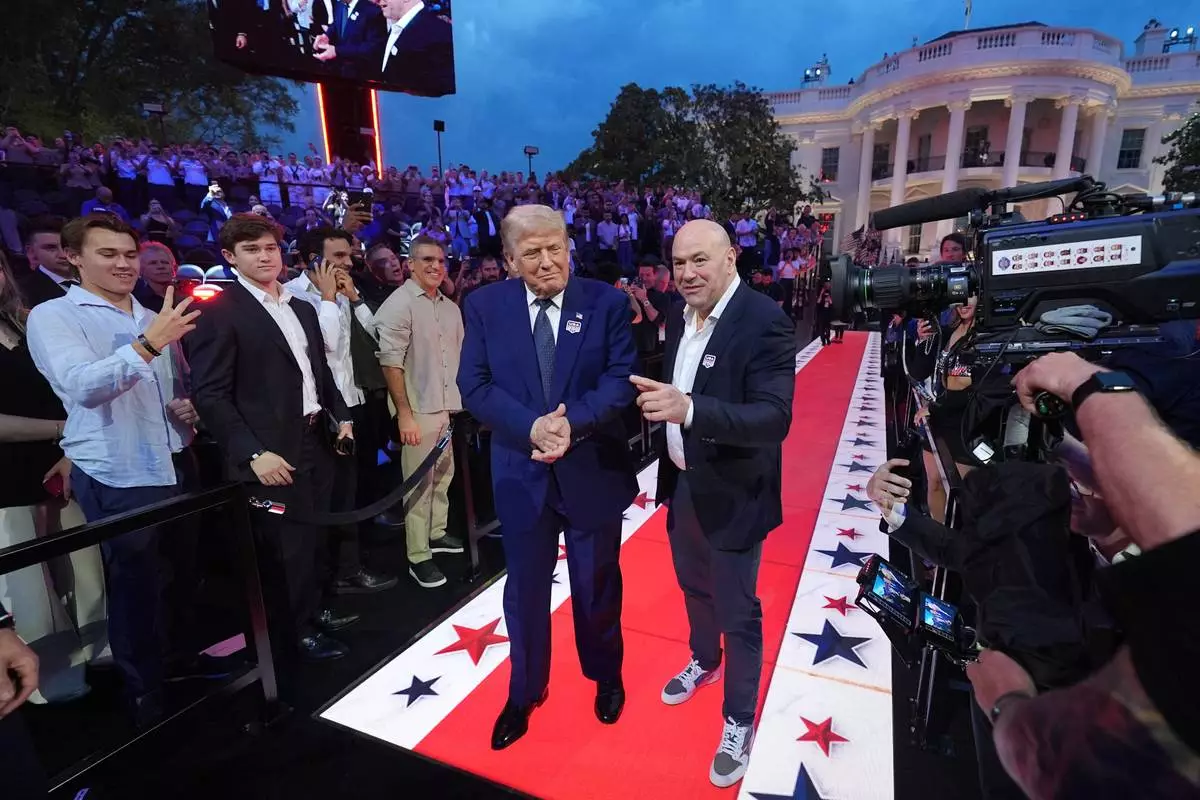
President Donald Trump and Dana White, UFC president and CEO, arrive for UFC Freedom 250 on the South Lawn of the White House, Sunday, June 14, 2026, in Washington. (AP Photo/Alex Brandon)
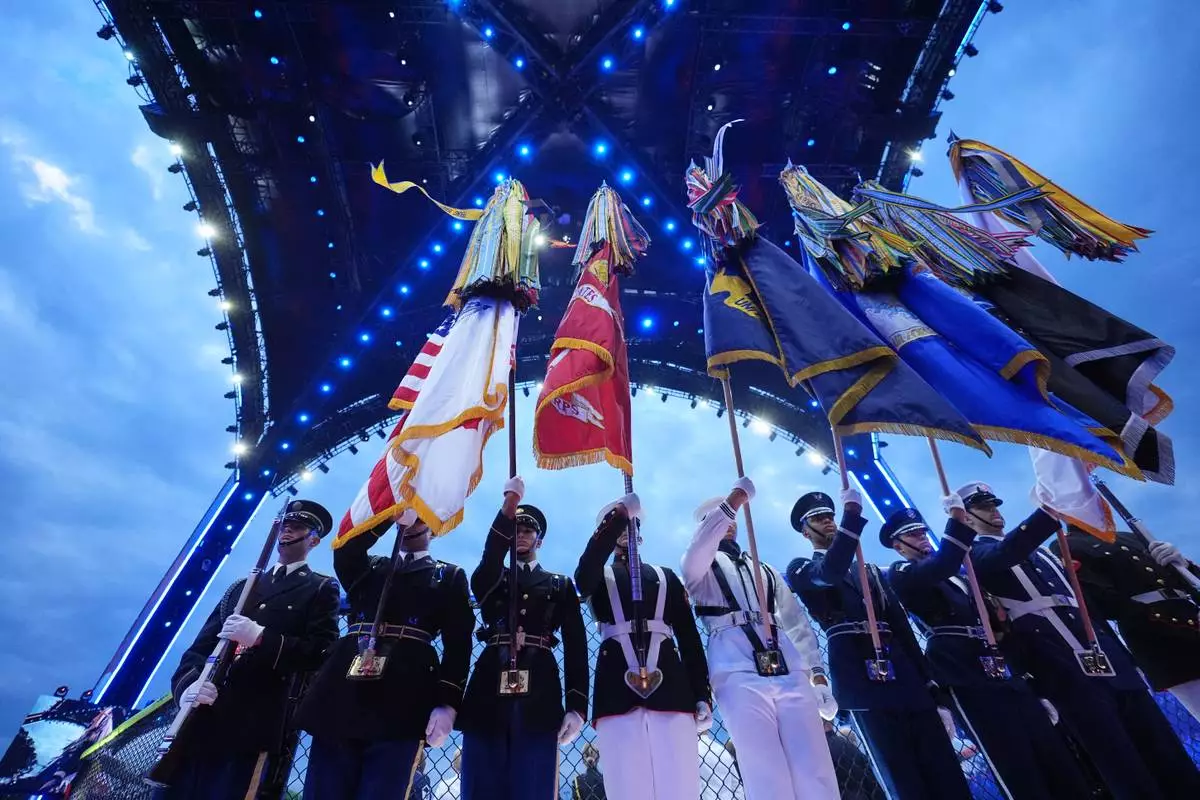
A joint forces honor guard stands during the National Anthem before UFC Freedom 250 on the South Lawn of the White House, Sunday, June 14, 2026, in Washington. (AP Photo/Alex Brandon)
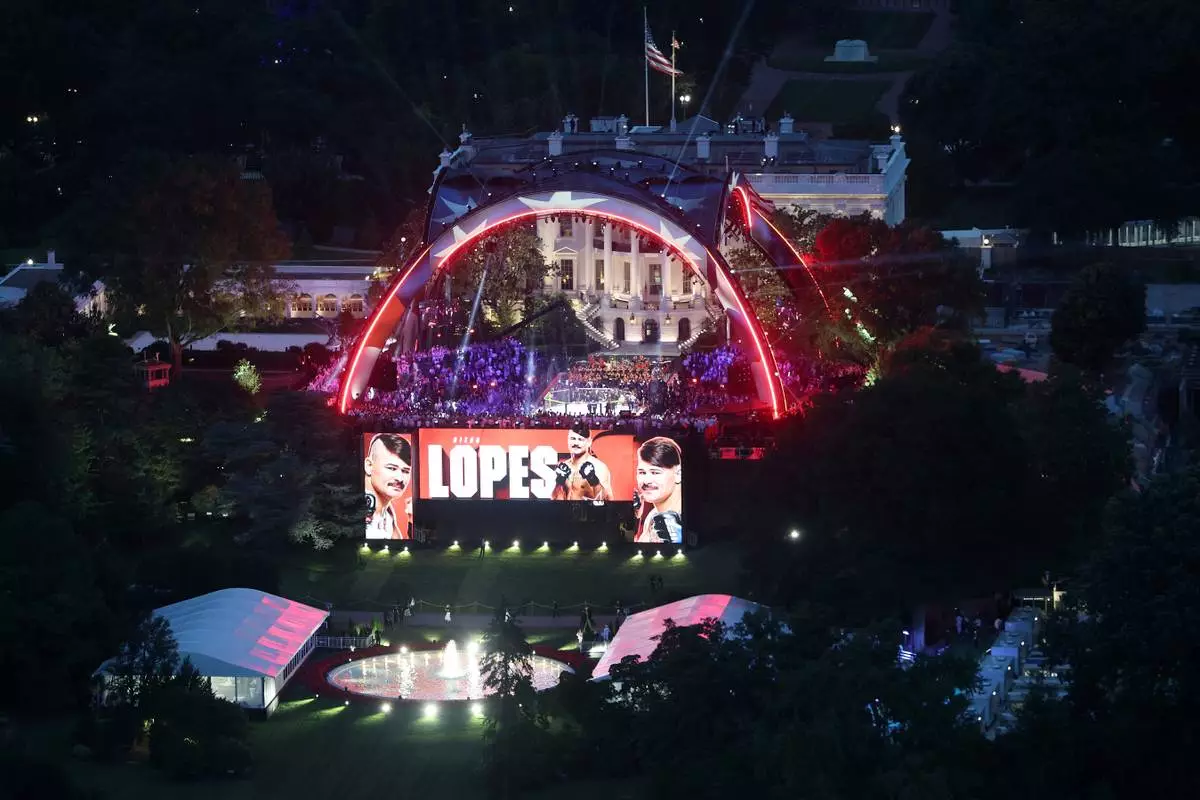
Diego Lopes is introduced during UFC Freedom 250 on the South Lawn of the White House from the top of the Washington Monument on Sunday, June 14, 2026, in Washington. (Win McNamee/Pool Photo via AP)
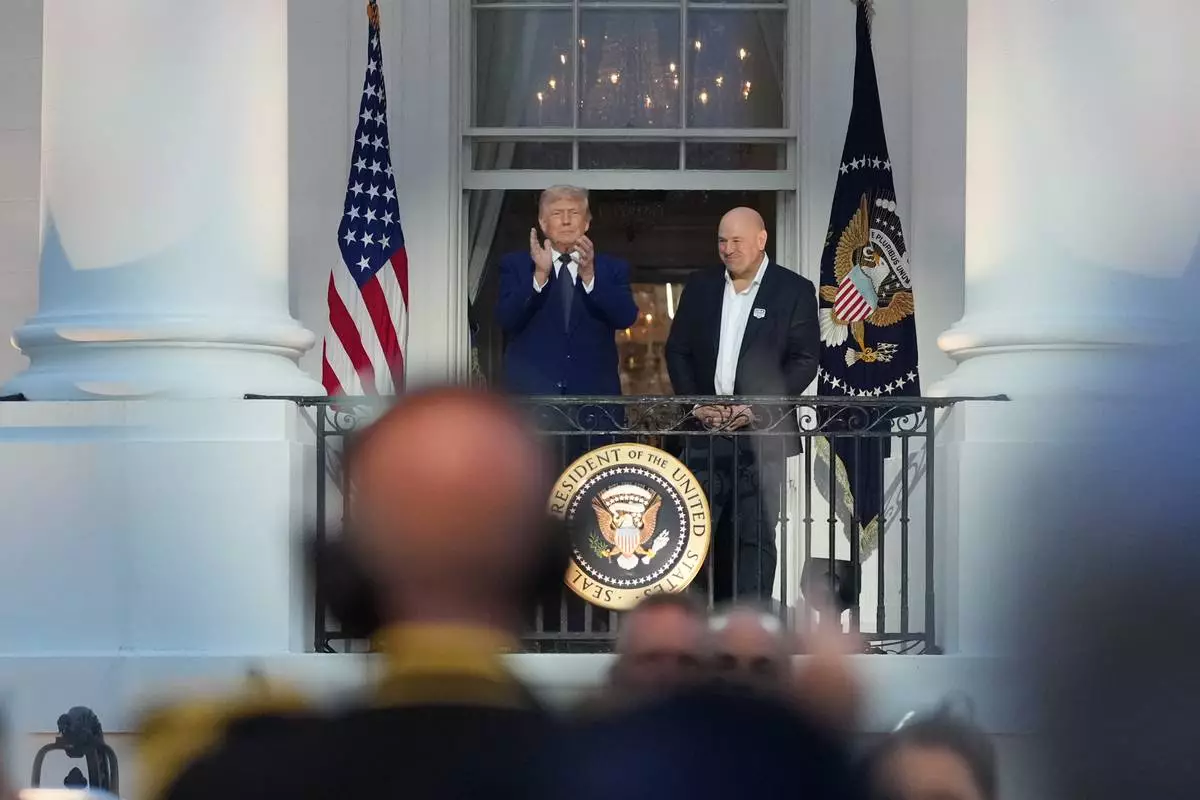
President Donald Trump and Dana White, UFC president and CEO, arrive on the Blue Room Balcony for the National Anthem before UFC Freedom 250 on the South Lawn of the White House, Sunday, June 14, 2026, in Washington. (AP Photo/Alex Brandon)
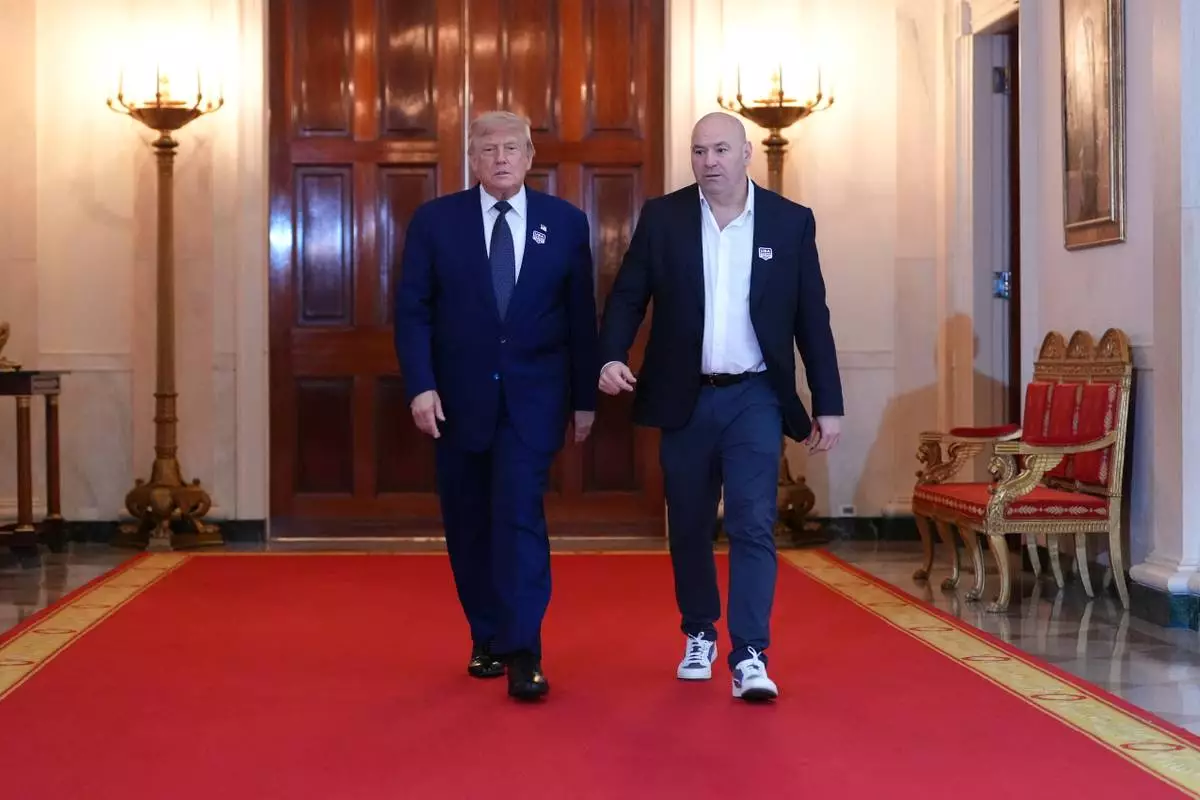
President Donald Trump walks with UFC president and CEO Dana White through the Cross Hall of the White House before attending the UFC Freedom 250 fights on the South Lawn of the White House, Sunday, June 14, 2026, in Washington. (AP Photo/Jacquelyn Martin, Pool)
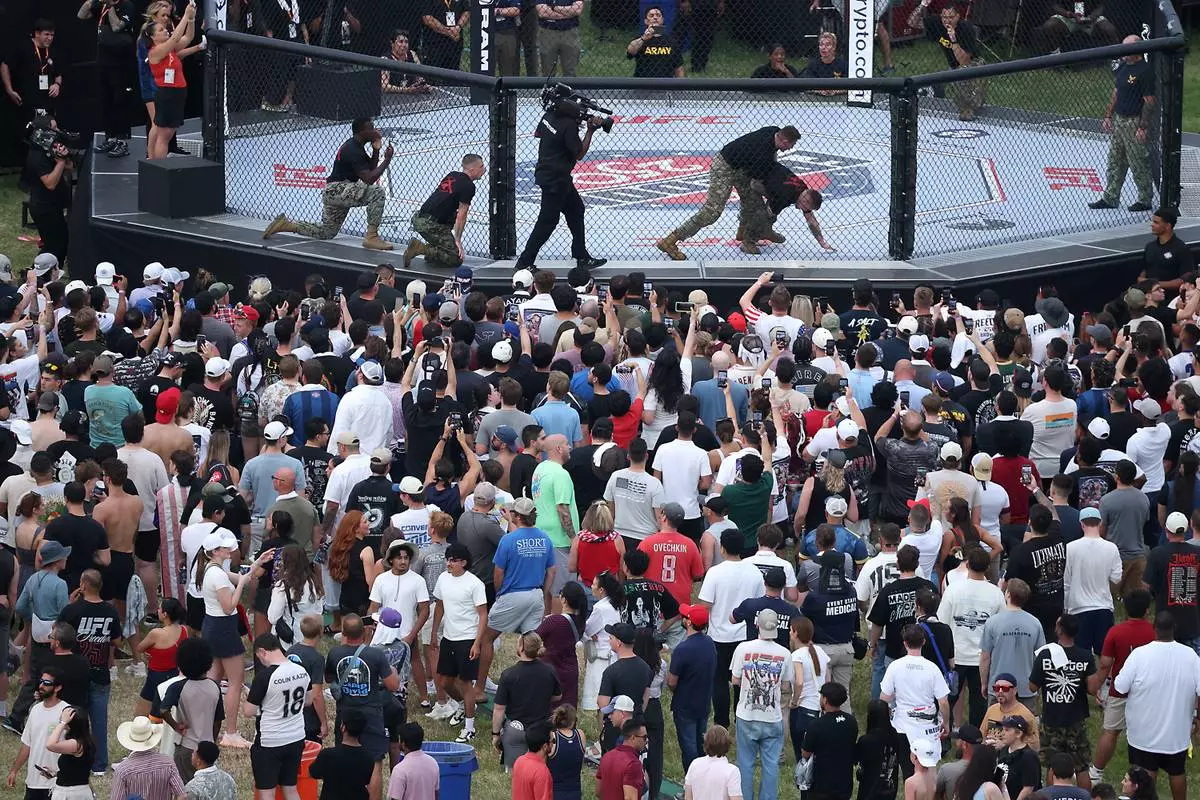
Army soldiers hold a grappling demonstration during the UFC Freedom 250 Fan Fest on The Ellipse ahead of the UFC Freedom 250 fight on the South Lawn of the White House on Sunday, June 14, 2026, in Washington. (Kevin Dietsch/Pool Photo via AP)
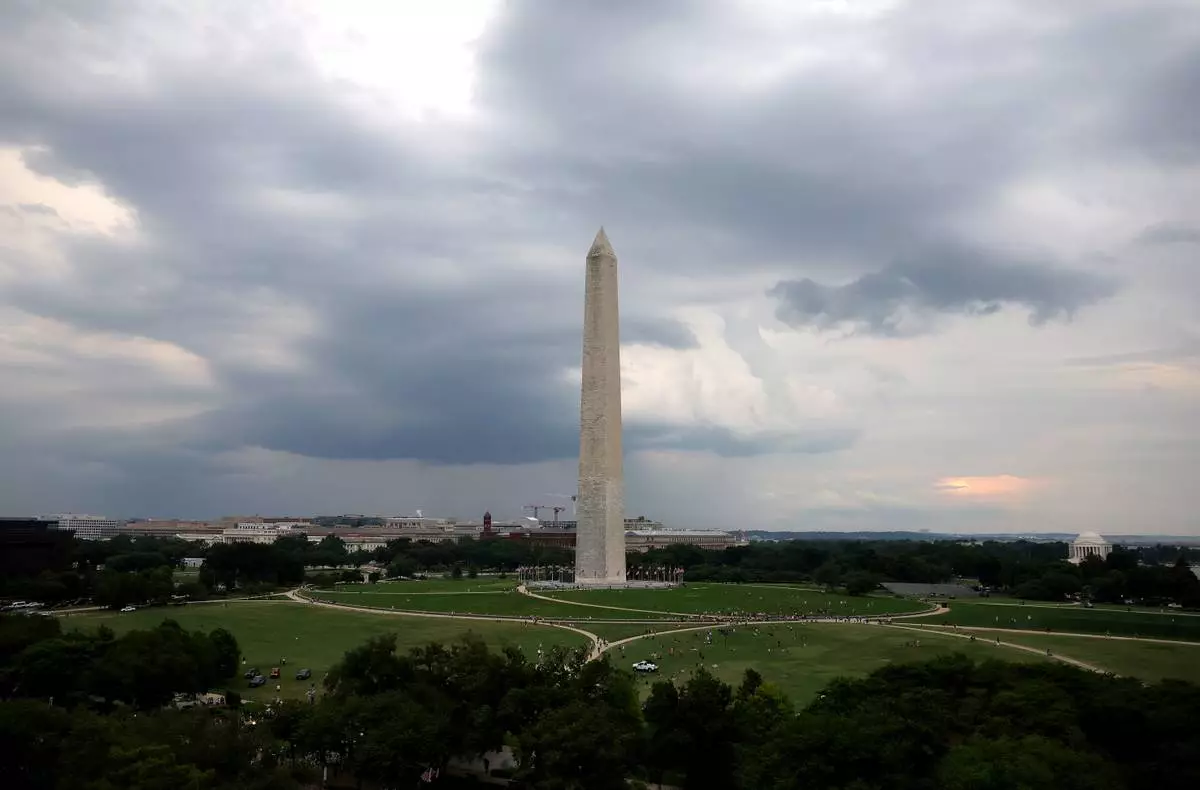
Storm clouds move above the Washington Monument ahead of the UFC Freedom 250 fight on the South Lawn of the White House on Sunday, June 14, 2026, in Washington. (Kevin Dietsch/Pool Photo via AP)
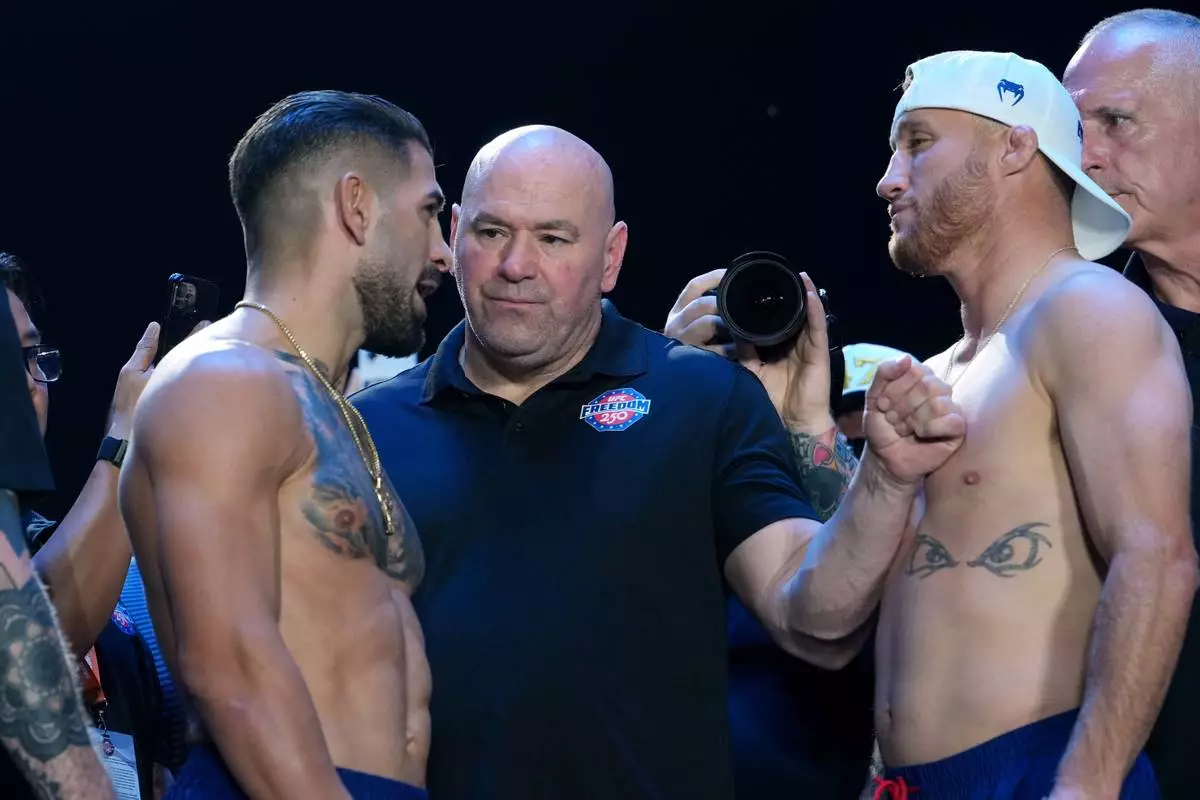
UFC president and CEO Dana White, center, with Ilia Topuria, left, and Justin Gaethje, right, during the ceremonial UFC Freedom 250 weigh-ins on the Ellipse, Saturday, June 13, 2026, in Washington, ahead of Sunday's fight on the South Lawn of the White House. (AP Photo/Julia Demaree Nikhinson) CORRECTION: Changes name from Joe Rogan to Dana White.
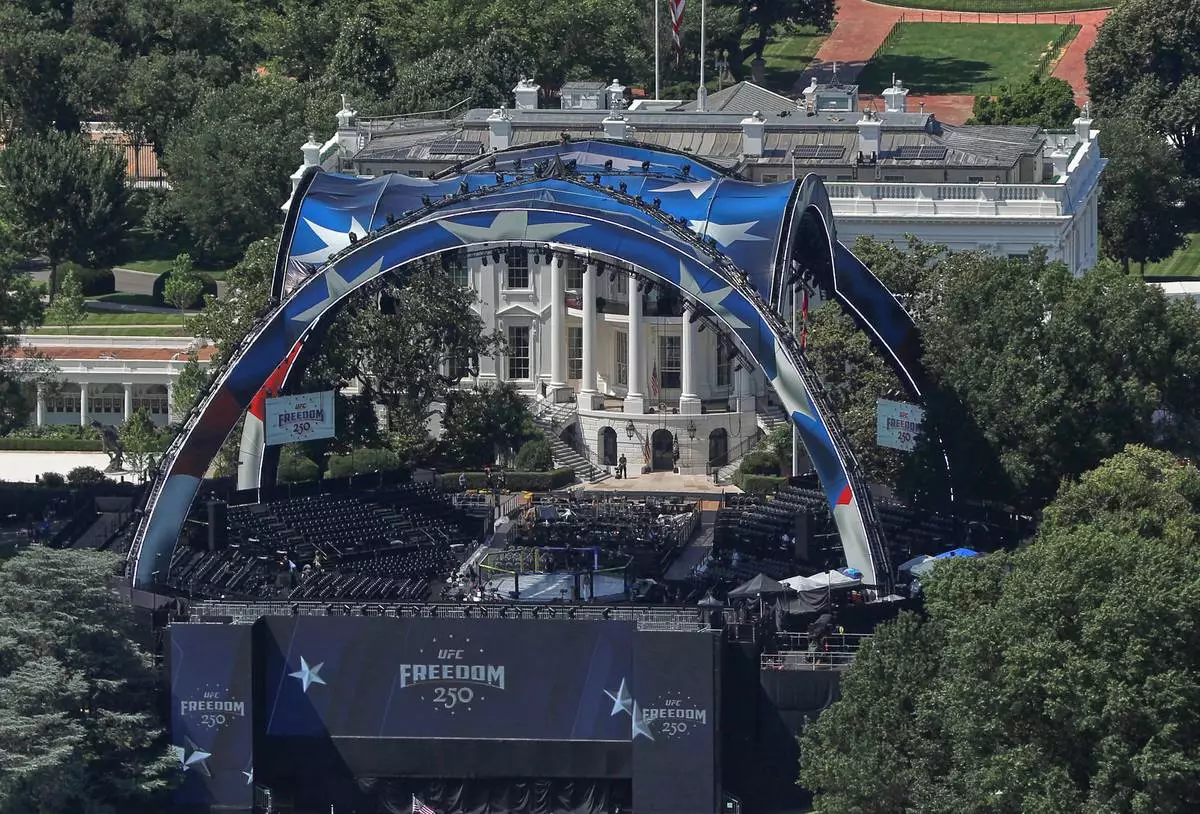
The arena for the UFC Freedom 250 fights is pictured on the South Lawn of the White House, in Washington, Saturday, June 13, 2026. (AP Photo/Rahmat Gul)
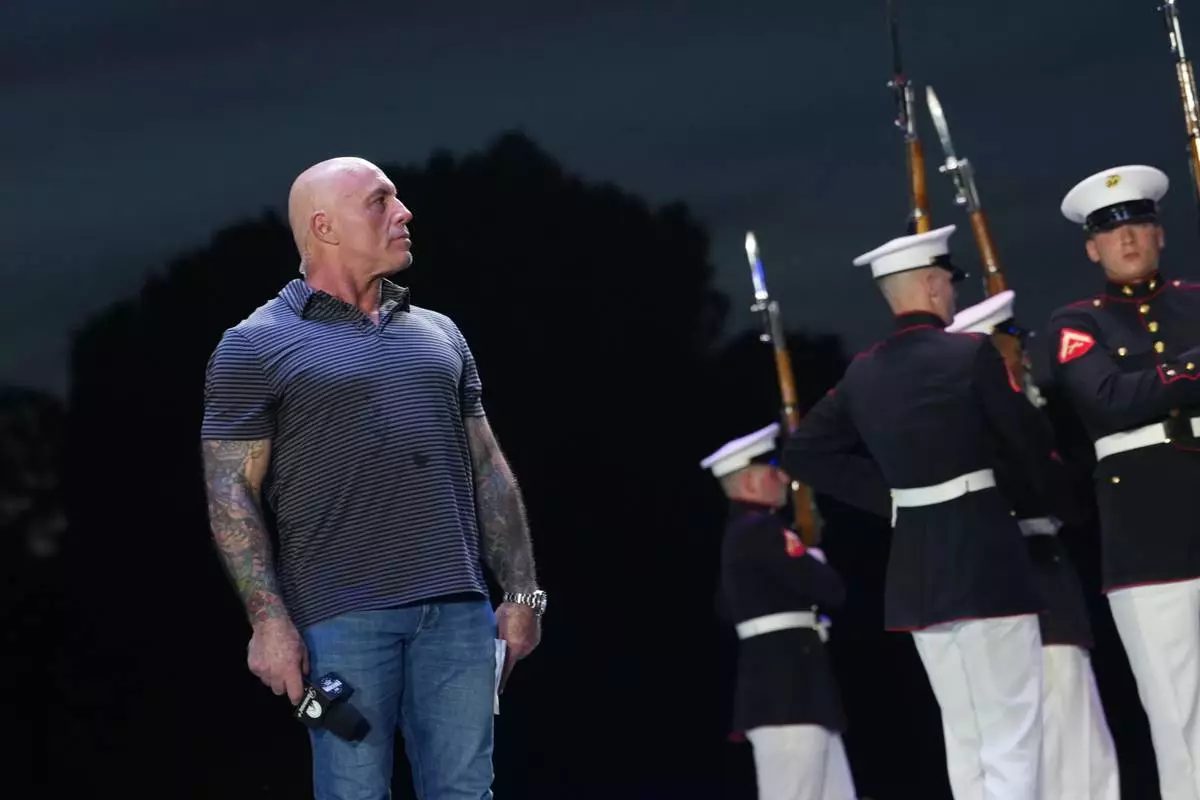
UFC commentator Joe Rogan during the ceremonial UFC Freedom 250 weigh-ins on the Ellipse, Saturday, June 13, 2026, in Washington, ahead of Sunday's fight on the South Lawn of the White House. (AP Photo/Julia Demaree Nikhinson)
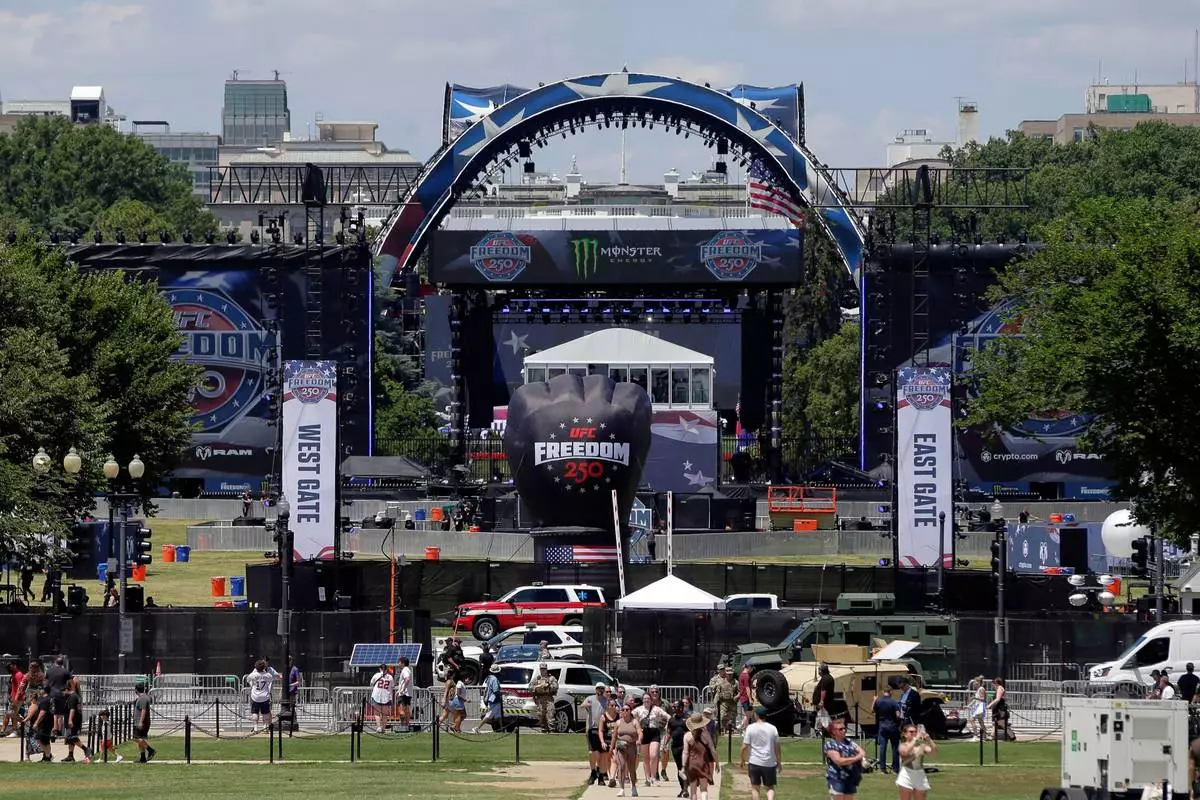
The arena for the UFC Freedom 250 fights is pictured on the South Lawn of the White House, in Washington, Saturday, June 13, 2026. (AP Photo/Rahmat Gul)
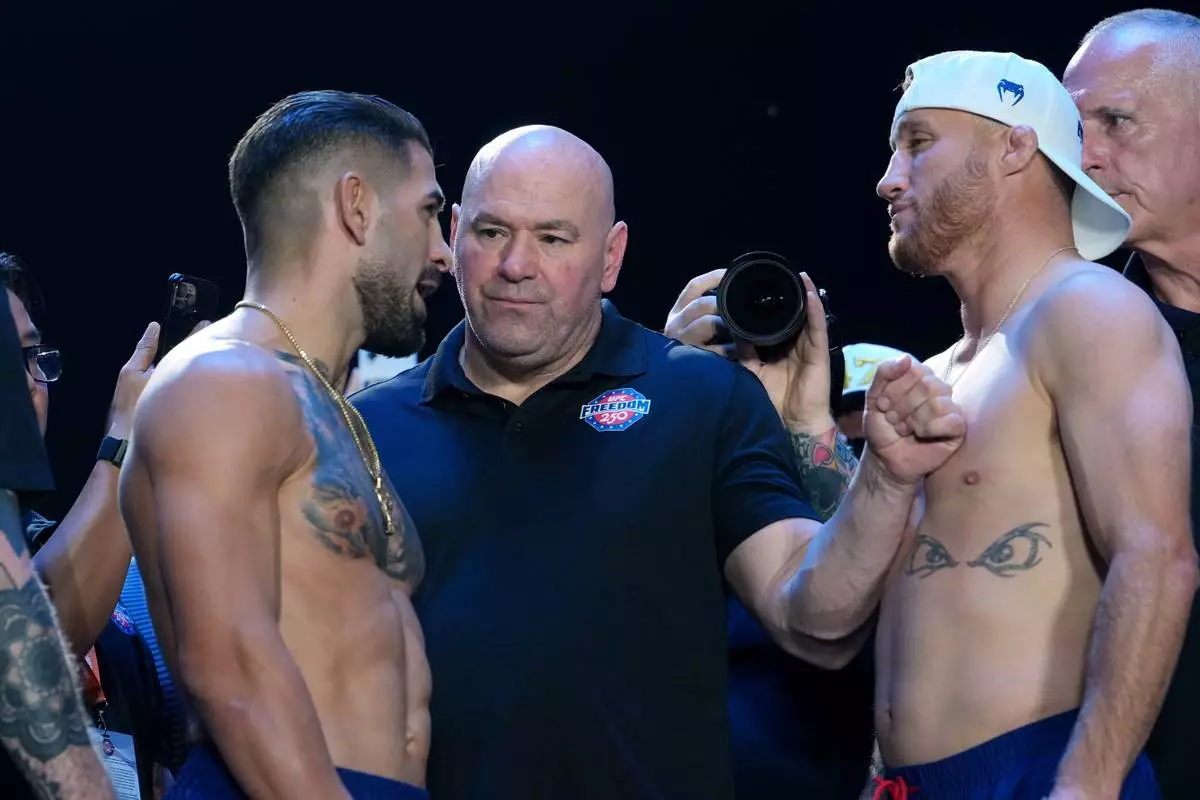
UFC commentator Joe Rogan, center, with Ilia Topuria, left, and Justin Gaethje, right, during the ceremonial UFC Freedom 250 weigh-ins on the Ellipse, Saturday, June 13, 2026, in Washington, ahead of Sunday's fight on the South Lawn of the White House. (AP Photo/Julia Demaree Nikhinson)