The U.S. federal government's total public debt had surpassed the 39-trillion-U.S.-dollar milestone as of Tuesday, according to the latest data released by the Treasury Department on Wednesday.
U.S. media reports indicate that the ballooning debt is a byproduct of conflicting objectives within the government, including the adoption of sweeping tax legislation, increased defense spending, and strengthened immigration enforcement.
Matters such as war and tax cuts have also driven spending increases. National Economic Council Director Kevin Hassett estimated on Sunday that the ongoing military operations against Iran has so far cost the U.S. more than 12 billion U.S. dollars.
The U.S. Government Accountability Office (GAO) said that rising government debt will lead to higher borrowing costs and reduced funds available to businesses for investment, which can depress wage levels and bring higher prices for goods and services.
U.S. national debt surpasses 39 trln USD milestone
As the diplomatic engagement between the United States and Iran continues despite a faltering ceasefire, a former commander of Iran's Islamic Revolutionary Guard Corps (IRGC) has said that Iran is prepared to use military power to break the U.S. maritime blockade should the negotiations collapse or run on too long.
Mohsen Rezaee, who also currently serves as a member of the Iranian Expediency Discernment Council, struck a confident tone about Iran's current trajectory in an exclusive interview with China Global Television Network (CGTN) in Tehran on Wednesday.
He said the country has withstood over two decades of crippling sanctions and continued to move forward.
"We have been under sanctions for more than 20 years. The number of sanctions likely exceeds 2,000, targeting individuals, enterprises, corporations, ships, insurance companies, and even foreign countries that interacted with us. However, we have managed to find solutions to neutralize these sanctions, and we will continue to do so moving forward," he said.
He said Iran aims to ease the sanctions burden through talks with the U.S., although at the same time, he said, Iran is ready to shift to a military response if the path to a peaceful resolution closes.
"Furthermore, we will compel the U.S. to lift these sanctions. We will force the U.S. to end the maritime blockade -- either through negotiations or, should they resist, through direct action and we will attack U.S. warships. Therefore, despite all the pressures, the future of our economy is bright and promising, while the future of the US economy is bleak," he said.
While any new war against Iran would be a dead end, the best way out for the U.S. is to continue talks, according to the senior official.
"We have prepared ourselves so that if the maritime blockade continues beyond a certain timeframe, we will launch an attack and break the blockade. The Americans have no choice but to negotiate. Continuing this war is a journey into a very dark tunnel for the United States. The more America chooses to fight, the deeper it enters a tunnel with no end. Yet for us, the path is perfectly clear. America is moving toward us in the dark, while we are monitoring their every move," he said.
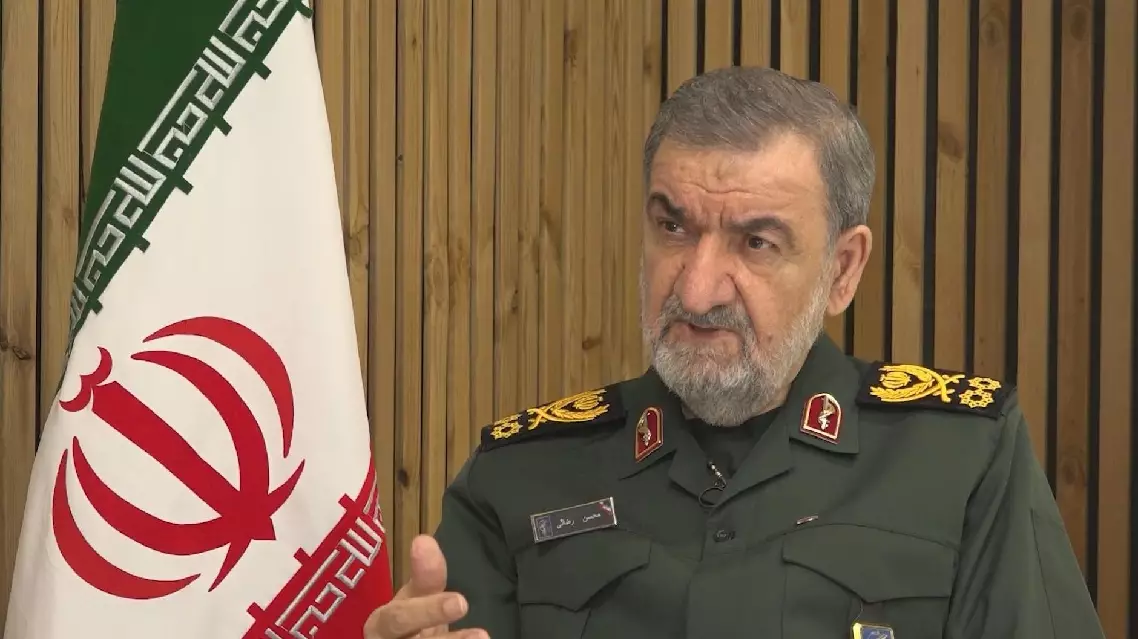
Former IRGC chief says Iran ready to break U.S. naval blockade by force if talks fail