ISLAMABAD (AP) — A key outlawed Pakistani militant group behind numerous gun and bomb attacks announced a three-day ceasefire early Thursday ahead of a key Muslim holiday, hours after Pakistan and Afghanistan also declared a temporary pause to escalating fighting. No exchanges of fire were reported, marking the first lull since late February, when clashes erupted.
Mohammad Khurasani, a spokesman for the Tehrik-e-Taliban Pakistan, or TTP, said the ceasefire was intended to allow people to observe Eid al-Fitr, which marks the end of the holy month of Ramadan.
The TTP, which is separate from but allied to the Afghan Taliban, has stepped up attacks inside Pakistan since the Afghan Taliban returned to power in 2021. The TTP has been designated as a terrorist organization by the United States and the United Nations. Pakistan accuses Afghanistan's Taliban government of sheltering TTP leaders and thousands of members who carry out cross-border attacks. Kabul denies the charge.
The group said the ceasefire is set to take effect from the first day of Eid, which is expected to begin Friday in Pakistan subject to a sighting of the moon.
Pakistan and Afghanistan announced Wednesday that they plan a temporary pause in fighting until Monday night.
The two sides said the truce was made at the request of Saudi Arabia, Turkey and Qatar. The three countries have been mediating efforts to end hostilities since cross-border fighting resumed in February and previously helped broker a ceasefire in October.
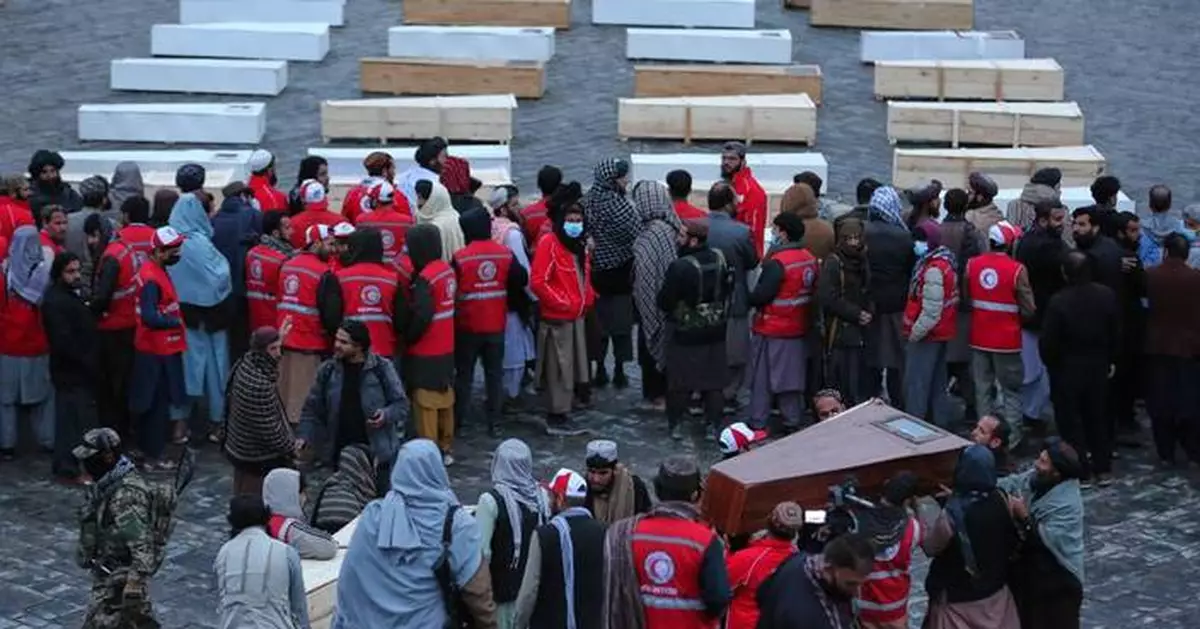
The announcements followed a mass funeral for victims of a Pakistani strike on a drug rehabilitation center in Kabul earlier in the week. Afghan Taliban authorities said the attack killed 408 people and wounded 265, though the toll could not be independently verified.
Pakistan's Information Minister Attaullah Tarar said Wednesday the military did not target any hospital, and the strikes in Kabul were aimed at a ammunition depot. Tarar also announced the temporary pause in fighting with Kabul.
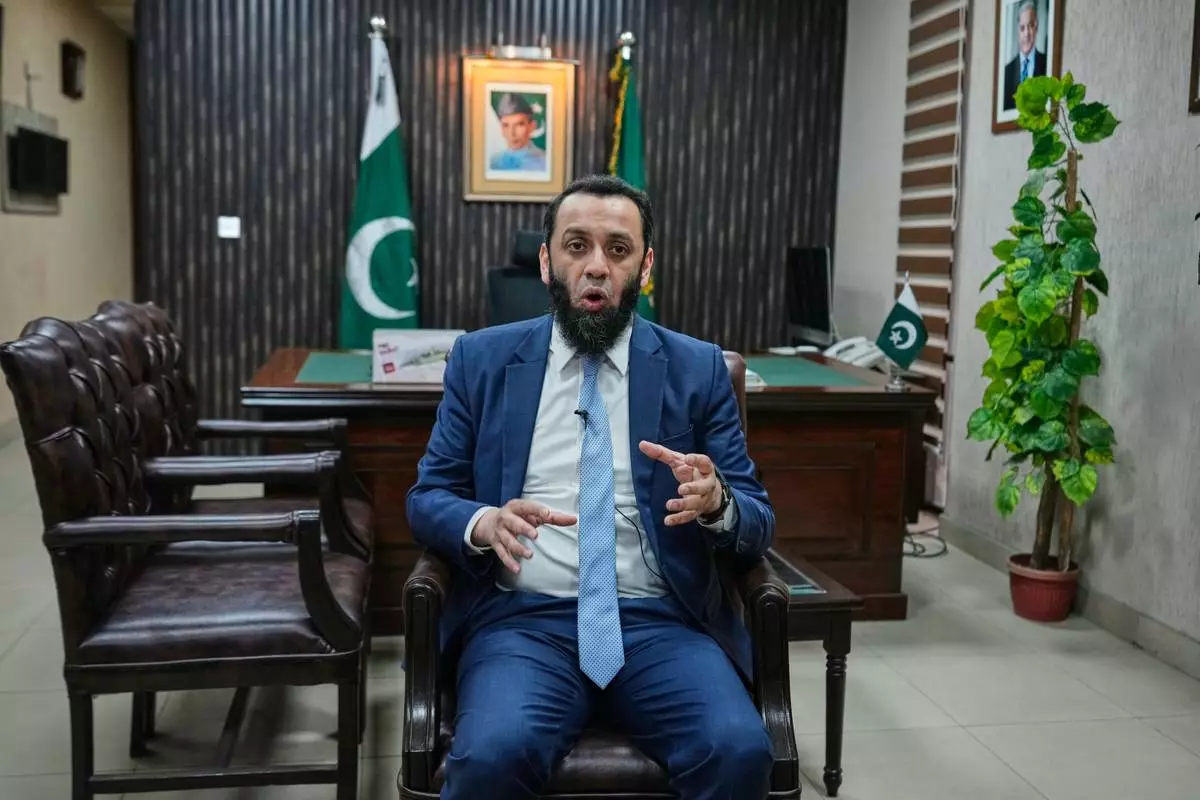
Pakistan's Information Minister Attaullah Tarar speaks during an interview with The Associated Press, in Islamabad, Wednesday, March 18, 2026. (AP Photo/Anjum Naveed)
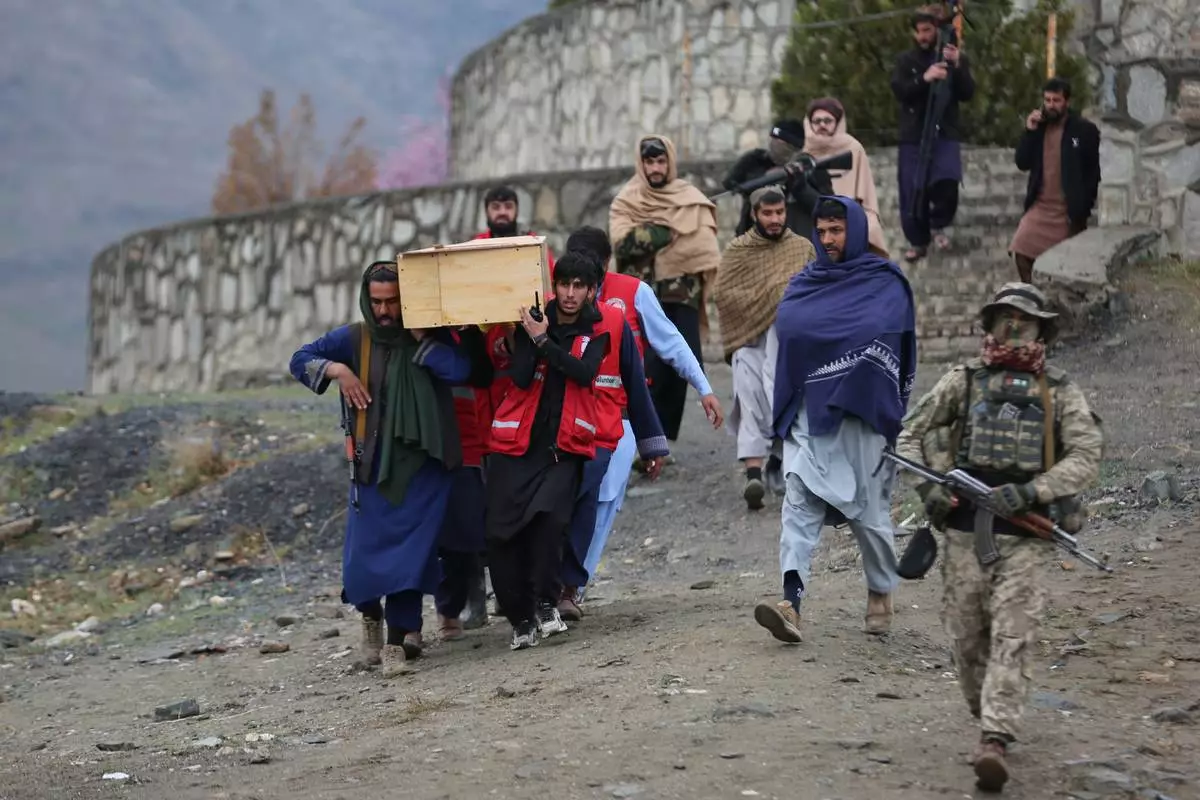
Taliban security personnel guard as people carry the remains of victims of a Monday airstrike on a drug rehabilitation hospital, ahead of burial Wednesday, March 18, 2026. (AP Photo/Siddiqullah Alizai)
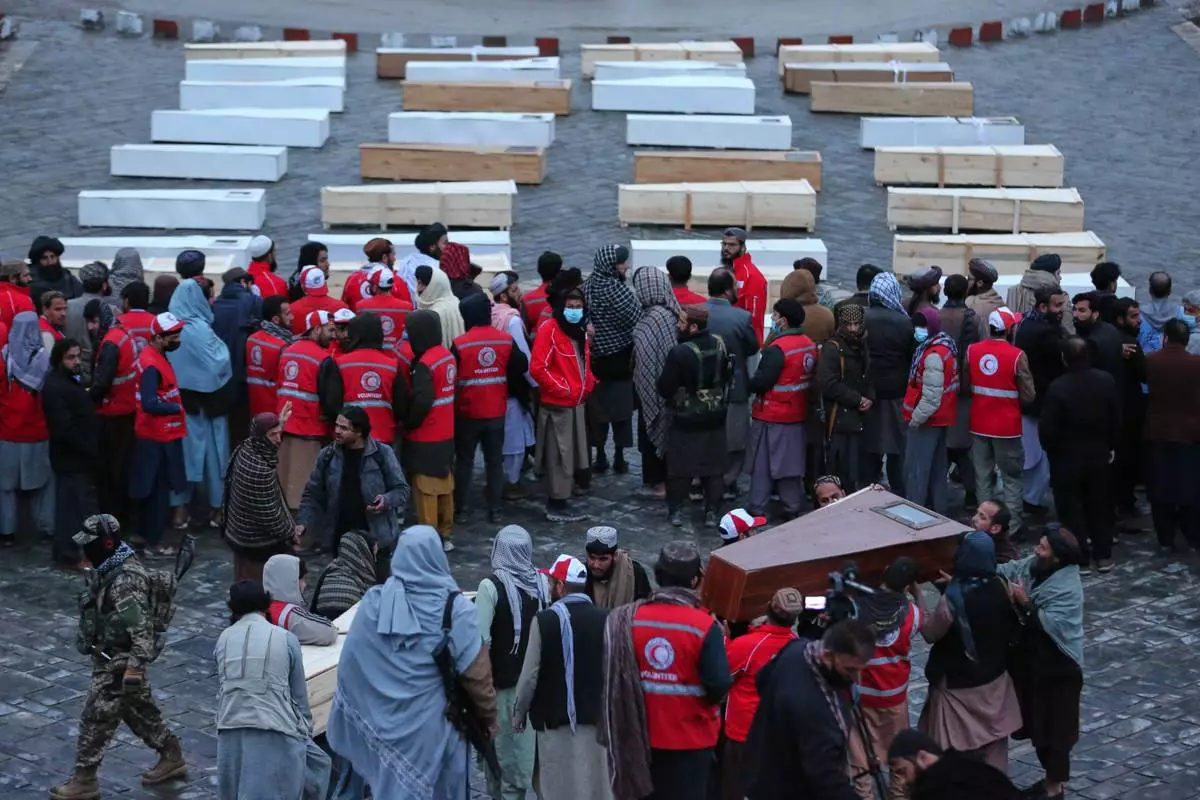
Coffins containing the remains of victims of a Monday airstrike on a drug rehabilitation hospital are laid out before burial in Kabul, Afghanistan, Wednesday, March 18, 2026. (AP Photo/Siddiqullah Alizai)
WASHINGTON (AP) — The U.S. government's top intelligence official told lawmakers Wednesday that Iran's government "appears to be intact but largely degraded” yet repeatedly dodged questions about whether President Donald Trump had been warned about the fallout from the weeks-old war, including Iran's attacks on Gulf nations and its effective closure of the vital Strait of Hormuz.
Tulsi Gabbard, the director of national intelligence, also stated in prepared remarks to the Senate Intelligence Committee that U.S. attacks on Iran last year had “obliterated” Iran's nuclear program and that there had been no effort since then to rebuild that capability.
The statement was notable given Trump's repeated assertions that a war with Iran was necessary to head off what he said was an imminent threat from the Islamic Republic. Gabbard pointedly said that conclusion was the president's alone to draw as she declined to directly answer whether the intelligence community had likewise assessed that Iran's nuclear system presented an imminent risk to the United States.
“It is not the intelligence community's responsibility to determine what is and is not an imminent threat,” she said at one point.
Democratic Sen. Jon Ossoff of Georgia shot back: “It is precisely your responsibility to determine what constitutes a threat to the United States.”
The testimony came at the first of two congressional hearings held each year to offer the public a glimpse into the largely secret operations of the government's intelligence agencies and the threats they confront.
The hearings this week take place at a time of scrutiny over the war with Iran and heightened concerns about terrorism at home after recent attacks at a Michigan synagogue and a Virginia university. Wednesday's hearing also came a day after the resignation of Joe Kent as director of the National Counterterrorism Center. Kent said he could not “in good conscience” back the war and did not agree that Iran posed an imminent threat.
But the hours-long hearing offered few revelations from Gabbard, who repeatedly declined to discuss conversations with Trump, or other senior intelligence officials who testified.
“I am very disappointed,” said an exasperated Sen. Mark Warner, the top Democrat on the Senate Intelligence Committee. “It's the only one time of year the public gets to hear from you guys in this kind of setting.”
A frequent line of questioning for Democrats: What intelligence, if any, had been given to Trump about the war's potential consequences? Trump, for instance, has said he was surprised that Iran responded to strikes from the United States by attacking Arab nations and has been contending with the economic impact of the effective closure of the Strait of Hormuz, a body of water connecting the Persian Gulf to the world’s oceans and a vital passageway for oil and gas.
White House press secretary Karoline Leavitt said in a post on X that Trump was “fully briefed” on the possibility of Iran closing the Strait of Hormuz and that the Pentagon has been planning for the possibility of Iran closing it “for DECADES.”
But Trump’s plan to secure the waterway is unclear, especially after he said this week that NATO and most other allies had rejected his calls to help secure it. Iran has said the strait is open except to the U.S. and its allies.
Democrats got few direct answers when they pressed administration officials on what Trump understood about that possibility, with Gabbard saying she would not divulge her conversations with him and CIA Director John Ratcliffe observing that he had been in countless briefings with the president.
“We’re trying to figure out if the president knew what the downside was of the Strait of Hormuz being closed,” said Sen. Mark Kelly, an Arizona Democrat. “Did he know this was going to happen or did he just disregard it?”
Gabbard appeared to try to thread a needle between emphasizing the intelligence community's views of Iran's risks — she said, for instance, that internal tensions would continue to increase even if the regime's leadership remained intact — and not completely echoing the president's arguments of an imminent threat.
At one point, Warner noted that Gabbard, in her prepared written statement submitted to the committee, said Iran’s nuclear enrichment program had been obliterated in strikes last year, but her opening remarks on Wednesday did not use that language.
He asked whether she had omitted that reference to conform to Trump's claims of an imminent threat. Gabbard insisted that she had skipped some of her written statement in the interest of time.
Trump has sought to distance himself from Kent. Ratcliffe tried to do the same Wednesday when he was asked whether intelligence supported Kent’s assessment that Iran was not an imminent threat. “The intelligence reflects the contrary,” Ratcliffe said.
Gabbard and Ratcliffe fielded the majority of questions, but other witnesses included the heads of the National Security Agency and Defense Intelligence Agency, as well as FBI Director Kash Patel, who was pressed about the terrorism threat amid a spate of attacks this month. Those include a man with a past terrorism conviction who opened fire inside an Old Dominion University classroom in Virginia and a Lebanese-born man in Michigan who drove his car into a synagogue.
One subject that did not receive attention: a deadly missile strike on an elementary school in Iran, which people familiar with the matter have said the U.S. likely carried out as a result of outdated intelligence.
Apart from Iran, Gabbard was pressed on her presence at an FBI search in January of the main election hub in Fulton County, Georgia, where agents seized voter data related to the 2020 presidential election. Her appearance at a domestic law enforcement operation raised eyebrows given that Gabbard's office is meant to focus squarely on foreign threats.
Warner described her appearance there as part of an “organized effort to misuse her national security powers to interfere in domestic politics and potentially provide a pretext for the president’s unconstitutional efforts to seize control of the upcoming elections.”
Gabbard responded that she was present for the search at the request of the president but did not participate, though she later said she helped to oversee it.
The House Intelligence Committee will hold its own threats hearing on Thursday.
Associated Press writers Mike Catalini, Ben Finley and Michelle L. Price contributed to this report.
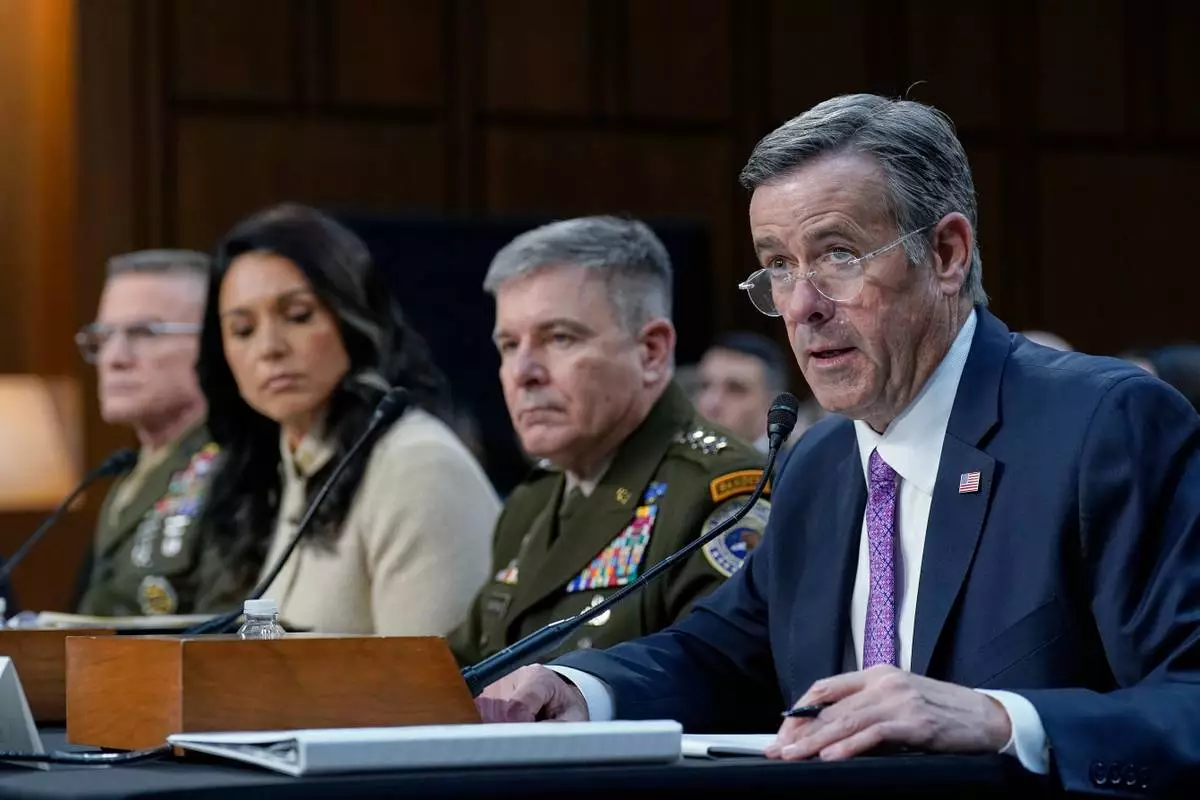
CIA Director John Ratcliffe testifies during the Senate Committee on Intelligence hearings on Capitol Hill Wednesday, March 18, 2026, in Washington. (AP Photo/Jose Luis Magana)
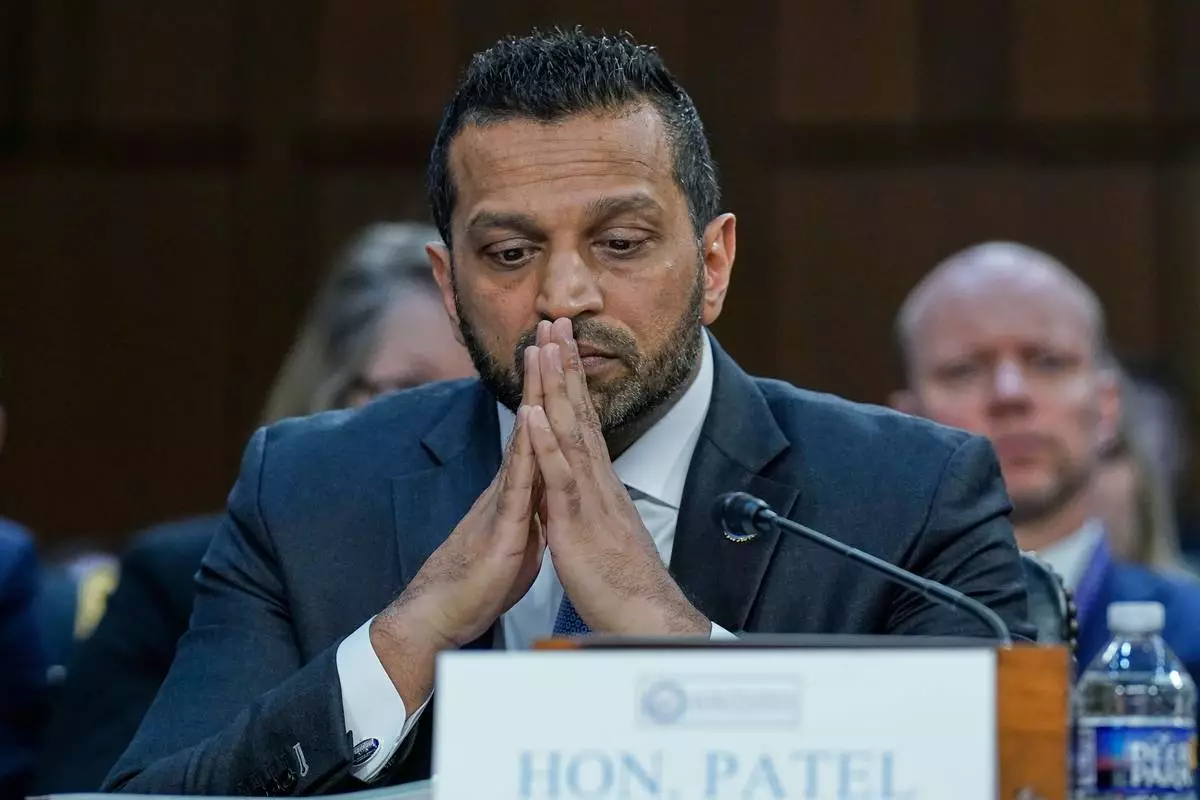
FBI Director Kash Patel listens during the Senate Committee on Intelligence hearings on Capitol Hill Wednesday, March 18, 2026, in Washington. (AP Photo/Jose Luis Magana)
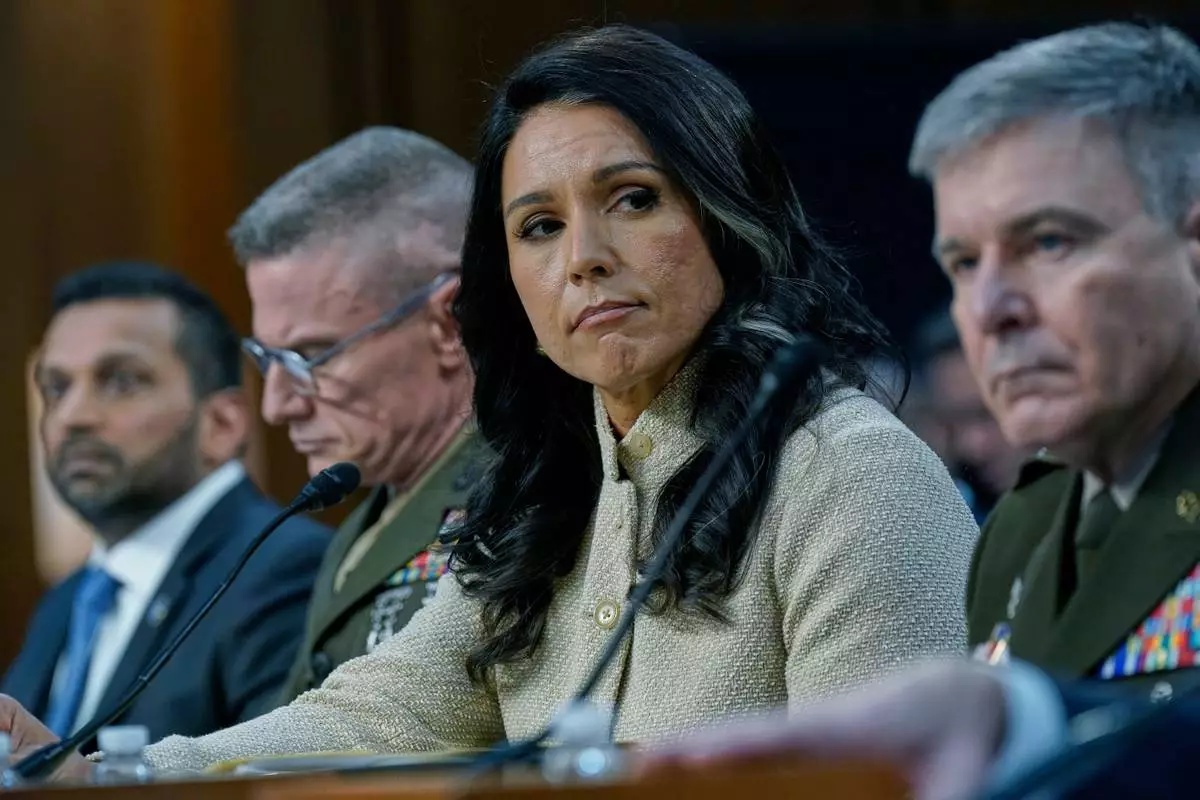
From left, FBI Director Kash Patel, Defense Intelligence Agency Director James Adams III, Director of National Intelligence Tulsi Gabbard, and Acting Commander of the U.S. Cyber Command William Hartman, listen during the Senate Committee on Intelligence hearings to examine worldwide threats on Capitol Hill Wednesday, March 18, 2026, in Washington. (AP Photo/Jose Luis Magana)
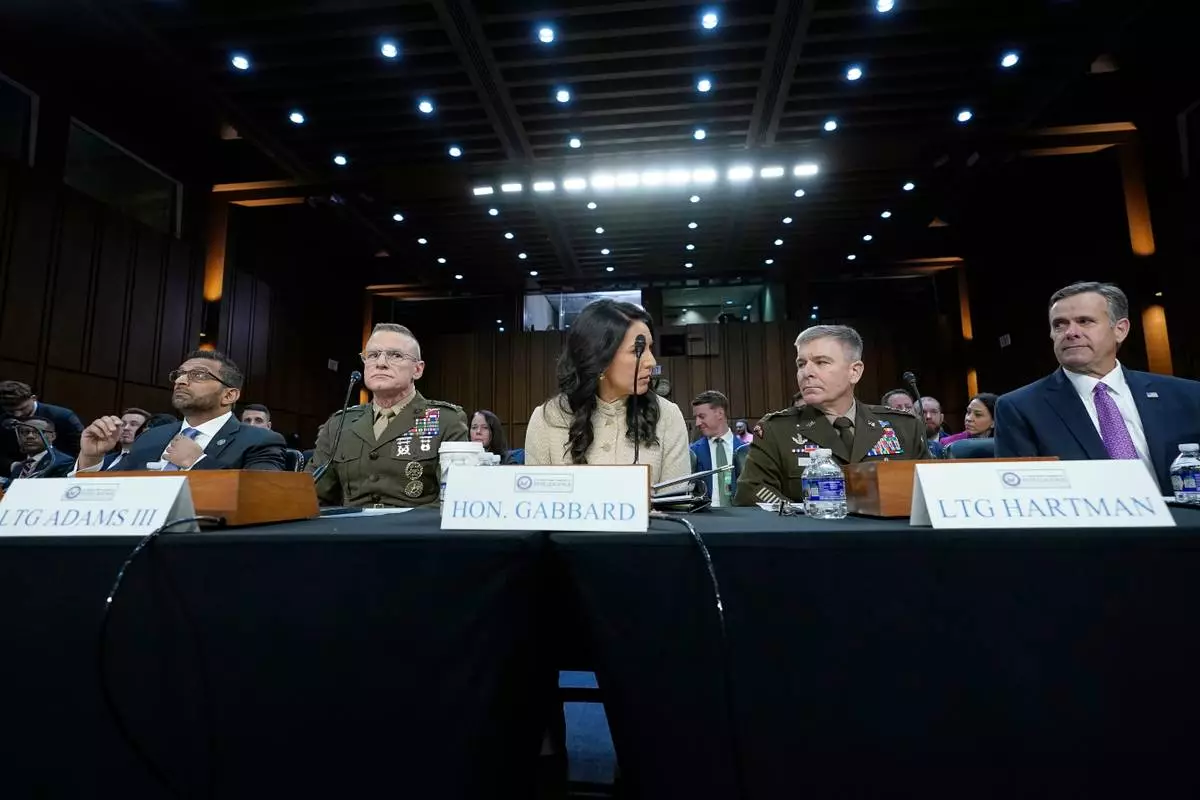
From left, FBI Director Kash Patel, Defense Intelligence Agency Director James Adams, Director of National Intelligence Tulsi Gabbard, Acting Commander of the U.S. Cyber Command William Hartman, and CIA Director John Ratcliffe are seated before the Senate Committee on Intelligence hearings to examine worldwide threats on Capitol Hill Wednesday, March 18, 2026, in Washington. (AP Photo/Jose Luis Magana)
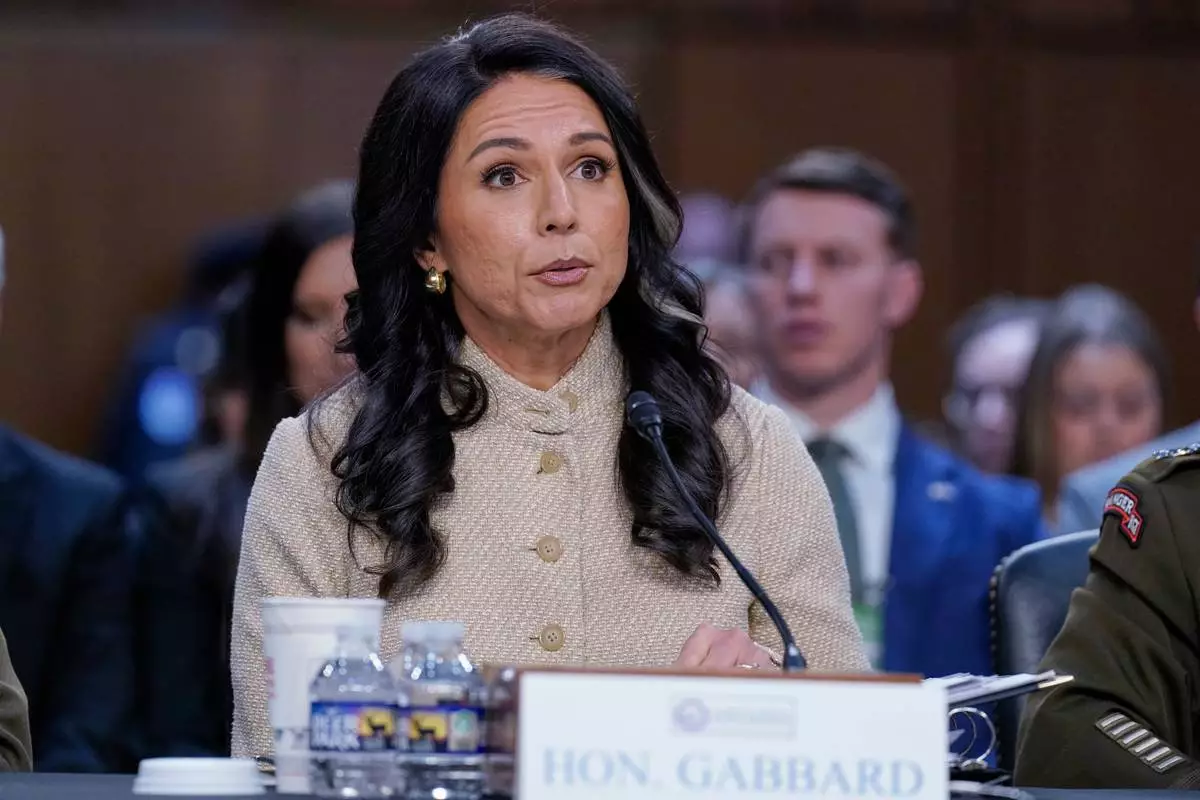
Director of National Intelligence Tulsi Gabbard testifies before the Senate Committee on Intelligence hearings to examine worldwide threats on Capitol Hill Wednesday, March 18, 2026, in Washington. (AP Photo/Jose Luis Magana)
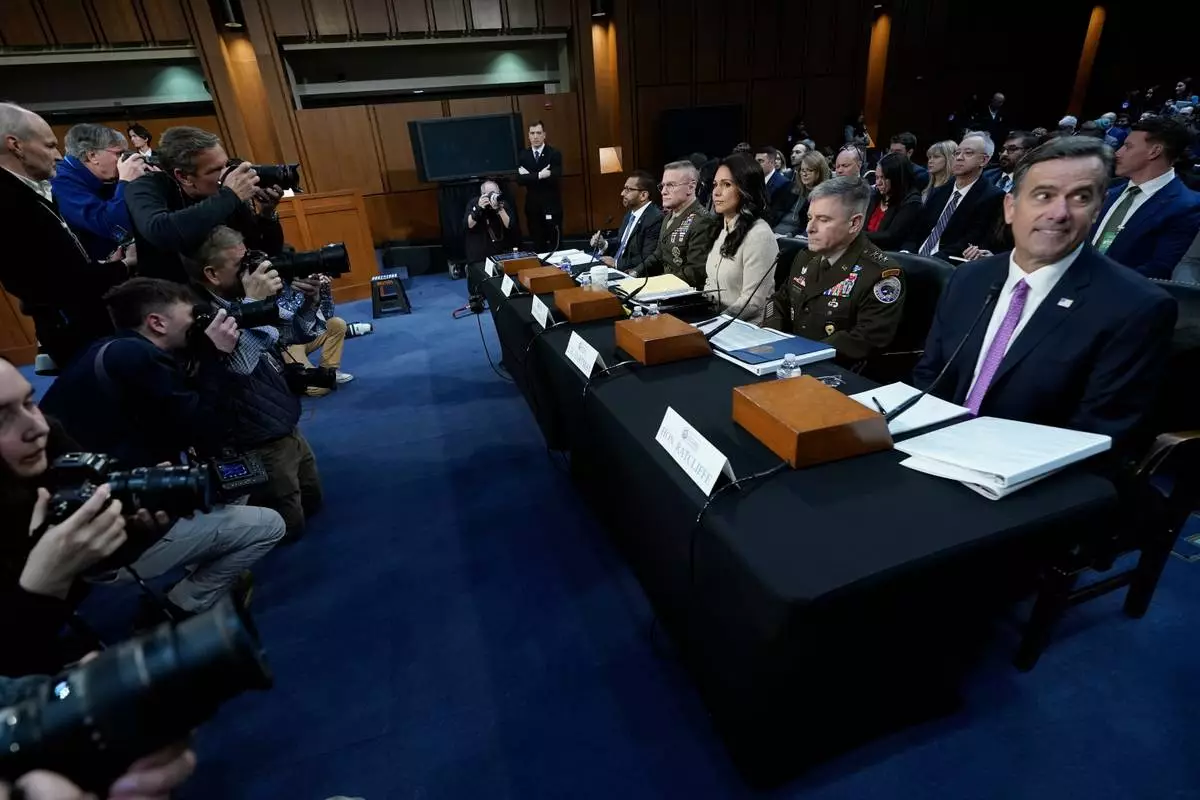
FBI Director Kash Patel, Defense Intelligence Agency Director James Adams, Director of National Intelligence Tulsi Gabbard, Acting Commander of the U.S. Cyber Command William Hartman, and CIA Director John Ratcliffe are seated before the Senate Committee on Intelligence hearings to examine worldwide threats on Capitol Hill Wednesday, March 18, 2026, in Washington. (AP Photo/Jose Luis Magana)
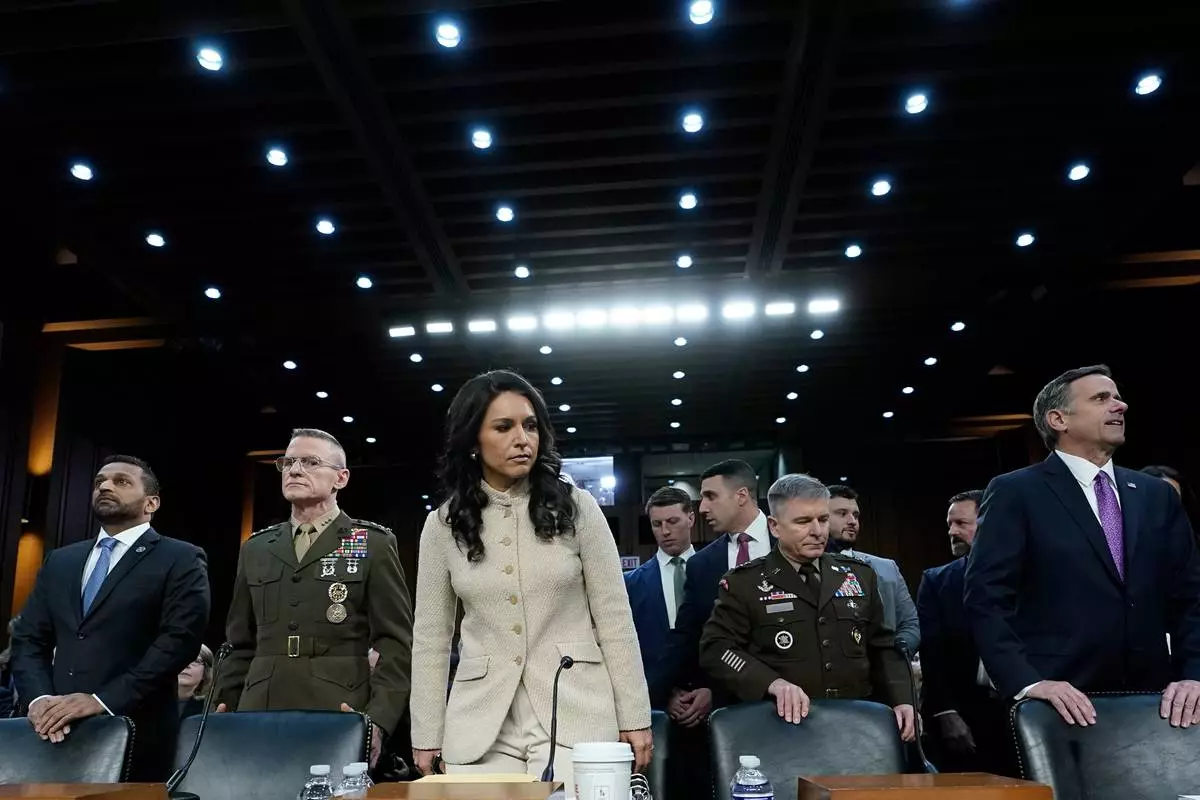
From left, FBI Director Kash Patel, Defense Intelligence Agency Director James Adams, Director of National Intelligence Tulsi Gabbard, Acting Commander of the U.S. Cyber Command William Hartman, and CIA Director John Ratcliffe stand before the Senate Committee on Intelligence hearings to examine worldwide threats on Capitol Hill Wednesday, March 18, 2026, in Washington. (AP Photo/Jose Luis Magana)
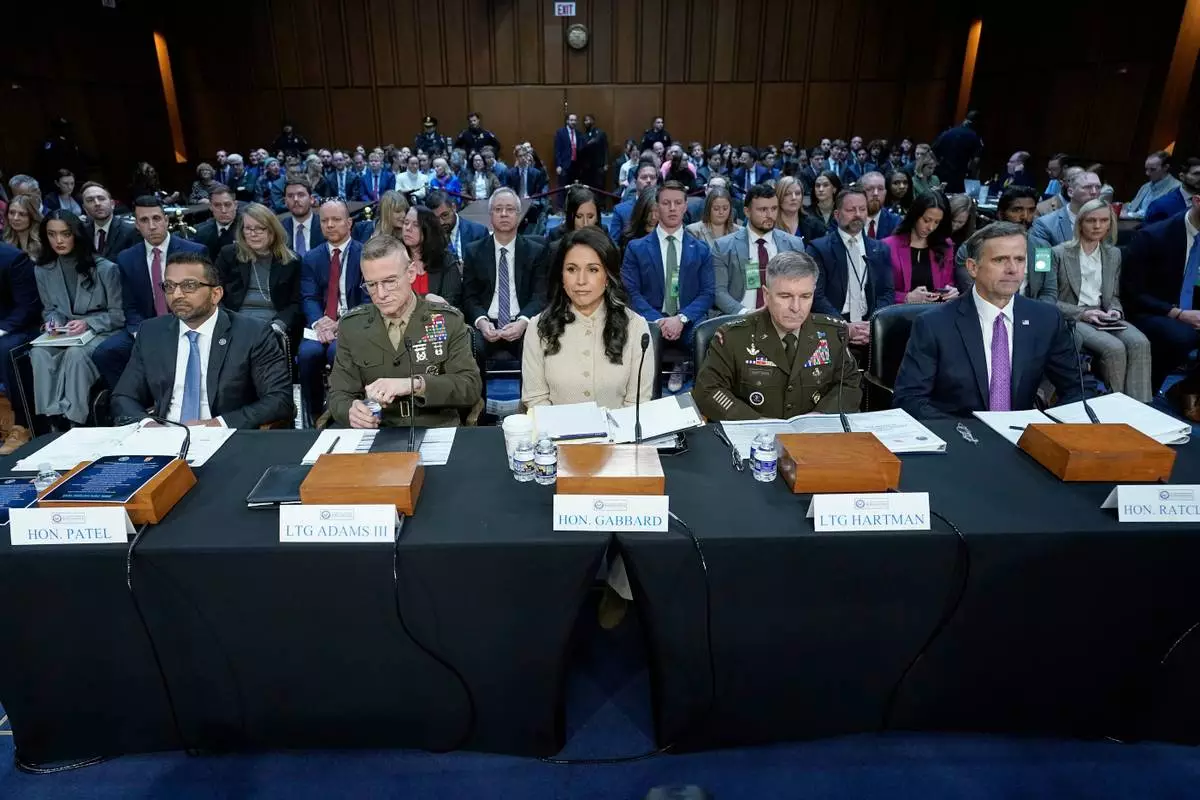
From left, FBI Director Kash Patel, Defense Intelligence Agency Director James Adams, Director of National Intelligence Tulsi Gabbard, Acting Commander of the U.S. Cyber Command William Hartman, and CIA Director John Ratcliffe are seated before the Senate Committee on Intelligence hearings to examine worldwide threats on Capitol Hill Wednesday, March 18, 2026, in Washington. (AP Photo/Jose Luis Magana)
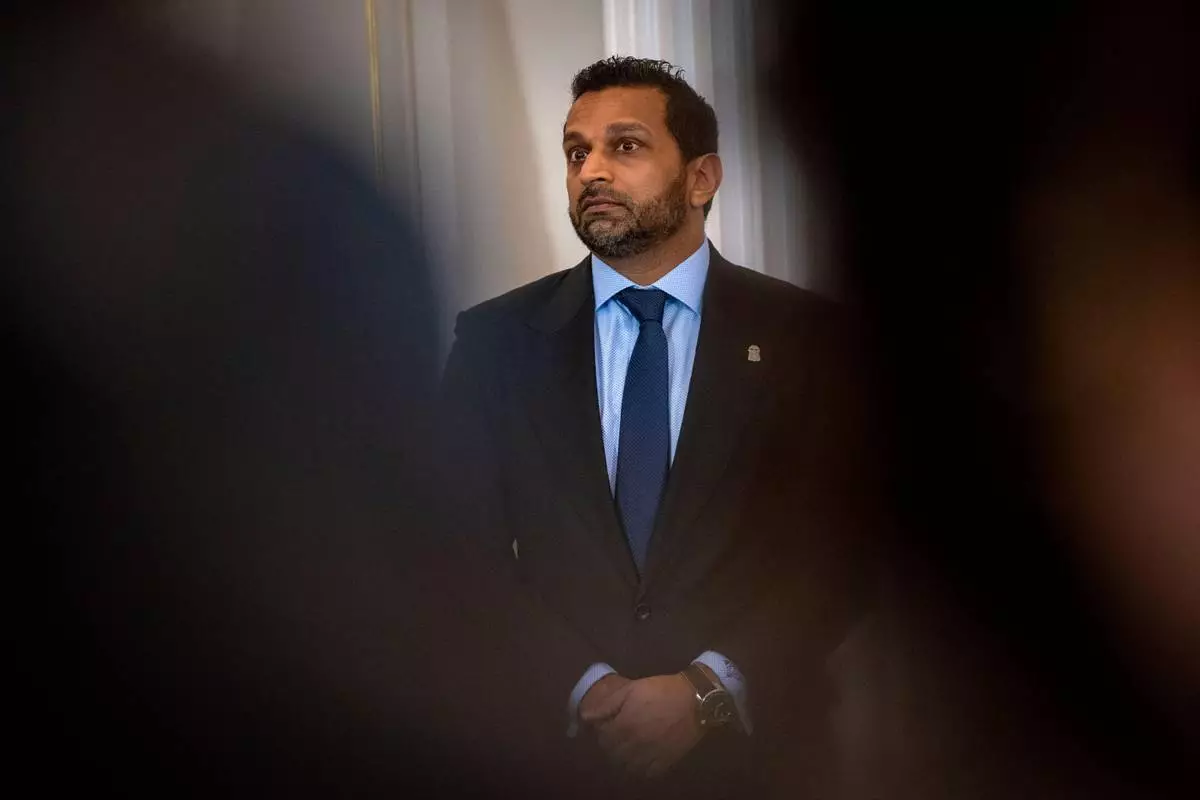
FBI Director Kash Patel takes part in a U.S. Hostage and Wrongful Detainee Flag Raising ceremony at the State Department, Monday, March 9, 2026 in Washington. (AP Photo/Kevin Wolf)