WASHINGTON (AP) — Sen. Markwayne Mullin moved a step closer to becoming President Donald Trump's next homeland security secretary after a Senate committee Thursday narrowly advanced his nomination.
The 8-7 vote came after a contentious hearing Wednesday and sent the Cabinet nomination to the full Senate, which could act to confirm the Oklahoma Republican next week.
That vote included a “no” from the Republican chairman, Sen. Rand Paul of Kentucky, and a “yes” from a Democrat, Sen. John Fetterman of Pennsylvania. The approval comes as the parties are fighting bitterly over the policies of the Department of Homeland Security, leading to a funding lapse that is now in its 34th day.
During his testimony before the Senate Homeland Security and Government Affairs Committee, Mullin tried to make the case that he would be a steady hand after the tumultuous tenure of Kristi Noem, Trump's first DHS secretary. Mullin also signaled support for Trump’s immigration priorities, which are central to the funding standoff after the death of at least three American citizens at the hands of federal agents.
Mullin's hearing was unusually combative and came close to going off the rails as he engaged in heated exchanges with some Democrats as well as Paul.
In addition to a lengthy exchange over Mullin's failure to disclose what he characterized as a “classified” congressional trip while a House member, Paul opened the hearing with a fiery statement challenging Mullin's fitness to lead DHS.
Paul pointed to comments Mullin made after a funding fight, when he called Paul a “freaking snake” and said he understood why a neighbor had tackled Paul in a lawn care dispute. That incident happened several years ago, and Paul suffered multiple broken ribs and later had surgeries he linked to the attack.
“I just wonder if someone who applauds violence against their political opponents is the right person to lead an agency that has struggled to accept limits to the proper use of force?” Paul said.
Mullin refused to back down.
“For you to say I’m a liar, sir, that’s not accurate,” Mullin said.
Paul later said he would not vote for Mullin’s confirmation.
Fetterman, who has frequently challenged his own party, said his vote was "rooted in a strong committed, constructive working relationship with Senator Mullin for our nation’s security.”
Meg Kinnard can be reached at http://x.com/MegKinnardAP
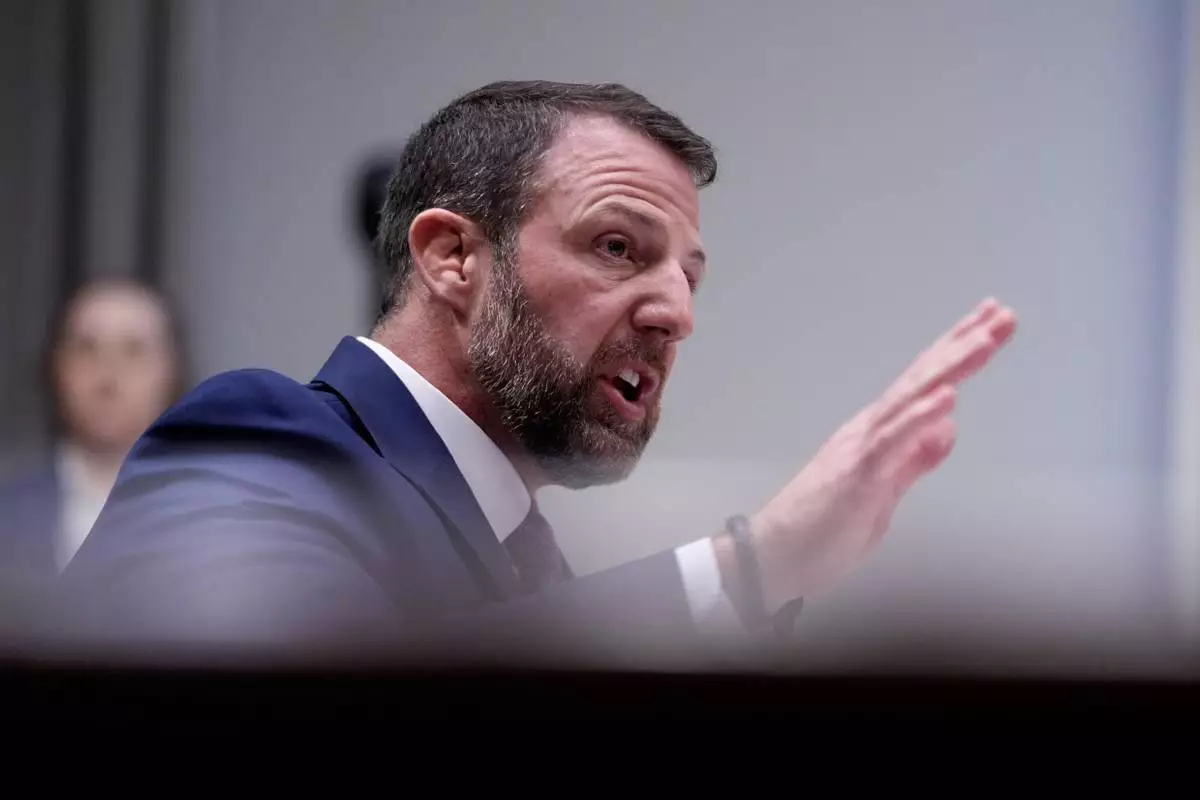
Sen. Markwayne Mullin, R-Okla., President Donald Trump's pick for Homeland Security secretary, testifies during Senate Committee on Homeland Security and Governmental Affairs hearing, Wednesday, March 18, 2026 on Capitol Hill in Washington. (AP Photo/Manuel Balce Ceneta)
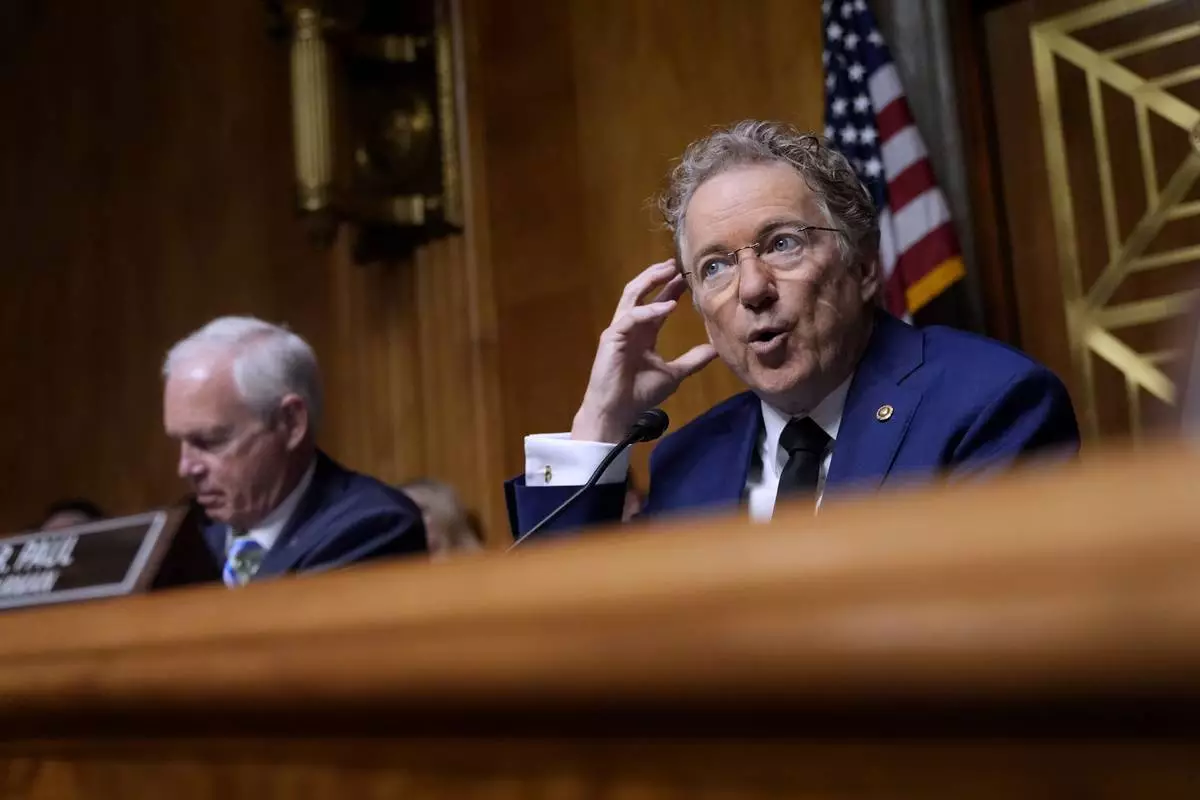
Committee Chairman Sen. Rand Paul, R-Ky, speaks before Sen. Markwayne Mullin, R-Okla., President Donald Trump's pick for Homeland Security secretary, testifies before the Senate Committee on Homeland Security and Governmental Affairs hearing, Wednesday, March 18, 2026 on Capitol Hill in Washington. (AP Photo/Manuel Balce Ceneta)
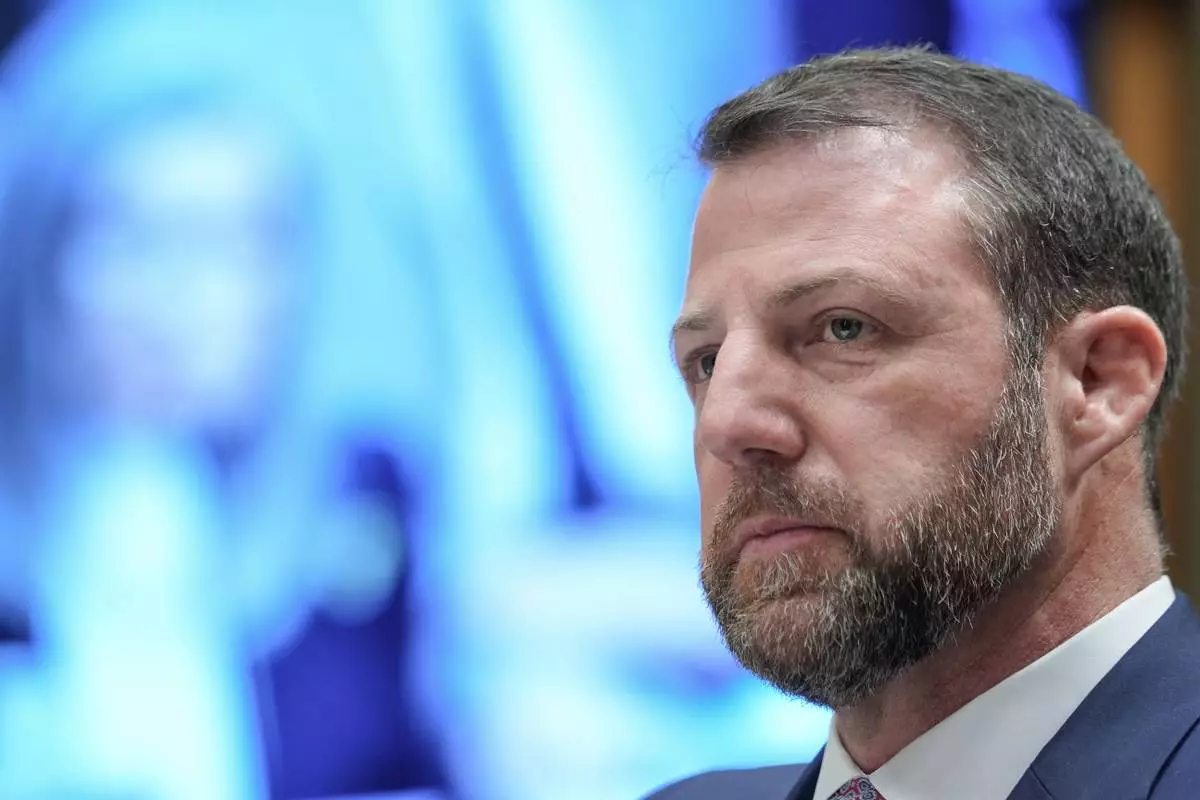
Sen. Markwayne Mullin, R-Okla., the White House pick for homeland security secretary, testifies during Senate Committee on Homeland Security and Governmental Affairs hearing, Wednesday, March 18, 2026 on Capitol Hill in Washington. (AP Photo/Mariam Zuhaib)
NEW YORK (AP) — Oil prices climbed again Thursday because of the war with Iran, tightening their grip on the global economy and sending stock markets lower around the world.
Brent crude, the international standard, briefly rose above $119 per barrel in the morning before pulling back to $112.20, which is still a 4.5% rise from the prior day. A barrel of benchmark U.S. crude added 0.8% to $96.23 after Iran intensified its attacks on oil and gas facilities around the Persian Gulf in response to an Israeli attack on an important Iranian natural gas field.
The attacks added to fears that fighting may knock out production of oil and gas in the Gulf for a long time, which would mean high prices could last a while and cause inflation to rip higher around the world.
Stock indexes dropped 3.4% in Japan, 2.7% in South Korea, 2.2% in Germany and 2.3% in the United Kingdom. On Wall Street, where trading began after Brent crude’s price pared its big gain and where companies are less reliant on oil from the Gulf, the losses were more modest.
The S&P 500 fell 0.7% and is on track for a fourth straight losing week, which would be its longest such streak in a year. The Dow Jones Industrial Average was down 359 points, or 0.8%, as of 11:30 a.m. Eastern time, and the Nasdaq composite was 0.8% lower.
President Donald Trump and countries around the world have made moves to stem the spike in oil prices, but they’re mostly short-term fixes when markets want to see less risk for oil and gas fields around the Gulf and a clearance of the Strait of Hormuz off Iran’s coast, where a fifth of the world’s oil typically sails.
Worries are so high about oil prices that traders are now even betting on a slim chance that the Federal Reserve may have to hike interest rates this year. It’s a dramatic turnaround from before the war, when traders were betting heavily that the Fed would cut rates multiple times this year.
Cuts to rates would give the economy and prices for investments a boost, and they’re something Trump has angrily been calling for, but they would risk worsening inflation. The Fed on Wednesday decided to hold off on cutting interest rates at its latest meeting, and traders found comments from Chair Jerome Powell discouraging about the possibility for cuts in 2026.
Now, traders are betting on a 4% chance the Fed could hike its main interest rate by the end of the year and a 73% chance that it will at least hold steady, according to data from CME Group. Just a month ago, those same traders were betting on a 74% probability of two or more cuts.
That drove Treasury yields higher, and the two-year Treasury yield touched its highest level since the summer.
The more widely followed 10-year Treasury yield rose to 4.27% from 4.26% late Wednesday, up from just 3.97% before the war with Iran started. Earlier in the day, the Bank of Japan, the European Central Bank and the Bank of England held their own interest rates steady.
Besides the threat of higher inflation, a couple solid reports on the U.S. economy also helped to lift Treasury yields. One said fewer U.S. workers applied for unemployment benefits last week, when economists were expecting a slight rise. Another said growth for manufacturing in the mid-Atlantic area unexpectedly accelerated.
Higher Treasury yields have already sent rates for mortgages and other kinds of loans upward, and a report on Thursday showed sales of new U.S. homes unexpectedly weakened in January.
Higher Treasury yields also grind down on prices for all kinds of investments, from stocks to crypto to gold. Gold sank 5.8% to $4,613.50 per ounce and touched its lowest price since early February. Silver fell even more and dropped 9.2%.
Stocks of companies that mine such metals fell to some of Wall Street's sharpest losses. Newmont dropped 8.6%, and Freeport-McMoRan sank 5.7%.
Micron Technology fell 4.8% even though it reported a blowout quarter of much higher profit and revenue than analysts expected. It gave back some of its big gain for the year so far, which came into the day at nearly 62% because of a worldwide shortage for computer memory.
Helping to limit Wall Street's losses was Rivian Automotive, which jumped 2.6%. It announced a partnership where Uber will invest up to $1.25 billion in the company and expects to buy 10,000 autonomous robotaxis. Uber Technologies fell 1.5%.
AP Business Writers Elaine Kurtenbach, David McHugh and Matt Ott contributed.
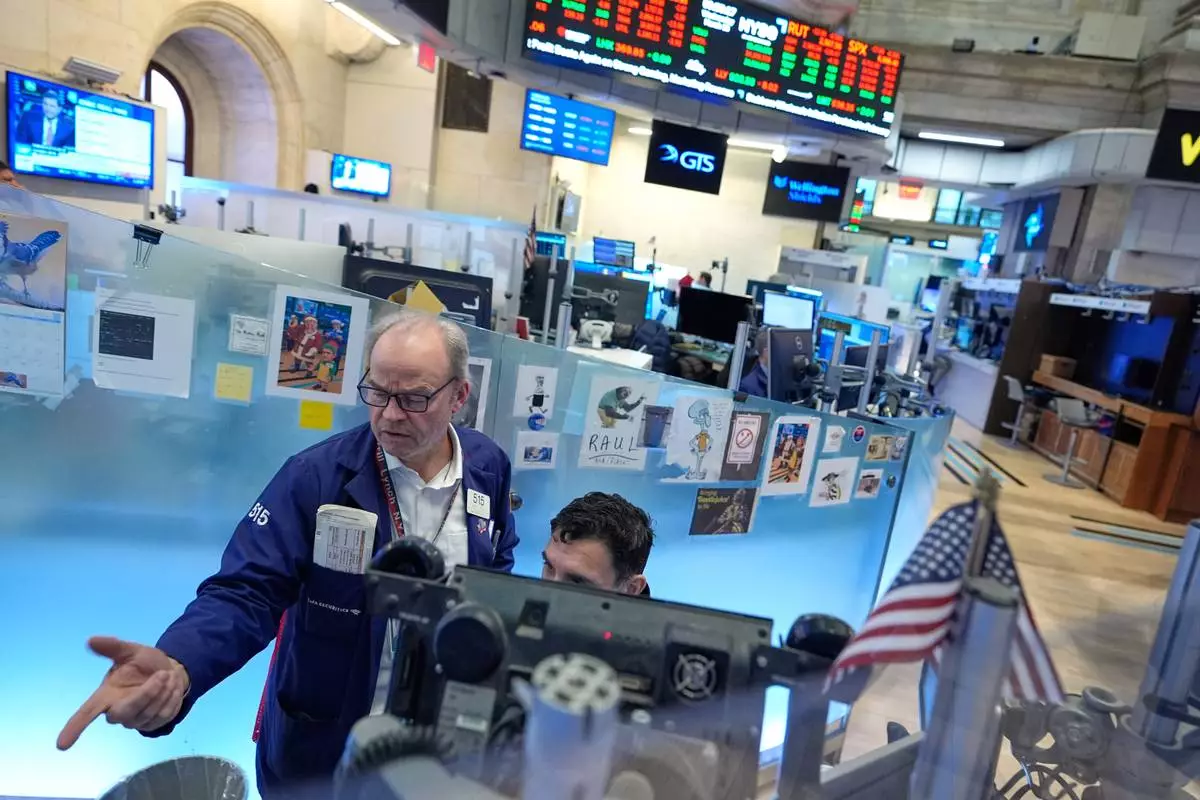
David O'Day, left, works on the floor at the New York Stock Exchange in New York, Wednesday, March 18, 2026. (AP Photo/Seth Wenig)
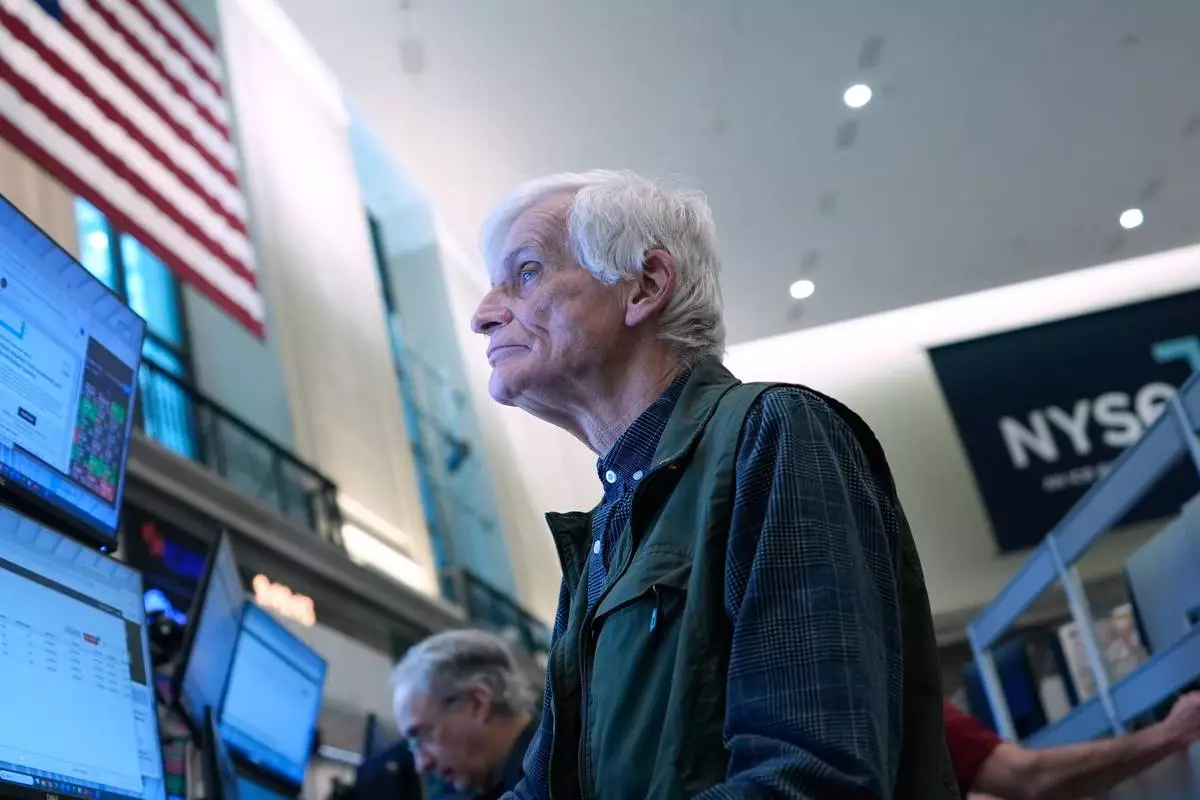
People work on the floor at the New York Stock Exchange in New York, Wednesday, March 18, 2026. (AP Photo/Seth Wenig)
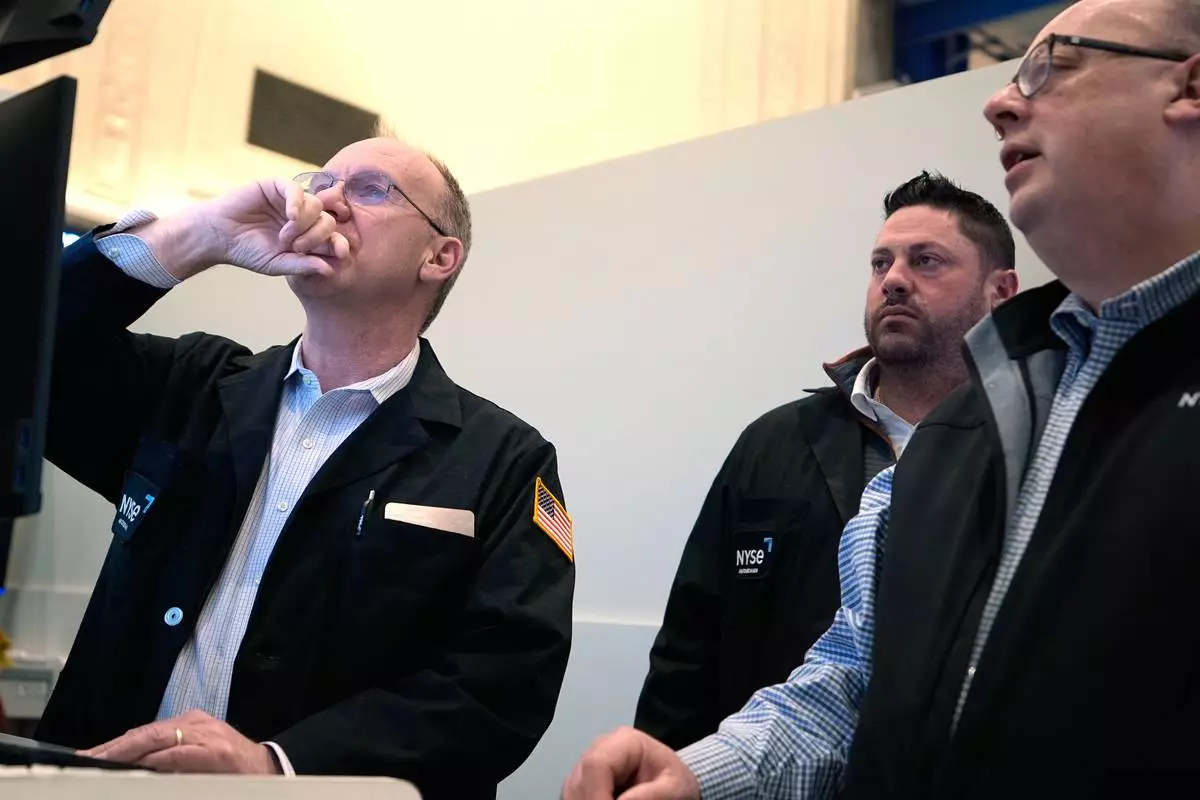
People work on the floor at the New York Stock Exchange in New York, Wednesday, March 18, 2026. (AP Photo/Seth Wenig)
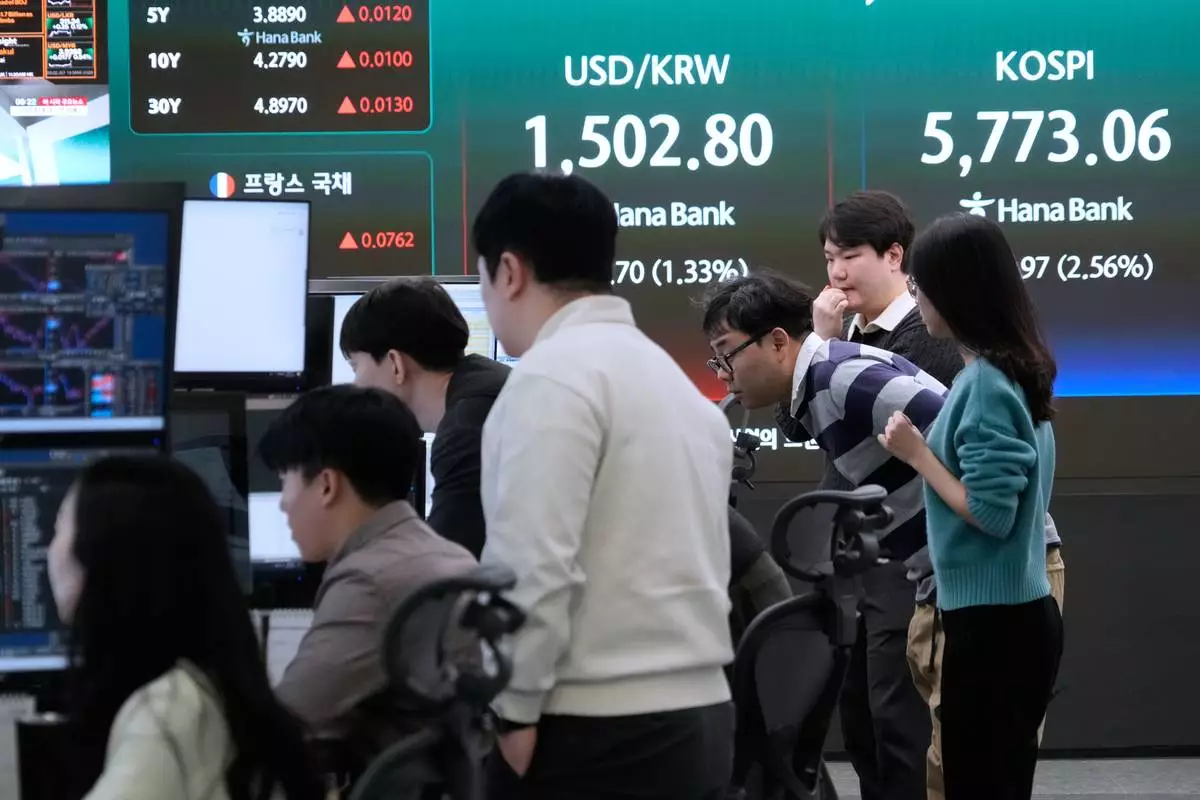
Currency traders watch monitors near a screen showing the Korea Composite Stock Price Index (KOSPI), right, and the foreign exchange rate between U.S. dollar and South Korean won at the foreign exchange dealing room of the Hana Bank headquarters in Seoul, South Korea, Thursday, March 19, 2026. (AP Photo/Ahn Young-joon)

Currency traders watch monitors at the foreign exchange dealing room of the Hana Bank headquarters in Seoul, South Korea, Thursday, March 19, 2026. (AP Photo/Ahn Young-joon)

A currency trader works near a screen showing international oil prices at the foreign exchange dealing room of the Hana Bank headquarters in Seoul, South Korea, Thursday, March 19, 2026. (AP Photo/Ahn Young-joon)
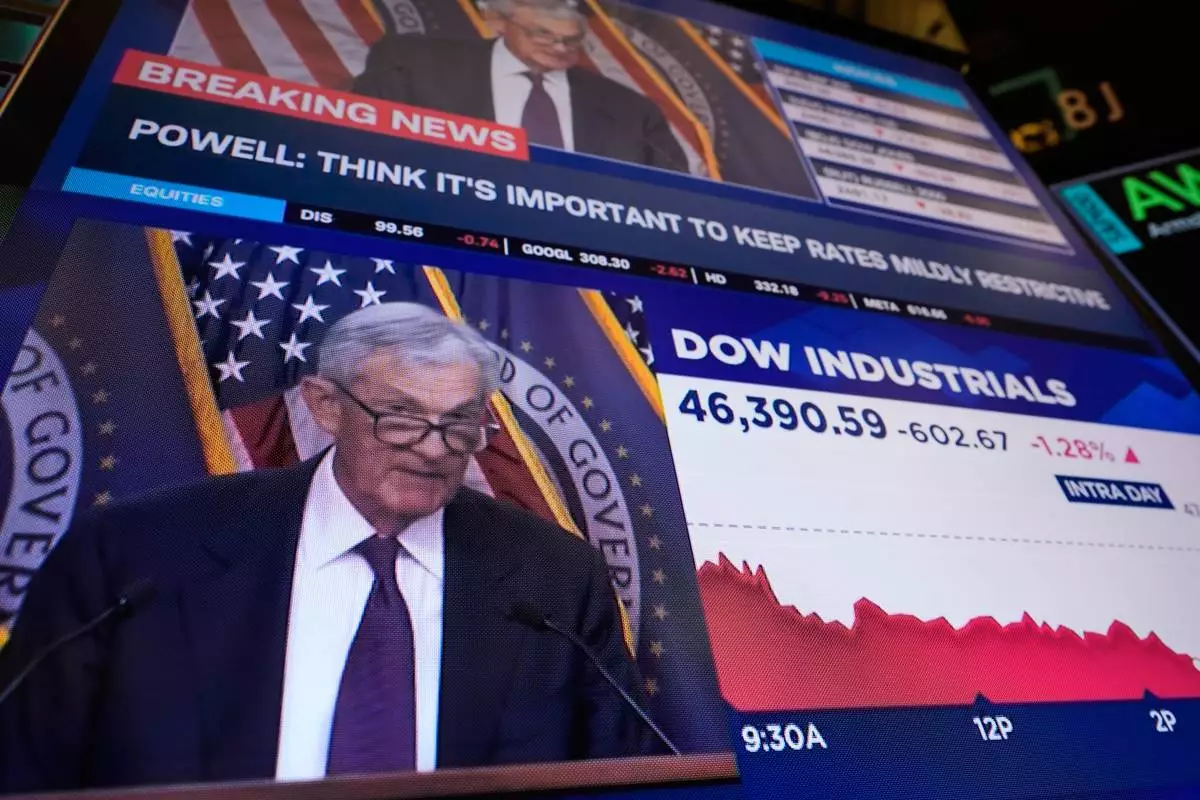
Television screens carry a news conference by Federal Reserve chair Jerome Powell on the floor of the New York Stock Exchange in New York, Wednesday, March 18, 2026. (AP Photo/Seth Wenig)

Currency traders work near a screen showing the Korea Composite Stock Price Index (KOSPI), top center, and the foreign exchange rate between U.S. dollar and South Korean won, top center left, at the foreign exchange dealing room of the Hana Bank headquarters in Seoul, South Korea, Thursday, March 19, 2026. (AP Photo/Ahn Young-joon)