FRANKFURT, Germany (AP) — Escalating attacks on key oil and gas facilities in the Persian Gulf have increased the risk of an extended bout of higher prices for everything from gasoline and electricity to computer chips and food.
Iran launched strikes on key Gulf infrastructure Thursday in retaliation for an Israeli attack on a natural gas field that supplies most of the country's natural gas. The tit-for-tat attacks have raised fears that the initial price shocks at the start of the war may become more entrenched.
Gulf countries have already cut production at oil wells after the risk of Iranian strikes blocked most of the tanker traffic through the Strait of Hormuz, leaving the oil no place to go. Even if the Strait of Hormuz becomes safe for oil tankers to transit soon, it will be some time before oil and gas begin flowing again due to the complexity of restarting refineries and other facilities. If energy infrastructure has been damaged by the ongoing attacks, it will take even longer.
Asia is getting hit the hard as most of the oil and gas exiting the strait is transported there. Government offices in the Philippines are now open only four days a week and there are directives to limit the use of air conditioning. Vietnam has urged people to work from home.
And it’s not just oil and gas. Key raw materials - like helium used in making computer chips and sulfur, a raw material in fertilizer - have been obstructed and could be in short supply soon, raising the prices of goods all the way down the supply chain.
Here are key refineries, terminals and other infrastructure that has been targeted.
South Pars is the world's largest natural gas field and is split between Iran and Qatar. The portion controlled by Qatar is called North Field. South Pars supplies the bulk of natural gas used to heat homes and generate electricity in Iran.
An Israeli strike at facilities connected to the field at Asuleyah led to Iranian threats to attack oil and gas sites in other Gulf countries.
Iran already struggles at times to produce enough electricity. The loss of natural gas from South Pars would make life worse for the civilian population.
U.S. President Donald Trump said that Israel would not attack South Pars again, but warned on social media that if Iran continued striking Qatar’s energy infrastructure, the U.S. would retaliate and “massively blow up the entirety” of the field.
The largest LNG export facility in the world suffered “extensive” damage when it was attacked Thursday by Iran in retaliation for the South Pars attack. It had already been shut down by state-owned QatarEnergy following a drone strike.
Ras Laffan draws gas from the Qatari side of the shared field with Iran - called the North Field. The gas is chilled until it condenses into a liquid and then transferred to tankers for transport, mostly to Asia.
The attack has dealt a severe shock to global energy markets because Qatar produces 20% of the world’s liquefied natural gas. Europe is already feeling the pinch from sharply higher prices.
This is a tanker terminal that has handled almost all of Iran’s roughly 1.6 million barrels per day of prewar crude exports, most of it going to China. Trump said the U.S. bombed military sites on Kharg Island on March 13 but spared its oil infrastructure. He threatened that the island's oil infrastructure could be next.
Some tankers have continued to load there. At least some Iranian oil appears to be leaving the Gulf through a “dark fleet" of tankers that use false location signals and obscure ownership to evade sanctions, according to shipping intelligence companies.
Saudi Aramco's pipeline from the Abqaiq oil processing center near the Persian Gulf to the Yanbu port on the Red Sea circumvents the Hormuz chokepoint and has allowed Saudi Arabia to continue exporting a substantial portion of its oil. However, the pipeline lacks capacity to fully make up for the Hormuz closure. Saudi Arabia said its SAMREF refinery at Yanbu was hit, raising concerns about the ability to export oil through the port there.
A key terminal for oil tankers on the Gulf of Oman, it enables Abu Dhabi to export a significant share of its oil using a pipeline from the Habshan oil and gas field without sending it through the Strait of Hormuz. It has been disrupted by two strikes but has reportedly resumed operations.
Following a drone attack, fires at the facilities were extinguished Thursday, said the Kuwait Petroleum company, without specifying the extent of the damage. Refineries are key to Kuwait's oil production because without them, oil wells would have to be shut down for lack of a destination for the oil. Restarting refineries is extremely time consuming for safety reasons and those wells would remain largely inactive until refineries are back on line.
Salalah is the site of an $800 million facility that produces liquid petroleum gas for export to Asia, where it is commonly used for cooking fuel. Restaurants in India have begun shortening hours of operation and many have dropped energy intensive dishes like curries and deep-fried foods from the menu. It's located outside the Strait of Hormuz and operations were suspended as a precaution after drone strikes.
The site supplies about 20% of Abu Dhabi's natural gas. It's also a major supplier of sulfur extracted from gas, a raw material used to make fertilizer and in chemical production. Operations were suspended Tuesday due to a drone strike.
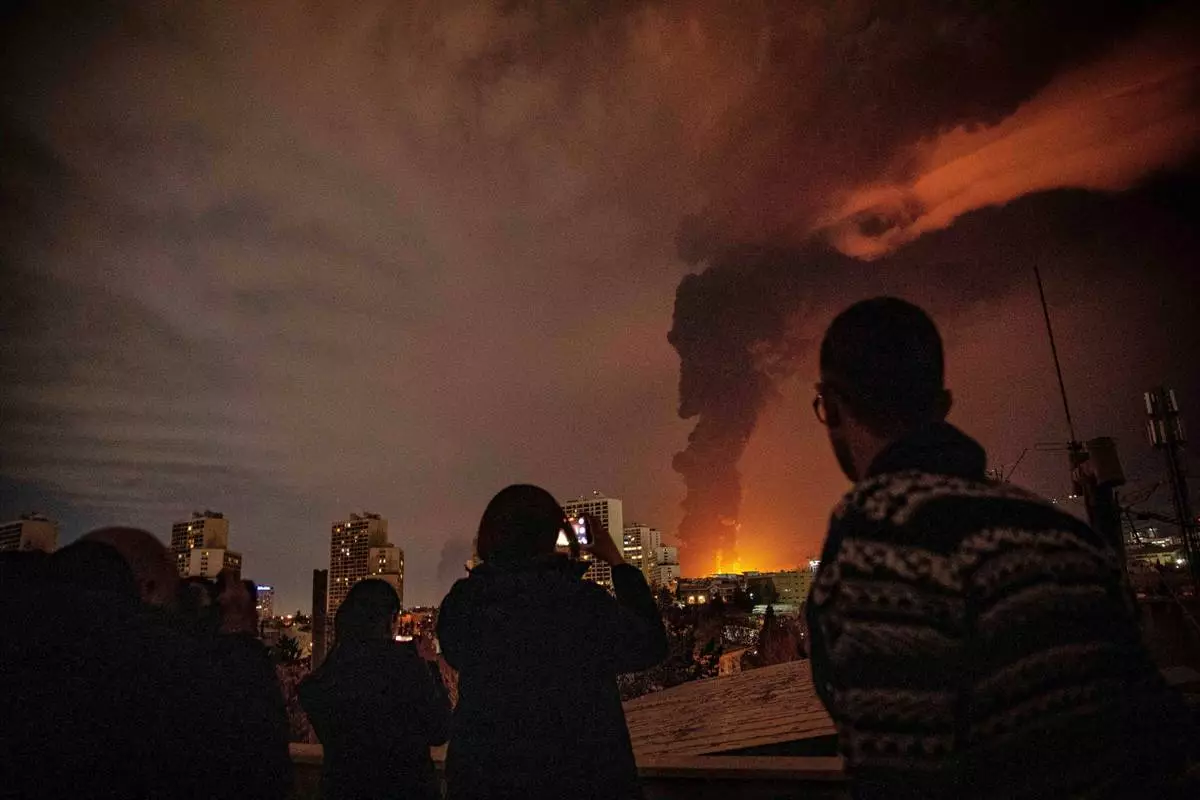
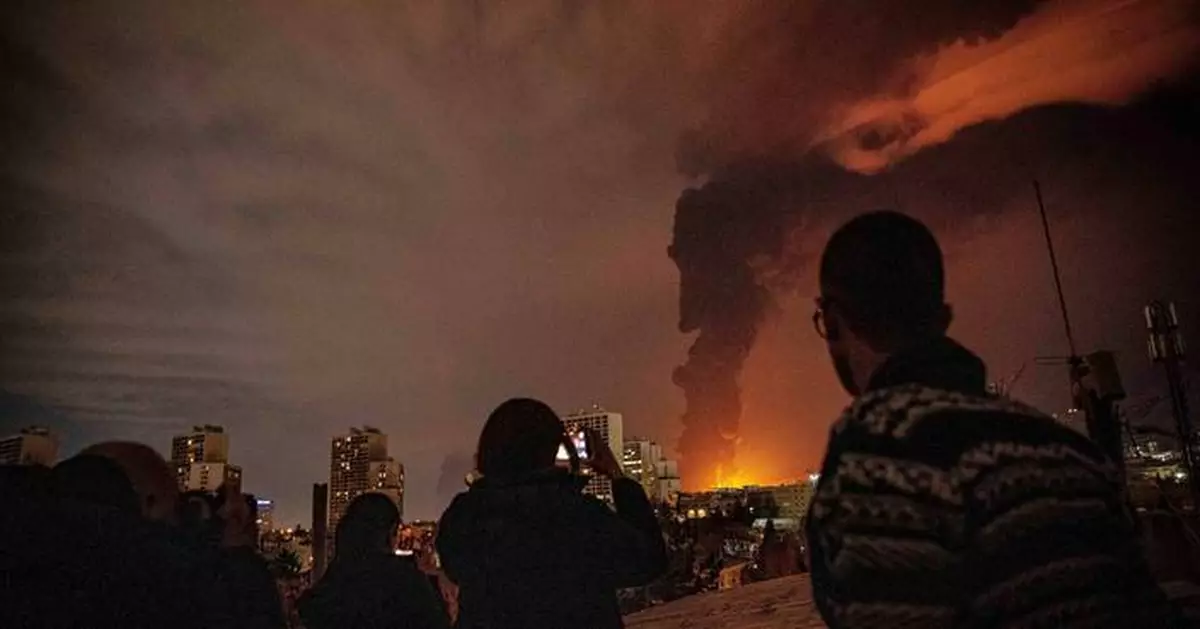
Residents watch and take pictures as flames and smoke rise from an oil storage facility struck as attacks hit the city during the U.S.–Israeli military campaign in Tehran, Iran, Saturday, March 7, 2026. (Alireza Sotakbar/ISNA via AP)
The United States pulled off a daring rescue of two aviators whose fighter jet was shot down by Iran, plucking the pilot from behind enemy lines before setting off a complicated extraction of the second service member who hid deep in the mountains as Tehran called for Iranians to help capture him.
The CIA looked to throw off Iran’s government before the crew member was found, launching a deception campaign to spread word inside the Islamic Republic that it had already located him.
Even as President Donald Trump and other U.S. officials described an almost cinematic mission, rescuers faced major obstacles, including two Black Hawk helicopters coming under fire and problems with two transport planes that forced the U.S. military to blow them up.
“This is the first time in military memory that two U.S. Pilots have been rescued, separately, deep in Enemy Territory,” Trump wrote early Sunday on his Truth Social platform. “WE WILL NEVER LEAVE AN AMERICAN WARFIGHTER BEHIND!”
In a pair of social media posts, Trump said the operation over the weekend required the U.S. to remain completely silent to avoid jeopardizing the effort, even as the president and top members of his administration continuously monitored the airman’s location.
The White House and the Pentagon refused to publicly discuss details about the downed fighter jet for well over 24 hours after the initial crash, particularly about the first crew member rescued from the F-15E Strike Eagle— an effort that Trump later said took seven hours in broad daylight over Iran.
The United States and Iran's government then were both racing to find the second crew member, a weapons systems officer, whose location neither side knew.
The CIA spread word that the U.S. had found him and were moving him by ground to get him out of Iran, according to a senior Trump administration official who spoke on condition of anonymity to discuss details not yet made public.
The confusion allowed the CIA to uncover the location of the service member, who was hiding in a mountain crevice, the official said. The intelligence agency sent the coordinates to the Pentagon and the White House, where Trump ordered a rescue operation.
Meanwhile, an anchor on a channel affiliated with Iranian state television had been urging residents in the mountainous region of southwest Iran where the fighter jet went down to hand over any “enemy pilot” to police and promised a reward for anyone who did.
Trump said the American aviator was being “hunted down” by enemies who were “getting closer and closer by the hour.” The United States was monitoring his location continuously, he said.
At the right moment, Trump said, he directed the military to send dozens of heavily armed aircraft to rescue the crew member, who the president said is “seriously wounded” but will recover.
Iranian state media reported that airstrikes in southwestern Iran on Saturday killed at least three people and wounded others, in the same area where the missing American crew member was believed to be.
The American rescue mission ran into major challenges behind enemy lines. Iran’s joint military command claimed it struck two U.S. Black Hawk helicopters taking part in the operation.
A person familiar with the situation said the two helicopters were able to navigate to safe airspace, although it’s unclear if they landed or if crew members were injured. The person spoke on the condition of anonymity to discuss the sensitive information.
Two American transport planes also encountered a technical malfunction and additional aircraft were brought in to complete the rescue, according to a regional intelligence official briefed on the mission. The U.S. military blew up the transport planes, said the official, who spoke on condition of anonymity to discuss the covert mission.
Iran’s state television on Sunday aired a video showing what it claimed were parts of a U.S. aircraft shot down by Iranian forces, along with a photo of thick, black smoke rising. The broadcaster said Iran had shot down a transport plane and two helicopters that were part of the rescue operation.
Iran’s joint military command said the destroyed aircraft included two C-130 military transport aircraft and two Black Hawk helicopters in the province of Isfahan, where the rescue took place.
“The fact that we were able to pull off both of these operations, without a SINGLE American killed, or even wounded, just proves once again, that we have achieved overwhelming Air Dominance and Superiority over the Iranian skies,” Trump said on social media.
Trump, however, did not mention that a second military jet also went down the same day as the F-15E.
Iranian state media said Friday that a U.S. A-10 attack aircraft crashed after being struck by Iran’s defense forces.
A U.S. official, speaking on condition of anonymity to discuss a sensitive military situation, confirmed a second U.S. Air Force combat aircraft went down in the Middle East on Friday. The official provided no other details on what happened and no information on the status of the crew.
Kim and Lee reported from Washington, and Magdy from Cairo. Associated Press writers Lisa Mascaro and Konstantin Toropin in Washington, Farnoush Amiri in New York and Julia Frankel in Jerusalem contributed to this report.
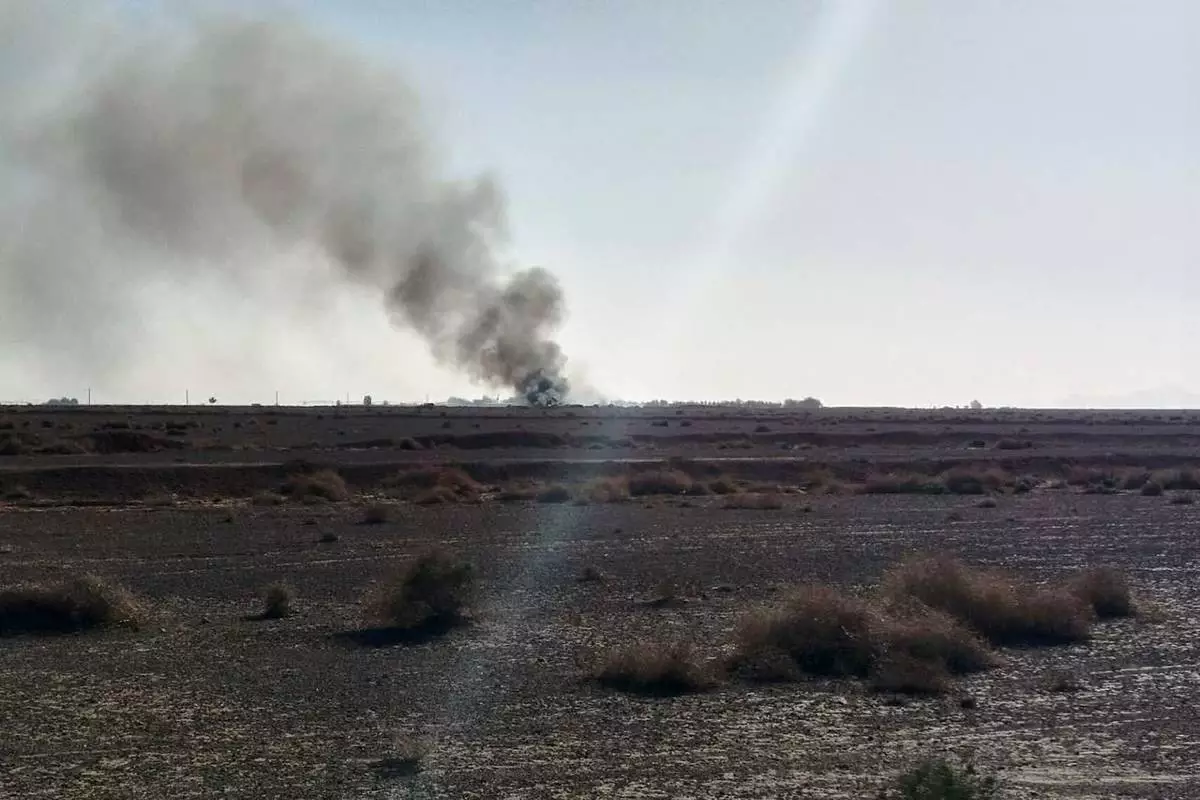
In this image provided by Sepahnews, the Iranian Revolutionary Guard's official website, black smoke rises into the air at what Iran's state TV claimed was the site where an American transport plane and two helicopters involved in a rescue operation were shot down, in Isfahan province, Iran, April, 2026. (Sepahnews via AP)
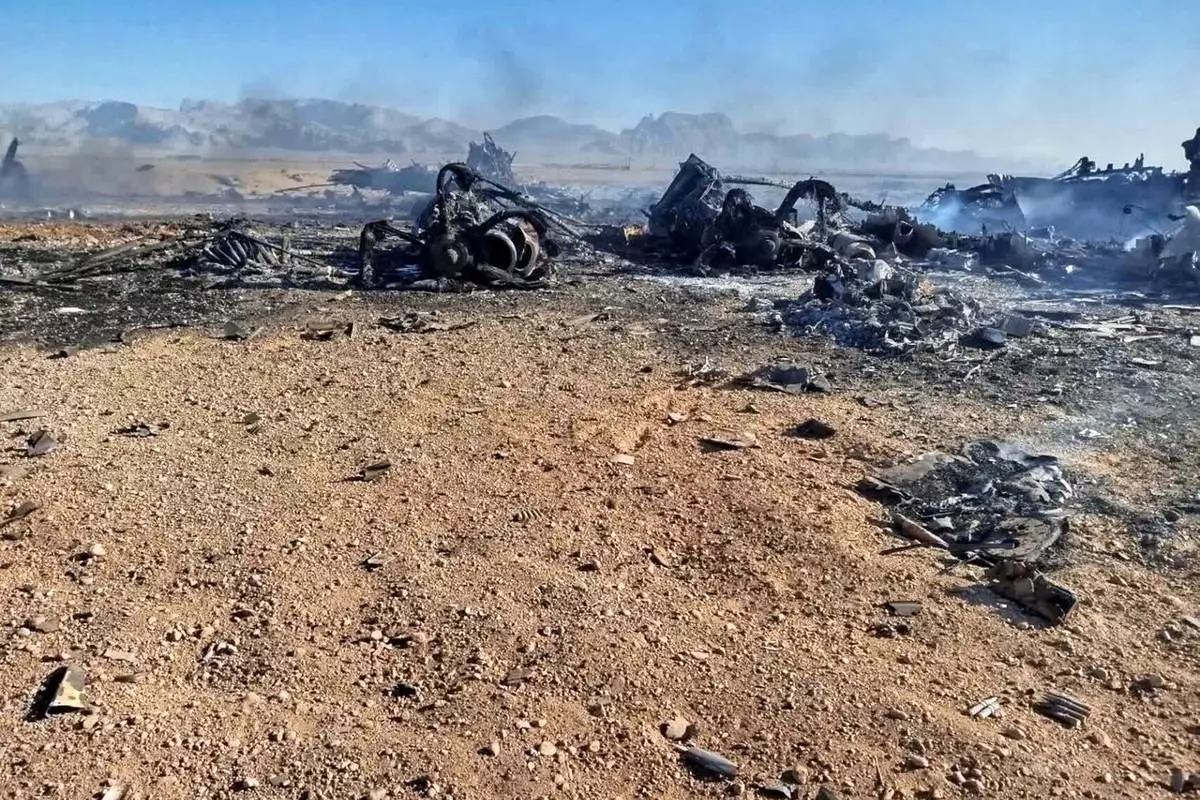
In this image provided by Sepahnews, the Iranian Revolutionary Guard's official website, wreckage is shown at what Iran's state TV claimed was the site of a downed American transport plane and two helicopters involved in a rescue operation, in Isfahan province, Iran, April, 2026. (Sepahnews via AP)
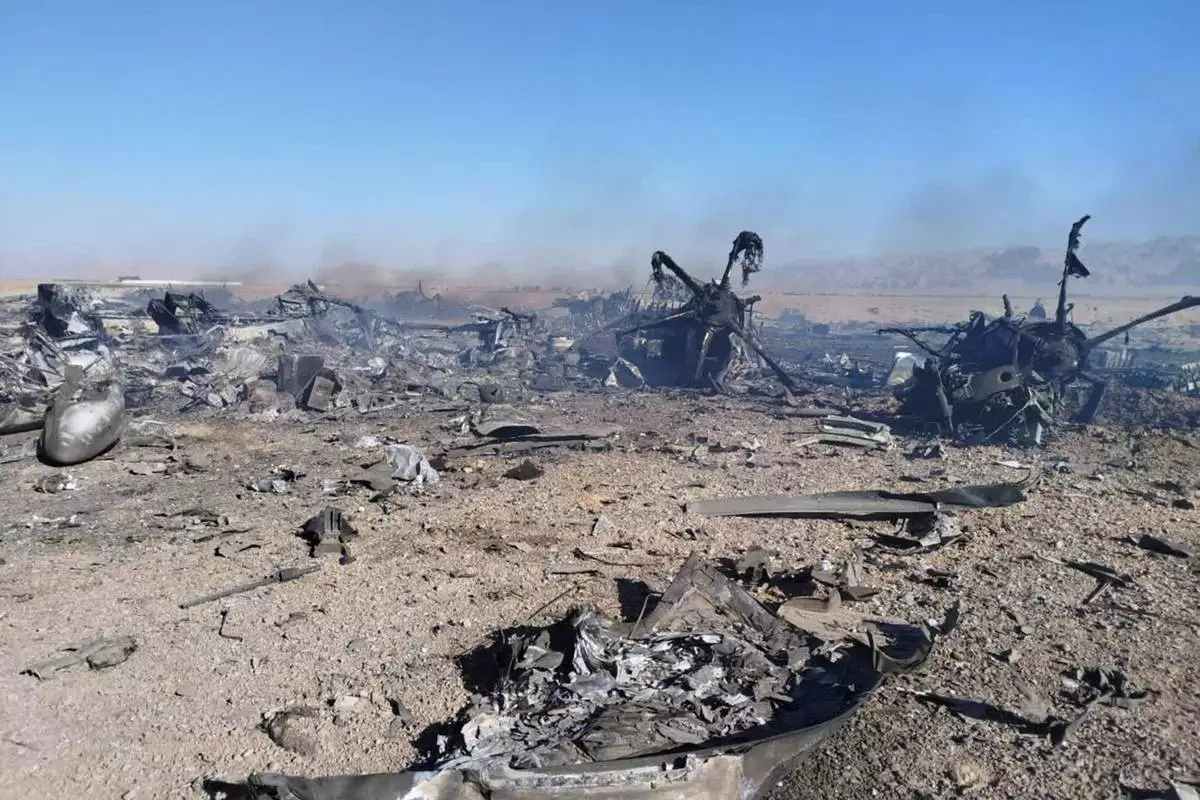
In this image provided by Sepahnews, the Iranian Revolutionary Guard's official website, wreckage is shown at what Iran's state TV claimed was the site of a downed American transport plane and two helicopters involved in a rescue operation, in Isfahan province, Iran, April, 2026. (Sepahnews via AP)