WASHINGTON (AP) — A federal arts commission on Thursday approved the final design for a 24-karat gold commemorative coin bearing President Donald Trump's image to help celebrate America's 250th birthday on July 4.
The vote by the U.S. Commission of Fine Arts, whose members are supporters of the Republican president and were appointed by him earlier this year, was without objection. It clears the way for the U.S. Mint to begin production on the coin, whose size and denomination are still under discussion.
“As we approach our 250th birthday, we are thrilled to prepare coins that represent the enduring spirit of our country and democracy, and there is no profile more emblematic for the front of such coins than that of our serving President, Donald J. Trump,” U.S. Treasurer Brandon Beach said in a statement.
The unprecedented move marks yet another example of Trump and his allies circumventing conventional past presidential practices — and even the law — to get what he wants. It's the latest instance of Trump putting his name and likeness in the historical archive, following his renaming of the U.S. Institute of Peace, the Kennedy Center performing arts venue and a new class of battleships, among other tributes.
Federal law says no living president can appear on U.S. currency. But Megan Sullivan, the acting chief of the Office of Design Management at the Mint, said the Treasury secretary has authority to authorize the minting and issuance of new 24-karat gold coins, which Scott Bessent has used to get around that prohibition and put Trump on a coin.
She presented the coin’s final design at the commission’s March meeting on Thursday and said Trump had approved it.
“It is my understanding that the secretary of the Treasury presented this design, as well as others, to the president and these were his selection," Sullivan said.
The White House and the Mint did not immediately respond to electronic and telephone requests for comment.
The front of the coin features an image of Trump in a suit and tie and with a stern look on his face. His fists rest on top of what is supposed to be a desk as he leans forward. Lettering on the top half of the coin spells “LIBERTY” in a slight arc. Directly underneath that are the dates 1776-2026. The words “IN GOD WE TRUST” are at the bottom, with seven stars on one side of the coin and six stars on the other side.
The reverse side depicts a bald eagle midflight with “UNITED STATES OF AMERICA” on the right side and “E PLURIBUS UNUM” on the left side.
“I know it's a very strong and a very tough image of him, and I think it’s fitting to have a current sitting president who’s presiding over the country over the 250th year on a commemorative coin for said year,” said Commissioner Chamberlain Harris, a top White House aide to Trump.
The coin will be part of a “very limited production run,” Sullivan said, but the number has not been determined. The size and denomination of the coin also have not yet been decided, she said. Some commissioners noted Trump's fondness for big things as they advocated for the largest size coin.
The Mint, which is part of the Treasury Department, has looked at a size for the Trump coin that is larger than its 1-ounce (28-gram) gold coin, which is about 1.3 inches (3.3 centimeters) in diameter, Sullivan said.
Its largest coin is 3 inches (7.6 centimeters), “so we're looking somewhere in there," she said.
“I think the president likes big things," said Commissioner James McCrery II, who was the architect on Trump's design proposal for a 90,000-square-foot (8,360-square-meter) ballroom addition to the White House. The fine arts commission approved that proposal at its February meeting.
Harris told McCrery she agreed with him. She works in the White House as a special assistant to the president and deputy director of the Oval Office.
“I think the larger the better. The largest of that circulation, I think, would be his preference,” Harris said, speaking of Trump.
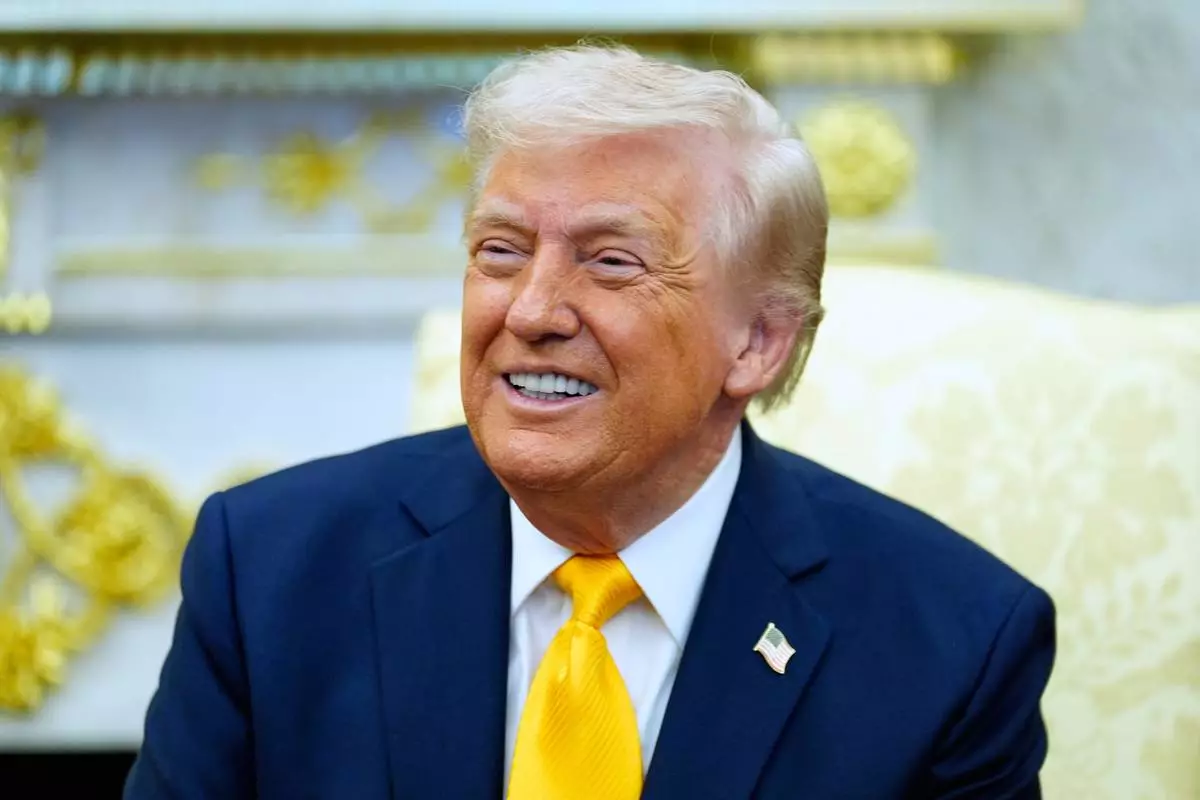
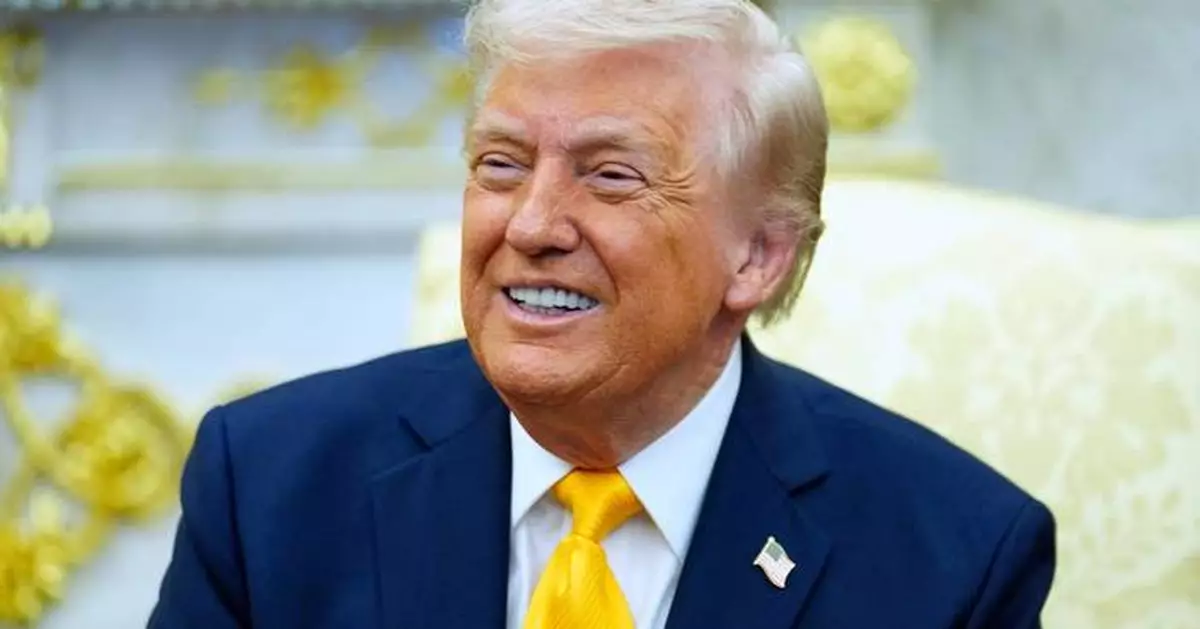
President Donald Trump speaks during a meeting with Japan's Prime Minister Sanae Takaichi in the Oval Office of the White House, Thursday, March 19, 2026, in Washington. (AP Photo/Alex Brandon)
WASHINGTON (AP) — A U.S. service member who has been missing since Iran shot down a fighter jet has been rescued, President Donald Trump wrote in a social media post early Sunday.
A frantic U.S. search-and-rescue operation unfolded after the crash of the F-15E Strike Eagle on Friday, as Iran also promised a reward for anyone who turned in the “enemy pilot.”
A second crew member was rescued earlier.
“This brave Warrior was behind enemy lines in the treacherous mountains of Iran, being hunted down by our enemies, who were getting closer and closer by the hour,” Trump wrote.
Trump said that the aviator is injured but “will be just fine,” adding that the rescue involved “dozens of aircraft” and that the U.S. had been monitoring his location “24 hours a day, and diligently planning for his rescue.”
The fighter jet was the first U.S. aircraft to have crashed in Iranian territory since the conflict in late February.
Trump said last week that the U.S. had “decimated” Iran and would finish the war “very fast.” Two days later, Iran shot down two U.S. military planes, showing the ongoing perils of the bombing campaign and the ability of a degraded Iranian military to continue to hit back.
In Kuwait, an Iranian drone attack caused significant damage to two power plants and put a water desalination station out of service, according to the Ministry of Electricity. No injuries were reported from the attack, the ministry said.
In Bahrain, the national oil company said that a drone attack caused a fire at one of its storage facilities, which was extinguished. It said the damage was still being assessed and no injuries had been reported.
In the United Arab Emirates, authorities responded to multiple fires at the Borouge petrochemicals plant, a joint venture of the Abu Dhabi National Oil Co. and Borealis of Australia. They say the fires were caused by falling debris following successful interceptions by air defense systems, but production at the plant in Ruwais, near the UAE’s western border with Saudi Arabia, has halted.
The strike came a day after Israel struck a petrochemical plant in Iran that Prime Minister Benjamin Netanyahu said generated revenue that it had used to fund the war.
The war began with joint U.S.-Israel strikes on Feb. 28 and has killed thousands, shaken global markets, cut off key shipping routes and spiked fuel prices. Both sides have threatened and hit civilian targets, bringing warnings of possible war crimes.
The other jet to go down was a U.S. A-10 attack aircraft. Neither the status of the crew nor exactly where it crashed was immediately known.
Trump renewed his threats for Iran to open up the Strait of Hormuz, a crucial waterway for global energy shipments that has been choked off by Tehran, by Monday or face devastating consequences, writing Saturday in a social media post: “Remember when I gave Iran ten days to MAKE A DEAL or OPEN UP THE HORMUZ STRAIT. Time is running out — 48 hours before all Hell will reign down on them.”
“The doors of hell will be opened to you” if Iran’s infrastructure is attacked, Gen. Ali Abdollahi Aliabadi with the country’s joint military command said late Saturday in response to Trump’s renewed threat, state media reported. In turn, the general threatened all infrastructure used by the U.S. military in the region.
But Pakistan’s Foreign Ministry spokesperson, Tahir Andrabi, told The Associated Press that his government’s efforts to broker a ceasefire are “right on track” after Islamabad last week said that it would soon host talks between the U.S. and Iran.
Iran’s foreign minister, Abbas Araghchi, said that Iranian officials “have never refused to go to Islamabad.”
Mediators from Pakistan, Turkey and Egypt were working to bring the U.S. and Iran to the negotiating table, according to two regional officials.
The proposed compromise includes a cessation of hostilities to allow a diplomatic settlement, according to a regional official involved in the efforts and a Gulf diplomat briefed on the matter. They spoke on condition of anonymity to discuss closed-door diplomacy.
Iran’s parliamentary speaker, Mohammad Bagher Qalibaf, issued a veiled threat late Friday to disrupt traffic through a second strategic waterway in the region, the Bab el-Mandeb.
The strait, 32 kilometers (20 miles) wide, links the Red Sea with the Gulf of Aden and the Indian Ocean. More than a tenth of seaborne global oil and a quarter of container ships pass through it.
“Which countries and companies account for the highest transit volumes through the strait?” Qalibaf wrote.
More than 1,900 people have been killed in Iran since the war began.
In Gulf Arab states and the occupied West Bank, more than two dozen people have died, while 19 have been reported dead in Israel and 13 U.S. service members have been killed. In Lebanon, more than 1,400 people have been killed and more than 1 million people have been displaced. Ten Israeli soldiers have died there.
Jon Gambrell in Dubai, United Arab Emirates; Samy Magdy in Cairo; Munir Ahmed in Islamabad; Dasha Litvinova in Tallinn, Estonia; and Seung Min Kim, Will Weissert, Michelle L. Price, Lisa Mascaro and Ben Finley in Washington, contributed to this report.
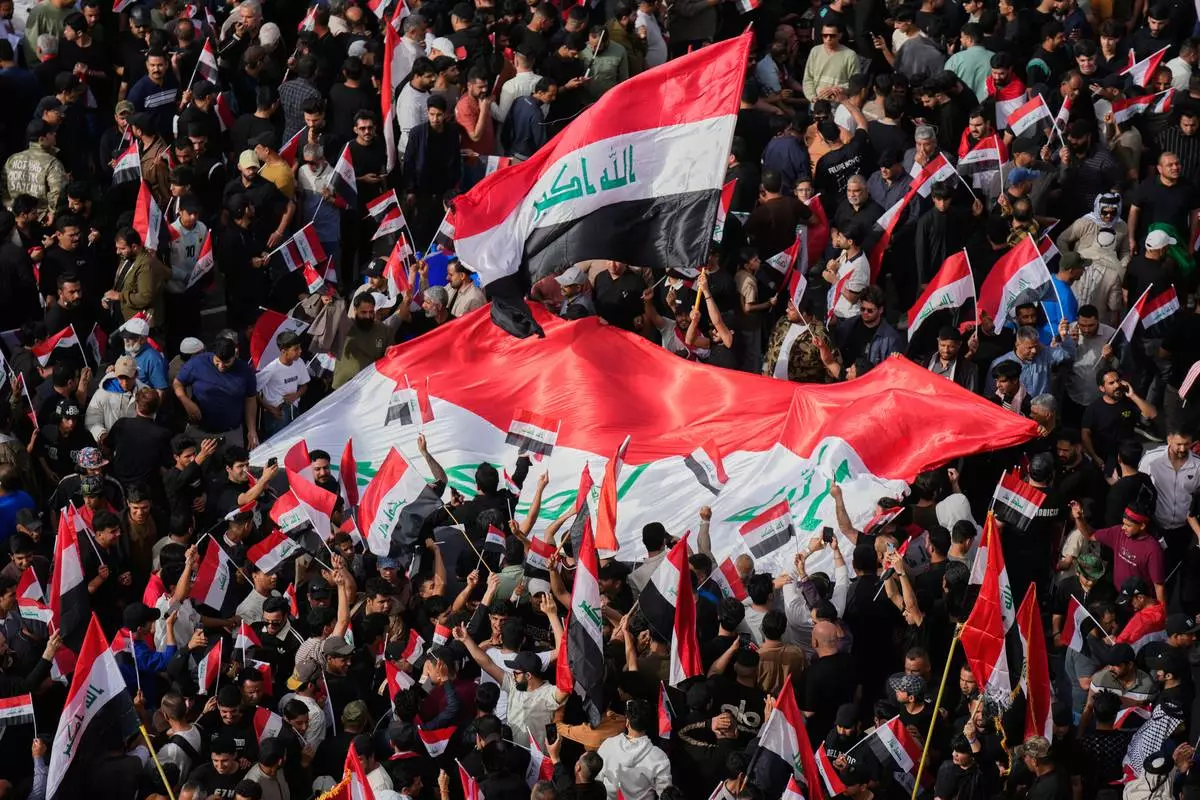
Followers of Iraq's Shiite cleric Muqtada al-Sadr chant slogans as they wave national Iraqi flag during a protest against U.S. and Israeli attacks on multiple cities across Iran, in Tahrir Square, Baghdad, Baghdad, Iraq, Saturday, April 4, 2026. (AP Photo/Hadi Mizban)
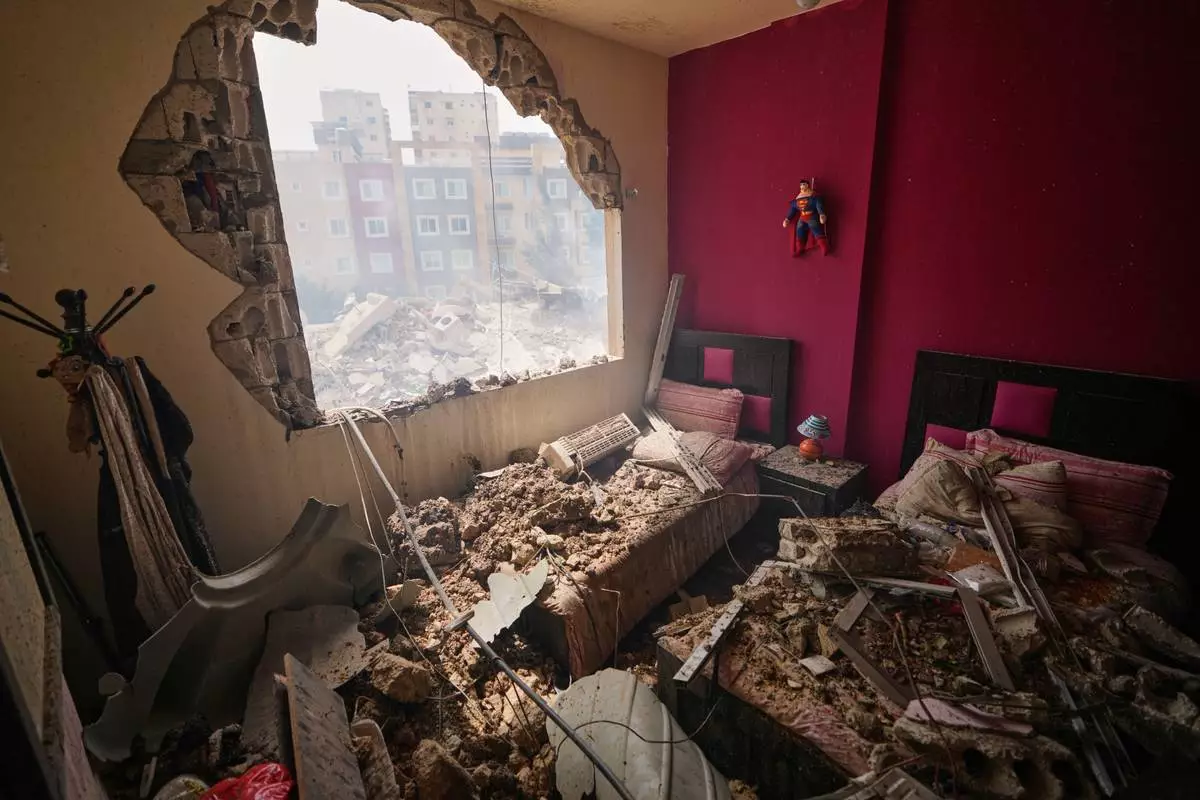
A bedroom is damaged in a building struck in an Israeli airstrike in the southern port city of Tyre, Lebanon, Saturday, April 4, 2026. (AP Photo/Mohammed Zaatari)
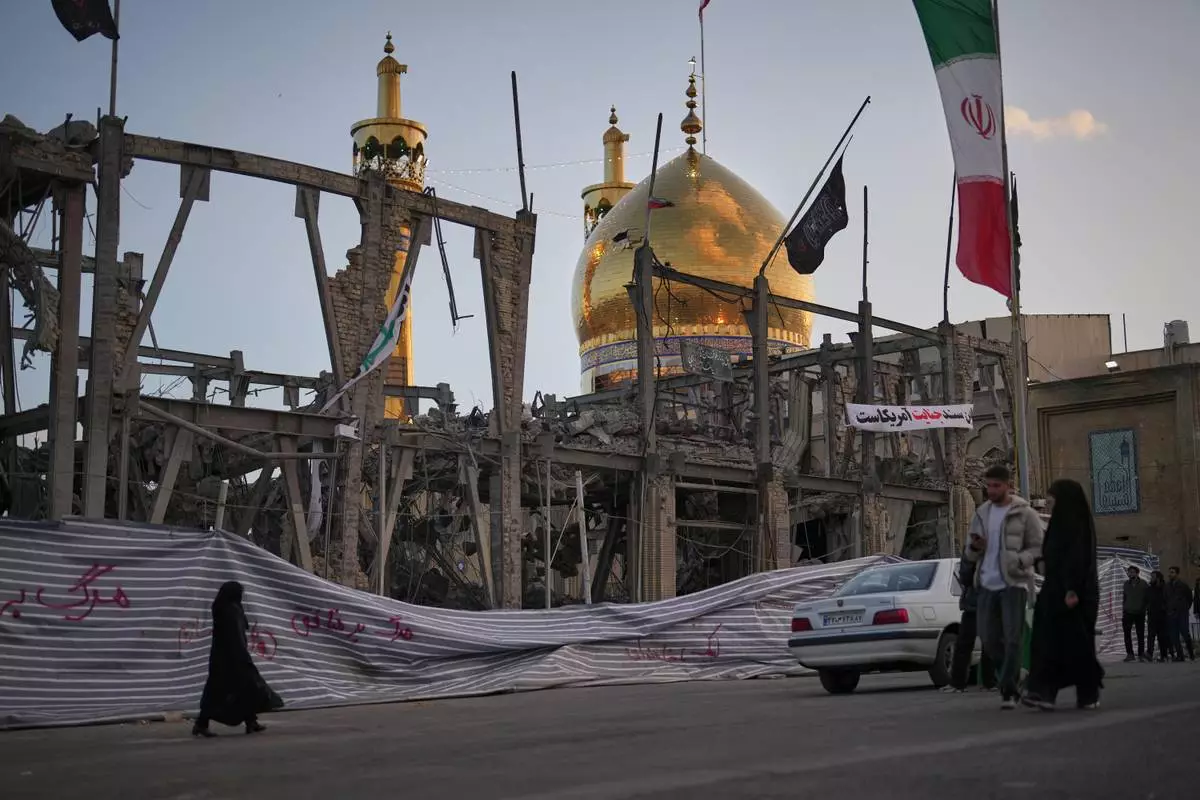
Pedetrians walk by a destroyed building within the Grand Hosseiniyeh, with the mosque visible in the background, which officials at the site say was hit by U.S.-Israeli airstrikes Tuesday, in Zanjan, Iran, Saturday, April 4, 2026. (AP Photo/Francisco Seco)

Police officers and their horses take cover in an underground parking garage as sirens warn of an incoming missile fired from Yemen in Tel Aviv, Israel, Saturday, April 4, 2026. (AP Photo/Maya Levin)
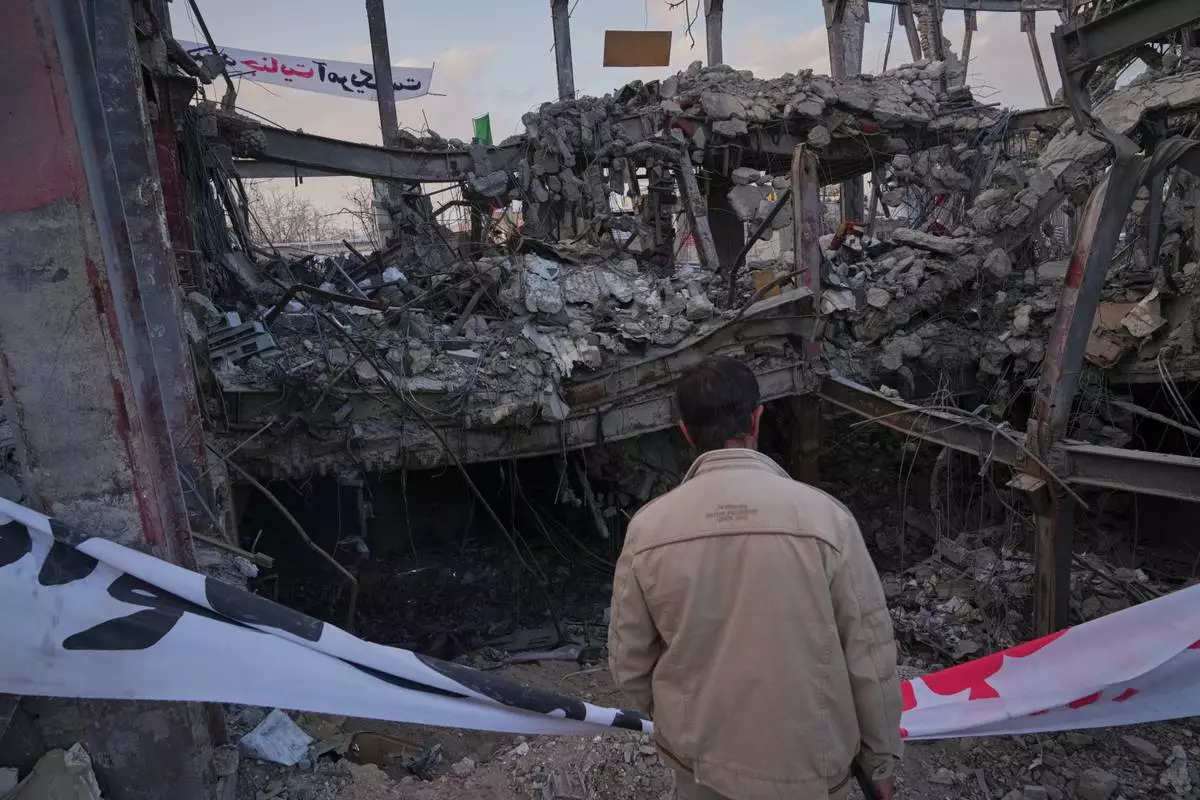
A man looks at a destroyed building within the Grand Hosseiniyeh complex that officials say was hit by U.S.-Israeli airstrikes Tuesday in Zanjan, Iran, Saturday, April 4, 2026. (AP Photo/Francisco Seco)