Skip to Content Facebook Feature Image

Trump and Netanyahu split on gas field attack, raise questions about whether they're in sync on war

News

Trump and Netanyahu split on gas field attack, raise questions about whether they're in sync on war
News

News

Trump and Netanyahu split on gas field attack, raise questions about whether they're in sync on war

2026-03-20 06:10 Last Updated At:06:20

WASHINGTON (AP) — President Donald Trump and Israeli Prime Minister Benjamin Netanyahu 's diverging language on Israel's decision to attack a critical Iranian gas field marks the most notable difference of opinion between the two leaders since the start of the 20-day war against Iran.

The attack by Israel on the South Pars gas field prompted Iran to retaliate against energy infrastructure in other Middle East countries. The Iranian strikes led to already elevated global energy prices further surging and spurred Gulf allies to call for Trump to rein in Netanyahu.

The aftermath of the strike left Trump and Netanyahu facing questions on whether they're entirely in sync in prosecuting the war that began as a closely coordinated joint attack on the longtime regional foe. The emergence of daylight — or at least the appearance of it — between the two leaders could shape the balance of the conflict and any eventual endgame.

Trump, during an Oval Office meeting with Japanese Prime Minister Sanae Takaichi, told reporters that he neither agreed with nor approved of Israel's attack on the world’s largest gas field, which is an energy lifeline for Iran.

“I told him, ’Don’t do that,'” Trump said of Netanyahu's decision to strike. “We get along great. It’s coordinated, but on occasion he’ll do something. And if I don’t like it — and so we're not doing that anymore.”

Netanyahu said that Israel “acted alone” and that he's agreed to Trump's request that Israel hold off on any further attack on Iran's giant gas field. The prime minister also sought to downplay any space between him and Trump.

“It’s been said that for 40 years I’ve been saying that Iran is a danger to Israel and a danger to the world. That is true,” Netanyahu said at a news conference in Jerusalem. “You know who else said that? President Trump.”

Netanyahu later added: “Look, I don’t think any two leaders have been as coordinated as President Trump and I. He's the leader. I’m his ally. America is the leader.”

Trump's first public reaction to Wednesday's strike on the Iranian gas field came several hours afterward in a fiery social media post where he also declared the U.S. “knew nothing” about the attack before it was carried out.

Two people familiar with the matter who were not authorized to comment publicly said the U.S. was made aware of Israel's plan ahead of the attack. The people were not authorized to comment publicly and spoke on the condition of anonymity. One of the people said Israel's targets are being coordinated with the U.S.

Top U.S. administration officials on Thursday made the case that Trump is simpatico with Netanyahu, but is ultimately guided in his Iran strategy by what he believes is in the U.S. national security interest.

The U.S. air campaign has focused on decimating Iran’s missile program, pummeling its already beleaguered nuclear program and destroying its navy. Israel, meanwhile, has carried out one high-level assassination after another as it looks to topple the Islamic authority that has led the country since 1979.

The prime minister has framed the moment as an opportunity to usher in a new era in the Middle East — one in which the government in Tehran is run by a more moderate leadership that is not hostile to Israel.

Netanyahu is buoyed by an Israeli public that is far more supportive of the war than the American public. That gives him the political leeway to support a sustained operation that could deliver a decisive blow to Iran’s clerical rule.

Though Trump has offered shifting, myriad reasons for the conflict, he's consistently articulated that ensuring that Iran “never has a nuclear weapon” is his primary objective.

“The objectives that have been laid out by the president are different from the objectives that have been laid out by the Israeli government,” Director of National Intelligence Tulsi Gabbard noted to House intelligence committee members on Thursday, when asked during a hearing about the White House position on the gas field strike.

Trump, in contrast with Netanyahu, has cooled on the prospects of toppling Iran's clerical authority and paving the way for a more moderate government.

It's been a significant evolution for the president from the start of the U.S. and Israeli bombardment, when he confidently told Iranians that they would soon have an opportunity to rid themselves from the clerical rule of the past 47 years.

But in a Fox News Radio interview last week, Trump was far more measured about the pathway ahead for opponents of the Islamic government and expressed concerns about the paramilitary Basij force, which has played a central role in crushing recent nationwide protests, maintaining its grip as a menacing force in Iran.

“So, I really think that’s a big hurdle to climb for people that don’t have weapons. I think it’s a very big hurdle,” Trump said.

Asked by host Brian Kilmeade if he agreed with Netanyahu's calls for Iranians to take back their country, Trump made clear he didn't think they were ready to rise up. “I would think that Bibi would understand that too," Trump added.

Over the course of Trump's five years in the White House, Netanyahu has arguably been his most steadfast ally among foreign leaders. The Israeli leader, for his part, never misses an opportunity to gush that the Jewish state has never had a more reliable friend in the White House.

But over the last three weeks, Trump and aides have acknowledged the two countries come at the war differently. And Trump has said those differences are natural.

“You know, they’re there, and we’re very far away,” Trump noted.

In the big picture, differences between Trump and Netanyahu are so far largely superficial, said Joel Rubin, a former State Department official in the Obama administration.

The Israeli prime minister has “been trying to figure out how to get American support for many decades" to get behind his push for decapitating strikes on Iran. Trump, Rubin added, is “the first president to say, ’Go for it!'"

Still, the longer the war goes on, the more pressure Trump could face politically and the more rifts could form, Rubin said.

“When the war ends it’s likely gonna be Trump’s call and I do think that we’re probably gonna have a dynamic where, in the future, they’ll have to figure out how to be in sync in terms of identifying and defining when it’s time to end the military operation,” Rubin said of Trump and Netanyahu. “And Israel does not have the same focus on global oil markets as the U.S., and the repercussions.”

AP writer Sam Mednick in Jerusalem contributed to this report.
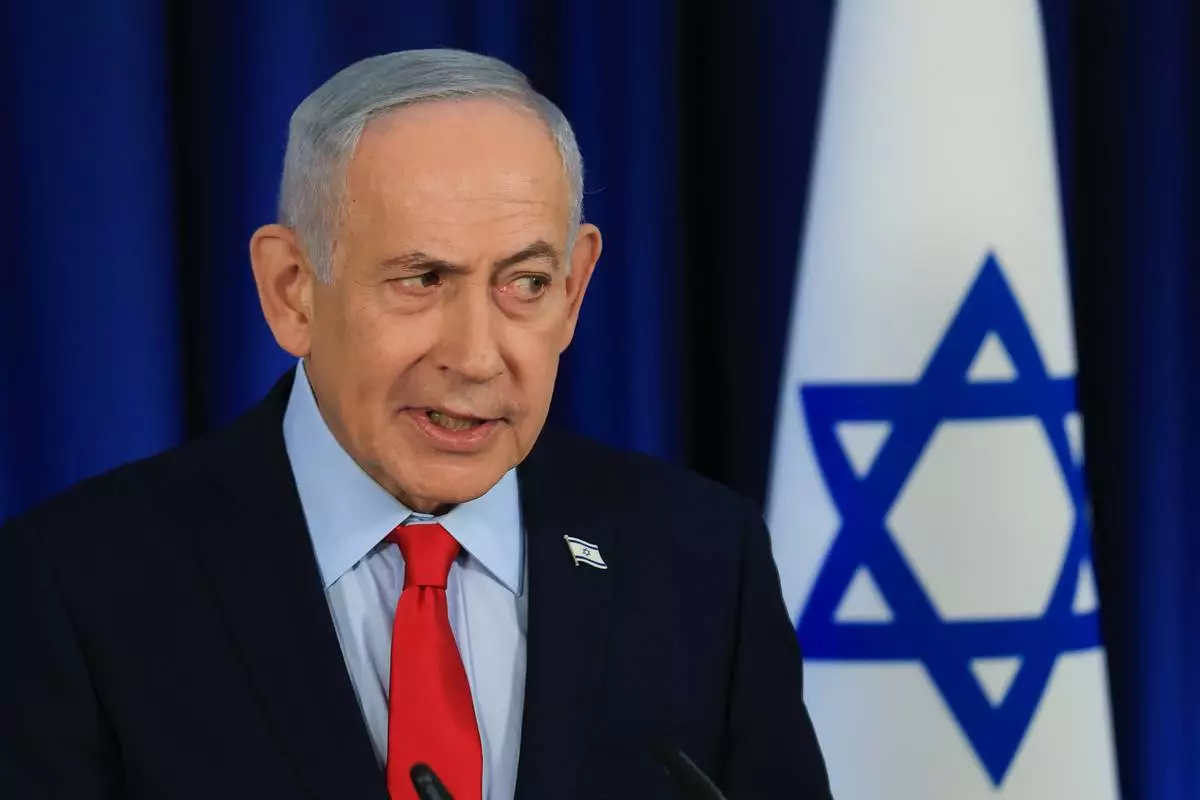
Israeli Prime Minister Benjamin Netanyahu speaks during a press conference in Jerusalem, Thursday, March 19, 2026. (Ronen Zvulun, Pool Photo via AP)
Israeli Prime Minister Benjamin Netanyahu speaks during a press conference in Jerusalem, Thursday, March 19, 2026. (Ronen Zvulun, Pool Photo via AP)

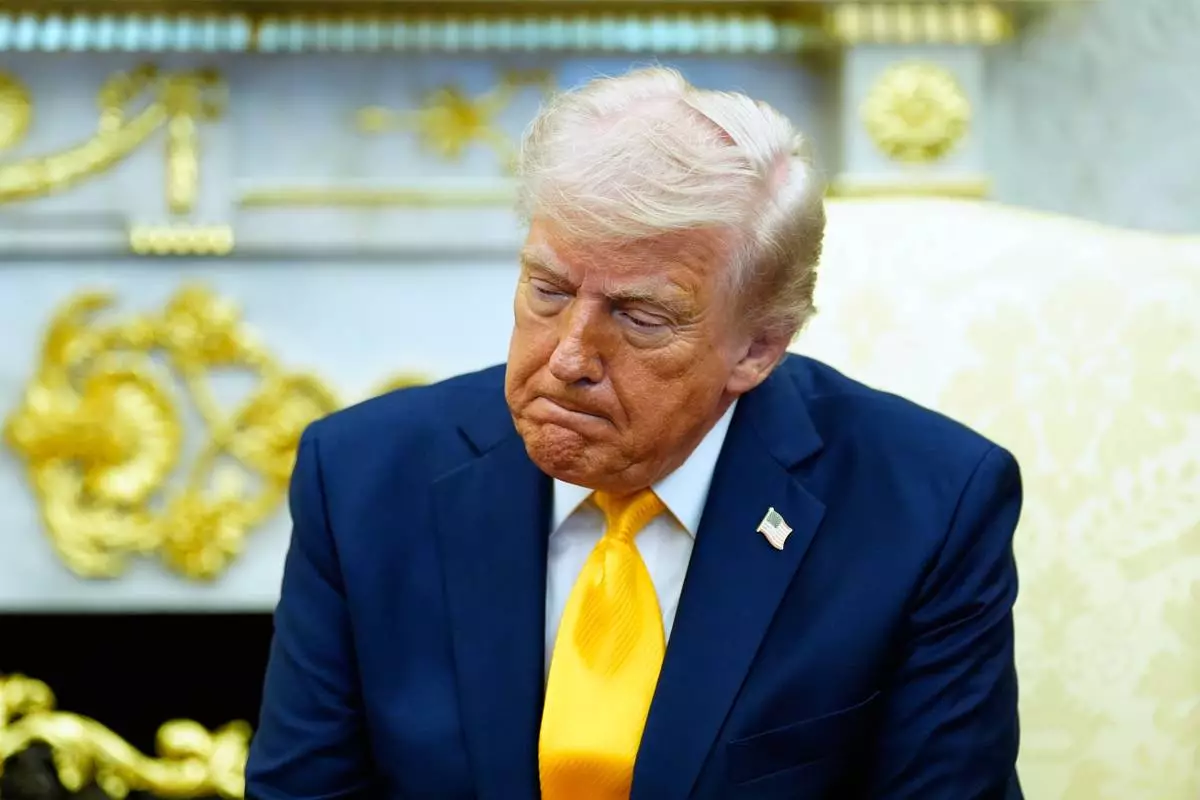
President Donald Trump listens as he meets with Japan's Prime Minister Sanae Takaichi in the Oval Office of the White House, Thursday, March 19, 2026, in Washington. (AP Photo/Alex Brandon)
President Donald Trump listens as he meets with Japan's Prime Minister Sanae Takaichi in the Oval Office of the White House, Thursday, March 19, 2026, in Washington. (AP Photo/Alex Brandon)
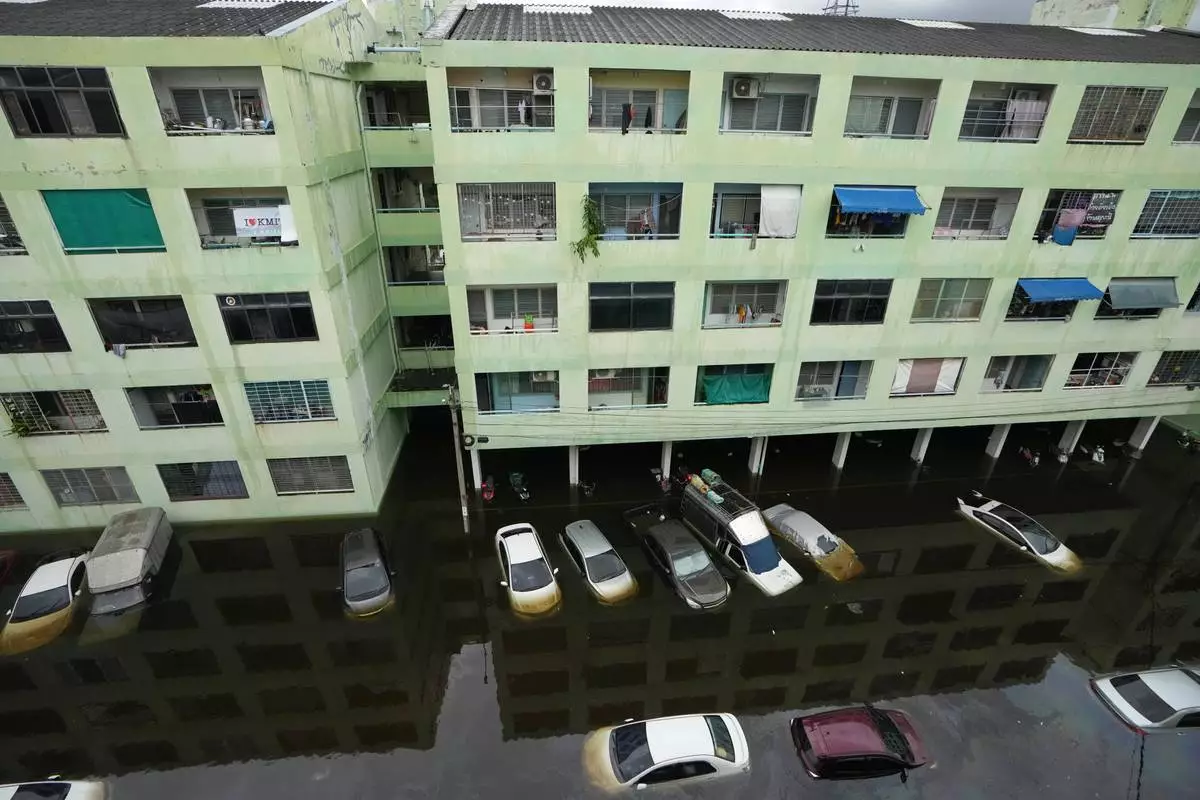
BANGKOK (AP) — Floodwaters in Thailand ’s capital were slowly receding on Monday after nearly continuous rainfall over the weekend, although some neighborhoods and major roads remained inundated.

Rain continued intermittently, but Bangkok city officials said conditions had improved enough to accelerate drainage efforts. Water levels in four main canals had risen too high over the weekend to take in runoff from surrounding communities.

More rain was forecast across much of Thailand, although Bangkok was expected to receive less. Cambodia and Myanmar were also experiencing severe weather.

The weekend flooding affected 329,000 households, or about 700,000 people, the Bangkok Flood Control Center reported, according to Deputy Gov. Tavida Kamolvej. Thai media reported two flood-related deaths in the city and at least 10 nationwide.

Gov. Chadchart Sittipunt declared a flood emergency Saturday across all 50 city districts, although some were relatively unscathed. He said authorities were prioritizing assistance for vulnerable residents, including older people and those with disabilities, by delivering supplies or evacuating them. City officials said nearly 7,000 people were staying in shelters.

Neighborhoods in eastern Bangkok were hit hardest. Prime Minister Anutin Charnvirakul donned white rain boots Sunday night to inspect a heavily flooded housing estate in Bang Kapi district and help distribute relief supplies.

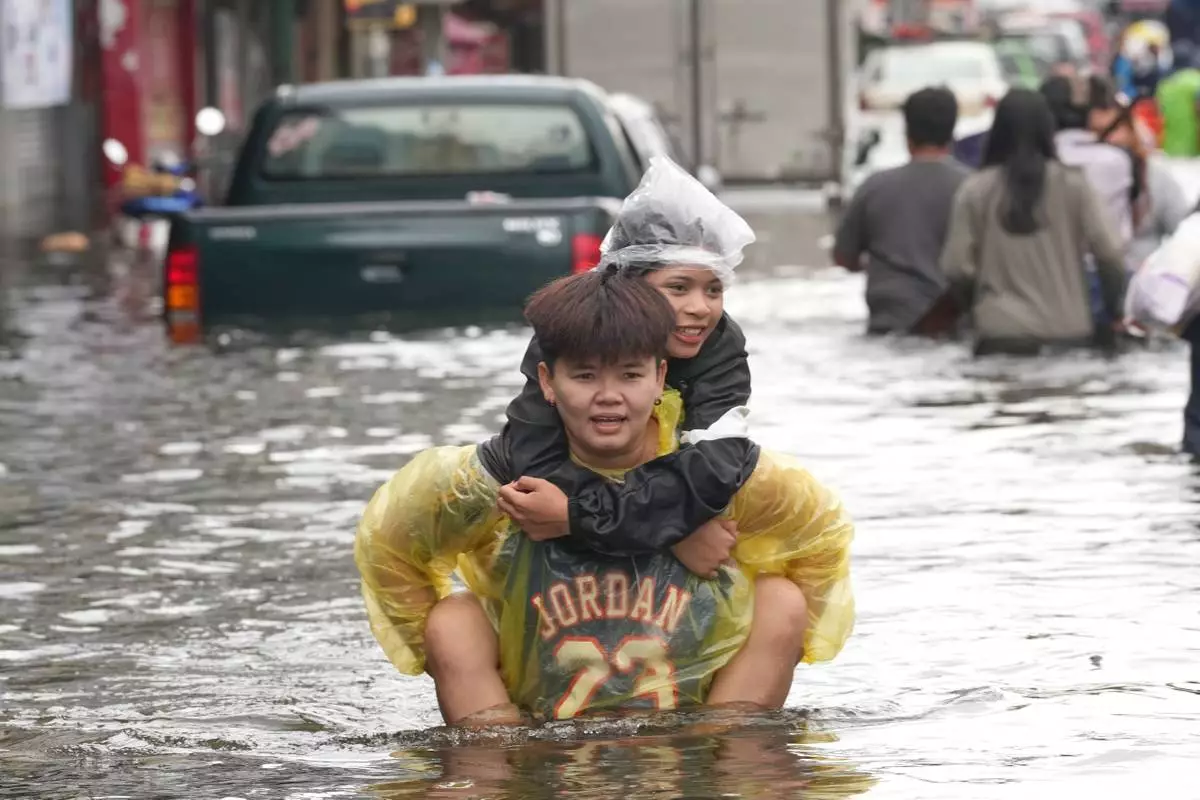
Water was about knee-deep Monday near a train station and shopping mall in Bang Kapi. Despite intermittent downpours, shoppers waded through the water carrying bags, backpacks and boxes of groceries. Some traveled to and from the station in a small boat provided by the mall.

For Naowarat Supanikorn, a 55-year-old maid who shares a single-story house with three dogs and six cats, the flooding was more than an inconvenience.

She said she realized at about 1:30 a.m. on Saturday that water was seeping into her home.

“I had to take my dogs and cats out,” she said. “I had to leave them with my neighbor. I have taken them back today because they said the sun would come out, but it looks like the rain will come back.”

She said the flooding in her neighborhood reached above her hips at its highest, and had since dropped to about knee-level. She said the bigger problem is that she has lost her job working at a condominium.

“My workplace also said if I can’t come to work, they’re happy to take my resignation. So I thought, that’s fine, I’ll quit.”

To try to generate some income, she bought supplies to make some food she can sell streetside, but business is slow in the flooded conditions.

“It’s stressful. If the bills come, I’d be cooked, because I don’t have work now. If I have to pay for water or electricity now it would be bad,” she said. “I’m not worried about me but I’m worried about my pets. I’ve lived with them my whole life. They’re my priority. It’s ok if I don’t have work and starve myself, but I’d like help for my pets.”

The flood also has had knock-on effects, including panic buying of food, disrupted supply chains for food and other items, and staffing problems at various enterprises whose employees were unable to get to their jobs.

The Thai Air Force announced it was sending 69 ground personnel to Bangkok's Suvarnabhumi Airport to help clear a backlog of passenger luggage caused largely by airport workers being unable to get to their place of work.

“This deployment is a vital mission to care for, assist, and facilitate travelers — including tourists from around the world — ensuring smooth operations and preventing delays in ground services, thereby upholding the nation’s positive image,” the air force said.

The airport previously attributed the baggage pileup to “insufficient staffing to support ground handling operations” and problems with some baggage carts.

The disruptions delayed some departures and forced arriving passengers to wait longer than usual for their luggage, with baggage from several flights still undelivered, the airport said.

The government declared special holidays on Monday and Tuesday for state offices. It advised state enterprises, financial institutions, private businesses and hospitals to determine whether they needed to remain open.

Thailand’s meteorological agency forecast heavy to very heavy rain across several parts of the country. It warned residents, particularly in northern, central and eastern regions, to prepare for possible flash floods, river overflows, forest runoff and landslides, especially near waterways, foothills and low-lying areas.

In neighboring Myanmar, at least 10 people were killed and dozens were missing after heavy rain triggered widespread flooding and landslides in the southern coastal region of Tanintharyi, local media reported.

Dawei township recorded 346 millimeters (13.62 inches) of rain Monday, breaking an 80-year-old record. Myanmar’s Meteorology Department warned that conditions could worsen as the storm front moved closer to Yangon.

Flash floods struck at least 10 provinces in Cambodia, affecting 44,889 families and forcing nearly 4,000 people to evacuate, according to disaster management officials.

The agency overseeing the archaeological park in Siem Reap province, home to the centuries-old Angkor temple complex, said it was operating water gates and diversion systems to reduce the risk of flooding.

——-

Associated Press writer Sopheng Cheang in Phnom Penh, Cambodia contributed to this report.

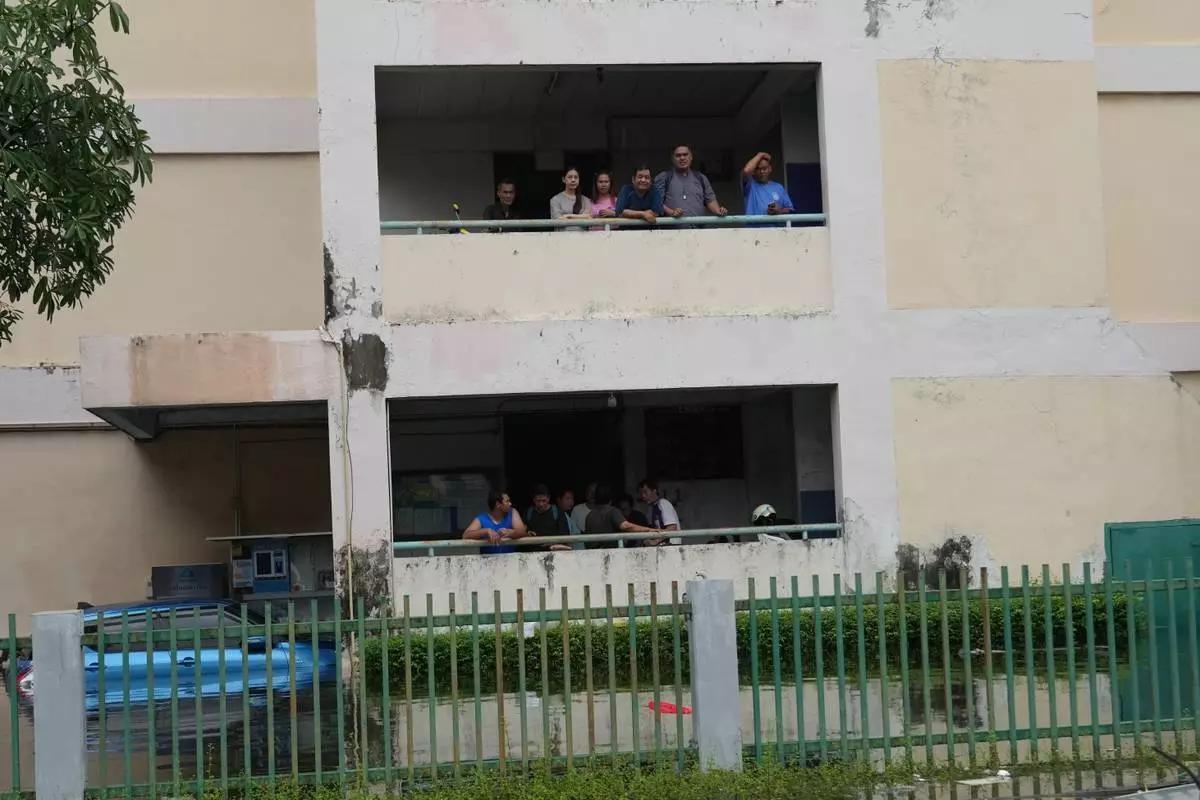
Residents of a building look out at the flooded street after heavy rain in Bangkok, Thailand, Monday, Sept. 28, 2026. (AP Photo/Sakchai Lalit)

Residents of a building look out at the flooded street after heavy rain in Bangkok, Thailand, Monday, Sept. 28, 2026. (AP Photo/Sakchai Lalit)

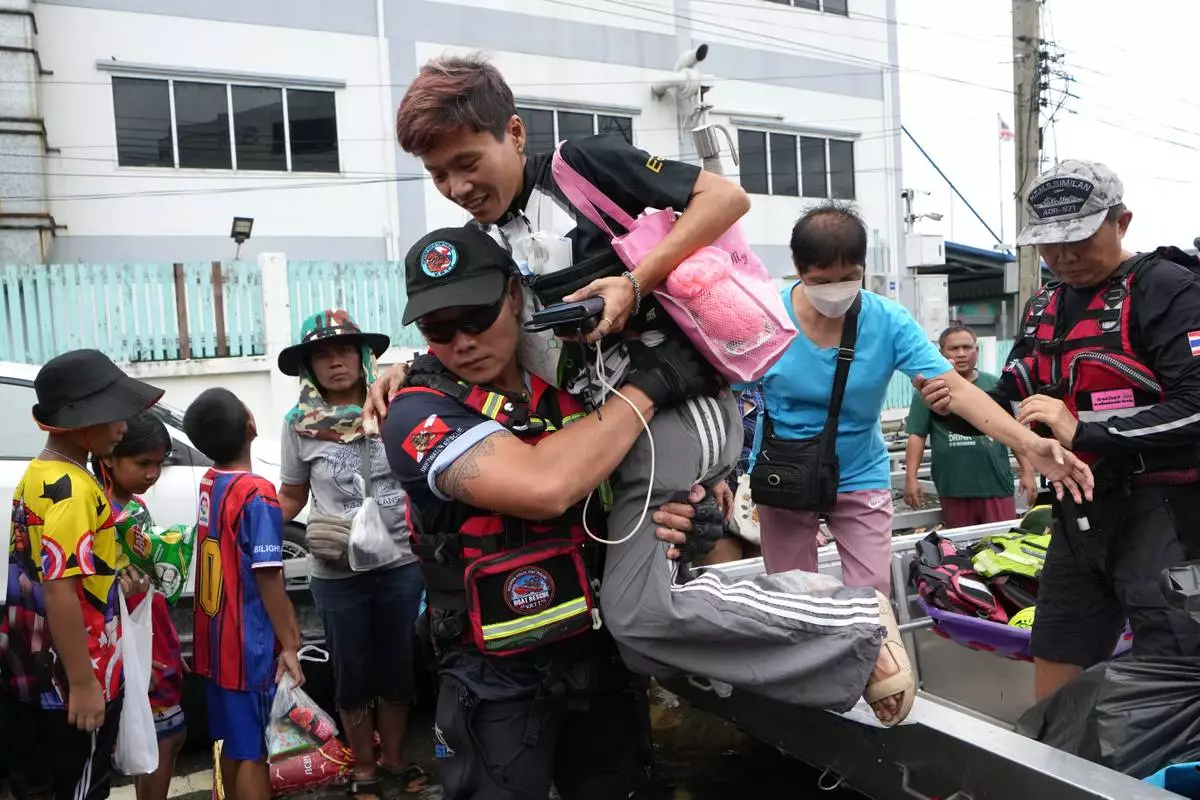
Rescuers evacuate a patient from a flooded area to a safer place in Bangkok, Thailand, Monday, Sept. 28, 2026. (AP Photo/Sakchai Lalit)

Rescuers evacuate a patient from a flooded area to a safer place in Bangkok, Thailand, Monday, Sept. 28, 2026. (AP Photo/Sakchai Lalit)

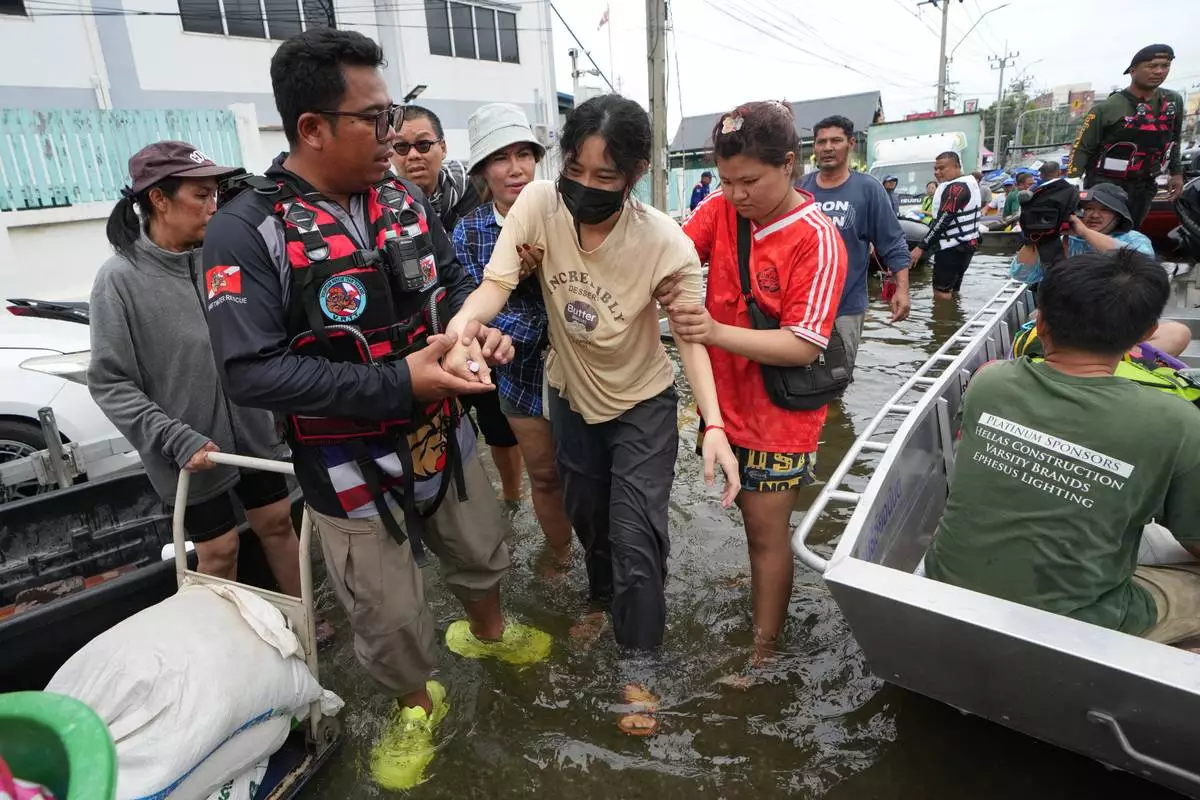
Rescuers evacuate people from a flooded area to a safer place in Bangkok, Thailand, Monday, Sept. 28, 2026. (AP Photo/Sakchai Lalit)

Rescuers evacuate people from a flooded area to a safer place in Bangkok, Thailand, Monday, Sept. 28, 2026. (AP Photo/Sakchai Lalit)

The streets are flooded after a heavy rain, in Bangkok, Thailand, Monday, Sept. 28, 2026. (AP Photo/Sakchai Lalit)

The streets are flooded after a heavy rain, in Bangkok, Thailand, Monday, Sept. 28, 2026. (AP Photo/Sakchai Lalit)

People wade through a flooded street after a heavy rain in Bangkok, Thailand, Monday, Sept. 28, 2026. (AP Photo/Sakchai Lalit)

People wade through a flooded street after a heavy rain in Bangkok, Thailand, Monday, Sept. 28, 2026. (AP Photo/Sakchai Lalit)

Recommended Articles