NEW YORK (AP) — WNBA players are having information sessions over the next day or two to learn more about the new collective bargaining agreement that was agreed to in principle early Wednesday morning.
Through zoom calls and one-on-one conversations, the players are hearing about some of the details of the transformational new deal that will last for the next seven years with an opt-out after six, according to a person familiar with the negotiations. The person spoke to The Associated Press on Thursday on condition of anonymity because of the sensitive nature of the discussions.
Lawyers on both sides are finalizing the term sheet, which should be done in the next day or so. It will then get put to a vote of the players with a majority needed to ratify the CBA. The league’s Board of Governors will then need to approve the deal before it becomes official.
The deal came after the two sides spent the past eight days in intense in-person negotiations that lasted for more than 100 hours. They came to the agreement about 2:20 a.m. Wednesday after spending more than 10 hours of discussions on Tuesday.
“This is historical for women’s sports. I told Cathy it’s not just for the players that are entering the league or the players that aren’t already here,” union president Nneka Ogwumike said of her conversations with WNBA Commissioner Cathy Engelbert. “We’re just really grateful to be able to come to a deal. We’re proud of ourselves.”
Here are a few key points from the CBA.
The salary cap for the 2026 season is expected to be $7 million with average salaries more than $585,000, according to the person. Top players can make over $1 million for the first time in the league’s history with a supermax salary close to $1.4 million. The cap could grow up to $11 million in 2031 if revenue projections go well. The salary cap can change a maximum of 10% in either direction each year with the exception of after the first season when it could up or down 13%.
The minimum salary for this year would be around $300,000 as the league enters its 30th season. This would increase salaries fourfold from last season. The average salary, which was about $125,000 last year, should be around $584,000 before revenue sharing in 2026.
“For the first time, player salaries are tied to a truly meaningful share of league revenue, driving exponential growth in the salary cap, increasing average compensation beyond half a million dollars and raising the standard across facilities, staffing and support,” Ogwumike said after the verbal agreement Wednesday morning.
The average revenue share over the length of the deal will be around 20%, according to the person. It's still unclear whether its the gross revenue the players asked for or the net revenue the league pushed for.
Teams will continue to pay for housing for the first three years of the deal according to the person. In 2029 and 2030, teams will pay for housing for players earning $500,000 or less. After that, teams will only pay for the housing of developmental players.
Rookie contracts will remain for four years with a bump in pay for all players still on rookie contracts. Players who earn All-WNBA honors can get the maximum salary in the fourth year of their contract if they stay with their team. So far Caitlin Clark would be eligible for that in 2027, Paige Bueckers in 2028 and Aliyah Boston this season.
AP WNBA: https://apnews.com/hub/wnba-basketball
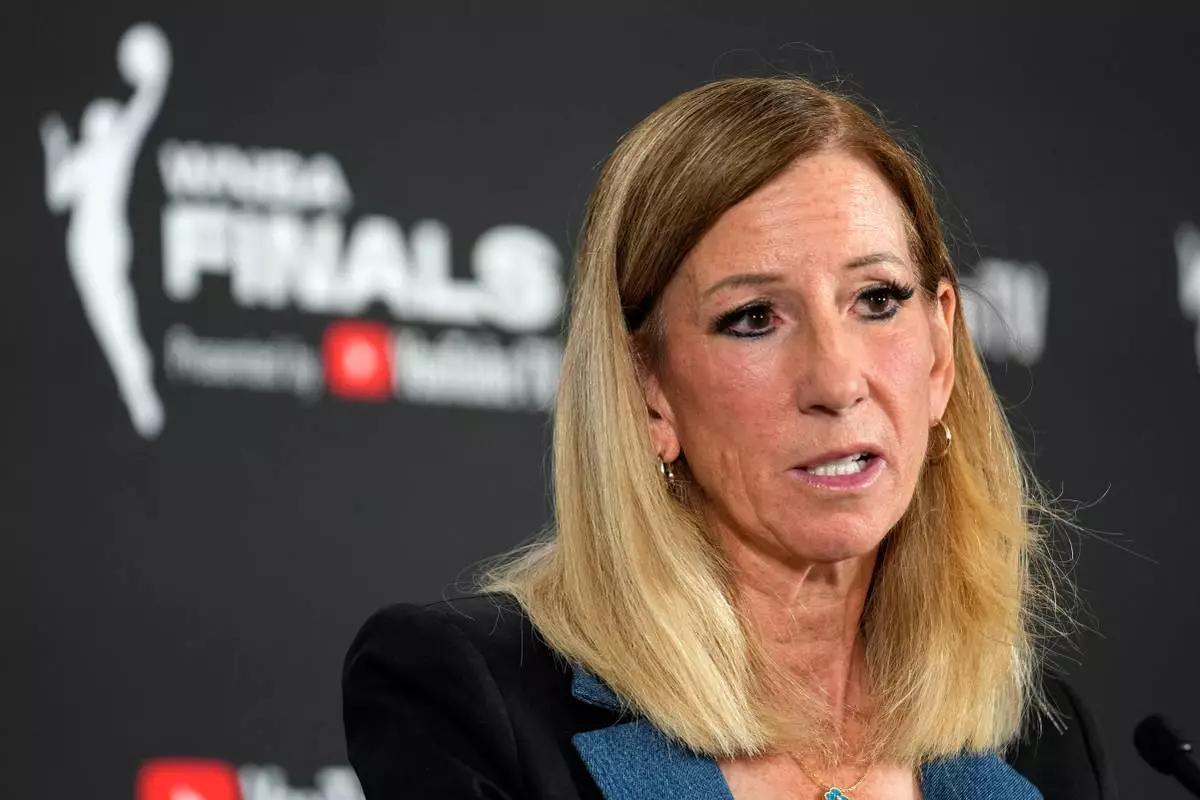
FILE -WNBA commissioner Cathy Engelbert speaks prior to Game 1 of a WNBA basketball final playoff series between the Las Vegas Aces and the Phoenix Mercury, Oct. 3, 2025, in Las Vegas. (AP Photo/John Locher), File)
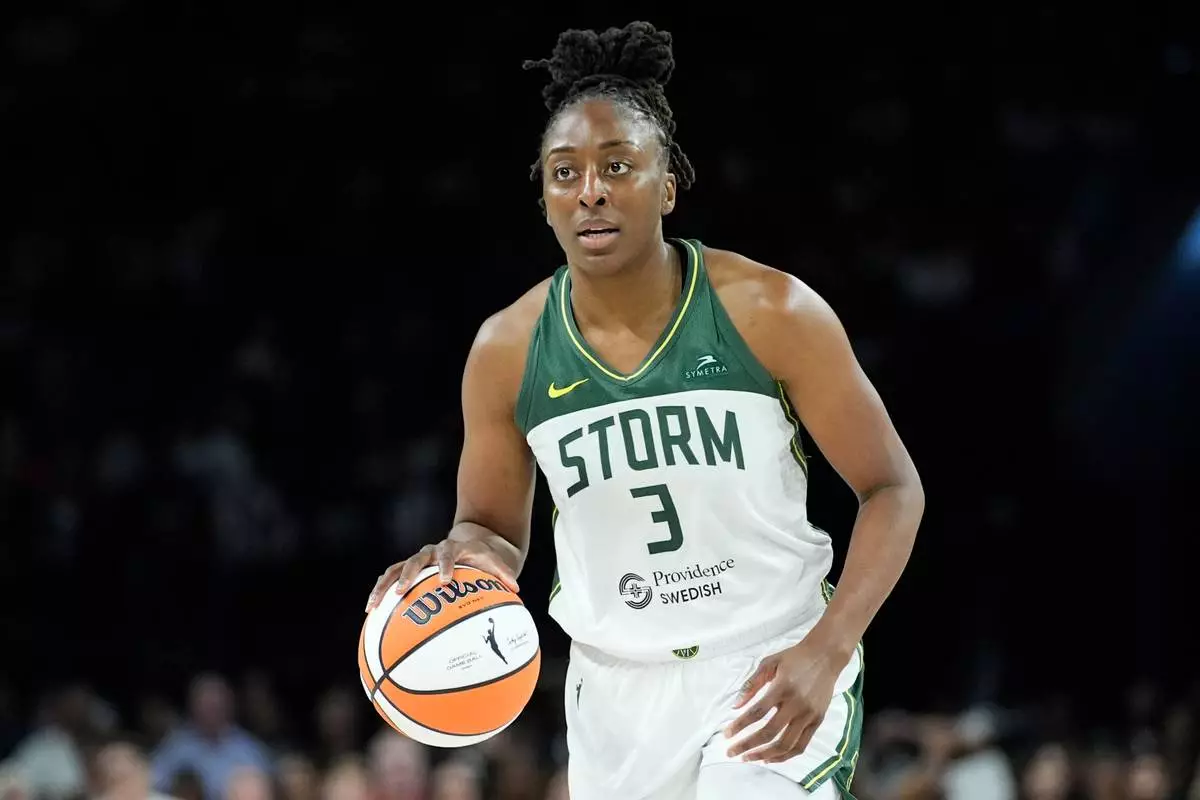
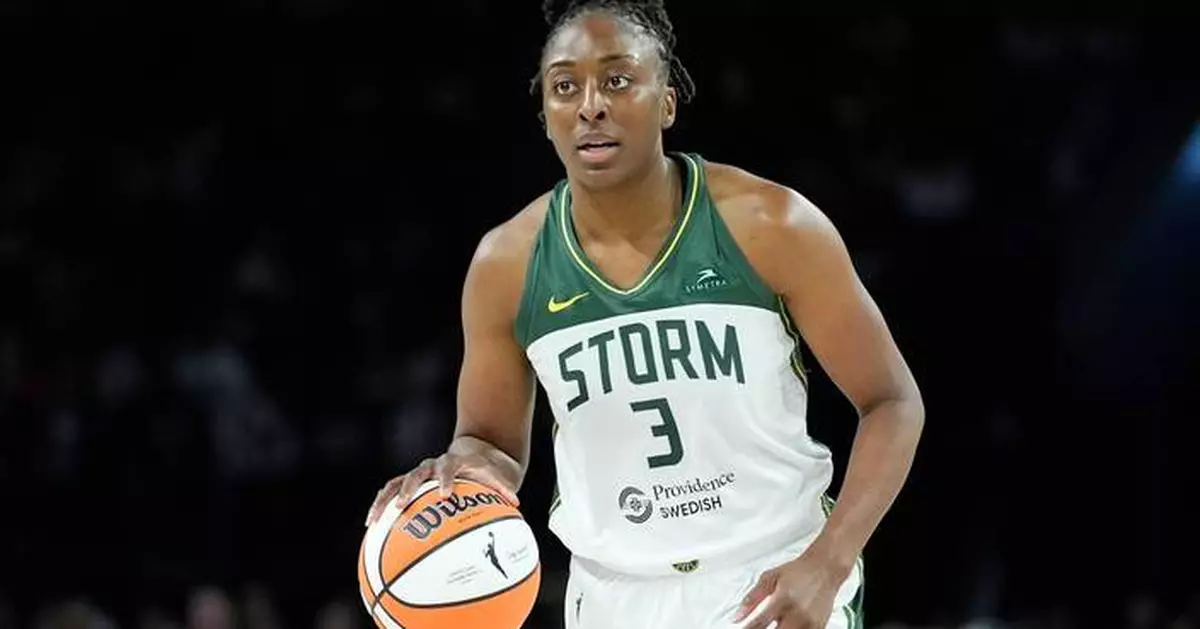
FILE - Seattle Storm forward Nneka Ogwumike (3) plays against the Las Vegas Aces in Game 2 of a WNBA basketball first-round playoff game Sept. 24, 2024, in Las Vegas. (AP Photo/John Locher, File)
INDIANAPOLIS (AP) — Yaxel Lendeborg stood at midcourt with a Michigan staffer, going through the paces of a halftime warmup at the giant Final Four midcourt logo. He jogged lightly forward, backward, then shuffled side to side before hopping around.
He spent much of that time grimacing or biting his lip. And he didn't look much more comfortable when he did return to start the second half Saturday night against Arizona.
The good news is Michigan didn't need much from the first-team All-American as it cruised to an unexpectedly lopsided 91-73 win in a matchup of the NCAA Tournament's last two No. 1 seeds, not with the Wolverines' depth simply overwhelming the Wildcats. The question now is how Lendeborg's injuries might affect him for Monday night's NCAA title game against UConn.
Lendeborg said he rolled his left ankle and sprained his MCL. He also was emphatic when asked if there was any chance he would miss the Wolverines' first appearance in the championship game since 2018.
“Absolutely not,” he said at his locker, surrounded by multiple rows of reporters. “Unless I wake up and I get up and fall off my feet, I'm going to be in that game.”
The 6-foot-9, 240-pound Lendeborg entered the game averaging 15.2 points, 7.0 rebounds and 3.3 assists, offering strength and size with versatility to chase on the perimeter. He finished with 11 points on 3-of-4 shooting in 14 minutes, including a pair of 3-pointers in his hobbled post-halftime minutes.
For much of the second half, he rode an exercise bike behind the Michigan bench, clapping for baskets or screaming with glee as the Wolverines made big play after big play.
He also spent time late in the game sitting on the court near the end of the bench and almost alongside the photographers on the baseline before having an ice pack wrapped around his left knee. He wore that for the final minutes and still had it on as he carefully made his way through the postgame handshake line with the Wildcats.
But he stayed engaged throughout, climbing to the raised court to greet teammates with high-fives as coach Dusty May emptied the bench in the final minute.
“Our team has extreme depth,” guard Roddy Gayle Jr., said. “We have the ability to feel happy when other people are being successful. Then, even when you're having a bad night, you're able to lean on your teammates for extra help.”
Lendeborg had to count on his entire team to carry the load without him.
Lendeborg had a rough start with two quick fouls and then exited after he stepped on the foot of Arizona big man Motiejus Krivas and twisted his left ankle, the same one he had tweaked during the loss to Purdue in the Big Ten Tournament championship game.
Fear hit hard in that moment.
“I tried my best to get up as quickly as possible to try to not dwell on that feeling. I tried to walk it off,” Lendeborg said, adding with a chuckle: “It didn't get walked off.”
Lendeborg left the bench for trainers to retape his ankle and treat it with ice, returned briefly, then went back to the locker room again.
“I was going to give it a go but there was like five minutes left (before halftime) so they advised it was best to get treatment right away,” he said. “I sat there, got treatment, got ice. I did the best I could to analyze the situation. I was watching the game and trying to make it feel better.”
Lendeborg wore a brace on his left knee when he returned for the second half.
Lendeborg checked out at the 13:02 mark and headed to the bike. He returned again at the 7:10 mark after Arizona had cut a 30-point deficit to 20, saying he wanted to be a secondary ballhandler.
Why did May put him back in with the big lead?
“Well, apparently you missed the UConn-Duke game,” May said, referencing the Huskies' rally from 19 points down to stun the tournament's No. 1 overall seed in the Elite Eight.
Lendeborg said he told his teammates he would largely work around the arc and avoid crashing into the interior to raise the risk of aggravating the injury. He also said he wanted to get a feel for how he might be able to function with the Wolverines headed for one more game.
Michigan had more than enough to put away Arizona, notably with 7-foot-3 center Aday Mara going for 26 points to lead five players in double figures. Michigan shot 47.8% and made 12 of 27 3-pointers. Now, Lendeborg will race to be ready for the shot at leading Michigan to its first national title since 1989, as well as the first by a Big Ten school since 2000.
“For me, it's a lot of treatment, a lot of time with the trainer, a lot of time away from my teammates which I'm not going to like,” Lendeborg said.
Whatever it takes.
“I'm playing,” he said. “I have to.”
AP March Madness bracket: https://apnews.com/hub/ncaa-mens-bracket and coverage: https://apnews.com/hub/march-madness
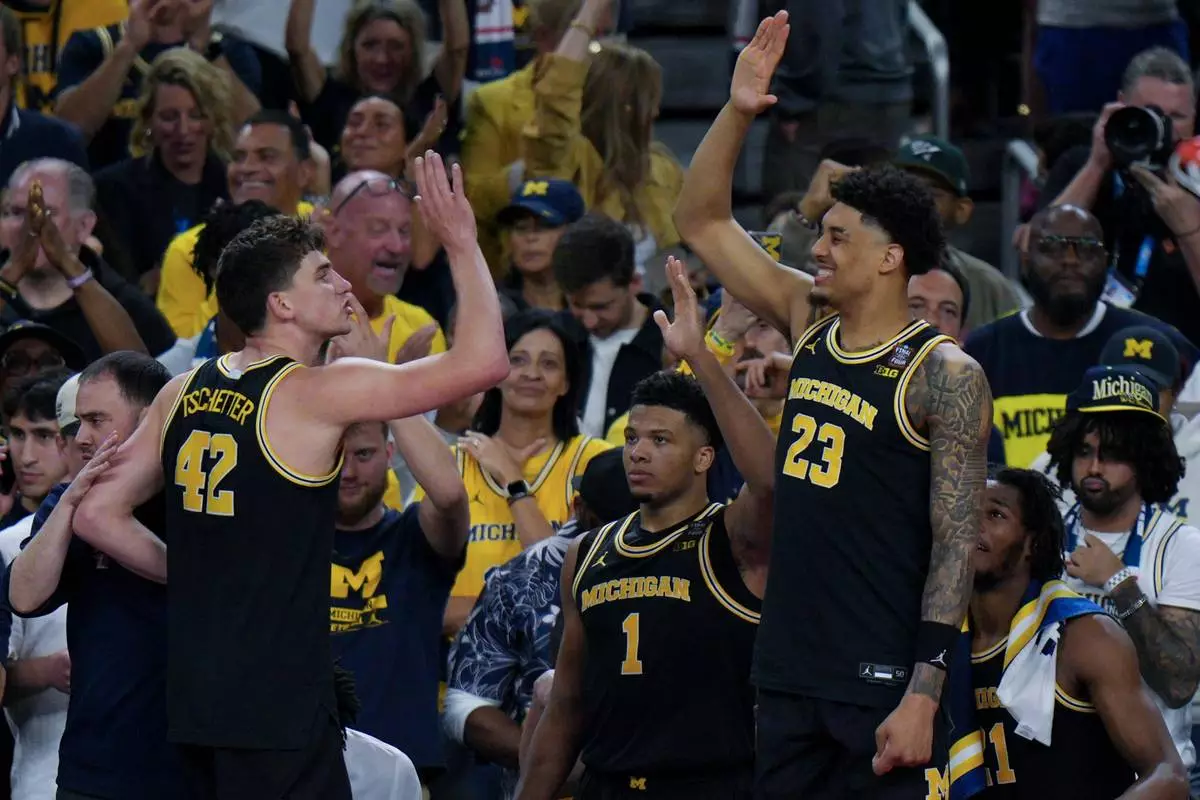
Michigan forward Yaxel Lendeborg (23) high fives forward Will Tschetter (42) during the second half of an NCAA college basketball tournament semifinal game against Arizona at the Final Four, Saturday, April 4, 2026, in Indianapolis. (AP Photo/AJ Mast)
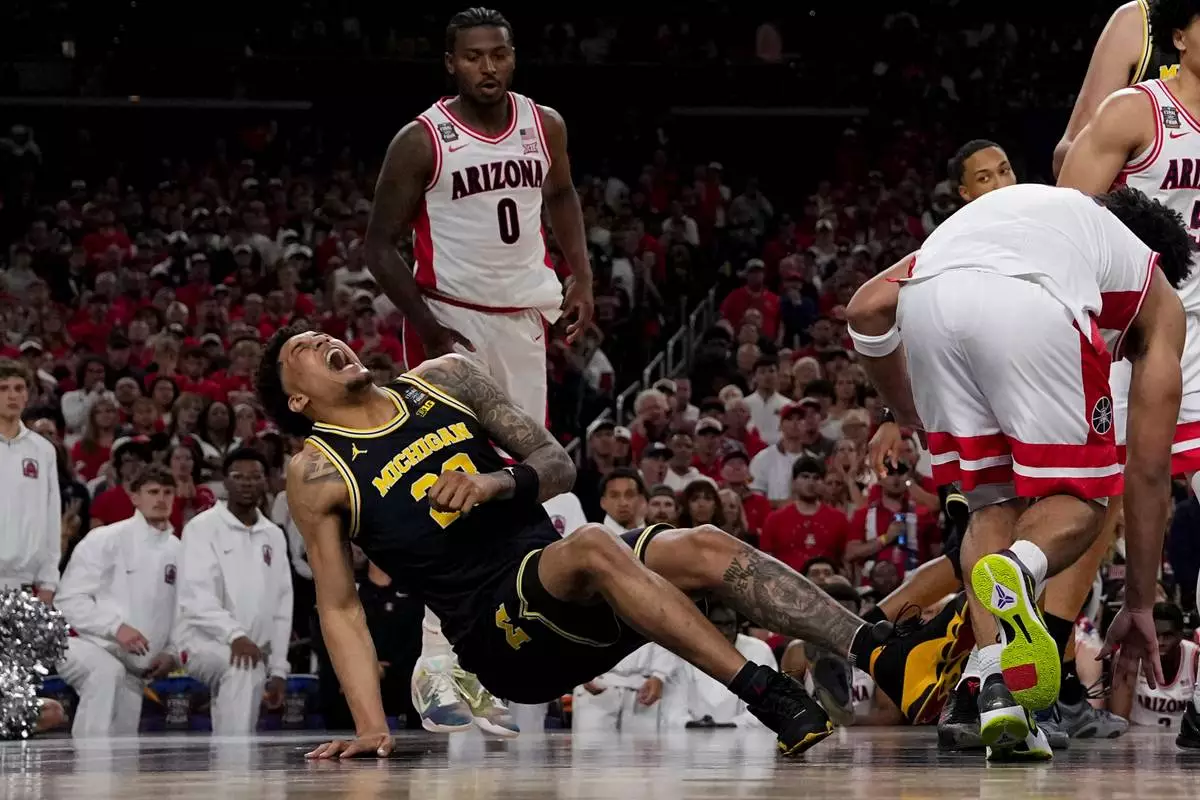
Michigan forward Yaxel Lendeborg (23) falls after play against Arizona during the first half of an NCAA college basketball tournament semifinal game at the Final Four, Saturday, April 4, 2026, in Indianapolis. (AP Photo/Abbie Parr)
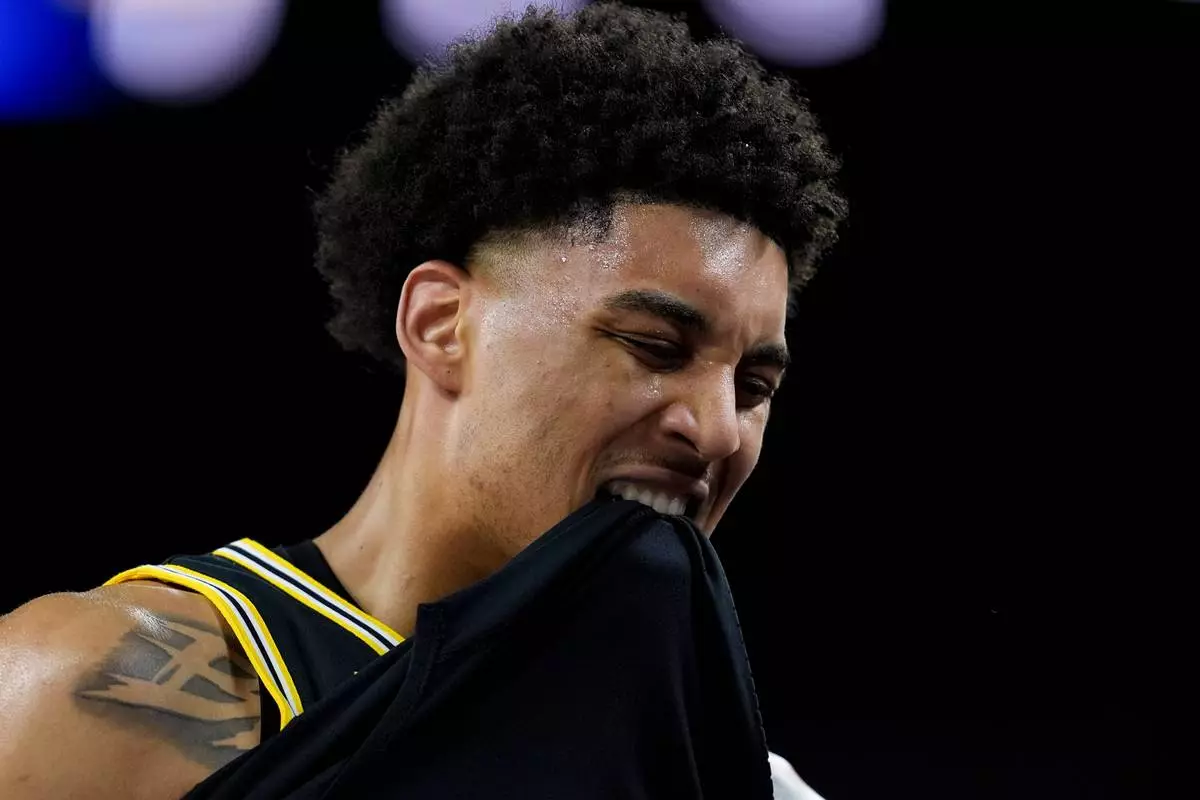
Michigan forward Yaxel Lendeborg reacts after an injury on the court during the first half of an NCAA college basketball tournament semifinal game against Arizona at the Final Four, Saturday, April 4, 2026, in Indianapolis. (AP Photo/Abbie Parr)
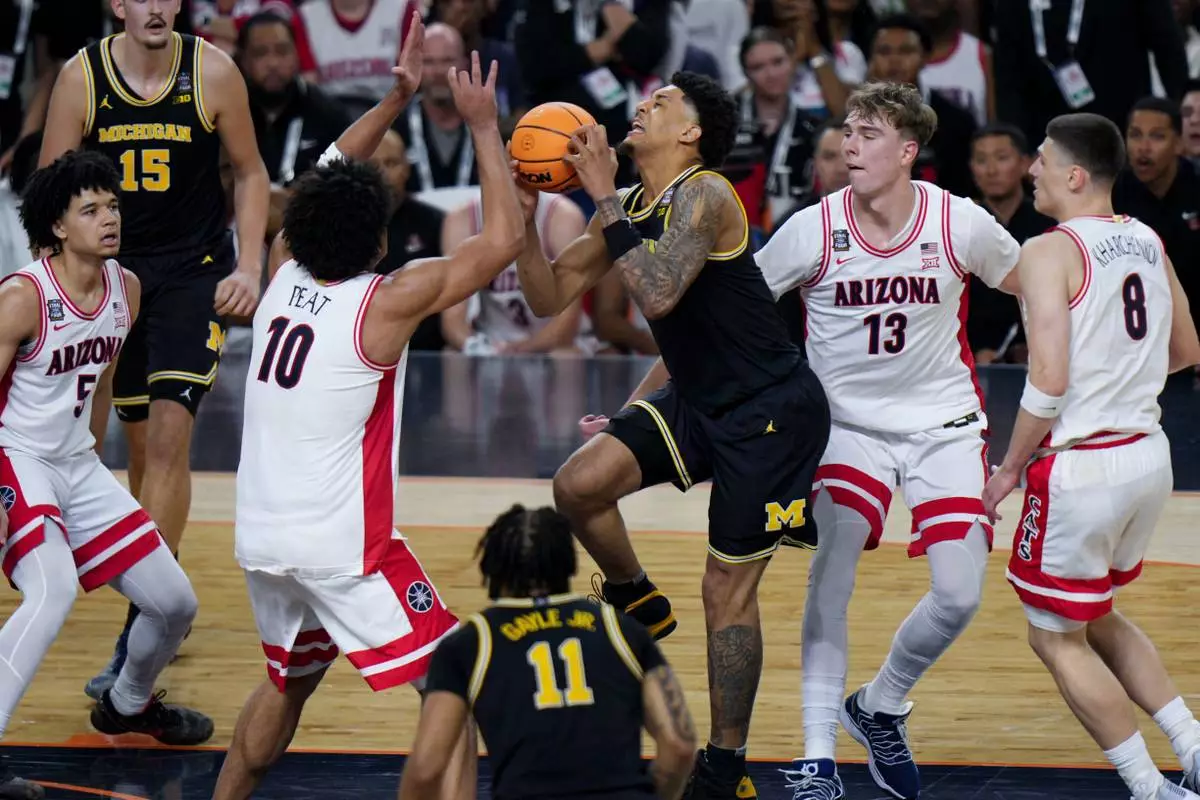
Michigan forward Yaxel Lendeborg, center, is injured on a play as Arizona center Motiejus Krivas (13) and forward Koa Peat (10) defend during the first half of an NCAA college basketball tournament semifinal game against Arizona at the Final Four, Saturday, April 4, 2026, in Indianapolis. (AP Photo/AJ Mast)
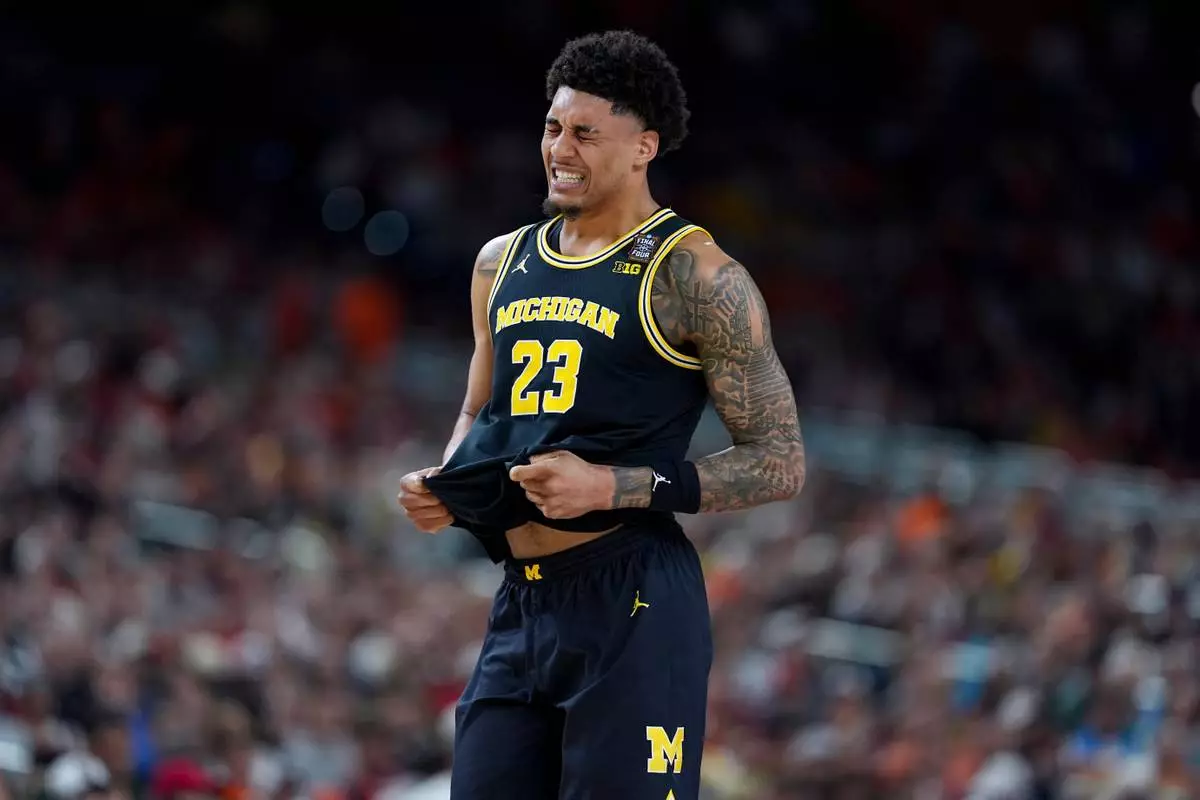
Michigan forward Yaxel Lendeborg reacts after an injury on the court during the first half of an NCAA college basketball tournament semifinal game against Arizona at the Final Four, Saturday, April 4, 2026, in Indianapolis. (AP Photo/Abbie Parr)
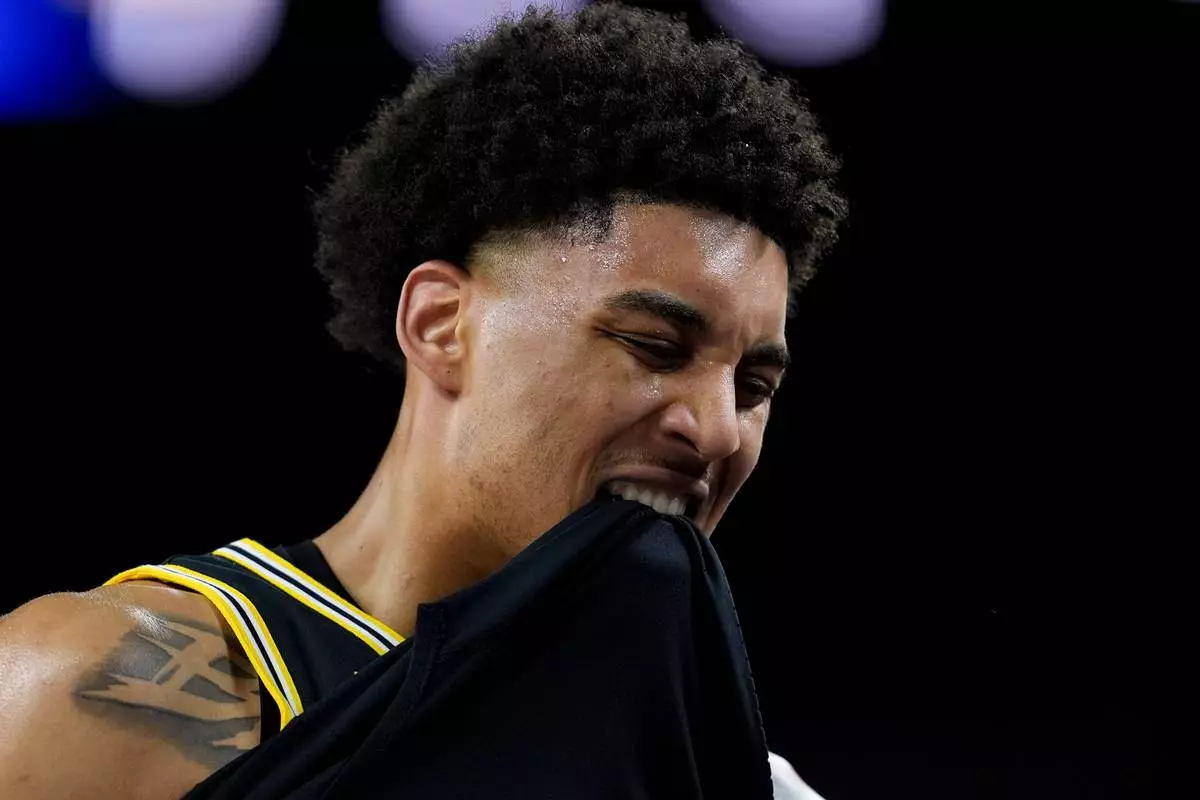
Michigan forward Yaxel Lendeborg reacts after an injury on the court during the first half of an NCAA college basketball tournament semifinal game against Arizona at the Final Four, Saturday, April 4, 2026, in Indianapolis. (AP Photo/Abbie Parr)