The China Meteorological Administration on Saturday unveiled the first set of observation images captured by the Fengyun-4C satellite, a milestone marking China's establishment of independent and controllable real-time monitoring capabilities covering the Sun to Earth.
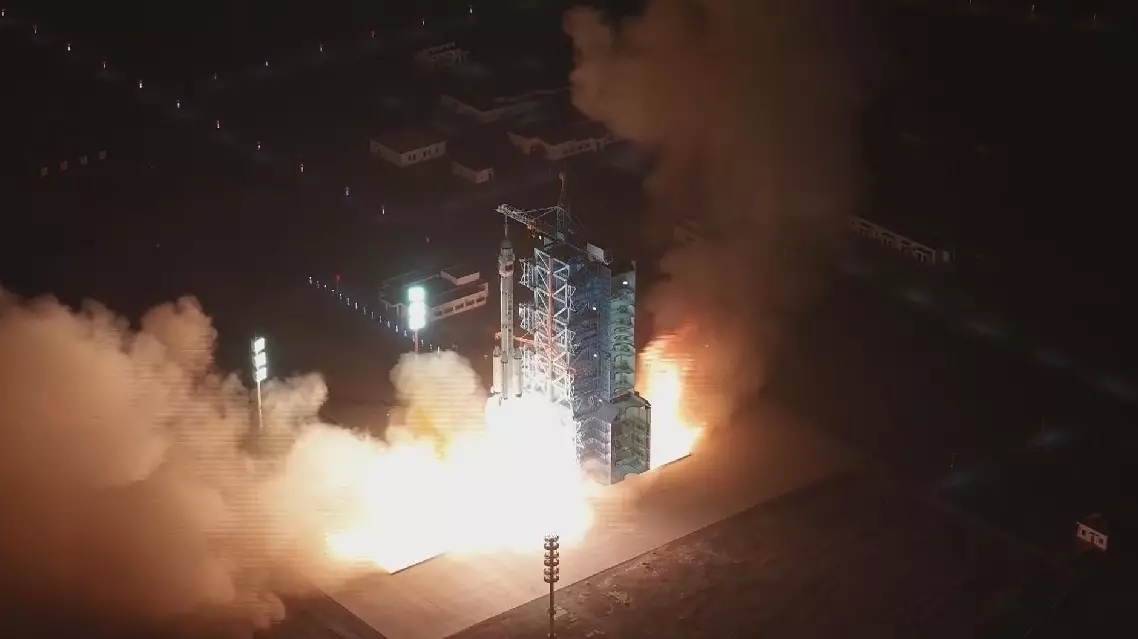
The satellite, launched on December 27, 2025 from the Xichang Satellite Launch Center in the southwestern province of Sichuan, stands as the world's most capable single geostationary meteorological satellite in terms of comprehensive observation capability.
Tang Shihao, commander of the Fengyun 4 ground system, said the release of the first observation images confirms that the overall meteorological observation platform -- including this satellite -- is operating normally.
"The release of the first batch of images marks a critical phase for the satellite. Following its launch and entry into orbit, a series of processes -- including image processing and data transmission -- must be completed. Obtaining the first images confirms that all systems across the satellite platform are functioning as intended and that the ground-based data processing system is operating normally. Moreover, the image quality is exceptional, showing significant improvement over the previous satellite," he said.
The Fengyun-4C is equipped with six payloads that meet advanced international standards and are designed specifically to capture small- and medium-scale weather systems that are often responsible for sudden and severe storms.
Among them, the interferometric atmospheric vertical sounder provides highly refined spectral data capable of capturing the vertical structure of the atmosphere. The information is expected to supply additional observation data for Earth system numerical forecasting and improve weather prediction accuracy.
A lightning imager aboard the satellite has produced continuous observation animations that accurately depict lightning activity during severe convective storms, demonstrating its potential for monitoring extreme weather and providing early warnings.
Meanwhile, the multiband ionospheric ultraviolet spectrometer imager has conducted continuous observations of airglow phenomena over the Eastern Hemisphere. The instrument can map structural changes in Earth's ionosphere that may affect communication, navigation and positioning signals, the administration said.
In addition, according to the administration, a solar extreme ultraviolet imager, working together with solar X-ray and ultraviolet flux sensors, successfully captured image sequences and radiation changes during solar flare eruptions, which will help expand China's ability to track solar activity.
"The satellite carries six key meteorological payloads, enabling continuous observation spanning from Earth's atmosphere to the Sun. This capability plays a vital role in studying the Sun-Earth relationship and monitoring major meteorological disasters. The imagers aboard Fengyun-4C can conduct minute-level observations, maintaining high resolution for small to medium-scale areas both day and night. This marks the first time China has space-based capabilities to observe rapidly evolving severe weather phenomena -- including intense rainfall and tornadoes -- that evolve on a minute-by-minute basis," said Lu Feng, chief designer of the ground system of Fengyun 4's optical satellite.
"No other geostationary meteorological satellite currently in operation carries as many payloads as this one. More payloads mean greater detection capabilities, but they also impose higher demands on the satellite platform -- including precision, stability, and thermal environment management. China has therefore overcome multiple key technological challenges, including calibration and positioning, in this process," said Tang.
According to meteorological authorities, the operational trial of the Fengyun-4C satellite will commence during this year's main flood season, enhancing the ability to monitor and provide early warnings for impending weather systems, particularly those that are small in scale and short in duration.
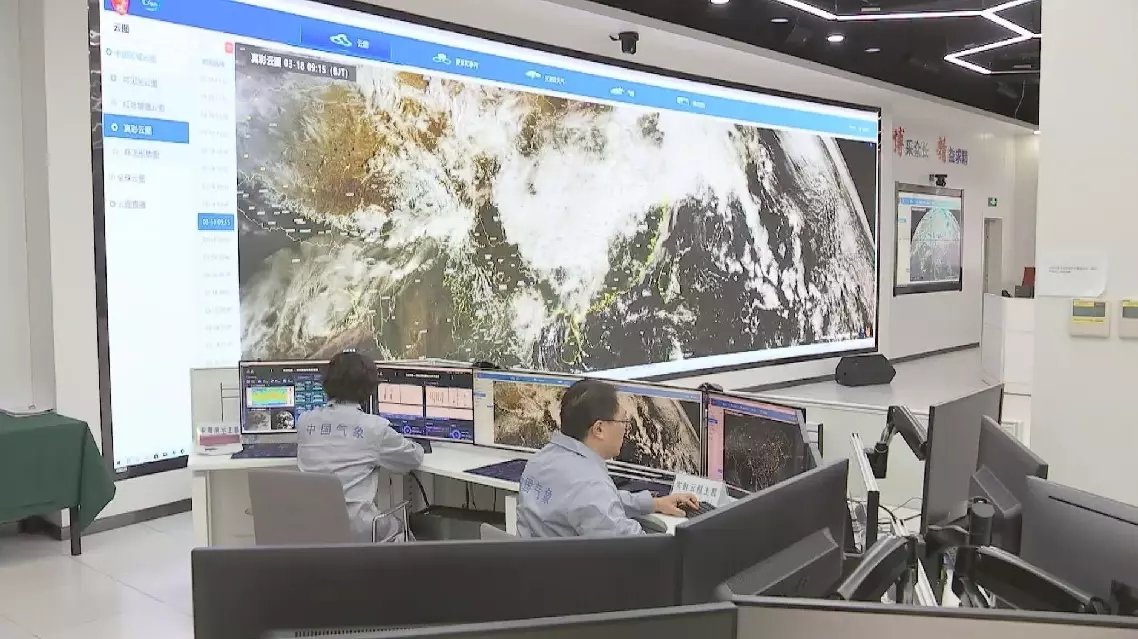
China releases 1st set of images from Fengyun-4C meteorological satellite