JERUSALEM (AP) — Prime Minister Benjamin Netanyahu will soon have to decide when to hold Israel’s next elections. But with war raging on multiple fronts and no end in sight, Israel’s enemies in Iran and Lebanon may help make that decision for him.
The stakes could hardly be higher: A victory will add to his legacy as Israel’s longest-ruling leader and fend off, if not quash altogether, calls for a reckoning over the Oct. 7, 2023, Hamas attacks that triggered 2 ½ years of war across the region. A defeat risks turning him into the highest-profile political casualty of that attack — the deadliest in Israel's history — which still casts a long shadow over the country's psyche and already has led to a string of high-profile resignations and firings.
Click to Gallery
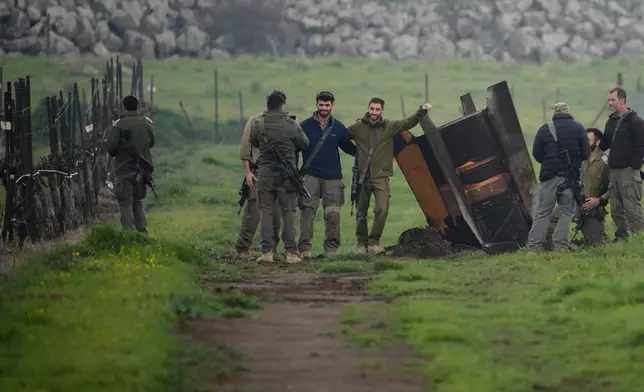
Israeli soldiers take photographs next to a fragment of a missile fired from Iran, and intercepted by Israeli defense system, embedded in an open field in the Israeli-controlled Golan Heights, Thursday, March 19, 2026. (AP Photo/Ohad Zwigenberg)
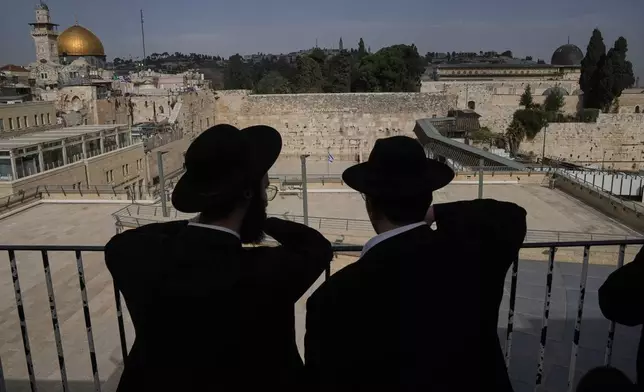
Ultra-Orthodox Jewish men stand near an empty Western Wall at Jerusalem's Old City, Thursday, March 19, 2026, as the area remains closed to visitors under nationwide Home Front Command restrictions banning large gatherings amid the war with Iran. (AP Photo/Mahmoud Illean)
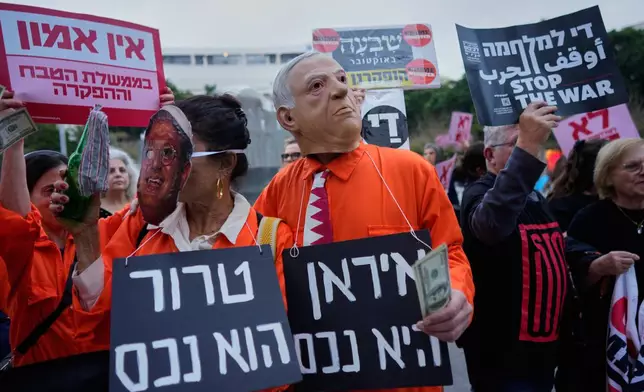
People dressed in orange prison jumpsuits and wearing masks of Israel's Prime Minister Benjamin Netanyahu and National Security Minister Itamar Ben Gvir gather to demonstrate against the ongoing war with Iran, in Tel Aviv, Israel, Thursday, March 19, 2026. Boards read in Hebrew: "Iran is an asset" and "Terror is an asset. (AP Photo/Maya Levin)
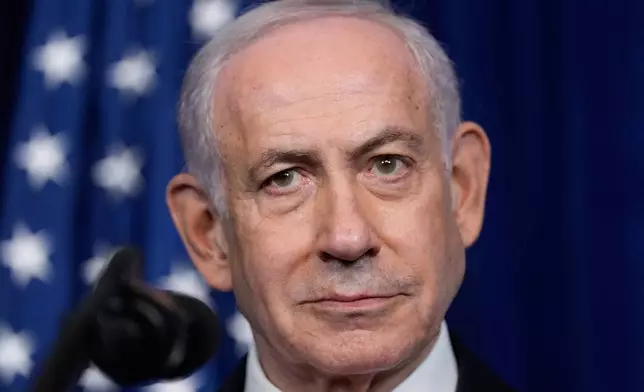
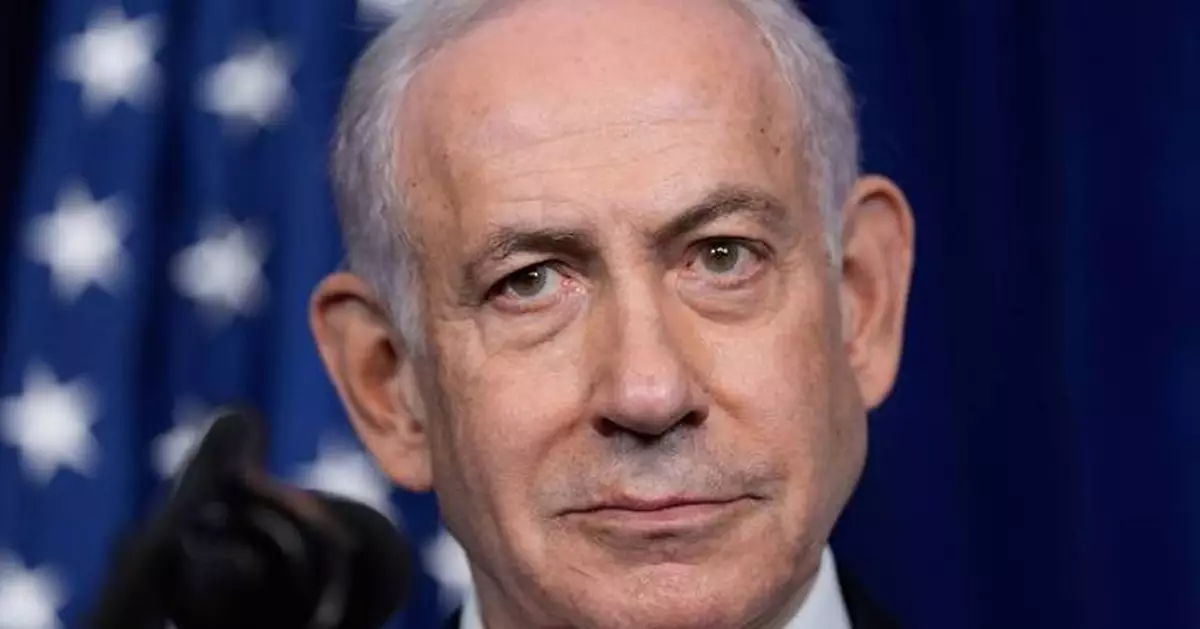
FILE - Israel's Prime Minister Benjamin Netanyahu listens during a news conference with President Donald Trump at Mar-a-Lago, Dec. 29, 2025, in Palm Beach, Fla. (AP Photo/Alex Brandon, File)
Here is a closer look at what’s at stake for Netanyahu, and how the wars with Iran and Hezbollah could help determine his fate.
Netanyahu’s government is in the final months of its four-year term and is required to hold elections by the end of October. But Netanyahu has the ability to dissolve the governing coalition before then and call early elections. Israeli governments rarely last their full terms.
With this deadline looming, Netanyahu can choose a date when he thinks he and his religious and nationalist partners have the best chance to win.
Since elections are scheduled three months ahead of time, he could move now to schedule a vote in late June, just before the summer vacation season, or wait until the fall.
A quick campaign and decisive victory over Iran could boost Netanyahu’s public standing and give him the confidence to call an early election. He could boast of Israel’s military power and the close ties with U.S. President Donald Trump that made this war possible, while claiming to have reshaped the region to Israel’s advantage after the Oct. 7 attack.
But three weeks into the war, that scenario looks increasingly unlikely.
Iran continues to fire missiles at Israel each day, disrupting the lives of millions of anxious and exhausted voters. Israel’s war with Hezbollah militants in Lebanon is intensifying, and with Iran disrupting the flow of oil from the Persian Gulf and upending the global economy, Trump has given no indication when the war may end. Members of the “America First” wing of the Republican Party have begun to accuse Israel of dragging the U.S. into a needless war.
Recent opinion polls in Israel indicate that while Israelis overwhelmingly support the war, Netanyahu and his political coalition don’t appear to be benefiting.
In this environment, there is little incentive for Netanyahu to push up the election date, said Yohanan Plesner, president of the Israel Democracy Institute, a Jerusalem think tank.
“It doesn’t seem like there’s any remarkable change in Israeli public opinion,” he said. “He’d rather buy more time and exhaust the full term that is available to him.”
Netanyahu still has a few weeks to make a decision. But for now, he appears to be leaning toward a fall election. At a news conference last week, Netanyahu said he hopes elections will be in “September or October.”
That would give Netanyahu, the ultimate political survivor, a few more months to rebuild his popularity.
A prolonged war could make this more difficult, raising the risk of additional Israeli casualties and demoralizing and further exhausting the public. Northern Israel has come under especially heavy fire from Hezbollah in recent days, and residents, including people in traditional Netanyahu strongholds, have voiced anger over Israel’s failure to halt the attacks.
On the global stage, a drawn-out conflict could raise the likelihood of disagreements with Trump. It also could further tarnish Israel's international standing after the heavily criticized war in Gaza, for which Netanyahu has been indicted for war crimes by the International Criminal Court, allegations he denies.
Plesner says that a narrow window in early September, just before the monthlong holiday season, looks like the best time for Netanyahu to hold the vote.
Otherwise, the election will take place close to the Oct. 7 anniversary, when Israelis are again reminded of that tragic day.
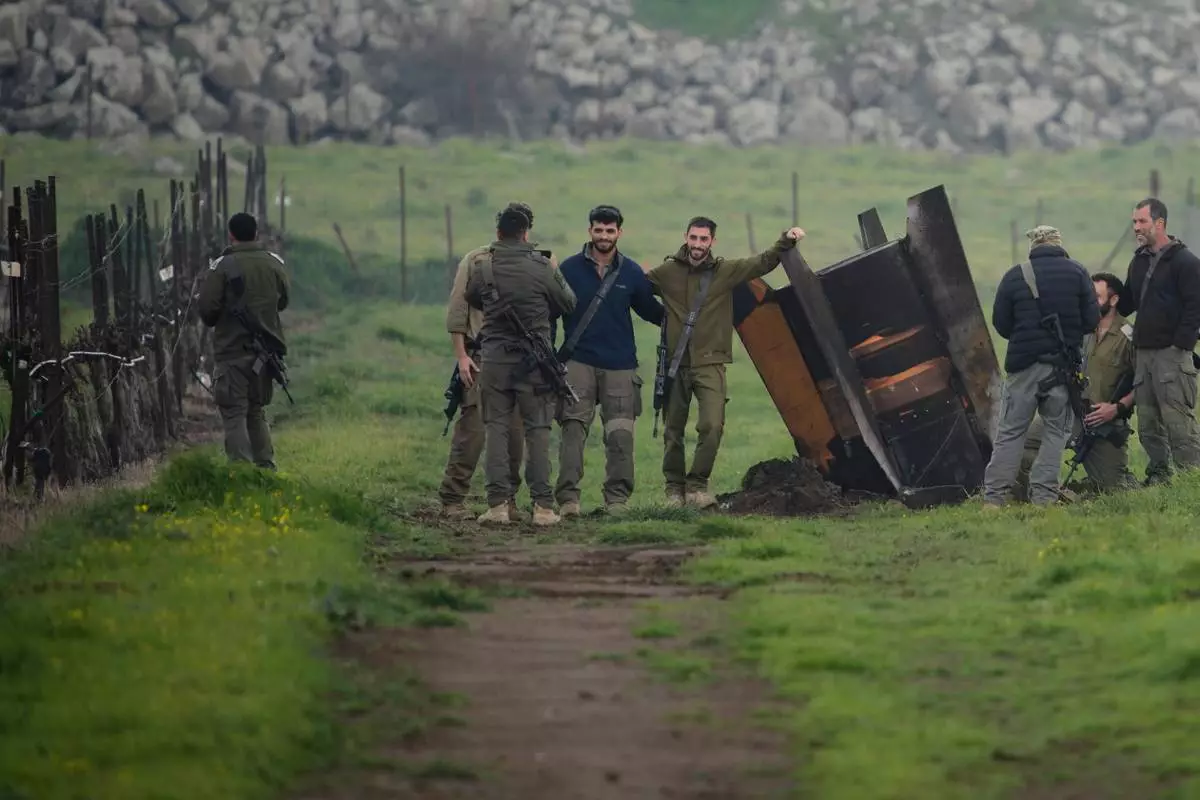
Israeli soldiers take photographs next to a fragment of a missile fired from Iran, and intercepted by Israeli defense system, embedded in an open field in the Israeli-controlled Golan Heights, Thursday, March 19, 2026. (AP Photo/Ohad Zwigenberg)
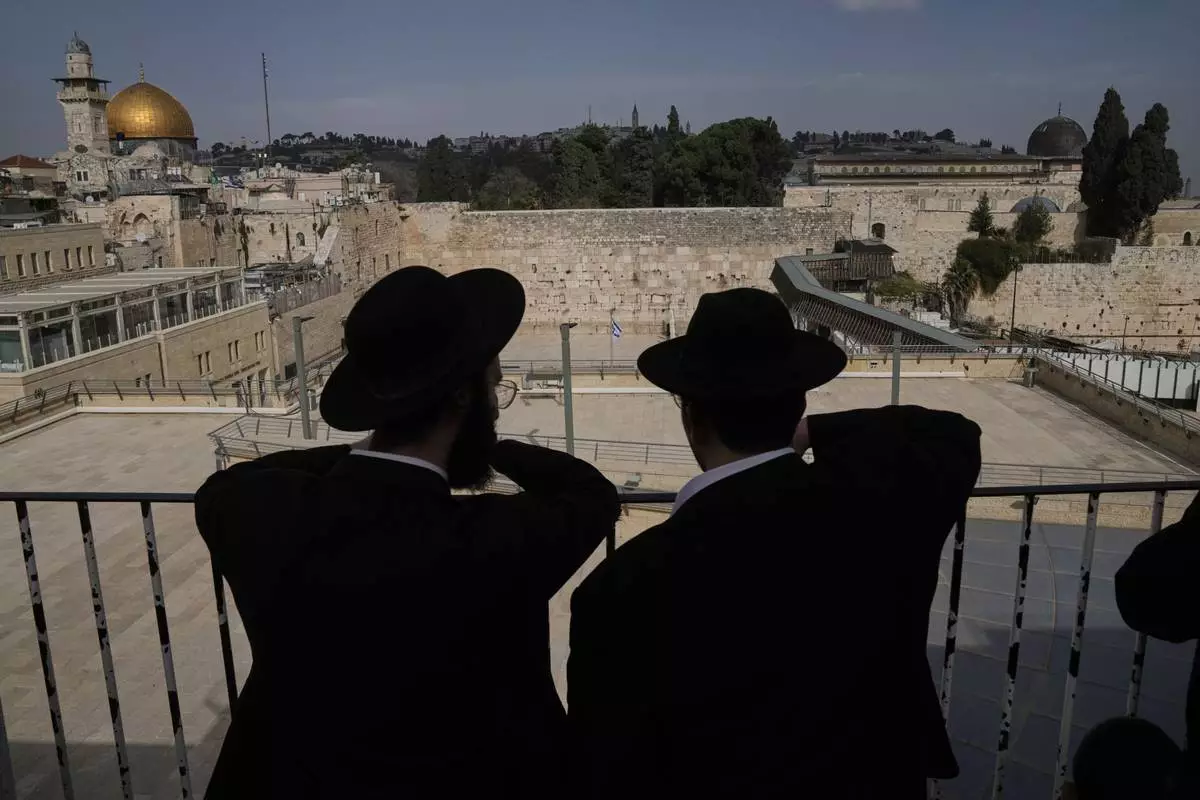
Ultra-Orthodox Jewish men stand near an empty Western Wall at Jerusalem's Old City, Thursday, March 19, 2026, as the area remains closed to visitors under nationwide Home Front Command restrictions banning large gatherings amid the war with Iran. (AP Photo/Mahmoud Illean)
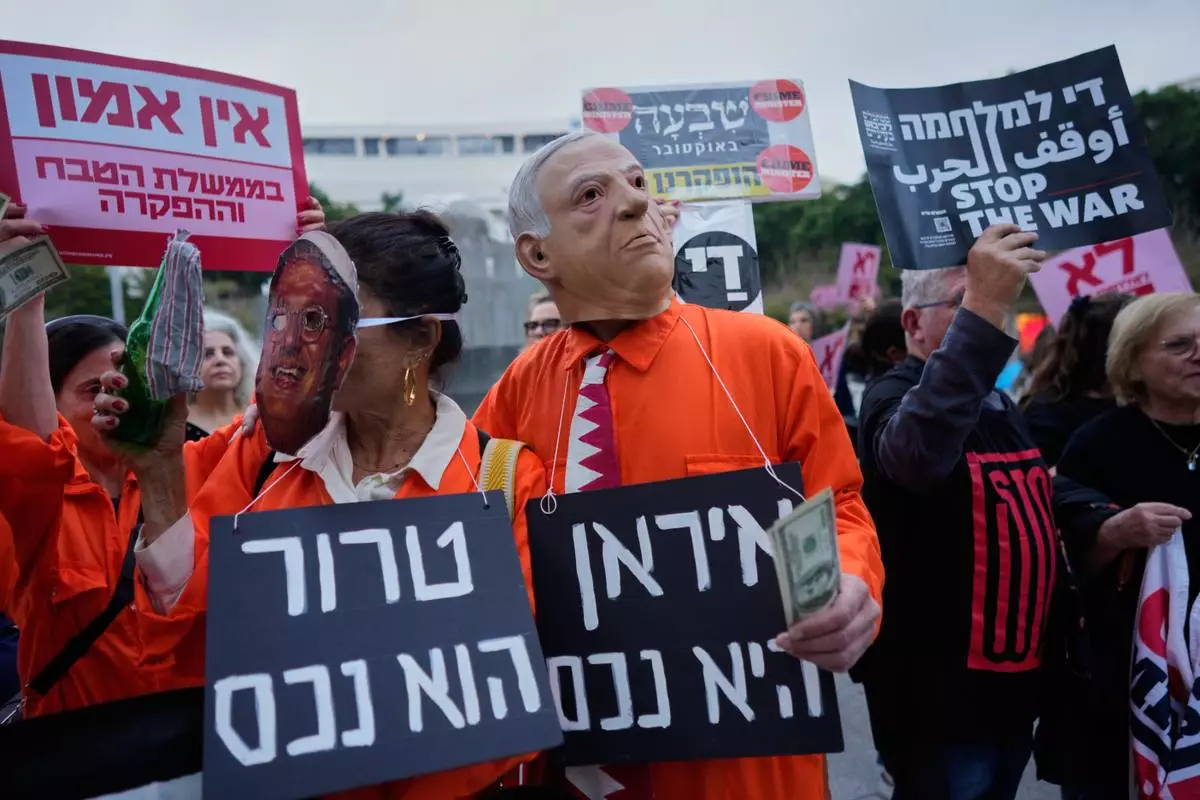
People dressed in orange prison jumpsuits and wearing masks of Israel's Prime Minister Benjamin Netanyahu and National Security Minister Itamar Ben Gvir gather to demonstrate against the ongoing war with Iran, in Tel Aviv, Israel, Thursday, March 19, 2026. Boards read in Hebrew: "Iran is an asset" and "Terror is an asset. (AP Photo/Maya Levin)
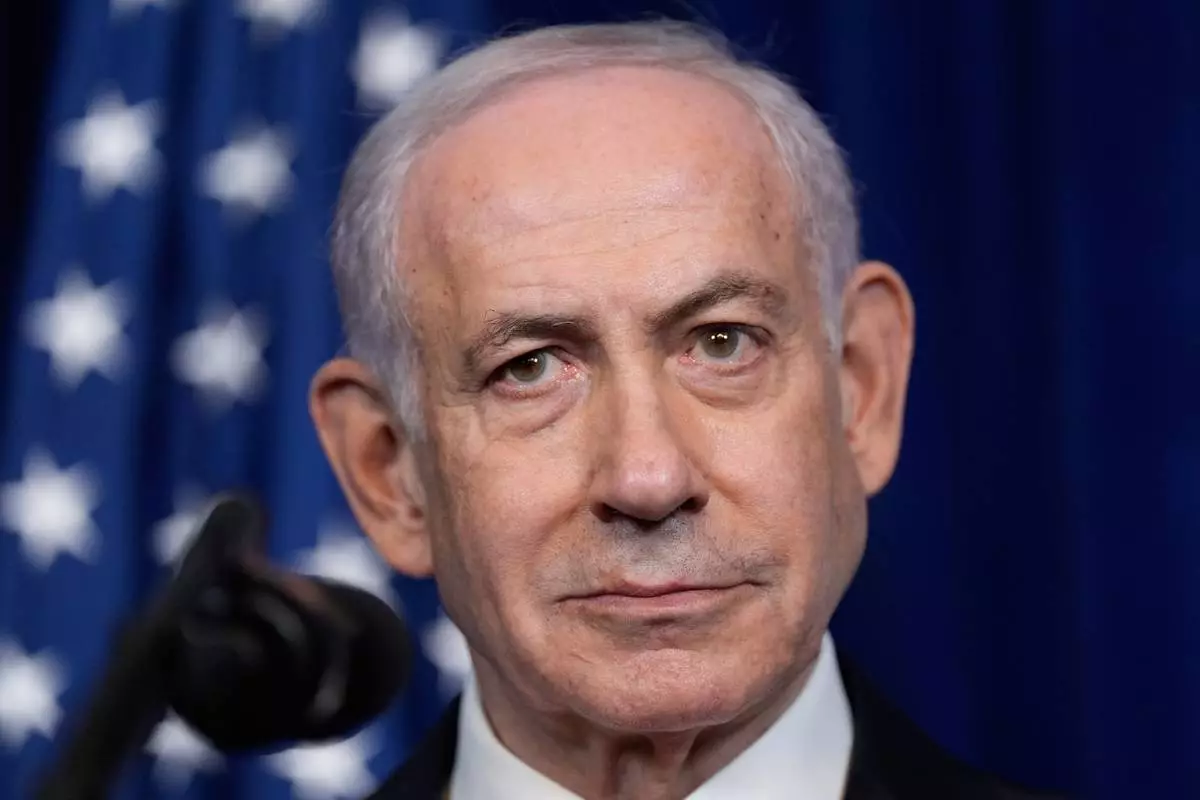
FILE - Israel's Prime Minister Benjamin Netanyahu listens during a news conference with President Donald Trump at Mar-a-Lago, Dec. 29, 2025, in Palm Beach, Fla. (AP Photo/Alex Brandon, File)