MESA, Ariz. (AP) — Seiya Suzuki will miss the Chicago Cubs' season opener after suffering a minor ligament strain in his right knee during the World Baseball Classic, manager Craig Counsell said Saturday.
The team was mulling whether to place him on the injured list.
“Opening day is not going to happen,” Counsell said. “(He's) not going to be ready to play on opening day. We've got to make a decision. Once you get past opening day, we've got to make a decision: Does it just make sense to just give him some time. We've got time to make that decision, but that's kind of where we're at.”
The Cubs open against Washington at Wrigley Field on Thursday.
Suzuki got hurt in Japan’s 8-5 loss to Venezuela in a World Baseball Classic quarterfinal March 14 in Miami. He walked gingerly to the dugout after a headfirst slide into second base when he was caught stealing in the first inning. Suzuki was replaced in center field after the end of that half-inning.
The 31-year-old returned to the Cubs’ spring training facility on Monday, when he was seen walking slowly with a soft brace on the injured knee. Suzuki underwent imaging to determine the extent of the injury.
Suzuki is going into the final season of an $85 million, five-year contract. He has hit .269 with 87 home runs and 296 RBIs in 532 games for the Cubs, including a team-leading 103 RBIs with 32 homers in 2025.
AP MLB: https://apnews.com/hub/mlb

Japan's Seiya Suzuki is tagged out at second base by Venezuela's Gleyber Torres during the first inning of a World Baseball Classic quarterfinal game against Japan, Saturday, March 14, 2026, in Miami. (AP Photo/Marta Lavandier)

Japan's Seiya Suzuki is helped off the field after being injured at second base at the with the first inning during a World Baseball Classic quarterfinal game against Venezuela, Saturday, March 14, 2026, in Miami. (AP Photo/Marta Lavandier)
HOUSTON (AP) — Now more than halfway to the moon, the Artemis II astronauts prepared for their historic lunar fly-around to push deeper into space than even the Apollo astronauts.
On the downside, their toilet is on the blink again.
The three Americans and one Canadian are set to reach their destination Monday, photographing the mysterious lunar far side as they zoom around. It is the first moon-bound crew in more than 53 years, picking up where NASA’s Apollo program left off.
“The Earth is quite small, and the moon is definitely getting bigger,” pilot Victor Glover reported.
Until the Orion capsule's bathroom is fixed, Mission Control has instructed the astronauts to break out more of the backup urine collection bags. The so-called lunar loo malfunctioned following Wednesday’s liftoff and has been hit-and-miss ever since. A version of the Artemis II toilet was tested on the International Space Station several years ago.
Engineers suspect ice may be blocking the line that is preventing urine from completely flushing overboard. The toilet is still open for No. 2 business.
Debbie Korth, NASA’s Orion program deputy manager, said the astronauts have also reported a smell coming from the bathroom, which is buried in the floor of the capsule with a door and curtain for privacy.
“Space toilets and bathrooms are something everybody can understand .. it’s always a challenge,” she said, noting that the space shuttle toilet was also often on the fritz.
John Honeycutt, chair of the mission management team, said it is human nature to be interested in the space commode, and even though it is “in a good state right now,” he’d like it to be working at 100%.
“They’re OK,” he said of the astronauts. “They trained to manage through the situation.”
Artemis II is poised to set a distance record for humans, traveling more than 252,000 miles (400,000 kilometers) from Earth before hanging a U-turn behind the moon and heading home without stopping or entering lunar orbit. The record is currently held by Apollo 13.
The Canadian Space Agency celebrated the country’s role in the mission, speaking from Quebec with astronaut Jeremy Hansen as he headed toward his lunar rendezvous. Hansen is the first non-U.S. citizen to fly to the moon.
“Today he is making history for Canada,” Canadian Space Agency President Lisa Campbell said. “As we watch him taking this bold step into the unknown, let his journey remind us that Canada’s future is written by those who dare to reach for more.”
In the live televised linkup, Hansen said he has already witnessed “extraordinary” views from NASA's Orion capsule.
Hansen, Glover, Reid Wiseman and Christina Koch are the world's first lunar astronauts since Apollo 17's crew of three in 1972. Koch and Glover are the first female and first Black astronauts to the moon, respectively.
Their nearly 10-day mission — ending with a Pacific splashdown on April 10 — is the first step in NASA's bold plans for a sustainable moon base. The space agency is aiming for a landing by two astronauts near the lunar south pole in 2028.
The Associated Press Health and Science Department receives support from the Howard Hughes Medical Institute’s Department of Science Education and the Robert Wood Johnson Foundation. The AP is solely responsible for all content.
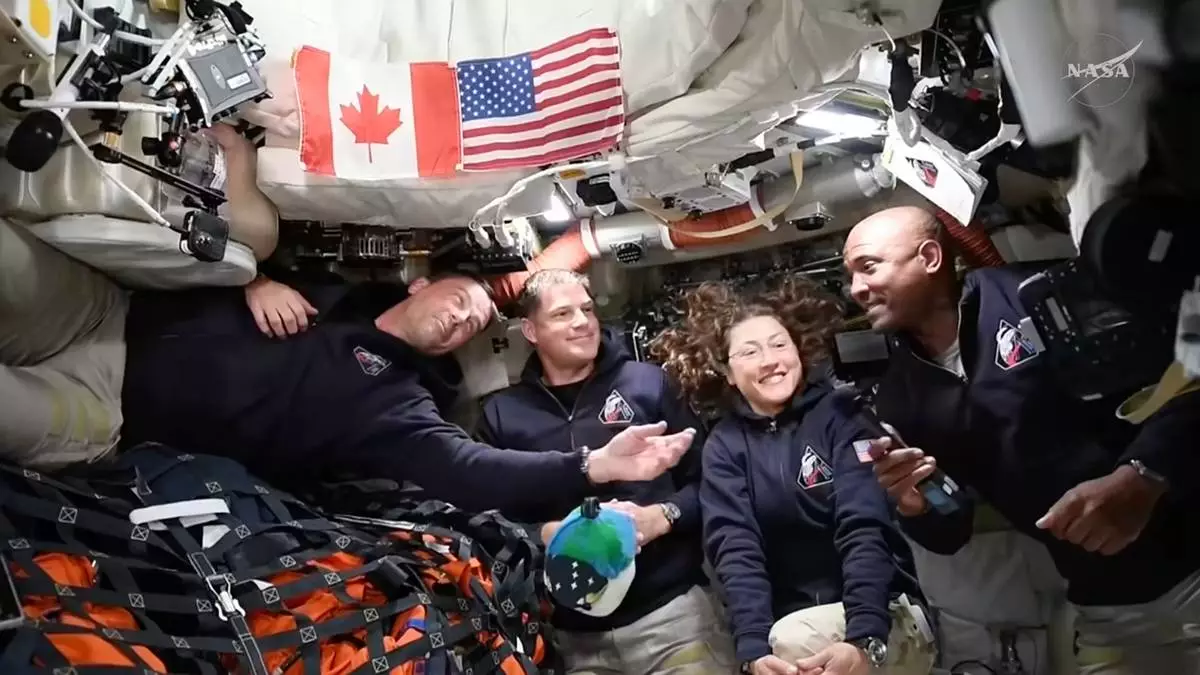
In this image from video provided by NASA, Artemis II astronauts, from left, Reid Wiseman, Jeremy Hansen, Christina Koch and Victor Glover gather for an interview en route to the moon on Saturday, April 4, 2026. (NASA via AP)
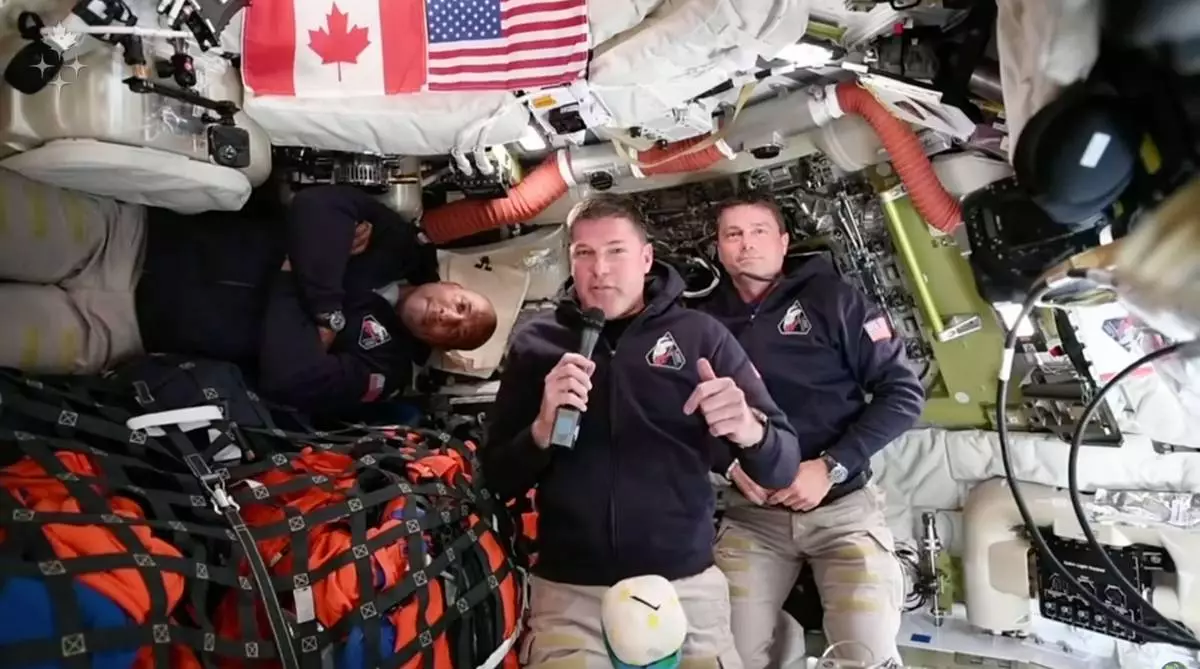
This image provided by the Canadian Space Agency, Artemis II astronaut Jeremy Hansen of Canada, connects live from the Orion spacecraft and speaks with Canadian media along with astronauts Victor Glover, left, and Reid Wiseman on Saturday, April 4, 2026. (Canadian Space Agency via AP)
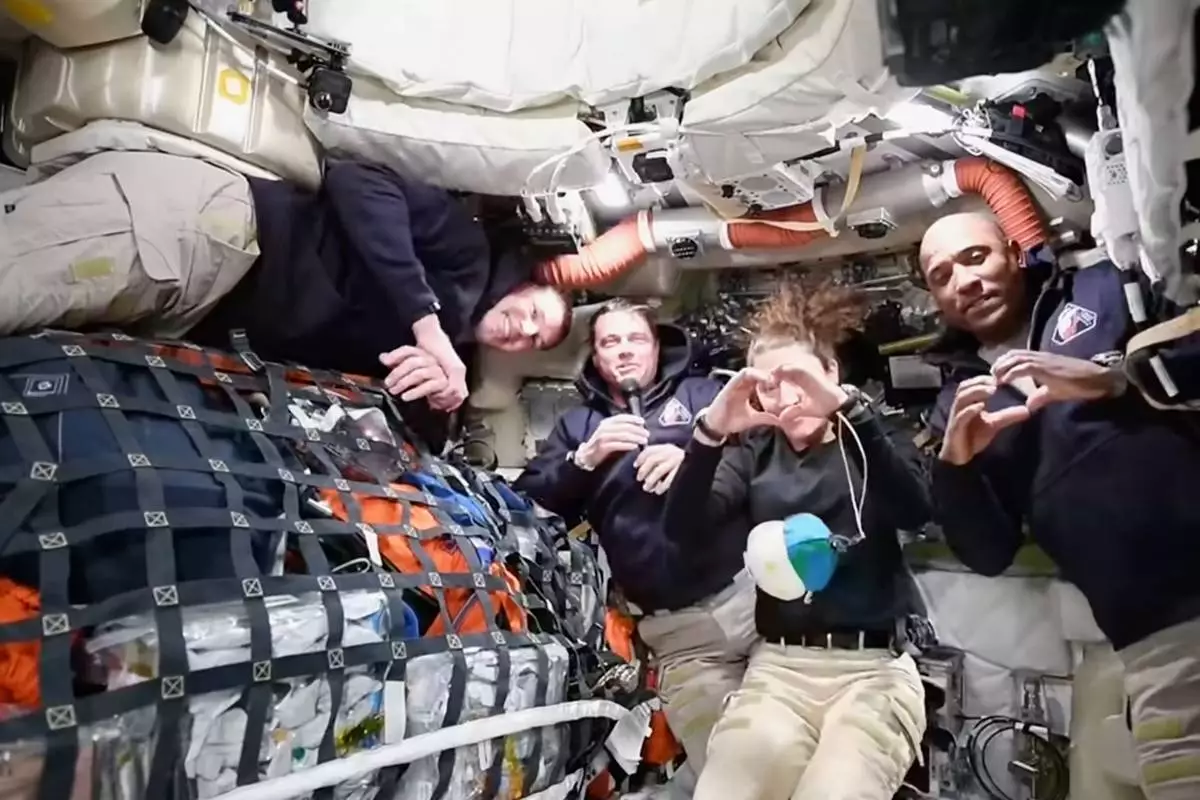
This image from video provided by NASA shows the Artemis II crew Commander Reid Wiseman, second from left, thanking the families of the crew while speaking with NASA Mission Control in a video conference while en route to the moon, Thursday, April 2, 2026, as Canadian astronaut and mission specialist Jeremy Hansen, far left, looks on and mission specialist Christina Koch and pilot Victor Glover, far right, make hearts with their hands. (NASA via AP) CORRECTION: headed to the moon, not in moon's orbit
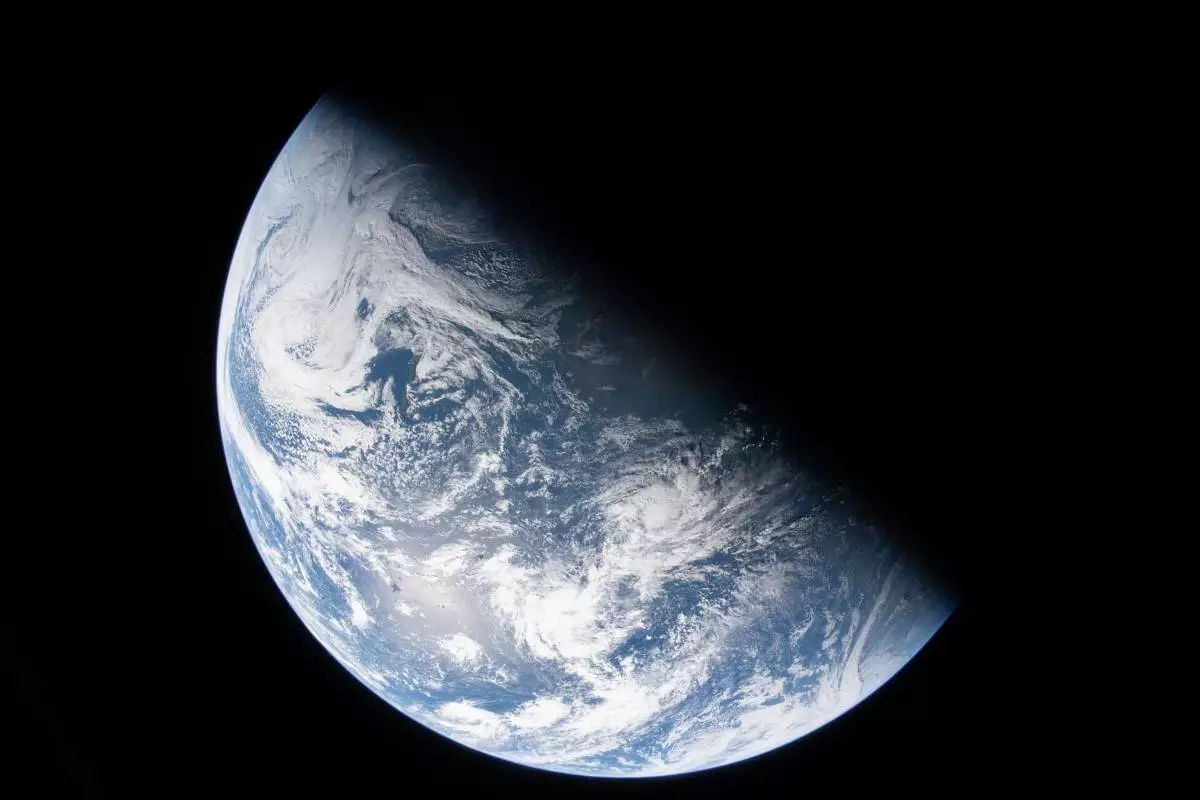
This image from video provided by NASA shows a view of earth taken by NASA astronaut and Artemis II Commander Reid Wiseman from one of the Orion spacecraft's four windows after completing the translunar injection burn, Thursday, April 2, 2026. (NASA via AP)