Skip to Content Facebook Feature Image

Italy’s justice referendum becomes a high stakes test for conservative Premier Giorgia Meloni

News

Italy’s justice referendum becomes a high stakes test for conservative Premier Giorgia Meloni
News

News

Italy’s justice referendum becomes a high stakes test for conservative Premier Giorgia Meloni

2026-03-22 21:08 Last Updated At:21:10

ROME (AP) — Italy’s conservative premier, Giorgia Meloni, faces a pivotal political test in a two-day referendum on judicial reform that started on Sunday, a vote that has transformed into a broader judgment on her leadership at home and abroad.

Originally presented as a technical overhaul of the justice system, the reform has sharpened political divisions and unified the center‑left opposition, turning the referendum into a symbolic showdown on Meloni’s strength one year ahead of national elections.

More Images
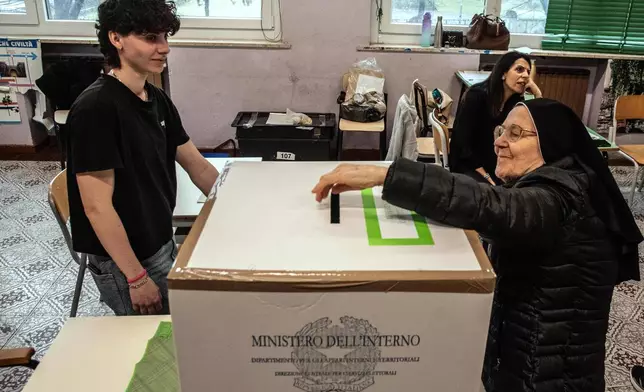
A nun votes in a referendum on judicial reform, at a polling station in Turin, Italy, Sunday March 22, 2026. (Daniele Solavaggione/LaPresse via AP)
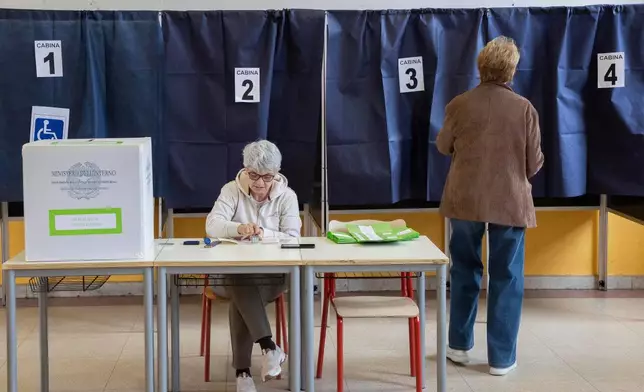
A nun votes in a referendum on judicial reform, at a polling station in Turin, Italy, Sunday March 22, 2026. (Daniele Solavaggione/LaPresse via AP)

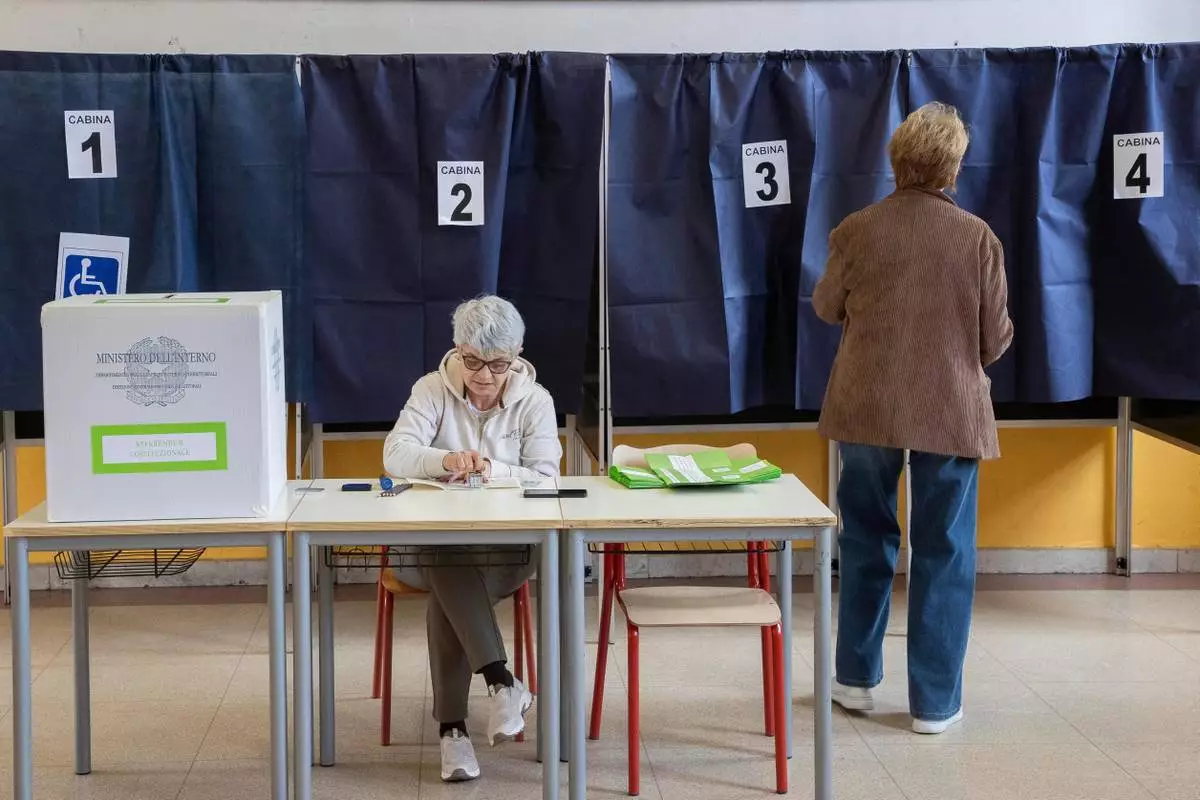
A woman arrives to vote in a referendum on judicial reform, at a polling station in Milan, Italy, Sunday March 22, 2026. (Marco Ottico/Lapresse via AP)
A woman arrives to vote in a referendum on judicial reform, at a polling station in Milan, Italy, Sunday March 22, 2026. (Marco Ottico/Lapresse via AP)

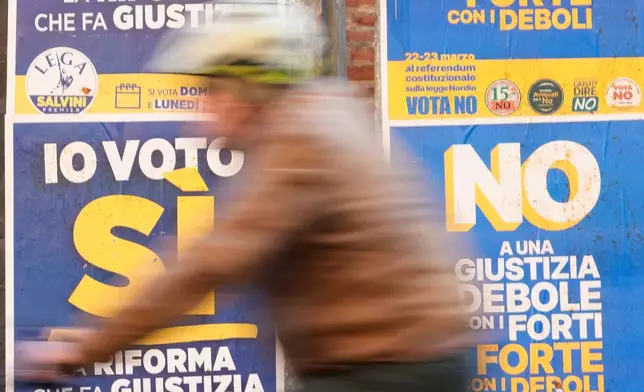
A man passes next to election posters as Italian citizens will be called on March 22th and 23th to approve or reject the constitutional reform of the judicial system introduced by the Meloni government, through a referendum that does not require a minimum voter turnout, in Milan, Italy, Friday, March 20, 2026. (AP Photo/Luca Bruno)
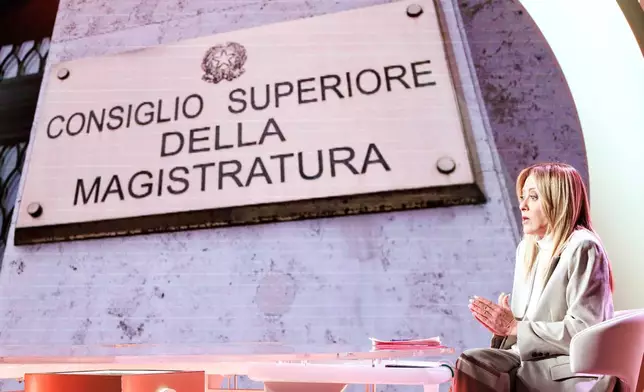
A man passes next to election posters as Italian citizens will be called on March 22th and 23th to approve or reject the constitutional reform of the judicial system introduced by the Meloni government, through a referendum that does not require a minimum voter turnout, in Milan, Italy, Friday, March 20, 2026. (AP Photo/Luca Bruno)

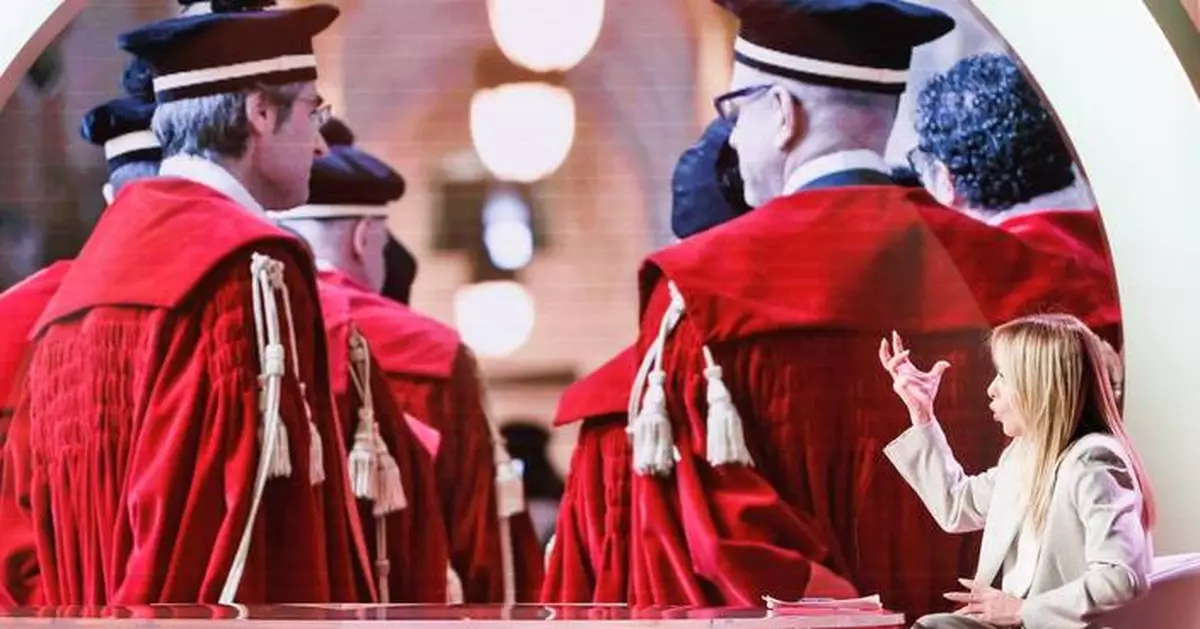
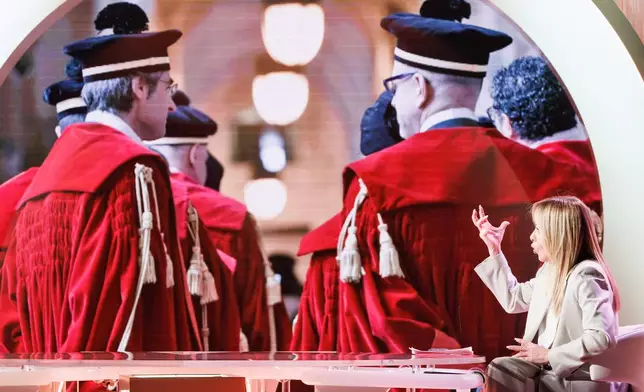
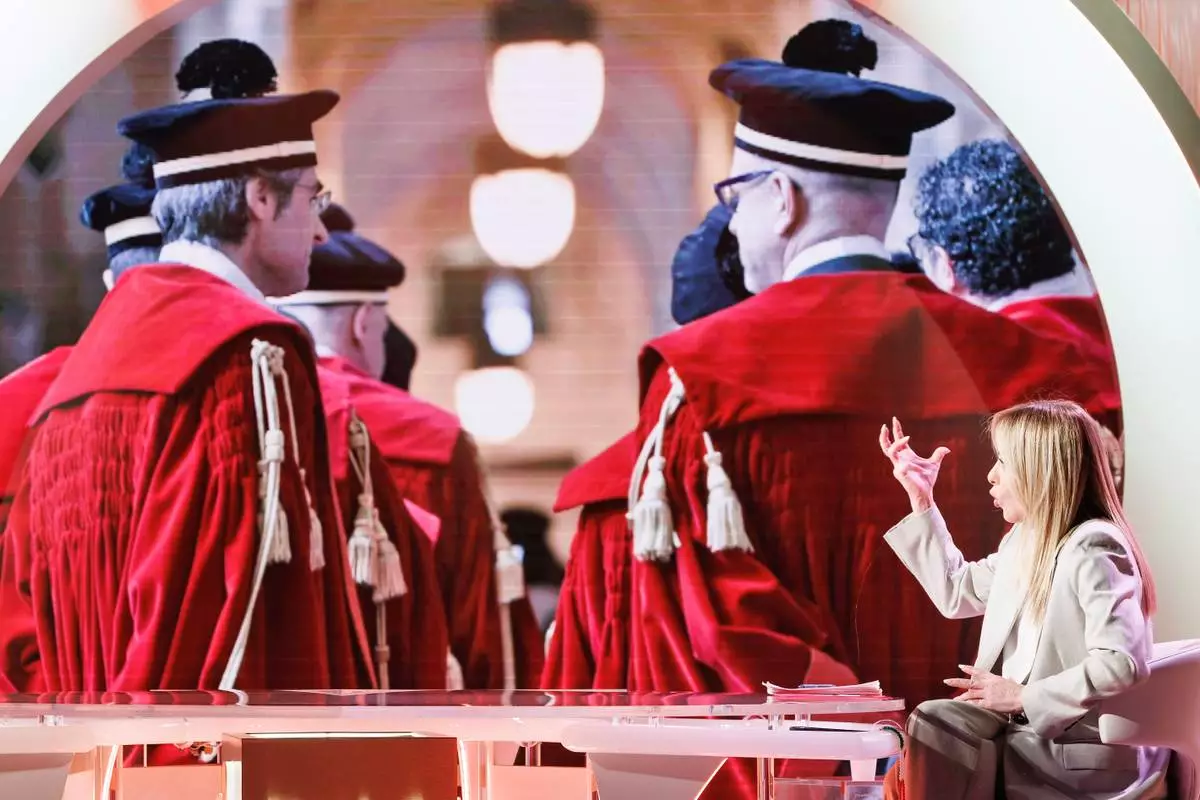
Italian premier Giorgia Meloni speaks about the upcoming referendum on a judicial reform during the RAI state television program Cinque minuti (Five Minutes), in Rome, Friday, March 20, 2026. Writing on placard on screen reads in Italian "Superior Council of Magistracy" (Roberto Monaldo /LaPresse via AP)
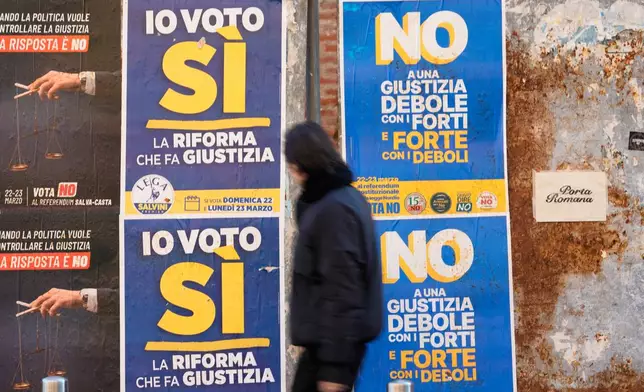
Italian premier Giorgia Meloni speaks about the upcoming referendum on a judicial reform during the RAI state television program Cinque minuti (Five Minutes), in Rome, Friday, March 20, 2026. Writing on placard on screen reads in Italian "Superior Council of Magistracy" (Roberto Monaldo /LaPresse via AP)

A man passes next to election posters as Italian citizens will be called on March 22th and 23th to approve or reject the constitutional reform of the judicial system introduced by the Meloni government, through a referendum that does not require a minimum voter turnout, in Milan, Italy, Friday, March 20, 2026. (AP Photo/Luca Bruno)
A man passes next to election posters as Italian citizens will be called on March 22th and 23th to approve or reject the constitutional reform of the judicial system introduced by the Meloni government, through a referendum that does not require a minimum voter turnout, in Milan, Italy, Friday, March 20, 2026. (AP Photo/Luca Bruno)

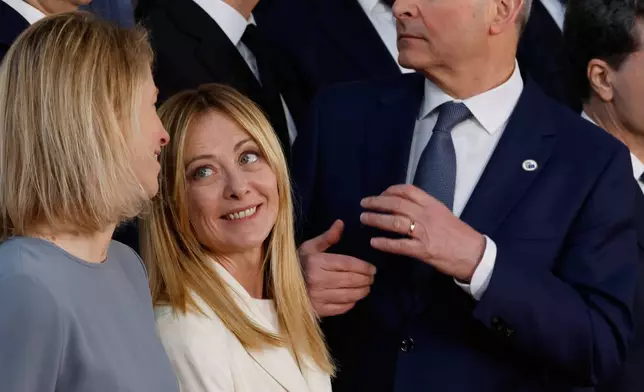
Italy's Prime Minister Giorgia Meloni, center, speaks with European Union foreign policy chief Kaja Kallas, left, during a group photo at an EU summit in Brussels, Thursday, March 19, 2026. (AP Photo/Geert Vanden Wijngaert)
Italy's Prime Minister Giorgia Meloni, center, speaks with European Union foreign policy chief Kaja Kallas, left, during a group photo at an EU summit in Brussels, Thursday, March 19, 2026. (AP Photo/Geert Vanden Wijngaert)

Italian premier Giorgia Meloni speaks about the upcoming referendum on a judicial reform during the RAI state television program Cinque minuti (Five Minutes), in Rome, Friday, March 20, 2026. (Roberto Monaldo /LaPresse via AP)

Italian premier Giorgia Meloni speaks about the upcoming referendum on a judicial reform during the RAI state television program Cinque minuti (Five Minutes), in Rome, Friday, March 20, 2026. (Roberto Monaldo /LaPresse via AP)

Recent polls show the race remains too close to call, with the “No” camp gaining late momentum in a polarized climate where turnout may prove decisive. After five hours of voting on the first day, according to Italy's Interior Ministry, turnout reached almost 15% of eligible voters. That is the highest turnout for any two-day referendum in the past 23 years.

Lorenzo Pregliasco, political analyst and polling expert at YouTrend, said a rejection of the reform would carry significant political weight.

“A possible ‘No’ victory would send a political signal, weakening Meloni’s aura of invincibility, while pushing the center-left opposition to say that there is already an alternative in the country,” he told The Associated Press.

Meloni initially avoided tying her image too closely to the referendum, wary of the danger that a defeat could weaken her domestically and abroad.

She currently presides over Italy’s most stable government in years, after gaining credibility among her European allies as a charismatic leader. A referendum win would further strengthen her tenure at home, alongside her international standing.

That's why, as the vote neared and polls tightened, the Italian premier shifted strategy and fully embraced the “Yes” campaign.

Meloni has sharpened her rhetoric, accusing parts of the judiciary of hindering government work on migration and security, and warning that failure to pass the reform would strengthen unaccountable judicial “factions” and endanger citizens’ safety.

“If the reform doesn’t pass this time, we will probably not have another chance,” she said at a campaign event last week. “We will find ourselves with even more powerful factions, even more negligent judges, even more surreal sentences, immigrants, rapists, pedophiles, drug dealers being freed and putting your security at risk.”

Her stark warnings have drawn fierce criticism from magistrates and the center-left, who argue that the reforms would erode judicial independence and undermine constitutional guarantees.

“Obviously (I’m voting) no, because I think this government has organized a referendum that serves no purpose other than its own, if it were to go ahead,” said Giovanna Antongini, an 89-year-old, as she headed to a polling station in central Rome.

Analysts say the referendum carries international implications as well.

Meloni's long standing alignment with U.S. President Donald Trump, once politically advantageous, has become increasingly problematic as his foreign policy — particularly the U.S. and Israeli war with Iran — faces growing disapproval among Italians.

“Meloni is facing what I would call the ‘Trump risk’ — which is appearing too subservient to the U.S. president, who is an extremely unpopular political leader in Italy and the rest of Europe and generates a lot of distrust, even among center-right voters,” Pregliasco said.

A defeat in the referendum would not force Meloni to resign — her mandate runs through 2027 and she repeatedly pledged to complete it — but could diminish her credibility within the European Union, where she is viewed as a stabilizing actor in an often politically volatile environment.

The referendum centers on long-debated reforms aimed at reshaping the structure of Italy’s judiciary.

“This vote is very important," said Francesca Serlupi Ferretti Crescenzi, 67, casting her ballot in Rome. “It is intended to improve the judicial system, which is long overdue for reform. I am convinced that it must and can be improved.”

A key measure includes separating the career paths of judges and prosecutors, preventing them from switching roles — something that is currently allowed but rarely practiced.

Another major change concerns the High Judicial Council, which oversees magistrates’ appointments and disciplinary matters. The reform proposes splitting it into three separate chambers and altering how members are chosen, replacing internal elections with selections by lottery from eligible judges and prosecutors.

The clash between Italy’s right-wing leaders and magistrates has punctuated Italian politics, exploding during the governments of late conservative leader Silvio Berlusconi, who was one of the staunchest supporters of the judicial reform.

Supporters argue the changes will modernize an infamously slow court system and enhance accountability. But critics, including prominent magistrates, say the reform misses the real priorities while threatening the judiciary’s independence.

Nicola Gratteri, Naples’ chief prosecutor and a long time anti-Mafia magistrate, offered one of the most pointed rebukes.

“I don’t think this government has implemented the reforms needed to make trials work more effectively," he told the AP. “Instead, it has made it virtually impossible to combat crimes against the public administration and to tackle white-collar abuse and corruption.”

As Italians head to the polls, the referendum stands as one of the defining moments of Meloni’s premiership — a choice that could reshape not only the justice system but also the trajectory of her government, regardless of the outcome.
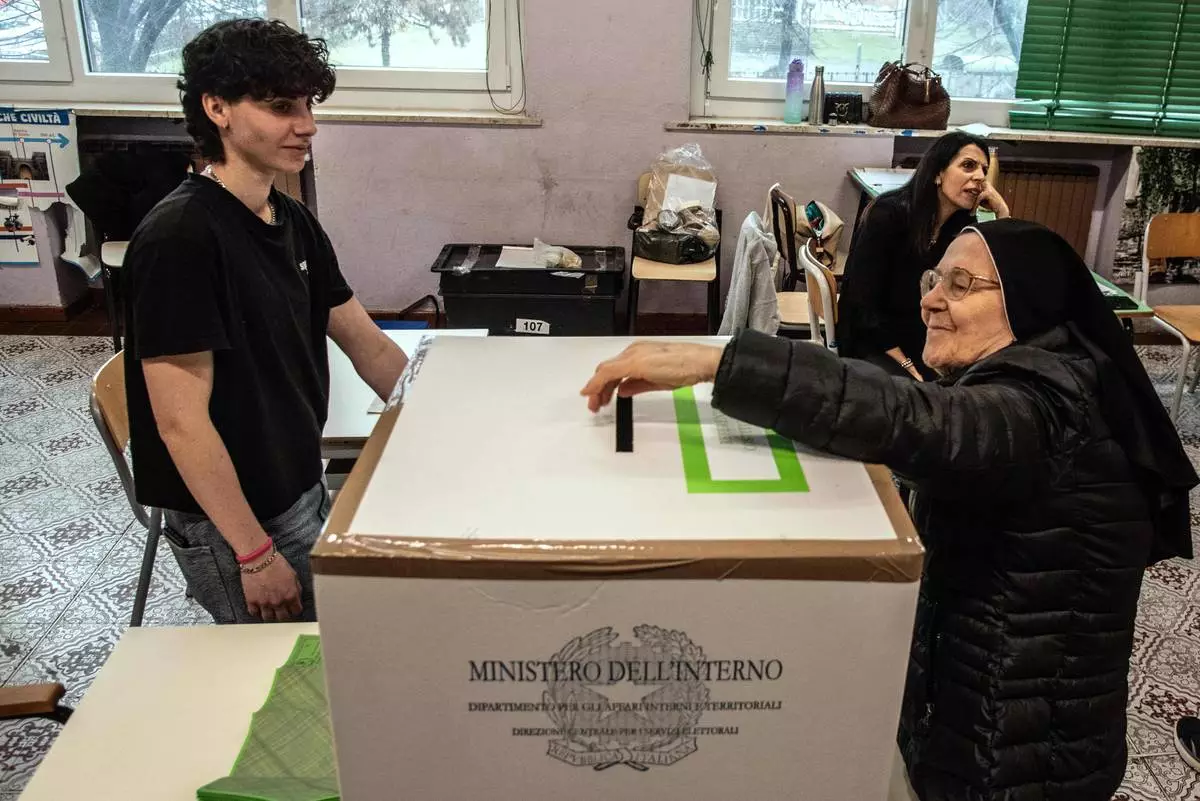
A nun votes in a referendum on judicial reform, at a polling station in Turin, Italy, Sunday March 22, 2026. (Daniele Solavaggione/LaPresse via AP)
A nun votes in a referendum on judicial reform, at a polling station in Turin, Italy, Sunday March 22, 2026. (Daniele Solavaggione/LaPresse via AP)

A woman arrives to vote in a referendum on judicial reform, at a polling station in Milan, Italy, Sunday March 22, 2026. (Marco Ottico/Lapresse via AP)
A woman arrives to vote in a referendum on judicial reform, at a polling station in Milan, Italy, Sunday March 22, 2026. (Marco Ottico/Lapresse via AP)

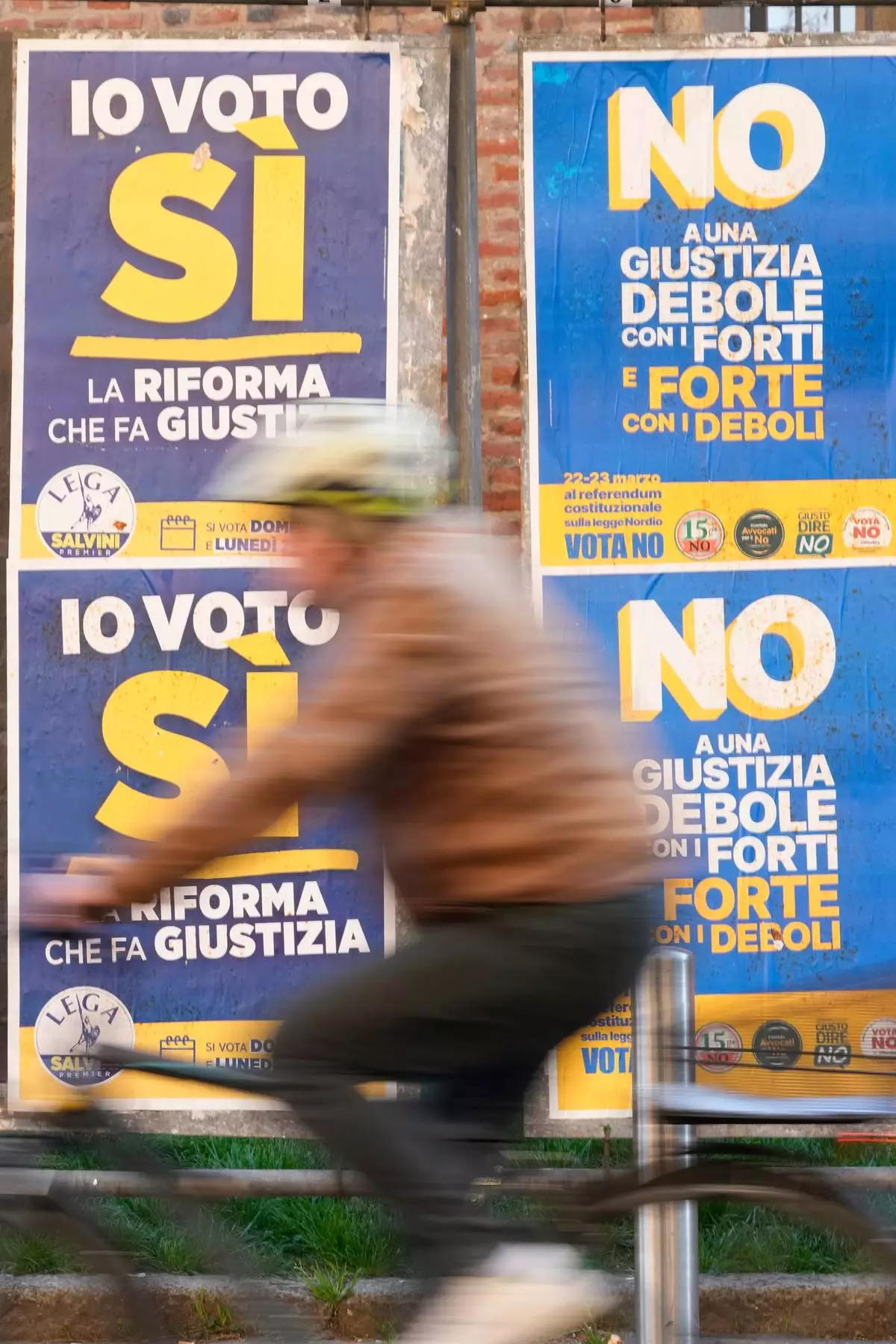
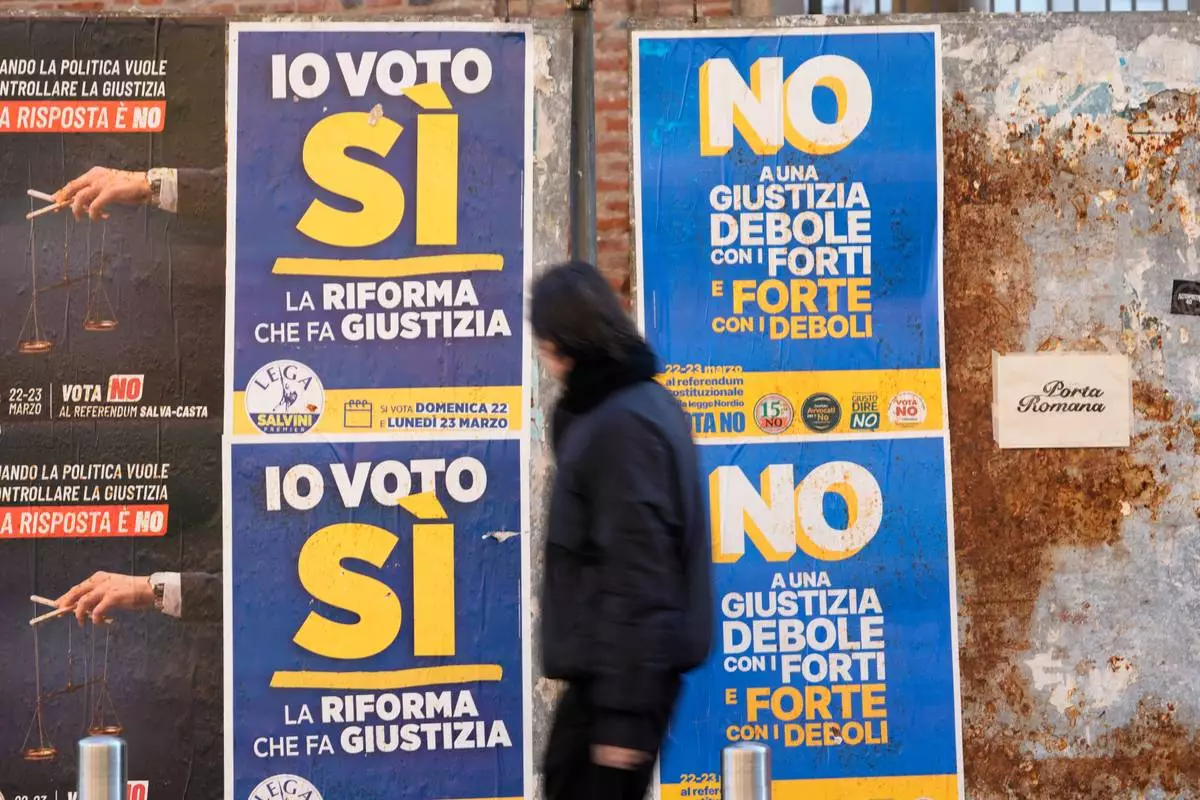
A man passes next to election posters as Italian citizens will be called on March 22th and 23th to approve or reject the constitutional reform of the judicial system introduced by the Meloni government, through a referendum that does not require a minimum voter turnout, in Milan, Italy, Friday, March 20, 2026. (AP Photo/Luca Bruno)
A man passes next to election posters as Italian citizens will be called on March 22th and 23th to approve or reject the constitutional reform of the judicial system introduced by the Meloni government, through a referendum that does not require a minimum voter turnout, in Milan, Italy, Friday, March 20, 2026. (AP Photo/Luca Bruno)

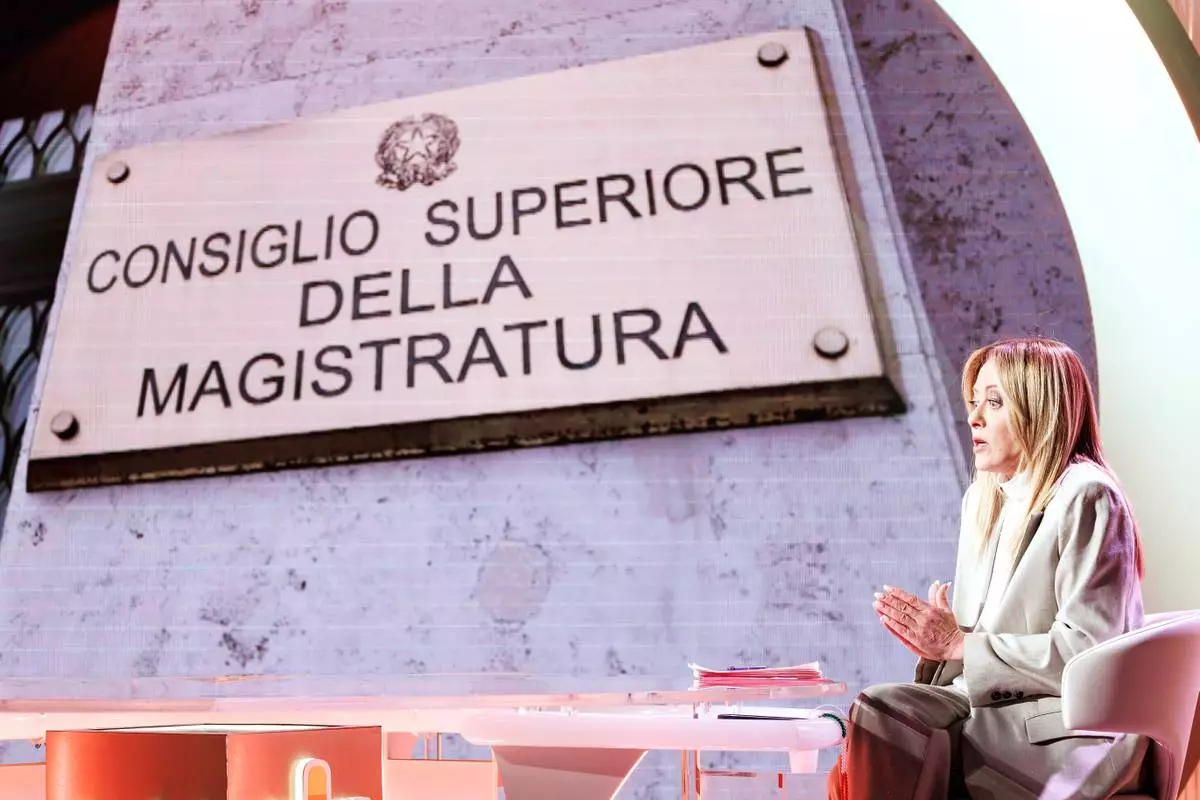
Italian premier Giorgia Meloni speaks about the upcoming referendum on a judicial reform during the RAI state television program Cinque minuti (Five Minutes), in Rome, Friday, March 20, 2026. Writing on placard on screen reads in Italian "Superior Council of Magistracy" (Roberto Monaldo /LaPresse via AP)
Italian premier Giorgia Meloni speaks about the upcoming referendum on a judicial reform during the RAI state television program Cinque minuti (Five Minutes), in Rome, Friday, March 20, 2026. Writing on placard on screen reads in Italian "Superior Council of Magistracy" (Roberto Monaldo /LaPresse via AP)

A man passes next to election posters as Italian citizens will be called on March 22th and 23th to approve or reject the constitutional reform of the judicial system introduced by the Meloni government, through a referendum that does not require a minimum voter turnout, in Milan, Italy, Friday, March 20, 2026. (AP Photo/Luca Bruno)
A man passes next to election posters as Italian citizens will be called on March 22th and 23th to approve or reject the constitutional reform of the judicial system introduced by the Meloni government, through a referendum that does not require a minimum voter turnout, in Milan, Italy, Friday, March 20, 2026. (AP Photo/Luca Bruno)

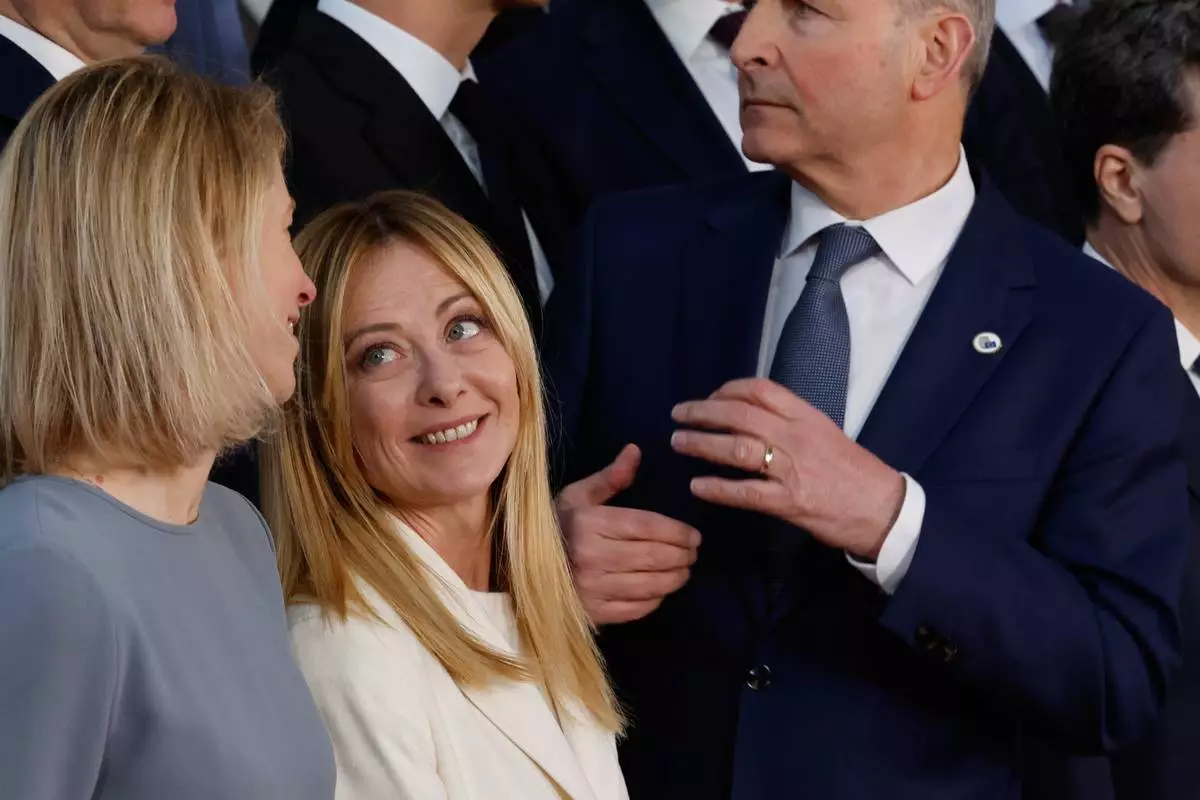
Italy's Prime Minister Giorgia Meloni, center, speaks with European Union foreign policy chief Kaja Kallas, left, during a group photo at an EU summit in Brussels, Thursday, March 19, 2026. (AP Photo/Geert Vanden Wijngaert)
Italy's Prime Minister Giorgia Meloni, center, speaks with European Union foreign policy chief Kaja Kallas, left, during a group photo at an EU summit in Brussels, Thursday, March 19, 2026. (AP Photo/Geert Vanden Wijngaert)

Italian premier Giorgia Meloni speaks about the upcoming referendum on a judicial reform during the RAI state television program Cinque minuti (Five Minutes), in Rome, Friday, March 20, 2026. (Roberto Monaldo /LaPresse via AP)
Italian premier Giorgia Meloni speaks about the upcoming referendum on a judicial reform during the RAI state television program Cinque minuti (Five Minutes), in Rome, Friday, March 20, 2026. (Roberto Monaldo /LaPresse via AP)
CAIRO (AP) — Iran and its ally, the Lebanese militant Hezbollah group, stepped up pressure on Israel on Sunday, with intense attacks on the country's north and south after the United States and Iran threatened to widen their targets in the war in the Middle East, now in its fourth week.

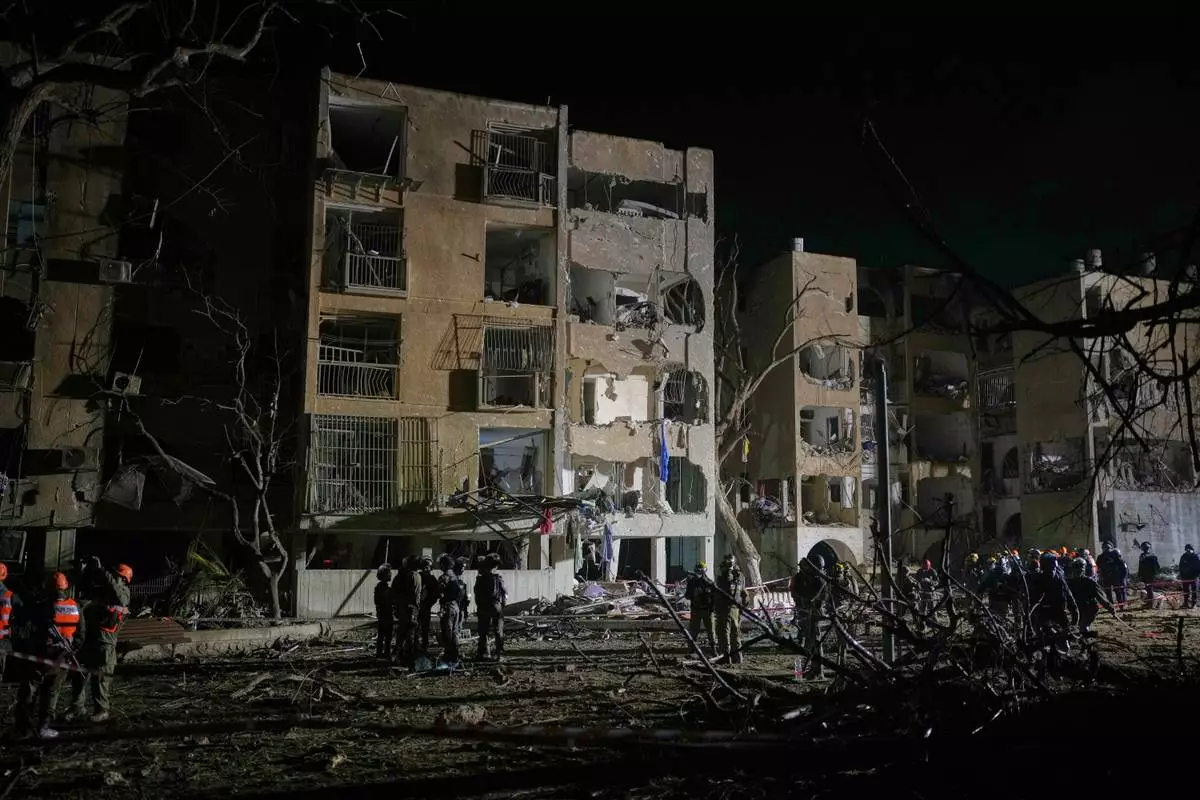
As Israel came under renewed fire, top Israeli leaders traveled to the Negev Desert, home to the country’s main nuclear research center and the site where Iran's barrages struck two towns on Saturday, shattering apartment buildings and injuring scores of people in Arad and Dimona.

Prime Minister Benjamin Netanyahu toured Arad and said it was a “miracle” no one was killed there. He claimed Israel and the U.S. were well on their way to achieving the war’s goals and implored the international community for support.

Earlier, President Donald Trump warned the United States will destroy Iran’s power plants if Tehran fails to fully open the Strait of Hormuz in 48 hours. Iran's parliament speaker said if the U.S. follows through on its threat, Tehran would retaliate against American and Israeli energy and wider infrastructure in the region.

The developments signaled the Iran war, which the U.S. and Israel launched on Feb. 28, was moving in a dangerous new direction, despite Trump's mention last week he was considering “winding down" operations. The war that has killed hundreds of people, rattled the global economy and sent oil prices surging.

Hezbollah claimed responsibility for an airstrike Sunday that killed a man in northern Israel while Gulf Arab states — including Saudi Arabia and the United Arab Emirates — said they were working to intercept new Iranian strikes.

Iran has practically closed the Strait of Hormuz, a critical chokepoint connecting the Persian Gulf to the rest of the world through which roughly one-fifth of the world's supply passes. Attacks on commercial ships and threats of further strikes have stopped nearly all tankers from navigating the strait, compelling some of the world's largest oil producers to make cuts because their crude has nowhere to go.

The blockade is a liability for both the U.S. and its allies in Europe and Asia, who rely heavily on the Persian Gulf supply to meet energy demand and power factories, vehicles and homes. The U.S. lifted some sanctions on Iranian oil at sea to relieve pressure on energy prices.

On Saturday, Trump said he would give Iran 48 hours to open the strait or the U.S. would destroy Iran's “various POWER PLANTS, STARTING WITH THE BIGGEST ONE FIRST!”

The Iranian parliament speaker, Mohammad Bagher Qalibaf, responded Sunday on X that if Iran's power plants and infrastructure were targeted, then vital infrastructure across the region — including energy and desalination facilities — would be considered legitimate targets and “irreversibly destroyed.”

Separately, Iranian officials on Sunday said they would keep providing safe passage through the strait to vessels from countries other than its enemies.

Iran said its strikes in the Negev Desert were in retaliation to an earlier attack on Iran’s main nuclear enrichment site in Natanz, according to state-run media.

Tehran hailed the attack as show of strength — even as Israel's military asserts that Iranian missile launches have gradually decreased in frequency since the start of the war.

“If the Israeli regime is unable to intercept missiles in the heavily protected Dimona area, it is, operationally, a sign of entering a new phase of the battle,” said Qalibaf, the Iranian parliament speaker.

Dimona is about 20 kilometers (12 miles) west of the nuclear research center and Arad around 35 kilometers (22 miles) to the north.

Soroka, southern Israel’s main hospital, received at least 175 wounded from Arad and Dimona, the hospital's deputy director Roy Kessous told The Associated Press.

Israel is widely believed to possess nuclear weapons, though it doesn’t confirm or deny their existence. The U.N. nuclear watchdog said on X it had not received reports of damage to the Israeli center or abnormal radiation levels.

Israel denied responsibility for hitting Natanz on Saturday while the Iranian judiciary’s official news agency, Mizan, said there was no leakage. The Pentagon declined to comment on the strike at Natanz, which was also hit in the first week of the ongoing war and in the 12-day war last June.

The U.N. watchdog — the International Atomic Energy Agency — has said the bulk of Iran’s estimated 972 pounds (441 kilograms) of enriched uranium is elsewhere, beneath the rubble at its Isfahan facility.

Iran said Saturday’s strike at Natanz also hit a hospital in nearby Andimeshk. The health ministry reported patients and doctors were evacuated from there.

“Patients in the city of Andimeshk were forced to leave the only hospital in the city,” Health Ministry spokesman Hossein Kermanpour wrote on X.

He posted images showing a ward with a partially collapsed ceiling, a corridor strewn with broken glass, and said patients had been transferred to another city.

In Iran, the death toll in the war surpassed 1,500 on Saturday, state media reported, citing the health ministry. In Israel, 15 people have been killed by Iranian strikes. More than a dozen civilians in the occupied West Bank and Gulf Arab states have been killed in strikes.

The war has also seen noncombat related accidents, including a U.S. refueling plane crash in western Iraq that killed six U.S. service members and a Qatari military helicopter crash on Saturday that was blamed on a technical malfunction. All seven aboard the helicopter were killed, Qatari authorities said Sunday.

The Israeli civilian was killed in the northern town of Misgav Am in what Israel's military said “seemed to be” a rocket attack. Israeli medics said they found the man in his car and released a video showing two vehicles ablaze.

Hezbollah, an ally of Iran, launched strikes on Israel soon after the war erupted, saying it was in retaliation for the killing of Iran's Supreme Leader Ayatollah Ali Khamenei. Israel struck back, bombarding Lebanon and targeting Hezbollah in deadly airstrikes, expanding its presence in southern Lebanon and amassing more troops near the border.

Lebanese authorities say Israel's strikes have killed more than 1,000 people and displaced more than 1 million.

Metz reported from Ramallah, West Bank. Associated Press writers Melanie Lidman in Tel Aviv, Israel, Koral Saeed in Abu Snan, Israel, and Isabel Debre in Beirut contributed reporting.

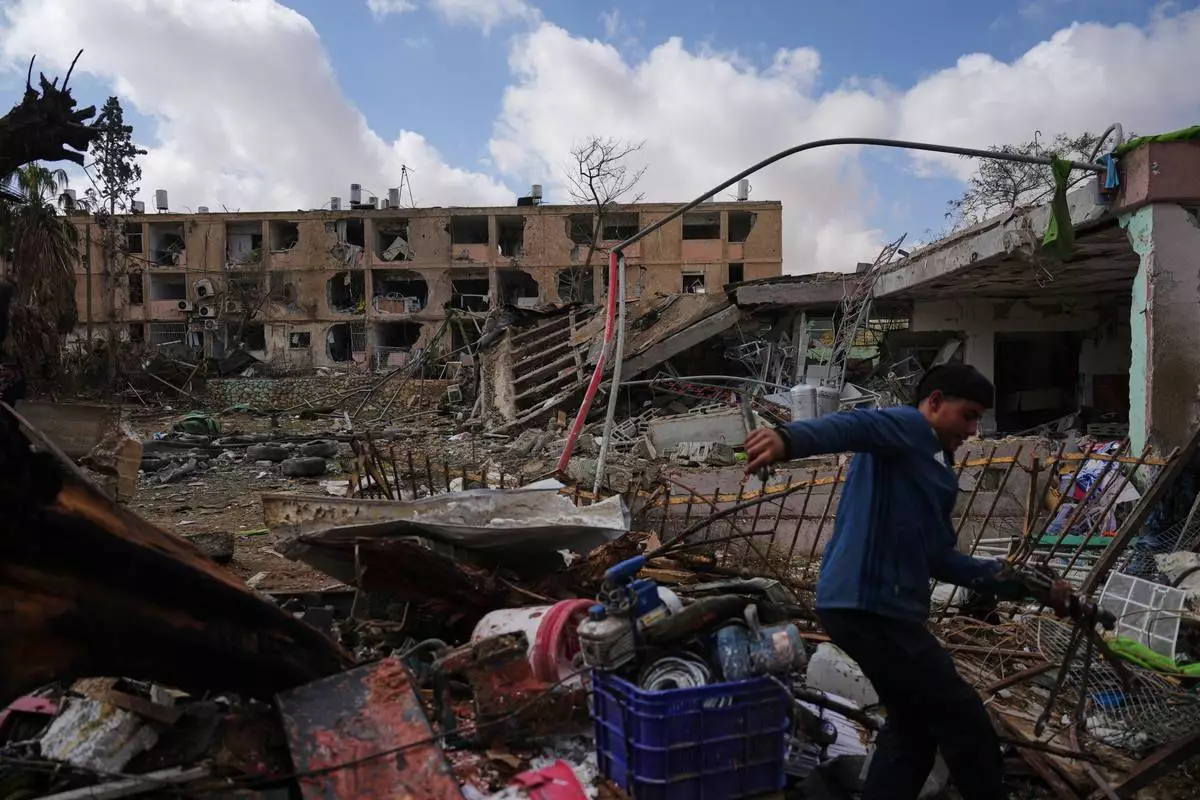
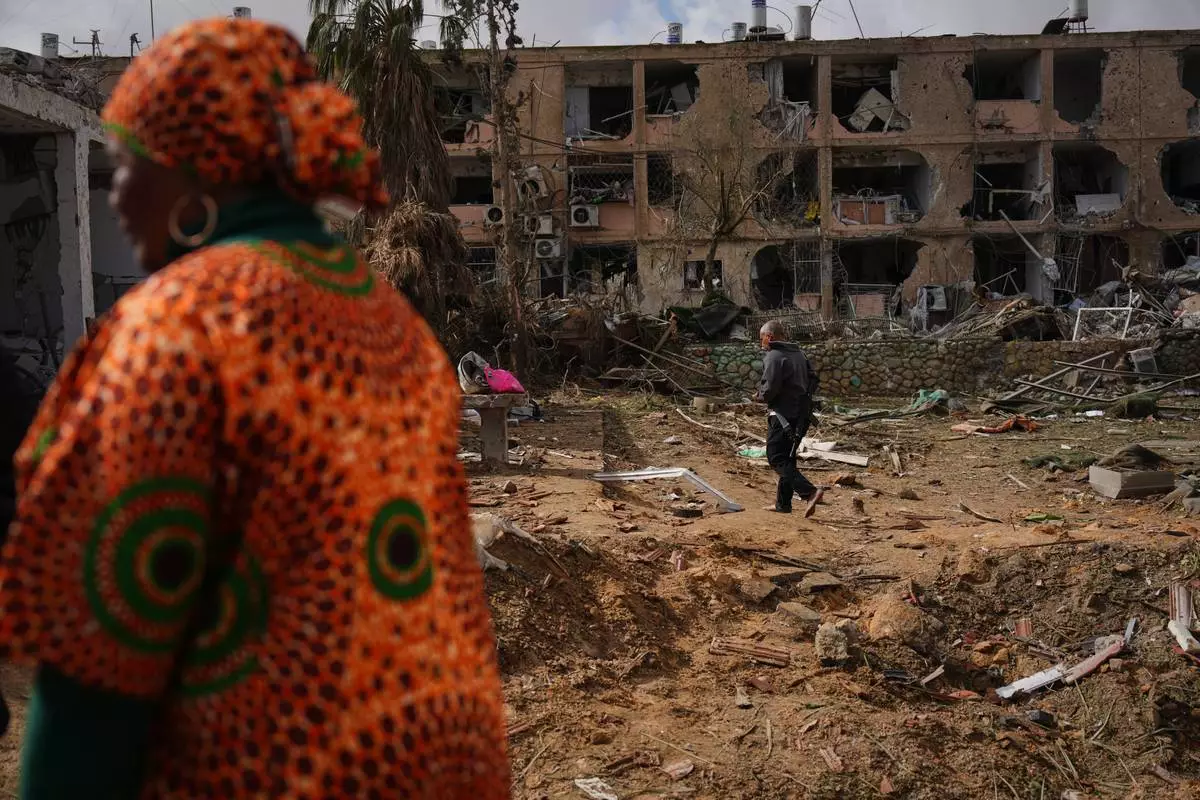
People survey a site that was struck by an Iranian missile in Dimona, southern Israel, Sunday, March 22, 2026. (AP Photo/Ariel Schalit)

People survey a site that was struck by an Iranian missile in Dimona, southern Israel, Sunday, March 22, 2026. (AP Photo/Ariel Schalit)

People survey a site that was struck by an Iranian missile in Dimona, southern Israel, Sunday, March 22, 2026. (AP Photo/Ariel Schalit)

People survey a site that was struck by an Iranian missile in Dimona, southern Israel, Sunday, March 22, 2026. (AP Photo/Ariel Schalit)

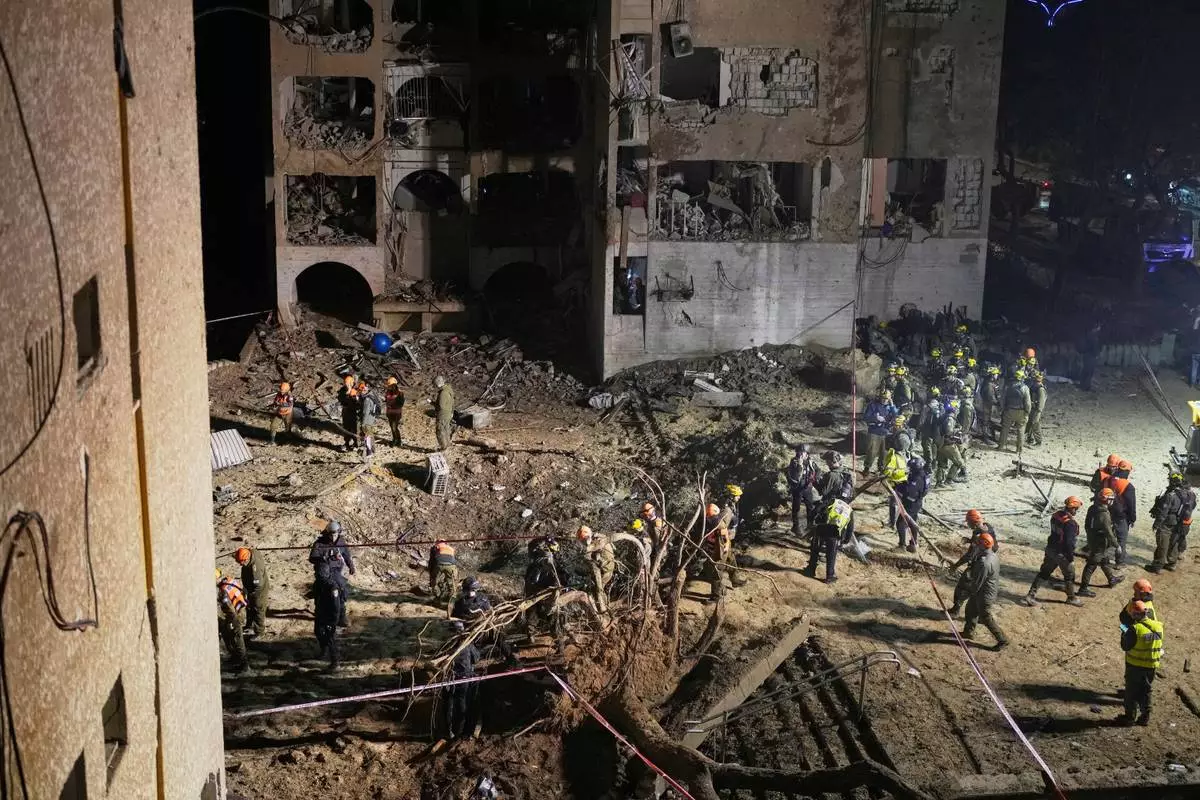
Israeli security forces and rescue teams work at the site struck by an Iranian missile in Arad, southern Israel, Sunday, March 22, 2026. (AP Photo/Ohad Zwigenberg)

Israeli security forces and rescue teams work at the site struck by an Iranian missile in Arad, southern Israel, Sunday, March 22, 2026. (AP Photo/Ohad Zwigenberg)

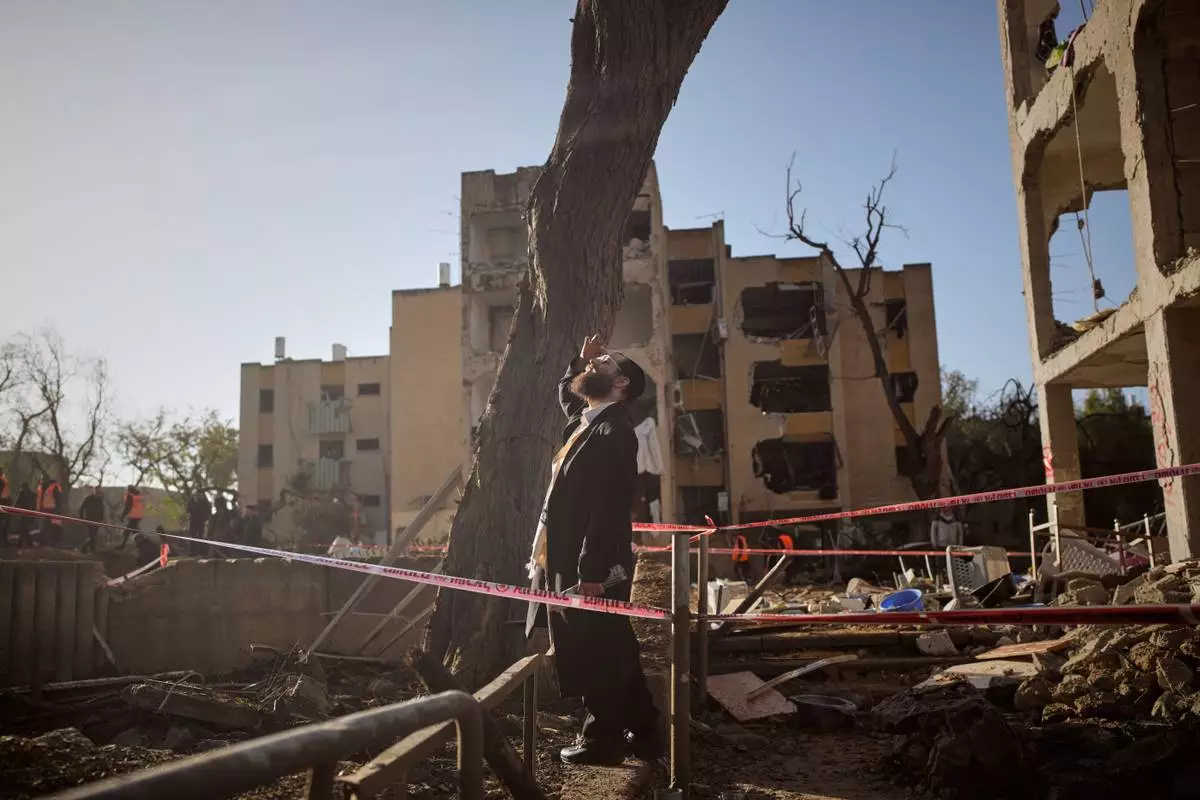
A man looks at residential buildings damaged by an Iranian missile strike in Arad, southern Israel, Sunday, March 22, 2026. (AP Photo/Ohad Zwigenberg)

A man looks at residential buildings damaged by an Iranian missile strike in Arad, southern Israel, Sunday, March 22, 2026. (AP Photo/Ohad Zwigenberg)

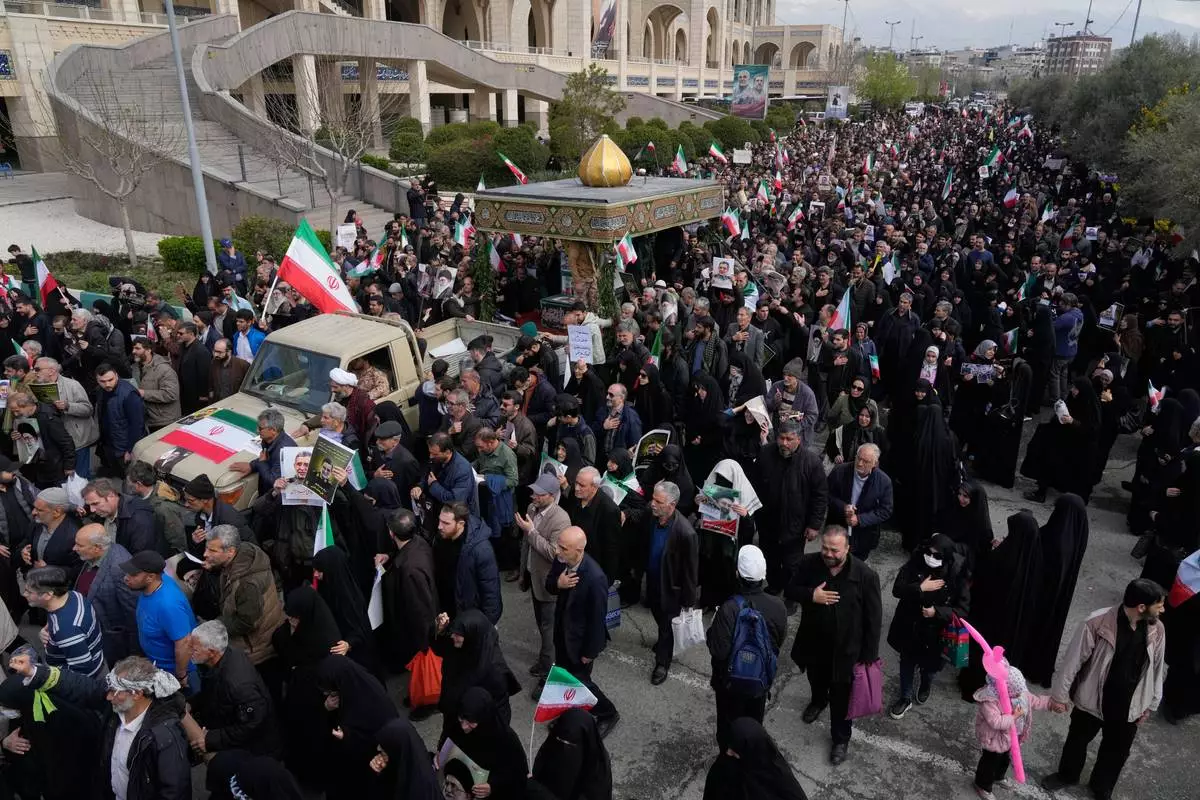
People follow a truck carrying the flag draped coffins of Gen. Ali Mohammad Naeini, a spokesperson for Iran’s paramilitary Revolutionary Guard and one of his comrades Amir Hossein Bidi , during their funeral procession in Tehran, Iran, Saturday, March 21, 2026. (AP Photo/Vahid Salemi)

People follow a truck carrying the flag draped coffins of Gen. Ali Mohammad Naeini, a spokesperson for Iran’s paramilitary Revolutionary Guard and one of his comrades Amir Hossein Bidi , during their funeral procession in Tehran, Iran, Saturday, March 21, 2026. (AP Photo/Vahid Salemi)

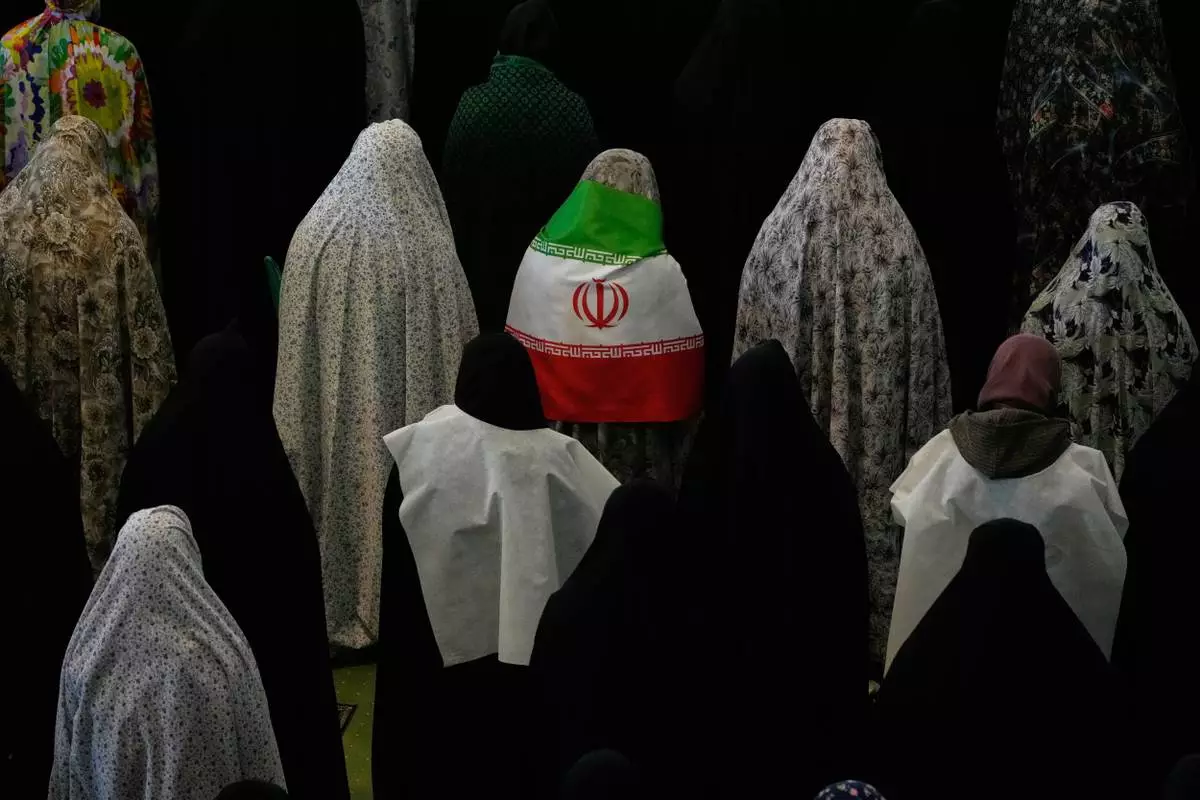
Iranian worshippers perform Eid al-Fitr prayers marking the end of the holy fasting month of Ramadan as one of them wears an Iranian flag at the Imam Khomeini Grand Mosque in Tehran, Iran, Saturday, March 21, 2026. (AP Photo/Vahid Salemi)

Iranian worshippers perform Eid al-Fitr prayers marking the end of the holy fasting month of Ramadan as one of them wears an Iranian flag at the Imam Khomeini Grand Mosque in Tehran, Iran, Saturday, March 21, 2026. (AP Photo/Vahid Salemi)

Israeli security forces and rescue teams work at the site struck by an Iranian missile in Arad, southern Israel, Sunday, March 22, 2026. (AP Photo/Ohad Zwigenberg)

Israeli security forces and rescue teams work at the site struck by an Iranian missile in Arad, southern Israel, Sunday, March 22, 2026. (AP Photo/Ohad Zwigenberg)

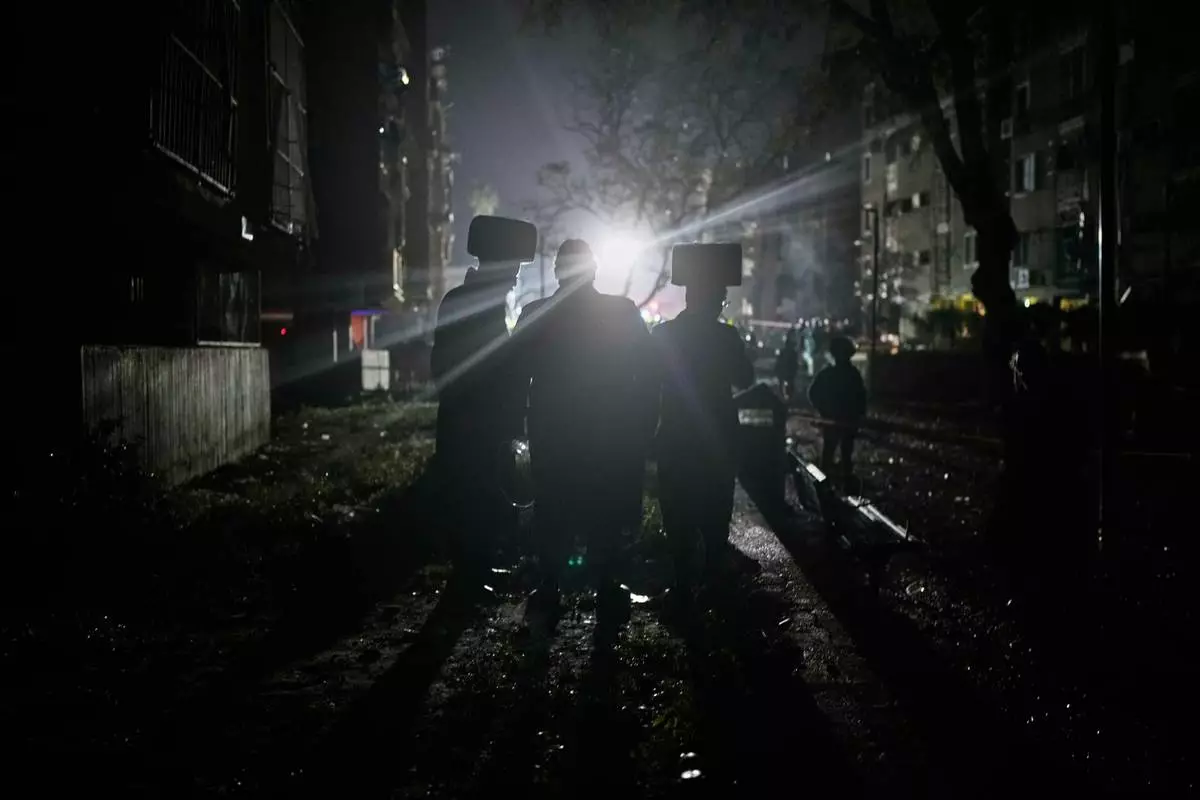
Ultra-Orthodox Jewish men watch as Israeli security forces and rescue teams operate at the site hit by an Iranian missile in Arad, southern Israel, Sunday, March 22, 2026. (AP Photo/Ohad Zwigenberg)

Ultra-Orthodox Jewish men watch as Israeli security forces and rescue teams operate at the site hit by an Iranian missile in Arad, southern Israel, Sunday, March 22, 2026. (AP Photo/Ohad Zwigenberg)

Recommended Articles