China's electric vehicle (EV) charging infrastructure continued to expand rapidly, with the total number of charging points reaching 21.01 million by the end of February 2026, up 47.8 percent year on year, the National Energy Administration has revealed.
Of this total, public charging facilities numbered 4.834 million, an increase of 28.8 percent from a year earlier.
Private charging facilities totaled 16.176 million units by the end of last month, surging 54.6 percent year on year and reflecting strong growth in residential charging demand.
The data, sourced from the national charging infrastructure monitoring and service platform, highlights the continued expansion of China's EV support network alongside a surge in EV sales.
In 2025, China's EV sector saw accelerated growth momentum, with production and sales totaling 16.626 million and 16.49 million units, respectively, growing by 29 percent and 28.2 percent year on year, respectively, according to data from the China Association of Automobile Manufacturers.
In October 2025, China unveiled a three-year action plan to improve the country's EV charging infrastructure, aiming to establish a nationwide network of 28 million charging facilities, with public charging capacity surpassing 300 million kilowatts by the end of 2027.
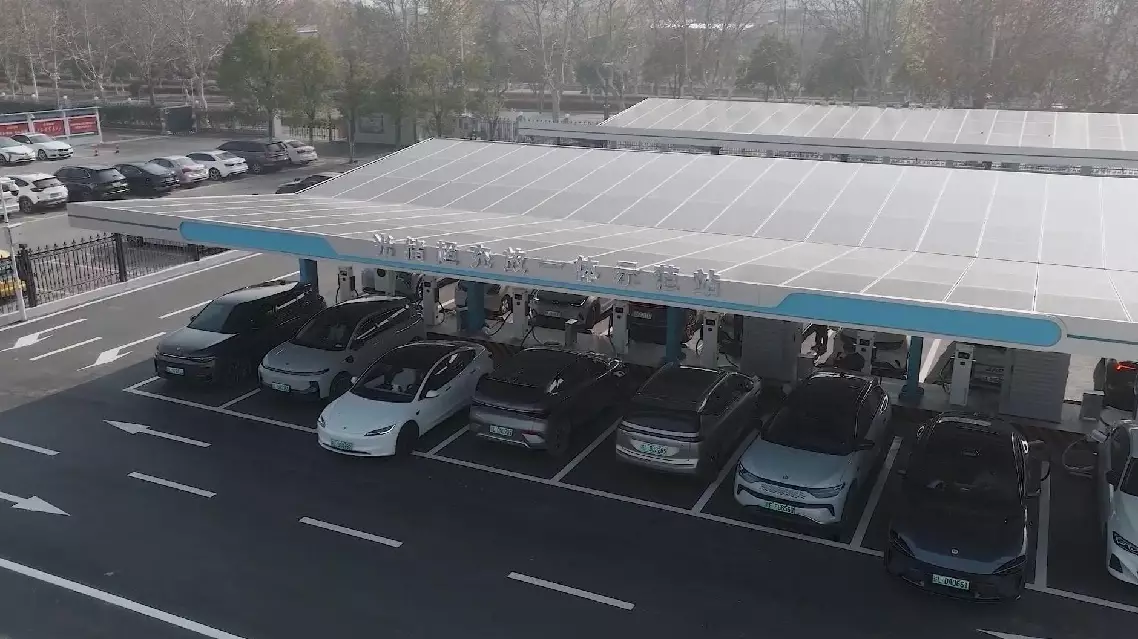
China's EV charging infrastructure exceeds 21 mln units
China will use various policy tools to build a robust domestic market, said China's Minister of Finance Lan Fo'an at the China Development Forum 2026 annual meeting on Sunday.
Themed "China in its 15th Five-Year Plan Period: Advancing High-Quality Development and Creating New Opportunities Together", the two-day event convenes global business leaders and scholars to explore shared opportunities emerging from China's pursuit of high-quality growth.
Lan stated the government will step up efforts to boost consumption and intensify implementation of inclusive policies that deliver benefits directly to consumers. This year, 250 billion yuan (around 36.3 billion USD) in ultra-long-term special treasury bonds will be allocated to support trade-in programs for consumer goods, and a 100 billion yuan fund will be established to stimulate domestic demand.
Meanwhile, efforts will be made to enhance long-term consumption capacity, strengthen employment support, improve the social security system, and increase residents' income through multiple channels.
On expanding effective investment, the government will optimize its investment structure and coordinate the use of ultra‑long‑term special treasury bonds, local government special bonds, and investment from the central government budget. Greater funding will be concentrated on priority areas such as new quality productive forces and new urbanization.
"We will improve fiscal and tax support policies, help private enterprises share risks, reduce financing costs, and stimulate private investment. This year, we will allocate special funds to provide credit enhancement for private enterprises issuing bonds; establish a special guarantee program for private investment; implement loan interest subsidy policies for micro, small and medium-sized enterprises; and guide more financial resources to business entities and the real economy," said Lan.
Finance ministry pledges stronger policy efforts to build robust domestic market