The negative chain effect brought by the U.S.-Israel-Iran conflict, which entered its 23rd day on Sunday, has posed significant challenges to various socioeconomic sectors in Dubai, the United Arab Emirates (UAE), with a sharp decline seen in the stock market and the real economy.
On Feb. 27, the Dubai Financial Market (DFM) General Index closed at 6,503.50 points. Following military action against Iran on Feb. 28 and subsequent Iranian retaliation, market sentiment plummeted.
As of March 18, the last trading day before the Eid al-Fitr holiday, the index closed at 5,550.24 points, down 14.66 percent from Feb. 27.
Market analysts said that the recent military threat directly targeting infrastructure such as airports and ports has led to a strategic withdrawal of foreign capital, while the ongoing risk of war is forcing some family offices to reassess their asset allocation in the Middle East. The stock market's performance reflects risks of rising future financing costs and foreign capital outflows.
In terms of the real economy, the property market has also cooled significantly following the escalation of the conflict.
According to data from the Dubai Land Department, in the second half of February, before the conflict, approximately 9,029 transactions were completed; while in the first two weeks of March, after the conflict, the number of transactions dropped to 6,541, a decrease of 27.56 percent.
At the same time, the aviation and tourism sectors are facing headwinds.
Dubai International Airport, as a global hub, has seen a drop in transit passenger traffic due to airspace closures and route adjustments, while tourists' willingness to travel has been significantly affected.
Analysts said that Dubai's economic situation will improve if the conflict can be brought under control in the short term. However, if the fighting is prolonged, the city's image as a global economic safe haven could be fundamentally reshaped.

Dubai stock market, real economy plummet as regional tensions escalate
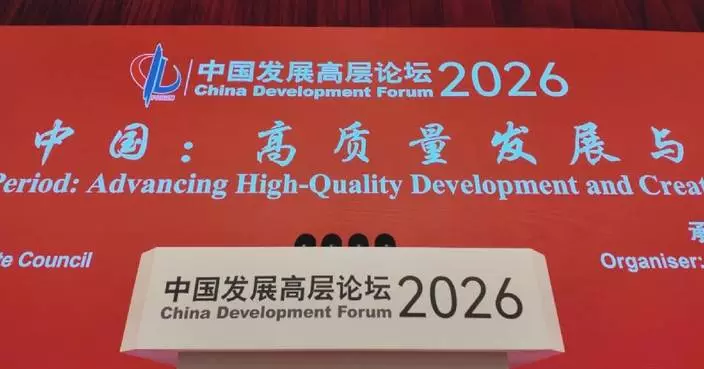
China's development blueprint for the 2026-2030 period will create strong market opportunities for industries worldwide, said Judy Marks, president and CEO of American elevator maker Otis, in Beijing on Sunday. The China Development Forum 2026 began on Sunday in Beijing. With the theme of "China in Its 15th Five-Year Plan Period: Advancing High-Quality Development and Creating New Opportunities Together," the two-day event is bringing together global officials, industry leaders, and experts for 13 thematic sessions and a series of closed-door discussions, covering topics including new trends in consumption growth, green and low-carbon transition, the development of future industries, and the industrial application of artificial intelligence (AI).
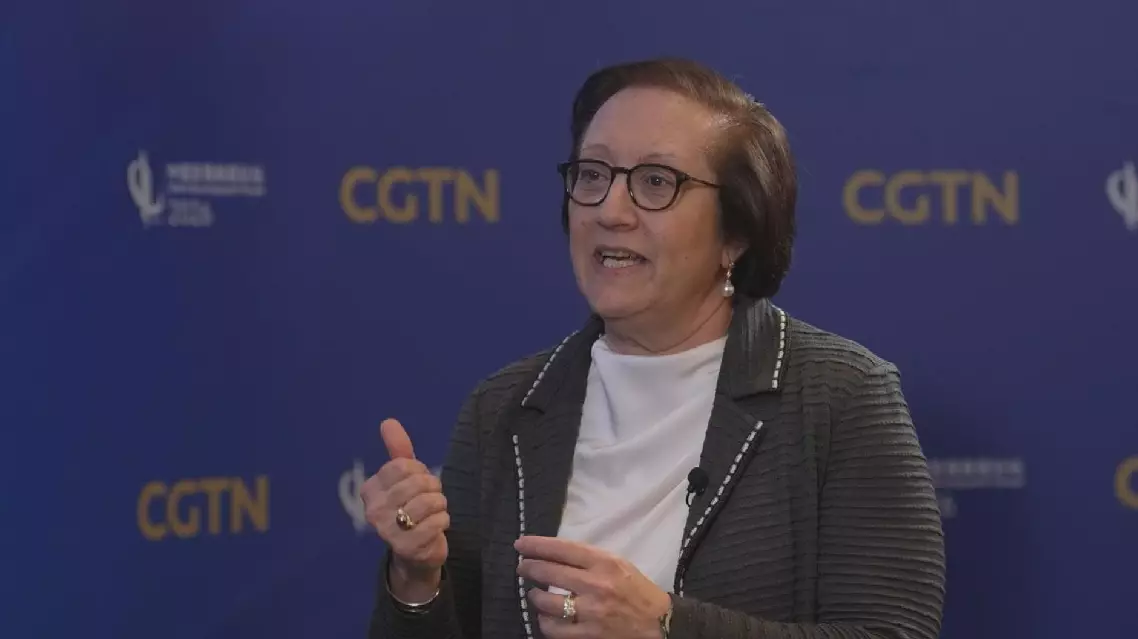
In an interview with China Global Television Network (CGTN) on the sidelines of the event, Marks shared her insights on the significant role of China's research capabilities and market environment for the global economy.
She said that Otis's research and development center in China, leveraging local resources, is well-positioned to advance its innovation strategy.
"So I would tell you to us in China, it's an innovation hub and an agility engine. And, that really describes China for us. We do work in China for China, but we also do both manufacturing and development and research for the rest of the world. And China, in Shanghai, has our largest development team of anywhere in the world. It makes us go faster. It's AI and digital driven -- and it really allows us to set the benchmark," said Marks.
She said that China is advancing rapidly in areas including smart cities and digital infrastructure, developments that will bring new opportunities and shape the future of the global elevator industry.
"Now to us, the world is digital and connected. They're the two highest priorities we have. If an elevator is part of an ecosystem in the building, we can share information with transportation systems, with energy systems. As China pursues even more of a low carbon world, our elevators actually push power back into the building and capture power when they break with our regenerative drives," she said.
Speaking of China's recently-approved 15th Five-Year Plan (2026-2030), aimed at expanding high-level opening up and driving high-quality development, Marks described it as highly encouraging for multinational companies.
"I would tell you everything we see in the 15th Five-Year Plan is encouraging: high-quality development, which is a commitment from the government and the whole ecosystem to serve its citizens, digitalization, urban renewal -- all of this combines. It's created a large market for a company like Otis. It's where we're going to invest, and it's in sync with our strategy and our mission," she said.
China's development blueprint brings opportunities to global industries: Otis CEO