WASHINGTON (AP) — Most Asian Americans, Native Hawaiians and Pacific Islanders believe President Donald Trump has done more harm than good on the issue of immigration and border security in his second term so far, according to a new AAPI Data/AP-NORC poll.
About 6 in 10 AAPI adults say Trump has hurt immigration and border security “a lot" or "a little," according to the survey from AAPI Data and The Associated Press-NORC Center for Public Affairs Research, compared with about 4 in 10 U.S. adults in a January AP-NORC survey. About two-thirds of AAPI adults — who are generally more likely to be Democrats than U.S. adults overall — also say Trump has “gone too far” when it comes to deporting immigrants living in the U.S. illegally, compared with about half of Americans in general.
Trump's administration has instituted sweeping immigration measures since he took office, but the past two months have been especially tumultuous. This past January, Trump suspended processing immigrant visas for citizens of 75 countries. Arrests at the U.S.-Mexico border have fallen dramatically, but the number of Immigration and Customs Enforcement arrests and detentions have soared. In December 2024, daily detentions averaged just under 40,000. Last month, they numbered about 70,000.
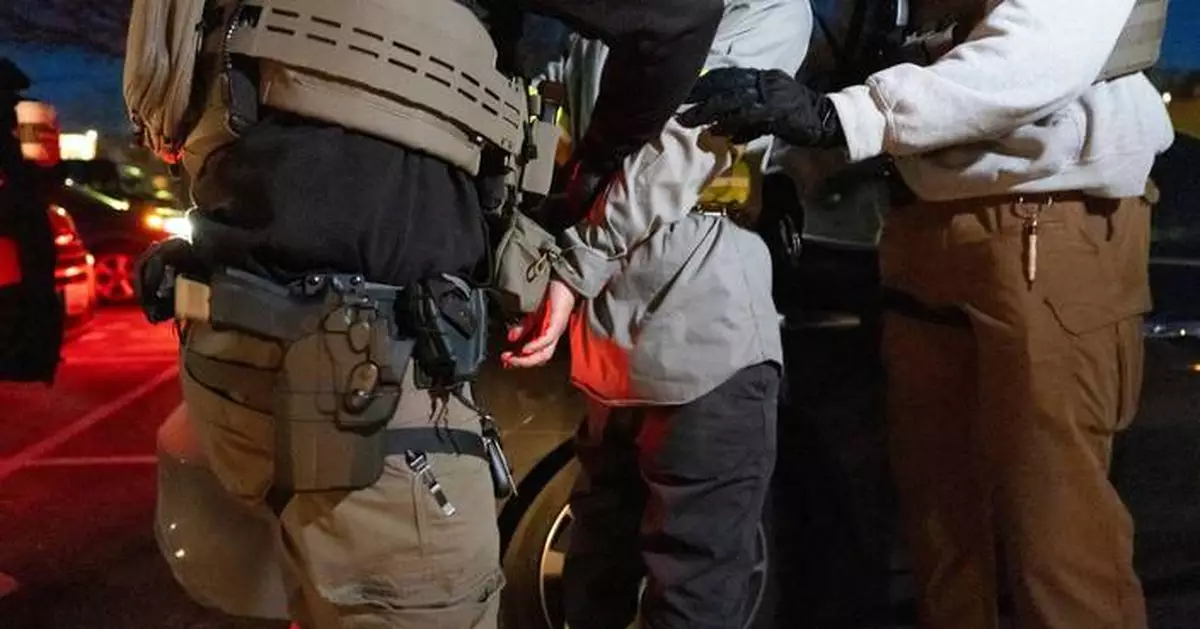
The survey was conducted on the heels of the January fatal shootings by ICE agents of two U.S. citizens and their detainment of a Hmong American man — clad only in his underwear — in freezing temperatures.
These immigration crackdowns hit close to home for Jeff Ugai, who lives in Hawaii. On his island, Kauai, nearly four dozen people were arrested in November in immigration raids.
“It seems like the current administration’s efforts have been more almost about cruelty than they have about actually establishing an immigration system that makes sense to this country,” said Ugai, 39, who is a Democrat.
AAPI adults, one of the fastest-growing demographics in the U.S., broadly don't support Trump's tough tactics on immigration, the poll found. A separate AAPI Data/AP-NORC survey last fall found that unhappiness about Trump's immigration approach had risen from earlier in the year.
“We’re also seeing opposition to policies that may not involve violence or violations of due process, but still involve things like banning immigrants from entire countries where there is a history of visa overstays or deporting immigrants who are married to U.S. citizens," said Karthick Ramakrishnan, founder and executive director of AAPI Data.
In this poll, around 4 in 10 AAPI adults say deporting immigrants living in the U.S. illegally should be a low priority for the U.S. government, an increase from about one-third just after Trump took office. About one-third of AAPI adults now say these deportations should be a moderate priority, and only about 2 in 10 say they should be a high priority.
Fran Peace, 75, of Oroville, California, still sees deporting immigrants here illegally as a high priority. But the Japanese American retiree disagrees with stopping people based on “stereotypes” like their looks or if they have an accent. She also is open to a citizenship path for those who've lived here for years and haven’t committed a crime.
“I don’t think you should just have to go back automatically, but the laws don’t say that," Peace said. “If you’re illegal you go back. But I think there should be some concession made for the people that have been here a long time.”
Most AAPI adults, 73%, have a “somewhat” or “very” unfavorable opinion of U.S. Immigration and Customs Enforcement, known as ICE.
AAPI Republicans have a much less negative view of the agency than AAPI adults overall, with only about one-third saying they view ICE negatively. But only about one-quarter of Republicans overall had an unfavorable opinion of ICE in a February AP-NORC survey.
There's also widespread opposition to several hardline immigration policies, with about 6 in 10 saying they oppose large-scale immigration enforcement operations in neighborhoods with high populations of immigrants, and about 7 in 10 against allowing immigration enforcement agents to cover their faces when arresting people.
Prohibiting face coverings would be like body cameras, “helping keep people accountable,” Ugai said.
The AAPI adult population is split on whether immigrants here illegally have a large impact on social welfare resources and crime. About 4 in 10 AAPI adults think immigrants in the U.S. illegally pose a “major risk” of burdening welfare and safety net programs. A similar share see this as “a minor risk.” Only about one-quarter see “not a risk at all.”
On the question of whether immigrants here illegally will commit crimes, about one-third of AAPI adults see this as a “major risk,” while about half think it's a "minor risk.” Only 15% say it's “not a risk at all."
Peace credits Trump with driving down crime like drug trafficking because before his second term, the U.S. “practically had open borders."
But Daniel Kim, 65, of Las Cruces, New Mexico, thinks that immigrants pose little risk in terms of crime.
A Democrat and Korean American, he previously volunteered at a church to assist refugees with food and donations. He stopped going to his own evangelical church over church leaders' insistence on remaining apolitical.
“The church leadership just could not make the connection or could not find it in their hearts to think (about) the issues involved with the treatment of foreigners in our country," Kim said.
The poll of 1,197 U.S. adults who are Asian American, Native Hawaiian and Pacific Islanders was conducted Feb. 2-9, 2026, using a sample drawn from NORC’s probability-based Amplify AAPI Panel, designed to be representative of the Asian American, Native Hawaiian and Pacific Islander population. The margin of sampling error for all respondents is plus or minus 4.6 percentage points.
This poll is part of an ongoing project exploring the views of Asian Americans, Native Hawaiians and Pacific Islanders, which are usually not highlighted in other surveys because of small sample sizes and lack of linguistic representation.
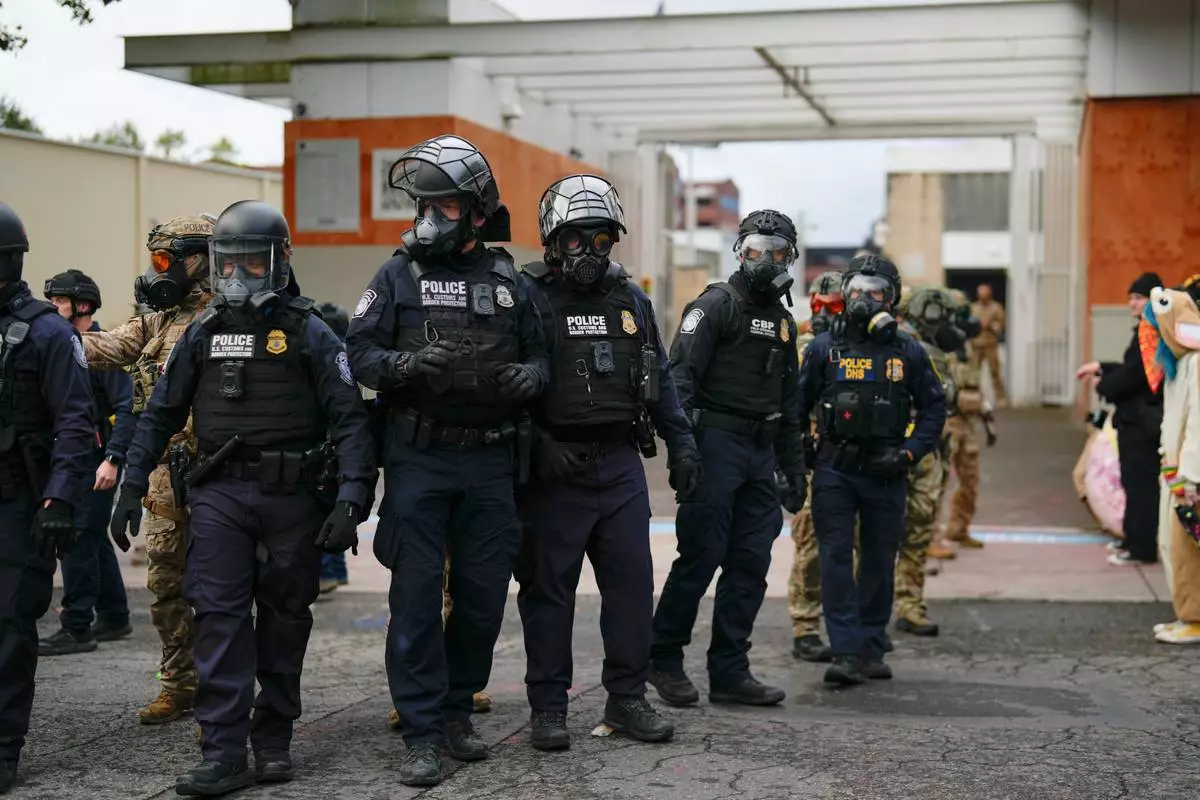
FILE - Law enforcement officers walk out of a U.S. Immigration and Customs Enforcement facility, Oct. 11, 2025, in Portland, Ore. (AP Photo/Jenny Kane, File)
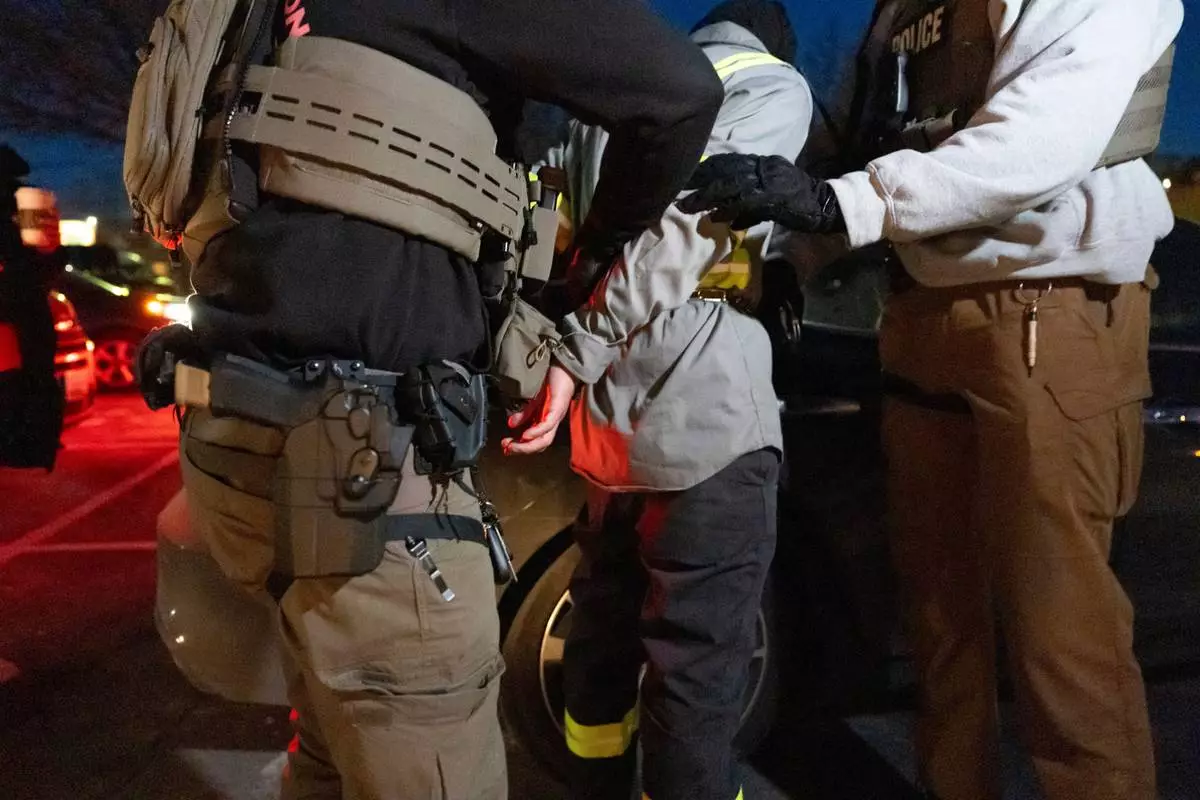
FILE - U.S. Immigration and Customs Enforcement officers detain a person, Jan. 27, 2025, in Silver Spring, Md. (AP Photo/Alex Brandon, File)
MIAMI (AP) — The federal trial of a former Miami congressman accused of secretly lobbying for Venezuela's government during the first Trump administration begins Monday with Secretary of State Marco Rubio set to testify over his interactions with his old friend.
Prosecutors allege David Rivera was a hired gun for former President Nicolás Maduro, leveraging Republican connections from his time in Congress to push the White House to abandon its hard line on Venezuela’s socialist government.
Rivera, who at one time had been Rubio's roommate in Florida, allegedly persuaded then Foreign Minister Delcy Rodríguez — now Venezuela’s acting president — to award him a $50 million lobbying contract to be paid by state oil company PDVSA. As part of the alleged foreign influence campaign, prosecutors say Rivera was aided by Texas Republican Rep. Pete Sessions and a convicted Cali cartel associate as he sought meetings with the White House and Exxon Mobil on Maduro’s behalf.
The trial offers a rare glimpse into the often unseemly role Miami — long a haven for exiles, corruption and anti-communist crusaders — plays in shaping U.S. policy in Latin America. As such, it is perhaps fitting that Rubio, Miami's most prominent politician, is set to take the stand Tuesday about his meetings with Rivera while the former congressman was allegedly helping Maduro mount a charm offensive in Washington.
Also likely to face scrutiny is Rodríguez, who relied on Rivera to set up meetings in New York, Caracas, Washington and Dallas in a bid to build U.S. support for normalizing relations with Venezuela — an effort that failed at the time but now appears within reach, albeit on unequal terms, following Maduro’s ouster and the ascent of his more pragmatic aide.
An 11-count indictment, unsealed in 2022, charges Rivera and an associate with money laundering and failing to register as a foreign agent.
Prosecutors allege that to hide their work, Rivera set up an encrypted chat group called MIA — for Miami — with his main conduit to the Maduro government: Venezuelan media tycoon Raúl Gorrín, who was subsequently charged in the U.S. with bribing top Venezuelan officials.
Members of the group used playful code words to discuss their activities: Maduro was the “bus driver,” Sessions “Sombrero,” and millions of dollars “melons,” according to prosecutors.
Rivera, 60, denies wrongdoing. His attorneys counter that his one-man firm, Interamerican Consulting, was hired by an American subsidiary of Venezuela’s state-owned oil company — not PDVSA itself — and therefore did not need to register as a foreign agent.
His consulting work, they say, was focused on positioning Venezuelan-owned Citgo in the U.S. energy industry and was wholly distinct from his peacemaking efforts, which involved working with Maduro's opponents to usher in leadership less hostile to the U.S.
But plaintiffs in a parallel civil case accuse Rivera of doing little of the promised work and using the contract as cover for illegal lobbying. Of the roughly $20 million he received, $3.75 million went to a South Florida company that maintained Gorrín’s luxury yacht.
Rubio’s expected testimony is highly unusual — not since Labor Secretary Raymond Donovan testified at a mafia trial in 1983 has a sitting member of the president’s Cabinet taken the stand in a criminal trial.
While Rubio isn't charged and there's no indication in the indictment that he acted improperly as a senator at the time, prosecutors say Rivera viewed him as a key ally in his outreach to the White House. For Rubio, prosecutors said in a pre-trial hearing last week, contact with Gorrín offered a backchannel to Caracas at a time U.S. authorities had detected a possible death threat against him from Venezuelan socialist party boss Diosdado Cabello.
Rivera and Rubio met at the senator's Washington home on July 9, 2017, according to the indictment. Rivera, the indictment says, told Rubio that he was working with Gorrín, who had persuaded Maduro to accept a deal in which he would hold free and fair elections.
“Remember, U.S. should facilitate, not just support, a negotiated solution,” Rivera texted Rubio two days later as the senator was set to meet Trump, the indictment says. “No vengeance, reconciliation.”
Following a second meeting between Rubio, Rivera, Gorrín and others, Rivera remarked in the chat that the bus driver — Maduro — would have to pay him for setting up the meeting with Rubio. Without the senator's support, Rivera said, there would be “no turkey,” he wrote.
The outreach quickly unraveled, however. Later that month, Trump sanctioned Maduro and labeled him a “dictator,” launching a “maximum pressure” campaign to unseat the president. Rubio took to the Venezuelan airwaves to press the White House's agenda.
“For Nicolás Maduro, who I am sure is watching, the current path you are on will not end well for you,” Rubio said July 31, 2017, in a rare 10-minute address to the Venezuelan people that aired on Gorrín's network.
The State Department declined to comment.
After the contract was signed, Rivera and Gorrín arranged a meeting in New York City between Rodríguez, then foreign minister and a PDVSA board member, and Sessions, whose Dallas-area district included Exxon's headquarters.
Later, Sessions tried to broker a meeting for Rodríguez with Darren Woods, who had succeeded Trump's then Secretary of State Rex Tillerson as CEO of Exxon. Rodríguez was looking to resolve a long-running investment dispute and lure Exxon back to Venezuela in order to revive the OPEC nation’s collapsing oil industry. The meeting never happened as Exxon rebuffed the outreach.
Almost a year after helping Rivera make inroads with Exxon, Sessions secretly traveled to Caracas for a meeting with Maduro arranged by Gorrín and Rivera, the indictment says. As part of the effort, Sessions also agreed to deliver a letter from the Venezuelan president to Trump.
The defense team also wanted Maduro and White House chief of staff Susie Wiles to testify. Maduro, through a lawyer, said he would invoke his constitutional right to remain silent if compelled, while prosecutors successfully quashed an attempt to subpoena Wiles, who was a registered lobbyist for Gorrín’s Globovision network at the same time the media magnate was working with Rivera.
Before being elected to Congress in 2010, Rivera was a high-ranking Florida legislator. During that time he shared a Tallahassee home with Rubio, who eventually became Florida House speaker.
Rivera has previously faced controversy, including allegations he secretly funded a Democratic spoiler candidate in a 2012 congressional race. Last year, federal prosecutors dropped the case after an appeals court threw out a sizable fine imposed by a lower court. Rivera was also investigated — but never charged — for campaign finance violations and a $1 million contract with a gambling company while serving in the Florida legislature.
Rivera has denied any wrongdoing and said both investigations were politically motivated.
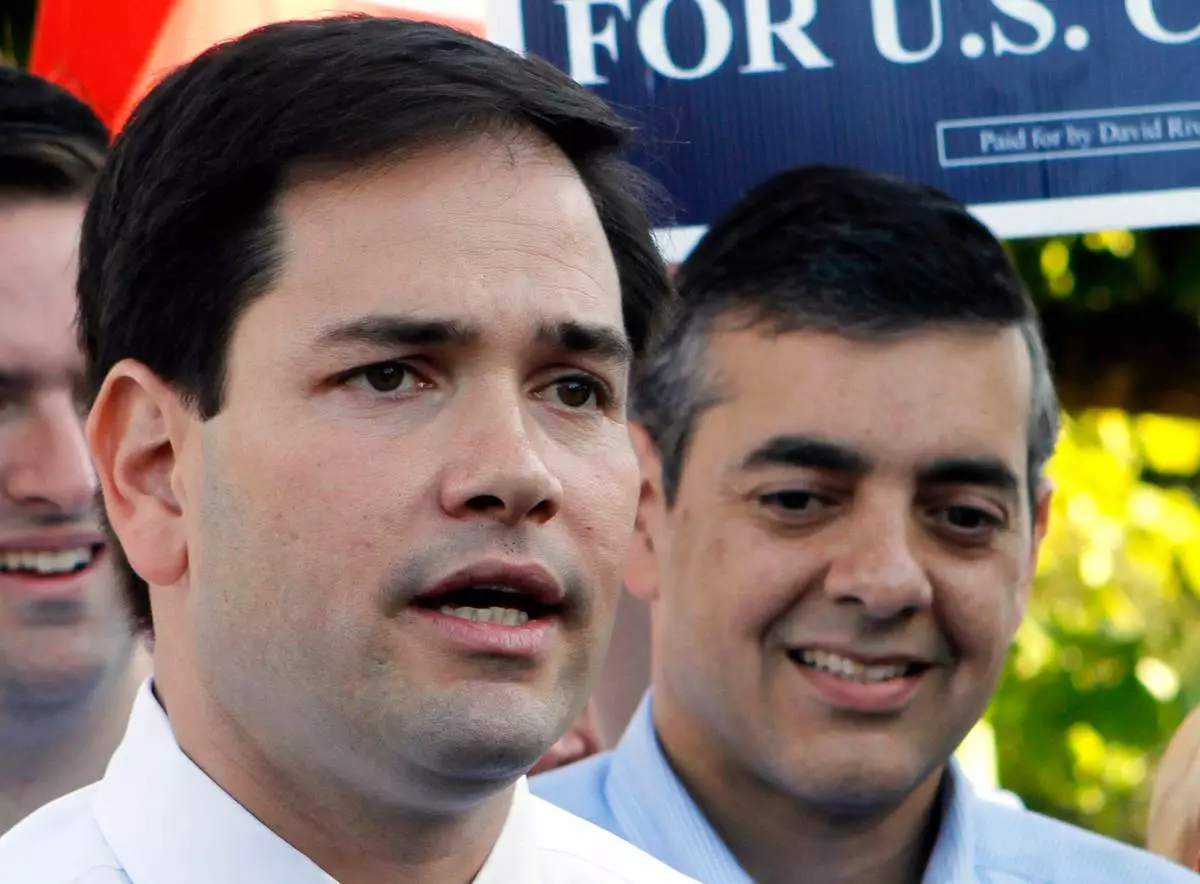
FILE - Then Republican U.S. Senate candidate Marco Rubio, left, accompanied by then Republican candidate for Congress David Rivera, talks to reporters in Miami, Oct. 20, 2010. (AP Photo/Alan Diaz, File)
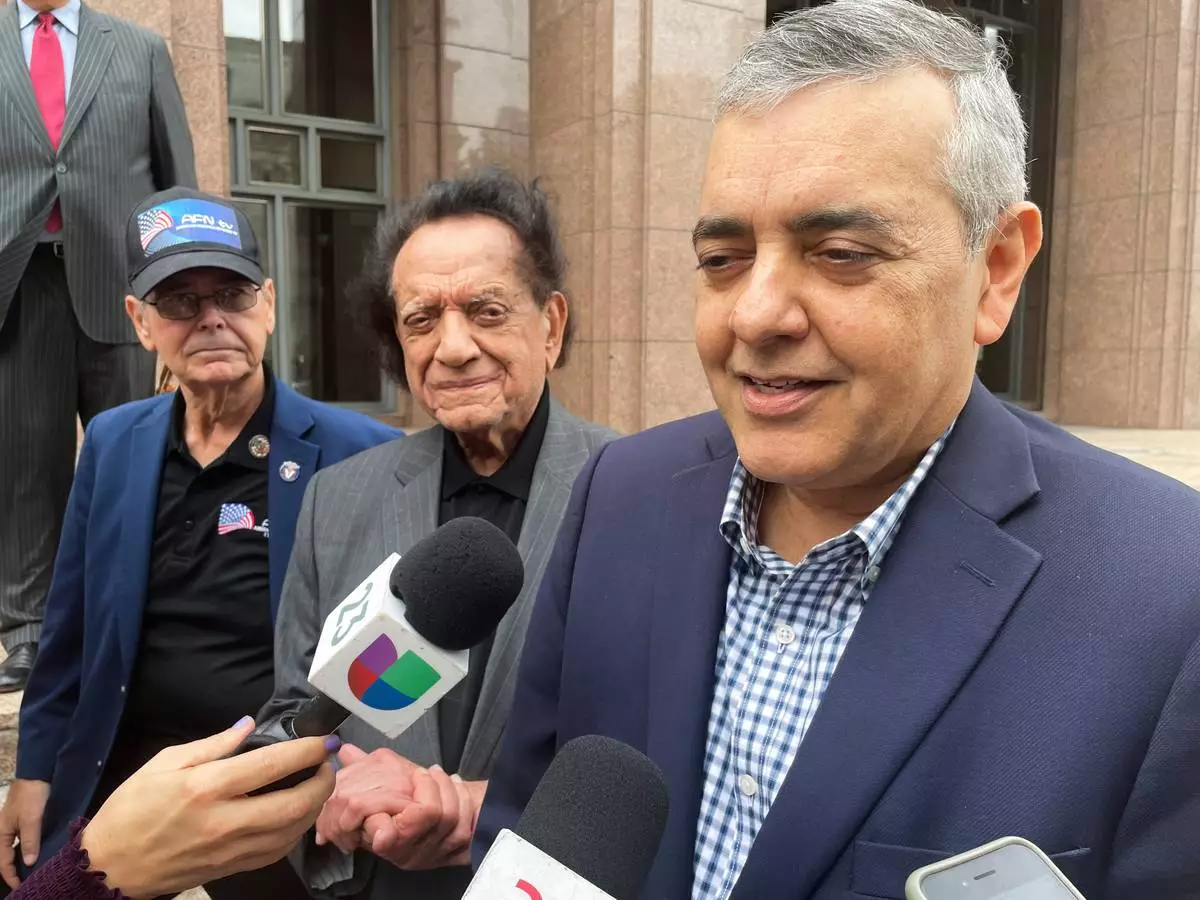
FILE - Former U.S. Rep. David Rivera speaks with media outside a federal court in Miami, Dec. 20, 2022. (AP Photo/Joshua Goodman, File)