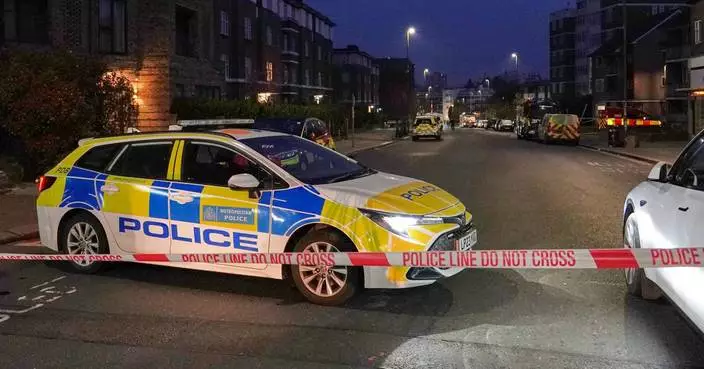
MARSEILLE, France (AP) — Ligue 1 club Marseille confirmed Monday the departure of its former president Pablo Longoria, who failed to win titles and to bring back stability at the former powerhouse of French soccer with a succession of coaches.
The nine-time French champions and 1993 Champions League winners said in a statement they have reached an agreement on the terms of Longoria's departure.
Longoria arrived at the club in 2020 in a sporting director role and was appointed president less than a year later after groups of angry supporters raided the club’s training complex, in protest against then-president Jacques-Henri Eyraud.
Under his presidency, Marseille reached the semifinals of the Europa Conference League in 2022 and the Europa League in 2024. But Marseille failed to perform in the Champions League and did not win a single title.
Longoria was moved aside last month after the departure of coach Roberto De Zerbi, with Alban Juster succeeding him on an interim basis.
Marseille thanked “Longoria’s commitment, passion, and the work he has accomplished over the past six years in service of the club.”
Longoria initially enjoyed strong support from Marseille fans as he secured several major signings and appointed high-profile coaches such as Jorge Sampaoli and Gennaro Gattuso.
However, since American investor Frank McCourt bought Marseille in 2016, the southern club has struggled to achieve stability, something Longoria proved unable to deliver.
Marseille dominated domestic soccer in the late 1980s and early 1990s. It was the only French team to win the Champions League before PSG claimed the trophy last year. Marseille hasn’t won the French league title since 2010 and has not claimed a trophy since the now-defunct League Cup in 2012.
Now coached by Habib Beye, Marseille lost 2-1 at home to Lille over the weekend and sits 11 points behind leader PSG in third place.
AP soccer: https://apnews.com/hub/soccer
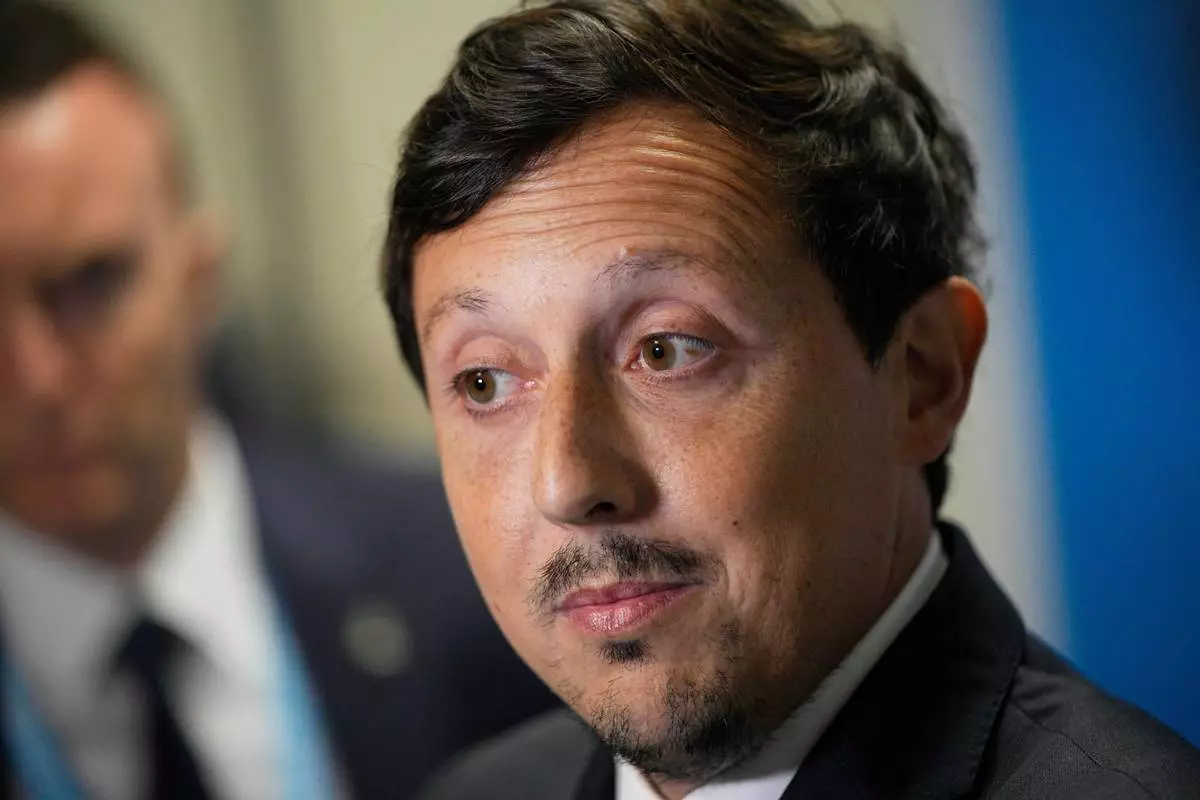
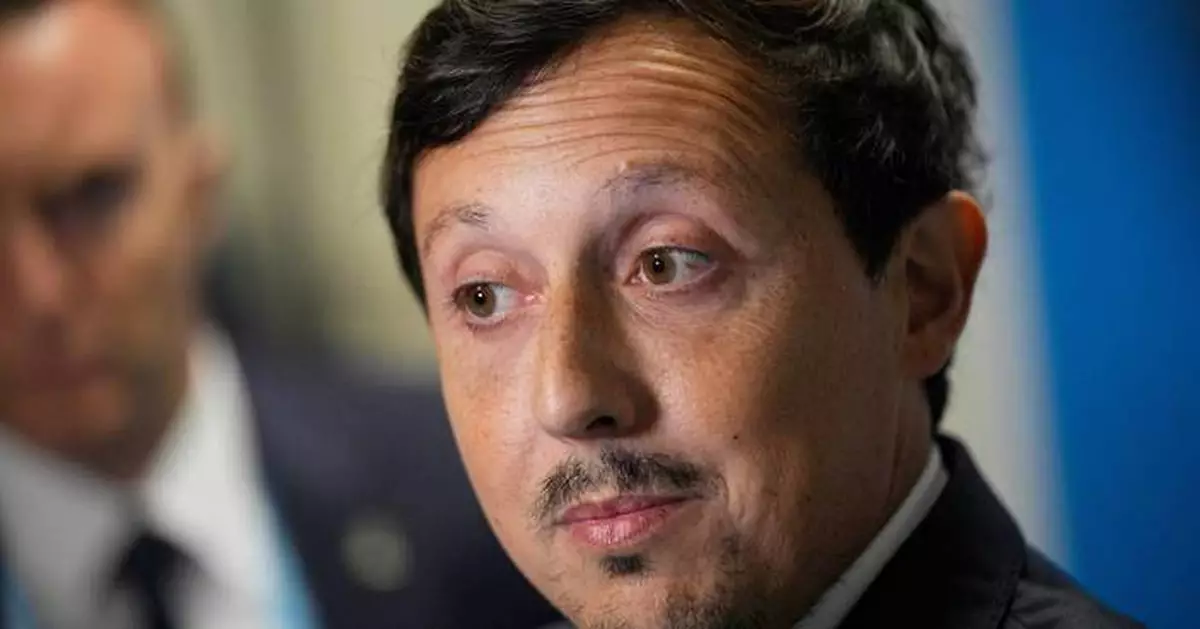
FILE - Olympique de Marseille President Pablo Longoria speaks during a news conference in Marseille, France, Sunday, Oct. 29, 2023. (AP Photo/Daniel Cole, File)
DUBAI, United Arab Emirates (AP) — Iran warned Monday that it would strike electricity plants across the Middle East and mine the Persian Gulf after U.S. President Donald Trump threatened to bomb power stations in the Islamic Republic if it did not reopen the crucial Strait of Hormuz to international shipping.
The war, now in its fourth week, has already seen several dramatic turning points — the killing of Iran’s supreme leader, the bombing of a key Iranian gas field, and strikes targeting oil and gas facilities and other civilian infrastructure in Gulf Arab nations. The conflict has killed more than 2,000 people, shaken the global economy, sent oil prices surging, and endangered some of the world’s busiest air corridors.
Trump’s ultimatum and Iran’s promise of retaliation now threaten to raise the stakes yet again, with potentially catastrophic repercussions for civilians across the region.
If carried out, the attacks could cut electricity to wide swaths of people in Iran and around the Gulf and knock out desalination plants that provide many desert nations with drinking water. There are also increasing concerns about the consequences any of strikes on nuclear facilities.
Even if the attacks are not carried out, the fever pitch of the rhetoric shows how the war has spiraled to a point unimaginable at the start of the conflict on Feb. 28, when the United States and Israel began bombing Iran.
Trump said the U.S. would “obliterate” Iran’s power plants unless the country releases its stranglehold on the Strait of Hormuz within 48 hours — a deadline that expires late Monday Washington time.
Iran has shut the strait, through which a fifth of the world’s oil is shipped along with other important commodities, in response to U.S. and Israeli strikes. A trickle of ships has gotten through, and Iran insists the crucial waterway remains open — just not to the U.S., Israel or their allies.
The chokehold has wreaked havoc on energy markets, pushed up the prices on food and other goods well beyond the Middle East and sent shock waves throughout the global economy.
“No country will be immune to the effects of this crisis if it continues to go in this direction,” said Fatih Birol, the head of the Paris-based International Energy Agency.
Iran’s paramilitary Revolutionary Guard promised retaliation if Trump made good on his threat, saying Iran it would hit power plants in all areas that supply electricity to American bases, “as well as the economic, industrial and energy infrastructures in which Americans have shares.”
Iranian parliament speaker Mohammad Bagher Qalibaf said Iran would consider vital infrastructure across the region to be legitimate targets, including energy and desalination facilities critical for drinking water in Gulf nations.
Iran's semiofficial Fars news agency, which is close to the Revolutionary Guard, published a list of such facilities, including the United Arab Emirates’ nuclear power plant. Over the weekend, Iran launched missiles targeting Dimona in Israel, near a facility key to its long-suspected atomic weapons program. The Israeli facility wasn’t damaged.
United States Central Command chief Adm. Brad Cooper, meanwhile, claimed in an interview that Iran was launching missiles and drones from populated areas, and suggested those areas would be targeted.
“You need to stay inside for right now,” Cooper told Iranian civilians in the interview with the Farsi-language satellite network Iran International that aired early Monday.
In his first one-on-one interview since the war started, Cooper said the U.S. and Israel were targeting infrastructure and manufacturing facilities to destroy Iran’s capabilities to rebuild its military.
“It’s not just about the threat today,” he said. “We’re eliminating the threat of the future.”
Israel launched new attacks Monday on the Iranian capital, saying it had “begun a wide-scale wave of strikes” on infrastructure targets in Tehran without immediately elaborating. Explosions were heard in multiple locations in the afternoon. It wasn’t immediately clear what had been hit.
With the U.S. deploying more amphibious assault ships and additional Marines to the Middle East, Iran warned against any ground attack.
“Any attempt by the enemy to target Iran’s coasts or islands will, naturally and in accordance with established military practice, lead to the mining of all access routes ... in the Persian Gulf and along the coasts,” Iran’s Defense Council warned said in a statement.
The widespread use of mines could imperil not only military vessels but scores of commercial ships waiting to pass through the Strait of Hormuz, and a cleanup would last long after the conflict ends.
Trump has said he has no plans to send ground forces into Iran but also has said that he retains all options. Israel has suggested its ground forces could take part in the war.
Israel has also targeted the Iran-linked Hezbollah militant group in Lebanon during the war, while the group has fired hundreds of rockets into Israel.
In recent days, Israel has hit many apartment buildings in Beirut and bombed bridges over the Litani river in the Lebanon's south.
Lebanese President Joseph Aoun called the targeting of bridges “a prelude to a ground invasion,” while Egypt denounced the strikes as the "collective punishment” of civilians for the actions of Hezbollah.
Authorities say Israeli strikes have killed more than 1,000 people in Lebanon and displaced more than 1 million.
Iran’s death toll has surpassed 1,500, its Health Ministry has said. In Israel, 15 people have been killed by Iranian strikes. At least 13 U.S. military members have been killed, along with more than a dozen civilians in the occupied West Bank and Gulf Arab states.
Oil prices remained stubbornly high in early trading, with the price of Brent crude, the international standard, at around $113 a barrel, up some 55% since the war began.
Jorge Moreira da Silva, a senior United Nations official, said the world has already seen a ripple effect, including “exponential price hikes in oil, fuel and gas” that have had a far-reaching impact on millions, primarily in Asian and African developing countries.
“There is no military solution,” he said.
In another sign of the far-reaching effects, South Korean chemical giant LG Chem said Monday it had to shut down a major industrial plant because the war had disrupted supplies of naphtha, a petroleum product used in plastic manufacturing.
Rising reported from Bangkok and Magdy from Cairo. AP writers Charlotte Graham-McLay in Wellington, New Zealand, Sally Abou AlJoud and Bassem Mroue in Beirut, and Tong-hyung Kim in Seoul, South Korea, contributed to this report.
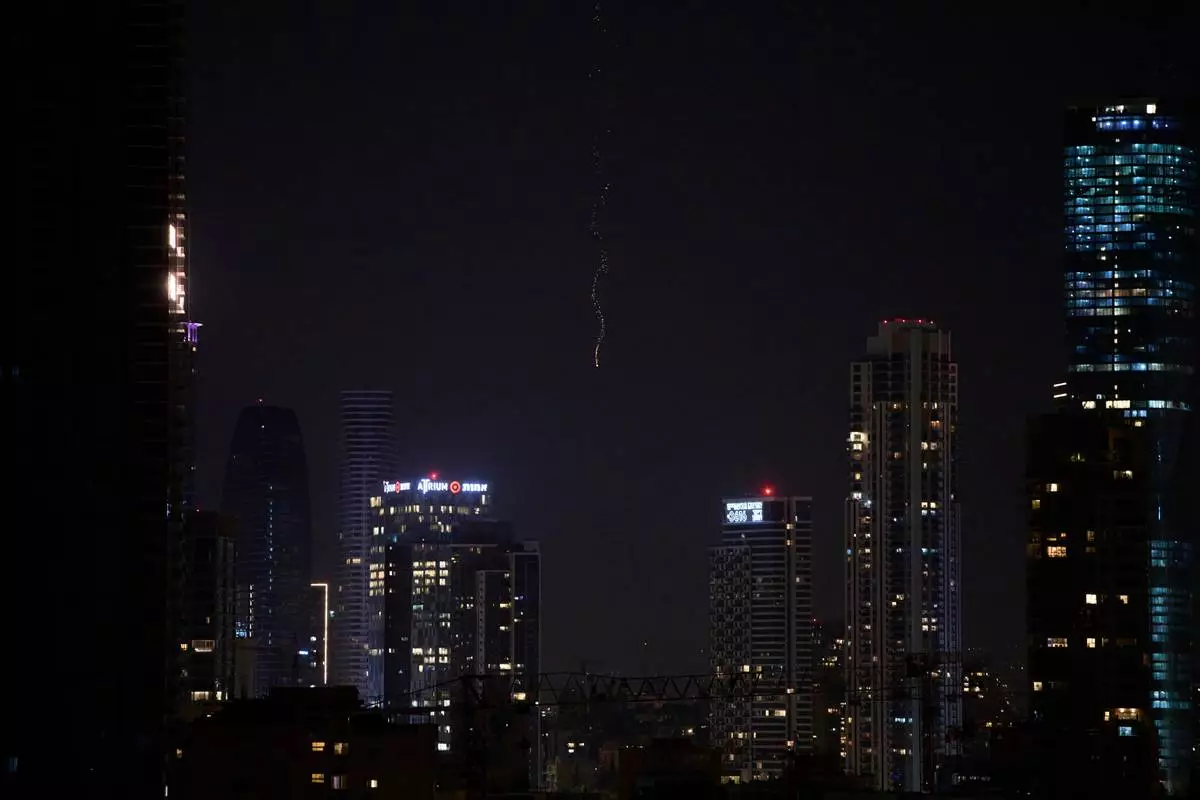
Missiles launched from Iran streak across the sky over central Israel, early Monday, March 23, 2026. (AP Photo/Ohad Zwigenberg)
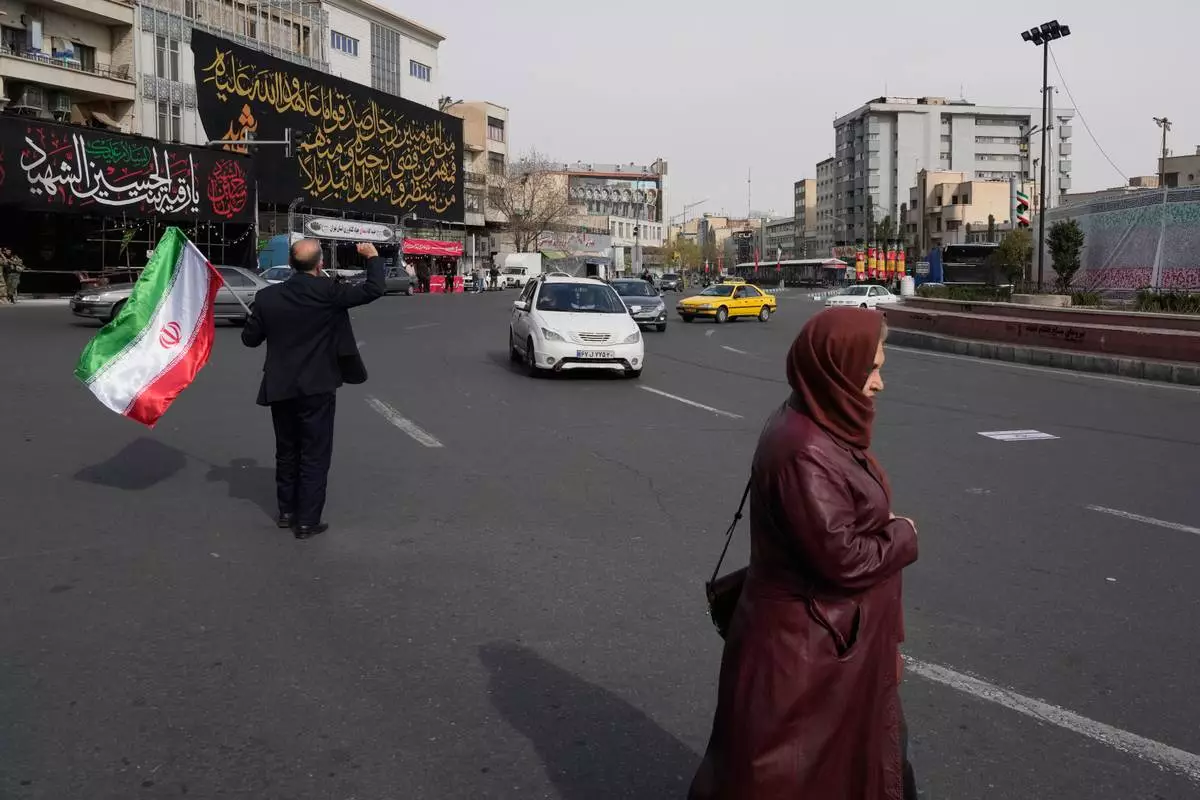
A man waves an Iranian flag during a campaign in support of the government as a woman and vehicles pass by at the Enqelab-e-Eslami, or Islamic Revolution, square in downtown Tehran, Iran, Sunday, March 22, 2026. (AP Photo/Vahid Salemi)
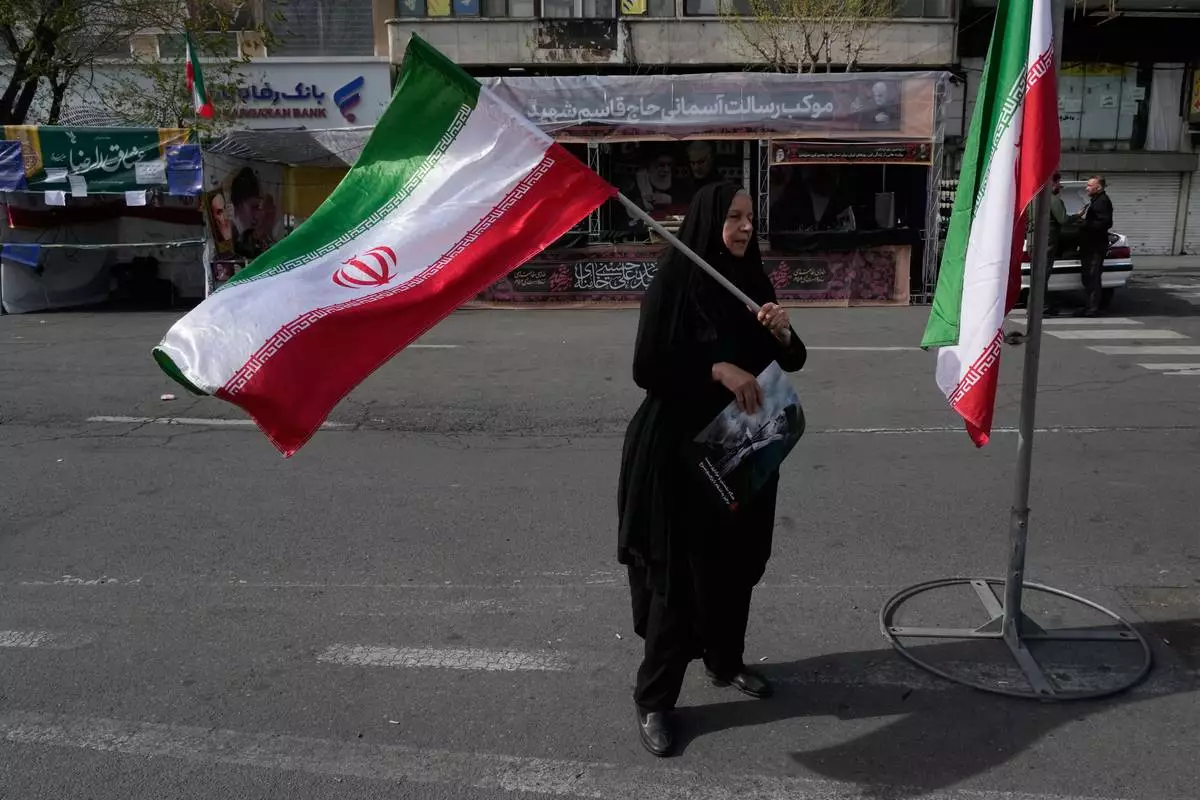
A woman waves an Iranian flag during a campaign in support of the government at the Enqelab-e-Eslami, or Islamic Revolution, square in downtown Tehran, Iran, Sunday, March 22, 2026. (AP Photo/Vahid Salemi)
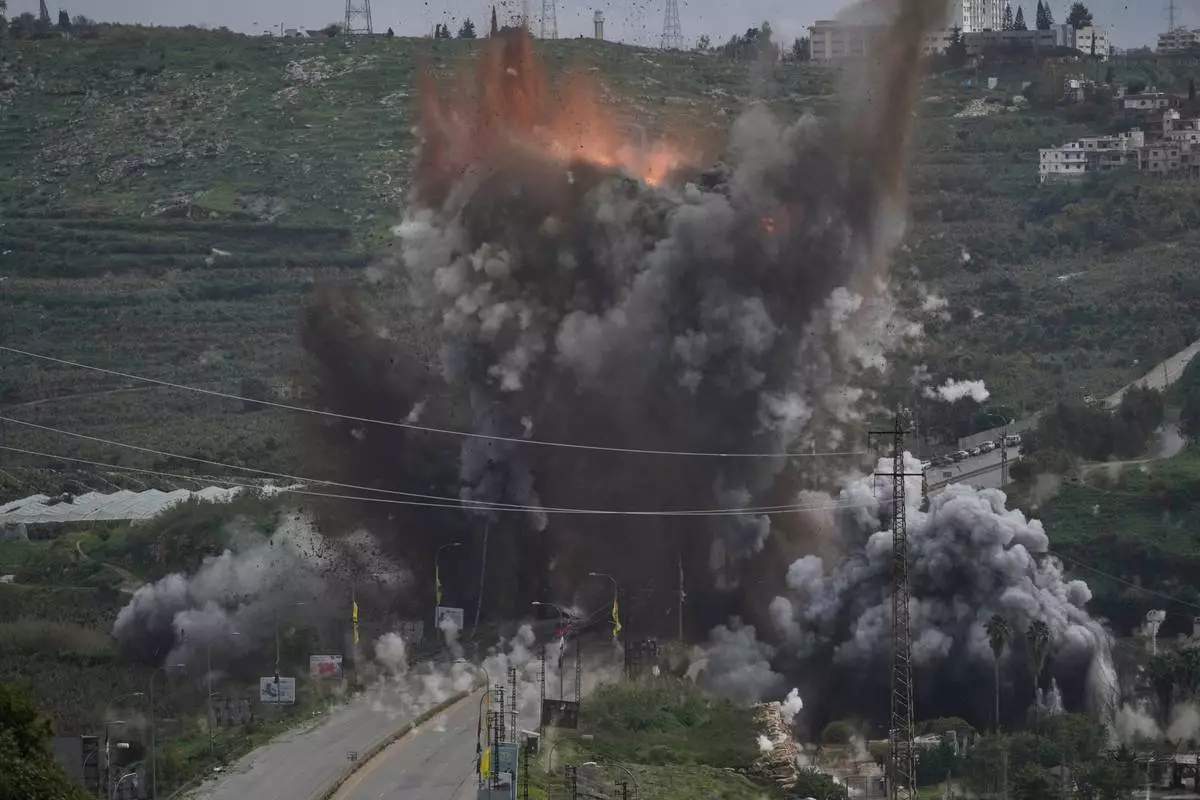
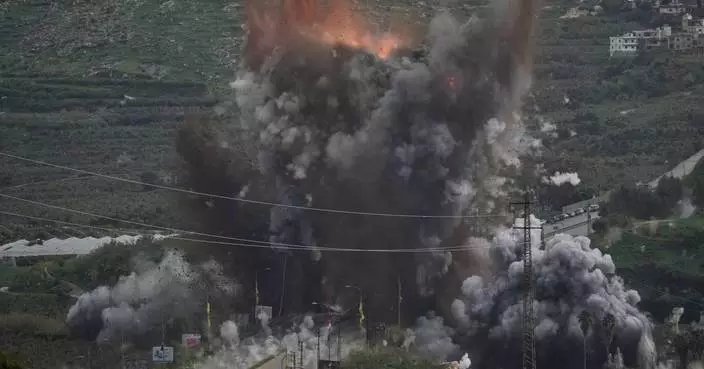
Smoke and flames rise from an Israeli airstrike that hit the Qasmiyeh Bridge near the coastal city of Tyre, Lebanon, Sunday, March 22, 2026. (AP Photo/Mohammad Zaatari)
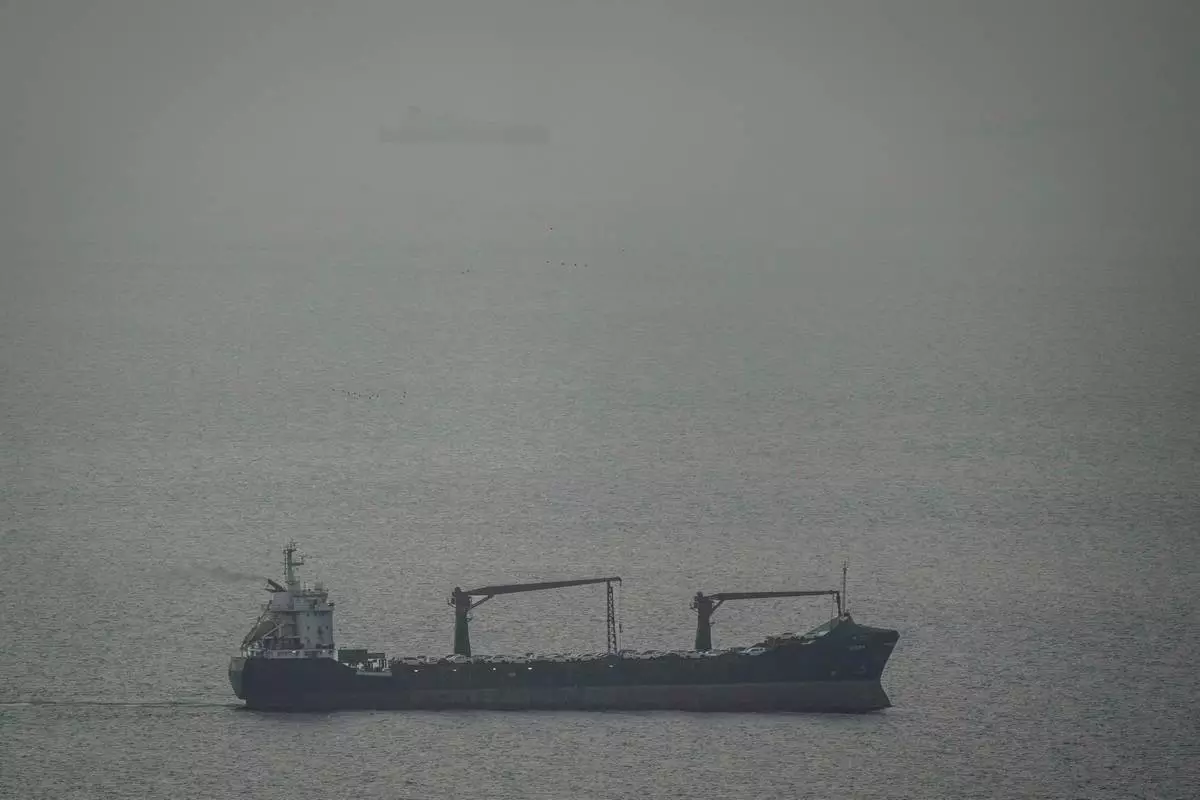
A cargo ship carrying vehicles sails through the Arabian Gulf toward the Strait of Hormuz in the United Arab Emirates, Sunday, March 22, 2026. (AP Photo)
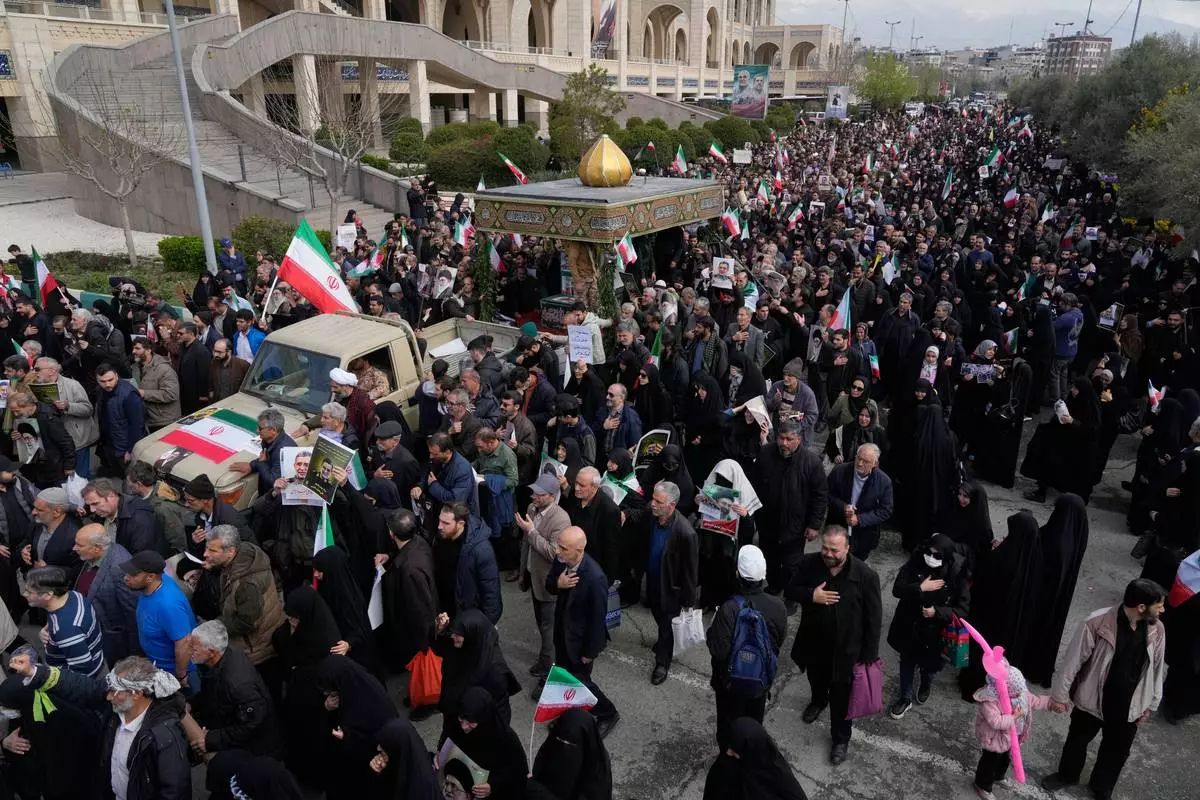
People follow a truck carrying the flag draped coffins of Gen. Ali Mohammad Naeini, a spokesperson for Iran’s paramilitary Revolutionary Guard and one of his comrades Amir Hossein Bidi , during their funeral procession in Tehran, Iran, Saturday, March 21, 2026. (AP Photo/Vahid Salemi)