Rising fuel prices, triggered by ongoing tensions in the Middle East, are squeezing already thin margins for South African airlines.
Jet fuel prices have surged more than 70 percent since the war on Iran began on Feb. 28. In response, some South African airlines have raised ticket prices and introduced temporary surcharges to cover rising costs.
"The conflict in the Middle East, and obviously the restraint on the movement of fuel around the world really, has had a severe impact on the price of jet fuel. So, we've seen increases. In the beginning it was about 70 percent in some of the coastal regions. That's gone up even higher now," said Kirby Gordon, Chief Marketing Officer, FlySafair, an international low-cost airline based in Johannesburg.
For the carrier Safair, the spike is adding around 2,000 U.S. dollars per flight hour, cutting deeply into margins. The airline has introduced a surcharge of up to 10 U.S. dollars per flight ticket.
But some analysts caution that airlines could be acting prematurely, since jet fuel prices do not immediately mirror swings in crude oil.
"Globally, the standard for airlines to hedge their fuel prices is six to 12 months. And they hedge as much as 80 to 85 percent of their fuel. That means that they're locking in their prices for the next six to twelve months. So, there shouldn't be this immediate knock-on effect that the airlines are claiming in terms of jet fuel prices," said Guy Leitch, an editor at SA Flyer Magazine.
With fuel costs climbing, passengers are paying more to fly, and analysts warn the squeeze could soon ground demand.
"The big concern I have is that discretionary travel will certainly become that much more unaffordable, and the demand will drop off quite sharply. And so, we'll see, well, obviously, less seats. We'll see less demand for seats. We'll see less actual flying. We'll see airlines beginning to combine flights. And the industry's growth is going to be quite remarkably slow, if not actually reversed," Leitch continued.
The fallout stretches beyond soaring fuel bills. With the Middle East a critical aviation hub, rerouted flights and suspended services are rippling outward. For South Africa, dependent on imported aircraft parts, the turbulence is now hitting home.
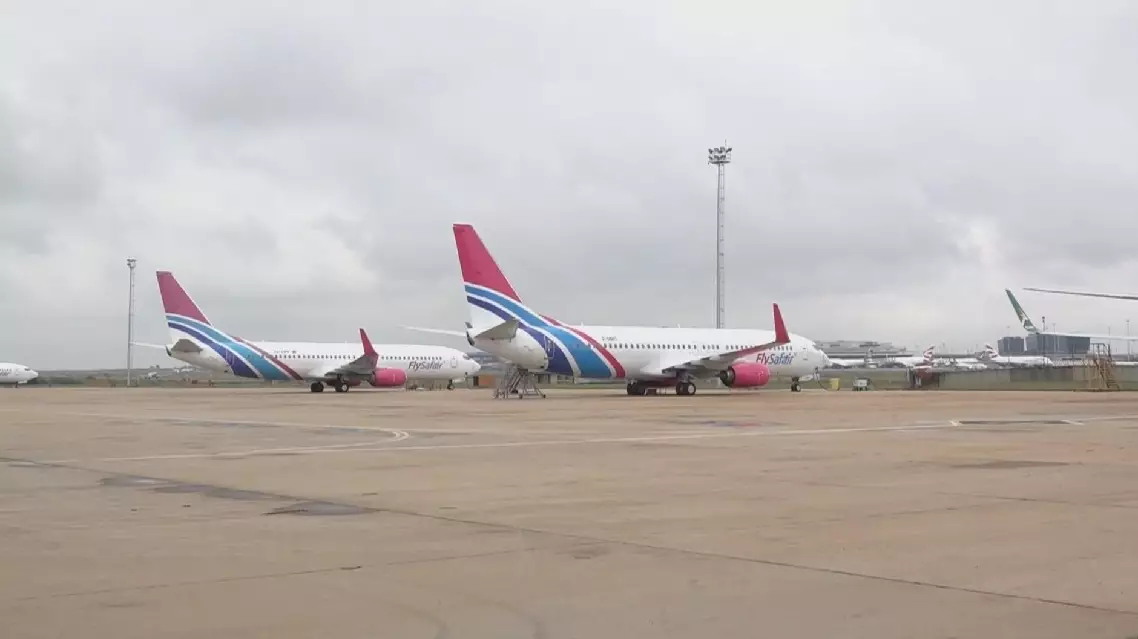
Fuel price shock from Middle East conflict squeezes South African airlines
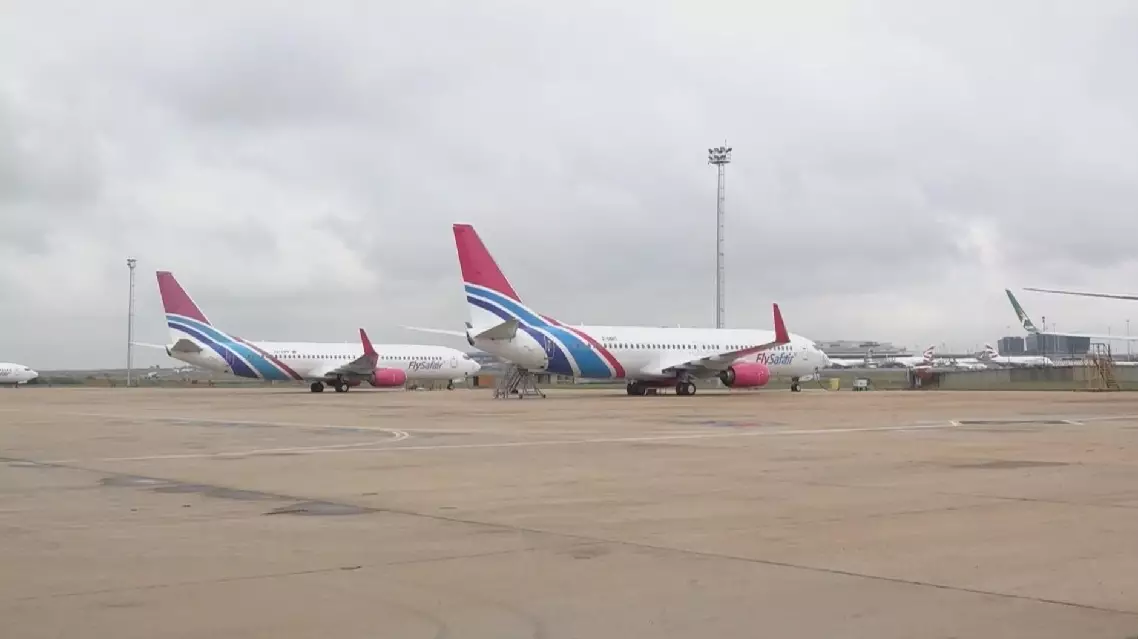
Fuel price shock from Middle East conflict squeezes South African airlines
China has turned green technologies once confined to textbooks into everyday life, said Milla, a Kazakhstan student in Beijing, as she shared her experiences and perspectives on the country’s green development and the application of new energy in daily life.
Milla described how China's push for sustainability is visible not only in national policy but also in her everyday campus life at Tsinghua University. Navigating the historic grounds, the economics student relies on a bicycle to get between classes, a choice she finds both convenient and environmentally friendly.
She added that the university actively promotes sustainability through initiatives such as recycling systems and water-conservation reminders, noting that shared bicycles have become a practical feature of campus life.
"I really love seeing how Tsinghua University is trying to become greener. There are many small initiatives that encourage students to live more sustainably, such as recycling systems, reminding not to waste water, and shared bicycles all across campus," she said.
Milla's observation extend far beyond the university gates. She noticed the rapid proliferation of electric vehicles, identifiable by their distinctive green license plates. What has left Milla an even deeper impression is the emergence of hydrogen-powered vehicles, a technology she first encountered not on the street, but in a high school textbook.
"Another thing that amazed me even more was seeing hydrogen-powered buses. I was actually so surprised when I first saw one. Hydrogen energy is something I became interested in back in 10th grade, when I first saw it in a textbook. Hydrogen can be used as a clean fuel. When hydrogen is used to produce energy, the main byproduct is water instead of harmful emissions, which makes it one of the most clean energy sources scientists are developing today. Seeing how hydrogen-powered vehicles are working in real life made me realize that technologies we once only read about in textbooks are slowly becoming a part of everyday life," said Milla.
Milla said that witnessing these technologies in action has reinforced a broader understanding of solving environmental problems.
"For me, learning about these technologies is incredibly exciting. It shows that solving environmental problems is not only about reducing emissions but it's also about innovating and thinking about new ways, how to make energy. Studying economics while still being interested in environmental protection allows me to see how technology, policy and economic systems can work together to build a cleaner and a more sustainable future," she said.
Her remarks are also being vividly manifested at the upcoming Boao Forum for Asia Annual Conference 2026 prepares to be held in Hainan from March 24 to 27, when green and smart operations will be a key feature. All venues will be powered by 100 percent renewable electricity throughout the conference, with total power consumption expected to reach about two million kilowatt-hours, equivalent to reducing carbon dioxide emissions by around 1,200 tonnes. Meanwhile, a number of AI-powered systems will be deployed for the first time.
Thousands of representatives from government, business and academia will gather under the theme "Shaping a Shared Future: New Dynamics, New Opportunities, and New Cooperation." The conference will spotlight pressing topics and build consensus on cooperation through nearly 50 sub-forums, roundtables and dialogues.

Kazakh student commends China's green tech shift from textbooks to everyday life