LEIPZIG, Germany (AP) — Sought-after young winger Yan Diomande has been sidelined with a shoulder injury which rules him out of the Ivory Coast squad for upcoming friendlies ahead of the World Cup, his club Leipzig said Monday.
The 19-year-old Diomande has shot to prominence this season with 10 goals and seven assists in 26 Bundesliga games since joining Leipzig in July. He's been linked with a potential transfer to top clubs across Europe.
Leipzig said Diomande “suffered a capsular injury to his left shoulder” in Leipzig's 5-0 win over Hoffenheim on Friday and that it's not yet clear how long he will be out.
“Following discussions between all those involved, it has been agreed that the attacker will not join up with Ivory Coast during the international break in order to focus fully on his recovery,” the club added.
Diomande, who grew up in Florida before a spell in Spain with Leganes, has scored three goals in nine games for the Ivory Coast. His national team is due to face South Korea in a friendly Saturday and Scotland three days later. The Ivory Coast is in Group E with Ecuador, Germany and Curacao at the World Cup.
AP soccer: https://apnews.com/hub/soccer

Stuttgart's Finn Jeltsch, left, and Leipzig's Yan Diomande fight for the ball during the Bundesliga soccer match between VfB Stuttgart and RB Leipzig in Stuttgart, Germany, Sunday March 15, 2026. (Harry Langer/dpa via AP)
DUBAI, United Arab Emirates (AP) — U.S. President Donald Trump says Iran wants “to make a deal”and claims U.S. envoys have been holding talks with a “respected” Iranian leader.
Trump told reporters Monday his Middle East special envoy Steve Witkoff and Trump’s son-in-law Jared Kushner conducted talks Sunday into the evening.
He said talks would continue today.
Trump did not name any official or officials representing Tehran. Trump said the U.S. has not talked to Supreme Leader Ayatollah Mojtaba Khamenei.
Trump said if a deal is reached with Iran, the U.S. will move to take Iran’s enriched uranium critical to its disputed nuclear program.
THIS IS A BREAKING NEWS UPDATE. AP’s earlier story follows below.
DUBAI, United Arab Emirates (AP) — President Donald Trump extended his deadline for Iran to reopen the crucial Strait of Hormuz to international shipping, saying Monday that the U.S. would hold off on threatened strikes against Iranian power plants for five days.
In his announcement on Truth Social, Trump also held out the possibility of a resolution to the war — though Iranian officials denied there were negotiations. Trump's turnaround appeared to offer something of a reprieve after rhetoric reached a fever pitch when the U.S. and Iran traded threats with potentially catastrophic repercussions for civilians across the region.
Shortly after Trump's announcement — hours before the deadline was set to expire — Iranian state television declared that the American leader had backed down “following Iran’s firm warning.”
The war, now in its fourth week, has already seen several dramatic turning points — the killing of Iran’s supreme leader, the bombing of a key Iranian gas field, and strikes targeting oil and gas facilities and other civilian infrastructure in Gulf Arab nations. The conflict has killed more than 2,000 people, shaken the global economy, sent oil prices surging, and endangered some of the world’s busiest air corridors.
The latest threatened attacks could have cut electricity to wide swaths of people in Iran and around the Gulf and knocked out desalination plants that provide many desert nations with drinking water. There are also increasing concerns about the consequences of any strikes on nuclear facilities.
Trump said over the weekend that the U.S. would “obliterate” Iran’s power plants unless the country releases its stranglehold on the Strait of Hormuz within 48 hours — a deadline that would have expired late Monday Washington time.
But on Monday morning, Trump wrote on his Truth Social site that the U.S. and Iran have had “very good and productive conversations” that could yield “a complete and total resolution” in the war.
Trump added that the suspension of his threat to attack power plants was “subject to the success of the ongoing meetings and discussions.”
Trump did not elaborate on the negotiations that had taken place, and the state-owned IRAN newspaper reported that Iran’s Foreign Ministry denied that there have been any.
“Remarks by the U.S. president are part of efforts to reduce energy prices and buy time to implement his military plans” the newspaper said.
Earlier, Iranian Foreign Minister Abbas Araghchi said he spoke by phone with his Turkish counterpart, Hakan Fidan. Turkey has been an intermediary before in negotiations between Tehran and Washington.
President Abdel-Fattah el-Sissi also said Monday that Egypt has delivered “clear messages” to Iran focusing on de-escalating the conflict, according to his office.
Iran’s paramilitary Revolutionary Guard promised retaliation if Trump made good on his threat, saying Iran would hit power plants in all areas that supply electricity to American bases, “as well as the economic, industrial and energy infrastructures in which Americans have shares.”
Iranian parliament speaker Mohammad Bagher Qalibaf said Iran would consider vital infrastructure across the region to be legitimate targets, including energy and desalination facilities critical for drinking water in Gulf nations.
Iran’s semiofficial Fars news agency, which is close to the Revolutionary Guard, published a list of such facilities, including the United Arab Emirates’ nuclear power plant. Over the weekend, Iran launched missiles targeting Dimona in Israel, near a facility key to its long-suspected atomic weapons program. The Israeli facility wasn’t damaged.
In the wake of Trump's turnaround, Fars and the Tasnim news agencies portrayed the American president as backing down.
“Since the start of the war, messages have been sent to Tehran by some mediators, but Iran’s clear response has been that it will continue its defense until the required level of deterrence is achieved,” Tasnim’s report said. “With this kind of psychological warfare, neither the Strait of Hormuz will return to pre-war conditions nor will calm return to energy markets.”
With the U.S. deploying more amphibious assault ships and additional Marines to the Middle East, Iran also warned against any ground attack.
“Any attempt by the enemy to target Iran’s coasts or islands will, naturally and in accordance with established military practice, lead to the mining of all access routes ... in the Persian Gulf and along the coasts,” Iran’s Defense Council warned.
Trump has said he has no plans to send ground forces into Iran but also has said he retains all options. Israel has suggested its ground forces could take part in the war.
Iran's chokehold on the Strait of Hormuz has wreaked havoc on energy markets, pushed up prices of food and other goods well beyond the Middle East and sent shock waves throughout the global economy.
“No country will be immune to the effects of this crisis if it continues to go in this direction,” said Fatih Birol, the head of the Paris-based International Energy Agency.
Oil prices were stubbornly high in early trading Monday, but plunged after Trump's announcement.
Jorge Moreira da Silva, a senior United Nations official, said the world has already seen a ripple effect, including “exponential price hikes in oil, fuel and gas” that have had a far-reaching impact on millions, primarily in Asian and African developing countries.
“There is no military solution,” he said.
Israel launched new attacks Monday on the Iranian capital, saying it had “begun a wide-scale wave of strikes” on infrastructure targets in Tehran without immediately elaborating. Explosions were heard in multiple locations in the afternoon. It wasn’t immediately clear what had been hit.
The United Arab Emirates reported its air defense were attempting to intercept new incoming Iranian fire Monday afternoon.
Israel has also targeted the Iran-linked Hezbollah militant group in Lebanon, while the group has fired hundreds of rockets into Israel.
In recent days, Israel has hit many apartment buildings in Beirut and bombed bridges over the Litani River in the Lebanon’s south.
Lebanese President Joseph Aoun called the targeting of bridges “a prelude to a ground invasion,” while Egypt denounced the strikes as the “collective punishment” of civilians for the actions of Hezbollah.
Authorities say Israeli strikes have killed more than 1,000 people in Lebanon and displaced more than 1 million.
Iran’s death toll has surpassed 1,500, its Health Ministry has said. In Israel, 15 people have been killed by Iranian strikes. At least 13 U.S. military members have been killed, along with more than a dozen civilians in the occupied West Bank and Gulf Arab states.
Rising reported from Bangkok and Magdy from Cairo. AP writers Charlotte Graham-McLay in Wellington, New Zealand, Sally Abou AlJoud and Bassem Mroue in Beirut, and Tong-hyung Kim in Seoul, South Korea, contributed to this report.
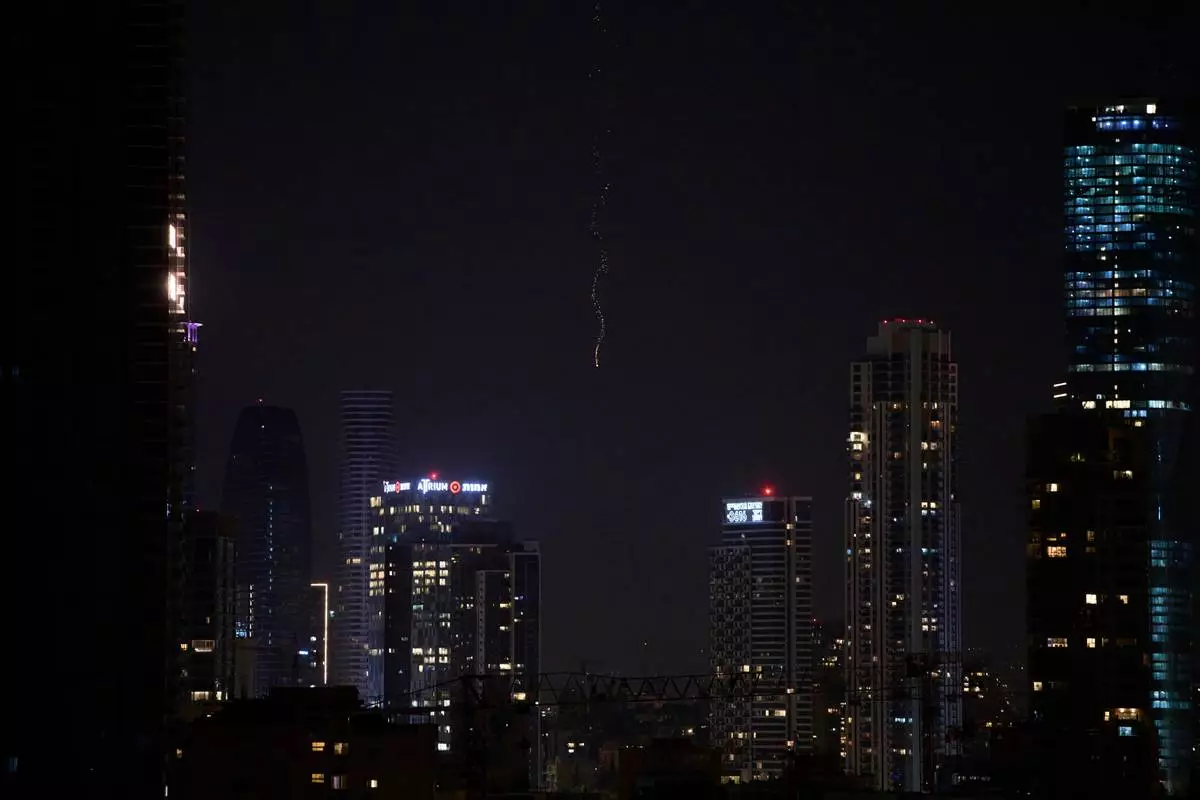
Missiles launched from Iran streak across the sky over central Israel, early Monday, March 23, 2026. (AP Photo/Ohad Zwigenberg)
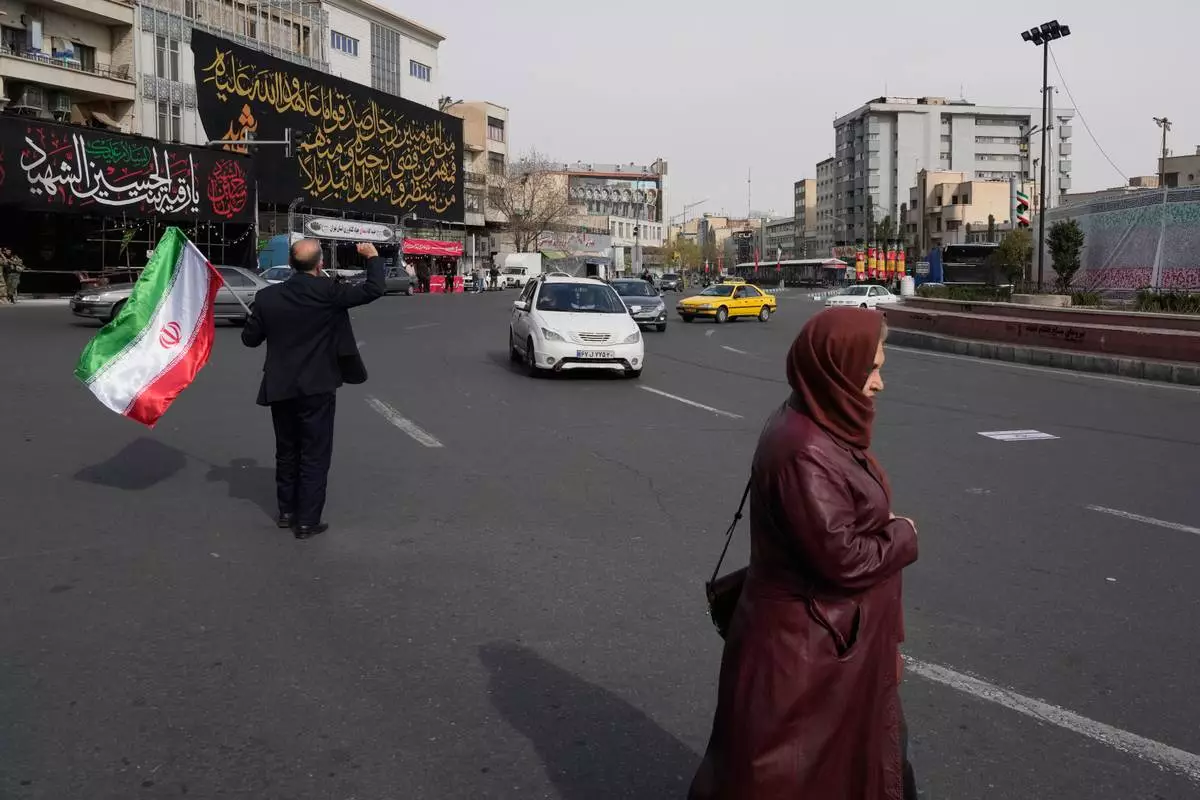
A man waves an Iranian flag during a campaign in support of the government as a woman and vehicles pass by at the Enqelab-e-Eslami, or Islamic Revolution, square in downtown Tehran, Iran, Sunday, March 22, 2026. (AP Photo/Vahid Salemi)
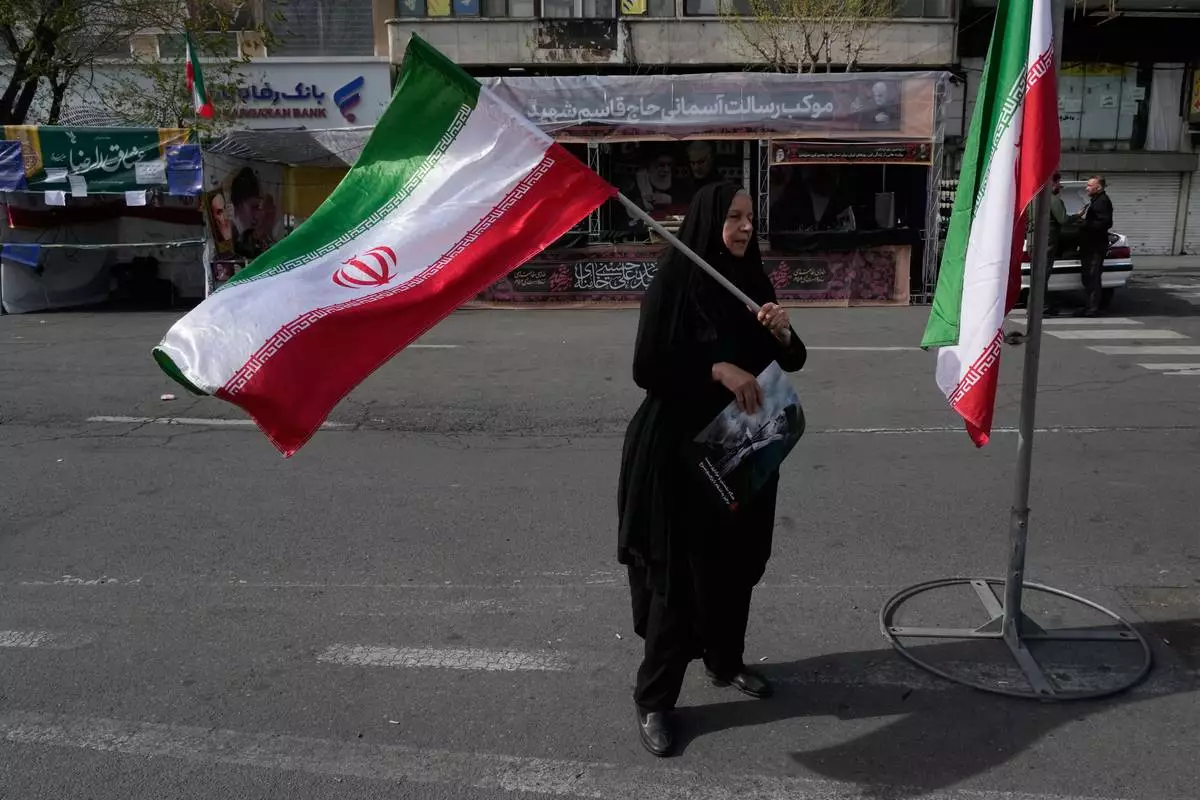
A woman waves an Iranian flag during a campaign in support of the government at the Enqelab-e-Eslami, or Islamic Revolution, square in downtown Tehran, Iran, Sunday, March 22, 2026. (AP Photo/Vahid Salemi)
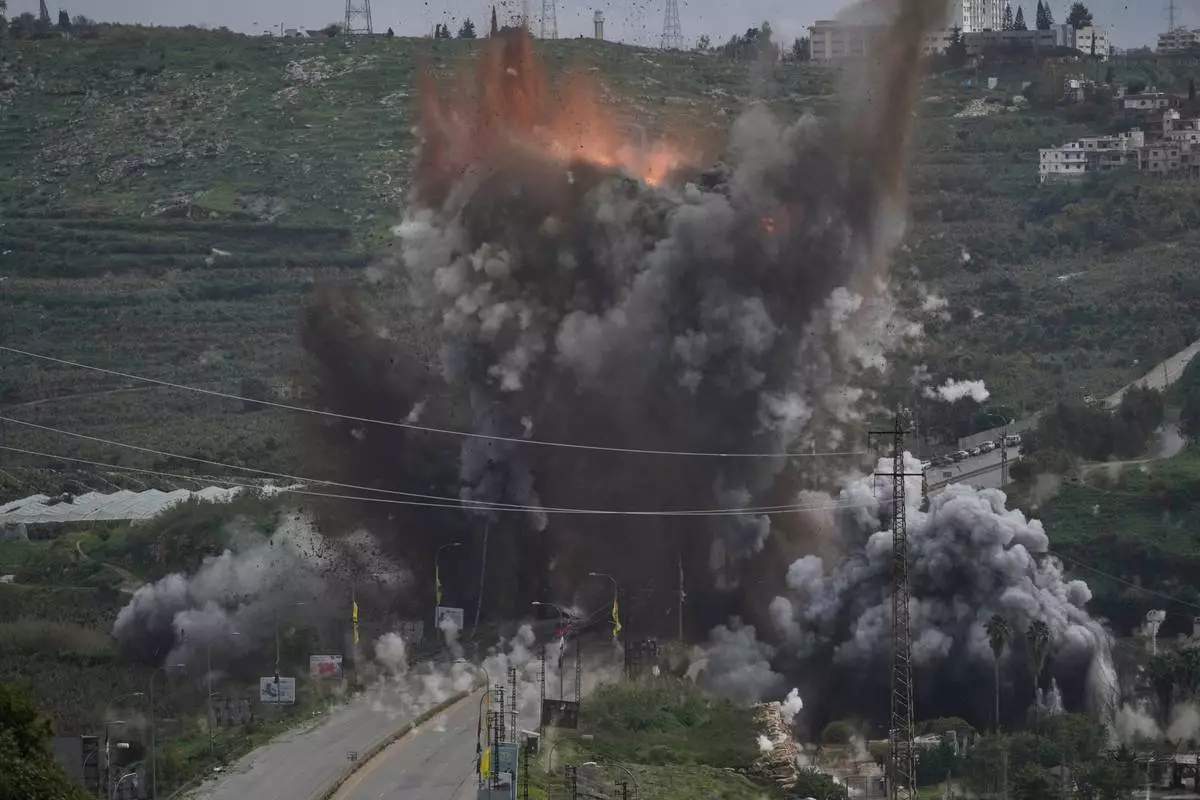
Smoke and flames rise from an Israeli airstrike that hit the Qasmiyeh Bridge near the coastal city of Tyre, Lebanon, Sunday, March 22, 2026. (AP Photo/Mohammad Zaatari)
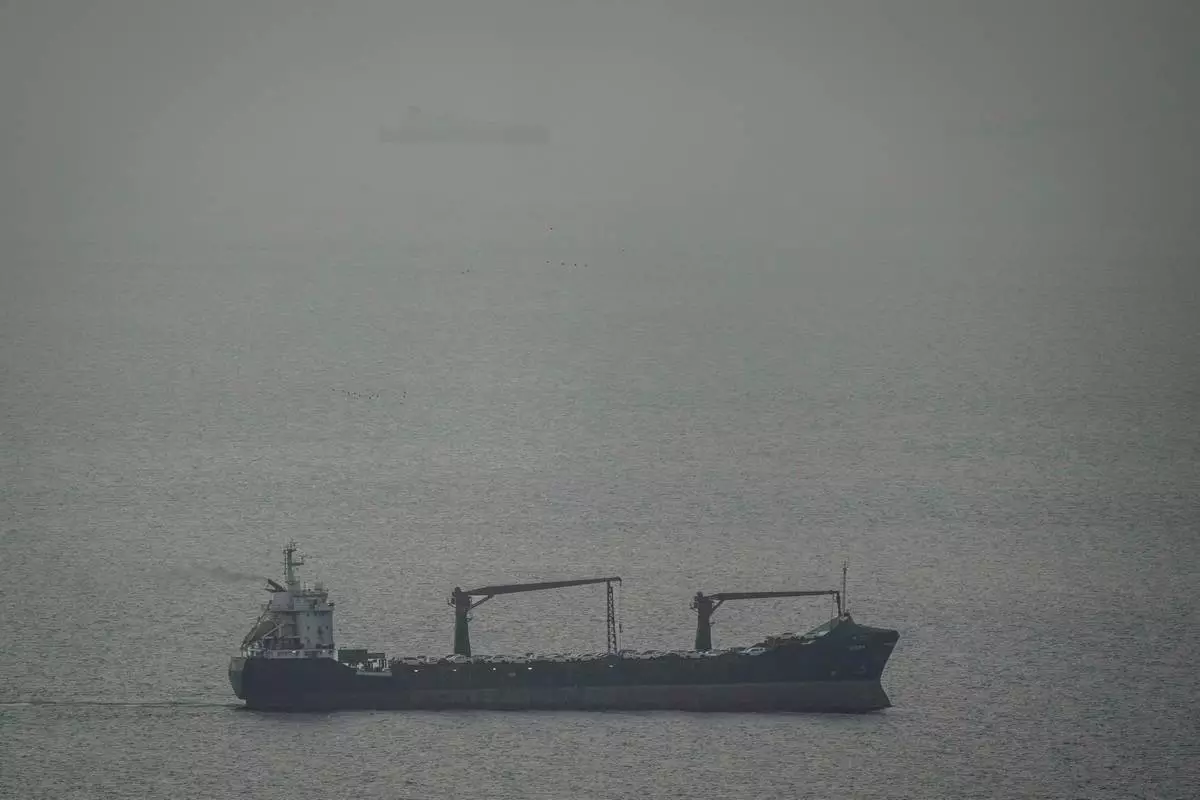
A cargo ship carrying vehicles sails through the Arabian Gulf toward the Strait of Hormuz in the United Arab Emirates, Sunday, March 22, 2026. (AP Photo)
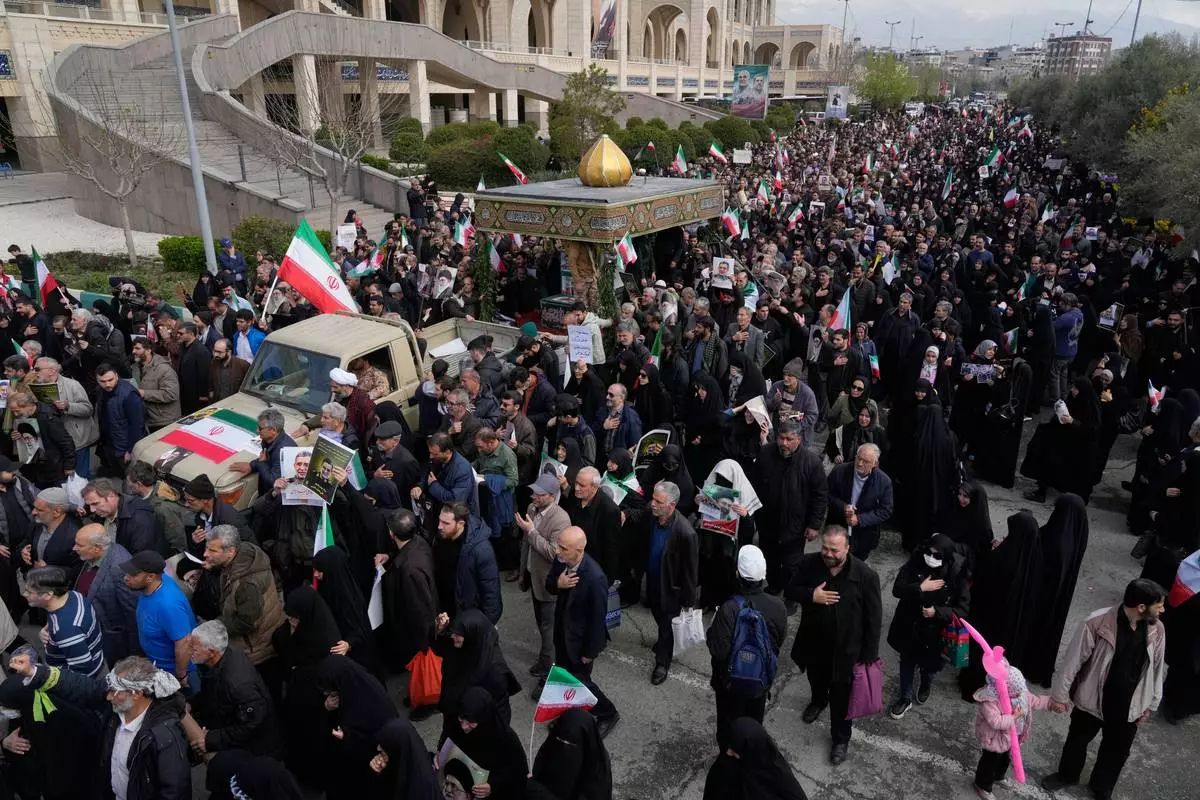
People follow a truck carrying the flag draped coffins of Gen. Ali Mohammad Naeini, a spokesperson for Iran’s paramilitary Revolutionary Guard and one of his comrades Amir Hossein Bidi , during their funeral procession in Tehran, Iran, Saturday, March 21, 2026. (AP Photo/Vahid Salemi)