TOKYO (AP) — Asian benchmarks mostly rebounded Tuesday, echoing cautious relief that swept through Wall Street after President Donald Trump said the United States has talked with Iran about a possible end to their war.
Japan's benchmark Nikkei 225 added 0.8% in morning trading to 51,908.00, recovering some of the losses it suffered the previous day.
Toyota Motor Corp.'s stock price gained 1.3% in morning trading after it announced overnight that it was investing $1 billion in its Kentucky and Indiana auto plants. That's part of a plan to invest up to $10 billion in the U.S. over the next five years that the Japanese automaker announced in November. Japanese manufacturers have been eager to show their contribution to American jobs and economic growth.
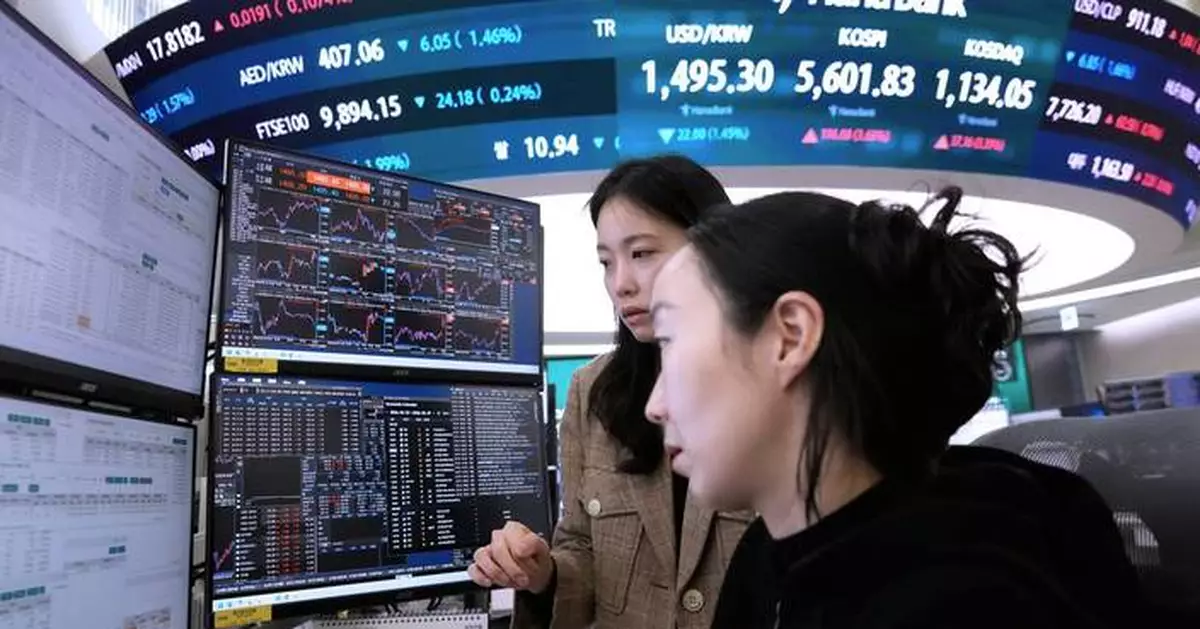
Australia's S&P/ASX 200 rose 0.4% to 8,402.60. South Korea's Kospi edged up 0.6% to 5,439.39. Hong Kong's Hang Seng jumped 1.1% to 24,656.59, while the Shanghai Composite added 0.2% to 3,820.77.
Global markets have been on a roller coaster ride over worries about the war in Iran, which began in late February, especially nations in Asia, which are severely affected by any lack of access to the Strait of Hormuz, crucial for energy shipments from the Middle East.
In energy trading, benchmark U.S. crude gained $3.55 to $91.68 a barrel. Brent crude the international standard, added $3.83 to $103.77 a barrel, reversing course after easing overnight on Wall Street that came after Trump said the United States and Iran held productive talks “regarding a complete and total resolution of our hostilities in the Middle East” over the last two days.
Iran denied such talks took place and Iranian parliament speaker Mohammad Bagher Qalibaf said that “fakenews is used to manipulate the financial and oil markets” in a post on X.
Over the weekend, Trump had threatened to “obliterate” Iran’s power plants if it doesn’t open up the Strait of Hormuz within 48 hours. The narrow waterway off Iran’s coast has become a sore point for Trump and the economy because a sharp slowdown in traffic is preventing oil tankers from leaving the Persian Gulf to supply customers around the world.
On Monday, the S&P 500 rose 74.52 points to 6,581.00. The Dow Jones Industrial Average went from a surge of nearly 1,135 points during the morning to a more modest gain of 540 before accelerating to finish with a climb of 631, or 1.4%, to 46,208.47. The Nasdaq composite jumped 299.15, or 1.4%, to 21,946.76.
Stocks of smaller companies were also strong, and the Russell 2000 index of smaller stocks jumped a market-leading 2.3%.
Treasury yields also eased in the bond market following Trump’s announcement. The yield on the 10-year Treasury fell to 4.35% Monday from 4.39% late Friday. But it remains solidly above its 3.97% level from just before the war.
In currency trading, the U.S. dollar edged up to 158.61 Japanese yen early Tuesday from 158.35 yen. The euro cost $1.1585, down from $1.1610.
AP Business Writer Stan Choe contributed.
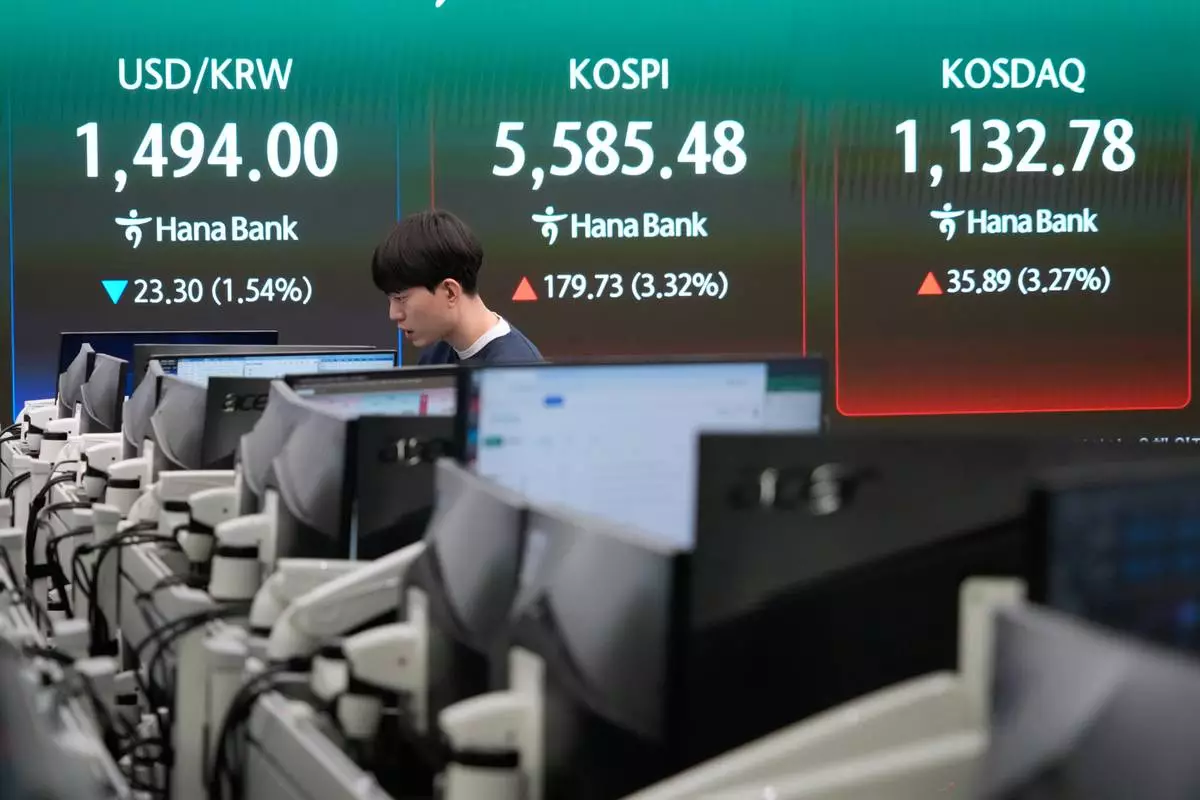
A currency trader watches monitors near a screen showing the Korea Composite Stock Price Index (KOSPI), top center, and the foreign exchange rate between U.S. dollar and South Korean won, top center left, at the foreign exchange dealing room of the Hana Bank headquarters in Seoul, South Korea, Tuesday, March 24, 2026. (AP Photo/Ahn Young-joon)
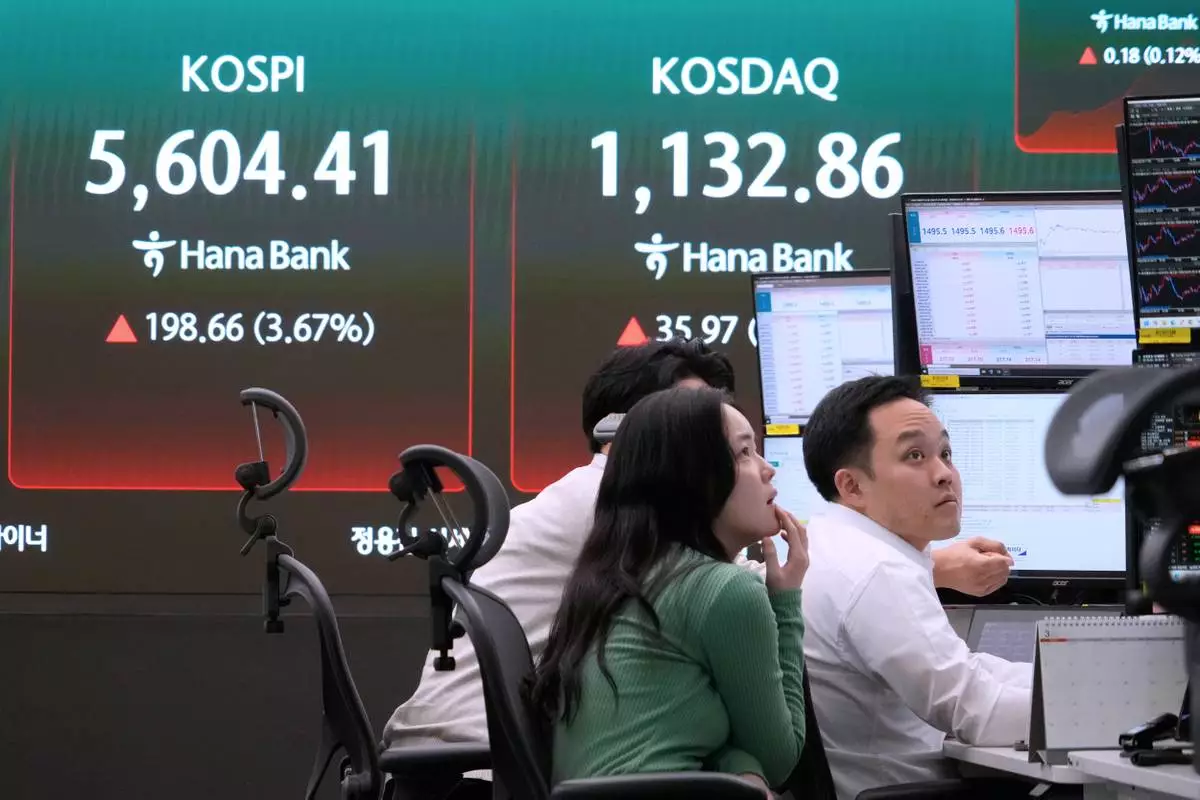
Currency traders watch monitors near a screen showing the Korea Composite Stock Price Index (KOSPI), left, at the foreign exchange dealing room of the Hana Bank headquarters in Seoul, South Korea, Tuesday, March 24, 2026. (AP Photo/Ahn Young-joon)
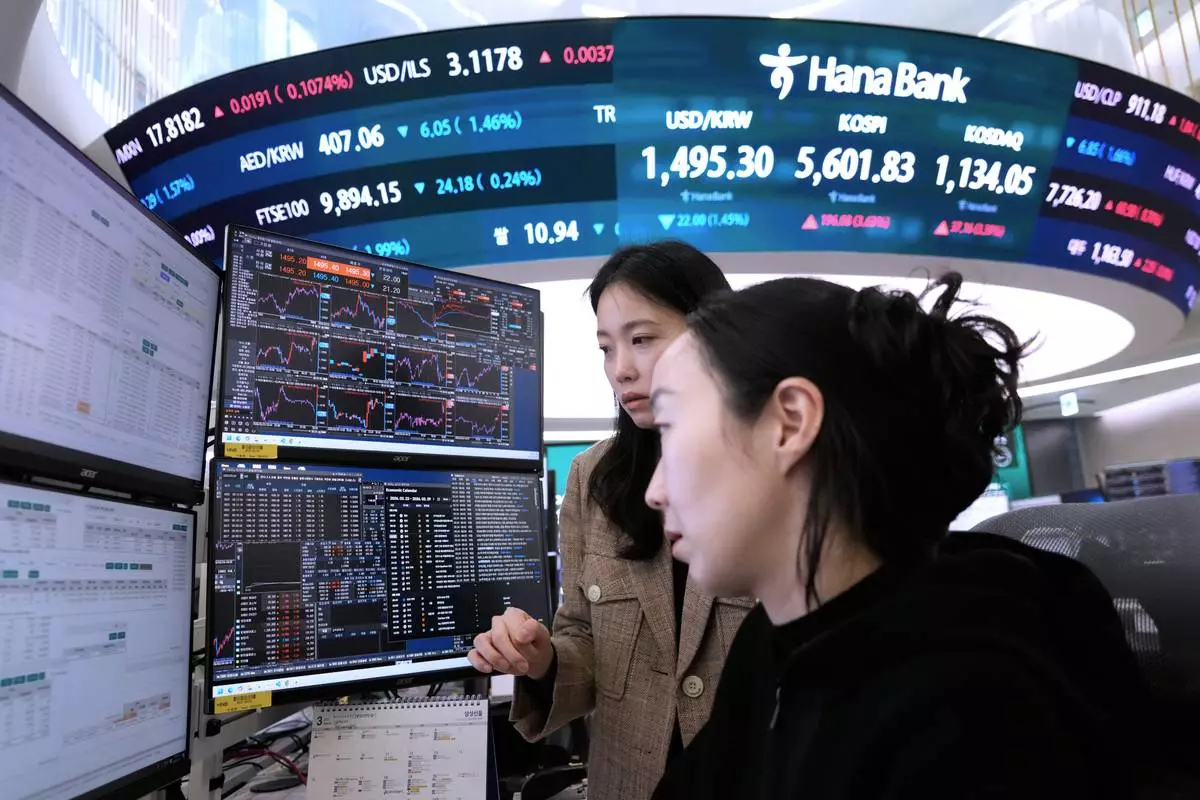
Currency traders watch monitors near a screen showing the Korea Composite Stock Price Index (KOSPI), top center, and the foreign exchange rate between U.S. dollar and South Korean won, top center left, at the foreign exchange dealing room of the Hana Bank headquarters in Seoul, South Korea, Tuesday, March 24, 2026. (AP Photo/Ahn Young-joon)
WASHINGTON (AP) — President Donald Trump started the fourth week of his war against Iran by offering the world some guarded optimism that the U.S. could soon be winding operations down, a claim that markets cheered but Iranian officials dismissed as a ploy to buy time for a conflict that is causing economic pain around the globe.
In a social media message timed before markets opened, Trump said he was putting off for five days plans he announced over the weekend to bomb Iran's power plants unless Tehran opened the Strait of Hormuz by Monday evening. The critical passageway for some 20% of the world's crude has been effectively shuttered during the war, sending oil and gas prices soaring.
He decided to hold back on targeting Iran's critical infrastructure, Trump explained, because his envoys, son-in-law Jared Kushner and Steve Witkoff, had “very good” talks over the weekend with unnamed “respected” Iranian officials on ending hostilities.
The president made no mention of Iran's vow that vital infrastructure across the Gulf region — including energy and desalination facilities critical for drinking water — would be considered legitimate targets and “irreversibly destroyed" if Trump acted on his threat. The back-and-forth drove a steep selloff in Asian markets as the clock ran down on Trump’s ultimatum.
“All I’m saying is we are in the throes of a real possibility of making a deal,” Trump said during an extended exchange with reporters before boarding Air Force One on Monday morning to make his way from his home in Florida to an event in Memphis, Tennessee. “And I think, if I were a betting man I’d bet for it. But again, I’m not guaranteeing anything.”
Before the president's plane had landed in Tennessee, less than two hours later, Iran refuted there had been any high-level communications with the White House and dismissed Trump's rhetoric as a thinly veiled attempt to manipulate jittery global markets.
“No negotiations have been held with the US," Mohammad Bagher Qalibaf, the speaker of Iran's parliament, posted on X. "And fakenews is used to manipulate the financial and oil markets and escape the quagmire in which the US and Israel are trapped.”
The Iranian Foreign Ministry also said Trump’s statement was nothing more than an effort “to reduce energy prices and to buy time for implementing his military plans.”
If Trump were to end the war now, he would be walking away from the fight at a moment when he still hasn't fully achieved his stated objectives, some regional analysts have noted.
Over the course of the the past few weeks, Trump has offered shifting reasons for launching the war as Democrats accuse him of needlessly shaking the global economy and polls at home show that Americans are divided along party lines about the conflict.
But the president has settled on a list of goals he has said must be achieved, including degrading Iran’s missile capability, destroying its defense industrial base, eliminating the Iranian navy, preventing Iran from ever acquiring nuclear weapons, and securing the Strait of Hormuz.
The U.S. and Israeli air bombardment has made progress on some of those goals. But analysts say Trump would strain credulity if he were to claim, at this point, that he made good on achieving his aims — particularly definitively ending Iran's ability to build a nuclear bomb.
The U.S. and nuclear watchdogs believe some 970 pounds of highly enriched uranium remains buried beneath rubble at three key Iranian nuclear sites that were badly damaged by a limited U.S. military operation last June during the 12-day Israel-Iran war.
Trump said on Monday the U.S. would retrieve Iran’s enriched uranium as part of a potential agreement with the Islamic Republic. But he offered no details on how, beyond saying the U.S. military will “take it ourselves.”
“Trump’s war choice has not accomplished his military goals," Aaron David Miller, a former State Department Mideast negotiator who is now a senior fellow at the Carnegie Endowment for International Peace, said on X. Miller noted that Iran is still able to attack Gulf allies and effectively control the Strait of Hormuz. “No nukes; no enrichment, good luck with that. A singularly incompetent use of America’s power.”
Indeed, Trump on Monday sought to leave plenty of space for him to take another abrupt turn, even as he spotlighted the positive reaction in energy markets to his early morning social media post about the talks being underway.
“The price of oil will drop like a rock, as soon as a deal is done. I guess it already is today,” Trump said. “Now we have a very serious chance of making a deal. That doesn’t guarantee anything. I’m not guaranteeing anything. I’m not going to come out here in a week or two weeks, and have you all say, ‘Oh, you said...' — I didn’t say anything."
Trump last week ordered additional U.S. troops to the region as the U.S. administration weighs possible action to take control of the Strait of Hormuz to allow for the safe passage of tankers bringing oil from the oil-rich Gulf nations to Asia.
The U.S. moved last week to deploy three more amphibious assault ships and roughly 2,500 additional Marines to the Middle East, The Associated Press and other news outlets reported. The move came days after the U.S. redirected another group of amphibious assault ships carrying another 2,500 Marines from the Pacific to the Middle East. The Marines will join more than 50,000 U.S. troops already in the region.
Trump has said he has no plans to send ground forces into Iran but also has asserted that he retains all options. It is expected to take weeks for those Marines to arrive in the Mideast.
“We are witnessing how a conflict that began over politics and security is moving to be defined by energy and economics," said Behnam Ben Taleblu, senior director of the Foundation for Defense of Democracies, a hawkish Washington think tank. “It’s hard to ignore the logic inherent in the president’s own commentary, which both calms markets but also buys time for Marines to arrive.”
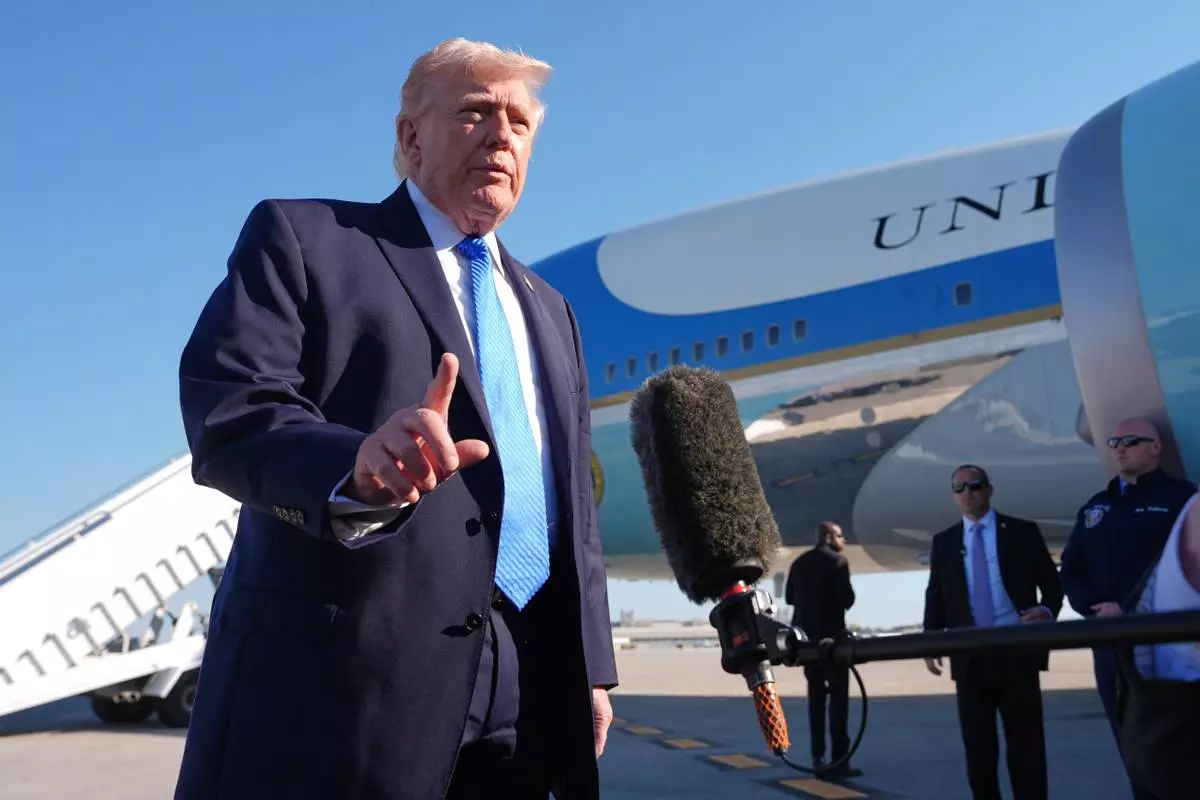
President Donald Trump speaks with the media before boarding Air Force One, Monday, March 23, 2026, at Palm Beach International Airport in West Palm Beach, Fla. (AP Photo/Mark Schiefelbein)
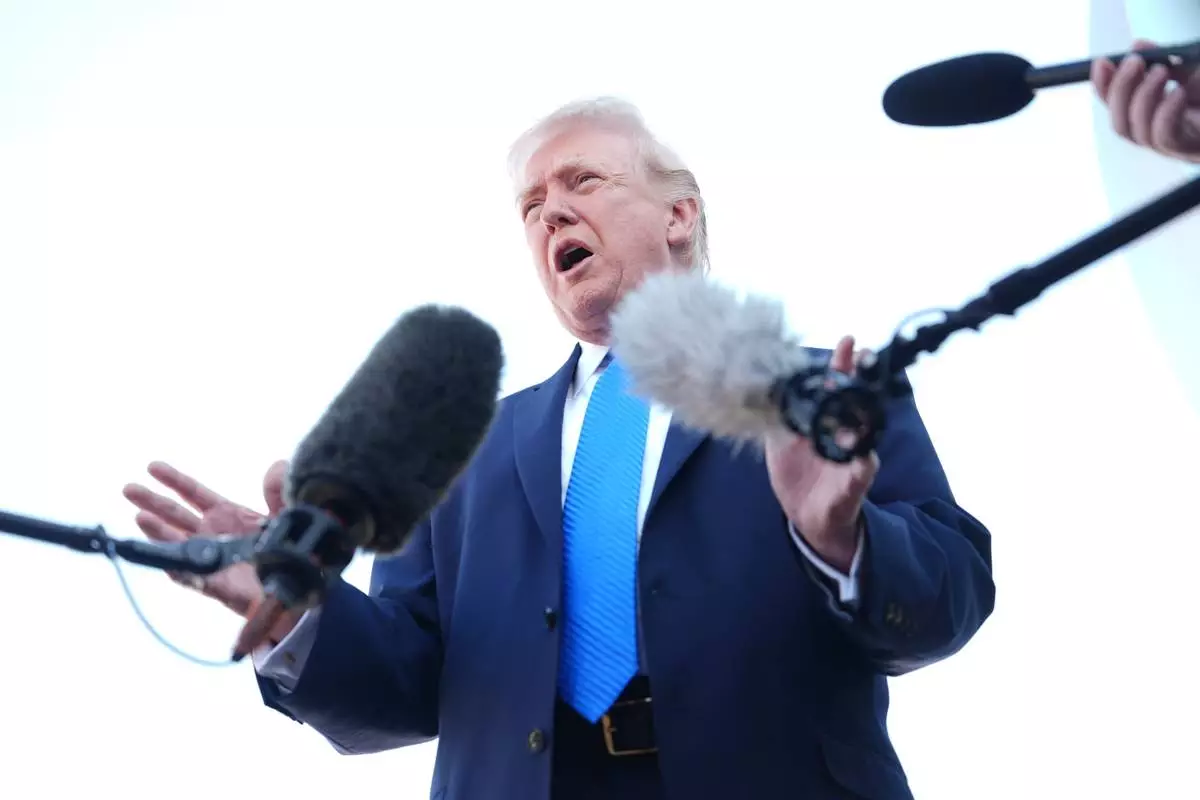
President Donald Trump speaks with the media before boarding Air Force One, Monday, March 23, 2026, at Palm Beach International Airport in West Palm Beach, Fla. (AP Photo/Mark Schiefelbein)
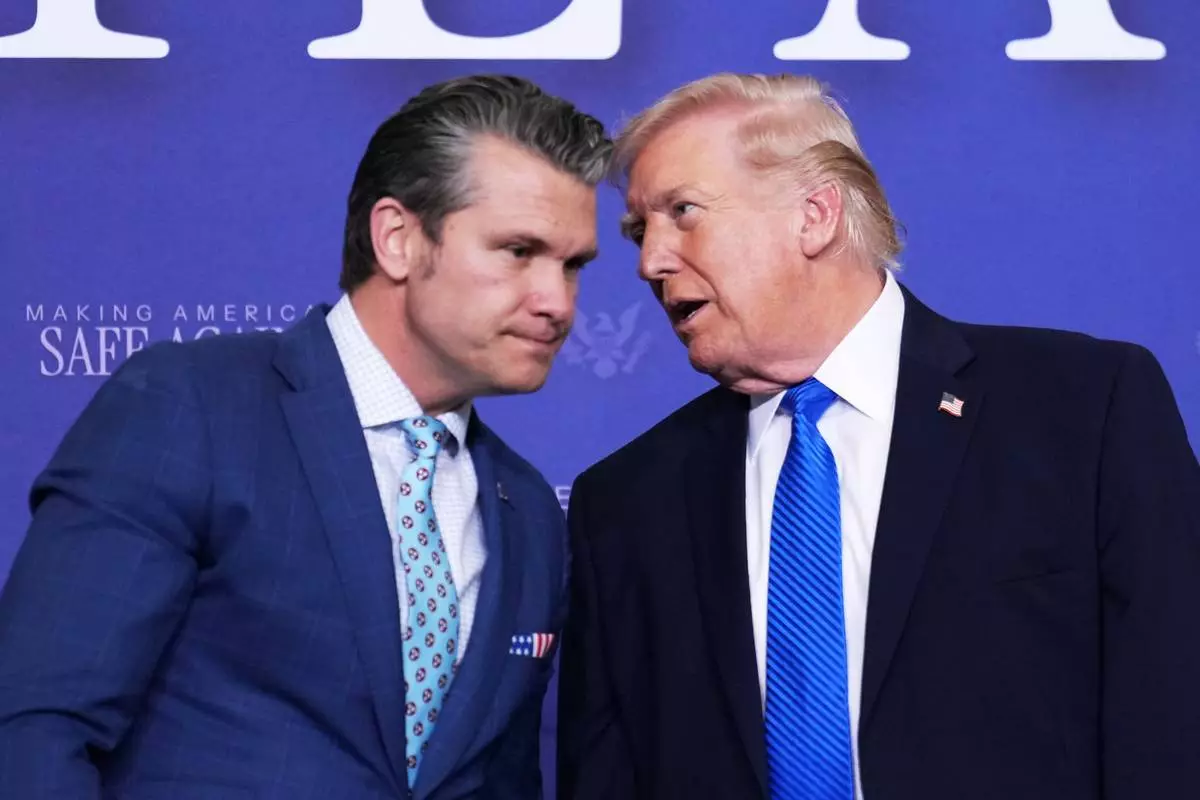
President Donald Trump speaks with Defense Secretary Pete Hegseth during a roundtable discussion on public safety at a Tennessee Air National Guard Base, Monday, March 23, 2026, in Memphis, Tenn. (AP Photo/Mark Schiefelbein)