DALLAS (AP) — Golden State's Moses Moody dribbled all alone on his way to what looked to be an easy basket after stealing the ball from Dallas rookie standout Cooper Flagg yet again.
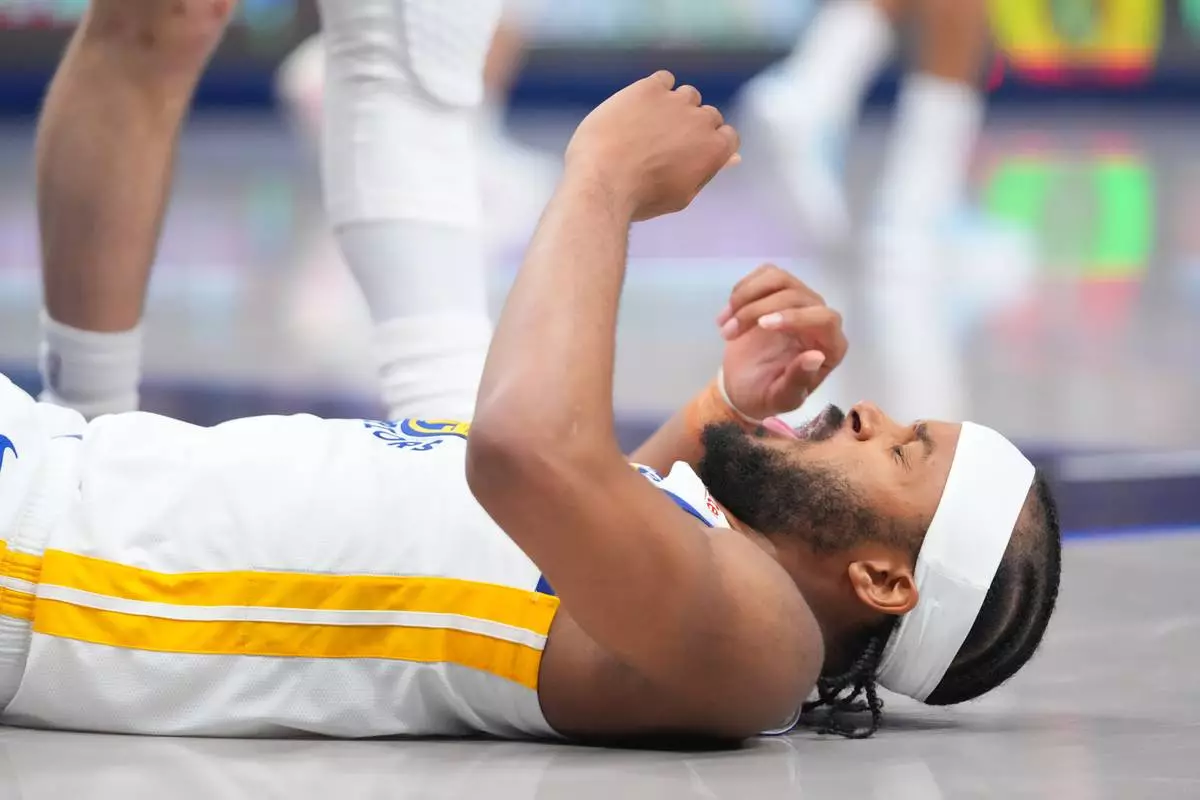
Instead, Moody's left leg buckled and he crumpled to the court with an apparently serious left knee injury that left players and coaches from both teams stunned along with fans late in overtime of what had been an intense game.
Click to Gallery
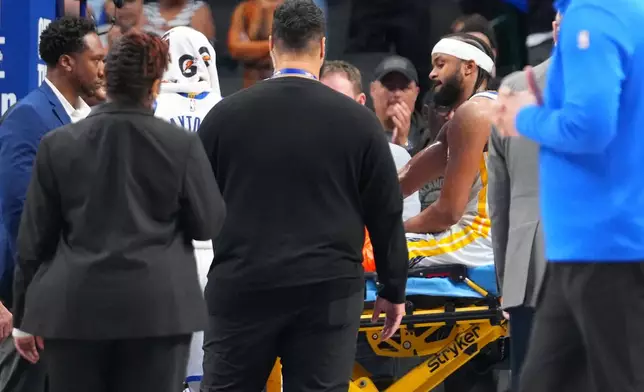
Golden State Warriors guard Moses Moody is carted off the field after suffering an injury against the Dallas Mavericks during overtime of an NBA basketball game Monday, March 23, 2026, in Dallas. (AP Photo/Julio Cortez)
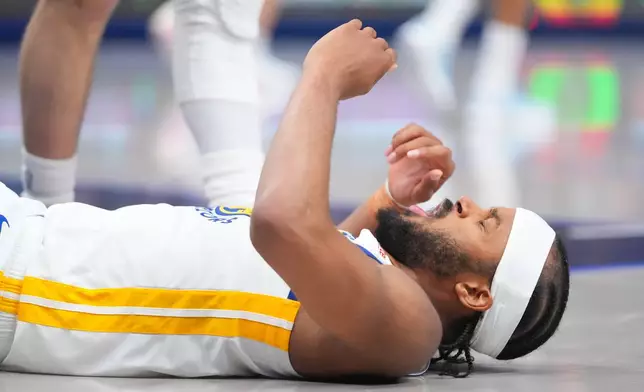
Golden State Warriors guard Moses Moody reacts after being fouled by Dallas Mavericks forward Cooper Flagg during overtime of an NBA basketball game Monday, March 23, 2026, in Dallas. (AP Photo/Julio Cortez)
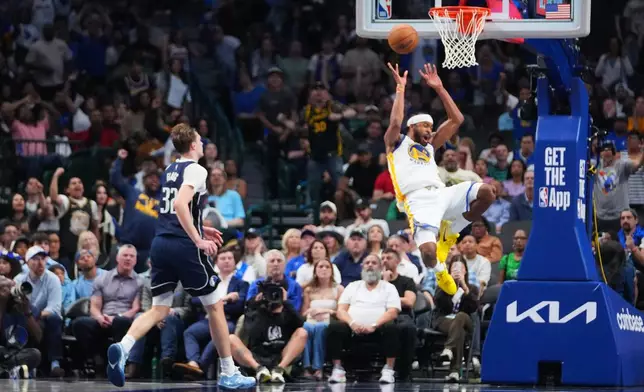
Golden State Warriors guard Moses Moody, right, reacts while suffering an injury as Dallas Mavericks forward Cooper Flagg (32) looks on during overtime of an NBA basketball game Monday, March 23, 2026, in Dallas. (AP Photo/Julio Cortez)
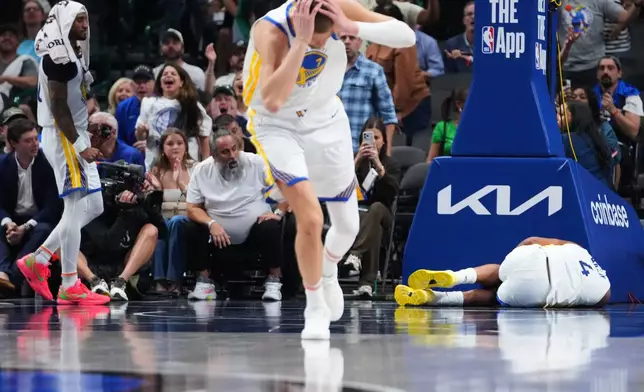
Golden State Warriors center Kristaps Porzingis, center, and guard Gary Payton II, left, react after guard Moses Moody (4) suffered an injury during overtime of an NBA basketball game against the Dallas Mavericks Monday, March 23, 2026, in Dallas. (AP Photo/Julio Cortez)
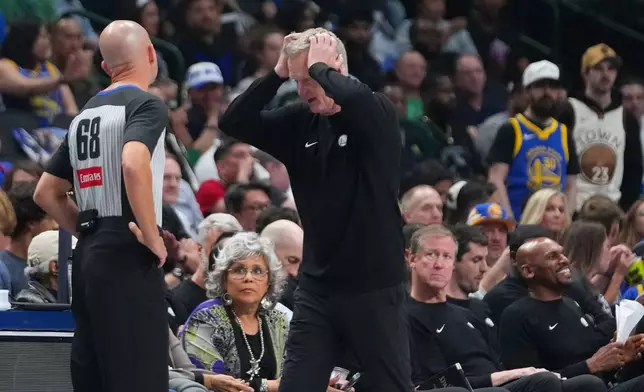
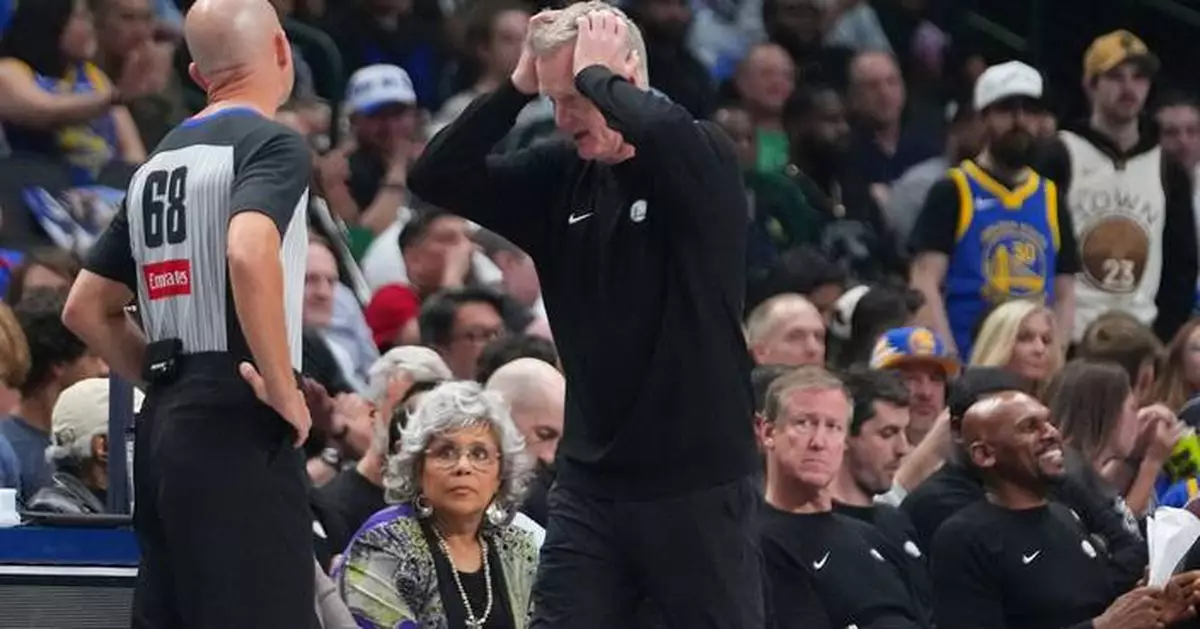
Golden State Warriors head coach Steve Kerr, right, reacts in front of referee Jacyn Goble (68) during the first half of an NBA basketball game against the Dallas Mavericks Monday, March 23, 2026, in Dallas. (AP Photo/Julio Cortez)
After play finally stopped on Dallas' offensive end with 58 seconds remaining in the extra period, Warriors coach Steve Kerr put his hands over his face — and he wasn't even looking in the direction of his fallen player.
Players and medical staff surrounded Moody, who stayed down for several minutes before being taken off on a stretcher. Kerr said Moody was getting X-rays at the arena.
“Just saw his leg buckle. Saw him go down in a heap, in pain,” Kerr said after Golden State's 137-131 OT victory Monday night. “We don’t know what it is, but it sure looked bad. Just hoping for the best. What the best-case scenario is, that’s what we’re all hoping for. But it looked bad.”
Moody was playing for the first time after missing 10 games with a sprained right wrist. He led the Warriors with 23 points and had three steals — all three against Flagg, all three in the fourth quarter or overtime. The first two came during an 11-0 Golden State run that broke a tie at the start of the fourth.
“Mo is such a great human being, great teammate, wonderful guy to coach,” Kerr said. “Puts in the work every day. And was brilliant, by the way. Played so well defensively, changed the game for us with his ball pressure and knocked down big shots. So great to finally have him back. And then for that to happen, you’re just praying that it’s not too serious, but it sure looked serious.”
The noise didn't return to the hushed arena over the final 58 seconds, the Warriors scoring the only point in that stretch. Each team attempted just one shot as Dallas lost a 12th consecutive home game, its longest home skid in 32 years.
“I saw the looks on the Mavericks’ faces,” Kerr said. “Everybody on the floor was just horrified. Players care about players. They know how fragile this business is and how short their careers are and how injuries can happen and can be catastrophic. We don’t know what it is yet. We’re just hoping for the best.”
Brandin Podziemski, who had 20 points and 10 rebounds as the Warriors stopped a three-game losing streak, said the scene reminded him of when Jimmy Butler tore the ACL in his right knee against Miami, his former team, at home on Jan. 19.
“You just hate to see it, especially to the good people in life,” Podziemski said.
The Warriors are headed to the play-in tournament in the Western Conference, and waiting for word on star guard Stephen Curry's return from a knee injury after losing Butler for the season. Now one of their locker room favorites appears to be facing a lengthy absence.
“It’s tough,” said Gary Payton II, who made all eight of his shots and scored 17 points. “It’s his first game back, and he does so much rehab and everything, takes care of his body, does what he needs to do to get back. And just to see the noncontact thing, it’s annoying to see, especially among the ones that does all the right things, is professional, is a pro.”
AP NBA: https://apnews.com/hub/NBA
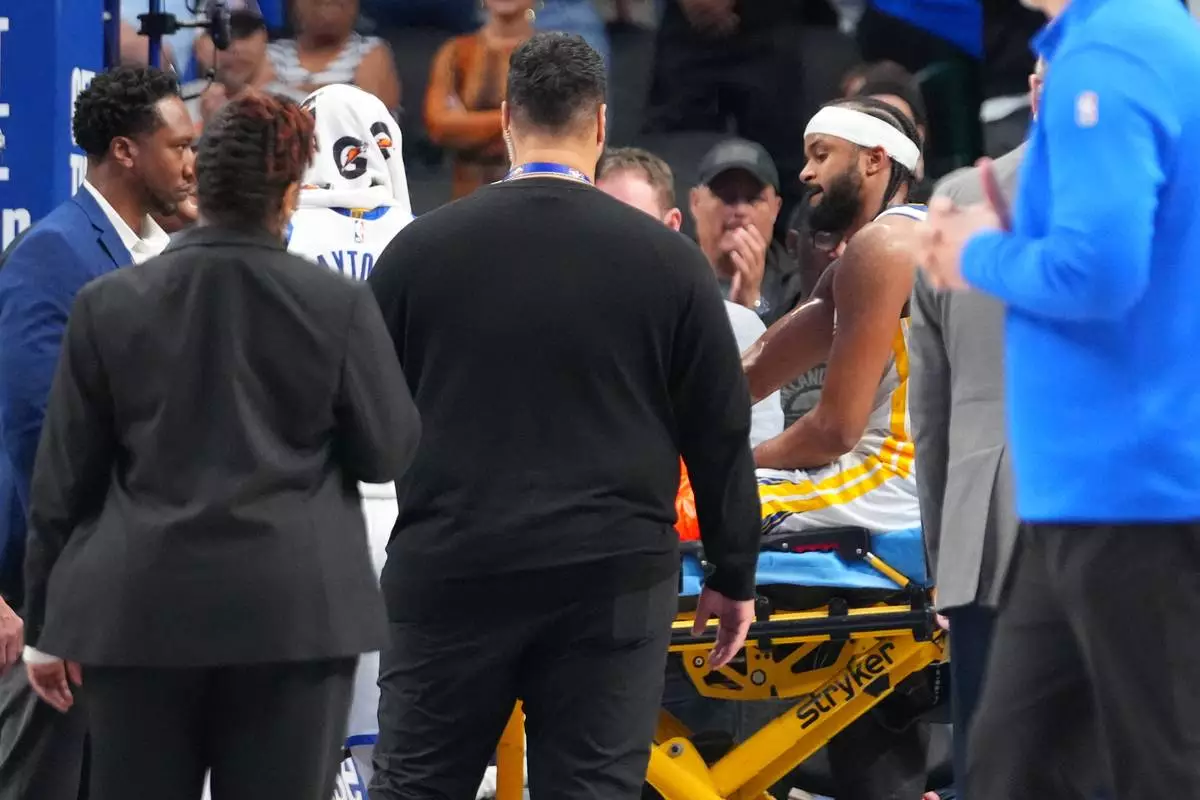
Golden State Warriors guard Moses Moody is carted off the field after suffering an injury against the Dallas Mavericks during overtime of an NBA basketball game Monday, March 23, 2026, in Dallas. (AP Photo/Julio Cortez)
Golden State Warriors guard Moses Moody reacts after being fouled by Dallas Mavericks forward Cooper Flagg during overtime of an NBA basketball game Monday, March 23, 2026, in Dallas. (AP Photo/Julio Cortez)
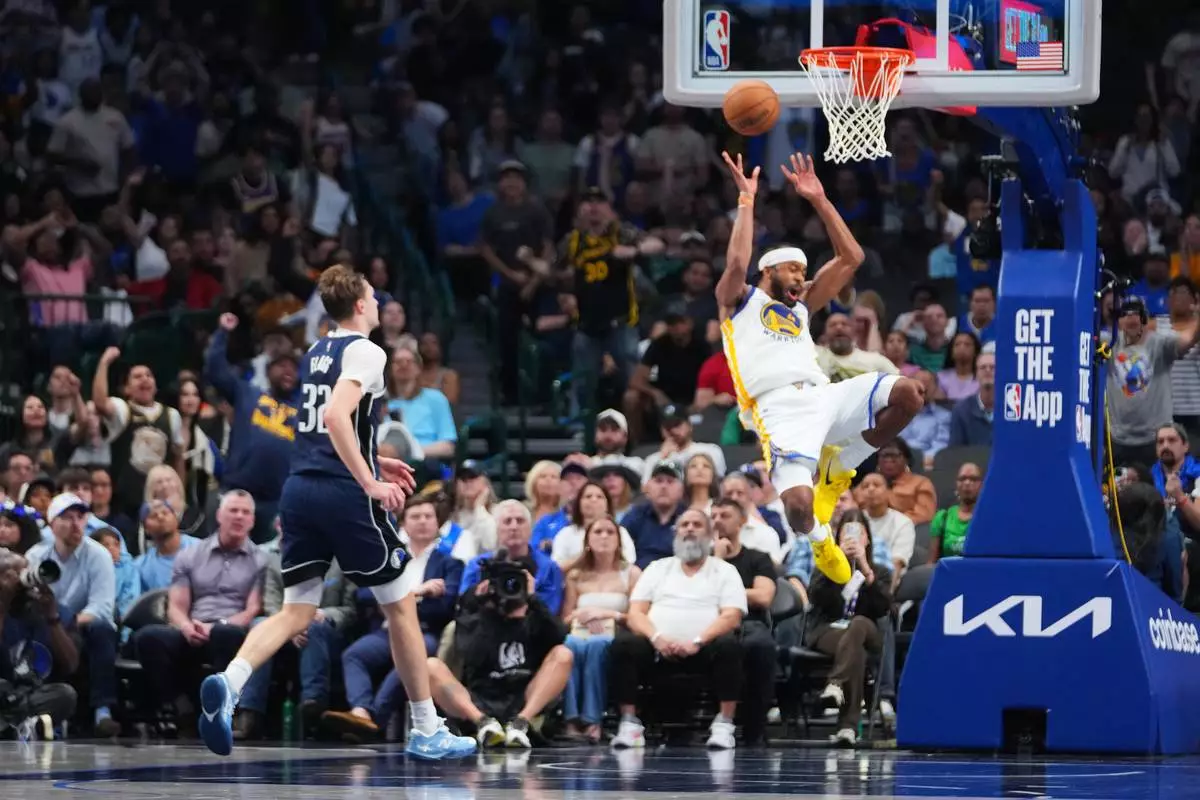
Golden State Warriors guard Moses Moody, right, reacts while suffering an injury as Dallas Mavericks forward Cooper Flagg (32) looks on during overtime of an NBA basketball game Monday, March 23, 2026, in Dallas. (AP Photo/Julio Cortez)
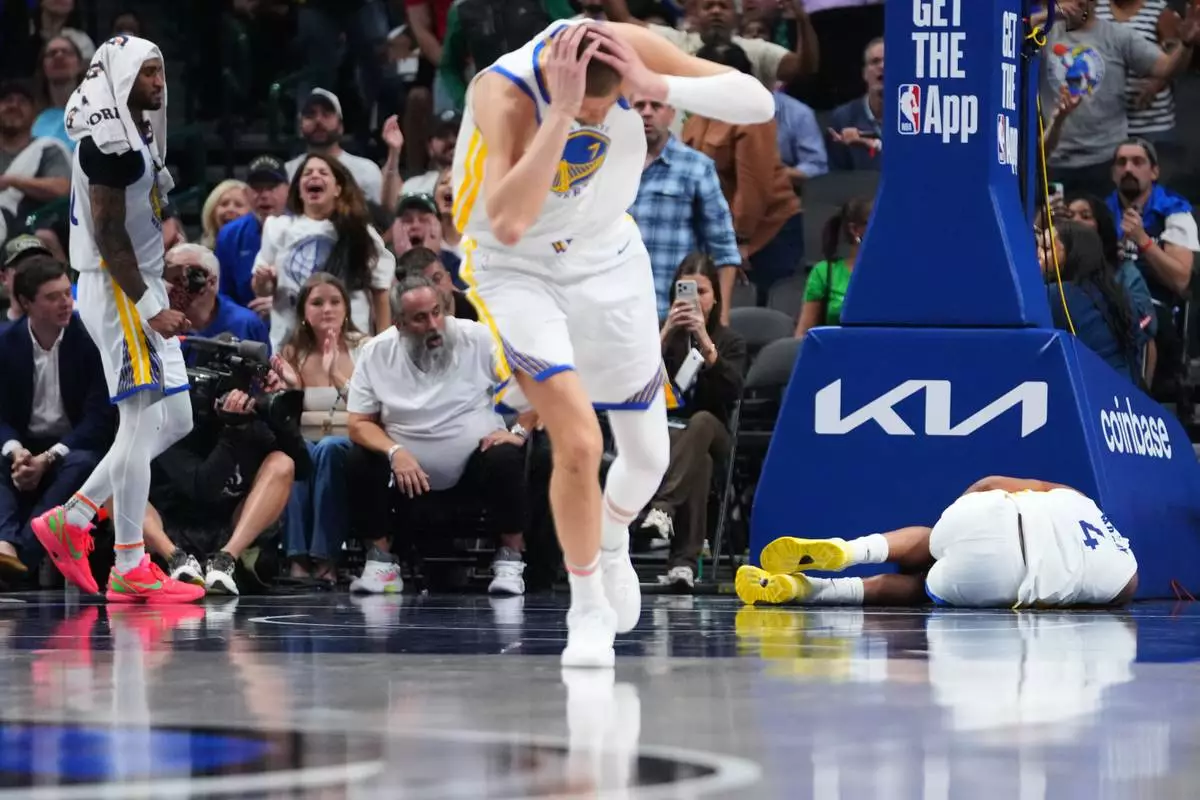
Golden State Warriors center Kristaps Porzingis, center, and guard Gary Payton II, left, react after guard Moses Moody (4) suffered an injury during overtime of an NBA basketball game against the Dallas Mavericks Monday, March 23, 2026, in Dallas. (AP Photo/Julio Cortez)
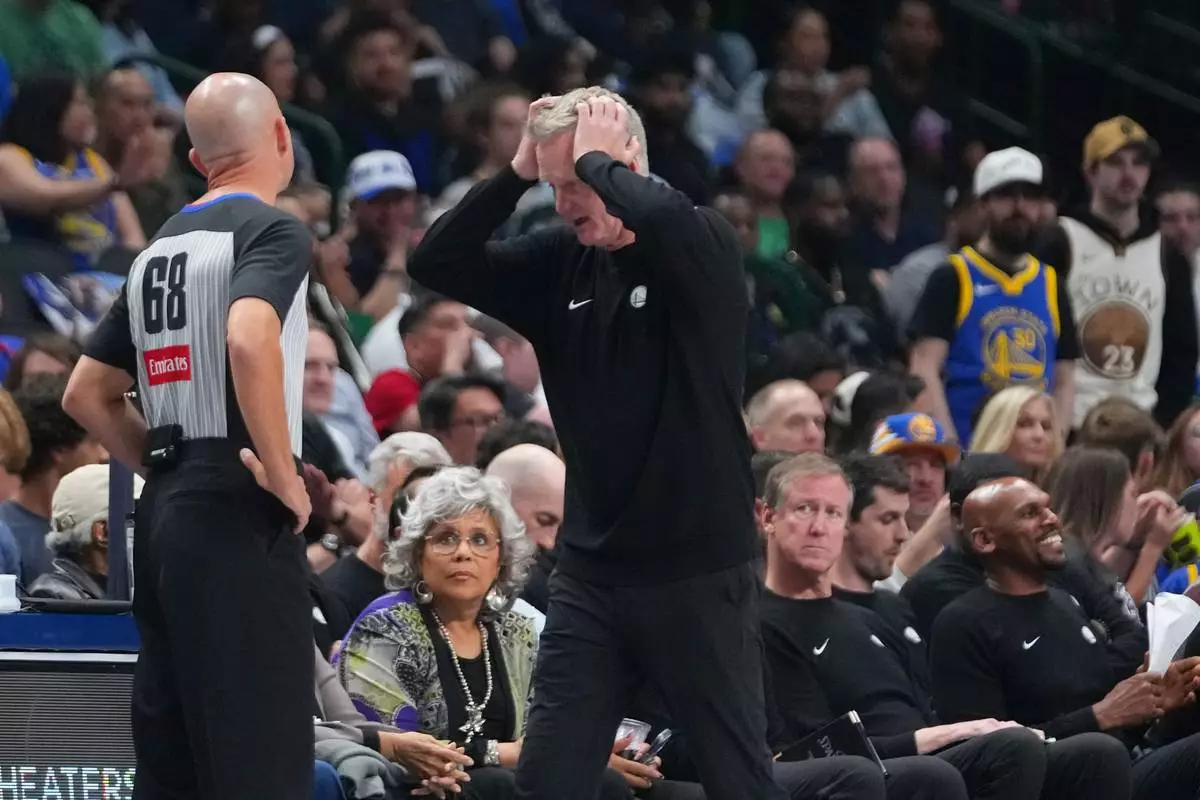
Golden State Warriors head coach Steve Kerr, right, reacts in front of referee Jacyn Goble (68) during the first half of an NBA basketball game against the Dallas Mavericks Monday, March 23, 2026, in Dallas. (AP Photo/Julio Cortez)