Syracuse turned to its past by hiring former star guard Gerry McNamara on Tuesday in a bid to guide a fading men’s basketball program back to prominence.
The 42-year-old McNamara, nicknamed “G-Mac,” is returning to where he and Carmelo Anthony led the Orange to a national championship in 2003. McNamara then spent 14 years as an assistant under Hall of Fame coach Jim Boeheim and an additional season under his successor, Adrian Autry.
Now he replaces Autry, who was fired after three largely disappointing seasons in which the Orange went 49-48 and extended their NCAA Tournament drought to five seasons — the school's longest since 1967-72.
“I love this place. I love what Syracuse means to the fans, to the players who have worn this jersey, to the people of central New York,” McNamara said in a statement released by the school, which plays in the Atlantic Coast Conference. “This program has given me everything, and I am ready to give everything back to it.”
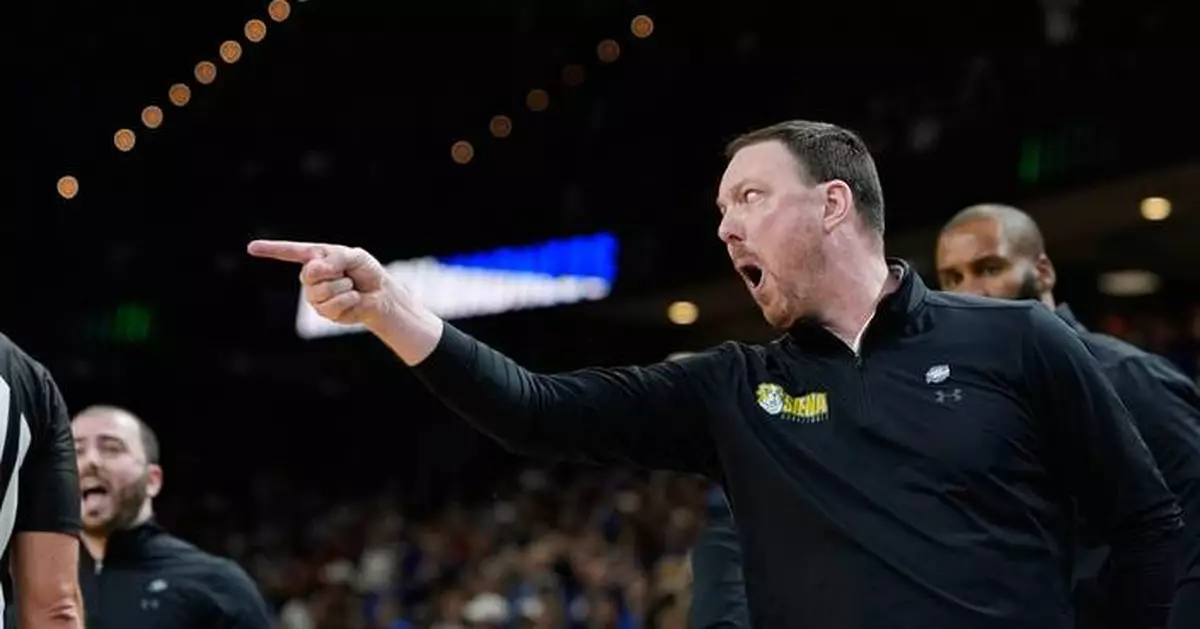
McNamara returns to Syracuse after spending the past two seasons at Siena, where he went 37-30. That included a 23-12 finish this year in which the Saints won the Metro Atlantic Athletic Conference tournament and clinched their first NCAA berth since 2010.
The 16th-seeded Saints then nearly knocked off Duke in an eventual 71-65 first-round loss on Thursday.
Incoming athletic director Bryan Blair referred to McNamara’s hiring as “a critical moment for Syracuse basketball.”
“At every stop in his playing and coaching journey, he has elevated those around him — student-athletes, staff and the broader community — through his energy, his standards and his ability to connect,” said Blair, who was hired on March 12. "He honors our past, but he is driven to build for the future. ... We welcome Gerry home and can’t wait to see where he takes our program.”
In McNamara, the Orange hire a coach who has name recognition and connections to a program’s proud past in which Syracuse was an established basketball power over Boeheim’s 47-year tenure that featured 35 tournament berths and five Final Four appearances. During McNamara's time as an assistant, the Orange made nine tournament appearances, including Final Four runs in 2013 and 2016.
From Scranton, Pennsylvania, McNamara has a strong track record for recruiting and developing players. Working under Boeheim, he was credited for having a primary role in mentoring eventual NBA players Michael Carter-Williams, Dion Waiters and Tyler Ennis.
Boeheim, whose name graces Syracuse’s home court, remains a fixture with the team as a special assistant.
“Gerry McNamara’s story is as authentically Syracuse as they come,” said the school's chancellor-elect, J. Michael Haynie.
“He came here from Scranton with something to prove and became one of the greatest players this program has ever seen and one of the most trusted coaches to sit on our bench," Haynie said. "Now he’s coming home with a singular mission: to return Syracuse basketball to where it belongs, among the elite programs in the country."
McNamara’s hiring comes with Syracuse in transition with Blair replacing John Wildhack, who is retiring in July following a 10-year tenure.
Under Blair, Syracuse is expected to place an emphasis on increasing its financial commitment to recruit players — something the program lacked under Wildhack.
“College basketball has changed. How you build a program, recruit talent, compete for resources and win looks different than it did even five years ago. I know that. I’m ready for it," McNamara said. "What hasn’t changed is what Orange Nation expects, and what this place deserves. We are going to build something special here.”
As a player, McNamara finished fourth at Syracuse in career points (2,099), and remains the program's career leader in minutes played (4,799) and 3-point baskets (400). His No. 3 jersey was retired in 2023.
AP March Madness bracket: https://apnews.com/hub/ncaa-mens-bracket and coverage: https://apnews.com/hub/march-madness
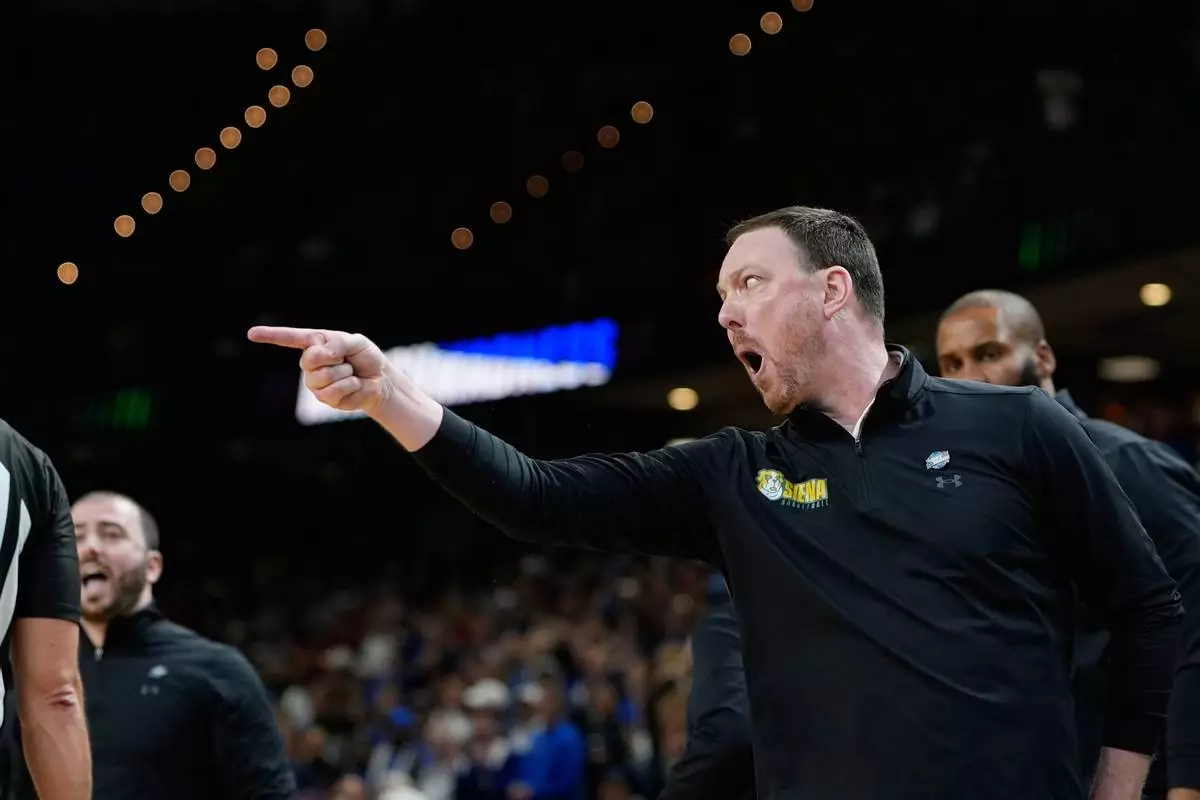
Siena head coach Gerry McNamara gestures during the second half in the first round of the NCAA college basketball tournament against Duke, Thursday, March 19, 2026, in Greenville, S.C. (AP Photo/Brynn Anderson)
NEW YORK (AP) — It took less than a minute for a routine landing to spiral into a deadly crash Sunday at New York's LaGuardia Airport. But the collision between an Air Canada flight and a fire truck crossing the runway was the culmination of a series of events that began much earlier.
The Associated Press created this timeline based on a review of air traffic control recordings and information from the Federal Aviation Administration, publicly available flight tracking data and the National Transportation Safety Board, including information it obtained from the jet's cockpit voice recorder.
10:12 p.m.: Air Canada Express Flight 8646, operated by Jazz Aviation, leaves Montréal–Trudeau International Airport, two hours and 13 minutes late. By the time the aircraft reaches New York, it is part of an influx of late-arriving flights, including some waiting extended periods for a gate.
11:16:42 p.m.: A United aircraft, Flight 2384, aborts takeoff for a second time because of an anti-ice warning light in the cockpit.
11:20:48 p.m.: “We have an odor on the plane as well here at this time," the United pilot reports. “We are going to be going back to the gate, request fire as well,” using shorthand for the airport’s fire rescue team.
11:21:12 p.m.: Another pilot chimes in: “If that’s a sewer smell … we smelled that too going around the terminal there.”
11:22:24 p.m.: A controller asks the United pilot if it is a smoke odor. He responds: “No, it was a weird odor. I don’t know exactly how to describe it,” and says he can't get ahold of anyone to obtain a gate assignment.
11:24:49 p.m.: The controller confirms there is no gate available. He asks the pilot, “Do you still need us to send fire there?” The pilot says yes, citing the odor.
11:27:44 p.m.: United 2384’s pilot tells the controller he doesn't plan on evacuating the plane. The controller instructs the pilot to move to another taxiway.
11:29:54 p.m.: United 2384 makes a wrong turn and ends up in a different part of the taxiway, but the controller doesn't sound concerned. "You can just stay over there … and we’ll have the guys go over there,” he says.
11:31:41 p.m.: United 2384 declares an emergency. The pilot says: “The flight attendants in the back are feeling ill because of the odor. We will need to go into any available gate at this time.”
11:31:59 p.m.: The controller asks again if there’s an available gate, telling the person he’s speaking with, “now they’re declaring an emergency. They want to get out.”
11:33:39 p.m.: The controller tells United 2384 there is still no open gate, but fire trucks are headed over with a stair truck if they want to evacuate. "Let me know if you do,” he says.
11:34:18 p.m.: In a routine step near the end of a flight, the air traffic controller handling approaches into LaGuardia instructs the pilots of Air Canada Express Flight 8646 pilots to contact the airport’s control tower, which will guide them the rest of the way.
11:35:08 p.m.: Flight 8646 is cleared to land on Runway 4/22.
11:36:45 p.m.: At the airport, a controller asks: “Is there a vehicle that needed to cross the runway?”
11:37:00 p.m.: “Truck 1 and company, LaGuardia Tower, requesting to cross 4 at Delta,” the firefighter says, meaning he is requesting clearance to use Taxiway D to cross Runway 4 — the same runway where Flight 8646 is about to land.
11:37:05 p.m.: “Truck 1 and company cross 4 at Delta,” the controller says, authorizing the truck and other emergency vehicles to cross Runway 4. Simultaneously, on a different frequency, the pilot on the odor-stricken United flight reports that his plane has finally been cleared to go to a gate.
11:37:08 p.m.: “Truck 1 and company crossing 4 at Delta," a firefighter in Truck 1 repeats, confirming that the controller has cleared the vehicle to cross.
11:37:11 p.m.: An electronic call out in Flight 8646’s cockpit indicates the plane is 50 feet above the ground.
11:37:12 p.m.: A controller tells the pilot of an outbound Frontier Airlines flight to stop on a taxiway.
11:37:15 p.m.: “Sorry, Truck 1,” a controller says as Flight 8646 bears down on Runway 4/22.
11:37:16 p.m.: A controller then frantically tells the fire crew: “Stop. Stop Stop. Stop. Truck 1. Stop. Stop. Stop. Stop."
11:37:17 p.m.: Flight 8646’s cockpit voice recorder captures a sound that investigators say is consistent with the plane’s landing gear touching down..
11:37:19 p.m.: Flight 8646's first officer, who was flying the plane, transfers control to the captain.
11:37:20 p.m.: The controller continues, “Stop Truck 1. Stop. Stop Truck 1. Stop.” As he speaks, an alarm begins to beep.
11:37:25 p.m.: Flight 8646 slams into the fire truck. The cockpit voice recording stops.
11:37:45 p.m.: A controller tells the pilot of the next plane set to land to “go around,” meaning he should keep flying instead of landing.
The controller then tries to raise the pilots of Flight 8646. "I see you collided with a vehicle there. Just hold position. I know you can’t move. Vehicles are responding to you now.” Other rescue vehicles race to the crash site.
11:55:37 p.m.: The pilot of another plane tells a controller: “That wasn’t good to watch." The controller responds: “Yeah, I know. I was here ... We were dealing with an emergency earlier. I messed up.” The pilot says: “Nah, man, you did the best you could.”
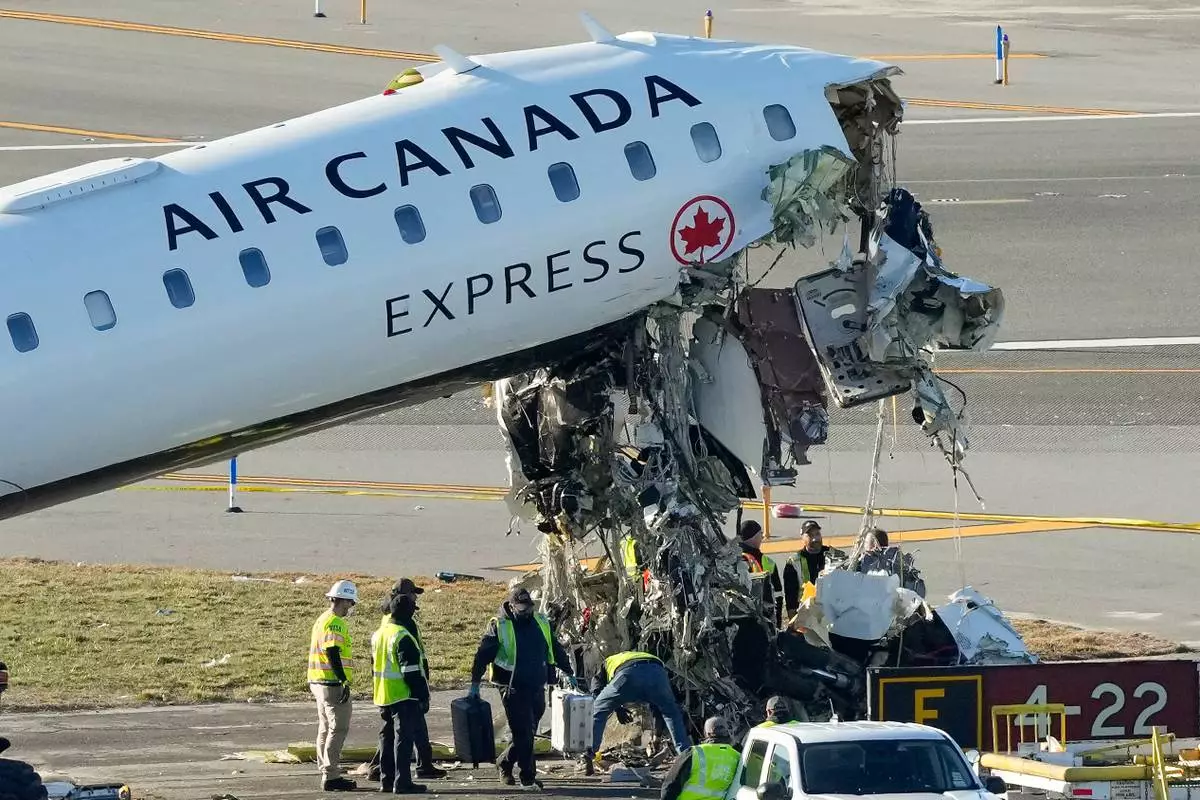
NTSB officials and aircraft maintenance workers pick through debris and remove luggage as they inspect the wreckage of an Air Canada Express jet, Tuesday, March 24, 2026, just off the runway where it had collided with a Port Authority fire truck Sunday night at LaGuardia Airport in New York. (AP Photo/Yuki Iwamura)