|
- International BIO-LivIQ Study Will Generate Evidence for Global LivIQ Leadless Pacemaker Approvals
- Far-Field Sensing and AV-Synchronous Pacing Performance Will be Validated by Real World Clinical Data
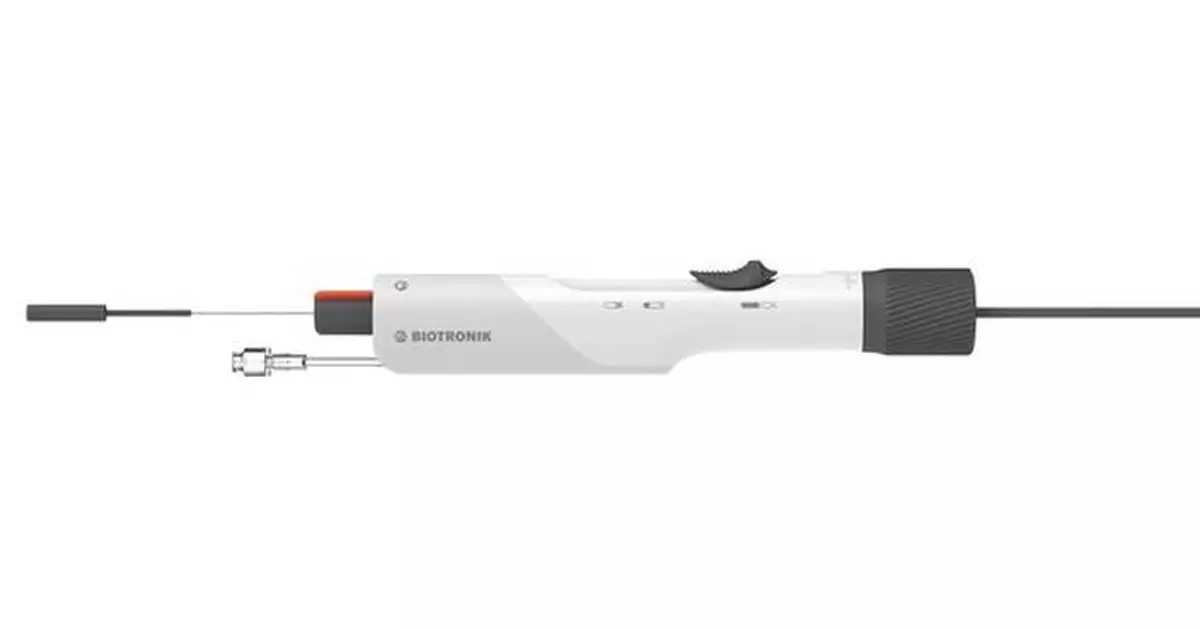
BERLIN, March 24, 2026 /PRNewswire/ -- BIOTRONIK today announced the initiation of its global pivotal study evaluating the LivIQ leadless pacemaker system. This next-generation single‑device solution is designed to deliver atrioventricular (AV)-synchrony using advanced electrical far‑field sensing.
First implantations within this study have been completed at the Kokura Memorial Hospital in Kitakyushu, Japan and the National Cerebral and Cardiovascular Center (NCVC) in Osaka, Japan. "The BIOTRONIK leadless pacemaker system was remarkably straightforward to implant. Catheter navigation and deployment were intuitive, helping us to achieve excellent device positioning and initial results," said Dr. Kenji Ando, Department of Cardiology at Kokura Memorial Hospital.
"I am pleased to see a highly compelling option emerging for a single device leadless pacemaker, promised to deliver strong AV-synchrony and long-term device performance," added Dr. Kengo Kusano, Study Principal Investigator at NCVC.
As a prospective multicenter clinical investigation, the BIO-LivIQ study will enroll 325 patients across 60 sites worldwide. The trial will evaluate device safety, pacing performance, AV-synchrony behavior, and quality-of-life outcomes to generate the evidence required for global regulatory submissions.
LivIQ continues BIOTRONIK's long‑standing commitment to physiologic pacing. It uses proven far‑field sensing technology to electrically detect atrial activity and enable a single‑device VDD mode. This advanced sensing approach supports reliable AV synchrony across a broad range of clinical scenarios. Equally important, LivIQ's highly maneuverable catheter is designed for precise control and predictable placement, creating a smooth, streamlined implantation experience.
"We are one step closer to providing clinicians with a more intuitive and capable single‑device solution in leadless pacing," said Dr. Andreas Hecker, Chief Technology Officer at BIOTRONIK. "LivIQ brings together two key advances that address distinct clinical needs. It combines an easy‑to‑handle catheter design that simplifies implantation, and a novel sensing concept that enhances therapy performance across more scenarios."
Clinicians seek solutions to avoid complications related to the pacemaker's pocket, infection risks, and an invasive experience. Leadless pacing continues to emerge as an important therapy option and is designed to address these growing needs.
CAUTION - Investigational device. Limited to federal (United States) law to investigational use.
About BIOTRONIK
For over 60 years, BIOTRONIK has stood at the forefront of medical technology, pioneering breakthrough innovations that are transforming the lives of millions affected by heart disease and chronic pain. Rooted in a deep purpose to seamlessly harmonise technology with the human body, we engineer trusted, life-changing therapies through our advanced active implants in Cardiac Rhythm Management, Monitoring, and Neuromodulation, while providing cutting-edge solutions in Electrophysiology. From creating Germany's first pacemaker in 1963 to breaking new ground in digital technologies and Conduction System Pacing today, BIOTRONIK is continuously raising the bar for quality, performance, and innovation. Headquartered in Berlin, our global reach spans over 100 countries across the Americas, EMEA, and Asia—bringing bold, future-ready solutions that are shaping the next generation of medical technology.
- International BIO-LivIQ Study Will Generate Evidence for Global LivIQ Leadless Pacemaker Approvals
- Far-Field Sensing and AV-Synchronous Pacing Performance Will be Validated by Real World Clinical Data
BERLIN, March 24, 2026 /PRNewswire/ -- BIOTRONIK today announced the initiation of its global pivotal study evaluating the LivIQ leadless pacemaker system. This next-generation single‑device solution is designed to deliver atrioventricular (AV)-synchrony using advanced electrical far‑field sensing.
First implantations within this study have been completed at the Kokura Memorial Hospital in Kitakyushu, Japan and the National Cerebral and Cardiovascular Center (NCVC) in Osaka, Japan. "The BIOTRONIK leadless pacemaker system was remarkably straightforward to implant. Catheter navigation and deployment were intuitive, helping us to achieve excellent device positioning and initial results," said Dr. Kenji Ando, Department of Cardiology at Kokura Memorial Hospital.
"I am pleased to see a highly compelling option emerging for a single device leadless pacemaker, promised to deliver strong AV-synchrony and long-term device performance," added Dr. Kengo Kusano, Study Principal Investigator at NCVC.
As a prospective multicenter clinical investigation, the BIO-LivIQ study will enroll 325 patients across 60 sites worldwide. The trial will evaluate device safety, pacing performance, AV-synchrony behavior, and quality-of-life outcomes to generate the evidence required for global regulatory submissions.
LivIQ continues BIOTRONIK's long‑standing commitment to physiologic pacing. It uses proven far‑field sensing technology to electrically detect atrial activity and enable a single‑device VDD mode. This advanced sensing approach supports reliable AV synchrony across a broad range of clinical scenarios. Equally important, LivIQ's highly maneuverable catheter is designed for precise control and predictable placement, creating a smooth, streamlined implantation experience.
"We are one step closer to providing clinicians with a more intuitive and capable single‑device solution in leadless pacing," said Dr. Andreas Hecker, Chief Technology Officer at BIOTRONIK. "LivIQ brings together two key advances that address distinct clinical needs. It combines an easy‑to‑handle catheter design that simplifies implantation, and a novel sensing concept that enhances therapy performance across more scenarios."
Clinicians seek solutions to avoid complications related to the pacemaker's pocket, infection risks, and an invasive experience. Leadless pacing continues to emerge as an important therapy option and is designed to address these growing needs.
CAUTION - Investigational device. Limited to federal (United States) law to investigational use.
About BIOTRONIK
For over 60 years, BIOTRONIK has stood at the forefront of medical technology, pioneering breakthrough innovations that are transforming the lives of millions affected by heart disease and chronic pain. Rooted in a deep purpose to seamlessly harmonise technology with the human body, we engineer trusted, life-changing therapies through our advanced active implants in Cardiac Rhythm Management, Monitoring, and Neuromodulation, while providing cutting-edge solutions in Electrophysiology. From creating Germany's first pacemaker in 1963 to breaking new ground in digital technologies and Conduction System Pacing today, BIOTRONIK is continuously raising the bar for quality, performance, and innovation. Headquartered in Berlin, our global reach spans over 100 countries across the Americas, EMEA, and Asia—bringing bold, future-ready solutions that are shaping the next generation of medical technology.
** This press release is distributed by PR Newswire through automated distribution system, for which the client assumes full responsibility. **
BIOTRONIK Leaps Forward with Next‑Generation Leadless Pacing
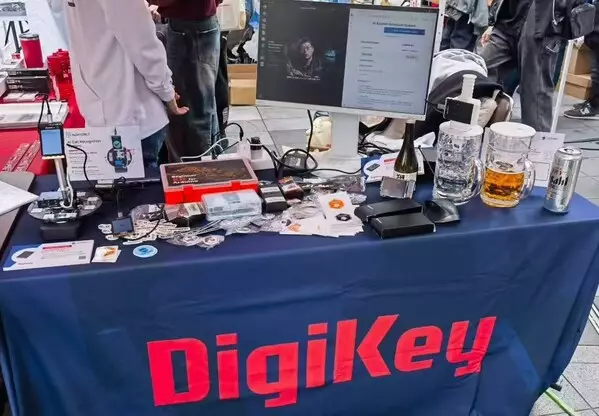
SHANGHAI, April 5, 2026 /PRNewswire/ -- DFRobot, a global leader in open-source hardware, recently participated in the Robot Hokoten @ Akihabara event in Tokyo, appearing at the DigiKey booth. The company presented two AI-driven projects based on open-source hardware—an "Electronic Nose" gas recognition system and an AI-powered cell recognition teaching system—demonstrating how AI and open hardware can be effectively applied in STEAM education and maker scenarios.
Electronic Nose: Integrating TinyML with On-Device AI
The "Electronic Nose" project combines edge AI with embedded hardware. It uses four MEMS gas sensors connected to an ESP32 running a TinyML model for real-time odor analysis.
During the demonstration, the sensor probe was placed above a glass of beer. Within 20 to 30 seconds, the system completed odor sampling and analysis. The results were then transmitted to the LattePanda Sigma, a compact x86 computing module, which generated descriptive content or tasting notes using a locally deployed language model. The entire process was executed on-device, without relying on network connectivity.
Xia Qing, Senior Engineer at DFRobot, commented: "This demonstration shows how makers can combine TinyML-based sensing with local AI models to transform sensor data into intuitive insights. Potential applications include coffee flavor analysis, fermentation monitoring, and food freshness detection."
AI Cell Recognition: Bringing AI into the STEAM Classroom
Another featured project focused on educational applications. DFRobot presented an AI-powered cell recognition teaching system designed to integrate artificial intelligence into middle school biology education. The system is built using the HUSKYLENS 2 AI vision sensor and the UNIHIKER K10 development board.
Powered by the K230 processor with up to 6 TOPS of AI computing performance, HUSKYLENS 2 can efficiently run both pre-trained and user-trained models with low latency. In the demonstration, the system performed real-time identification and classification of cells under a microscope, making abstract AI and machine learning concepts tangible through hands-on interaction.
The project showcases the complete AI workflow—from data collection and model training to edge inference—highlighting its practical applicability in educational settings.
Partnering with DigiKey to Expand the Open-Source Hardware Ecosystem
DFRobot and DigiKey jointly showcased at Robot Hokoten to promote open-source hardware and AI education. The two parties will continue collaborating on technical content, global marketing, and educational solutions, lowering the barrier to AI and open hardware adoption, and accelerating the transition from maker projects to real STEAM classroom applications.
** This press release is distributed by PR Newswire through automated distribution system, for which the client assumes full responsibility. **
DFRobot Showcases AI Maker Projects at Robot Hokoten in Akihabara