Skip to Content Facebook Feature Image

Rubio testifies he didn't know of allegations an ex-lawmaker was lobbying for Venezuela's Maduro

News

Rubio testifies he didn't know of allegations an ex-lawmaker was lobbying for Venezuela's Maduro
News

News

Rubio testifies he didn't know of allegations an ex-lawmaker was lobbying for Venezuela's Maduro

2026-03-25 06:02 Last Updated At:06:10

MIAMI (AP) — Secretary of State Marco Rubio testified in court that he had no knowledge that former Florida congressman David Rivera was lobbying on behalf of Venezuela's government — as prosecutors later alleged — when he met with his longtime friend to discuss U.S. policy toward the South American country several times at the start of the first Trump administration.

“I would’ve been shocked” had I known, Rubio said in almost three hours of testimony Tuesday at Rivera's federal trial in Miami.

More Images
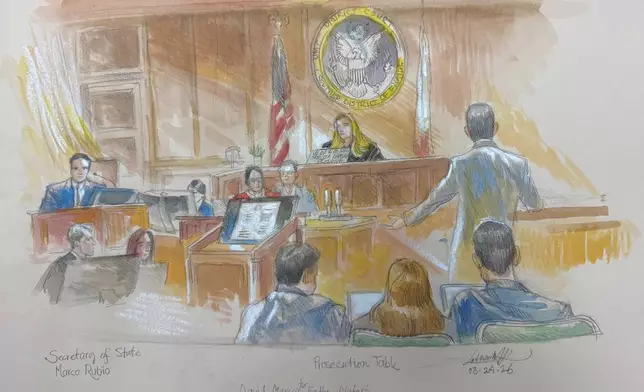
In this courtroom sketch Secretary of State Marco Rubio testifies during the trial of former Florida congressman David Rivera in District Court Judge Melissa Damian's courtroom, Tuesday, March 24, 2026, in Miami. (Lothar Speer via AP)
In this courtroom sketch Secretary of State Marco Rubio testifies during the trial of former Florida congressman David Rivera in District Court Judge Melissa Damian's courtroom, Tuesday, March 24, 2026, in Miami. (Lothar Speer via AP)

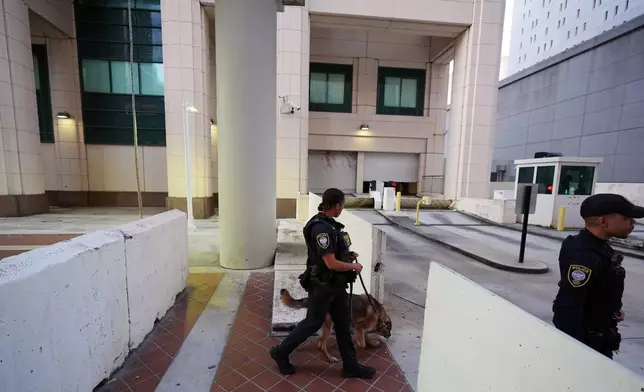
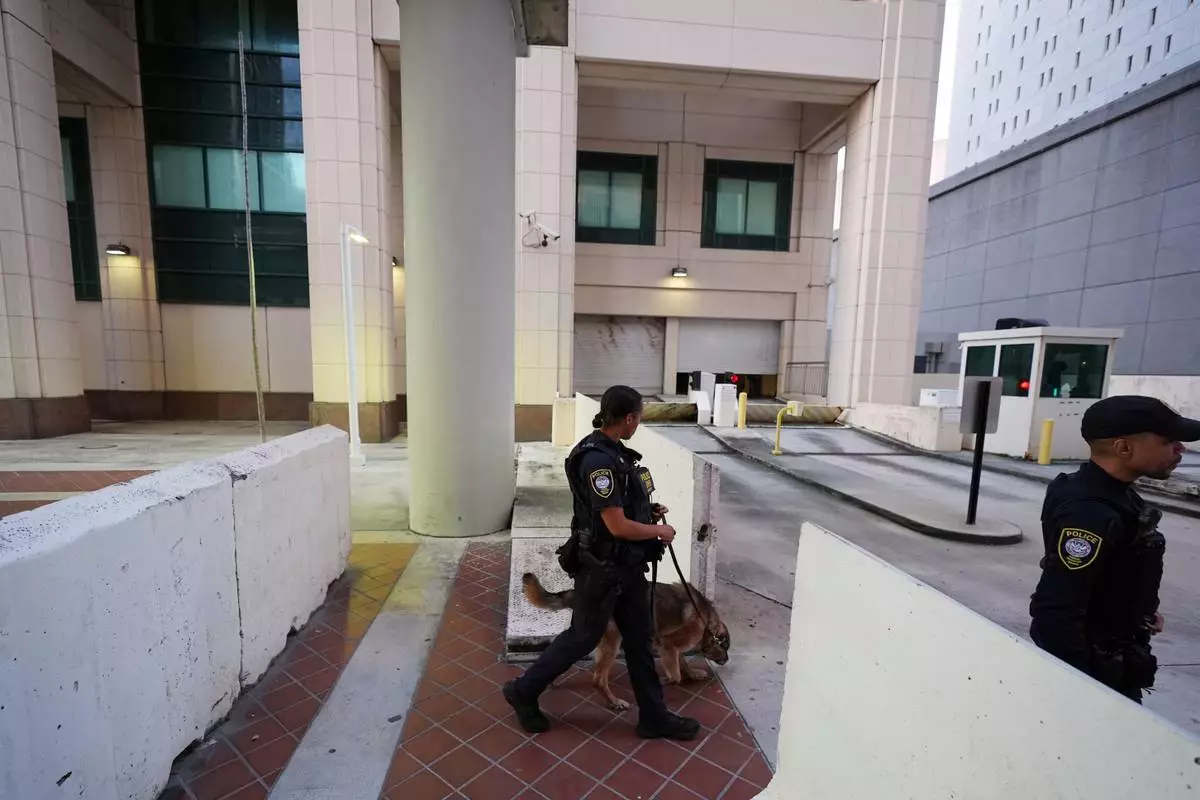
Police with a canine check outside the James Lawrence King Federal Building, where Secretary of State Marco was expected to testify in the trial of his former roommate David Rivera, Tuesday, March 24, 2026, in Miami. (AP Photo/Rebecca Blackwell)
Police with a canine check outside the James Lawrence King Federal Building, where Secretary of State Marco was expected to testify in the trial of his former roommate David Rivera, Tuesday, March 24, 2026, in Miami. (AP Photo/Rebecca Blackwell)
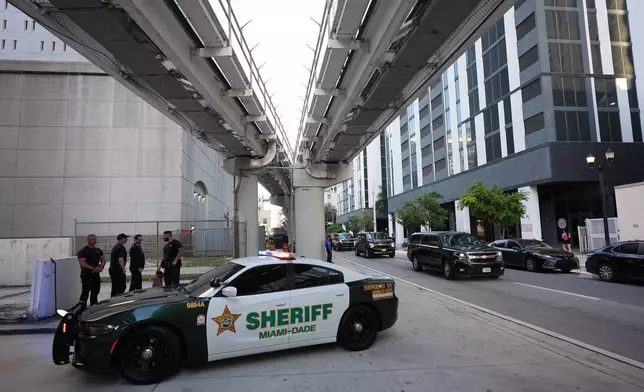
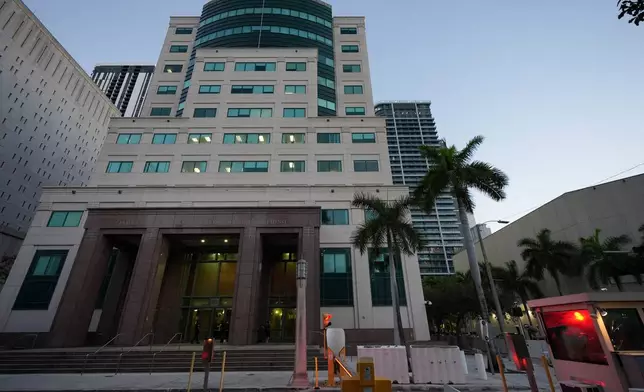
The sun rises outside the James Lawrence King Federal Building, where Secretary of State Marco was expected to testify in the trial of his former roommate David Rivera, Tuesday, March 24, 2026, in Miami. (AP Photo/Rebecca Blackwell)
The sun rises outside the James Lawrence King Federal Building, where Secretary of State Marco was expected to testify in the trial of his former roommate David Rivera, Tuesday, March 24, 2026, in Miami. (AP Photo/Rebecca Blackwell)

A convoy carrying Secretary of State Marco Rubio arrives at the James Lawrence King Federal Building where Rubio was set to testify in the trial of his former roommate David Rivera, Tuesday, March 24, 2026, in Miami. (AP Photo/Rebecca Blackwell)

A convoy carrying Secretary of State Marco Rubio arrives at the James Lawrence King Federal Building where Rubio was set to testify in the trial of his former roommate David Rivera, Tuesday, March 24, 2026, in Miami. (AP Photo/Rebecca Blackwell)

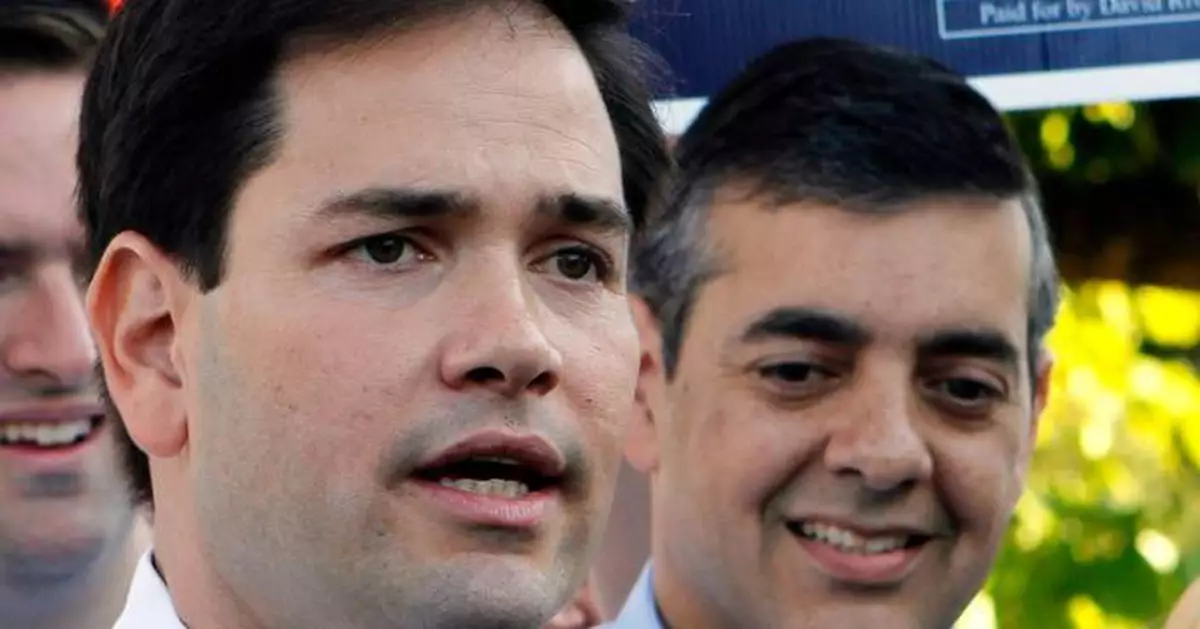
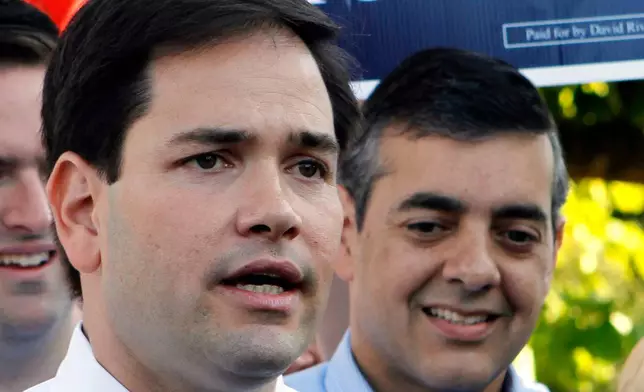
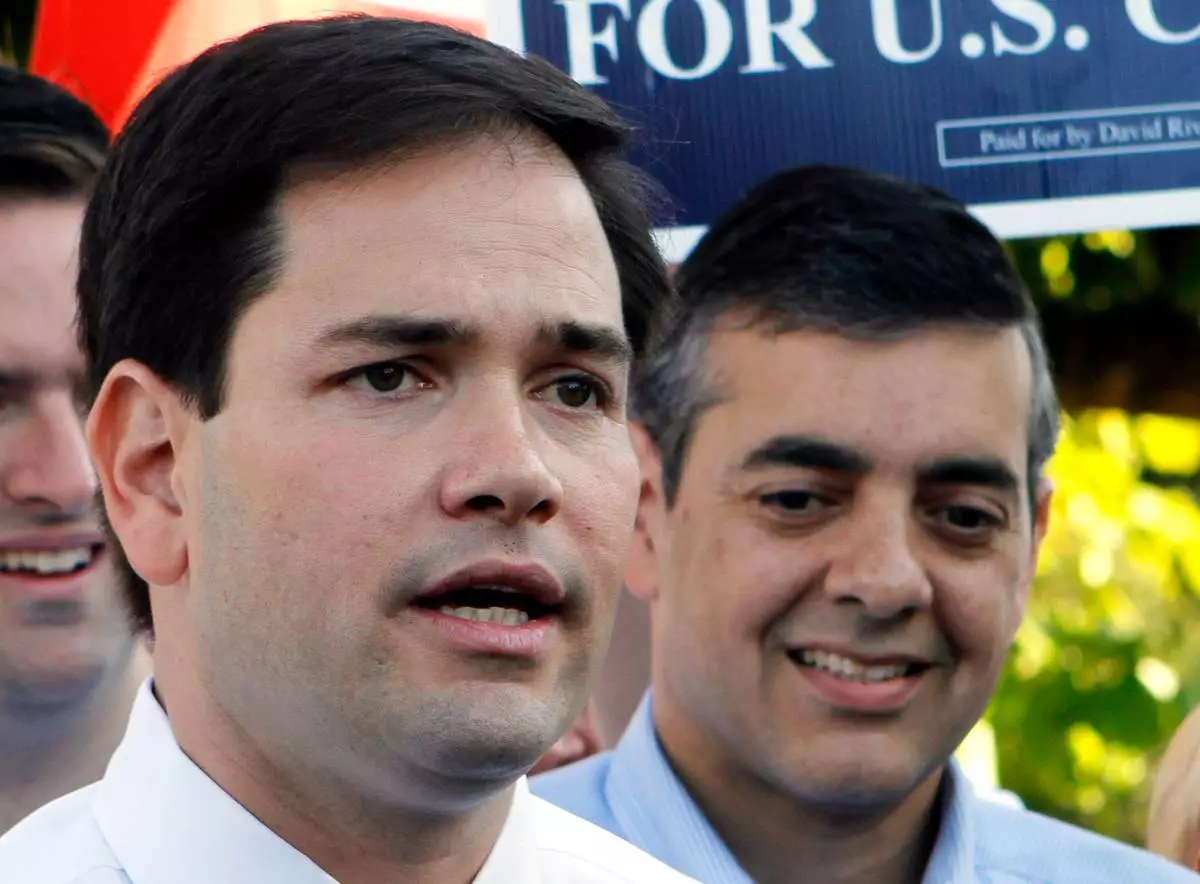
FILE - Then Republican U.S. Senate candidate Marco Rubio, left, accompanied by then Republican candidate for Congress David Rivera, talks to reporters in Miami, Oct. 20, 2010. (AP Photo/Alan Diaz, File)

FILE - Then Republican U.S. Senate candidate Marco Rubio, left, accompanied by then Republican candidate for Congress David Rivera, talks to reporters in Miami, Oct. 20, 2010. (AP Photo/Alan Diaz, File)

Rivera and an associate were charged in 2022 with money laundering and failing to register as a foreign agent after being awarded a $50 million lobbying contract by then-leader Nicolás Maduro’s government.

Prosecutors allege that the goal of the lobbying effort was to persuade the White House to normalize relations with Venezuela, while Rivera's attorneys argue that the three-month contract, which ended before Rivera met with Rubio, was focused exclusively on luring Exxon Mobil back to Venezuela — commercial work that is generally exempt from the Foreign Agents Registration Act.

As part of his work, Rivera and his co-defendant are accused of trying to arrange meetings for then-Foreign Minister Delcy Rodríguez — now Venezuela’s acting president — in Dallas, New York, Washington and Caracas, Venezuela, with White House officials, members of Congress and the chief executive officer of Exxon.

In sometimes deeply personal testimony Tuesday, Rubio discussed at length friendships that date back to the start of his political career as an aide to Bob Dole's 1996 presidential campaign and a West Miami council member.

Testifying in a packed courtroom with heightened security, Rubio said he and Rivera became “very close” when they overlapped as members of the Florida legislature. The two Cuban-American Republicans co-owned a house in Tallahassee, celebrated family events together and ardently opposed Venezuela's socialist government when both went to Washington at the same time — Rubio elected to the Senate, Rivera to the House.

So when Rivera texted Rubio in July 2017 that he needed to see him urgently to discuss Venezuela, they agreed to meet the next day, a Sunday, at a friend’s home in Washington where the then-senator was staying with his family, Rubio said.

At the meeting, Rivera informed Rubio that he was working with Raul Gorrín, a media magnate in Venezuela, on what he described as a plan for Maduro to step aside.

“I was skeptical,” said Rubio, adding that the Maduro government was full of “double dealers” constantly pitching unrealistic plans to unseat Maduro. “But if there was a 1% chance it was real, and I had a role to play alerting the White House, I was open to doing that.”

Rubio said he had no knowledge Rivera was himself working for Maduro as prosecutors would later allege. Rubio said he doubted Gorrín would betray Maduro even when the former congressman opened his laptop and showed millions of dollars in a Chase bank account that he was told were payments from the businessman to Venezuela's opposition.

“It was an impressive amount,” Rubio said. “He didn't tell me whose account it was. He said it was to support the opposition.”

Two days later, borrowing talking points provided by Rivera, Rubio wrote and delivered a speech on the Senate floor signaling the U.S. would not retaliate against Venezuelan insiders who worked to push Maduro from power.

“He provided me with insight into some of the key phrases that regime insiders would’ve wanted to hear to know this was serious,” Rubio testified. “No vengeance, no retribution.”

Rubio also spoke to Trump, alerting the president in his first term that there may be something “brewing” with Venezuela.

But the peacemaking effort collapsed almost immediately. At a second meeting at a Washington hotel, Gorrín failed to produce a promised letter from Maduro to Trump that he wanted Rubio to hand-deliver to the president.

“It was a total waste of my time,” Rubio testified.

Shortly afterward, Trump imposed heavy sanctions on Maduro and members of his inner circle for their decision to go forward with what Rubio called a “fake election” to empower a constituent assembly that undercut the opposition-controlled legislature.

By that time, the senator hewed closely to the Trump administration's hard line. He taped a rare 10-minute address to the Venezuelan people in July 2017, a day after the divisive election, that was broadcast exclusively on Gorrín's Globovision network.

“For Nicolás Maduro, who I am sure is watching, the current path you are on will not end well for you,” Rubio said in the televised address.

On the stand, Rubio said that had he known Rivera was working with Gorrín on behalf of Maduro, he never would have agreed to deliver the address on the network.

But Rivera said Rubio's testimony backed his defense that as a lifelong opponent of communism he never worked to strengthen Maduro's grip on power.

“Marco Rubio made it abundantly clear today that everything we worked on together in 2017 was meant to remove Maduro from power in Venezuela," he said in a statement.

Throughout his testimony Rubio, a lawyer, spoke calmly and in command of granular details of U.S. policy toward Venezuela over the past decade, even as he struggled to recall the specifics of his text exchanges with Rivera on Venezuela matters.

His testimony was highly unusual. Not since Labor Secretary Raymond Donovan testified at a Mafia trial in 1983 has a sitting member of the president’s Cabinet taken the stand in a criminal trial.

As if to underscore the uniqueness of his appearance in federal court, Rivera's attorney, Ed Shohat, asked Rubio to sign a copy of his 2012 autobiography, “An American Son,” at the conclusion of his testimony.

Rivera and his co-defendant, political consultant Esther Nuhfer, are among a small number of friends and family Rubio thanks in the acknowledgement section of his memoir.
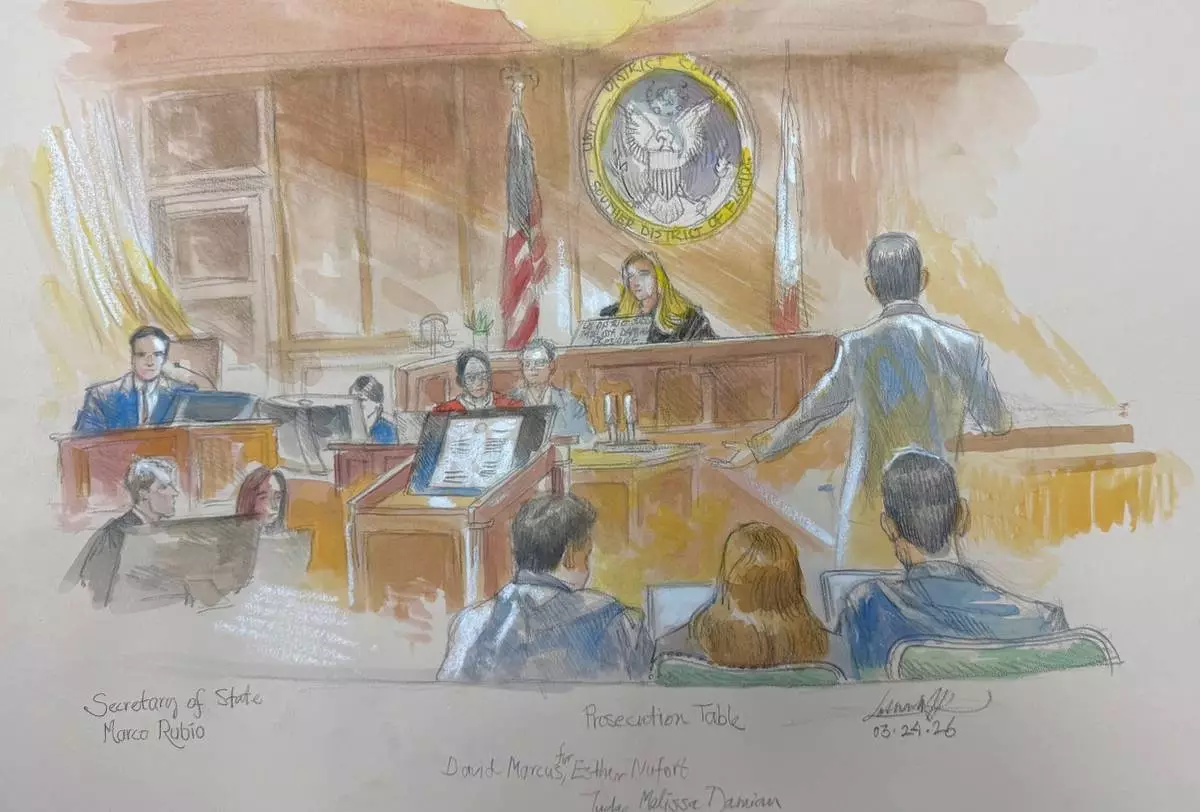
In this courtroom sketch Secretary of State Marco Rubio testifies during the trial of former Florida congressman David Rivera in District Court Judge Melissa Damian's courtroom, Tuesday, March 24, 2026, in Miami. (Lothar Speer via AP)
In this courtroom sketch Secretary of State Marco Rubio testifies during the trial of former Florida congressman David Rivera in District Court Judge Melissa Damian's courtroom, Tuesday, March 24, 2026, in Miami. (Lothar Speer via AP)

Police with a canine check outside the James Lawrence King Federal Building, where Secretary of State Marco was expected to testify in the trial of his former roommate David Rivera, Tuesday, March 24, 2026, in Miami. (AP Photo/Rebecca Blackwell)
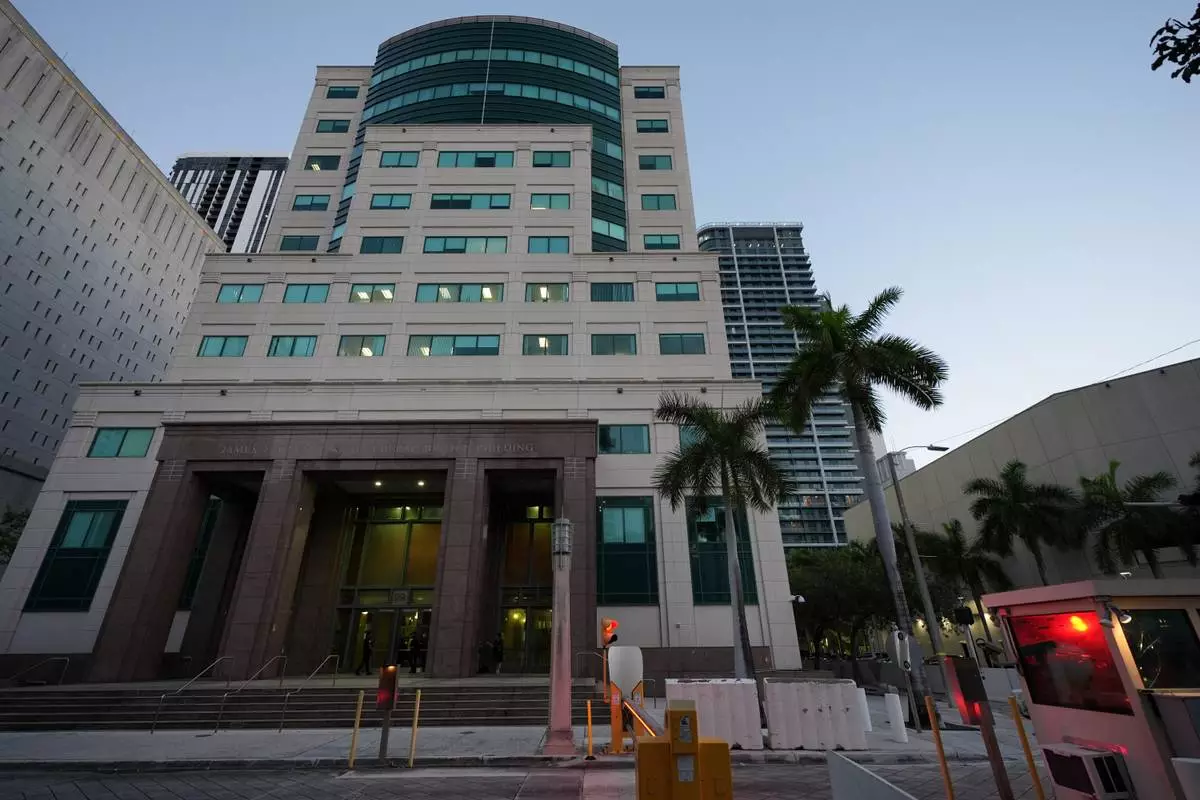
Police with a canine check outside the James Lawrence King Federal Building, where Secretary of State Marco was expected to testify in the trial of his former roommate David Rivera, Tuesday, March 24, 2026, in Miami. (AP Photo/Rebecca Blackwell)
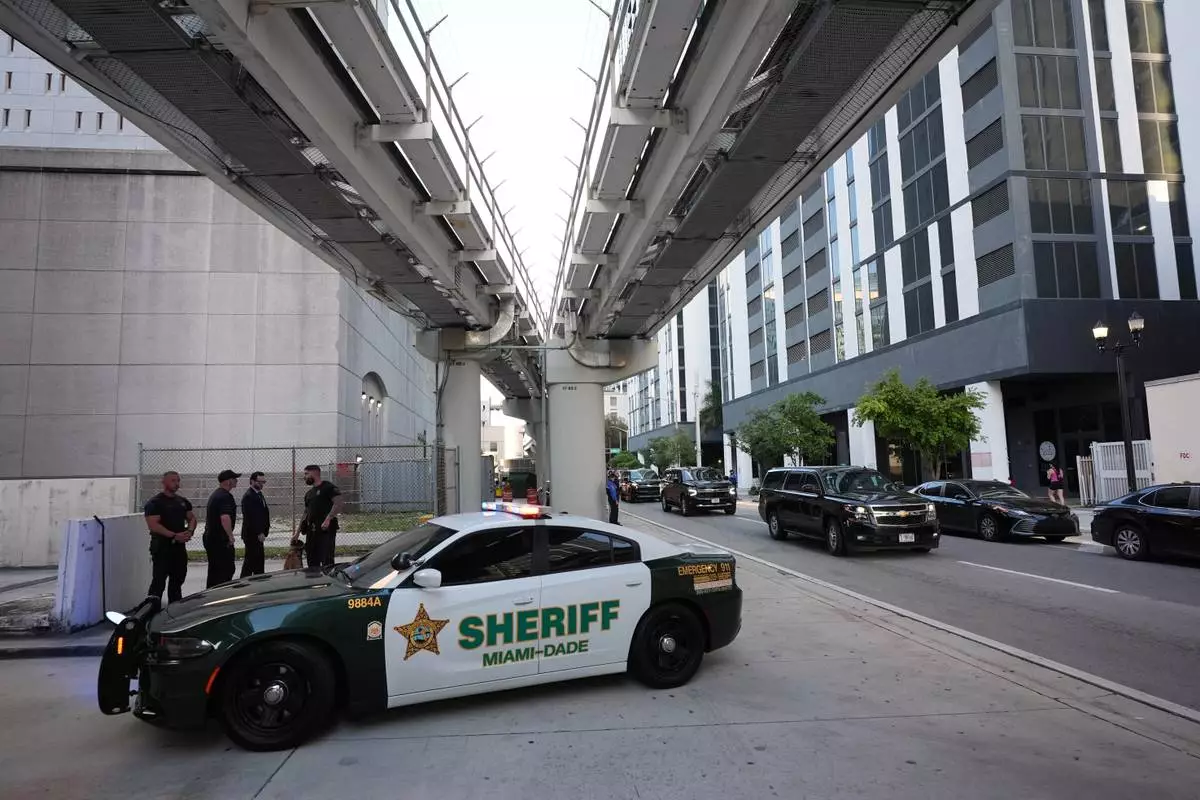
The sun rises outside the James Lawrence King Federal Building, where Secretary of State Marco was expected to testify in the trial of his former roommate David Rivera, Tuesday, March 24, 2026, in Miami. (AP Photo/Rebecca Blackwell)
The sun rises outside the James Lawrence King Federal Building, where Secretary of State Marco was expected to testify in the trial of his former roommate David Rivera, Tuesday, March 24, 2026, in Miami. (AP Photo/Rebecca Blackwell)

A convoy carrying Secretary of State Marco Rubio arrives at the James Lawrence King Federal Building where Rubio was set to testify in the trial of his former roommate David Rivera, Tuesday, March 24, 2026, in Miami. (AP Photo/Rebecca Blackwell)

A convoy carrying Secretary of State Marco Rubio arrives at the James Lawrence King Federal Building where Rubio was set to testify in the trial of his former roommate David Rivera, Tuesday, March 24, 2026, in Miami. (AP Photo/Rebecca Blackwell)

FILE - Then Republican U.S. Senate candidate Marco Rubio, left, accompanied by then Republican candidate for Congress David Rivera, talks to reporters in Miami, Oct. 20, 2010. (AP Photo/Alan Diaz, File)
FILE - Then Republican U.S. Senate candidate Marco Rubio, left, accompanied by then Republican candidate for Congress David Rivera, talks to reporters in Miami, Oct. 20, 2010. (AP Photo/Alan Diaz, File)
WASHINGTON (AP) — Minnesota officials sued the Trump administration on Tuesday for access to evidence they say they need to independently investigate three shootings by federal officers, including the killings of Renee Good and Alex Pretti.

The lawsuit claims that the federal government reneged on its promise to cooperate with state investigations after the surge of federal law enforcement in Minneapolis. State officials are seeking a court order demanding that the Trump administration comply.

“We are prepared to fight for transparency and accountability that the federal government is desperate to avoid,” Hennepin County Attorney Mary Moriarty told reporters.

The lawsuit marks an escalation in the clash between Minnesota leaders and the Trump administration over the investigations into the high-profile shootings by federal officers that sparked public outcry and protests. The Trump administration has suggested that Minnesota officials don’t have jurisdiction to investigate, but state officials insist they need to conduct their own probes because they don’t trust the federal government to investigate itself.

“There has to be an investigation any time a federal agent or a state agent takes the life of a person in our community,” Moriarty said.

The administration sent thousands of officers to the Minneapolis and St. Paul area for the immigration crackdown as part of President Donald Trump’s national deportation campaign. The Department of Homeland Security considered its largest immigration enforcement operation ever a success but it was staunchly criticized by Minnesota’s leaders who raised questions over officers’ conduct.

There continues to be fallout from Operation Metro Surge in the form of a Homeland Security shutdown, as Democrats in Congress hold up funding in an effort to secure restraints on Trump’s immigration agenda.

An email seeking comment was sent to Justice Department. A DHS spokesperson said in an email Tuesday that all shootings are reviewed by an appropriate law enforcement agency, followed by an independent review within the agency.

The Justice Department in January said it was opening a federal civil rights investigation into Pretti’s killing but has said a similar federal probe was not warranted in the killing of Good. The decision in Good’s case marked a sharp departure from past administrations, which moved quickly to investigate shootings of civilians by law enforcement officials for potential civil rights offenses.

Deputy Attorney General Todd Blanche has said that the department’s Civil Rights Division does not investigate every law enforcement shooting and that there have to be circumstances and facts that “warrant an investigation.”

DHS said Tuesday that Customs and Border Patrol is conducting its own internal investigation of the Pretti case. On Good, DHS said the matter remains under investigation but that footage shows Good impeded law enforcement operations and weaponized her vehicle, leading the officer to act in self-defense.

Minnesota's lawsuit also demands access to evidence in a third case — that of Julio Cesar Sosa-Celis, who was shot and wounded in his right thigh by a federal agent in January.

Federal officials initially accused Sosa-Celis and another man of beating an Immigration and Customs Enforcement officer with a broom handle and a snow shovel. But federal prosecutors later dropped all charges against the men, and authorities opened a criminal investigation into whether two immigration officers lied under oath about the shooting.

Both officers are on administrative leave as ICE and DOJ conduct a joint review, DHS said Tuesday, adding in a statement that ICE is committed to transparency and accountability.

Minnesota’s lawsuit said the federal government is not permitted to “withhold investigative evidence for the purpose of shielding law enforcement officers from scrutiny where a State is investigating serious potential violations of its criminal laws, targeting its citizens, within its borders.”

Moriarty said Tuesday that the federal government “has adopted a policy of categorically withholding evidence,” calling the practice unprecedented and alarming. She said the lawsuit followed formal demands for evidence after the federal government blocked Minnesota investigators from accessing evidence related to the shootings.

Such cases by states against the federal government are highly unusual, said Rachel Moran, law professor at the University of St. Thomas in Minneapolis.

That is because local agencies don’t often try to investigate potential crimes by federal officers, and also because the federal government rarely refuses to cooperate. The opposite, where state officials might try to obstruct federal agents, used to be more common during the civil rights era, Moran said.

“The state should have a chance at success because, what their basic claim is, is that they have a right to review evidence regarding a possible crime,” Moran said. “They have not only a right, but an obligation to investigate whether officers have committed crimes in their jurisdiction.”

Either outcome of the lawsuit could have significant implications for federal and state power. If a federal judge grants the state’s request, Moran said, that provides legal support for state and local officials to investigate federal officers. If the federal government is allowed to withhold evidence, it could discourage federal and state cooperation, she said.

Fingerhut reported from Des Moines, Iowa. AP reporter Sarah Raza in Sioux Falls, South Dakota, contributed.

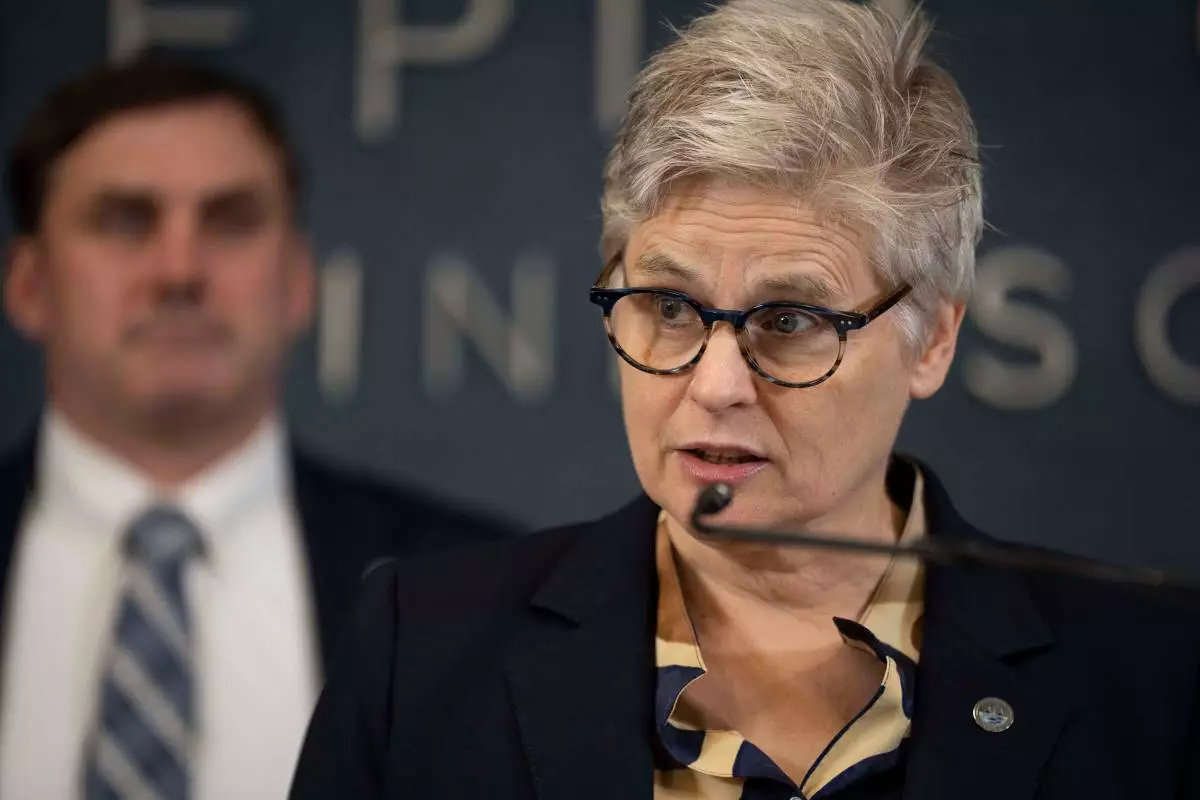
Hennepin County Attorney Mary Moriarty speaks during a news conference at the Hennepin County Government Center on Aug. 14, 2025, in Minneapolis. (Renée Jones Schneider/Star Tribune via AP, File)

Hennepin County Attorney Mary Moriarty speaks during a news conference at the Hennepin County Government Center on Aug. 14, 2025, in Minneapolis. (Renée Jones Schneider/Star Tribune via AP, File)

Recommended Articles