SACRAMENTO, Calif. (AP) — The University of Southern California canceled a gubernatorial debate planned for Tuesday after candidates of color who would have been excluded accused the school of discrimination.
Republicans Steve Hilton and Chad Bianco, and Democrats Tom Steyer, Katie Porter, Eric Swalwell and Matt Mahan, who are all white, were slated to participate in the debate hosted by the University of Southern California's Dornsife Center for the Political Future and KABC-TV. But four established Democratic candidates of color, Antonio Villaraigosa, Xavier Becerra, Betty Yee and Tony Thurmond, didn't meet the criteria to participate.
No clear front-runner has emerged in the crowded race ahead of the June 2 primary. Ballots will go out in early May.
The university has defended a formula used to select the participants and denied allegations of bias. A public policy professor independently developed the criteria based on candidates’ polling and fundraising, the university said in a statement Friday.
A group of 50 public policy and social science scholars from across the country defended the professor in a letter to the university’s president on Monday.
“We urge USC to stand firm in rejecting all efforts to apply political pressure on its faculty and its overall academic mission,” they wrote.
But the university reversed course Monday night, saying that the debate co-hosts couldn’t agree on a solution.
The "data-driven candidate viability formula is based on extensive research and enjoys broad academic support,” it said in a statement. “At the same time, we recognize that concerns about the selection criteria for tomorrow’s gubernatorial debate have created a significant distraction from the issues that matter to voters.”
The debate cancellation comes weeks after state Democratic Party Chair Rusty Hicks urged candidates to drop out of the race if their campaigns were no longer viable, citing the possibility that the two leading Republicans could advance to the general election. The all-GOP general election is possible under California’s unusual top-two primary system, which puts all candidates on one ballot and only the top two vote-getters advance to November, regardless of party.
Hicks on Tuesday unveiled the results of a poll commissioned by the party that shows Hilton, Porter, Bianco, Swalwell and Steyer in close competition, and the other candidates trailing behind them. It's consistent with other recent polling.
“These results confirm the possibility, albeit a low one — the possibility of Democrats being locked out of the general election,” Hicks said. “More importantly, it’s yet another reminder of the undeniable fact that all candidates must honestly assess their viable path to win.”
Much of the criticism is targeted at Mahan’s inclusion over other candidates. Mahan, the San Jose mayor, joined the race months after his competitors, but has outraised some of them thanks in part to contributions from ultrawealthy donors in Silicon Valley.
He said he was disappointed the debate was canceled and that the other established candidates should have been allowed to participate.
“The best way to promote democracy is to have every voice included and have forums like this for debate,” he said in an interview.
The controversy escalated Monday when legislative leaders, including chairs of the Black and Latino caucuses, called on organizers to open up the debate to more candidates.
“If USC does not do the right thing, we call on California voters to boycott this debate," they wrote. "If the university will not give voters a fair shot at evaluating everyone running for governor, voters should find other ways to learn about the candidates.”
Villaraigosa, a former Los Angeles mayor who is Latino, celebrated the university's decision to cancel the debate.
“USC made the right call, even if it came late and under pressure,” he said in a statement.
—
Associated Press writer Trân Nguyễn contributed.
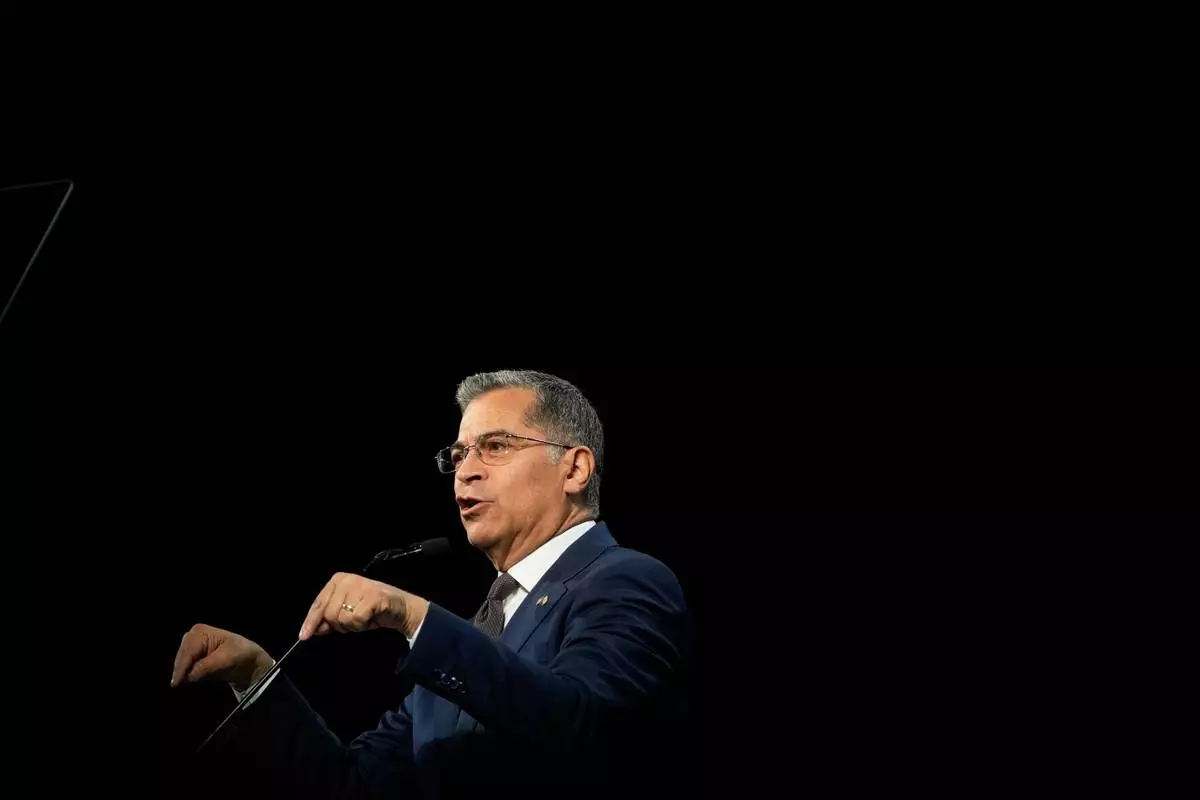
FILE - California gubernatorial candidate Xavier Becerra speaks at the 2026 California Democratic Party State Convention in San Francisco, Saturday, Feb. 21, 2026. (AP Photo/Jeff Chiu, File)
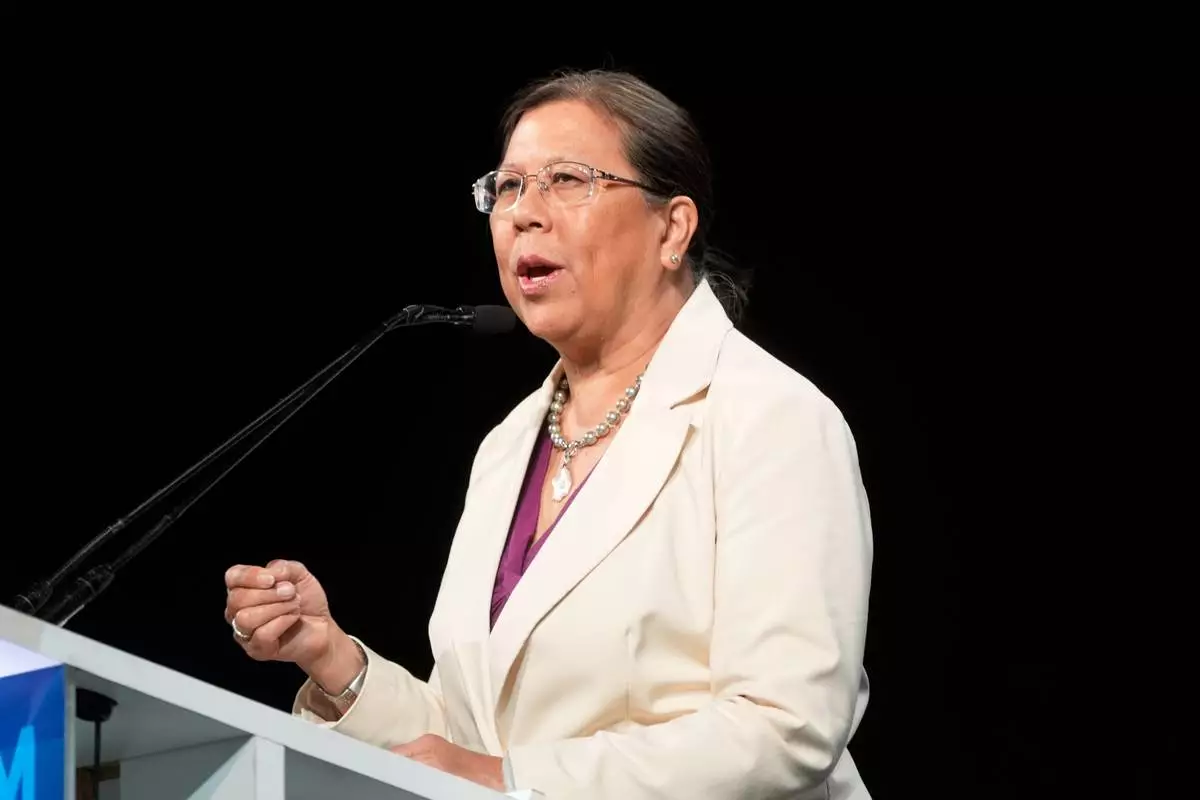
FILE - California gubernatorial candidate Betty Yee speaks at the 2026 California Democratic Party State Convention in San Francisco, Saturday, Feb. 21, 2026. (AP Photo/Jeff Chiu, File)
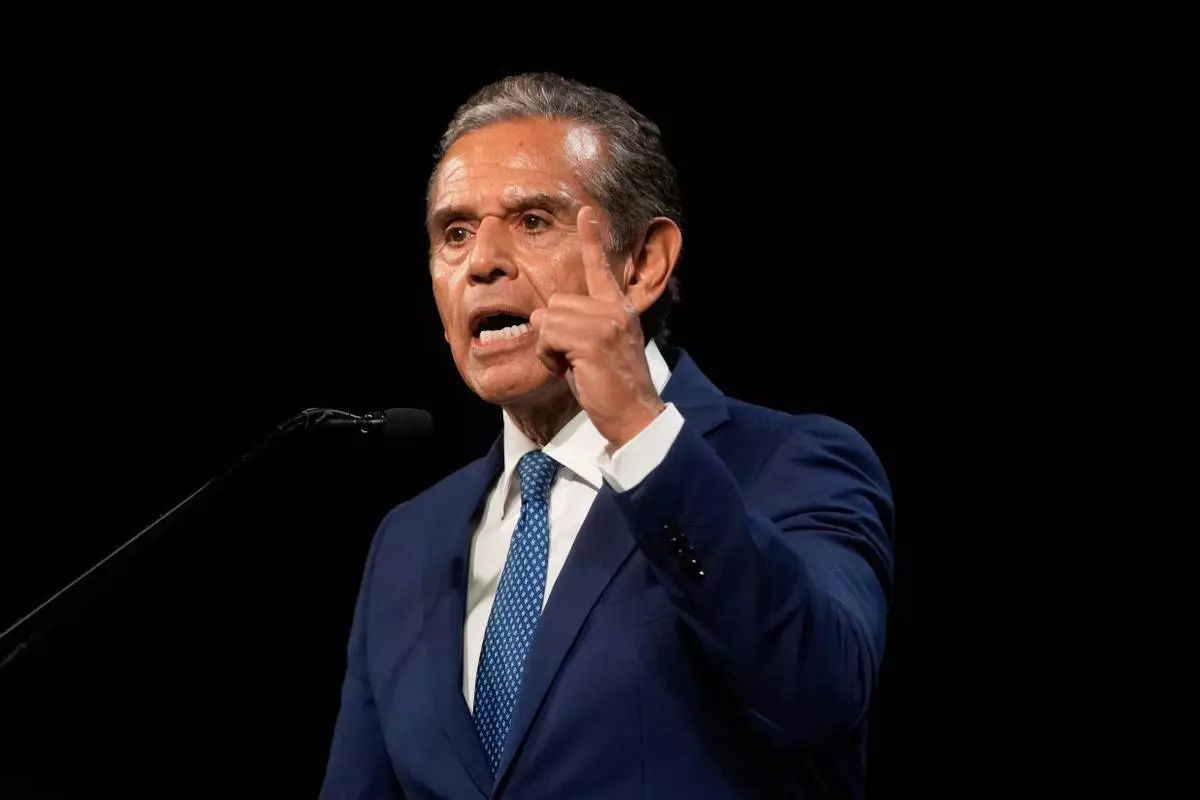
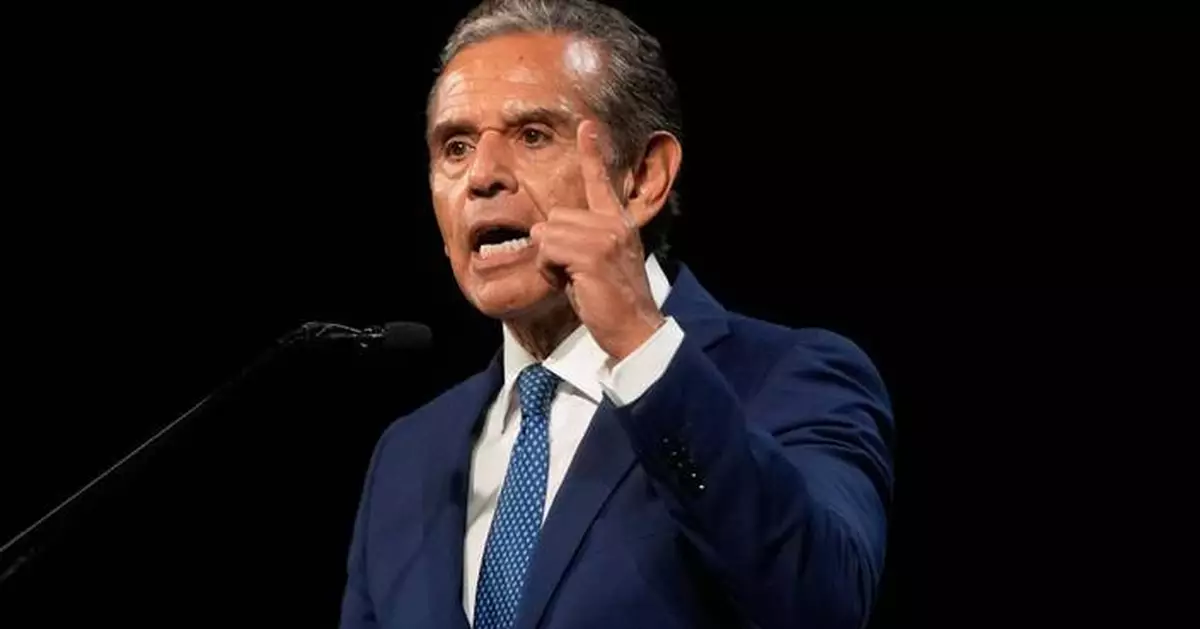
FILE - California gubernatorial candidate Antonio Villaraigosa speaks at the 2026 California Democratic Party State Convention in San Francisco, Feb. 21, 2026. (AP Photo/Jeff Chiu, File)
WASHINGTON (AP) — President Donald Trump said he has struck a deal to obtain diesel from Russia, a stunning reversal of years of U.S. pressure on Moscow over its war with Ukraine and an attempt to address high fuel prices ahead of the U.S. midterm elections.
Trump said on social media on Friday that he struck the deal with Russian President Vladimir Putin in a phone call in which he was expected to discuss a suspected case of plague in Russia. Instead, Trump announced that Russia will immediately supply more than 300,000 tons of diesel, followed by an additional 500,000 tons in November and 1 million tons “immediately thereafter.” Russia will deliver an additional 3 million tons “within a short period of time” after that, he wrote.
Trump’s shocking announcement comes after he signed a sweeping Russia sanctions law last month that aimed at clamping down on Russia’s energy revenues, among other areas, that fuel its war against Ukraine.
Ukrainian President Volodymyr Zelenskyy called it, “a weak decision, unfortunately, a weak decision by strong partners," according to a statement released by the Ukrainian Embassy in Washington.
Trump’s announced the deal as his envoy Steve Witkoff and son-in-law Jared Kushner were meeting with Ukrainian officials to discuss a proposal to try to end the Russia-Ukraine war.
“I believe our team is simply being used as a smokescreen. And that is certainly not fair. It is certainly not how partners should treat each other,” Zelenskyy said.
Trump's move casts doubt on the likelihood of the White House imposing sanctions on Russia this month, given that a bipartisan law passed by Congress directs the administration to target the top importers of Russian oil and gas.
Trump, in his announcement, did not address the sanctions or Russia’s war but said, “Lower prices for Americans, especially our Great Farmers, Ranchers, and Truckers, is my Greatest Priority.”
The White House did not immediately respond to questions about who was paying for the diesel from Russia and when the fuel being supplied under the agreement would become available. It also did not clarify whether subsequent supplies of Russian diesel set to come next month would be supplied prior to Election Day on Nov. 3.
Gas prices globally have surged as the war in Iran upends the energy sector. While diesel future prices dipped on the news on Friday, the national average for a gallon of diesel in the U.S. remained high at $6.28, according to AAA, after hitting a record $6.52 on Sept. 22.
A statement from Putin, released by the Kremlin on Friday, said that during their call he and Trump dedicated “significant attention to the prospects of resolving the Ukrainian crisis” and also discussed “the situation around Iran and various aspects of bilateral relations.”
Russia “confirmed its readiness to supply oil and oil products to the American and global markets,” Putin said. “I am confident that this will have a positive impact on the entire global economy.”
The two leaders agreed to continue contacts, Putin said in the statement.
Zelenskyy, in a lengthy post online reacting to the deal, said Russia would repay it “with further terror and perfidy.” He cast it as an investment in the war, allowing it to be prolonged.
“It plays into Russia’s hands — allowing it to kill more, wage war for longer, have even less respect for America, and inflict even greater losses and damage on the world,” he said.
Rep. Don Beyer, the senior House Democrat on the Joint Economic Committee, called Trump’s announcement “infuriating.”
“This is what we warned anyone who would listen: Trump isn’t the slightest bit trustworthy when it comes to Russia,” Beyer said in a statement on X. “Giving him expanded tariff powers in hopes he would use them to help Ukraine was a mistake. Now he’s lifting sanctions on Russian fossil fuels.”
The law Trump signed last month envisions sanctions on Russian officials, banks and a shadow fleet of tankers and bans all new U.S. investment in Russia and the handling of sovereign debt.
It also directed Trump to impose tariffs of up to 100% on the top five importers of Russian oil or natural gas, with an exception for countries that import less than 15% of Russia’s natural gas exports and have taken significant steps to reduce those imports.
The U.S. has not imported Russian oil or gas since 2022, when the Biden administration banned them because of Moscow’s invasion of Ukraine, according to the U.S. Energy Information Administration.
Shortly after Trump made the announcement, the Treasury Department said it was immediately issuing a temporary license allowing Russian diesel to be supplied to the global market.
This is the latest in several licenses the U.S. Treasury has issued regarding Russian fuel shipments since the start of the Iran war earlier this year. But it is the first such license to ease sanctions on diesel for a period lasting longer than the standard 30-day window since the start of the Ukraine war.
The new so-called general license means U.S. sanctions will not apply until April 2027 on deliveries of Russian diesel that has been loaded onto tankers as of Friday. The department extended similar easing of sanctions in March and April even though Treasury Secretary Scott Bessent had ruled out such a move earlier in the year.
The extensions continue to underscore how the fallout from the Iran war has boosted Moscow’s ability to profit from its energy exports, which had been restrained by the U.S. and other allies since the invasion of Ukraine.
It’s unclear what kind of impact the move will have on oil prices, given overall global supply shortages.
“It’s kind of shuffling deck chairs on the Titanic,” said Michael Lynch of the Energy Policy Research Foundation, a non-partisan research institution focused on energy and economics.
“If we get diesel from Russia, basically it means that their existing customers are not going to get it and they’ll have to go somewhere else, and that will keep the price basically where it is now,” Lynch said.
Russia, once a major exporter of diesel, has banned exports since July as it has struggled to meet demand inside the country because of Ukraine’s repeated attacks on Russian oil refineries. The International Energy Agency says Russian diesel output has fallen by about 30%.
Russian Deputy Prime Minister Alexander Novak told state news agency Tass that Russia is “immediately starting to lift restrictions on diesel exports ahead of schedule.” He said that Moscow could start supplies to the U.S. already in October, and that Russia’s domestic market will be “fully supplied” with diesel, as well.
Associated Press writers Will Weissert and Konstantin Toropin in Washington, Alex Veiga in Los Angeles and Farnoush Amiri in New York contributed to this report.
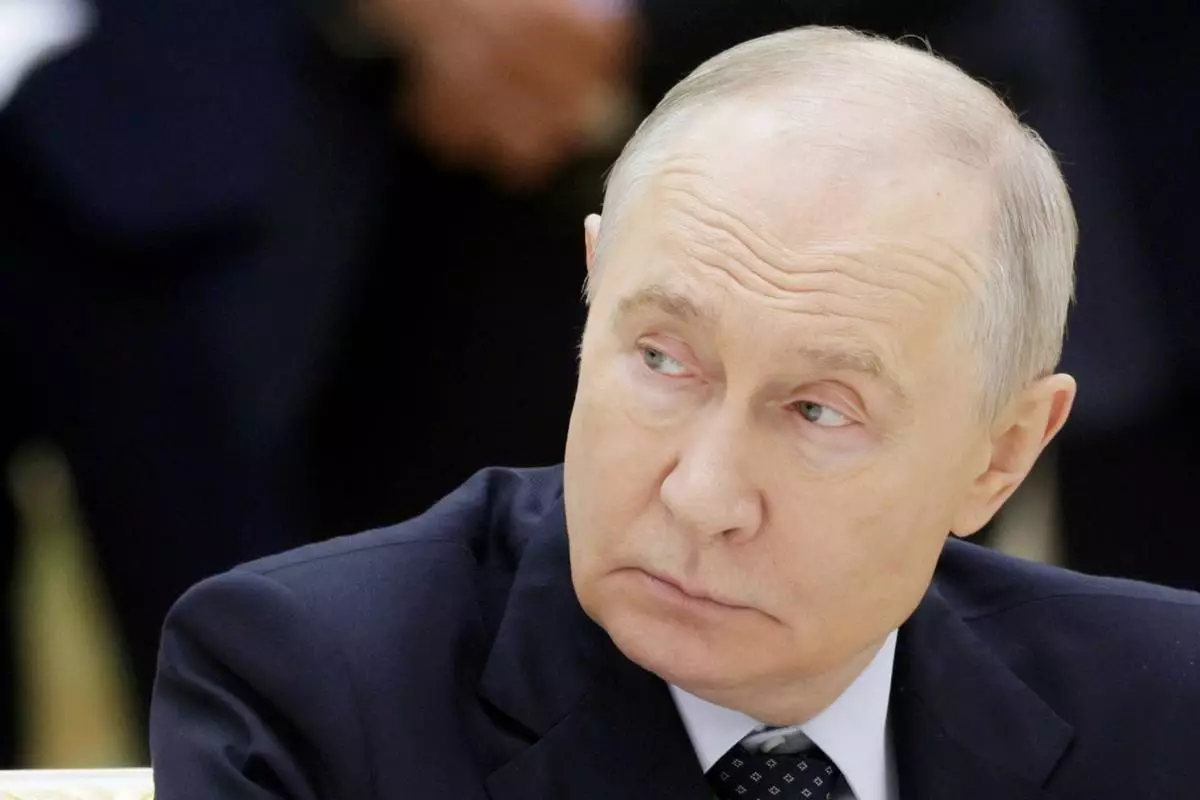
Russian President Vladimir Putin attends the extended format meeting at the Commonwealth of Independent States (CIS) summit in Turkmenbasy, Turkmenistan, Friday, Oct. 9, 2026. (Gavriil Grigorov, Sputnik, Kremlin Pool Photo via AP)
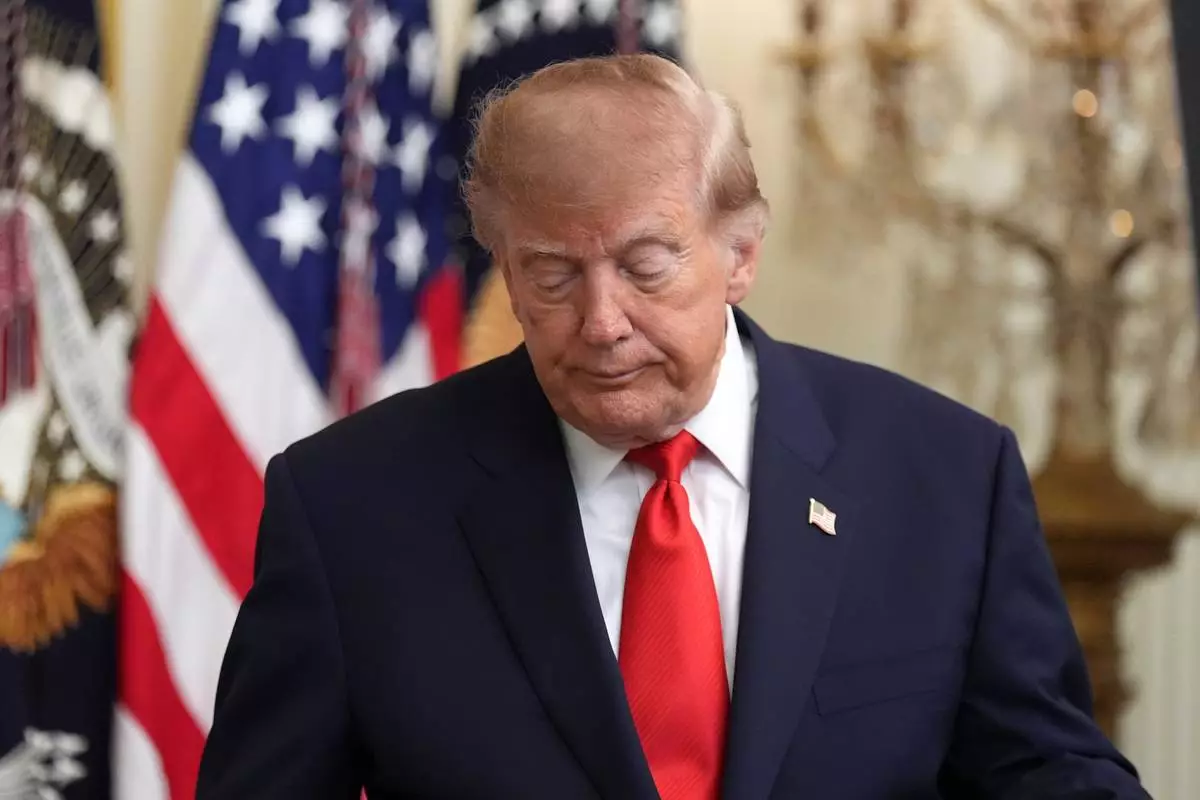
President Donald Trump walks after speaking at a Columbus Day celebration in the East Room of the White House, Friday, Oct. 9, 2026, in Washington. (AP Photo/Alex Brandon)

The price of a gallon of diesel fuel is shown electronically on a pump at a QuikTrip station Thursday, Oct. 1, 2026, in Greenwood Village, Colo. (AP Photo/David Zalubowski)