|
- Pivotal Phase II/III clinical trial underway, aiming for US and European market approval in 2028
- A 'truly transformative' regenerative medicine targeting a multi-million patient population with no existing curative treatment
- Fully biological transplant eliminates need for immunosuppression and restores natural function
- Scalable process protected by 92 granted patents
- CVI market projected to reach USD 5,951 million by 2034*
- Supported by USD 10 million financing from existing investors
GOTHENBURG, Sweden, March 25, 2026 /PRNewswire/ -- VERIGRAFT, a Swedish clinical-stage biotechnology company pioneering personalized, fully biological therapies, today announced the initiation of a pivotal Phase II/III trial of its P-TEV (personalized tissue engineered vein) in patients with chronic venous insufficiency (CVI), supported by USD 10 million from existing investors.
The milestone comes at a time when regenerative medicine and personalized biologics are gaining significant traction among global investors and healthcare systems.
VERIGRAFT's fully biological approach opens the way for a potential curative treatment for CVI, using personalized tissues that eliminates the need for immunosuppressive therapy. The manufacturing process is completed within 10 days, making VERIGRAFT's offering both scalable and clinically feasible. Trial sites for the Phase II/III study are located in Spain, the Netherlands and Poland.
As an advanced therapy medicinal product (ATMP), VERIGRAFT's clinical development programme is designed to generate robust clinical data in a limited patient population. The Company aims to achieve market approval in Europe and the US in 2028.
Chronic Venous Insufficiency (CVI) is a progressive and under-recognized vascular disease in which the veins in the legs fail to efficiently return blood to the heart, leading to sustained elevated venous pressure in the leg veins. Driven by factors such as ageing, obesity, and sedentary lifestyles, CVI represents a growing healthcare burden worldwide.
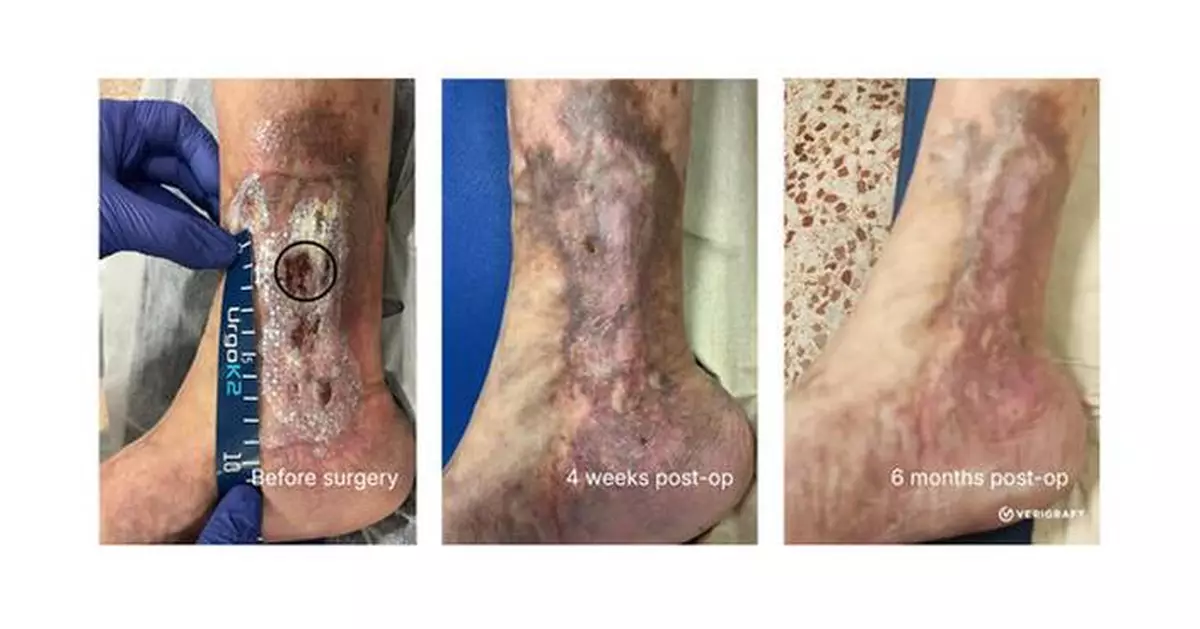
VERIGRAFT's personalized tissue-engineered vein (P-TEV) is designed to replace diseased venous segments with dysfunctional valves with vein segments containing functioning valves. The approach uses donor-derived venous material that is decellularized and subsequently personalized using the patient's own blood, creating a patient-specific graft. Once prepared, the P-TEV is surgically implanted to replace the diseased vein segment and restore venous function.
Petter Björquist, CEO of VERIGRAFT, said: "This financing enables a critical step forward in our clinical development and is a critical component in our journey to redefine how vascular disease can be treated by restoring natural biological function at scale. With P-TEV, we are addressing a large, underserved patient population with a therapy designed to address the underlying cause of disease, not just manage the symptoms. The initiation of our pivotal trial brings us significantly closer to making this a clinical reality."
Dr. Bryan Kluck, an Interventional Cardiologist, Endovascular Interventionalist and Vascular Medicine Specialist at Lehigh Valley Hospital, Allentown, PA, commented: "As an interventional cardiologist familiar with the technology, I believe it offers a new way forward. This is truly restorative, unlike so many of the available tools. Patency of the venous system, along with functional vein valves, has the potential to revolutionize venous therapy. This technology restores normal venous hemodynamics, a concept that, heretofore has been unimaginable."
Dr. Andrés García León, Head of the Department of Angiology and Vascular Surgery at Virgen de Valme University Hospital, Associate Professor of the University of Seville, and Lead Principal Investigator (PI), added: "I am very pleased to be leading the phase II/III trial of P-TEV. In clinical practice, treatment options for patients with advanced CVI are limited. P-TEV represents a promising and scalable approach with the potential to restore physiological blood flow."
*Chronic Venous Insufficiency Market Insight, Epidemiology And Market Forecast - 2034
Source: DelveInsight
Visit www.verigraft.com
- Pivotal Phase II/III clinical trial underway, aiming for US and European market approval in 2028
- A 'truly transformative' regenerative medicine targeting a multi-million patient population with no existing curative treatment
- Fully biological transplant eliminates need for immunosuppression and restores natural function
- Scalable process protected by 92 granted patents
- CVI market projected to reach USD 5,951 million by 2034*
- Supported by USD 10 million financing from existing investors
GOTHENBURG, Sweden, March 25, 2026 /PRNewswire/ -- VERIGRAFT, a Swedish clinical-stage biotechnology company pioneering personalized, fully biological therapies, today announced the initiation of a pivotal Phase II/III trial of its P-TEV (personalized tissue engineered vein) in patients with chronic venous insufficiency (CVI), supported by USD 10 million from existing investors.
The milestone comes at a time when regenerative medicine and personalized biologics are gaining significant traction among global investors and healthcare systems.
VERIGRAFT's fully biological approach opens the way for a potential curative treatment for CVI, using personalized tissues that eliminates the need for immunosuppressive therapy. The manufacturing process is completed within 10 days, making VERIGRAFT's offering both scalable and clinically feasible. Trial sites for the Phase II/III study are located in Spain, the Netherlands and Poland.
As an advanced therapy medicinal product (ATMP), VERIGRAFT's clinical development programme is designed to generate robust clinical data in a limited patient population. The Company aims to achieve market approval in Europe and the US in 2028.
Chronic Venous Insufficiency (CVI) is a progressive and under-recognized vascular disease in which the veins in the legs fail to efficiently return blood to the heart, leading to sustained elevated venous pressure in the leg veins. Driven by factors such as ageing, obesity, and sedentary lifestyles, CVI represents a growing healthcare burden worldwide.
VERIGRAFT's personalized tissue-engineered vein (P-TEV) is designed to replace diseased venous segments with dysfunctional valves with vein segments containing functioning valves. The approach uses donor-derived venous material that is decellularized and subsequently personalized using the patient's own blood, creating a patient-specific graft. Once prepared, the P-TEV is surgically implanted to replace the diseased vein segment and restore venous function.
Petter Björquist, CEO of VERIGRAFT, said: "This financing enables a critical step forward in our clinical development and is a critical component in our journey to redefine how vascular disease can be treated by restoring natural biological function at scale. With P-TEV, we are addressing a large, underserved patient population with a therapy designed to address the underlying cause of disease, not just manage the symptoms. The initiation of our pivotal trial brings us significantly closer to making this a clinical reality."
Dr. Bryan Kluck, an Interventional Cardiologist, Endovascular Interventionalist and Vascular Medicine Specialist at Lehigh Valley Hospital, Allentown, PA, commented: "As an interventional cardiologist familiar with the technology, I believe it offers a new way forward. This is truly restorative, unlike so many of the available tools. Patency of the venous system, along with functional vein valves, has the potential to revolutionize venous therapy. This technology restores normal venous hemodynamics, a concept that, heretofore has been unimaginable."
Dr. Andrés García León, Head of the Department of Angiology and Vascular Surgery at Virgen de Valme University Hospital, Associate Professor of the University of Seville, and Lead Principal Investigator (PI), added: "I am very pleased to be leading the phase II/III trial of P-TEV. In clinical practice, treatment options for patients with advanced CVI are limited. P-TEV represents a promising and scalable approach with the potential to restore physiological blood flow."
*Chronic Venous Insufficiency Market Insight, Epidemiology And Market Forecast - 2034
Source: DelveInsight
Visit www.verigraft.com
** This press release is distributed by PR Newswire through automated distribution system, for which the client assumes full responsibility. **
VERIGRAFT Advances First Potential Curative Treatment for CVI into Pivotal Phase II/III Trial
GOLD COAST, Australia, March 26, 2026 /PRNewswire/ -- Australian Manuka honey producer Biosota Organics is supporting women's health through its participation in the Mater Chicks in Pink 5K Your Way initiative, as scientific interest grows in the potential role of high-MGO Manuka honey in cancer-related research.
The 5K Your Way challenge forms part of the Mater Chicks in Pink International Women's Day Fun Run, one of Queensland's largest community events promoting breast cancer awareness. In March 2026, more than 23,000 participants helped raise over $2 million, transforming Brisbane into the iconic "Sea of Pink" in support of women affected by breast cancer.
"Supporting initiatives that advance women's health is deeply aligned with our values," said Biosota founder Andrey Zubko.
"Our customers are increasingly focused on proactive wellbeing, particularly around immunity, inflammation and cancer recovery, and Manuka honey has long been valued for its natural bioactive properties. It's encouraging to see scientific research exploring how these compounds, especially in high-MGO varieties, may have broader potential."
High-MGO Manuka Honey Gains Attention in Emerging Breast Cancer Research
Interest in Manuka honey's bioactive compounds, particularly methylglyoxal (MGO), has accelerated, with higher MGO levels indicating greater concentrations of these compounds.
Recent preclinical research (2024–2025), including studies referenced by UCLA Health, has explored Manuka honey in breast cancer models. Findings suggest it may inhibit tumour growth and trigger apoptosis (programmed cancer cell death), with one study reporting up to an 84% reduction in tumour growth in mice with estrogen receptor-positive (ER+) breast cancer. Laboratory studies have also shown potential modulation of key signalling pathways (AMPK/AKT/mTOR) and anti-inflammatory effects.
These early findings indicate that high-activity Manuka honey may interfere with cancer cell proliferation and are contributing to growing global interest in its role as a complementary or less-toxic therapeutic approach.
However, researchers emphasise that current evidence is limited to preclinical models, and further human studies are required.
"High-MGO Manuka honey is gaining recognition as a natural functional food with unique bioactive properties," Zubko added. "While the research is promising, it's important to be clear that Manuka honey is not a treatment or substitute for medical care."
About Biosota Organics
Biosota is an Australian producer of high-MGO Manuka honey, sourced from native Australian Manuka plants in remote, pristine environments and independently lab-tested to verify strength and purity.
** This press release is distributed by PR Newswire through automated distribution system, for which the client assumes full responsibility. **

Biosota Supports Mater Foundation as High-MGO Manuka Honey Revealed in Emerging Breast Cancer Research